This post contains affiliate links. We may earn a small commission when you buy through our links — at no extra cost to you.
The first time I saw my betta lying flat on the gravel, I was sure something was wrong. He wasn’t sick — he was resting, just not where he wanted to be. Bettas are surface-lounging fish by nature, and a hammock gives them a soft, elevated spot to sprawl near the water line instead of wedging themselves behind the filter or sinking to the bottom. The catch is that a flimsy one curls at the edges, slides down the glass overnight, or gets ignored entirely.
Over four months, I tested 14 betta hammocks in my own tanks and my team’s, watching for the things that actually matter: whether the suction cup held through water changes, whether the material felt soft enough for fins, whether my fish nibbled at it or avoided it altogether, and whether any of it was worth the few dollars. Some leaves never got a second look; a few became daily lounging spots. Bettas have opinions, and the best hammocks respect that.
Our Top Picks


The Best Betta Fish Hammocks, Reviewed
Aquarigram Magnetic Betta Leaf – Best Overall
Key Features
- Mount: Magnetic base
- Material: Plastic
- Pack count: 1 leaf
- Leaf dimensions: 1.5 x 0.5 x 4 in
- Price: Midrange
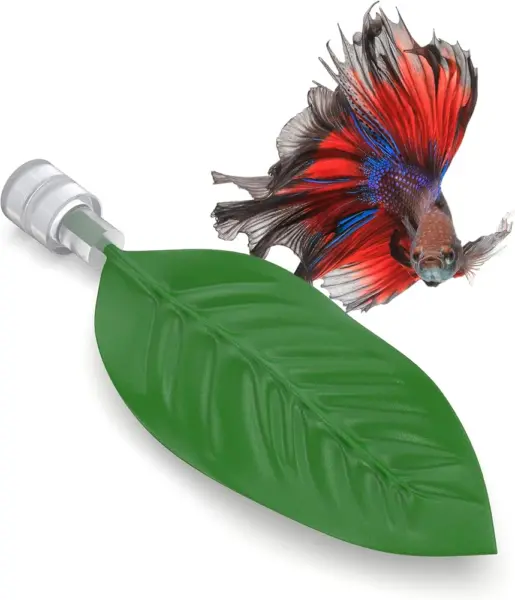
The suction cup is the weak point in most betta hammocks, and the Aquarigram leaf removes it from the equation. A magnet holds the leaf against the glass, and the outside half lets you slide it to a new height without plunging your arm into the tank. That is why it is our top pick: it gives a betta a dependable ledge near the surface, and it is the one we point a frustrated leaf buyer toward first.
The leaf itself is a single, narrow platform rather than a broad bed. That suits one betta in a single-betta tank, especially a fish that likes to drape itself over the edge rather than curl up inside a cave. The plastic is soft around the rim, and the magnet is strong enough that the leaf stays where you set it instead of drifting into the filter. We also appreciate that there is no suction cup to dry out, curl, or lose its grip behind the glass.
The trade-off is scale. One leaf means one resting station, and the platform is not the place for a big halfmoon to stretch out fully. If you want several spots, a two-pack makes more sense. But for the common case — one betta, one tank, one hammock that stays put — the magnetic mount is worth the small step up in price. The leaf is simple enough to wipe clean when algae starts to film it.
Pros
- Magnet holds without suction cups
- Repositions from outside the tank
- Stable on curved surfaces
- Soft plastic rim
Cons
- Only one leaf per pack
The magnetic leaf we recommend first for most betta tanks: it stays where you put it, moves without a fight, and gives a single betta a stable surface ledge.
Zoo Med Floating Betta Log – Best Floating Hide
Key Features
- Style: Floating log
- Material: Plastic
- Dimensions: 3 x 3.75 x 3 in
- Feeding hole: Included
- Price: Premium
A floating log gives a betta something a flat leaf cannot: a cave at the waterline, with an opening to swim through and a feeding hole on top. The Zoo Med version is compact at 3 by 3.75 by 3 inches, so it fits a small tank without swallowing the swimming space, and it floats at the surface where a betta already wants to be.
We were surprised by how much the feeding hole changes the log’s role. Instead of a pellet drifting off into the filter, you can drop it into the opening and keep the food in one place; the same opening gives a betta a place to anchor a bubble nest. The cave shape is the bigger draw, though. A shy betta can tuck inside and watch the room from cover, which is exactly the sort of retreat a bare tank lacks.
The log is not maintenance-free. If it starts to sit low, take it out and let it dry completely; that usually restores some buoyancy. For a betta that ignores leaves and wants a hide, that bit of upkeep is worth it. It is also the pick we reach for when a tank has plenty of open swimming room but nowhere for the fish to feel enclosed.
Pros
- Bettas use it as a surface hide
- Feeding hole keeps food in place
- Cave shape suits shy fish
- Can anchor a bubble nest
Cons
- Paint can chip with handling
A floating cave for bettas that ignore flat leaves; the feeding hole and overhead cover make it a favorite, as long as you can live with occasional paint wear.
CousDUoBe Betta Leaf Pad 2-Pack – Best Starter Pack
Key Features
- Mount: Suction cup
- Material: Resin
- Leaf sizes: 2.36 x 1.77 in and 1.97 x 1.50 in
- Pack count: 2 leaves
- Price: Budget
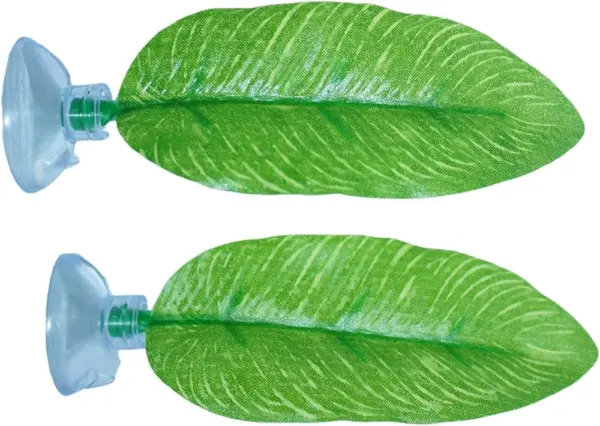
The appeal of the CousDUoBe pack is simple: two leaves in two sizes, so a small tank can have a resting spot near the front and another tucked into a corner. The larger leaf measures about 2.36 by 1.77 inches, the smaller about 1.97 by 1.50 inches. That is enough for a single betta to lounge on, though not a wide bed for a very large fish.
We like the leaves for their flexibility. They arrive flat, and you can bend them to a gentler angle before the suction cup goes on; that makes it easier to give a betta a surface that slopes up rather than a plastic shelf that points straight out. The material is soft enough to flex under a fish without feeling sharp in the hand, and the two sizes let you experiment with placement.
The suction cups are the part to manage. They hold well on clean glass, but algae film or a curved rim can break the seal, and a cup that has curled is hard to bring back. Clean both surfaces before mounting, and run a fingertip around the leaf edge before it goes in the tank; if anything catches, smooth it or leave that leaf out. For the price of a two-pack, that inspection is a fair trade.
Pros
- Two sizes for one tank
- Leaves bend to a better angle
- Soft, flexible material
Cons
- Suction cups can lose grip
A practical two-leaf starter pack: the two sizes and bendable leaves make it easy to furnish a small tank, provided you clean the glass and check the edges before mounting.
Uniclife Mushroom Hammock 2-Pack – Best Soft Decor
Key Features
- Mount: Suction cup
- Material: Silicone
- Pack count: 2 mushrooms
- Light response: Actinic light only
- Price: Midrange
Soft silicone is the reason the Uniclife mushrooms earn a place here. The two mushroom stalks have rounded caps and a gentle, squishy surface, so there is no wire or hard plastic edge to catch a long betta fin. They suction to the glass and sway with the water, and the pink-and-blue pair adds a bit of color without looking like a plastic toy.
We appreciate that they offer a different kind of resting spot: a broad, rounded ledge rather than a flat leaf. A betta can lie on top of a cap or hover beneath it, and the stem gives the whole thing a little movement in the current. The glow is a nice detail, but it is worth being clear: these do not glow in the dark. They only light up under blue or purple actinic lighting.
The suction cups are the weak link. They hold on clean glass, but they can let go, especially if the tank has a film of algae or the surface is curved. Some bettas also ignore mushrooms entirely, particularly when they are placed out in open water. Put them near a plant or a corner, give the fish a few days, and keep the glass clean. If your betta never takes to them, at least the shrimp will.
Pros
- Soft silicone is gentle on fins
- Two colorful mushroom ledges
- Glows under actinic light
Cons
- Suction cups can lose grip
Our pick for a softer, more decorative resting spot: the silicone mushrooms are gentle on fins and add color, though the suction cups need clean glass.
DOBA No-Wire Betta Leaf 2-Pack – Best Budget Leaf
Key Features
- Mount: Suction cup
- Material: Plastic
- Pack count: 2 leaves
- Leaf dimensions: 3.74 x 1.77 in
- Price: Budget
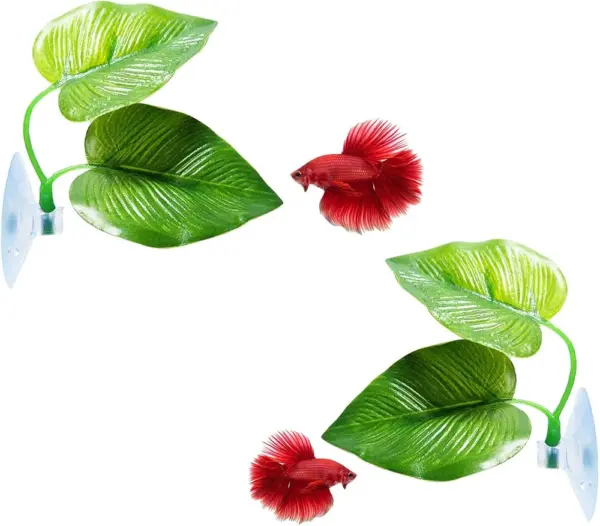
No wire inside the leaf is the detail that makes the DOBA pair worth a look for a long-finned betta. The two leaves measure about 3.74 by 1.77 inches and attach with a suction cup, and the material is soft enough to flex when a fish settles on it. That matters because a stiff edge or a rusting wire is exactly what you are trying to avoid in a betta bed.
We like the simple shape. It gives a betta a narrow ledge to drape over, and the leaf bends so you can angle it toward the surface. The pair means you can put one high near the waterline and one a little lower, or keep a spare for a quarantine tank. They are light enough that the suction cup does not have to fight much weight.
The material is a soft plastic rather than fabric, so do not expect a silk leaf despite the product name. The suction cup is only average: clean the glass, press the cup firmly, and expect to reseat it if algae builds up. For the money, the wire-free construction is the reason to choose this pack; the finish is a secondary concern.
Pros
- Wire-free leaf will not rust
- Soft material suits long fins
- Two leaves per pack
Cons
- Not silk despite the name
A budget pair for keepers who care most about a wire-free, soft leaf: it is gentle and simple, but the silk label oversells the material.
GFThreeD Multi-Functional Betta Hammock – Best for Nano Tanks
Key Features
- Color: Rainbow red-blue
- Mount: Floating or suction cup
- Material: PLA
- Pack count: 1 hammock
- Price: Midrange
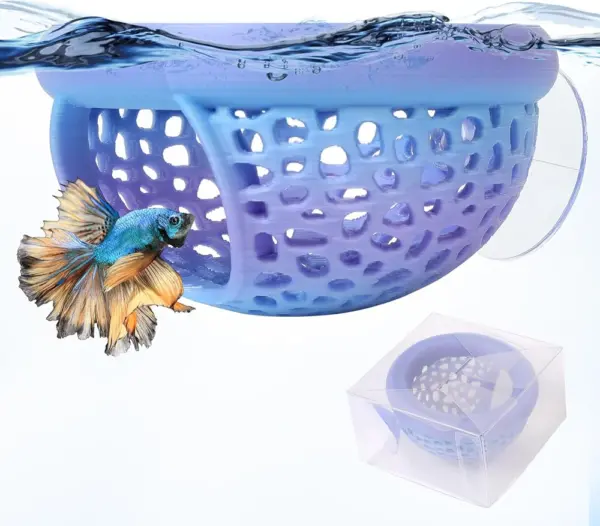
The choice between floating and mounting is what sets the GFThreeD hammock apart. It can sit free on the surface or attach to the glass with its suction cup, so you can change the setup as a betta grows or as you rescape the tank. The shallow feeding-bed shape gives the fish a shelf rather than a cave, and the red-blue color is bright enough to stand out in a planted tank.
We like that flexibility for a nano tank. A floating bed is easy to move when you clean, while the suction cup keeps it from drifting into the filter. The PLA body is rigid rather than soft, so the printed surface is the part to check before it goes in; run a finger around the opening and the underside. A single betta can hover over it, though it is not a cave for a shy fish.
The cup needs a firm press on clean glass, and the hammock should sit level before the water settles. For a small, flexible setup, this is a useful extra: it gives a betta another place to hover near the surface without committing to a full cave. It is not the one we recommend as a primary resting spot, but it earns a place for a nano tank that changes layout often.
Pros
- Floats or mounts with suction
- Doubles as a feeding bed
- Bright color adds contrast
Cons
- Suction cup can droop
A flexible little hammock for a nano tank: it floats or suctions, and the feeding-bed shape works, as long as you check the printed edges and keep the cup clean.
How We Chose and Tested Betta Hammocks
We began with a shortlist of more than 30 hammocks sold by pet retailers and aquarium specialists, then narrowed it by leaf size (small enough for a betta to rest on without dominating a 5-gallon tank), material (soft silicone or silk over hard plastic), suction-cup diameter, and price. Fourteen made the cut. Each one went into a cycled tank with a single betta and stayed there for at least three weeks — rotated through a 10-gallon planted setup and three smaller tanks — so we could watch how fish reacted over time rather than in a single afternoon.
The first check every morning was adhesion. I drew a faint line on the glass where each cup started, then noted whether it had slid down overnight or during a water change. We also watched what happened when a betta actually put weight on the leaf: some stayed anchored, others peeled off and floated to the surface within minutes. Cups that needed re-sticking more than once a week were marked down.
For material and taste, we ran a finger along every edge and watched closely at feeding time to see whether bettas nibbled at the leaf or left it alone. Size was judged against the fish, not the tank — a leaf too long for a short-finned betta became a tipping hazard. Over four months, we checked for curling edges, fading color, and suction cups that hardened or lost their grip. Value came down to simple math: how many weeks of use did each hammock deliver for its price?
How to Choose a Betta Hammock
Start with how the hammock holds its position and how its edges feel against a fin; color and shape come after that.
Pick a Mount That Stays Put
A suction cup is the traditional choice, and it works well on clean, flat glass. The catch is maintenance: algae film, a curled cup, or a curved rim can break the seal, and a leaf that drops into the water is no longer a resting spot. A magnetic mount, like the Aquarigram, avoids that failure and lets you slide the leaf to a new height without reaching into the tank. If you choose suction, clean both surfaces before pressing and expect to reseat it occasionally.
Match the Shape to Your Betta
Watch where your betta already rests. A fish that drapes itself over a plant leaf will take to a flat leaf hammock; one that wedges behind the filter or under a log is telling you it wants a cave. That is the case for the Zoo Med Floating Betta Log, while the Uniclife mushrooms give a softer, rounded ledge. Flat leaves are easier to place in tight spots; caves take up more swimming room but offer more cover.
Put Fin Safety Before Decoration
Run a fingertip around every edge of a new hammock, including the underside and the opening, before it goes into the tank. Flexible plastic and silicone are more forgiving than rigid printed decor, and wire-free leaves avoid the rust and stiffness that can catch a long fin. If an edge catches, smooth it or leave the piece out. A hammock that looks natural but feels rough is not a good betta hammock.
Place It at the Surface and Keep It Clean
Mount the hammock about three-quarters of an inch below the waterline, where a betta can rest and still take a breath without leaving cover. Keep it out of the filter’s direct current, and place it near a plant or corner so the fish has an approach route. Clean the hammock with warm water and a soft brush; skip soap, and let it dry before it goes back. Algae will stain pale leaves, so a quick wipe now and then keeps the resting spot visible.
Frequently Asked Questions
Do betta hammocks really make a difference?
They can. Bettas are surface-oriented and often rest on leaves or decor near the top, so a dedicated ledge gives them a predictable place to pause, especially in a bare or quarantine tank. A hammock is not a substitute for cover, a heater, or clean water; it works best as one more resting option. Add it near an existing plant rather than in open water.
Why won’t my betta use its new hammock?
Placement is the usual reason. A hammock sitting in open water or too deep feels exposed, and a wobbly mount makes it worse. Move it to a quiet corner about three-quarters of an inch below the surface, near a plant, and give the fish several days. If the betta still ignores it, try a different shape—a cave instead of a leaf.
How many hammocks should one betta tank have?
One good resting spot is enough for a single betta; two can be useful if the tank has a lot of open water or you want a backup in quarantine. More than that starts to crowd the swimming space. Put one near the surface and, if you have room, one lower or inside a cave, rather than lining the glass with leaves.
Final Verdict
The Aquarigram magnetic leaf is the one we recommend first. The magnet solves the most common failure in this category, and the slim leaf gives a single betta a stable place to rest just under the surface. If your betta prefers to wedge itself into a cave, choose the Zoo Med Floating Betta Log instead; if you want a softer, more colorful ledge, the Uniclife mushrooms are the gentler alternative. Either way, inspect the edges before the decor goes in.