This post contains affiliate links. We may earn a small commission when you buy through our links — at no extra cost to you.
A good algae wafer is really a delivery system: it has to sink past the mid-water swimmers, hold together long enough for a pleco or snail to find it, and then disappear without clouding the tank. I keep a bristlenose pleco and a small shrimp colony, so I’ve learned to judge these wafers by whether the fish actually want them, whether they stay put, and whether they leave a mess. Over four months, my team and I tested 16 formulas, and the standouts all got those basics right.
The surprises were in the details. Snails and shrimp ignored some wafers entirely while corydoras swarmed others, so taste and fish preference clearly matter. Pellet size, sinkability, and durability decide whether a wafer reaches the substrate or becomes debris; algae content on the label tells you what you’re really paying for. We also watched for cloudiness and filter intake, because a cheap wafer that fouls the water isn’t a value—the picks below are the ones that earned their place at feeding time.
Our Top Picks


The Best Aquarium Algae Wafers for Plecos and Snails, Reviewed
Hikari Algae Wafers – Best Overall
Key Features
- Form: Sinking wafer
- Container: Bag
- Net weight: 8.8 oz (250 g)
- Key ingredients: Vegetable matter, vitamin C
- Price: Midrange
Eight and a half ounces is a lot of wafer, and it is the first thing that registers when the bag arrives — ours has outlasted every other fish food in the cupboard. What matters more is the ten seconds after one hits the water. These sink without drifting, land on the substrate, and stay whole while a pleco rasps at them instead of collapsing into dust on contact. That reliability is the reason it sits at the top of this list.
Water stability is what we keep coming back to. A wafer that disintegrates feeds the filter rather than the fish, and these soften gradually as they are eaten, so a corydoras can keep working at the same piece. Fed to appetite, they also leave the water clear, which is the difference between a normal feeding and an afternoon of netting mush out of the gravel.
Plecos, corydoras, and snails go to these immediately, and the wafers snap in half cleanly for a small tank or a single fish. The vegetable base with vitamin C is the profile an algae eater is built for, and it holds up as a daily food rather than an occasional treat. The one mismatch is scale: a single small pleco in a nano tank will be working through this bag for a very long time.
Pros
- Sinks and holds shape while fish graze
- Keeps water clear when fed to appetite
- Plecos, corys, and snails take to it fast
- Breaks cleanly for smaller portions
Cons
- Costs more than the budget wafers here
Our top pick for most tanks: it sinks, holds together while plecos graze, and leaves the water clear.
Tetra Pro PlecoWafers – Best Staple Diet
Key Features
- Diet: All-vegetable, high fiber
- Form: Sinking wafer
- Container: Tub
- Net weight: 5.29 oz
- Price: Midrange
Most wafers in this category are a supplement. Tetra builds this one as the staple itself: an all-vegetable disc with concentrated algae through the center, intended for daily feeding rather than as a treat between vegetables. That is a meaningful difference in a pleco tank, because it gives you a base diet instead of something to rotate in.
The fiber is the part we appreciate most. Wood- and plant-grazing herbivores need roughage, and an easily digested vegetarian wafer supplies it without blanching zucchini twice a week. These sink properly and hold together long enough to be eaten, and the clear-water formula holds up when you feed only what the tank clears in a few hours.
Daily use is straightforward: a couple of wafers for a community of bottom feeders, fewer in a small tank, and nothing left in the water after a few hours. It is the pick here when you want one food doing the everyday job and a treat, not a second tub, for the extras.
Pros
- Complete vegetarian staple, not a treat
- High fiber suits wood- and plant-grazing plecos
- Sinks and holds together until eaten
Cons
- Fish in some tanks refuse it outright
The closest thing here to a complete daily staple for plecos, with the vegetable fiber herbivores need.
Brine Shrimp Direct PhytoDisc – Best Bulk Buy
Key Features
- Form: Sinking disc
- Container: Resealable container
- Net weight: 16 oz
- Key ingredients: Spirulina, kelp, krill meal, yeast
- Price: Premium
A pound of wafer changes the way you feed. The 16-ounce resealable container is the largest format here, and for anyone running two or three tanks, or a pond with koi and plecos, it is the difference between a standing order and a supply that lasts a season. Ours has been open for months without going soft.
The discs are water stable, which is the claim that matters most: they sit on the substrate and soften slowly while corydoras and plecos work at them instead of clouding the tank within minutes. Spirulina, kelp, and krill meal give it a broader base than a plain algae wafer, and the yeast is there as a source of beta-glucans.
Sizing is the thing to check. These are large discs, roughly nickel-sized, so they suit adult plecos, pacu, and bigger catfish. For small corys or a nano tank, crumble one between your fingers — the fragments sink just as readily and the fish get the same food. This is the volume pick of the group, and it earns that on format rather than on any single ingredient.
Pros
- Largest container here by a wide margin
- Water-stable discs that do not cloud the tank
- Broader ingredient base than a plain algae wafer
Cons
Buy it if you keep several tanks: a full pound of water-stable discs that hold together and do not cloud the water.
Invert Aquatics Mini Algae Discs – Best for Shrimp and Snails
Key Features
- Form: Mini disc
- Protein: 30% crude protein minimum
- Net weight: 1.5 oz
- Key ingredients: Spirulina, fish meal, vegetables
- Price: Budget
Shrimp do not need a dinner plate. The mini discs in this 1.5-ounce bag are small enough that you can drop in two or three, watch them get cleared, and adjust — closer to portion control than any full-sized wafer here. In a nano tank with a colony of shrimp and a handful of ramshorns, that is the whole argument.
They sink straight down rather than drifting, and they land where the snails already are. The formula is spirulina, fish meal, and vegetables with a stated minimum of 30 percent crude protein — a figure most of these wafers do not publish — which makes it a reasonable staple for a breeding colony rather than a pure treat.
For a big pleco, though, the bag is a snack. The discs are gone in a bite and you will be refilling quickly, so keep this as an invertebrate food for tanks where the smallest residents set the menu. Snails, shrimp, and smaller catfish are the audience.
Pros
- Small discs suit nano and shrimp tanks
- Sinks straight to the substrate
- Stated 30 percent minimum crude protein
Cons
- Breaks into a powdery mess if left uneaten
The best of these for a shrimp or snail tank: small discs that sink at once and let you feed a measured amount.
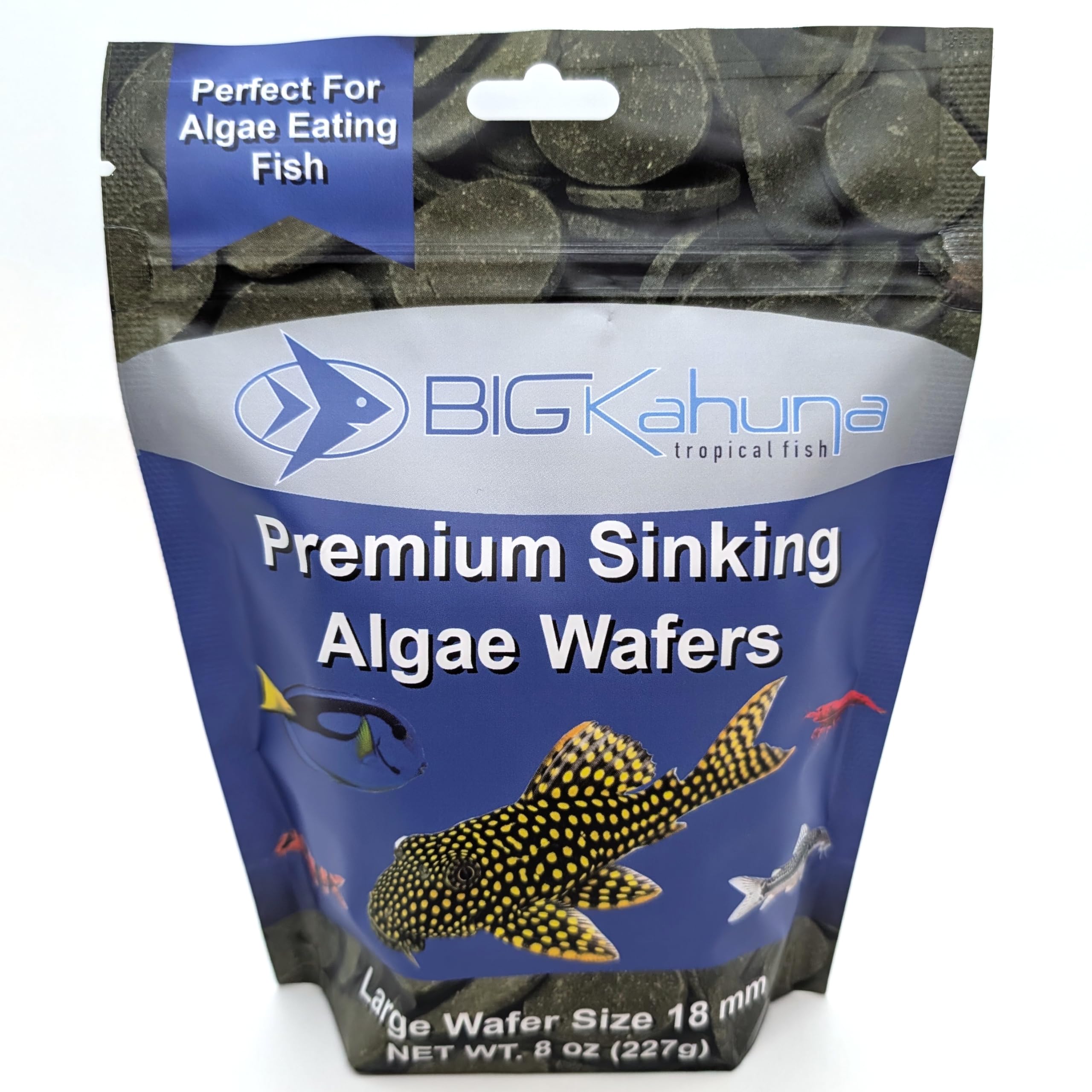
Big Kahuna Algae Wafers – Best for Large Plecos
Key Features
- Container: Resealable package
- Net weight: 8 oz
- Key ingredient: Spirulina
- Wafer diameter: 18 mm
- Price: Midrange
Eighteen millimeters across is not a wafer so much as a plate. For a full-grown pleco or a mystery snail, that is exactly the point: one disc is a meal that takes real time to work through, rather than a crumb that disappears before the fish finds it.
The spirulina base and the firm disc suit big grazers, and the 8-ounce resealable package keeps them fresh between feedings. Counting is easy too — one disc per large fish, dropped in after lights out, is simple to keep track of when the aim is not to overfeed. We like how little of it ends up in the gravel.
What we appreciate most is the fit for a specific job. In a tank with one big pleco, a wafer sized for smaller fish gets inhaled or lost among the stones; this one stays where it lands and gets worked on for a while. It is a narrow brief, and nothing else in this group fills it as well.
Pros
- One disc makes a full meal for an adult pleco
- Large discs are easy to count and easy to find
- Resealable package keeps the bag fresh
Cons
- Too large for small community fish
For an adult pleco, one 18 mm disc is a full meal that stays put — nothing else here suits a big grazer as well.
Aqueon Algae Rounds – Best for Budget Tanks

Key Features
- Form: Sinking round
- Net weight: 3 oz
- Key ingredients: Spirulina, kelp
- Price: Budget
A sinking food that does not always sink is a problem, and these rounds can float. Some drop straight to the substrate; others sit at the surface until they waterlog, which is no use to the pleco waiting below. We would not tip a whole scoop in blind — float a single round first and see where it ends up before you make it part of the routine.
What is on the label is sensible: spirulina and kelp in a round meant to dissolve slowly, with no clouding when it is fed as directed. Catfish and snails go at them, the 3-ounce bag is easy to portion, and the rounds are simple to break for smaller fish.
Value is the reason to keep these in the conversation. They sit among the least expensive foods in this group, and for a tank of snails and corydoras that clear a round quickly, that is a fair trade. If your bottom feeders are slow to find food, spend more on a wafer that goes down on contact.
Pros
- Among the least expensive foods here
- Spirulina and kelp base rounds
- Catfish and snails take to it
Cons
- Breaks down into small particles quickly
A fair-value round for tanks of quick eaters, though some float instead of sinking, so test one before you feed a scoop.
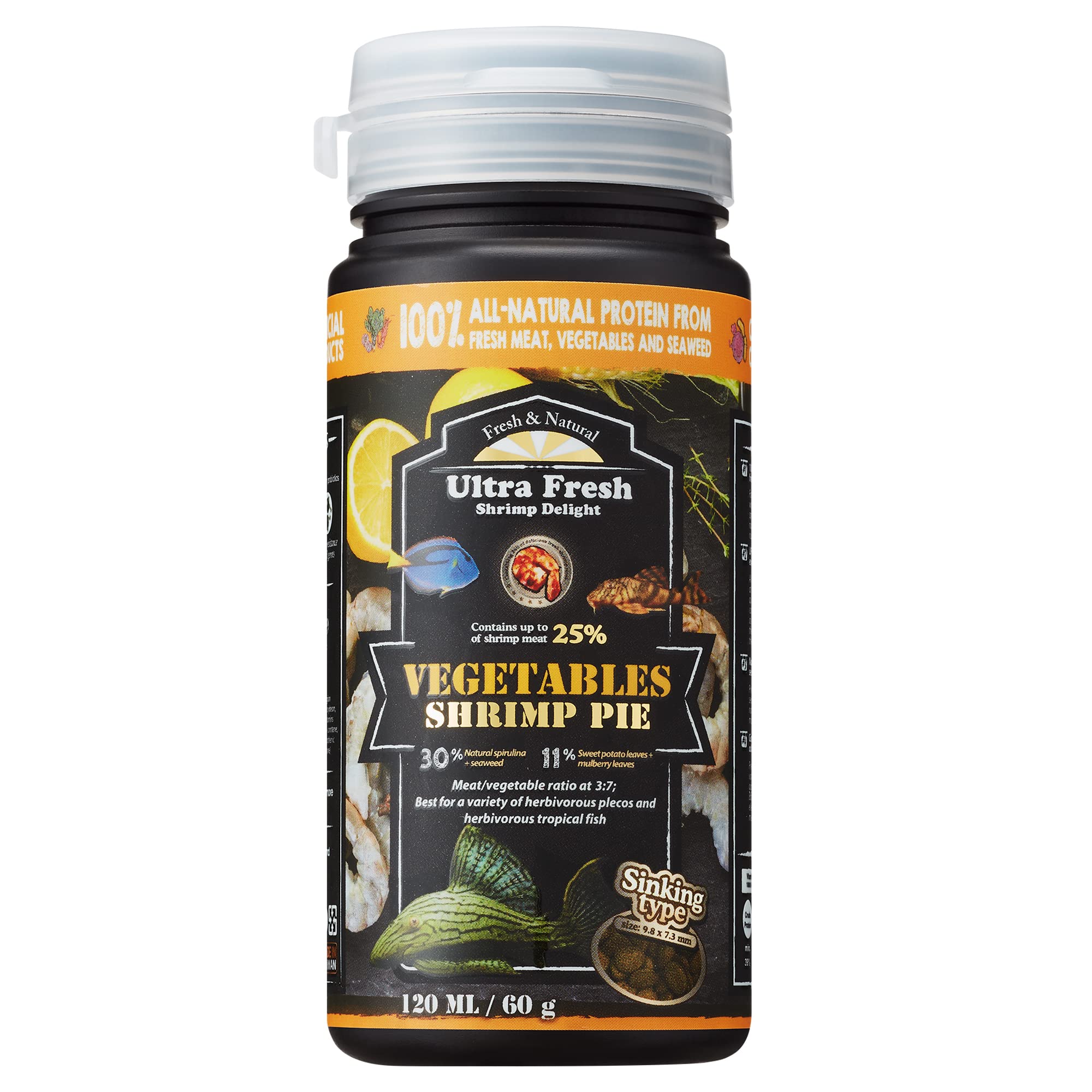
Ultra Fresh Algae Wafers – Best for Natural Diets
Key Features
- Form: Sinking wafer
- Net weight: 2.12 oz
- Probiotics: 3 million CFUs/g
- Key ingredients: Spirulina, seaweed, mulberry leaves
- Price: Budget
The ingredient list here is longer and more specific than anything else in the group: spirulina, seaweed, sweet potato leaves, mulberry leaves, sword prawns, and garlic, plus a stated three million CFUs per gram of probiotics. If you choose fish food by reading the back of the container, this is the one that rewards the habit.
It sinks quickly, which is the practical half of the promise, and the wafers soften fast enough for algae eaters to get through them. The color-enhancement angle, built on natural seaweed and spirulina, is the sort of claim you judge over months rather than days, and we treat it as a bonus rather than the reason to buy.
The bottle is well thought out, with a screw top and a small scoop that make it easy to feed a set amount instead of shaking out whatever comes. Where it lands depends on your fish: it suits corydoras, loaches, and shrimp far better than a pleco that wants something solid to rasp on for an hour.
Pros
- Sinks quickly to the substrate
- Unusually detailed, named ingredient list
- Bottle and scoop make portioning easy
Cons
- Wafers are small and break apart easily
Buy it for the ingredient panel — named algae sources and probiotics — and feed it to small bottom feeders, not a big pleco.
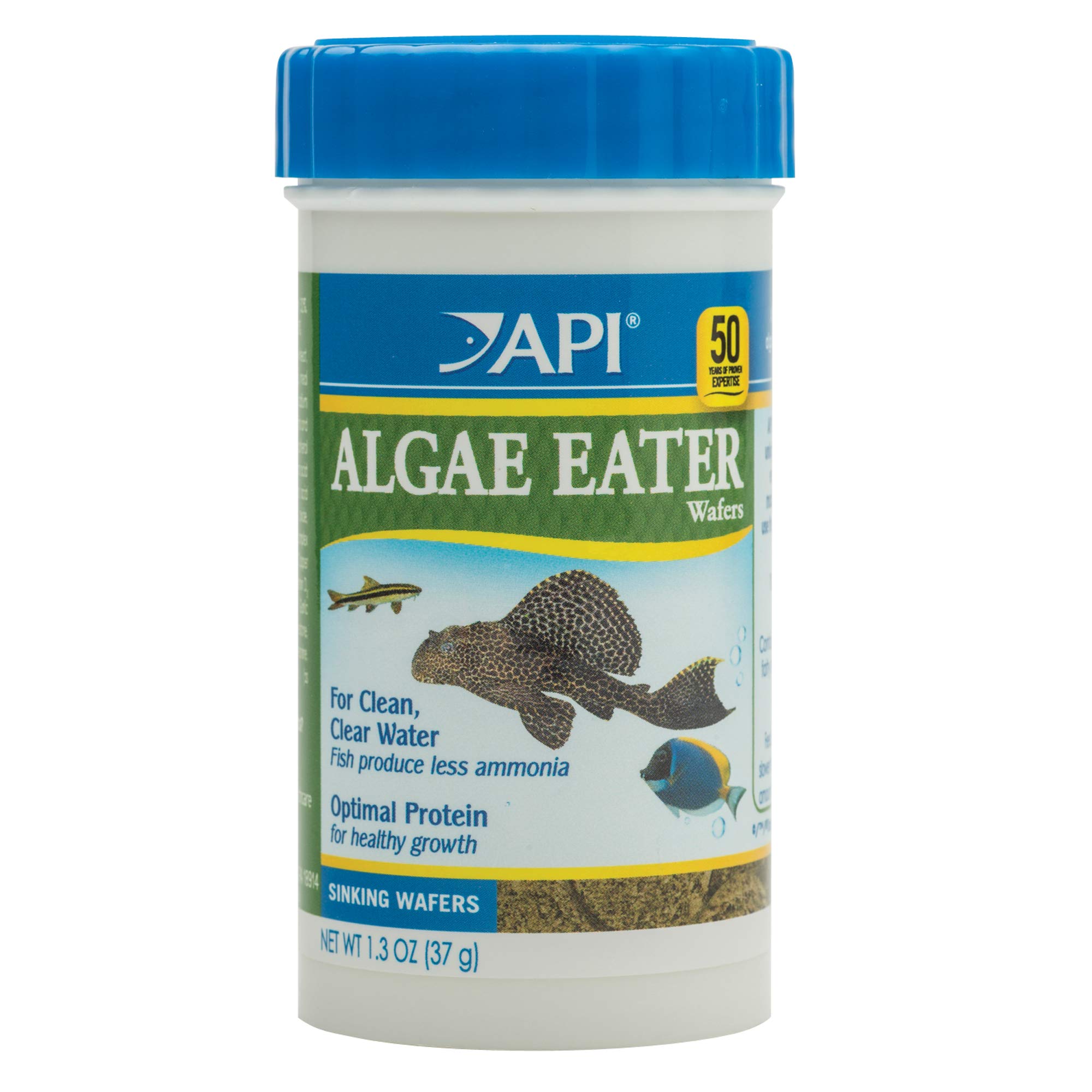
API Algae Eater Wafers – Best for Small Tanks
Key Features
- Form: Algae wafer
- Net weight: 1.3 oz
- Key ingredients: Algae, omega-3 fatty acids, alfalfa
The 1.3-ounce bottle is the smallest container in this group, and for one tank with a couple of corydoras that is the right amount of food to have open. API builds these on algae with omega-3 fatty acids and alfalfa, and the feeding instruction — up to twice a day, only what the fish clear in two hours — is the most specific guidance on any label here.
They sink on contact, and plecos, corydoras, and snails go straight at them. The algae-and-omega base makes it a reasonable everyday food rather than a treat, and the wafer is easy to split for a small tank.
The small bottle is the trade-off, and it is the right one for a single nano or a modest community. A fish room would empty it in a fortnight; a beginner with one tank gets a food that stores easily, does not go stale, and is simple to dose.
Pros
- Clear, specific feeding guidance on the label
- Plecos and algae eaters take to it readily
- Small bottle stays fresh in one-tank setups
Cons
- Wafers soften quickly once they hit the water
A tidy small bottle for one modest tank, with the clearest feeding guidance here and a wafer plecos go to readily.
How We Chose and Tested Algae Wafers
We built the shortlist by scanning more than 40 algae wafer formulas sold online and in local fish stores, then filtering by ingredient labels (algae source and position on the list), pellet size, price per ounce, and whether the manufacturer published a feeding guide. From that pool, we bought 16 formulas and ran them through four months of regular feedings.
Testing happened in real tanks, not on a lab bench. In a 55-gallon community tank with bristlenose plecos, corydoras, and nerite snails, we dropped one wafer per tank after lights-out and checked again at two, six, and twelve hours. A separate 20-gallon shrimp and snail tank let us see whether small mouths could actually nibble a wafer or whether it was too large. We also ran a small quarantine tank with glass-grazing fish to watch how quickly each wafer sank and whether it got pulled into the filter intake before anyone reached it.
At each feeding, we noted which wafers were ignored, which were swarmed, and how much remained after 12 hours. We recorded whether a wafer held its shape or crumbled into dust, whether the water turned cloudy, and how much residue settled on the substrate. Ingredient labels were checked for actual algae content—not just algae in the name—and we calculated cost per feeding based on how much of each wafer the fish actually ate. The formulas that scored best were the ones that sank reliably, stayed intact long enough to be eaten, and left the filter and water clear.
How to Choose an Algae Wafer
The best algae wafer is the one your bottom feeders actually finish — size, ingredients, and water stability only matter after that.
Size the wafer to the fish, not the tank
An 18-millimeter disc is a meal for an adult pleco and far too much for a shrimp colony; a mini disc is right for invertebrates and gone in a single bite from a big pleco. Match the format to the smallest mouth you are feeding, then break larger wafers for the rest of the tank. Crumbs scatter and a few go uneaten, which is still better than dropping in food nobody can finish before it starts fouling the gravel.
Sinking is a claim, not a guarantee
Sinking wafers sometimes float. Drop one into a glass of tank water before you commit a whole feeding. A wafer still bobbing at the surface after a minute or two will not reach a pleco, and any surface-feeding fish will intercept it on the way. If yours do float, they usually waterlog eventually, but by then the bottom feeders have given up. This one check tells you more about whether a wafer suits your tank than anything on the label.
Water stability decides how clean the tank stays
A wafer should soften gradually while fish work at it, not dissolve into a cloud the moment it lands. Food that breaks down in minutes feeds the filter, dirties the substrate, and pushes nitrate up fastest in a small tank. Feed only what gets cleared within a few hours and net out whatever is left. With wafers, the right amount is almost always less than the first instinct suggests.
Read the ingredient panel for the fish you keep
Algae, spirulina, and kelp are the base an herbivore needs; fish meal, krill, and shrimp add protein for omnivores and breeding colonies. Vegetable fiber matters for plecos that graze wood, and a stated protein figure — 30 percent on the Invert Aquatics discs — is more useful than a line about color. Between two wafers, the one that names its algae source and its protein level is the easier one to feed with confidence.
Container size and freshness
A pound of wafer makes sense across three tanks and is a slow experiment in a single nano. Match the container to what your fish eat in a few months, pick resealable packaging, and store it dry and cool. The largest format here, the Brine Shrimp Direct tub, is a fish-room purchase; the smallest, API’s bottle, suits one modest setup and no more.
Frequently Asked Questions
Can I feed algae wafers to goldfish or bettas?
Goldfish are omnivores and will eat a wafer, but it should not be their staple — most of the diet still needs to be a complete goldfish food. Bettas are insect eaters and usually ignore wafers entirely, so one dropped into a betta tank mostly fouls the water.
Only feed wafers where bottom feeders will clear them within a few hours.
My pleco ignores algae wafers. What should I try?
Feed after lights out. Plecos are largely nocturnal, and a wafer dropped in at night near driftwood or a cave gets found far more reliably than one landing in a bright tank at midday. Net out whatever is left a few hours later.
If three nights in a row go untouched, switch wafers — size, hardness, and algae base vary enough between brands that one usually clicks.
Do algae wafers replace fresh vegetables?
A good wafer covers the base diet, but fresh zucchini, cucumber, or spinach adds water and variety a dry food cannot, and plecos enjoy working at it. Blanch the vegetable, weight it down, and remove what is left within a day.
Wafers most days plus vegetables once or twice a week is a sensible rotation for a growing pleco.
Final Verdict
Hikari Algae Wafers are what we point most people to: they sink, hold together while plecos and snails work at them, and leave the water clear, which is the whole job. The bag is large and it costs more up front than the budget tubs, but for a community tank with bottom feeders it is the least fussy choice here.
If your tank belongs to shrimp and snails, the Invert Aquatics mini discs are the better format. If you run several tanks, buy the Brine Shrimp Direct pound and stop thinking about it.