This post contains affiliate links. We may earn a small commission when you buy through our links — at no extra cost to you.
Every algae wafer brand promises crystal-clear water and fast sinking. Yet the most common complaints from aquarium keepers are floating wafers and cloudy tanks after feeding. The gap between marketing and real-world performance is wider than most hobbyists expect.
This guide focuses on three hard performance metrics: immediate sinking, water clarity after a feeding cycle, and wafer durability. We’ve separated the brands that deliver from those that leave you with a mess and unhappy bottom feeders.
The right wafer isn’t about the most spirulina or the prettiest packaging. It’s about a consistent eating experience for your fish and a clean tank for you.
Top Picks
Best for Bottom Feeders
Hikari Algae Wafer 8.8oz

Rating: 4.8 ★ | Price: $$ | Sinking: Immediate, holds shape | Ingredient Quality: Spirulina, vitamin C | Cost per Ounce: Mid
Hikari’s wafer sinks within seconds and keeps its disc shape for hours — no crumbling, no floating debris. Even after sitting for hours, it remains intact, so you won’t see a cloud of particulates drifting through the water column. Unlike many alternatives that turn to mush and foul the water, these discs hold together, giving bottom dwellers a chance to graze at their own pace.
The ingredient list centers on pure cultured spirulina with stabilized vitamin C, and the aroma reliably lures out plecos, cory cats, snails, and shrimp. The high-quality spirulina base means picky eaters rarely refuse it, and the stabilized vitamin C supports health over months of daily feeding. Over time, the large bag’s cost per ounce is substantially lower than buying repeated mini packs, so keepers feeding multiple fish quickly recoup the upfront expense.
The bag’s resealable closure can be finicky — it sometimes tears rather than peels open. A quick workaround is to snip off the top and use a bag clip or rubber band. This size suits full-grown plecos, medium catfish, and community tanks, but if you run a nano cube with tiny shrimp, the wafers are too large; the mini wafer version fits those setups better.
Pros
- Sinks fast, stays intact, and won’t cloud the water
- High-quality spirulina formula that bottom feeders eagerly accept
- Excellent per-ounce value compared to mini wafers
Cons
- The resealable strip can be tricky to open and close
For daily bottom-feeder feeding in medium-to-large tanks, the Hikari 8.8oz bag combines clean water, eager eating, and low ongoing cost. Nano tank owners should look at the mini version.
Best for Community Tanks
Tetra TetraVeggie Algae Wafers 6oz
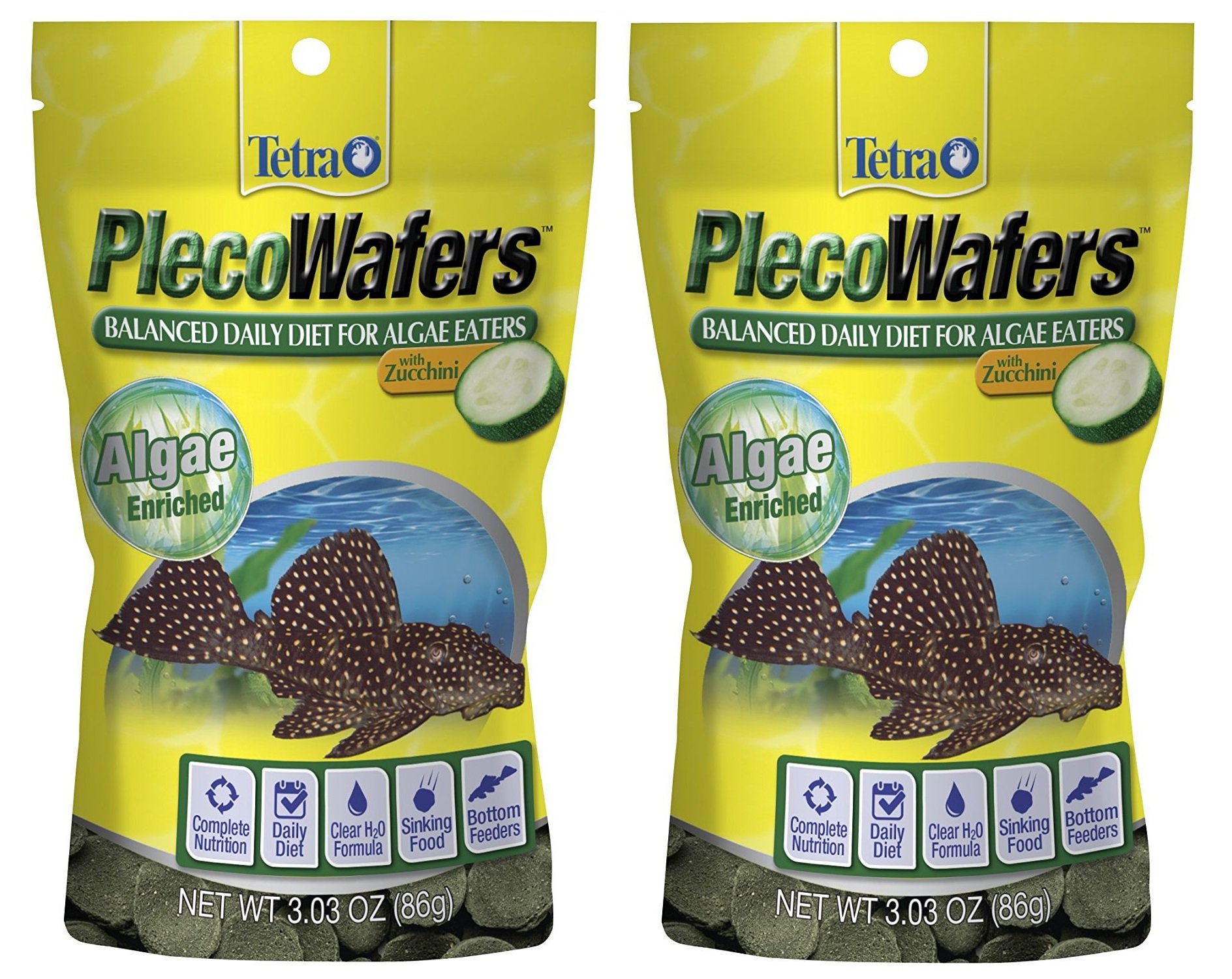
Rating: 4.8 ★ | Price: $$ | Sinking: Standard sinking | Ingredient Quality: Zucchini | Cost per Ounce: Mid
TetraVeggie Algae Wafers deliver consistently positive feedback with no major complaints reported — a strong sign of reliable everyday performance. The 6-ounce multi-pack (two 3 oz bags) offers good value compared to local pet store pricing. Against the top pick, the smaller user base (about one-tenth the review volume) makes long-term consistency less established. This is a solid choice for keepers who already trust Tetra’s formulations or want a cost-effective option for community bottom feeders like plecos and catfish, provided they aren’t concerned about the less proven track record over many months of daily use.
Pros
- High fish acceptance — bottom feeders readily take these sinking wafers.
- Competitive per-ounce cost compared to local pet store alternatives.
- Two separate 3 oz bags help maintain freshness.
Cons
- Long-term consistency is less established due to a smaller feedback pool relative to the top pick.
A dependable everyday wafer for Tetra fans and budget-driven keepers; for larger collections where long-term reliability matters most, the top pick offers greater confidence.
Best for Small Tanks
Ultra Fresh Algae Wafers 2.12oz
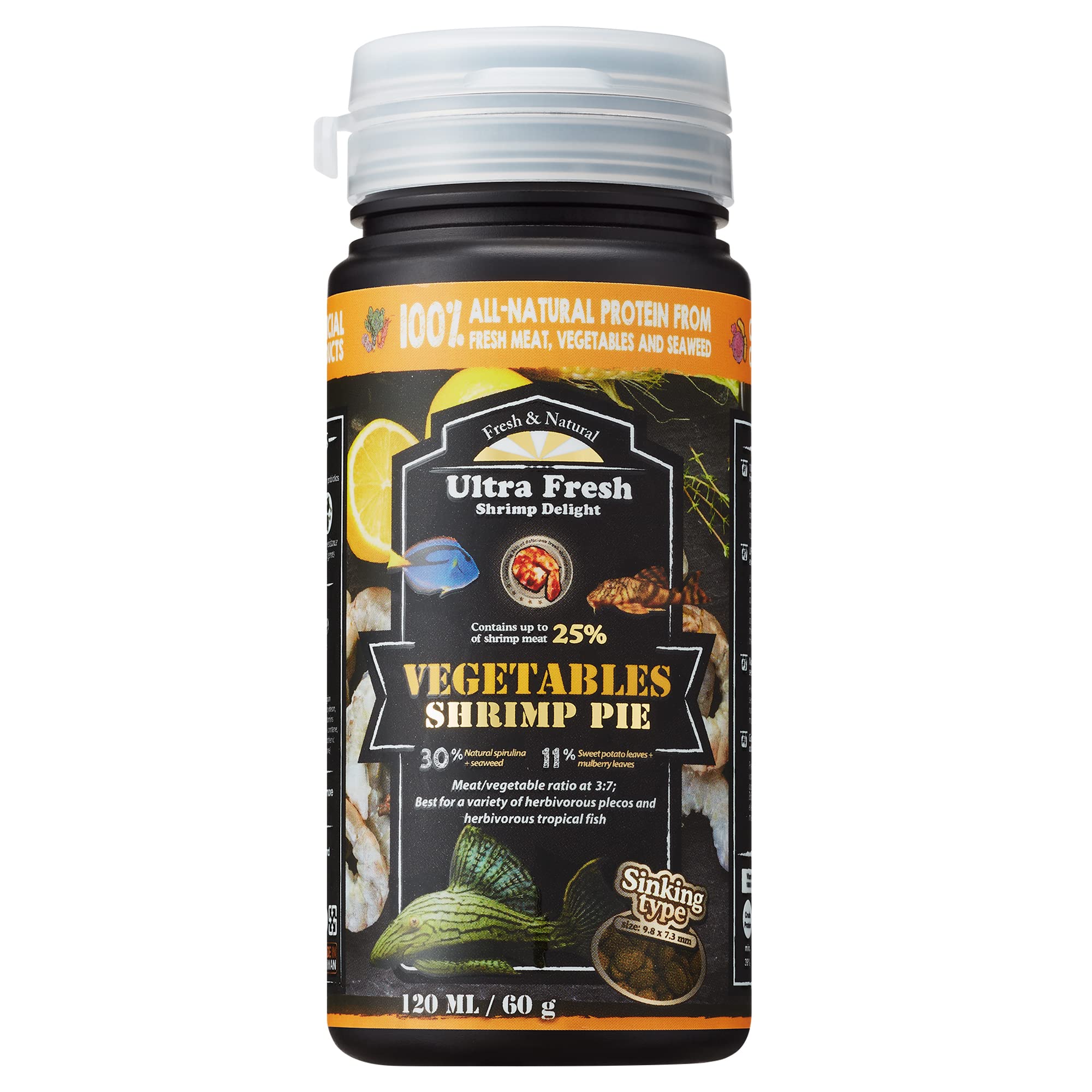
Rating: 4.7 ★ | Price: $$$ | Sinking: Good, sinks fast | Ingredient Quality: Spirulina, sword prawns | Cost per Ounce: High
Ultra Fresh Algae Wafers stand apart with a clean ingredient list featuring spirulina, sword prawns, garlic, and probiotics. Unlike the top pick Hikari, which focuses on reliable sinking and water clarity, Ultra Fresh prioritizes natural components and strong fish appeal — making it a go-to for picky eaters in small tanks.
This formulation works best in tanks under 20 gallons with picky plecos, shrimp, or snails, where the smaller wafer size and higher per-ounce cost are less of a concern. Keepers with large plecos or heavy feeding loads will find the bag runs out quickly and the price adds up, so it’s best reserved for nano setups or as a supplement.
Pros
- Natural ingredient list with no artificial additives.
- Strong attraction even for picky bottom feeders.
- Sinks rapidly without clouding water.
Cons
- Wafer diameter may be too small for large plecos, requiring multiple wafers per feeding.
Best suited for health-focused hobbyists with nano tanks who want a natural, probiotic-enhanced wafer their picky fish will accept.
Best for Nano & Shrimp
Hikari Mini Algae Wafers 0.77oz

Rating: 4.7 ★ | Price: $$$ | Sinking: Immediate sinking | Ingredient Quality: Spirulina | Cost per Ounce: High
Hikari Mini Algae Wafers are designed for small tanks: they sink immediately, hold shape without clouding, and shrimp, snails, and small plecos accept them readily. Compared to standard Hikari wafers, the mini size avoids the waste of breaking larger wafers — but the smaller package carries a higher cost per ounce.
These wafers suit nano tanks, shrimp-only setups, and breeding tanks where portion control matters. The premium per-ounce price is a tradeoff worth making when reduced waste and water quality are priorities — not an economical choice for larger pleco tanks.
Pros
- Perfect size for nano tanks, shrimp, and small plecos
- High quality and fish attraction
- Sinks immediately and holds shape well
Cons
- Cost per ounce is higher than standard wafers — only practical for small or nano setups
For nano tanks and shrimp setups, the convenient size and water clarity justify the premium — skip these for larger pleco tanks.
Best for Health-Focused
Northfin Kelp Wafers 250g
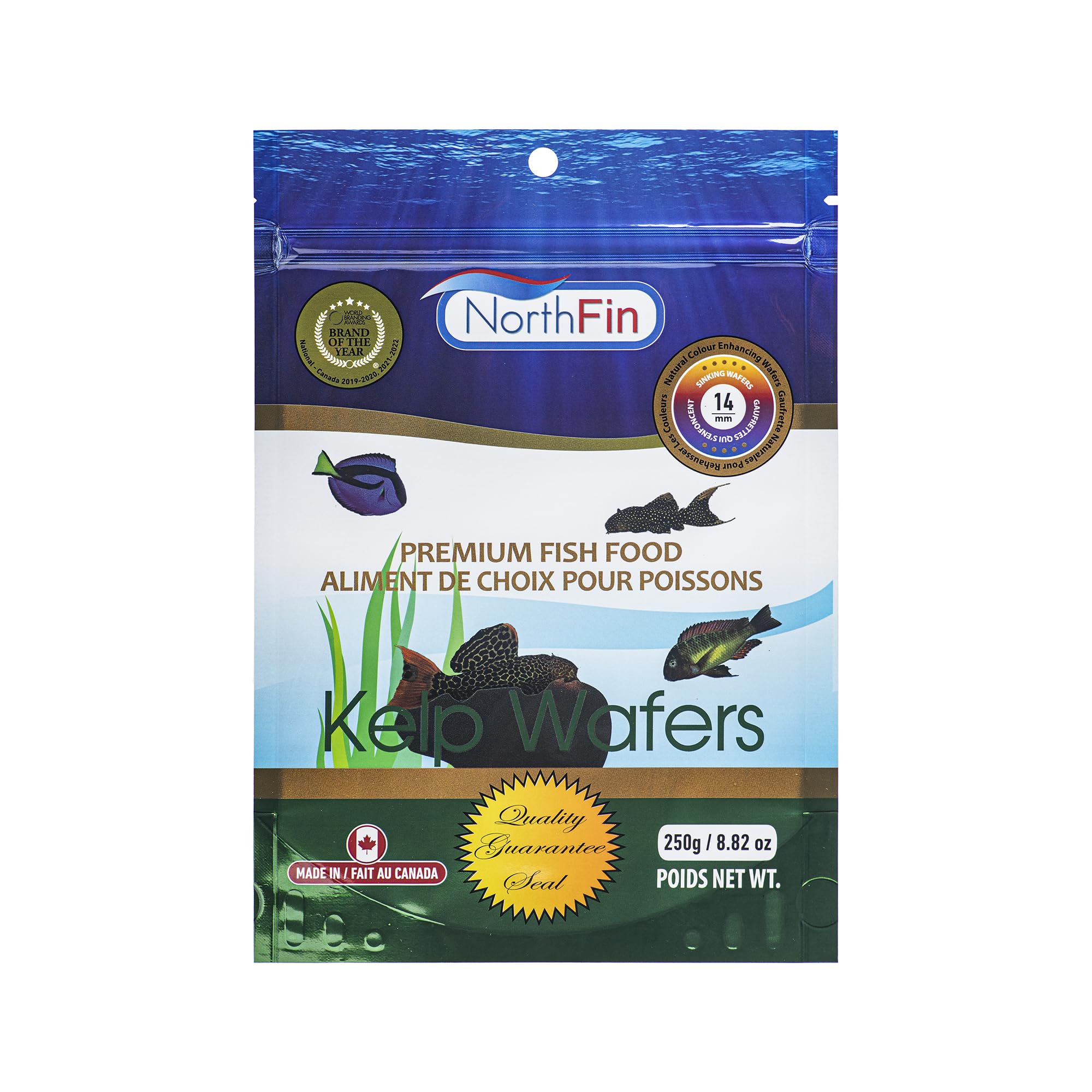
Rating: 4.6 ★ | Price: $$ | Sinking: May crumble, sinks | Ingredient Quality: Organic kelp, krill | Cost per Ounce: Mid
Northfin Kelp Wafers list organic kelp as the first ingredient, backed by Antarctic krill meal and spirulina — a transparent ingredient profile that appeals to health-focused keepers. Unlike the top pick’s standard formula, these wafers prioritize ingredient quality but come with tradeoffs: the wafers can crumble during handling, and some fish simply refuse them. Best suited for hobbyists whose plecos already accept kelp-based foods and who value ingredient sourcing over universal palatability.
Pros
- First ingredient is organic kelp, with Antarctic krill meal and spirulina for a nutrient-dense diet.
- High digestibility supports fish health and reduces waste output.
Cons
- Wafers can crumble during handling, creating debris that may cloud water.
- Some fish may ignore the wafers, limiting their use to tanks with proven kelp acceptance.
If your fish readily take kelp-based foods and you prioritize clean ingredient sourcing, these wafers deliver — just be prepared for possible crumbling.
Best for Large Tanks
Tetra PRO PlecoWafers 5.29oz

Rating: 4.6 ★ | Price: $$ | Sinking: Inconsistent, some float | Ingredient Quality: Algae center | Cost per Ounce: Mid
This bulk wafer delivers strong appeal for plecos, snails, and corys at a mid-range price. The large bag suits tanks with many bottom feeders. However, water clouding can occur if portions aren’t consumed quickly — making it a better fit for keepers who prioritize fish acceptance over pristine clarity.
Pros
- Highly attractive to algae-eating bottom feeders like plecos, snails, and corys.
- Large 5.29 oz bag offers solid value for keepers with multiple hungry fish.
Cons
- Some wafers may float instead of sinking immediately, requiring manual pushing.
Best for large pleco communities where fish acceptance and bulk quantity matter more than perfect water clarity.
Best for Community Tanks
Aquatic Foods 4-Type Wafer Mix 11oz

Rating: 4.6 ★ | Price: $$ | Sinking: Sinks well | Ingredient Quality: Spirulina, worm, shrimp | Cost per Ounce: Mid
This mix combines spirulina, worm, shrimp, and color-enhancing wafers in a single 11 oz jar, offering variety for community tanks with multiple bottom feeder species. Water clarity holds well during feeding. The tradeoff: picky eaters may ignore certain wafer types, reducing the benefit of variety in tanks where all fish must accept every option.
Pros
- Good quality with multiple wafer types for variety
- Keeps water clean during feeding
Cons
- In community tanks with picky fish, some wafer types may go uneaten
Best suited for community tanks where bottom feeders vary their preferences, but less ideal for tanks with a single finicky species.
Best for Snail & Shrimp
Invert Aquatics Mini Algae Discs 1.5oz

Rating: 4.6 ★ | Price: $ | Sinking: Sinks, disintegrates | Ingredient Quality: Spirulina, fish meal | Cost per Ounce: Low
These mini discs attract snails and shrimp quickly at a low price. The tradeoff is that they disintegrate fast and can cloud the water, so they work best when bottom feeders clean them up within a couple of hours.
Pros
- Snails and shrimp swarm these discs within minutes – high palatability for bottom feeders.
- Budget-friendly price for a 1.5 oz bag, especially for dedicated snail or shrimp tanks.
Cons
Best for keepers with snail or shrimp armies that feed quickly.
Best for Snail & Shrimp
GOOD PARTNER Algae Wafers 2.82oz

Rating: 4.5 ★ | Price: $$$ | Sinking: Sinking tablet | Ingredient Quality: Spirulina, probiotics | Cost per Ounce: High
This probiotic-enhanced sinking wafer uses natural ingredients including spirulina and Bacillus subtilis to support digestive health, and fish and snails readily accept it. However, the discs come smaller than standard wafers, and its specialized probiotic focus makes it a niche choice best suited for small tanks and shrimp setups where portion size matches the inhabitants.
Pros
- Fish and snails show clear preference for these wafers.
- Probiotic blend (Bacillus subtilis) supports digestive health.
Cons
- Discs are smaller than standard wafers – may not satisfy larger fish or heavy feeders.
Best for small tanks with snails, shrimp, or light feeders where the probiotic benefits and smaller portions align.
Best for Nano Tanks
Aquatic Foods 12mm Wafer Mix 4.9oz
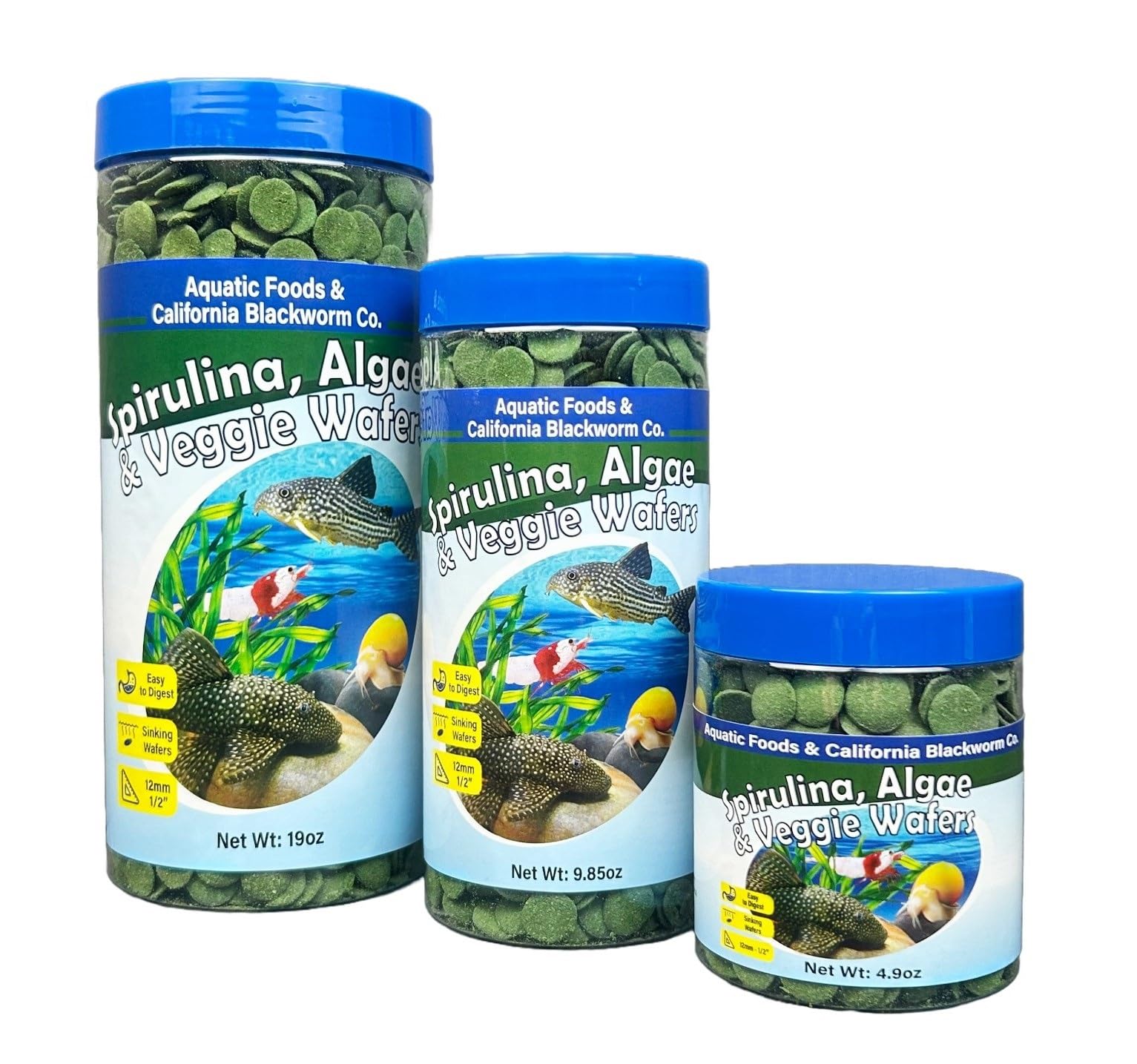
Rating: 4.6 ★ | Price: $$ | Sinking: Sinks | Ingredient Quality: Spirulina, algae, veggies | Cost per Ounce: Mid
This mix of sinking wafers and pellets appeals well to snails and shrimp, offering good value for the variety. However, long-term consistency across batches hasn’t been established, making it better suited for early adopters or those wanting to trial the brand rather than rely on it as a sole daily food.
Pros
- Snails and shrimp show strong preference for the varied mix.
- Good value for a variety pack covering multiple food forms.
Cons
- Batch-to-batch consistency may vary, making it a choice for sampling rather than committed long-term feeding.
This mix works well for shrimp and snail keepers wanting a variety, but only if you’re comfortable trying a newer brand with limited long-term feedback.
How to Choose
The single most important factor in choosing an algae wafer is how it behaves in your tank—not what the label promises.
Sinking Reliability
Wafers that float instead of sinking immediately frustrate bottom feeders and can foul the water surface. The issue often stems from air trapped during manufacturing or a recipe that’s too buoyant.
Look for wafers that drop straight to the bottom within a few seconds. Hikari’s standard and mini wafers are the most consistent in this regard, while some budget brands require a push or leave half the wafer floating.
Water Clarity
Cloudy water after feeding is the top complaint across all algae wafer brands. The cause is usually uneaten particles breaking down too quickly or ingredients that dissolve rapidly.
Even brands that claim ‘clear water’ can fail if you overfeed. The safest bet is a slow-dissolving wafer that maintains its shape for several hours, giving fish time to eat without creating a silt blanket.
Wafer Size and Durability
Large wafers work for big plecos but may go uneaten in small tanks, rotting and fouling the bottom. Mini wafers solve that but cost more per ounce.
Durability matters: a wafer that crumbles within an hour creates mess and waste. A well-formed wafer should hold its shape for at least 4-6 hours, allowing shrimp and snails to graze gradually.
Ingredient Quality
Spirulina and kelp are the gold-standard base ingredients for algae wafers. Avoid fillers like wheat flour or soy that add little nutritional value and increase clouding risk.
Natural additives such as garlic or probiotics can boost palatability and digestion, but the primary diet should come from whole algae sources. Higher protein content (30%+) is better for shrimp and growing plecos.
Price per Ounce
Per-ounce cost varies widely: from under $0.50 for bulk bags of Hikari to over $8 for mini wafers. For a single large pleco, a $12 bag of standard Hikari lasts months; mini wafers are only economical for nano tanks.
Calculate your daily feeding amount: a 5-inch pleco eats about half a wafer per day. A 1.3-ounce trial bag will last only a week, while an 8.8-ounce bag lasts over a month. Bulk buying saves money but requires good storage to keep wafers fresh.
FAQ
Why do my algae wafers float instead of sinking?
Air pockets trapped inside during manufacturing or a recipe that’s too light cause floating. Hikari’s wafers are compressed to sink immediately, while Tetra PRO and some budget brands often have inconsistent sinking. If your wafers float, try pushing them under with a skewer or switching to a denser brand.
Do algae wafers really not cloud the water?
Rarely, in practice. The most common negative review topic across all brands is water clouding. Even wafers that claim ‘clear water’ can cloud if overfed or if they break down too fast. The best performers are slow-dissolving wafers like Hikari standard that hold shape and don’t release fine particles.
How often should I feed algae wafers to plecos?
Once per day is enough for adult plecos. Drop one wafer per two fish an hour before lights out so they can scavenge overnight. Remove any uneaten wafer after 12 hours to prevent ammonia spikes. Young plecos may need a half-wafer twice daily.
Are mini algae wafers worth the higher price per ounce?
Only for nano tanks and shrimp colonies. In a 10-gallon tank, a full-size wafer often goes uneaten and rots. Mini wafers reduce waste and make feeding precise. For larger tanks, standard wafers are far more economical—the mini’s per-ounce cost can be 5x higher.