This post contains affiliate links. We may earn a small commission when you buy through our links — at no extra cost to you.
Freeze-dried fish food offers a shelf-stable, protein-rich treat, but it’s not one-size-fits-all. Too many aquarists open a jar to find dusty fragments, pieces that dwarf their fish’s mouth, or a food their fish simply refuses. These frustrations waste money and leave tanks underfed.
The root cause is often a mismatch between the food’s size and your fish’s mouth, or a product that crumbles during shipping. High protein is great, but only if the fish can actually eat it. The best freeze-dried foods balance size, texture, and palatability to avoid waste and water fouling.
This guide focuses on those practical differences. Instead of listing specs in a vacuum, it highlights real-world acceptance rates and common pitfalls like dust and water clouding. You’ll know which products deliver whole pieces that fish actually eat, and which ones are better left on the shelf.
Top Picks
Best for Community Tanks
Tetra BloodWorms 0.25 oz

Rating: 4.5 ★ | Price: $ | Piece Size: Medium | Palatability: Very good | Clouding / Dust: Low | Container Design: Bottle with safety lid
Tetra BloodWorms are freeze-dried bloodworms that are widely accepted by community fish, making them a convenient treat option. At a budget-friendly price, they offer a cost-effective way to add variety to staple diets without breaking the bank.
Best for community tanks with medium to large fish that can handle the worm size; these bloodworms are too large for nano species like guppies. This product works as a supplement rather than a primary food, and some fish may refuse them.
Pros
- Widely accepted by community fish
- Budget-friendly alternative to live foods
- Suitable for both freshwater and saltwater tanks
Cons
- Container cap can be stiff and difficult to open
- Some fish may ignore these bloodworms — best as a supplement
For keepers seeking a proven, affordable bloodworm treat for medium to large community fish, this is a straightforward choice.
Best for Protein-Rich Treat
Hikari Bio-Pure Bloodworms

Rating: 4.6 ★ | Price: $$ | Piece Size: Medium | Palatability: Excellent | Clouding / Dust: Low | Container Design: Ratcheting top
Hikari’s freeze-dried bloodworms deliver the highest protein content among bloodworm treats at 65%, supporting active growth and conditioning. The racheting dispenser makes portion control simple and reduces mess. While the top pick offers broader acceptance at a lower price, Hikari’s higher protein and convenient packaging appeal to hobbyists who prioritize nutrition and ease of use. For tanks with very small inhabitants, the worm pieces may be too large – these work best with bettas, community fish, and larger species. Some individual fish may refuse them, so it’s worth testing with your specific fish before committing to a larger container.
Pros
- 65% crude protein supports faster growth and conditioning
- Ratcheting dispenser top controls portions and cuts mess
- Cost-effective per serving for a premium freeze-dried treat
Cons
- Worm pieces can be too large for nano fish or fry – may require crushing
- Some fish may not accept them, so acceptance varies by species
A strong choice for bettas and community fish when high protein matters more than the lowest price. Test with your fish first to confirm acceptance.
Best for Large Cichlids Turtles
Tetra JumboKrill

Rating: 4.7 ★ | Price: $$$ | Piece Size: Large | Palatability: Good | Clouding / Dust: Some dust | Container Design: Vacuum-sealed canister
Tetra JumboKrill delivers whole freeze-dried shrimp sized for oscars, large cichlids, and turtles — a clear step up from the finer bloodworms of the top pick. The high astaxanthin content supports color vibrancy and the fibrous shells provide digestive roughage. This canister suits owners of fish 4 inches and larger who prioritize color and natural feeding behavior. While fine sediment collects at the bottom and some fish may refuse it, for the right fish this krill offers a feeding experience no pellet can match.
Pros
- Whole shrimp pieces encourage natural foraging behavior for large fish.
- Color enhancement from natural astaxanthin plus digestive fiber from shrimp shells.
- Large 14 oz canister offers good value for dedicated hobbyists.
Cons
- Some fish may refuse this krill; palatability can vary between individuals.
For large fish keepers who want whole shrimp and natural color enhancement, this is the largest freeze-dried krill available — but fish acceptance varies.
Best for Betta Digestion
Hikari Bio-Pure Daphnia
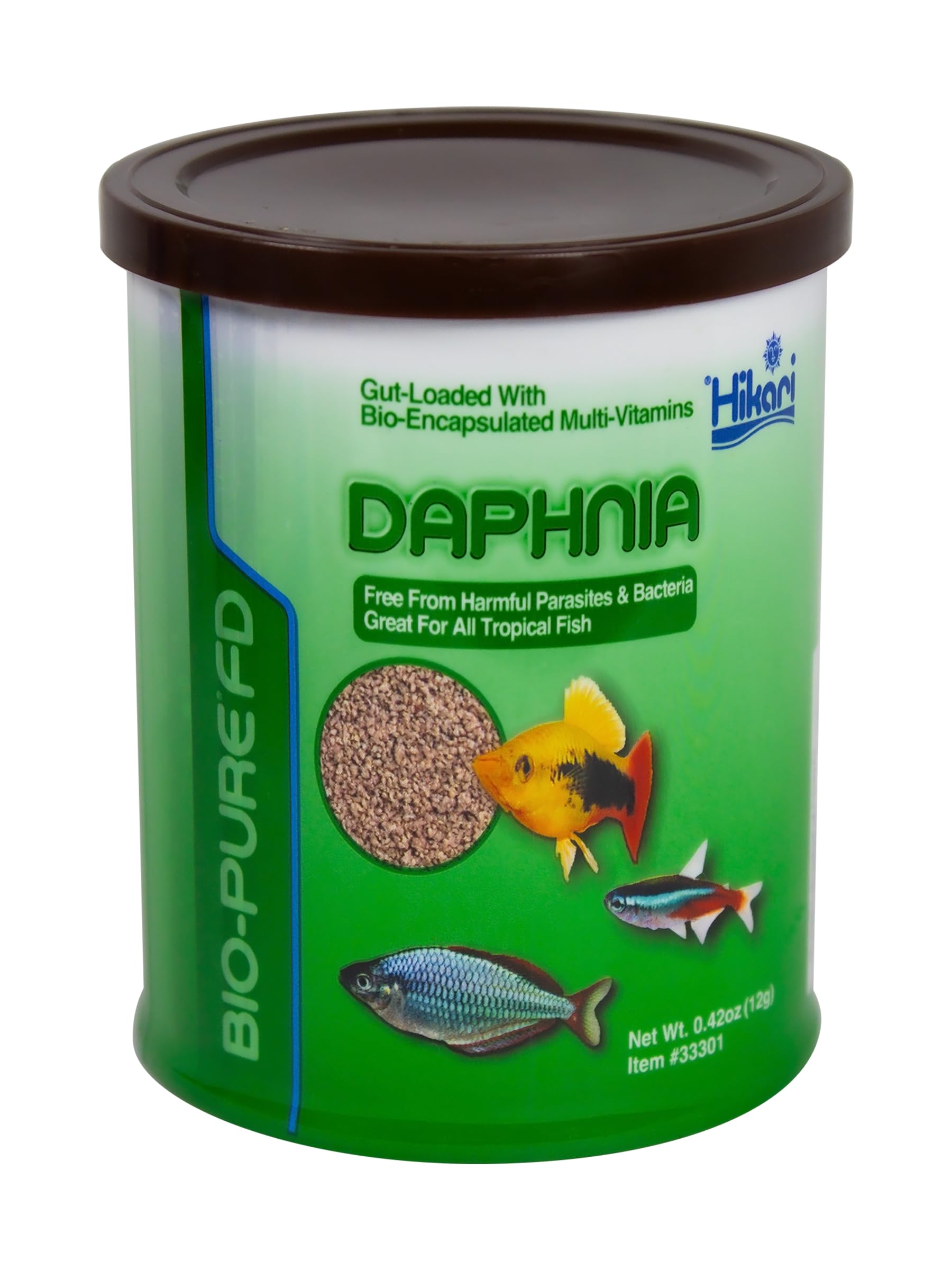
Rating: 4.6 ★ | Price: $$ | Piece Size: Small | Palatability: Excellent | Clouding / Dust: High (powdery) | Container Design: Pouch with ratcheting top
Unlike general treats, this freeze-dried daphnia functions as a targeted digestion aid. The high-fiber crustaceans work quickly to relieve betta constipation, and the same roughage supports fin repair. Even notoriously picky fish take it without hesitation, making it a go-to when appetite lags.
It suits betta owners treating digestive sluggishness or promoting fin recovery, but the fluffy, powdery texture means overfeeding clouds water fast. The particles float, so bottom feeders will miss the meal—this is not a community-tank staple.
Pros
- Effective natural laxative for bettas, quickly relieves constipation and aids fin regrowth.
- Picky eaters, including bettas off their food, readily accept this daphnia.
Cons
- Powdery texture can cloud tank water if more than a tiny pinch is added.
A small but efficient pouch for bettas needing gentle digestive relief, provided you feed with a light hand and accept it won’t reach the bottom.
Best for Saltwater/picky Fish
SF Bay Mysis Shrimp

Rating: 4.5 ★ | Price: $$ | Piece Size: Medium | Palatability: Excellent | Clouding / Dust: Some dust | Container Design: Jar
At 67.3% crude protein, this freeze-dried mysis shrimp tops the dataset for nutritional density – a clear advantage for finicky marine fish and freshwater species that need a protein boost. The whole shrimp pieces float on the surface, which suits fish that feed at the top but rules out bottom-dwellers. The high protein content also contributes to color enhancement in saltwater species. Best used as a supplement rather than a staple, especially for saltwater fish like clownfish or mandarins that respond well to mysis.
Pros
- Highest crude protein among freeze-dried foods at 67.3% supports growth and color.
- Widely accepted by both saltwater and freshwater fish, including picky eaters.
Cons
- A layer of dust and broken pieces can accumulate at the bottom of the jar.
- Some pieces may be too large for small fish and need crushing before feeding.
A targeted protein supplement for saltwater and picky eaters – best for owners who can manage piece size and surface feeding.
Best for Breeding & Energy
Omega One Tubifex

Rating: 4.7 ★ | Price: $$ | Piece Size: Large (cubes) | Palatability: Excellent | Clouding / Dust: Low | Container Design: Bottle
Unlike the top pick’s bloodworms, Omega One Tubifex delivers a higher fat content (9%) for energy and breeding conditioning, backed by fish that go for it reliably. The freeze-dried cubes hold up well in storage and the bottle offers good volume, but the size of the cubes suits medium to large fish best — smaller tank inhabitants will need the cubes broken apart. The freeze-drying process eliminates parasite risks associated with live tubifex, so this can be used as a regular rotation treat with confidence.
Pros
- Fish accept it readily even during stress or recovery, making it a useful appetite stimulant.
- Fat content supports energy needs for conditioning fish before breeding or after illness.
- Freeze-dried format and bottle packaging provide long shelf life without refrigeration.
Cons
- Cubes are sized for medium to large fish; smaller species may require manual breakage.
For community tanks stocked with medium to large fish, this is a go-to conditioning treat with exceptional acceptance — just plan to break cubes for smaller tankmates.
Best for Low-Dust Bloodworm
Omega One Bloodworms

Rating: 4.6 ★ | Price: $$ | Piece Size: Medium | Palatability: Excellent | Clouding / Dust: Minimal | Container Design: Bottle
Whole worms with minimal dust reduce filter clogging and keep water clear. Fish accept them readily, ideal for treat rotation. However, the container may appear only partially filled (product settles), and protein is 55% – slightly lower than some alternatives. A good option if dust is your primary concern.
Pros
- Whole worms, minimal dust – less filter clogging and clearer water.
- Highly palatable – fish generally accept it well across many species.
Cons
- Container may appear only partially filled due to product settling during shipping.
Best for fishkeepers who prioritize low-dust feeding over protein content or a fully packed container.
Best for Fry/small Fish
Omega One Brine Shrimp

Rating: 4.5 ★ | Price: $$ | Piece Size: Large (cubes) | Palatability: Very good | Clouding / Dust: High (clouds water) | Container Design: Bottle
Omega One’s freeze-dried brine shrimp delivers good value and broad palatability, but the large cubes require crushing for small fish or fry. Crushing creates dust that may cloud water if overfed, so this works best for medium to large fish or as a treat in tanks where slight mess is acceptable. Not suited for nano fish that need a fine powder.
Pros
- Great for small fish and fry when crushed
- Good value for the quantity
Cons
- Cubes create dust that can cloud water if overfed
Best for keepers comfortable crushing cubes for smaller fish and accepting some dust — a decent supplement treat for community tanks.
Best for Single Betta
Fluval Betta Bloodworms

Rating: 4.5 ★ | Price: $ | Piece Size: Medium | Palatability: Excellent | Clouding / Dust: Low | Container Design: Bottle
Bettas consistently accept these freeze-dried bloodworms – an ideal treat for a single fish. The budget-friendly price works for travel or trial, but this bottle is best suited for one betta – not economical for multiple tanks. Some pieces may need crushing for very small bettas.
Pros
- Bettas accept this treat without hesitation.
- Budget-friendly way to try freeze-dried bloodworms.
Cons
- Small 0.18 oz bottle requires frequent restocking for regular feeding.
Best for single betta owners who want an occasional treat without committing to a larger container.
Best for Large Fish/turtles
toyuto Krill & Shrimp

Rating: 4.5 ★ | Price: $$ | Piece Size: Large | Palatability: Good | Clouding / Dust: Some dust | Container Design: Large can
This mix delivers a generous can of whole shrimp and krill that large arowana, koi, and turtles readily take to. The strong odor that comes with it is a real drawback in open living spaces, and some pets may refuse it entirely. Occasional dust at the bottom of the can further limits the usable portion. It works well for budget-conscious owners of big fish or turtles who don’t mind the smell and can accept that not every pet will love it.
Pros
- Large pieces and generous volume suit big fish and turtles.
- High acceptance among fish and turtles that enjoy freeze-dried treats.
Cons
- Strong fishy odor may be unpleasant in living areas.
Worth considering for turtle keepers or owners of large fish on a budget who can work around the strong odor and occasional picky eaters.
Best for Large Cichlids
Omega One Shrimp

Rating: 4.6 ★ | Price: $$ | Piece Size: Very large | Palatability: Excellent | Clouding / Dust: Low | Container Design: Bag
These whole freeze-dried shrimp deliver a clean, high-protein treat that large fish like cichlids and oscars devour. The 60% crude protein content supports color and growth, and the bag offers decent value for the quantity. However, the shrimp pieces are too large for most aquarium fish — only suitable for big, predatory species. This niche use keeps it from being a universal option.
Pros
- Whole shrimp with 60% protein — fish readily accept them.
- Good value for the bag size given the whole-shrimp format.
Cons
- Shrimp pieces are large, limiting use to fish with big mouths.
Best as a treat for large cichlids, oscars, or arowana; skip for community tanks or nano fish.
Best for Natural Food
Amzey Blood Worms
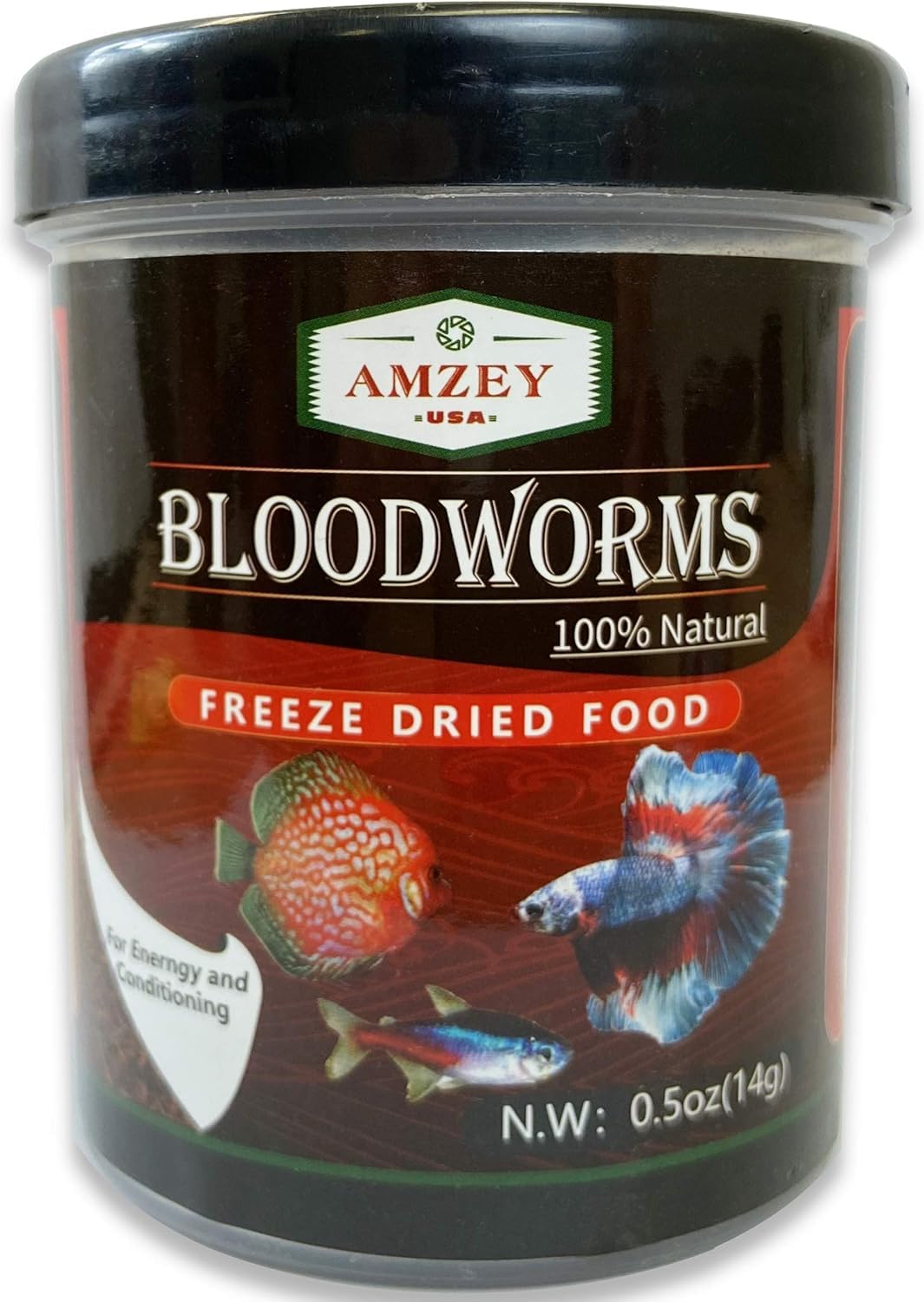
Rating: 4.3 ★ | Price: $$ | Piece Size: Large | Palatability: Very good | Clouding / Dust: Low | Container Design: Bottle
100% natural bloodworms with no additives, well-accepted by fish that can handle large pieces. Size and fill inconsistencies prevent it from ranking higher among freeze-dried options. Best suited for owners of larger fish who prioritize natural ingredients.
Pros
- No artificial additives or fillers
- Large worms appeal to bigger fish
Cons
- Worms can be too large for bettas and small fish
- Container may appear only partially filled
A natural treat for medium to large freshwater fish owners who can overlook the partial fill and size limitations.
Best for Varied Diet
Hikari Brine Shrimp

Rating: 4.4 ★ | Price: $$ | Piece Size: Large (cubes) | Palatability: Very good | Clouding / Dust: Some dust | Container Design: Ratcheting top pouch
Fish love the taste and the ratcheting dispenser keeps portions tidy. However, cubes may crumble into dust and pieces are too large for small fish without crushing — better suited for medium to large fish than as a low-mess option.
Pros
- High palatability that fish eagerly accept.
- Dispenser with ratcheting top makes portioning easy.
Cons
- Cubes may crumble into dust during handling, creating fine particles in the water.
A good fit for owners of medium to large fish who prioritize taste and convenience over dust-free feeding, but not the top choice for small tanks or mess-averse keepers.
Best for Marine Tanks
Ocean Nutrition Krill
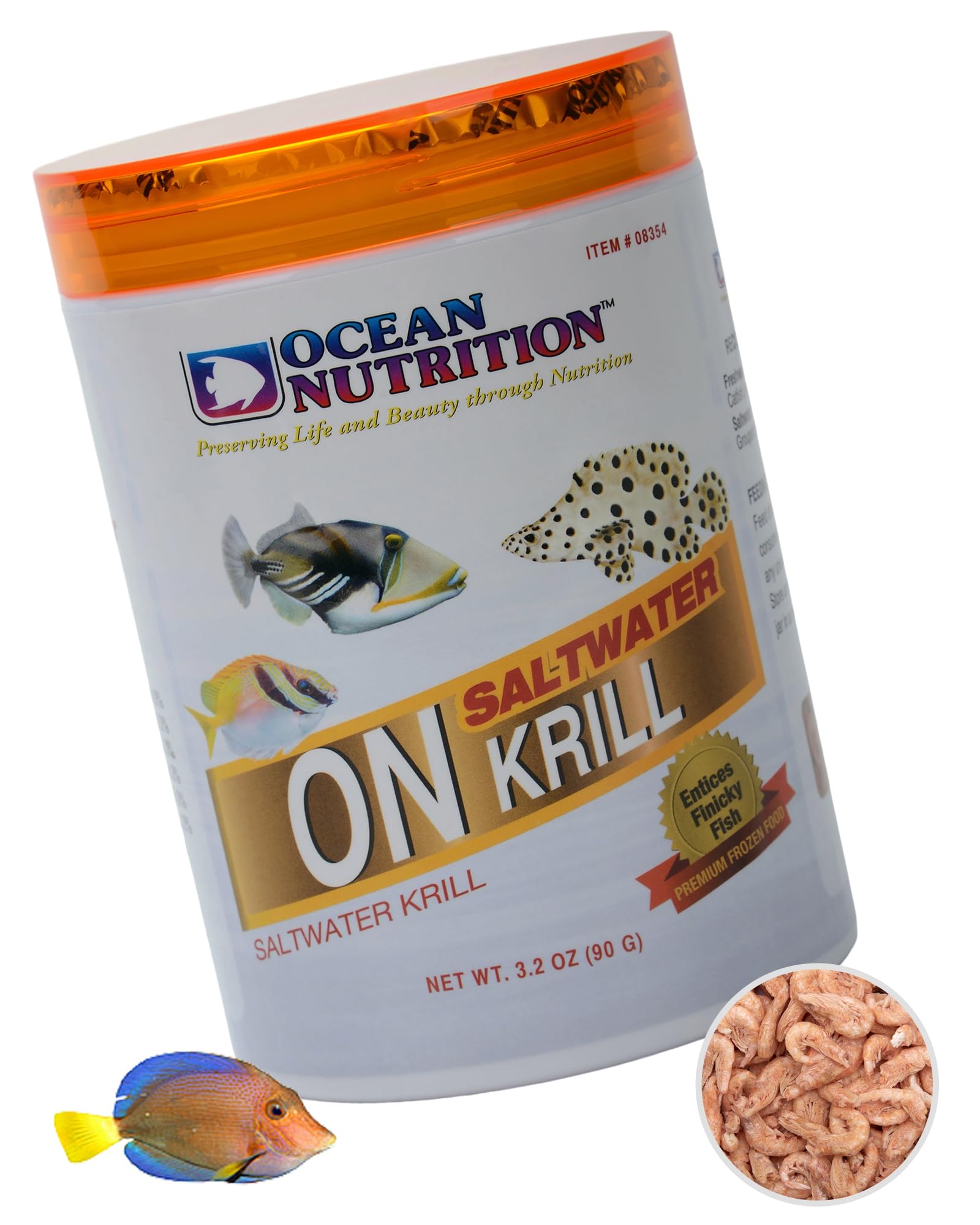
Rating: 4.6 ★ | Price: $$$ | Piece Size: Small (crumbled) | Palatability: Very good | Clouding / Dust: Crumbly | Container Design: Jar
This freeze-dried krill provides 50% crude protein and natural color enhancers, making it a solid supplement for large marine fish, cichlids, and triggers. The jar offers a generous quantity for the price. However, the flakes can be crumbly and not whole as expected, which may disappoint those seeking intact krill. It’s best suited for aquarists who prioritize nutritional value over visual presentation and have fish large enough to accept smaller pieces.
Pros
- High protein content supports growth and color in larger fish
- Large jar provides good value for frequent feeding
Cons
- Flakes can be crumbly and not whole as expected
Best for aquarists with large marine or cichlid tanks who prioritize protein content over whole-krill presentation.
How to Choose
The single most important factor in freeze-dried fish food is matching the piece size to your fish’s mouth – a food too large will be ignored or cause choking.
Protein Content: Why Higher Isn’t Always Better
While high protein (55%+) supports growth and color, it also increases waste output. Overfeeding high-protein food can foul water quickly. For fish that are not actively growing or breeding, a moderate protein level (45-50%) is sufficient and reduces maintenance.
Always match protein to your fish’s life stage. Growing juveniles and breeding adults benefit from >55% protein, while sedentary community fish do fine with lower levels.
Piece Size: The Most Overlooked Factor
Freeze-dried foods are often sold whole. A bloodworm that fits a 4-inch cichlid can be impossible for a neon tetra. Crushing whole pieces creates dust that clouds water and may be ignored.
Check the product’s size complaints in reviews before buying. Many brands now clearly state ‘large’ or ‘small’ – use that to match your tank.
Palatability: Not All Fish Will Eat the Same Brand
Even well-regarded brands see rejection from some fish. Hikari and Omega One have higher acceptance rates, while generic brands often have more refusals. Starting with a small size or sample can save money.
If your fish are picky, stick to brands with proven palatability. A food that your fish refuses is wasted money, regardless of protein content.
Dust and Clouding: The Hidden Cost of Cheap Packaging
Shipping vibrations break fragile pieces into powder. This dust releases quickly into the water, causing cloudiness and filter load. Products with whole, intact pieces or vacuum-sealed containers minimize this.
Avoid bags or jars with excessive powder on arrival. Soaking food in tank water before feeding can reduce clouding.
Container Design: Ease of Use Matters More Than You Think
Difficult lids or poor dispensing mechanisms lead to mess and waste. Ratcheting tops allow controlled pouring, while wide-mouth jars make it easy to take out pieces.
A poorly designed container can frustrate daily feeding. Look for resealable, easy-open packaging that keeps food dry.
FAQ
Why won’t my betta eat freeze-dried bloodworms?
Bettas may refuse bloodworms if the pieces are too large or if they prefer live food. Try crushing the worms into smaller bits or soaking them briefly in tank water. If your betta still refuses, consider trying freeze-dried daphnia or brine shrimp instead.
Are freeze-dried shrimp safe for turtles and saltwater fish?
Yes, freeze-dried shrimp are safe for turtles and saltwater fish. The freeze-drying process eliminates parasites and bacteria. However, always check the piece size – larger shrimp may need to be broken up for smaller turtles or fish.
How do I prevent freeze-dried food from clouding my aquarium water?
Soak the food in a small cup of tank water for a minute before feeding. This rehydrates the pieces and causes any dust to settle, reducing clouding. Avoid pouring the dusty remnants from the bottom of the container directly into the tank.
Can freeze-dried daphnia help with betta constipation?
Yes, daphnia acts as a natural laxative because its exoskeleton is indigestible and provides roughage. Feed it sparingly for a day or two to help clear blockages. It also supports fin growth and is generally well accepted by bettas.