This post contains affiliate links. We may earn a small commission when you buy through our links — at no extra cost to you.
Koi are grazers. Put a tender water lily in the pond and you’ll come out a week later to shredded stems, a toppled pot, and a muddy crater where the plant used to be. That’s the tension in every planted koi pond: you want the layered green look of a water garden, but you need plants that can take a beating from fish that treat foliage like a buffet. The right ones do more than decorate — they shade the water, give fry somewhere to hide, and soak up the nutrients algae feed on.
I’ve killed my share of pond plants, almost always by underestimating how fast koi grow and how much they eat. This season my team and I grew 16 varieties for eight months, from spring planting through the first frost, and the ones that held up weren’t always the ones that looked best at the nursery. A pond plant’s real test comes in August, after the heat, the algae, and the fish have had their say. Everything below earned its place in the water.
Our Top Picks
The Best Plants for a Koi Pond, Reviewed
Chalily Ruby Water Lily – Best Overall
Key Features
- Lifespan: Annual
- Sunlight: Full sun
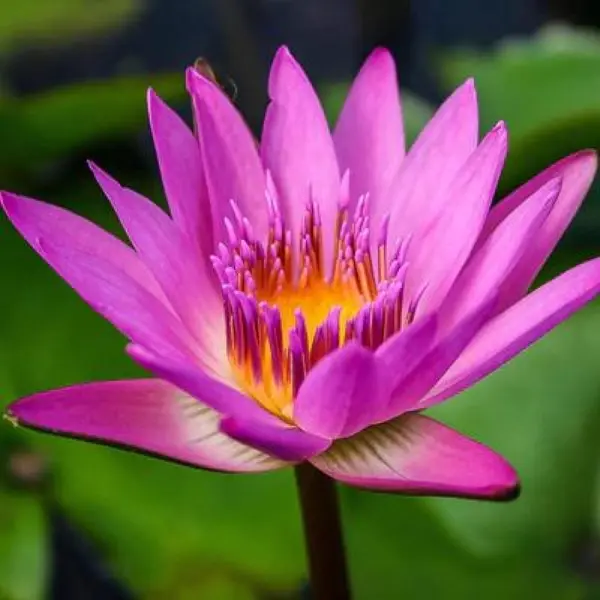
- Bloom color: Dark pink with yellow center
- Bloom period: Summer to Fall
- Price: Premium
Ruby is the clearest flowering focal point in this group: dark pink petals around a bright yellow center, held above broad pads that shade the surface. We kept coming back to it because it does two jobs at once, giving the pond a focal point while the leaves cut light and give fish somewhere to retreat. It is a bare-root plant rather than a dormant tuber, so you are buying a head start on the season. Full sun is non-negotiable if you want the flush of blooms, with several flowers opening each day from one plant.
That head start is why Ruby earns the top spot. The plant is sent as a growing division, not a dry tuber, so the wait between potting and the first bloom is shorter. Set the rhizome in a basket of heavy soil, place the crown a few inches under the water, and give it the sunniest part of the pond. We don’t treat it as a shade plant: the more direct light it gets, the better the flower show.
The catch is placement, not the plant itself. Aim the pump return away from the crown; a lily wants still water, and a current that pushes the pads around makes a healthy plant look tatty. We also keep the basket far enough from the skimmer that spent petals do not clog the intake. Those are small adjustments for a plant that can carry the pond’s look on its own.
Pros
- Dark pink blooms with yellow centers
- Broad pads shade and shelter fish
- Pre-grown bare root for a faster start
- Natural filtration improves clarity
Cons
- Annual; replace each season
Ruby is the plant we choose when a sunny koi pond needs a centerpiece: strong color, broad shade, and a growing plant rather than a dormant tuber.
Chalily Arrow Arum – Best Marginal Plant
Key Features
- Placement: Shallow water or bog shelf
- Plant type: Marginal/bog plant
- Bloom period: Summer
- Hardiness zone: 5
- Price: Midrange
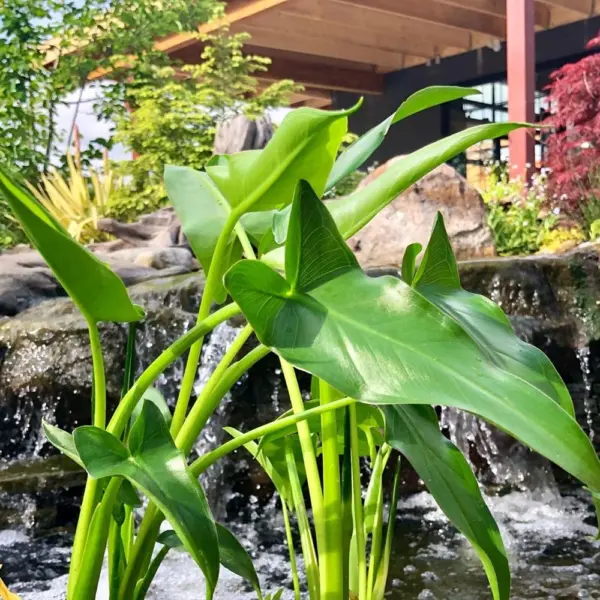
Arrow Arum is the plant we choose when the pond has a shallow shelf, a boggy edge, or a spot where the waterline moves. Its glossy, arrowhead-shaped leaves give the border a tropical lift, but the real work is below them: a marginal root system that takes up nutrients and gives fish a place to nose around. Winter hardiness down to zone 5 is the detail that makes it more than a summer decoration. In a cold garden, this is the kind of plant that comes back and holds the edge together while the annual color is still waking up.
Place it where the crown can sit at or just above the waterline. Full sun gives the strongest growth, and the arrowhead foliage is the point; the calla-like flowers are a quiet bonus rather than a color explosion. If you want a big pink display, Ruby is the better lily. Arrow Arum earns its place on structure and filtration, not on flower power.
Maintenance is modest: keep the crown wet, do not let the basket dry out, and divide when the clump crowds its container. We like that it can stay in the pond through winter in zone 5, which makes it a better long-term edge plant than a tropical floater. The one thing we miss is a stronger scent or bigger bloom, but that is not what this plant is for.
Pros
- Winter hardy to zone 5
- Glossy arrowhead foliage
- Filters water and shelters fish
- Useful on shallow shelf or bog
Cons
- Not a floater or oxygenator
For a shallow shelf or boggy edge, Arrow Arum is our first choice; its winter-hardy foliage filters water and gives fish cover year after year.
Aqualeaf Water Hyacinth – Best Floating Cover
Key Features
- Planting: No substrate needed
- Sunlight: Full sun to partial shade
- Plant type: Floating
- Bloom period: Summer
- Price: Budget
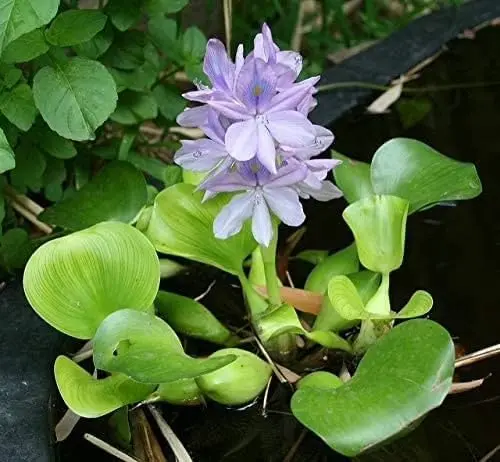
Water hyacinth is the least expensive pick here for putting a lid on a sunny koi pond, and that is exactly how we treat it: a fast, replaceable surface cover rather than a specimen. The plant floats without a basket or substrate, so there is no planting project, no soil cloud, and no root ball to wrestle into a pot. It simply sits on the surface, shades the water, and gives small fish somewhere to hide. For a pond that bakes in summer, that shade is not cosmetic; it helps steady the water and cuts evaporation.
Fast growth is the selling point and the chore. In warm water the plant can multiply until the surface is a solid mat, and the care instructions are blunt about removing excess growth. We plan for thinning from the start: leave open water for feeding and gas exchange, and pull plants before the mat closes over. The roots dangle and collect debris, which is part of the filtration story but also means the plant can look messy after a windy day.
We treat water hyacinth as a renewable cover crop, not a specimen, and that is why it earns its place. Start with more than one in a warm, sheltered spot and let them multiply; a single plant can disappear into a big pond, and a thick mat is easier to manage if you thin early. Coverage comes fast, but only if you accept the upkeep.
Pros
- Fast surface cover and shade
- No pot or substrate needed
- Helps filter water
Cons
- Size and leaf color vary on arrival
We recommend water hyacinth for fast, inexpensive surface cover in a warm pond, as long as you plan to thin it and replace it after cold weather.
Aqualeaf Hardy Water Lily Rhizomes – Best Perennial Value
Key Features
- Count: 3 rhizomes
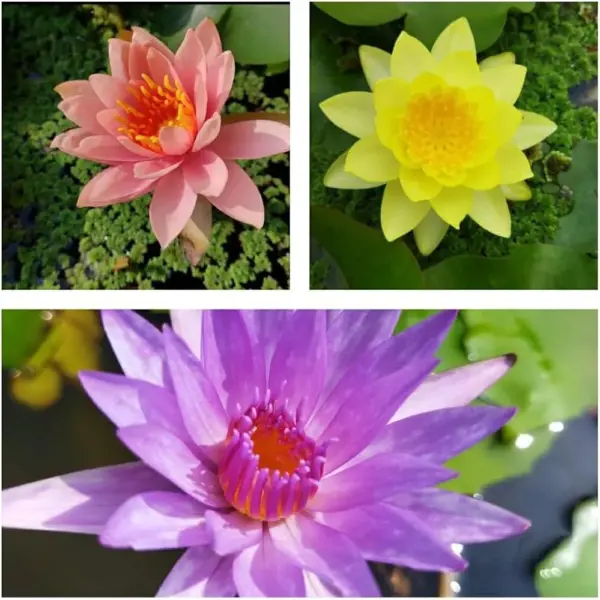
- Colors: Pink, yellow, orange
- Lifespan: Perennial
- Plant type: Hardy water lily rhizomes
- Price: Premium
This is a pack of three dormant rhizomes, not a pot of flowering lily, and the distinction matters. You get pink, yellow, and orange tubers that need potting, warmth, and time before there is a pad on the surface. For a gardener who enjoys the build, that is a fair trade: three colors, a perennial habit, and a lower cost per plant than the single grown lily here. For someone who wants the pond to look finished this weekend, it is the wrong purchase.
We like the long game here. A hardy lily should return after winter, and the three-color mix gives you more variety than a single named plant. The rhizomes are not fully grown, so you need a basket, heavy clay soil, and a spot in full sun; planting them is a real chore, not a drop-in job. Once they settle, the reward is a perennial planting that can become the backbone of the pond rather than a seasonal purchase.
The first season is about roots more than flowers, so judge it by new leaves rather than a count of blooms. Give the tubers warmth and leave them alone; moving them around to chase a better spot sets them back. If you want flowers you can count on immediately, Ruby is the safer buy; if you want a perennial project with three colors, give these tubers the season.
Pros
- Three colors from one order
- Hardy perennial habit
- Lower cost per plant than a grown lily here
Cons
- Not every rhizome may sprout
We see the three-rhizome pack as the patient gardener’s route to mixed lily colors and a perennial return, not as an instant bloom.
Marcus Fish Tanks Hornwort – Oxygenation
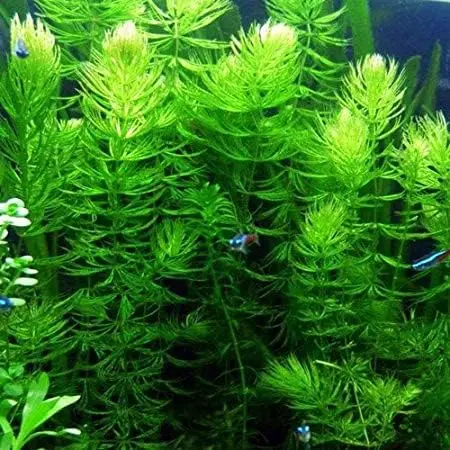
Key Features
- Sunlight: Full sun
- Plant type: Submerged oxygenator
- Stem length: 6-10 inches
- Price: Budget
Hornwort is the one plant here that works below the surface, and that is its whole appeal. The stems float or can be weighted in a quiet corner, giving fish cover and adding oxygen without competing with lilies for the top of the pond. We like it as a utility plant rather than a centerpiece: it fills the middle layer, softens the look of a bare pond, and gives small fish somewhere to dart. The bundle is usually 6 to 10 inches, so it is a start, not an instant thicket.
The catch is where it comes from. Hornwort is sold mainly as an aquarium plant, and that means it needs a good rinse and a careful look before it goes near a koi pond. We keep it out of the main flow until it has put on new growth, and we do not mix new stems with established plants until we are satisfied they are clean.
Because it has no roots, it will not stay where you drop it. Weight the bundle, tuck it behind a rock, or contain it in a quiet corner; in a pond with big koi, loose stems will be pushed around and may end up in the skimmer. We see it as a low-cost experiment for a pond that needs underwater cover, not a permanent planting you can ignore.
Pros
- Submerged cover and oxygenation
- Fast-growing stems when established
- Low-cost way to fill a bare pond
Cons
- Can arrive brown or die back
We value hornwort as a low-cost submerged oxygenator, but only for a quiet corner where you can rinse it well and anchor it.
How We Tested Koi Pond Plants (and What the Fish Did to Them)
We started with a list of about 40 plants sold as koi-friendly — marginals, floaters, oxygenators, and bog plants — and cut it down by the things that actually rule a plant out: whether it survives a cold winter in the ground, what planting depth it wants, how aggressively it spreads, and what a pot costs. Anything tropical, anything that needed more than a season to look like something, and anything priced like a specimen plant was out. That left 16 varieties, which we grew for eight months, from spring planting through the first frost.
Half went into a 500-gallon backyard pond with eight adult koi; the other half went into an unheated stock tank on a patio with no fish, so we could tell fish damage apart from weather damage. Every morning for the first month I walked the edge and looked for shredded leaves, floating stems, and pots dug loose from their gravel. After that, weekly checks.
Each month we measured how far plants had spread past their baskets and compared it with the size the grower promised — some doubled, some never moved. We counted bloom days rather than just noting whether a plant flowered at all, watched leaf color for the yellowing that signals a hungry plant, and at the end of the season lifted every basket to look at the roots: white and firm meant healthy, brown and mushy meant it was already gone.
We also worked out what each plant cost per month it looked good, since a cheap pot that melts in July is worse value than a pricier one that comes back. And we noted which plants shed leaves into the skimmer, because that’s the hidden labor of a planted pond.
How to Choose Plants for a Koi Pond
The right plant for a koi pond is the one that can do its job while sharing water with large, curious fish; matching the plant to the pond’s depth and light matters more than collecting a long species list.
Start with the planting layer, not the plant name
Koi ponds have four useful layers: floating cover, marginal shelves, deep-water lilies, and submerged oxygenators. Floating plants such as water hyacinth are the quickest way to shade the surface and cut evaporation; marginals such as Arrow Arum sit at the edge and filter the water where it meets the bank; lilies root deeper and give broad pads and flowers; hornwort fills the water column. We start with the layer that is missing. A bare pond with hot water needs surface cover first; a pond with a hard, exposed edge needs a marginal; a deep, sunny pond gets the most from a lily.
Match the plant to depth, light, and winter
Check three labels before you buy: how deep the crown sits, how much sun the plant wants, and whether it is annual or hardy. A water lily crown typically goes a few inches under the surface, while a marginal sits at the waterline and a floater never needs soil at all. Full-sun plants such as Ruby and water hyacinth will flower and spread better in open light; Arrow Arum is the one in this group that is winter hardy to zone 5. If your pond freezes, choose a hardy marginal or rhizome for structure and treat annual lilies and tropical floaters as seasonal color.
Plan for fish traffic and containment
Koi are strong, curious fish, and loose plants do not stay loose for long. A marginal or lily planted in a basket with heavy soil has a root ball that can survive investigation; a floating plant has nothing to anchor it and may drift into the skimmer. Hornwort has no roots at all, so weigh it or trap it in a quiet corner. We also leave a clear area around the pump and return, and check local rules before adding fast-spreading floaters outdoors. The point is not to make the pond plant-proof; it is to put plants where a fish bump will not undo the planting.
Decide how much patience you have
Grown bare-root lilies and potted marginals give you a head start; dormant rhizomes and small bundles cost less per plant but ask for a season of root growth before they look like the picture. We choose the grown plant when the pond needs to look finished now, and the rhizome pack when we are building for the long term. Either way, plant in warm water, keep the crown at the right depth, and resist moving the plant every week. New plants settle faster when they are left alone.
Frequently Asked Questions
Do koi ponds really need plants?
Not strictly. A pond can run with filtration alone, but plants add shade, cover, and a more natural look, and marginals and floaters take up nutrients that would otherwise feed algae. We start with surface cover if the water gets hot and a marginal if the edge is bare. The practical gain is a pond that stays cooler and gives fish somewhere to retreat, not just a prettier photograph.
When is the best time to add plants to a koi pond?
Late spring or early summer, once the water has warmed and the forecast is mild. That gives roots time to establish before winter and avoids shipping stress during temperature extremes. If you are ordering live plants, avoid a week when the daytime high is near freezing or the package will sit in a hot truck; wait for a steadier window.
Do pond plants need fertilizer?
Floating plants usually take up enough nutrients from the pond water, especially in a well-stocked koi pond. Lilies and marginals growing in baskets may need an aquatic plant fertilizer during active growth; use a pond-safe formula and follow the dose on the label, not a garden fertilizer. In a pond with high nitrate, fix the source before adding more fertilizer.
Final Verdict
For most koi ponds, we start with Chalily Ruby Water Lily. It gives the pond a finished look above and below the surface: broad pads for shade, strong pink-and-yellow flowers, and a growing plant that does not ask for a season of dormancy. The annual habit is the trade-off, so a cold-garden pond may be better served by Arrow Arum at the edge and the hardy rhizome pack for perennial lilies. Choose Ruby when the centerpiece matters most.