This post contains affiliate links. We may earn a small commission when you buy through our links — at no extra cost to you.
Koi will eat almost anything you drop in the water, and that’s the problem. These fish don’t have a true stomach, so food moves through them fast — feed a cheap, hard-to-digest stick and you’ll see it again a few days later as cloudy water and stringy waste. A good food fixes that whole loop: fish that rise eagerly, swallow without spitting pellets back out, hold their color, and leave the pond clearer than they found it.
I’ve kept koi for years, and the change that stuck was simple: I stopped buying whatever was cheapest by the bucket and started reading the ingredient panel. My team and I have spent five months feeding 14 different formulas to the ponds out back, and the gap between the best and the rest was wider than I expected. One thing worth knowing: watch the ten minutes after you feed, not the label — pellets that are too big go in and out of mouths over and over. The picks below are the ones the fish finished.
Our Top Picks
The Best Food for Koi Fish, Reviewed
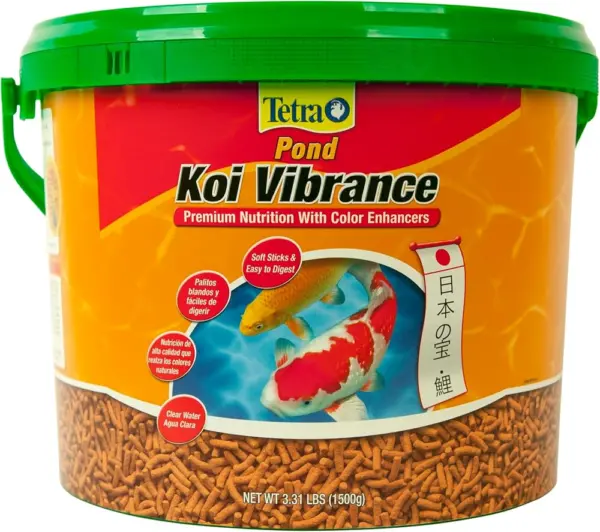
TetraPond Koi Vibrance – Best Overall
Key Features
- Form: Soft floating sticks
- Diet role: Daily maintenance
- Package size: 3.31 lb
- Feeding window: Above 50°F
- Price: Midrange
A koi pond needs a food you can reach for every morning without thinking about it, and TetraPond Koi Vibrance is built for exactly that role. The soft sticks float, soften quickly, and are sized for koi rather than tiny aquarium fish. Tetra positions it as a daily maintenance diet for koi and ornamental goldfish, which is the job most pond keepers need done.
That combination is why we make it the default pick here. The stick form is forgiving: it gives smaller koi something they can break down and larger koi something worth chasing, and it lets you see how much is being taken before it disappears. We also like that the formula is aimed at color and condition without turning every feeding into a growth push. The 3.31-pound bag is a sensible size for a modest pond, though a heavily stocked pond will empty it faster.
The caveat is acceptance. Koi can be stubborn about a new food, and a pond that has been on one brand for years may not switch overnight. Start by mixing a little into the old food and watch whether it gets cleared; once they are on it, the stick form makes the daily routine simple. For most ponds from spring through fall, it is the easy recommendation.
Pros
- Soft sticks are easy to portion and watch
- Daily maintenance diet built for koi
- Large bag suits a modest pond
- Supports color and condition
Cons
- Warm-water formula; not for ponds below 50°F
We recommend it as the default daily koi food for most ponds, thanks to soft floating sticks that are easy to portion and take.
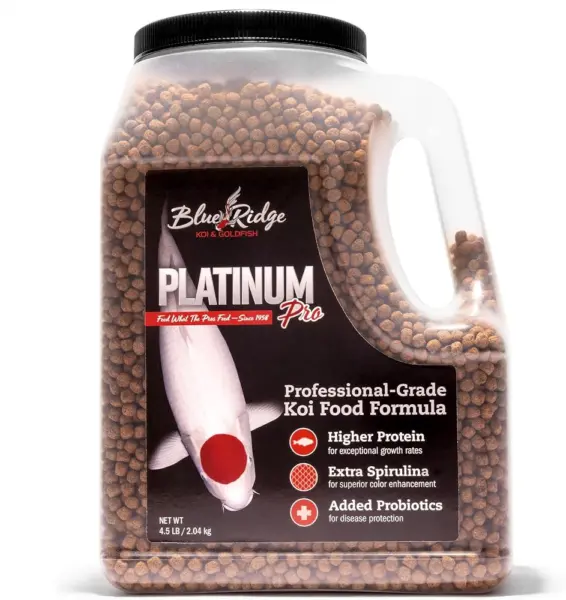
Blue Ridge Platinum Pro – Best for Warm-Season Growth
Key Features
- Form: Floating pellets
- Protein: 41%
- Pellet size: 3/16 inch
- Package size: 4.5 lb
- Price: Midrange
Forty-one percent protein is the headline, and in a koi pond that number is a season marker as much as a nutrition claim. We reach for Blue Ridge Platinum Pro when the water is warm and the fish are actively growing, because this is a formula built for that stretch rather than for the whole calendar. The 3/16-inch floating pellets soften quickly, and the recipe includes spirulina, canthaxanthin, and a probiotic.
What we like is the combination of a serious protein level with a pellet that stays on the surface long enough to portion. You can watch the pond clear a handful and adjust the next feed instead of guessing. The 4.5-pound bag also goes further than the stick foods here, which matters in a heavily stocked pond during summer. It is the pick we reach for when growth and color are the summer goals.
The 3/16-inch pellet is too big for very small koi, so keep a mini pellet for fish under about five inches. For a warm, active pond, though, it is the strongest growth option in this group.
Pros
- 41% protein for active warm-water growth
- Floating pellets are easy to portion
- 4.5-pound bag suits heavy summer feeding
- Includes color-support ingredients
Cons
- Warm-season formula only
This is the growth pick for warm, active ponds, and we reach for it when summer feeding is the main job.
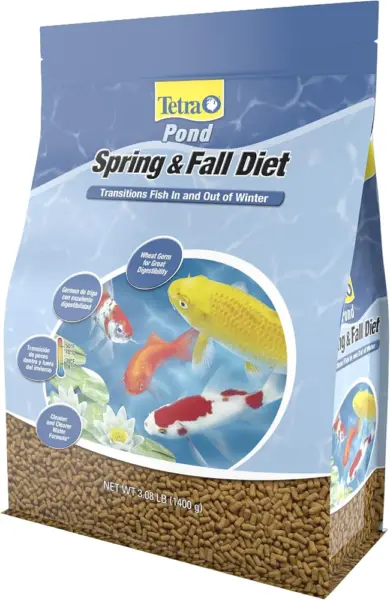
TetraPond Spring & Fall – Best Cool-Water Food
Key Features
- Form: Soft floating sticks
- Formula: Wheat germ
- Package size: 3.08 lb
- Feeding window: Below 50°F
- Price: Premium
The useful thing about TetraPond Spring & Fall is not the bag or the stick shape; it is the 50-degree line printed on the label. This is a wheat-germ formula meant for the shoulder seasons, when koi are still eating but digesting more slowly. The label calls for feeding below 50°F and stopping below 39°F, which makes it a food you use with a thermometer rather than a calendar.
We keep a bag for exactly that window. The soft sticks float and soften, so fish can take them without a lot of energy, and the wheat-germ base is the reason we are comfortable feeding when the pond is cold but not shut down. The 3.08-pound bag is easy to store between seasons, and the sticks are simple to portion when the fish are moving slowly.
The limitation is the calendar. If your pond ices over, stop feeding rather than switching to this. For the weeks when the pond is cooling and the fish still come up, it fills a gap that a warm-season food does not. That narrow window is the whole reason to keep it on the shelf.
Pros
- Wheat-germ formula for cool water
- Soft sticks are easy to take
- Useful shoulder-season bag
Cons
- Not a warm-season staple
Keep this wheat-germ stick for the shoulder seasons, when the pond is cooling but the fish are still eating.
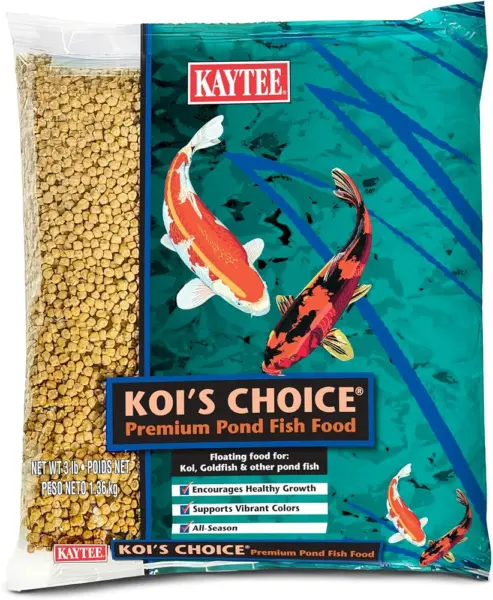
Kaytee Koi’s Choice – Best Budget
Key Features
- Form: Floating pellets
- Protein: 35%
- Package size: 3 lb
- First ingredient: Fish meal
- Price: Budget
The first thing you notice about Kaytee Koi’s Choice is how much food you get for the money. It is the budget option here, and it does not pretend otherwise. The pellets are sold as a floating food, the bag is a full three pounds, and the formula lists fish meal first with 35% protein.
We like it for a big, mixed pond where the goal is keeping everyone fed without treating every meal as a premium event. The pellet is substantial, so grown koi can take it easily, and the bag lasts through a lot of morning feeds. It is also simple to store and scoop, which matters when you are feeding a crowd.
Where it earns a place is value, but the pellet size is the catch: smaller koi under five inches can struggle with the larger pieces, so break them up or use a mini food for those fish. Floatability is the other thing to watch; some pellets go down instead of staying on the surface. For a pond of grown koi and a tight feed budget, it is a sensible choice; for small fish or a pond where you need every pellet to float, look elsewhere.
Pros
- Low cost per pound
- 35% protein with fish meal first
- Works for grown koi in mixed ponds
- Large bag lasts through many feeds
Cons
- Some pellets sink rather than float
It is the budget pick for grown koi in a big pond, as long as you can live with variable floatability.
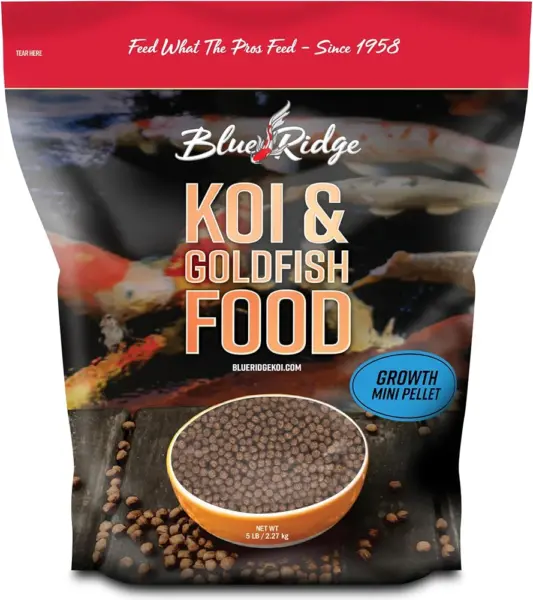
Blue Ridge Growth Mini – Best for Small Koi
Key Features
- Form: Floating pellets
- Protein: 36%
- Pellet size: 1/8 inch
- Package size: 5 lb
- Price: Midrange
A 1/8-inch pellet is the whole point of Blue Ridge Growth Mini. If you have young koi, fry, or goldfish under about five inches, the standard 3/16-inch koi pellets are a mouthful they may spit out. This bag is sized for the small fish in the pond, and that is the job we judge it on.
The 36% protein formula is built for active growth above 65°F, and the pellets float and soften within minutes. We like that it gives small koi their own food instead of forcing them to compete with the adults at the surface. The 5-pound bag is generous for a grow-out pond, though it is more food than a handful of fry needs, and the pellets stay on the surface long enough to see who is getting fed.
The boundary is size. Once your koi pass about five inches, the 1/8-inch pellet becomes a lot of small bites, and you can move them to a 3/16-inch food. For the small fish in a mixed pond, though, it solves a problem the bigger pellets create, and that is worth keeping a separate bag for.
Pros
- 1/8-inch pellets fit small koi
- 36% protein supports growth
- Floats and softens quickly
- 5-pound bag suits a grow-out pond
Cons
- Warm-season formula only
We recommend this one when small koi are getting outcompeted, because the mini pellet lets them eat at their own size.
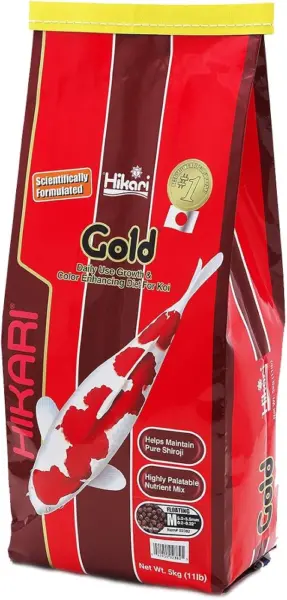
Hikari Gold Bulk – Best for Large Ponds
Key Features
- Form: Medium pellets
- Diet role: Daily koi diet
- Package size: 11 lb
- Color support: Color-enhancing
- Price: Premium
An 11-pound bag is a commitment, and that is exactly who Hikari Gold is for: a large pond with a lot of mouths to feed. The medium pellets are sold as a daily koi diet with color enhancement, and the bulk format is the reason to look at it.
We rank it as a bulk option rather than a default because it is built for volume. In the right setting, it takes the repetition out of reordering: one bag covers a long stretch of feeding, and the medium pellet suits grown koi. The formula is straightforward and built around daily feeding rather than a short seasonal push. It is the kind of bag a serious pond keeper keeps in the shed.
The catch is the pellet size. Medium pellets are not for small koi, so a pond with young fish needs a mini pellet alongside this bag. For a big pond with adult fish, it is a practical way to buy.
Pros
- 11-pound bulk suits large ponds
- Daily koi diet with color support
- Medium pellet for grown koi
- Cuts reordering frequency
Cons
- Large bag suits only big ponds
This is a bulk buy for a large pond with adult koi, not a starter bag for a small water garden.
How We Picked and Tested Koi Food
We started with roughly three dozen koi foods pulled from pond-supply shelves and specialty makers, then cut the list on what the labels actually said: a named fish or seafood meal near the top of the ingredient list, protein in the low 30s, and a pellet size range that suits everything from six-inch juveniles to two-foot adults. That left 14 foods — bargain pond sticks, color-enhancing formulas, and sinking pellets — which we fed over five months across three ponds.
Feeding time was the real test. Every morning before work I tossed a measured scoop into the same spot and timed how long the school took to clear it, then checked ten minutes later for anything still floating; food that lingered or drifted to the skimmer told us as much about palatability as the fish did. Sitting at the edge, I noted which fish got to eat — the biggest ones bully their way in — and whether pellets kept going in and out of mouths because they were too large to swallow. Some foods were ignored at the surface and only taken once they’d sunk, which matters if your pond has skittish fish or a strong current.
Two days after each feeding we checked filter pads and the skimmer basket, looking at whether waste was compact or long and stringy and whether the water had gone cloudy or foamy — the clearest sign of how well a food is being digested. Every couple of weeks I photographed the same few fish in the same light to compare depth of orange and the brightness of the white. And we worked out cost per fish per day from each label’s recommended feeding rate, since a cheap bag you have to feed twice as much of is no bargain.
How to Choose Koi Food
The right koi food is the one that matches your water temperature, your fish size, and the way you actually feed, not simply the bag with the highest protein number.
Start With the Water Temperature
Koi are not warm-blooded; their digestion tracks the pond. Above roughly 50°F to 60°F, a maintenance or growth formula makes sense; below that, wheat-germ formulas are easier to digest; below 39°F, stop feeding. We treat the thermometer as the first buying decision, because a warm-season pellet fed in cold water is money spent on food the fish cannot use well. A cool-water bag like TetraPond Spring & Fall is not a year-round staple; it is a seasonal tool.
Match the Pellet to the Fish
Pellet size is the quiet dealbreaker. A 3/16-inch pellet suits grown koi, while a 1/8-inch mini pellet is for fry, juveniles, and fish under about five inches. Sticks can be broken for smaller mouths, but a bag of large pellets and a pond of small koi is a bad match. We like Blue Ridge Growth Mini for that reason: it lets the small fish compete without turning every feeding into a scramble.
Choose a Formula for the Job
Protein is not a score to maximize. A 41% formula like Blue Ridge Platinum Pro is for warm, active growth; a 35% everyday food like Kaytee Koi’s Choice is a different job; wheat germ belongs in cool water. Color ingredients such as spirulina and canthaxanthin are useful, but they do not replace a formula matched to the season. We choose the formula for the job first, then the brand.
Do the Bag-Size Math
Bag size is a storage and freshness decision as much as a value decision. A large pond can go through an 11-pound bulk bag like Hikari Gold, while a modest pond is better served by a 3- to 5-pound bag that stays fresh. Compare cost per pound, not just the shelf price, and store food cool and dry. The cheapest bag is not a bargain if it goes stale before the fish finish it.
Watch Acceptance and Water Clarity
Floating food lets you see how much is being taken and whether the fish are interested. Softening speed matters too: soft sticks and fast-softening pellets are easier for koi to take, especially when the water is cool. If a pond ignores a new food, check the temperature and water quality first, then mix the new food into the old one over a week or two. A food the fish will not eat is not a value, however good the formula looks.
Frequently Asked Questions
How much should I feed my koi?
Feed only what the pond clears in about five minutes, one to three times a day in warm water, and less as the water cools. Start with a small handful, watch how much is left after a few minutes, and remove what nobody takes. Overfeeding is the fastest way to cloud the water and waste food.
Can koi eat goldfish food?
Many koi and goldfish pond foods are interchangeable, but a goldfish-only flake is a poor staple for large koi. Flakes disperse too fast, are hard to portion, and small koi may eat them while adults miss out. Use a koi pellet or stick as the base and keep flakes for fry or small fish.
Do I need to soak koi pellets before feeding?
Usually not. Most koi pellets and soft sticks soften quickly in the pond, and soaking can send fines into the water if you leave them too long. For very small koi or a picky fish, soak a few pellets for a minute or two and feed them right away; do not leave a soggy cup sitting around.
Final Verdict
TetraPond Koi Vibrance is the bag we recommend first for most ponds: a soft, floating daily stick that suits koi through the warm months and is easy to portion. If your water is already cooling, choose TetraPond Spring & Fall instead; if small koi are getting pushed aside at feeding time, Blue Ridge Growth Mini is the better tool. The point is to match the food to the season and the fish, not to chase the highest protein number.