This post contains affiliate links. We may earn a small commission when you buy through our links — at no extra cost to you.
The pitch for freeze-dried bloodworms is simple: a treat that brings even a stubborn eater to the front of the glass, without the mess of frozen cubes. What I got, with the first few tubs I bought, was a scoop of red dust and fish who let it drift right past them. What you’re really paying for is how much of the container is whole worms, whether they sink or float, and whether anything chases them.
I keep a betta who ignores pellets and a community tank that eats anything, so I had both a fussy judge and an easy crowd on hand. We worked through 14 containers over four months, and the ones worth rebuying kept their worms intact, sank slowly enough to be hunted, and left the glass clear. One thing nobody tells a first-time buyer: bloodworms are a treat, not a staple, and a mostly-crumb tub fouls a small tank fast. The ones that earned a permanent spot in my cupboard are below.
Our Top Picks
The Best Freeze-Dried Bloodworms for Aquarium Fish, Reviewed
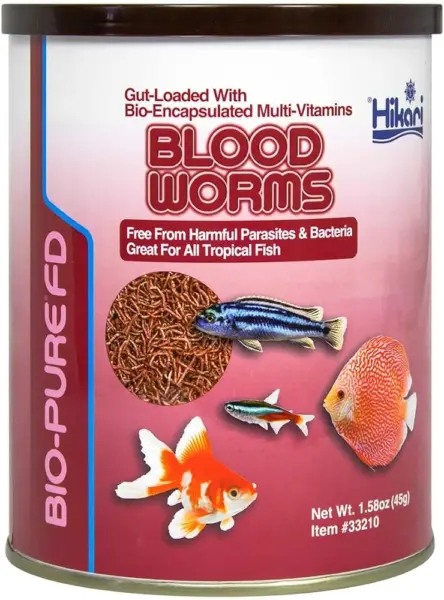
Hikari Bio-Pure Blood Worms – Best Overall
Key Features
- Dispenser: Ratcheting top
- Worm form: Whole freeze-dried worms
- Net weight: 1.58 oz
- Water clarity: Will not cloud water
- Price: Premium
Twist the ratcheting top on Hikari Bio-Pure and you get a few worms, not a shower of dust, which is why we keep it at the top of this group. The 1.58-ounce can is big enough for a community tank, and the dispenser makes it easy to feed a small pinch without half the contents ending up on the shelf. We think the package matters more with freeze-dried food than with pellets, because loose worms are light and messy.
The worms themselves are whole and substantial, and the label’s parasite- and bacteria-free processing is the reassuring part. Hikari also says the can is nitrogen-charged before opening, which is aimed at keeping the food fresher between feedings. The label adds that it will not cloud the water, a useful promise for a food that can leave dust. We like that for a food that may sit in the cupboard for a while; it is a more considered package than a plain bag or tub.
What earns it the top spot is the balance: fish tend to take it readily, the dispenser keeps feeding controlled, and the can suits a mixed community. Very small fish may still need a worm crushed, but that is a small extra step. For most community tanks, this is the bloodworm we recommend first.
Pros
- Ratcheting top limits spills and dust
- Will not cloud the water, per the label
- Strong, broad fish acceptance
- Large 1.58 oz can suits community tanks
Cons
- Large can is overkill for one betta
For most community tanks, Hikari Bio-Pure is the bloodworm we reach for first: the clean dispenser and broad acceptance make it the easiest to live with.
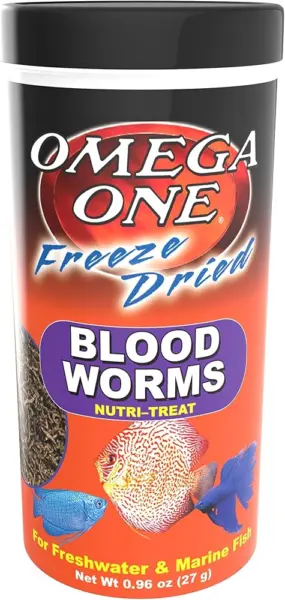
Omega One Blood Worms – Best Floating
Key Features
- Package: Bottle
- Worm form: Whole freeze-dried worms
- Net weight: 0.96 oz
- Crude protein: 55% min
- Price: Midrange
Hikari’s can is the better all-round package, but Omega One is the pick when your fish feed at the surface. These worms float, and that buys surface feeders time to grab them before they drift into the filter. The 0.96-ounce bottle is smaller and easier to tuck beside a small tank, and the label states a minimum of 55% crude protein.
We like that plain protein figure because it gives you something concrete to compare, and the whole-worm texture looks more substantial than a bottle of crumbs. Our reservation is the float itself: uneaten worms can linger at the surface if you overfeed, and they can drift into the filter. Feed a small pinch at a time, and watch how quickly the tank clears it.
The bottle is a sensible size for a modest community or a few small tanks. It is not the biggest value in this group, but it is the one we choose when surface feeding is the point. Fish that strike at the top get more time to eat, and you get a clear protein number on the label.
Pros
- Floats long enough for surface feeders
- 55% minimum crude protein
- Whole-worm texture
Cons
- Floating food is a poor fit for bottom feeders
Our pick for surface feeders is Omega One: it floats long enough to be caught and gives you a clear 55% minimum protein figure.
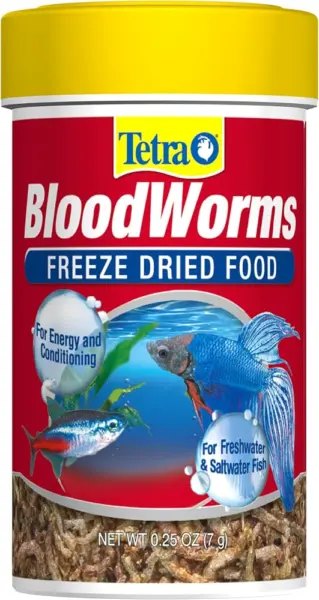
Tetra BloodWorms – Best Budget Starter
Key Features
- Worm form: Freeze-dried worms
- Net weight: 0.25 oz
- Target fish: Small to medium tropical and marine
- Feeding frequency: 2 to 3 times weekly
- Price: Budget
Tetra’s 0.25-ounce bottle is the low-commitment way to find out whether your fish care about bloodworms. It is a trial size, which sounds like a drawback until you remember that a big tub of freeze-dried food can sit around for months. For a betta tank or a small group of tetras, that makes sense.
The worms are fine and small, and the label keeps the job simple: feed two to three times a week alongside a staple diet. We treat it as a supplement, not a staple. The small pieces suit small mouths better than the big whole worms in San Francisco Bay’s bag, so it is an easier starting point for a modest tank.
Where Tetra earns a place is as a first purchase: a small bottle, simple dosing, and an easy way to add variety without opening a big container. We reach for it when we want to try bloodworms in a single small setup, and it works best there rather than on a shelf of community tanks.
Pros
- Low-cost trial size
- Small pieces suit small fish
- Simple 2 to 3 times weekly schedule
Cons
- Small bottle empties quickly in a community tank
- Small pieces crumble easily before fish eat them
Tetra earns its place as a trial bottle for small tanks: affordable, easy to dose, and small enough that you are not stuck with a giant tub if your fish pass.
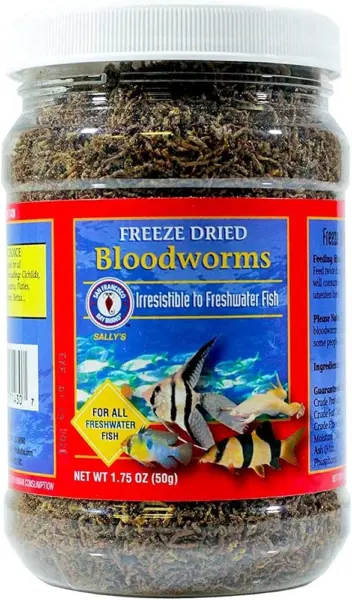
San Francisco Bay Bloodworms – Best for Large Fish
Key Features
- Package: Bag
- Worm form: Whole freeze-dried worms
- Net weight: 1.75 oz
- Price: Midrange
The first thing you notice about San Francisco Bay’s bloodworms is their size: these are substantial whole worms, not the dusty fragments that collect at the bottom of some bottles. For goldfish, cichlids, and adult angelfish, that is the point. A big fish gets a real mouthful instead of a cloud of crumbs, and the 1.75-ounce bag gives you plenty of treats without buying a tiny jar every few weeks.
We like the bag for value, but it is not the tidiest format. The worms are light, and the bottom of the bag can collect chaff and broken pieces; pour gently into a jar and use the dust in a small tank rather than dumping it all at once. The larger worms also mean small bettas need them crushed, which is easy to forget. For a big-fish tank, this is one of the most useful buys here: the worms hold up, the bag goes a long way, and the size is right for fish that eat with enthusiasm.
Pros
- Large whole worms for big fish
- 1.75 oz bag goes a long way
- Good value for multi-fish tanks
Cons
San Francisco Bay is the one we hand to goldfish and cichlid keepers, because the whole worms are sized for broad mouths and the bag goes a long way.
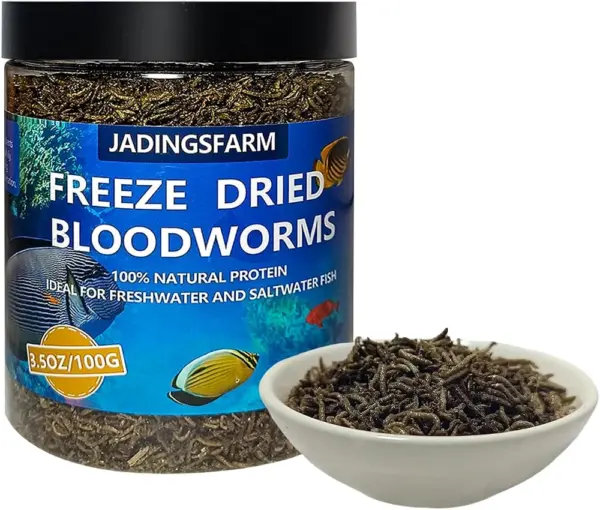
JADINGSFRAM Bloodworms – Best Bulk Value
Key Features
- Additives: No preservatives or artificial flavors
- Net weight: 3.5 oz
- Ingredients: Freeze-dried bloodworms
- Target fish: Freshwater and saltwater
- Price: Midrange
A 3.5-ounce tub is a lot of bloodworms, and that is the point. If you keep several tanks, or one tank of hungry cichlids, the big container cuts down on repeat orders and gives you room to feed a proper pinch. The ingredient list is simple, with no added preservatives or artificial flavors, and the worms are whole rather than crushed.
We like the straightforward bulk format. It is easy to open, easy to shake out, and the larger container is less likely to run out in the middle of a week. The worms are chunky and substantial, which suits medium to large fish; tiny mouths need a piece broken down first.
For multi-tank feeding, that math works in your favor. We recommend it when value and volume matter more than a small, specialized jar, and when you are feeding fish large enough to take a whole worm. It is a pantry-style buy for a fish room, not a one-betta treat.
Pros
- 3.5 oz tub suits multiple tanks
- Simple ingredient list
- Whole, substantial worms
- Good value for volume
Cons
- Bulk tub is overkill for one betta
Multi-tank keepers get the best value from JADINGSFRAM: a generous, simple tub of whole bloodworms that suits regular feeding across several tanks.
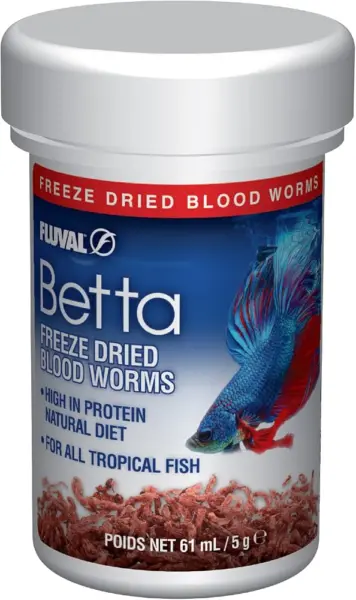
Fluval Betta Bloodworms – Best for One Betta
Key Features
- Protein: High protein
- Worm form: Freeze-dried bloodworms
- Net weight: 0.18 oz
- Target fish: Bettas
- Price: Budget
Fluval Betta’s 0.18-ounce jar is built around one fish, and that is exactly how we judge it. A single betta does not need a community-sized can, and a small jar means less food sitting open between feedings. The betta-specific label and high-protein claim make it an easy treat to keep beside the tank.
We like the size for a single-betta setup: it is easy to store, easy to portion, and the worms are small enough to offer one at a time. They can still be too big or too buoyant for some fish, so crush a piece before feeding. A betta that ignores it is not unusual; try a single crushed worm before deciding the jar is a failure. For one betta, it is a tidy, focused choice.
Pros
- Small jar suits one betta
- Betta-specific formula
- High-protein treat
Cons
- Too small for a community tank
For a single betta, Fluval Betta is the tidy choice: a small jar, a betta-focused formula, and pieces you can portion one at a time.
How We Tested the Freeze-Dried Bloodworms
We started with every freeze-dried bloodworm we could find on local shelves and in the usual online listings, then cut the field by reading labels. Single-ingredient tubs stayed; anything padded with fillers or rattling with broken pieces went. We weighed price against container size too, since a bargain tub of crumbs is worse value than a smaller tub of whole worms. That left 14 containers, which we fed out over four months.
Each tub got the same opening test. I spread a pinch across a white plate and counted whole worms against fragments, noted how uniform they were in length, and smelled them — fresh bloodworms have a faint, briny scent, and the sharp or dusty ones were usually the ones the fish snubbed. Then I dropped a pinch into three tanks: a planted community tank of small tetras and rasboras, a betta kept on his own, and a goldfish tank where anything edible disappears in seconds.
I timed how long the worms floated before sinking, because a slow sink is what gives midwater fish a real chance at them, and watched who actually ate. The goldfish hit the surface before the pinch landed, the betta waited until worms drifted down to his level, and the tetras only chased pieces small enough for their mouths. I also noted whether worms held their shape in the water or broke apart on contact, and checked the glass and filter floss the next morning for red haze or leftovers. At the end of each tub I counted how many feedings it delivered before I was scraping dust out of the corners.
How to Choose Freeze-Dried Bloodworms
The right bloodworm is the one your fish can catch and finish, so match the worm to the mouth and the feeding zone before you compare labels.
Match the Worm to the Mouth
A whole bloodworm that delights a goldfish can be a mouthful too far for a betta. Start with the smallest fish you feed. Small bettas and tetras do better with a fine, crumbly worm or a whole one crushed between your fingers, while cichlids, adult angelfish, and goldfish can take a substantial whole worm. San Francisco Bay’s larger worms suit broad mouths; Tetra’s smaller pieces are easier for small fish. Buying one big-worm bag for a betta tank usually means extra crushing and waste.
Choose Floating or Sinking Behavior
Freeze-dried worms are light, so many float until they absorb water. That is a gift for surface feeders because it gives them time to strike, and Omega One is the clearest example here. It is a poor match for bottom feeders, who may never see a worm that stays at the top. If your fish feed low, look for a product described as sinking or crumble the worm so it drops. Feed a small pinch at a time; uneaten worms that drift into the filter spoil water quality.
Read the Protein and Ingredient Line
Freeze-dried bloodworms are a protein-rich treat, but labels vary in how much they tell you. Omega One states a minimum crude protein of 55%, which is useful if you are comparing foods side by side; many others simply say high protein. We put more trust in a number than a banner. A short ingredient list is also reassuring, especially if you want single-ingredient bloodworms. None of these products is a complete staple diet, so use the protein figure to compare treats, not to replace a balanced main food.
Pick a Package You Can Keep Dry
Freeze-dried worms are light and dusty, so the container changes the daily experience. A ratcheting dispenser like Hikari’s lets you tap out a portion without spilling crumbs, while a bag can leave chaff at the bottom and needs decanting into a jar. A small jar suits one betta; a big tub suits several tanks. Judge quantity by the stated net weight, not by how full the container looks. Worms settle in transit, and a partly filled tub can still contain the weight on the label.
Use Bloodworms as a Treat, Not a Staple
Most labels suggest feeding bloodworms two to three times a week alongside a staple diet, using only what fish finish in a few minutes. That is the right rhythm: enough to add variety and encourage finicky eaters, not enough to replace complete nutrition or foul the water. We start with a small pinch, watch how quickly it disappears, and adjust from there. If a fish refuses the first offering, try a smaller piece before deciding the whole container is a loss.
Frequently Asked Questions
What is the difference between freeze-dried and frozen bloodworms?
Freeze-dried bloodworms are shelf-stable and need no freezer space, but they are light and often float. Frozen bloodworms stay moist, sink more readily, and suit fish that ignore dry food, though you have to thaw and store them. Choose freeze-dried for convenience and a food that keeps beside the tank; choose frozen if your fish feed low in the tank.
Do I need to soak freeze-dried bloodworms before feeding?
Not always. Many fish take them dry, but a brief soak in tank water softens the worm and helps it sink for midwater or bottom fish. Use tank water, not tap water, and drain the excess before adding. For a small betta, crushing a dry piece between your fingers is often easier than soaking a whole worm.
Do freeze-dried bloodworms need to be refrigerated?
Unopened freeze-dried food is shelf-stable, so it does not need the refrigerator. Keep it in a cool, dry cupboard with the lid tight; moisture is the bigger enemy than room temperature. If the worms clump, smell stale, or change color, discard them. A small jar for one tank is easier to keep dry than a big tub.
Can I use freeze-dried bloodworms for saltwater fish?
Many marine fish eat freeze-dried bloodworms, and several products are sold for fresh and saltwater tanks. They remain a treat, not a replacement for a marine staple. Offer a small pinch at the surface and see whether the fish take them before they reach the overflow; if they ignore dry food, try a different frozen or soaked food.
Final Verdict
Hikari Bio-Pure is our first recommendation for most community tanks. The ratcheting dispenser keeps a messy food under control, the clean-water claim matters in a planted tank, and the 1.58-ounce can is sized for regular treat feeding without becoming a lifetime supply. If your fish feed at the surface, Omega One’s floating worms are the better fit. For a single betta, Fluval’s small jar makes more sense than a big community can.