This post contains affiliate links. We may earn a small commission when you buy through our links — at no extra cost to you.
Freeze-dried tubifex worms are a high-protein treat most freshwater fish find irresistible. But not all cubes behave the same way in your tank. Some float stubbornly near the surface, others sink slowly, and a few can leave a dusty cloud that bothers sensitive species.
The performance of a cube depends on its density, manufacturing process, and even batch variations. A brand that sticks to glass for one aquarist might drift away for another. Understanding these trade-offs is the key to choosing a product that fits your feeding routine and your fish’s preferences.
We’ve sorted through the most popular options to highlight which ones actually deliver consistent cubes, minimal clouding, and the best acceptance from a wide range of fish. The right choice isn’t about the highest protein percentage — it’s about how the cube behaves where it matters: in your aquarium.
Top Picks
Best for Community Tank Treat
Omega One Tubifex 1.5oz

Rating: 4.7 ★ | Price: $$ | Protein %: 54% | Container Size: 1.5 oz | Brand Rep: High
Omega One’s freeze-dried tubifex worms are accepted by a wide range of community fish, from tetras to cichlids, making feeding straightforward for mixed-species tanks. The 1.5 oz container holds enough for regular treatments without frequent repurchases, and the 54% protein content supports growth and coloration. This level of acceptance reduces guesswork for hobbyists keeping multiple species.
The large cubes require a firm press against the glass to stay in place; they may float away if not pressed well. This behavior suits hobbyists who drop food into the water column or use a feeding ring. For community tank owners looking for a high-protein treat that most fish will take, this is a practical choice that also delivers strong value per ounce.
Pros
- Widely accepted by tetras, cichlids, barbs, and other community species.
- Larger 1.5 oz container reduces repurchase frequency.
- High protein content (54%) supports fish growth and color.
Cons
- Cubes can float away if not pressed firmly against glass; successful adhesion requires some technique.
- Large cubes are not easily broken into smaller pieces for nano fish.
A solid choice for community tanks that want a widely accepted, high-protein treat — just be prepared to press the cubes into place.
Best for Multi-Tank Budget
SF Bay Tubifex 4oz
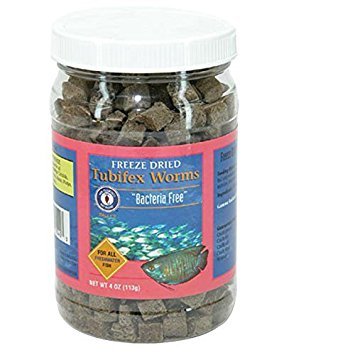
Rating: 4.5 ★ | Price: $ | Protein %: 51.5% | Container Size: 4 oz | Brand Rep: Medium
The 4-ounce container delivers the lowest cost per ounce among tubifex cubes, making it a clear choice for budget-minded aquarists with multiple tanks or large fish with big appetites. Protein content is solid at 51.5%, and fish respond well to the cubes. The main tradeoff versus the top pick is cube adhesion: these cubes are less likely to stick firmly to glass, so owners of surface-feeding fish may need a feeding ring or clip to keep them in place.
Pros
- Lowest cost per ounce among tubifex options – budget-friendly for heavy use.
- High-quality cubes that fish readily accept.
- Large 4-oz container lasts multiple months.
Cons
- Cubes may not stick well to glass; a feeding ring can help keep them in place.
Best value per ounce for dedicated fish keepers; a feeding ring offsets the weaker glass adhesion.
Best for Small Tanks Precise
Hikari Bio-Pure 0.78oz

Rating: 4.5 ★ | Price: $$ | Protein %: 60% | Container Size: 0.78 oz | Brand Rep: High
Hikari Bio-Pure delivers the highest protein content among similar freeze-dried tubifex options, backed by a brand reputation built on consistent cube quality. This single-can format excels at controlled portions in small tanks, contrasting with bulk or two-pack alternatives that may lead to overfeeding.
Best for Hikari loyalists and keepers of small setups where each cube goes a long way. The dense cubes hold shape well but resist crumbling into tiny pieces, and their tendency to float means bottom feeders may not get their share — this food suits surface-oriented fish and precise hand-feeding.
Pros
- Cubes maintain their shape without turning to dust in the container
- Fish consistently accept these worms with minimal waste
- High protein content supports growth and conditioning
Cons
- Dense cubes can be difficult to break into small pieces for very small fish
- Floating tendency means bottom feeders may miss the food entirely
A reliable choice for small-tank keepers who value protein density and brand consistency over volume or bottom-feeder accessibility.
Best for Variety Samplers
Aquatic Foods Tubifex 1oz
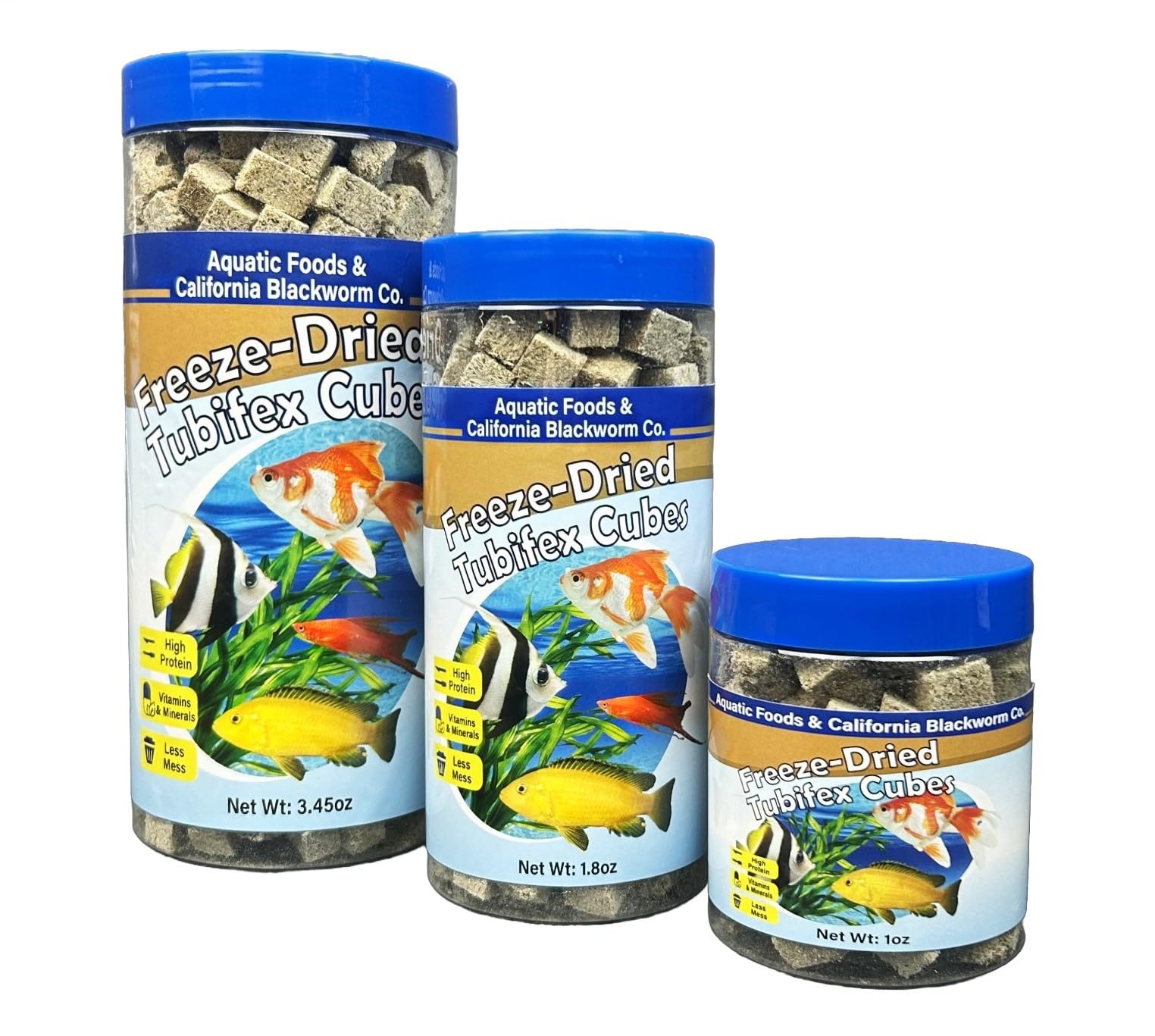
Rating: 4.7 ★ | Price: $$ | Container Size: 1 oz | Brand Rep: Low
The included free samples of pellets and wafers turn this canister into a low-risk trial kit for hobbyists curious about tubifex. Fish acceptance is strong – even previously hesitant fish have been reported to hand-feed. Compared to the proven all-rounder in this category, this brand has a shorter track record and some units may arrive with dusty contents that can cloud the water. Best for adventurous hobbyists who value variety and are comfortable with minor consistency quirks.
Pros
- Extremely palatable – can turn distant fish into hand-feeders
- Comes with free sample packs of pellets and wafers
Cons
- In some units, the jar may contain excessive dust that clouds the water – less of an issue with supervised feeding or a feeding ring
A fun starter pack for hobbyists curious about tubifex who also enjoy trying new food formulas.
Best for Mid-Size Occasional
SF Bay Tubifex 0.92oz

Rating: 4.5 ★ | Price: $$ | Protein %: 57.4% | Container Size: 0.92 oz | Brand Rep: Medium
This mid-size tubifex container offers good protein for the price, making it a decent choice for hobbyists who feed freeze-dried treats occasionally. However, some cubes may break down slowly or cloud the water, which limits its appeal for those who prioritize water clarity over cost savings.
Pros
- High protein content supports healthy growth and coloration.
- Compact size fits small tanks and infrequent feeding routines.
Cons
- Batch inconsistency can cause cubes that resist breaking down or cloud the tank water.
Best suited for fish keepers who feed tubifex rarely and can accept occasional water cloudiness in exchange for a budget-friendly protein boost.
Best for Backup Small Tanks
Hikari Tubifex 2-Pack

Rating: 4.7 ★ | Price: $$$ | Protein %: 60% | Container Size: 1.4 oz (2×0.7) | Brand Rep: Medium
This two-pack gives small-tank owners a spare can—handy when the first runs out. Fish accept these cubes readily. However, the per-ounce cost is significantly higher than buying a single larger container, making it a premium-priced convenience item. Ideal for those who prioritize backup over economy.
Pros
- Fish readily accept these cubes, making feeding reliable.
- Two-pack ensures a spare can is always on hand for small tanks.
Cons
- In small tanks, some cubes may be powdery and cloud the water.
Best for hobbyists who need a spare can for small tanks and are willing to pay a premium for the twin-pack format.
How to Choose
The most important factor when choosing freeze-dried tubifex worms isn’t protein percentage — it’s how the cubes actually behave in your aquarium.
Protein Content
Protein levels across brands range from 51% to 60%, which seems like a big difference. In practice, all freeze-dried tubifex worms are high-protein treats meant to supplement a balanced diet, not replace it.
The higher protein numbers (60%) often come from smaller cubes that are more compact. This means you’re feeding more protein per cube, but also that the cubes are denser and may float or resist crumbling. For most community tanks, a 54% product works just as well as a 60% one — the fish get plenty of protein either way.
Container Size
Container size directly affects cost per ounce and how long the food lasts. Small 0.7–0.9 oz cans are convenient for nano tanks but cost two to three times more per ounce than 4 oz bulk containers.
Larger containers, however, often trade economy for cube condition. The bottom cubes in a big tub can get crushed or turn dusty from shifting during shipping. If you don’t feed heavily, a mid-sized 1–1.5 oz container gives a good balance of value and cube integrity.
Brand Consistency
Brand reputation matters because freeze-dried cube behavior varies between batches. A brand with thousands of reviews and a long track record (like Hikari) tends to deliver predictable results — cubes that break down the same way can after can.
Less-reviewed brands or budget bulk options may show more variation: one batch sticks to glass, the next floats away. If you have sensitive fish or rely on precise placement, an established brand reduces the guesswork.
FAQ
Why do my freeze-dried tubifex worms float instead of sinking?
Most freeze-dried tubifex cubes are designed to float initially — that’s normal. They will absorb water and sink after a few minutes. If they stay floating indefinitely, the cubes may be too dense or have an airtight surface. Press the cube under the water surface with a finger or tongs to help it sink, or pre-soak it in a cup of tank water for 30 seconds before feeding.
How do I get freeze-dried tubifex cubes to stick to the glass?
Glass adhesion depends on cube texture and moisture. Dry the outside of the cube gently with a paper towel, then press it firmly against the glass for 10 seconds underwater. If it still won’t stick, try a different brand — some cubes have a rougher surface that grips better. A feeding clip or weighted dish is a reliable workaround.
Are freeze-dried tubifex worms safe for all freshwater fish?
They are safe for most community fish, including tetras, cichlids, goldfish, and bettas. However, very small fish (like newborn fry) may struggle with large cubes. Also, some individual fish simply refuse tubifex — that’s normal. Introduce it slowly and watch for any digestive issues, though problems are rare with freeze-dried products.
How much freeze-dried tubifex worms should I feed my aquarium fish?
Feed only as much as your fish can consume in 2–3 minutes, once or twice a week as a treat. Overfeeding can foul the water quickly because uneaten cubes break down into fine particles. Start with one cube for a small tank (10–20 gallons) and adjust based on how fast your fish eat it.