This post contains affiliate links. We may earn a small commission when you buy through our links — at no extra cost to you.
Most products marketed as puffer fish food are actually general carnivore diets. Pufferfish have a unique need: hard-shelled foods to wear down their continuously growing beaks. Relying on soft treats alone leads to overgrown beaks and nutritional gaps.
This guide cuts through the confusion by separating the one true staple from the supplements. The right pellet forms the foundation, while freeze-dried treats add variety and beak maintenance. Size and form matter more than brand names when matching food to your puffer’s species.
Whether you own a pea puffer or a Mbu, you’ll leave knowing exactly which food goes in the bowl every day and which stays in the cupboard for special occasions.
Top Picks
Best for Daily Staple
Hikari Carnivore Pellets
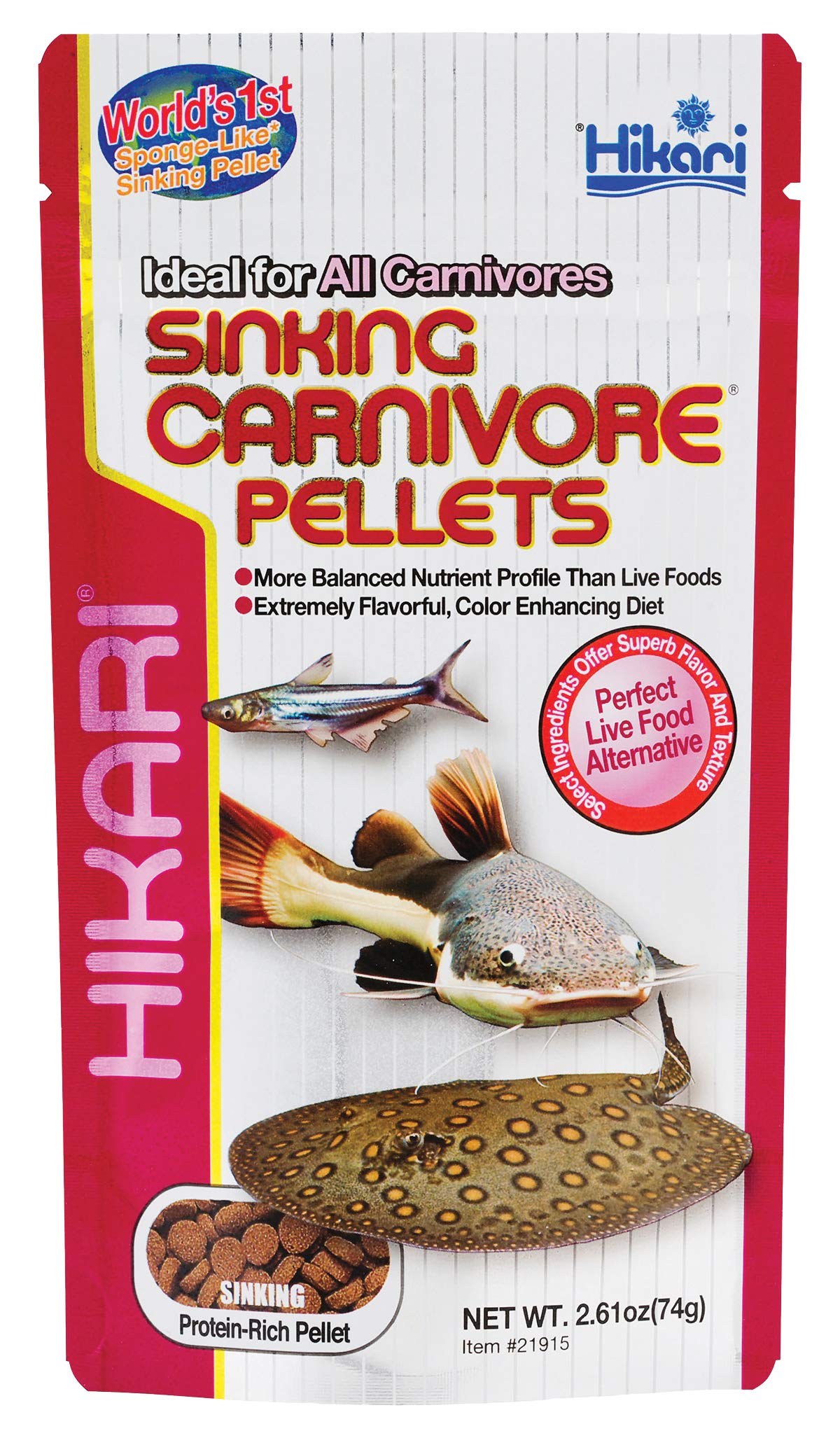
Rating: 4.8 ★ | Price: Mid-Range | Form: Sinking Pellet | Diet Completeness: Complete staple | Sinking or Floating: Sinks | Piece Size: Small
Formulated as a complete daily diet, these sinking pellets deliver high digestible protein from krill meal and astaxanthin to support color. The sinking format reaches bottom-feeding puffers directly. Fish consistently accept them, and the recipe works across many carnivorous species, making this a practical staple for daily feeding.
This is best for pufferfish owners who want a simple daily pellet that doesn’t require supplements. The small pellet size suits medium puffers well but may be too small for large species like Mbu or Fahaka — a notable tradeoff. This is a complete diet, not a treat.
Pros
- Fish consistently accept these pellets, even picky puffer species.
- Works for a range of carnivorous fish beyond puffers.
- Cost-effective as a daily staple compared to treat-only options.
Cons
- Pellet size may be too small for larger pufferfish species such as Mbu or Fahaka.
For pufferfish owners wanting a no-fuss daily pellet that covers nutrition without supplements, this is a practical choice.
Best for Picky Eaters
Hikari Freeze-Dried Bloodworms

Rating: 4.6 ★ | Price: Budget | Form: Freeze-dried granule | Diet Completeness: Treat only | Sinking or Floating: Floats then sinks | Piece Size: Tiny
The Hikari freeze-dried bloodworms offer extremely high palatability, backed by thousands of positive reviews from owners of picky puffers and bettas. Unlike the top-pick Carnivore Pellets, this is a treat, not a complete diet, but its broad appeal makes it a reliable tool for coaxing reluctant eaters and adding variety. Best for pufferfish owners who need to entice picky eaters or want to supplement a pellet-based diet. However, these bloodworms lack the hard-shelled ingredients required for beak maintenance, so they should never serve as the sole food source.
Pros
- High-quality treat that fish adore, backed by strong positive feedback.
- Great value for the size, making it an affordable supplement.
Cons
- Not a complete diet – lacks hard-shelled ingredients needed for pufferfish beak maintenance.
An affordable, high-appeal treat that works well as a dietary supplement, but not a staple for pufferfish.
Best for Large Puffers
Tetra JumboKrill

Rating: 4.7 ★ | Price: Premium | Form: Freeze-dried whole krill | Diet Completeness: Supplement | Sinking or Floating: Sinks | Piece Size: Large
These jumbo freeze-dried krill help maintain pufferfish beaks through their hard exoskeleton. The large canister offers good value, but this is a supplement, not a daily diet. Some fish may refuse the krill, and the container can contain broken pieces. Best as an occasional treat for large puffers.
Pros
- Hard exoskeleton helps wear down pufferfish beaks during occasional feeding
- Large canister provides good value for multi-puffer households
Cons
- Palatability varies — some fish may ignore these krill entirely
Works well as a treat for large puffers needing beak maintenance, but not a daily staple — confirm your fish accept it before buying a full canister.
Best for Budget Treat
Tetra BabyShrimp

Rating: 4.5 ★ | Price: Budget | Form: Sun-dried baby shrimp | Diet Completeness: Supplement | Sinking or Floating: Sinks | Piece Size: Large
Tetra BabyShrimp offers a budget-friendly option for occasional feeding, with fish that accept it enjoying the treat. However, the shrimp pieces can be too large and hard for small puffers, and some fish reject them entirely. This makes it a risky choice for picky or small-mouthed species, better reserved for larger, less discriminating fish.
Pros
- Quality shrimp treat that fish enjoy
- Great value for the price
Cons
- Shrimp pieces can be too large for small fish and some fish reject them
Best for larger puffer species that can handle whole shrimp and are not picky eaters.
How to Choose
Pufferfish need a hard-shelled food like krill or shrimp regularly to wear down their beaks, but a complete pellet should form the dietary base.
Item Form
The form determines whether a food works as a staple or a supplement. Pellets are nutritionally complete and sink to the bottom where bottom-dwelling puffers feed naturally. Freeze-dried treats like bloodworms or krill offer variety but lack essential vitamins and minerals for long-term health.
A common mistake is feeding only freeze-dried foods because fish love them. Over time, this leads to malnutrition and beak overgrowth. Stick to a high-quality pellet as the daily base and reserve freeze-dried items for occasional enrichment.
Diet Completeness
Not all foods labeled for carnivores are complete diets. A complete pellet contains balanced protein, fats, vitamins, and minerals. Treats often list only one ingredient, like bloodworms or krill, which means they miss key nutrients.
Check the feeding instructions: if it says ‘supplement’ or ‘treat,’ it’s not a staple. For pufferfish, the only complete option in this category is a sinking carnivore pellet. Everything else should be rotated in sparingly to prevent nutritional gaps.
Sinking or Floating
Pufferfish are primarily bottom feeders. Floating food may go uneaten, rot, and foul the water. Sinking pellets or freeze-dried items that sink quickly after a brief float are ideal. Some freeze-dried foods float indefinitely; those require pre-soaking to sink.
If your puffer ignores food floating at the surface, switch to a sinking formula. The Hikari pellets sink immediately, making them a natural choice for species like figure 8 or green spotted puffers that patrol the bottom.
Piece Size
Size matching is critical. A large Mbu puffer needs jumbo krill or shrimp pieces to chew and wear down its beak. A small pea puffer cannot handle whole shrimp and may choke or refuse them. Conversely, tiny pellets frustrate large puffers that expect a substantial mouthful.
Know your puffer’s adult size before buying. For small species (under 4 inches), choose small pellets or finely crushed freeze-dried treats. For large puffers (over 8 inches), look for jumbo krill or whole shrimp. Mid-sized pellets work for most medium puffers.
FAQ
Can I feed my pufferfish only freeze-dried bloodworms?
No. Freeze-dried bloodworms are a treat, not a complete diet. They lack the hard shells needed to wear down your puffer’s beak and miss essential nutrients. Relying on them alone leads to malnutrition and overgrown beaks. Always pair bloodworms with a quality carnivore pellet.
What size pellets are best for a figure 8 puffer?
Figure 8 puffers have small mouths, so tiny sinking pellets like Hikari Carnivore Pellets work well. Larger pellets may be refused. Stick to pellets around 2-3 mm in diameter. If your figure 8 struggles, soak the pellets briefly to soften them.
Why do my pufferfish ignore freeze-dried krill?
Freeze-dried krill can be hit-or-miss. Some puffers simply do not recognize it as food, especially if they were raised on pellets. The texture and smell differ from live prey. Try soaking the krill in tank water or garlic supplement to increase appeal. If refusal persists, use the krill as a rare treat or switch to a different brand.
Is Tetra JumboKrill safe for small pufferfish?
Not recommended. Tetra JumboKrill pieces are large and hard. Small puffers may choke or struggle to eat them. The product is best suited for large species like Mbu or Fahaka puffers over 6 inches. For small puffers, crush the krill into smaller bits or choose a treat sized for their mouths.