This post contains affiliate links. We may earn a small commission when you buy through our links — at no extra cost to you.
Every African cichlid keeper has bought a bag labeled ‘slow sinking’ only to watch pellets hit the bottom in seconds. The same story plays out with ‘floating’ pellets that drift down before fish can grab them. This disconnect between label and reality turns feeding into guesswork.
The real issue isn’t bad food—it’s that sinking behavior depends on pellet density, size, and water content in ways manufacturers rarely test well. Most foods are perfectly nutritious but behave differently than promised. A pre-soaked pellet can fix most complaints, but that extra step isn’t always convenient.
This guide cuts through the marketing by focusing on how each food actually performs in a tank. Whether you keep mbuna peacocks or big Oscars, these picks deliver what they claim where it matters most: in the water.
Top Picks
Best for Bottom-Dwelling Cichlids
Hikari Gold Sinking Mini

Rating: 4.7 ★ | Price: $ | Size & Form: Pellet mini | Sink/Float: Sinking | Features: High protein, color enhancing
The mini pellet sinks quickly without disintegrating, delivering high-protein nutrition right where mbuna and peacocks feed. Its wheat-germ base and beta carotene boost subtle reds and oranges without artificial additives, and fish take to it immediately — so less food ends up fouling the substrate.
This pellet suits keepers of small to medium-sized mbuna, peacocks, and haps that hunt at midwater to bottom. Hobbyists with very large cichlids may find the mini size leads to overlooked food or extra servings; for those tanks, a larger pellet is a better fit. The 12-ounce bag stretches further than most at this price point, making it a practical staple for multi-tank setups.
Pros
- Fish eagerly accept the sinking pellets, cutting down on uneaten waste.
- Budget-friendly 12-ounce bag offers strong value per feeding.
- Supports natural color vibrancy through beta carotene and NS Germ.
Cons
- Water clouding can occur after feeding, especially if portions are too heavy.
- Pellet size may be too small for large cichlids, causing them to be missed or demanding extra feedings.
For the typical African cichlid keeper on a budget, Hikari Gold Sinking Mini is a dependable staple that fish love — just look elsewhere if your tank is dominated by large predators that need bigger mouthfuls.
Best for Top-Feeding Cichlids
Tetra Floating Pellets

Rating: 4.6 ★ | Price: $ | Size & Form: Pellet | Sink/Float: Floating | Features: ProCare immune support
TetraCichlid Floating Pellets come in at the lowest price among floating options while maintaining high palatability for species like Oscars that feed from the surface. The ProCare formula supports immune health, but this is not a sinking food — it’s designed for fish that grab pellets before they drift. For bottom-dwelling African cichlids such as mbuna, a sinking pellet like the top pick is the better match.
This food suits beginner aquarists keeping medium to large top-feeding cichlids who want a simple, budget-friendly staple. The floating design makes it easy to monitor feeding, though occasional pellets may sink sooner than expected — a tradeoff that matters less if your fish are fast swimmers or you feed in smaller portions.
Pros
- Budget-friendly price with very high acceptance from top-feeding cichlids
- Floats well enough to observe feeding behavior and avoid overfeeding
- ProCare formula adds immune support without raising the cost
Cons
- Some pellets sink faster than expected, reducing feeding control for slower fish
- Container has significant empty headspace, which can feel wasteful for the volume
If your cichlids are top-feeders and you want the lowest-cost floating pellet that fish actually eat, this is the clear pick. For mixed tanks with bottom-dwellers, look to a sinking option instead.
Best for Color & Health Focus
Northfin Cichlid 2mm
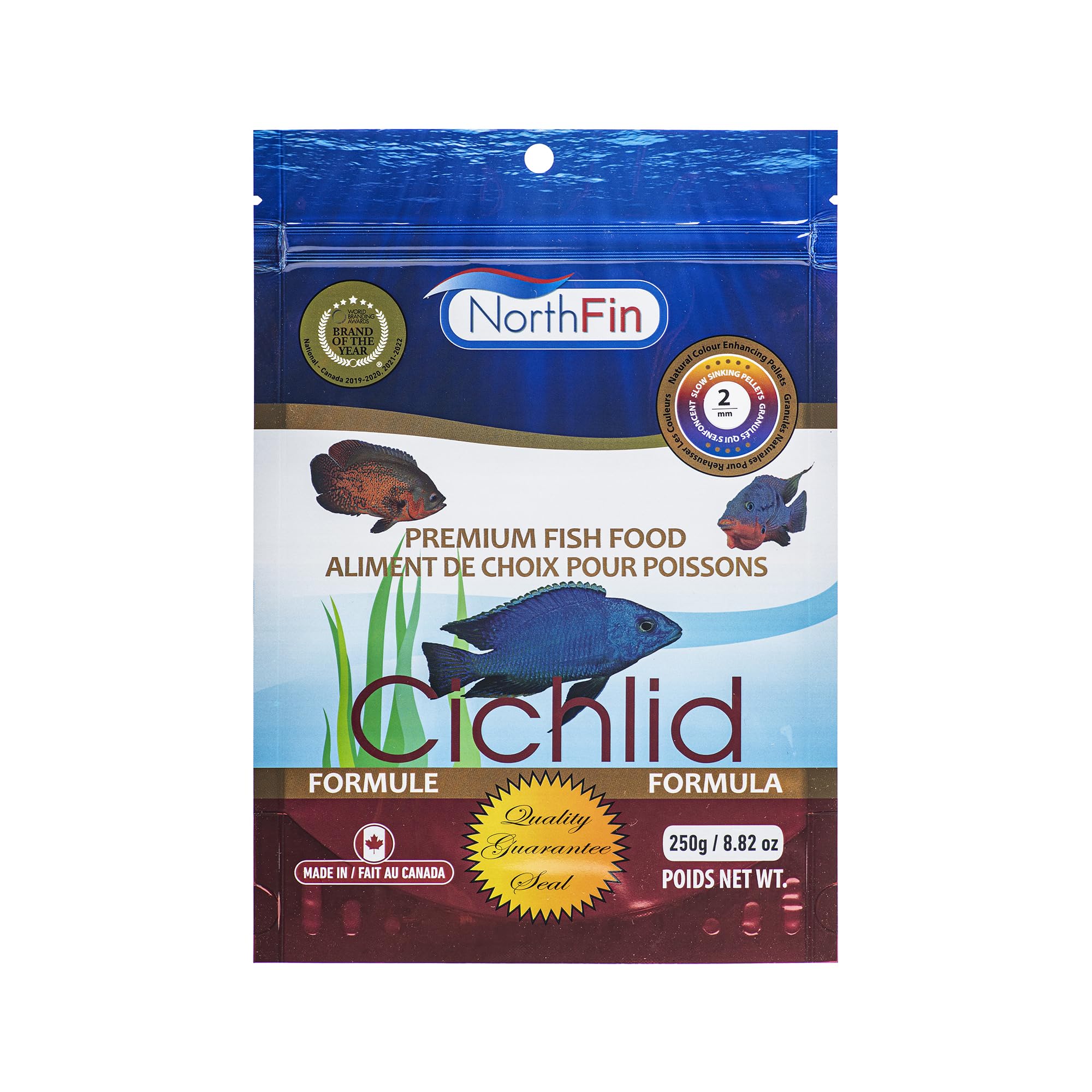
Rating: 4.5 ★ | Price: $$ | Size & Form: Pellet 2mm | Sink/Float: Slow sink | Features: No fillers, natural astaxanthin
Northfin’s formula uses whole salmon and krill with no fillers or hormones, delivering 42% crude protein that supports growth and color in small to medium cichlids. The pellets sink rapidly despite the label, so they’re best for bottom-feeding mbuna and smaller species rather than surface feeders or large fish. This is the right choice for aquarists who prioritize ingredient quality over sink behavior and have fish that can handle the 2mm size.
Pros
- All-natural, no-filler formula with whole salmon and krill as first ingredients.
- Fish accept it eagerly, with high palatability across many species.
- Natural astaxanthin enhances coloration without artificial hormones.
Cons
- Pellets sink faster than ‘slow sinking’ suggests, which may not suit surface-feeding cichlids.
- 2mm pellet size is small; large cichlids may find it unsatisfying.
This is the go-to option for aquarists who value ingredient purity over perfect sinking behavior and have small to medium cichlids.
Best for Small Cichlids, Color
Omega One Super Color
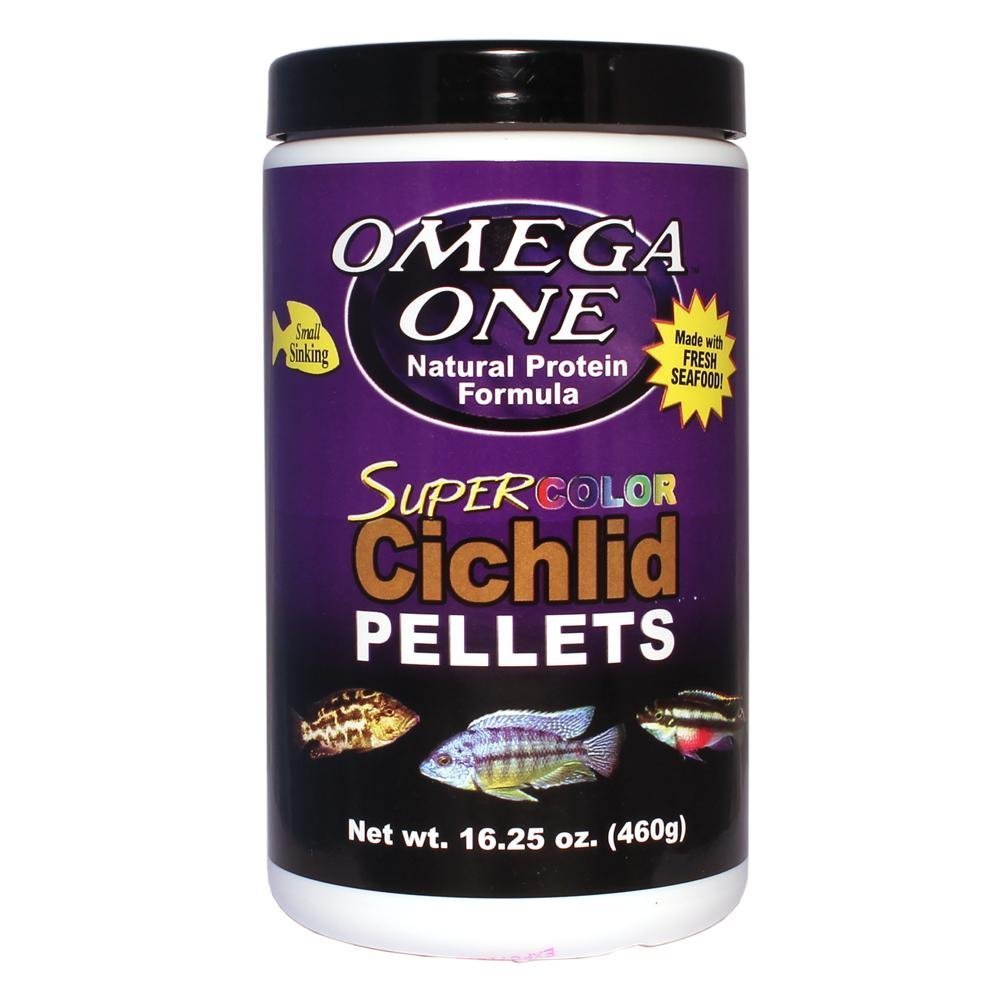
Rating: 4.7 ★ | Price: $$$ | Size & Form: Pellet 2mm | Sink/Float: Sinking
Omega One packs 42% crude protein from whole salmon and krill into a 2mm sinking pellet — a clear step up from the general-purpose Hikari Gold formula. The tradeoff is pellet size: too small for larger cichlids like Oscars or frontosa, but ideal for juvenile peacocks, mbuna, and other fish that take smaller bites. Premium pricing reflects the ingredient quality and large 16.25 oz container, making it a strong value for aquarists focused on color enhancement and high-protein diets.
Pros
- Cichlids show strong feeding response to these pellets
- Large container with high protein content for sustained coloration
- Low-starch formulation helps maintain clear water
Cons
- 2mm pellets are too small for large cichlids that need bigger bites
For keepers of small to medium African cichlids who want high protein and visible color gains, this is the best ingredient-focused sinking pellet in the set.
Best for Large Cichlids (Oscars)
Hikari Staple Floating Large

Rating: 4.6 ★ | Price: $ | Size & Form: Pellet large | Sink/Float: Floating | Features: Stabilized Vitamin C
The Hikari Staple Floating Large pellets are sized for adult cichlids with big mouths, making them a practical option for owners of large African peacocks or Frontosa who want to monitor feeding. The floating format lets you see exactly how much each fish eats, a clear advantage over sinking foods that disappear into the substrate. This food suits keepers of large, top-feeding cichlids on a budget, but the large pellet size limits its use to fish that can comfortably swallow it—smaller African cichlids like mbuna and most peacocks will struggle, and bottom-feeders miss out entirely.
Pros
- Pellet size matches big-mouthed cichlids like Oscars and large peacocks
- Floating design lets you monitor how much each fish eats
- Budget-friendly price for a staple large-pellet food
Cons
- Too large for small to medium African cichlids—check your fish’s mouth size first
- Floating format less suitable for bottom-feeding species that need sinking pellets
A solid choice for owners of large, top-feeding cichlids on a budget, but check pellet size against your fish’s mouth before buying.
Best for Top/mid-Water Feeders
Tetra Cichlid Crisps

Rating: 4.8 ★ | Price: $$ | Size & Form: Flake | Features: Algae Extract
Tetra Cichlid Crisps delivers exceptional value with its large 8.82 oz bottle of high-quality flakes that top- and mid-water cichlids find irresistible. However, the flake format means it’s not suitable for bottom-feeding species like mbuna that require sinking pellets — a deliberate design choice rather than a flaw. For aquarists who prefer flakes and keep fish that feed near the surface, this remains a standout option.
Pros
- Large 8.82 oz bottle provides budget-friendly value for multi-fish tanks.
- Flakes are highly palatable, appealing to picky eaters and top-water feeders.
Cons
- Flakes float, so bottom-feeding cichlids like mbuna may miss out on the meal.
Best for keepers of top- and mid-water cichlids who prefer flakes and want a cost-effective large container — not for those needing sinking pellets for bottom feeders.
Best for Medium/large Cichlids
Fluval Bug Bites

Rating: 4.6 ★ | Price: $$$ | Size & Form: Pellet | Sink/Float: Slow sink | Features: Black Soldier Fly Larvae
Black Soldier Fly Larvae as the first ingredient provides a natural protein source that can boost coloration in medium to large cichlids. However, the premium cost per ounce and the chance some fish will reject the pellets mean this food is best used as a supplement rather than a daily staple.
Pros
- Insect protein as first ingredient mimics natural diet
- Can enhance coloration and vitality in medium to large cichlids
Cons
- Sinking behavior can be unpredictable – some pellets sink immediately while others float
For cichlid keepers who want a natural insect-based supplement to rotate into their feeding schedule, this offers a unique protein source despite inconsistent sinking.
Best for All Sizes, Premium
Xtreme Peewee 1.5mm
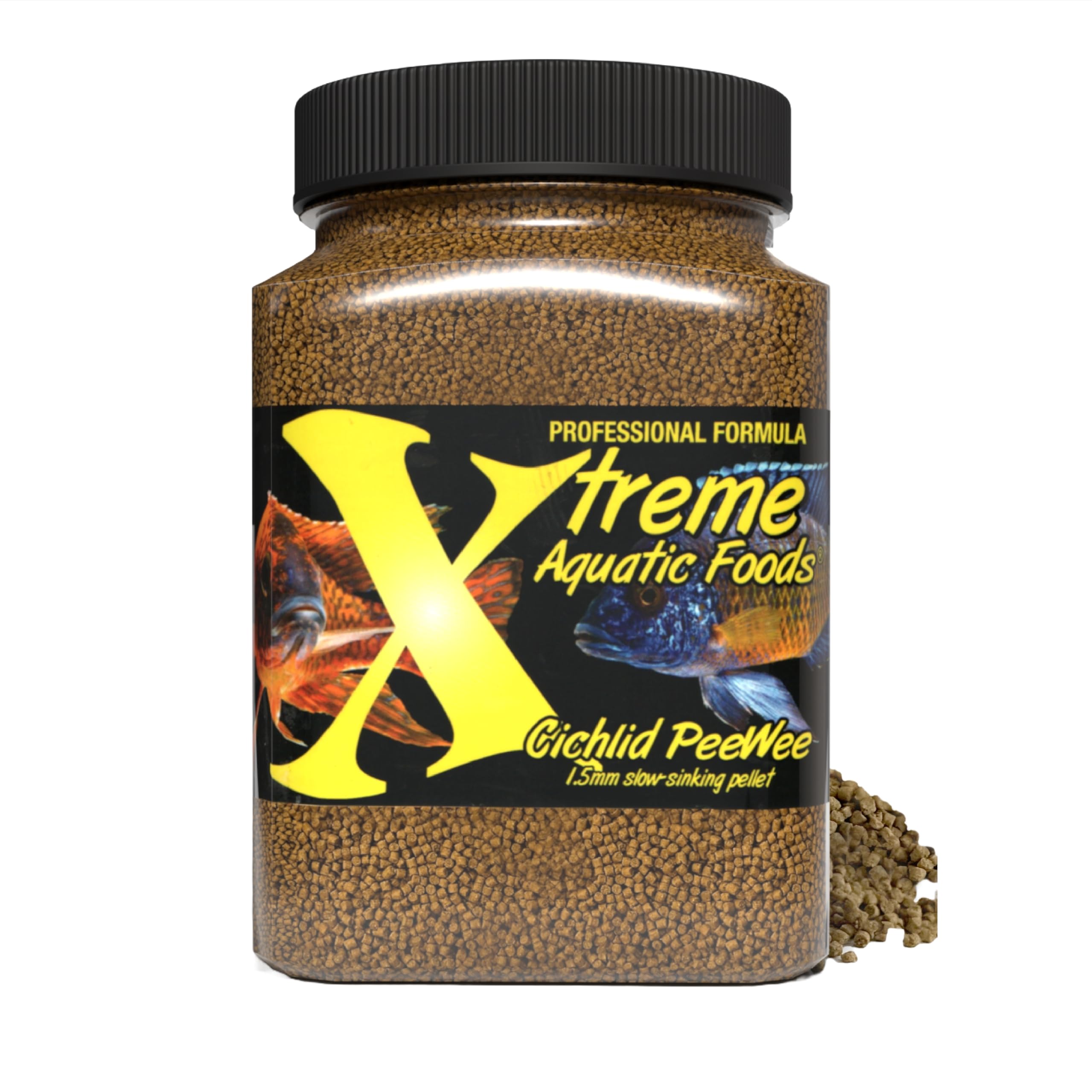
Rating: 4.6 ★ | Price: $$$ | Size & Form: Pellet 1.5mm | Sink/Float: Slow sink
These 1.5mm pellets from Xtreme provide high-quality farm-grown ingredients that cichlids love, with noticeable improvements in color and growth. However, the pellets sink far faster than the ‘slow sinking’ label suggests, and the small size can get lost in gravel for bottom feeders. At a premium price, this food suits committed hobbyists who prioritize ingredient quality over convenience.
Pros
- High-quality farm-grown ingredients support visible health improvements.
- Small 1.5mm pellets appeal to fry and small cichlids, with strong acceptance and color enhancement.
Cons
- The tiny pellets can settle into gravel, making them less accessible for bottom-feeding fish.
Choose Xtreme Peewee if you want the cleanest ingredient list and are willing to adjust feeding technique for fast-sinking pellets; otherwise, a more conventional sinking pellet like Hikari Gold is easier to manage.
Best for Medium-Sized Cichlids
Xtreme Big Fella 3mm

Rating: 4.6 ★ | Price: $$$ | Size & Form: Pellet 3mm
This 3mm pellet delivers high-quality protein and natural color enhancement that medium-sized cichlids readily accept. However, the name ‘Big Fella’ is misleading — the pellets are too small for large cichlids over 8 inches, and the fast sink rate limits use to mid- to bottom-feeding fish.
Pros
- Cichlids show strong preference for this food.
- Natural color enhancement without artificial additives.
Cons
- Pellet size is 3mm despite the ‘Big Fella’ name — too small for cichlids over 8 inches.
Best suited for medium-sized cichlids (3-5 inches) that feed in the middle or bottom of the tank; skip this if you keep large cichlids like Oscars.
Best for Herbivorous Cichlids
Hikari Excel Sinking Mini

Rating: 4.7 ★ | Price: $$ | Size & Form: Pellet mini | Sink/Float: Sinking | Features: Spirulina, wheat germ
This sinking pellet is built around spirulina and wheat germ to support digestion in herbivorous cichlids like mbuna and tropheus – they take to it readily and colors deepen over time. The mini size suits small to medium fish, but water clouding can occur in some tanks, and it is not meant for large carnivorous cichlids or general-purpose feeding.
Pros
- Herbivorous cichlids readily accept this formula, especially mbuna and tropheus.
- Spirulina content enhances natural colors in African cichlids.
Cons
- May cloud water in some aquarium setups.
Best for dedicated herbivore tanks with mbuna or tropheus, but not a universal cichlid food – choose the top pick if you keep mixed cichlid species.
Best for Large Tanks, Budget
Aqueon Slow Sinking
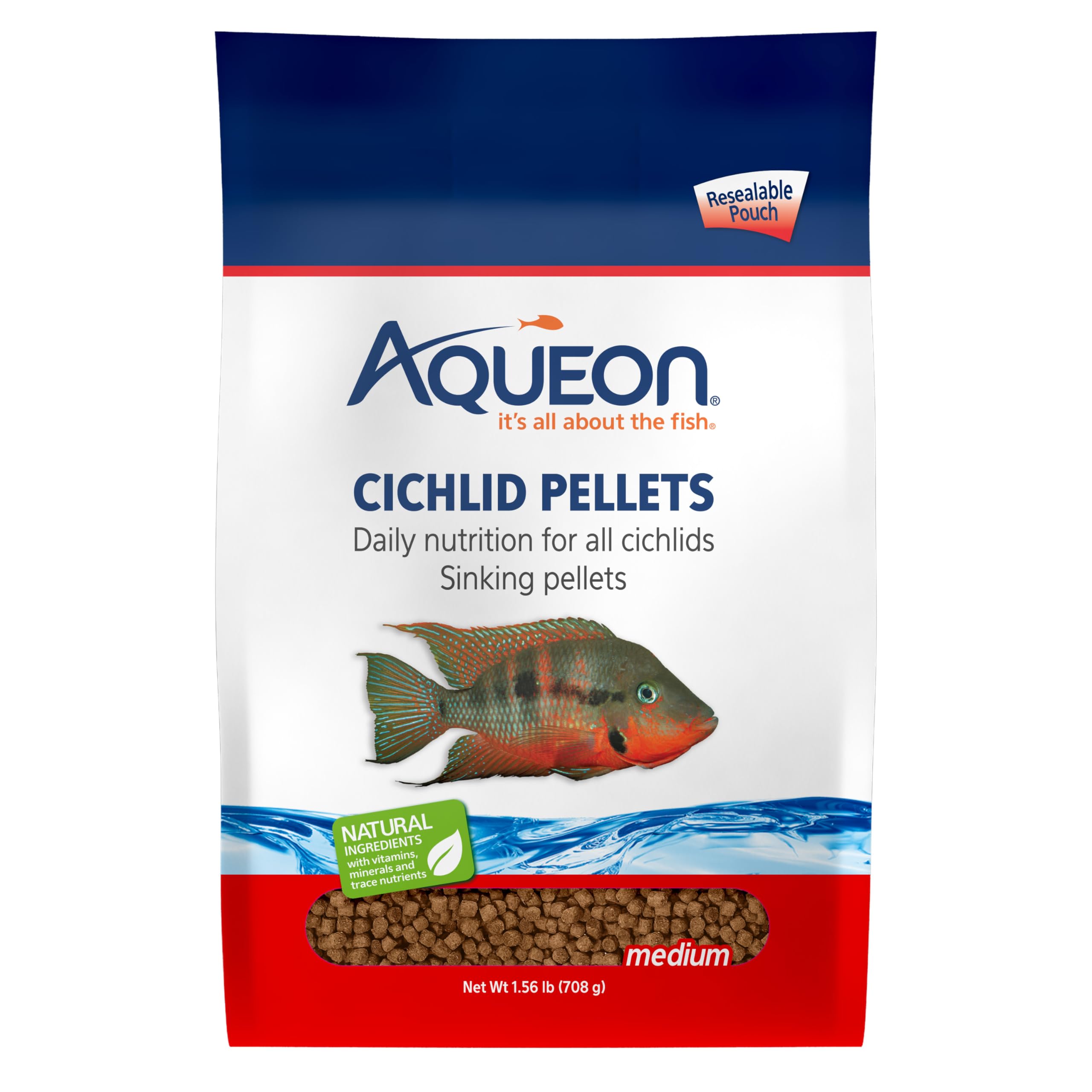
Rating: 4.3 ★ | Price: $ | Size & Form: Granule 3mm | Sink/Float: Slow sink
This 25-ounce bag offers the lowest cost per ounce among cichlid pellets, ideal for very large tanks. However, sinking behavior varies — some pellets float, others sink instantly — and acceptance depends on the fish; picky cichlids may refuse it. Best suited for tanks with undemanding eaters where budget is the top concern.
Pros
- Massive 25-ounce bag provides the lowest cost per ounce — ideal for large tanks on a budget.
- Pellets are palatable to cichlids that aren’t picky, offering decent nutrition for daily feeding.
Cons
- Pellets may cloud the water in some tanks, requiring more frequent cleaning.
Worth considering only for large tanks with non-picky cichlids where cost is the primary concern; otherwise, a more consistent sinking pellet from a top-rated brand is a safer choice.
Best for Medium Cichlids, Health
Hikari Bio-Gold Floating

Rating: 4.7 ★ | Price: $$ | Size & Form: Pellet medium | Sink/Float: Floating | Features: Probiotics, Vitamin C
Hikari Bio-Gold’s probiotics help reduce waste and enhance color, making it a solid choice for digestive health. However, the medium pellet size is better suited for smaller to medium cichlids; larger species may find it too small. It also has fewer long-term user reports compared to top sellers in this category.
Pros
- Probiotics aid digestion and reduce aquarium mess.
- High palatability ensures fish eat eagerly.
Cons
- Medium pellet size may be too small for large cichlids.
A targeted option for cichlid owners focused on digestive wellness with medium-sized top-feeding fish.
How to Choose
The most important purchase factor for African cichlid food is matching the pellet’s actual sinking behavior and size to your fish’s feeding zone and mouth gape.
Pellet Size & Form
Pellet diameter determines which fish can eat it. A 2mm pellet fits most juvenile and adult mbuna and peacocks, while Oscars need 4-6mm. Too small and large fish struggle to pick them up; too large and small fish can’t bite through.
Flakes float longer and suit top- and mid-water species, but they dissolve quickly and can cloud water if overfed. Pellets are more stable and sink according to density. Choose based on whether your cichlids feed at the surface, in midwater, or on the bottom.
Floating vs. Sinking Behavior
No pellet sinks or floats perfectly 100% of the time because water absorption changes density within seconds. ‘Slow sinking’ labels are aspirational: most pellets drop faster than claimed, especially if left dry in the tank.
Pre-soaking in a cup of tank water for 30 seconds reduces sink speed and softens pellets, making them easier to eat and less likely to be rejected. If you need a true floating food, choose a pellet specifically advertised as floating and test a small batch first.
Crude Protein Percentage
African cichlids need 35-45% protein from animal sources for growth and color, but herbivorous species like mbuna require more vegetable matter (spirulina, algae) and less protein to avoid bloating. A food with 42% protein and whole fish as the first ingredient supports most omnivorous cichlids.
Check the guaranteed analysis: if protein is below 35%, the food is likely too low for active cichlids. If above 45% without plant content, it may cause digestive issues in mbuna. Rotate between a high-protein pellet and a spirulina-based one to mimic natural diet variation.
Water Clarity
Cloudiness after feeding usually comes from undigested proteins or fillers breaking down in the water column. Foods with low starch and high digestibility (like Northfin and Omega One) leave water clearer than budget pellets with more fillers.
Overfeeding is the most common cause of cloudy water. Feed only what your fish can consume in 2-3 minutes, and remove uneaten pellets after 5 minutes. If clouding persists, switch to a food with no fillers or soak pellets beforehand.
Special Features
Probiotics (like Hikari’s Bio-Gold) improve digestion and reduce waste output, which can improve water quality over time. Color enhancers like astaxanthin and spirulina amplify reds and yellows naturally without artificial dyes.
Herbivore-specific formulas (like Hikari Excel) use spirulina and wheat germ to match the dietary needs of mbuna and tropheus. Using a general-purpose carnivore pellet for herbivores can lead to bloating and decreased lifespan.
FAQ
Why does my slow sinking cichlid food sink so fast?
Nearly all ‘slow sinking’ pellets sink faster than advertised because manufacturers test in ideal conditions, not in tanks with water currents and fish movement. The pellet’s density and water absorption cause it to drop rapidly. Pre-soaking in tank water for 30 seconds slows the sink rate and makes the food easier for fish to catch.
What pellet size is best for African cichlids?
For most adult African cichlids (mbuna, peacocks, haps), a 2mm pellet works well. Juvenile fish need 1-1.5mm, while large species like Oscars require 4-6mm. Match the pellet diameter to your fish’s mouth opening; if they spit out the pellet or struggle to bite it, the size is wrong.
Does cichlid food really cloud the water?
Yes, some foods cloud water more than others. Budget pellets with fillers break down quickly, releasing starch and protein into the water column. Premium foods with high digestibility (like Northfin or Omega One) typically cause less clouding. The easiest fix is to feed sparingly and remove uneaten food within five minutes.
Should I soak cichlid pellets before feeding?
Yes, pre-soaking in tank water for 20-30 seconds is highly recommended. It softens the pellet, slows the sink rate, and makes the food easier to digest. Many cichlids that reject dry pellets will eat them after soaking. This simple step solves the majority of feeding complaints.