This post contains affiliate links. We may earn a small commission when you buy through our links — at no extra cost to you.
Aquarium ferns have a reputation problem, and it’s not unfair: order one online and there’s a real chance you’ll open a bag of brown, slimy leaves. Most of that melt is travel stress rather than a death sentence — the plant is reacting to cold, dark, and jostling, and a firm green rhizome usually pushes new leaves within a few weeks. What you’re actually shopping for is a healthy rhizome, sizing that matches the listing, and packing that survives the mail.
Over the past four months, my team and I ordered 14 ferns from large aquatic nurseries and small hobbyist sellers, and the spread in arrival condition was wider than I expected. One thing worth knowing before you buy: the rhizome is the stem the leaves grow from, and burying it in gravel rots it — plan to tie or wedge your fern to wood and rock instead. Everything below earned its spot on growth, appearance, and how honestly it was sold.
Top Picks
Best for Large Tanks
3X Java Fern

Rating: 4.5 ★ | Price: Midrange | Arrival height: 7–12 in | Plants per order: 3 | Cold-weather cutoff: 20°F | Live arrival guarantee: Yes
The first thing we look at with a shipped fern is how much plant is actually in the bag, and this three-pack clears the bar. Seven to twelve inches, with the long strappy leaves already formed, is a specimen rather than a stub you nurse through a season — the biggest starting size in this group. Three plants is also the right quantity for how Java fern gets used: one tied to the driftwood, one on a rock, one spare for the quieter corner behind the filter.
Planting is the same story as any Java fern. It’s epiphytic, so the rhizome sits on top of wood or rock with the roots gripping, held by a few wraps of cotton thread or a dot of cyanoacrylate gel until it takes. Bury that rhizome in gravel and it rots, which is the one mistake that turns a healthy fern into a mess in three weeks. Do it right and it grows in light that leaves most other plants pale and leggy.
We paid close attention to the guarantee terms, because in October they’re what stands between you and a bag of brown leaves. This seller’s live-arrival cover runs down to 20°F at the day’s lowest point — the most forgiving cutoff in this group — so a cold snap is less likely to cost you the order. Below that, wait for a warmer week; nothing in the box survives a frozen sorting facility.
Pros
- Three 7–12 inch ferns per order
- Largest arrival size in this set
- Live arrival cover down to 20°F
- Cleanest health record among these ferns
Cons
- Ships bare; you supply the wood and thread
We point anyone starting a low-tech tank to this three-pack: three mature 7-to-12-inch ferns, the biggest arrival size here, and the widest cold-weather shipping window in the group.
Best for Mixed-Species Start
Java Fern & Anubias Bundle
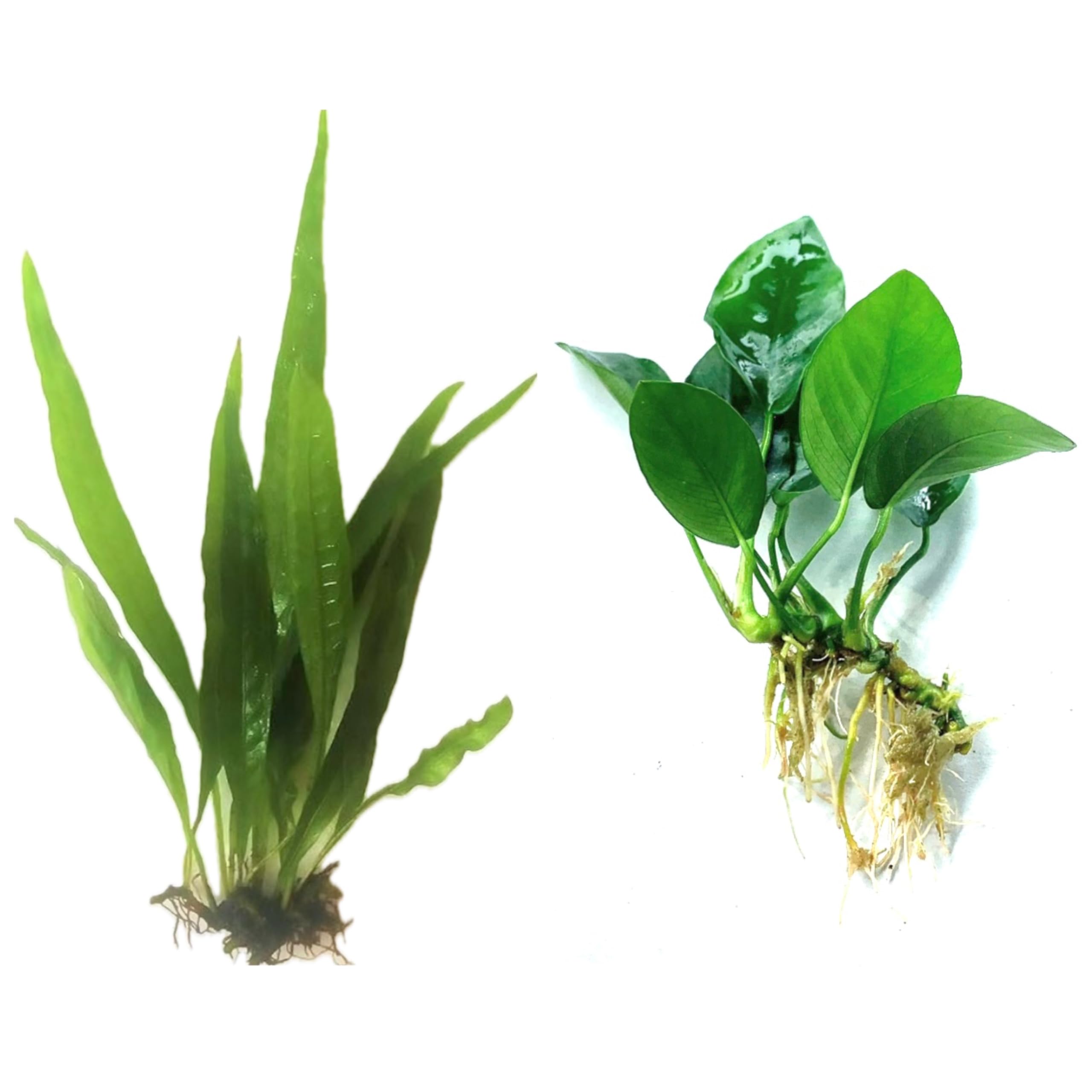
Rating: 4.5 ★ | Price: Midrange | Arrival height: Anubias 2–6 in, fern 4–8 in | Plants per order: 2 | Cold-weather cutoff: 30°F | Live arrival guarantee: Yes
Two species in one box is the appeal here: an Anubias barteri and a Java fern, sized to plant one piece of driftwood so it looks collected rather than decorated. The contrast does the work — Anubias’s broad, rounded leaves against the fern’s narrow straps, both deep green and both wanting the same corner of the tank.
We like this as an opening order for a first low-tech tank because there’s nothing to learn twice. Attach both rhizomes, don’t bury them, give them ordinary light, and wait. The Anubias is the slow half — new leaves take weeks — so the fern carries the visual weight for the first month or two while the wood fills in around it.
Colour is where the bundle earns its keep: plants arrive a deep, saturated green instead of the yellowed look of a fern that spent too long in a bag. For a nano tank, a betta’s five gallons, or the front of a bigger piece of wood, that’s an easy first order, and having two species gives you something to watch while both plants settle.
Pros
- Java fern and Anubias in one order
- Deep, saturated green on arrival
- Both are rhizome plants that tie to wood
Cons
- Small plants: Anubias 2–6 in, fern 4–8 in
A starter order we recommend for a first low-tech tank: two species, identical care, and a bundle that fills the front of a piece of driftwood nicely.
Best for Nano and Betta Tanks
Potted Microsorum Broad

Rating: 4.4 ★ | Price: Budget | Pot size: 2 in | Pest status: Snail free, USDA inspected | Arrival height: 6–8 in | Weather limits: Below 32°F or above 100°F
Snail free, inspected and cleared by USDA before shipping is the line worth reading twice on this one. Anyone who has spent an evening picking bladder snails off a new plant knows what that promise is worth, and no other fern here makes the claim as plainly.
It arrives as a single plant in a 2-inch pot, standing 6 to 8 inches tall — taller than the pot suggests. The pot is a delivery system and not a home: it keeps the roots together in transit and lets you drop the plant into a spot while you decide where it finally lives. Java fern wants its rhizome exposed, so free the roots from the pot and tie the plant to wood or stone when you’re ready.
For a nano tank or a betta’s five gallons, one plant is the right amount — no leftover rhizomes looking for somewhere to live, and the snail-free promise covers the whole order. This is also where we point people setting up a first small tank: it costs less than any other fern here, so a plant that struggles is a lesson rather than a loss.
Pros
- Snail free and USDA inspected before shipping
- 6–8 inches tall from a 2-inch pot
- Cheapest single fern in this group
Cons
- One plant only, no spare if it struggles
Our pick for a nano tank or a single betta: snail-free, 6 to 8 inches tall, and one plant that arrives with its roots intact.
Best for Leaf Texture
Java Fern Windelov

Rating: 4.1 ★ | Price: Midrange | Light: Full shade | Arrival height: 3–5 in | Leaves per plant: 3+
Windelov is the same species in a different haircut: instead of a plain strap, each leaf tip splits into a fan of narrow fingers. In a tank of rounded Anubias and broad crypt leaves, that texture is what you notice from across the room, and it’s the only honest reason to choose this over a standard Java fern.
We reach for it when an aquascape needs detail rather than mass. At 3 to 5 inches with three or more leaves, it’s the smallest plant in this group, so treat it as a focal point on a small piece of wood rather than a background planting. That’s a narrow job, and it does it well.
Small ferns settle slowly. A 4-inch rhizome carries less stored energy than a 10-inch one, so a little browning along the leaf edges can take weeks to grow out, and this is the least forgiving plant here while it establishes. Put it somewhere you’ll see it and then leave it alone — moving it every few days is the fastest way to lose it. In a shrimp tank where one interesting plant is the whole point, none of that matters.
Pros
- Fringed Windelov tips add real texture
- Grows in full shade
- Small enough for a nano shrimp tank
Cons
- Costliest fern per plant in this group
Buy it for the fringed leaf tips, not for volume: the smallest, slowest plant here, and the one that adds texture a plain Java fern can’t.
Best for Potted Planting
Java Fern 3-Pot Pack
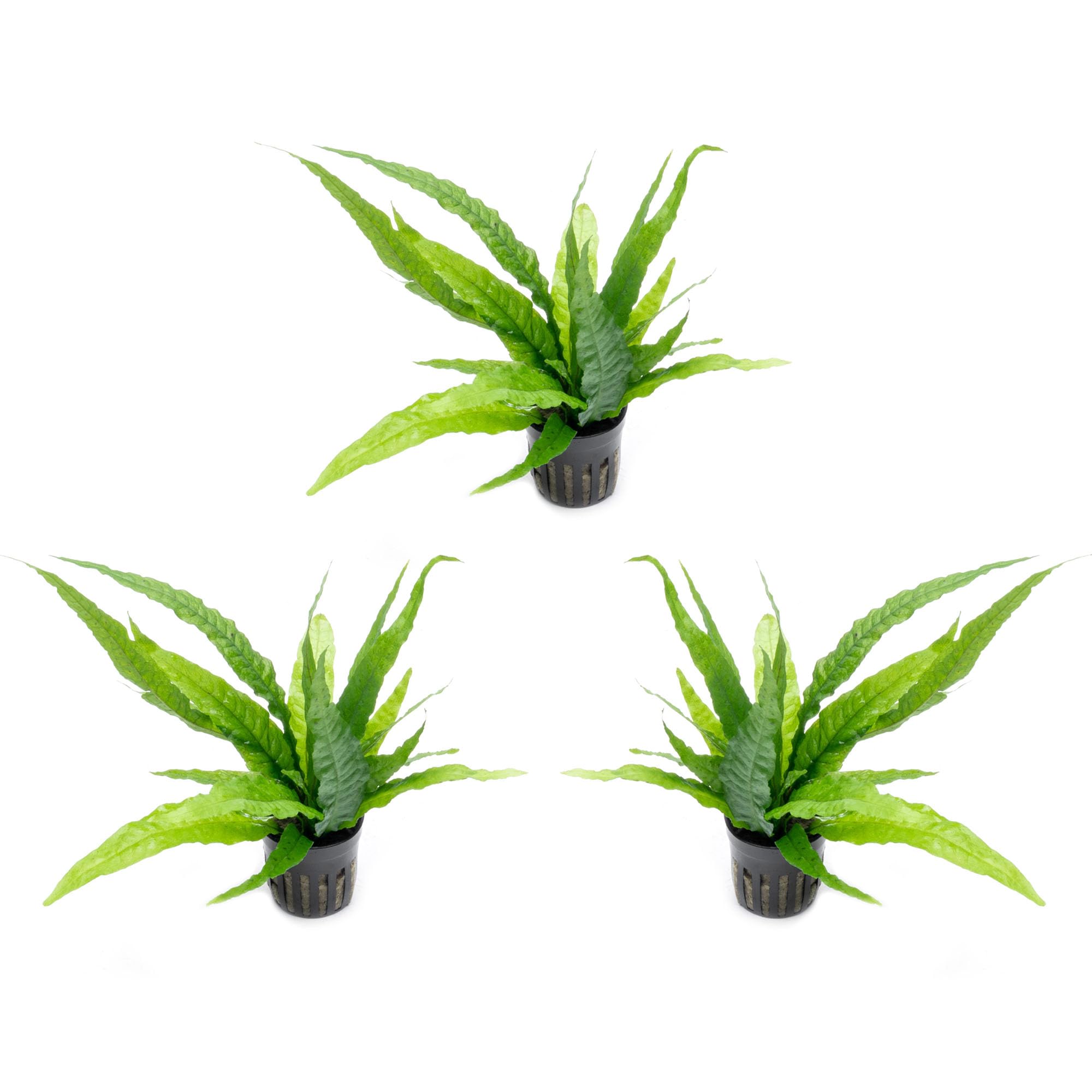
Rating: 4.4 ★ | Price: Premium | Light: Low light | Pot size: 2 in | Arrival height: 4–7 in | Pots per order: 3
Order this one for the roots, not the readymade look. Each of the three plants ships in a 2-inch pot packed with rock wool, and the wool has to come off before the fern goes near your hardscape — the seller’s own instructions are to squeeze the pot, peel the wool back, rinse, then attach. Skip that step and you’ll be fishing fibres out of the tank for a week. Do it properly and you have three plants with intact roots, which is the part that survives shipping.
The rest is straightforward: low light, no added CO2, and a fern that grips wood or stone and stays put. Compared with bare rhizomes, pots are gentler on the roots in transit and much easier to place while you decide on a final spot, which is why this is the version we point nervous first-timers at.
Java fern also propagates itself. Plantlets form on older leaves, and once they have roots you can snap them off and tie them somewhere else. Three pots are really three starting points, and in a tank with decent light and a little patience they’ll seed the rest of the hardscape for nothing.
Pros
- Three potted plants with roots held intact
- Low light, no added CO2 needed
- Clear instructions for removing the wool
Cons
- Smaller start at 4–7 inches
A good pick if you want three plants that arrive with their roots intact and don’t mind a smaller start.
Best for Single Budget Fern
Big Pete’s Java Fern

Rating: 4.3 ★ | Price: Budget | Light: Partial shade | Plant type: Broadleaf rhizomatous | Leaves per plant: About 6 | Plants per order: 1
Six broad leaves is what the plant details promise, and we like that count: it’s a specimen rather than a plug, enough fern to tie onto a decent piece of wood and see immediately. It’s also the sort of plant that makes more of itself — Java fern grows plantlets on older leaves, and a fern this size has several coming. Snap them off once they have roots and the next planting is free.
Care is the same as everything else here: rhizome on top of the wood, not under the gravel, ordinary light, no CO2. What you’re paying for is a plant that arrives with a real leaf count instead of two leaves and a prayer, and that’s the part that decides whether a fern looks like a purchase or a project.
The compromise is arrival condition. A bare rhizome travels for days in a bag with no light and no flow, and Java fern that lands limp can take a fortnight to show whether it’s settling or failing. Buy this as a cheap experiment, or for a tank where a six-leaf fern is already the right size — it isn’t the order to furnish a whole tank with.
Pros
- About six leaves on a broad-leaf rhizome
- Produces plantlets you can reattach
- Low price for a single fern
Cons
- Title promises an Anubias the plant details don’t
A cheap, generous six-leaf fern for a first try; the three-pack simply ships larger plants.
How We Tested the Best Aquarium Ferns
We started by reading listings the way a shopper would — comparing portion size, whether the plant ships as a bare rhizome, a pot, or a mat, price per plant, and seller feedback — then narrowed it to 14 ferns across the species you’ll actually find for sale. Each order arrived at my door, not a lab, and every one was photographed next to a ruler and opened the same day: I checked whether the rhizome was firm or mushy, counted usable leaves, and looked for snail egg clusters and strands of black beard algae. Two orders went into quarantine, a habit worth copying no matter where you buy.
The survivors went into real tanks — a low-tech 40-gallon community tank and a 10-gallon shrimp tank, both with modest light, no CO2, and no fertilizer dosing, because that’s how most people keep ferns. I tied each one to driftwood or wedged it into a rock crevice with the rhizome above the substrate, then watched what happened: which ones melted back to nothing, which ones sulked for a month, and which pushed new leaves within ten days. Once a month I measured new growth against the same ruler and noted color, algae collecting on older leaves, and whether the plant stayed anchored where I put it.
Four months in, we compared notes on value — how much healthy plant survived per dollar, not just the sticker price — and on whether what arrived matched the listing’s stated size and species. A couple of ferns that looked great on arrival never grew, and a couple of cheap, scruffy arrivals turned into the best plants in the tank. We’ll keep these growing and revisit the picks as they fill out.
How to Choose an Aquarium Fern
The most useful thing to know before ordering is that the arrival size decides how long you stare at bare gravel, and that the rhizome must never end up buried.
Arrival size is the number that matters
Listings quote a range, and the range is honest: a fern that ships at 3 to 5 inches is a cutting that needs a season before it reads as a plant, while one at 7 to 12 inches is furniture on day one. Read the range, not the photo, and match it to the tank. In a 10-gallon nano or a betta’s five gallons, one potted plant at 6 to 8 inches is plenty.
For a 40-gallon and up, three large plants is the sensible starting quantity, because Java fern gets used in pieces — one on the driftwood, one on a rock, one for the quieter corner. Buying small and waiting is a legitimate strategy; just price your patience in before you order.
Bare rhizome, pot, or already attached
Java fern is epiphytic. It grows on wood and stone with its rhizome — the thick green stem the leaves emerge from — exposed to the water. Bury that rhizome in gravel and it rots, which is behind a lot of melted ferns. Tie a bare plant down with cotton thread or a dot of cyanoacrylate gel and it grips within weeks.
Potted plants ship in rock wool that has to be peeled off and rinsed away before you attach anything, or the roots stay in a soggy plug that never takes hold. Treat the pot as a delivery system for the roots, not as a permanent home. Pots are gentler in transit and easier to place while you decide on a final spot.
Light, feeding, and what low-tech really means
Java fern earns its beginner reputation because it grows in the light a betta tank already has, with no CO2 injection and no special substrate. That is not the same as maintenance-free: it feeds from the water, so in a bare tank with a light fish load a liquid fertilizer keeps leaves dark green instead of pale.
More light is not the answer. Java fern is slow, and extra light grows algae on slow leaves faster than it grows fern. Moderate light, a little fertilizer, and leaving the plant where you put it is the whole routine.
Snails, cold snaps, and the arrival guarantee
Two things can undo a good order before the plant reaches your tank. The first is hitchhikers: some sellers promise snail-free, USDA-inspected plants, and a rinse and inspection is worth doing either way. The second is weather, and the sellers set their own limits — one guarantee stops at 20°F, another at 30, another at 32.
In October, check your overnight low before you order and be home the day the box lands. A plant held in a cold sorting facility over a weekend is exactly the case the guarantee excludes.
Frequently Asked Questions
Why does my Java fern have black spots on the leaves?
Usually it’s algae settling on a slow-growing leaf rather than disease. Rub a leaf gently between your fingers: if the spots come away, it’s algae, and shortening the light period or adding a few shrimp or snails deals with it.
Spots that stay put and spread alongside yellowing point more often to a nutrient gap, so start by dosing a liquid fertilizer after water changes and give it three or four weeks.
Will Java fern survive in a tank with goldfish or cichlids?
Often, yes. The leaves are leathery and most community fish ignore them. Big plant-eaters can still shred or uproot a loose fern, so tie it firmly to a heavy piece of wood rather than wedging it under a rock, and put it in a corner instead of the open middle.
If you keep digging cichlids, expect to re-tie it now and then. That is a maintenance chore, not a reason to skip the plant.
Can I grow Java fern out of water?
Yes. It grows emersed on wet rock, filter walls, and in terrariums, as long as the rhizome stays damp and the air is humid.
Growth above water looks different from the submerged form, and the old leaves often die back after you sink the plant while new underwater growth takes over. Move it once and then leave it alone for a month.
Final Verdict
Our answer to which fern is the three-pack: three mature 7-to-12-inch plants, the best arrival size in this group, enough to dress a piece of driftwood and still fill a back corner. Nothing else here does as much for a first planting.
Run a nano tank or a single betta, though, and the snail-free potted Microsorum is the smarter order — one plant, one placement, nothing left over. If you’re buying with your eyes rather than your patience, the Windelov’s fringed tips are worth the smaller plant.