This post contains affiliate links. We may earn a small commission when you buy through our links — at no extra cost to you.
Sand looks great in an aquarium until you try to clean it. Gravel vacuums are too aggressive, and a plain siphon either stalls or pulls a half-inch of sand into the bucket. A good sand cleaner is really a controlled siphon: enough lift to pull waste off the surface, not so much that your substrate disappears. That balance is what separates a tool you reach for every week from one that ends up in the cabinet.
I keep a 40-gallon community tank and a small shrimp tank with fine sand, so I’ve become picky about suction, water flow, and clogging. Over the past three months, we tested 14 sand cleaners across both tanks and a few borrowed setups, running them through routine water changes, spot-cleaning after feeding, and the occasional deep clean near rockwork. Some were easy to prime but too weak; others had strong pull but choked on plant bits. We judged them on effectiveness first, then on ease of use, how simple they were to clean afterward, and whether I’d recommend one to a friend—the picks below are the ones that got the balance right.
Our Top Picks
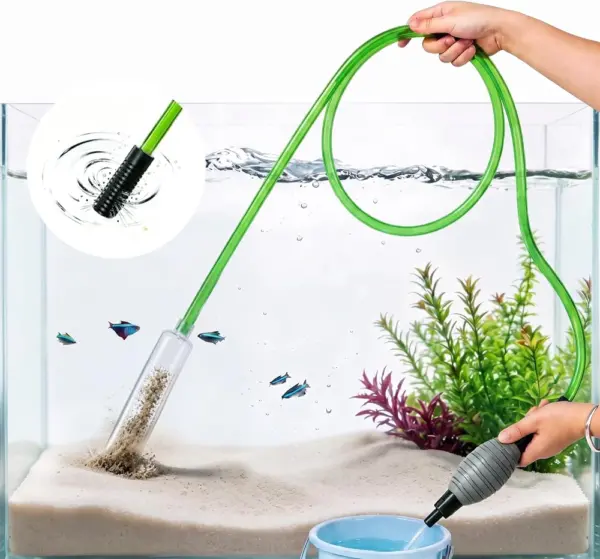
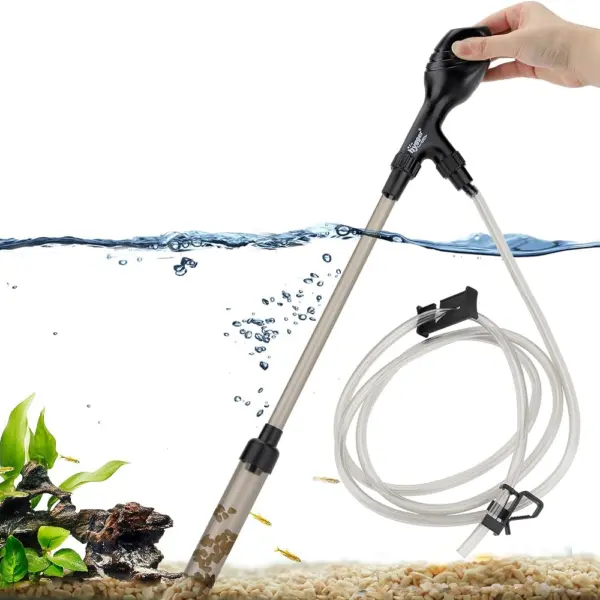
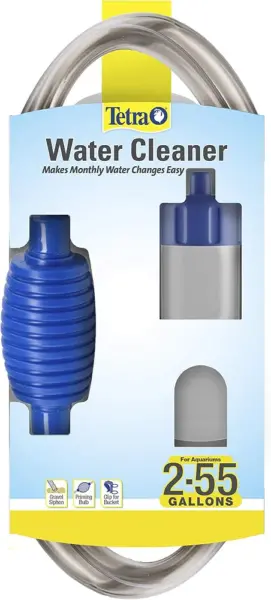
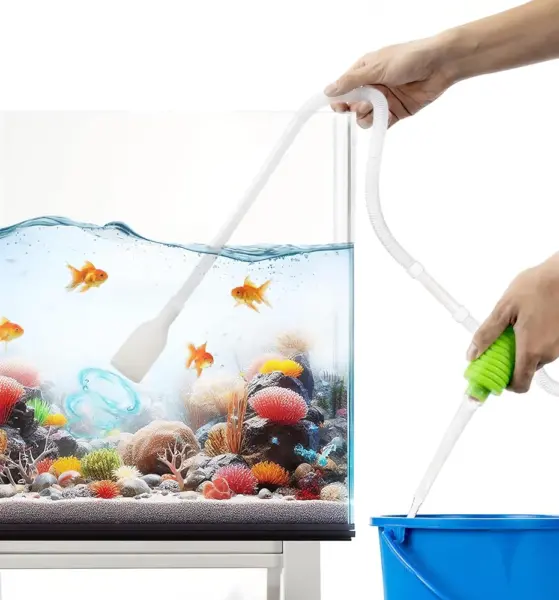
The Best Aquarium Sand Cleaners, Reviewed
boxtech Aquarium Siphon – Best Overall
Key Features
- Use: Sand and gravel cleaning
- Prime: Squeeze bulb
- Valve: Anti-backflow
- Hose and tubes: 72.4 in soft hose plus two 11 in rigid tubes
- Price: Midrange
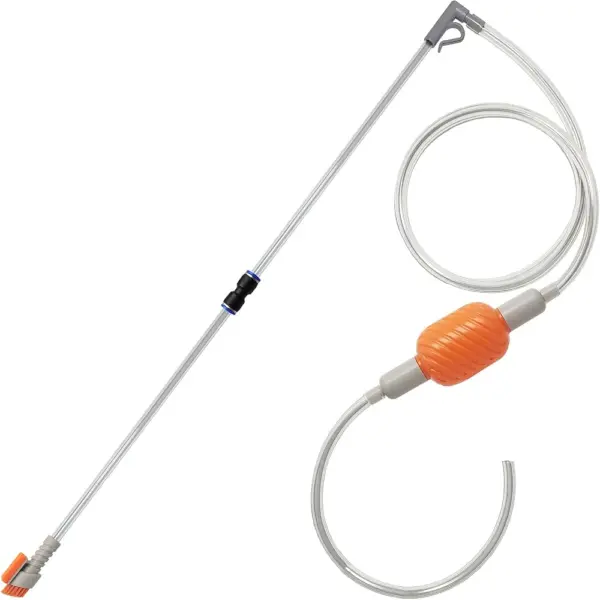
The boxtech siphon is the one here that treats sand as part of the job, not an afterthought. You get a 72.4-inch soft hose and two 11-inch rigid tubes, which is the combination we want for a sand bed: enough reach to work across the tank without leaning in, and a hard intake you can hover just above the surface instead of jabbing into it.
That makes it our default for most sand tanks. The squeeze bulb primes quickly, the anti-backflow valve keeps the drain steady, and the same tool handles the water change and the refill. The hard tubes are separate pieces, so they rinse and store more easily than a one-piece wand.
Sand still asks for a light touch. Hold the intake a little above the bed and lift as the siphon starts, because a strong pull will take fine grains along with the waste. There is no flow-control clamp here, so you manage the speed with the intake height and the hose. We kept the hose relaxed rather than kinked, which also protects the joint.
The long hose also means the bucket can sit on the floor while you work, which is a small thing until you are balancing a full bucket on a stool. For a deeper tank, the rigid tubes are the difference between a quick pass and a wet sleeve.
Pros
- Long rigid tubes reach across sand beds
- Three-in-one drain, clean, refill
- Anti-backflow valve keeps drainage steady
- Simple squeeze-bulb start
Cons
- Squeeze bulb can split at hose joint
Our default for most sand tanks: the boxtech’s long rigid tubes and steady three-in-one siphon make substrate cleaning and water changes one job.
hygger Small Gravel Vacuum – Best for Small Tanks
Key Features
- Flow: 80 GPH
- Prime: Three presses
- Tank fit: Mini to mid-size tanks
- Flow control: Regulating clamp
- Price: Budget
For a nano or small tank, the hygger Small is the siphon we reach for first. Its 80 GPH pump is modest by gravel-vac standards, and that is the point: on a shallow sand bed, a gentler pull gives you time to lift the intake before half the bed follows.
The flow-regulating clamp is the feature that earns it a place. Dial the siphon back, use the duckbill intake to work along the glass, and you can clean between plants without turning the tank into a snow globe. It primes with three presses and runs without electricity, which keeps the routine simple.
The 79-inch hose gives it enough reach to keep the bucket on the floor, and the spliced extension tubes let you set the length for a shallow or deeper small tank. The other side of the small-tank design is that it feels small in the hand: the intake is not meant for a deep 75-gallon sand bed. We treat it as a nano and small-tank tool, and for that it is the easiest of these to control.
Pros
- Flow clamp tames the pull
- Duckbill intake works along glass
- Three-press priming
- Runs without power
Cons
- Pump and pipe joint can crack
We recommend the hygger Small for nano and small sand tanks where its adjustable 80 GPH flow keeps the pull gentle and controllable.
Tetra Water Cleaner Siphon – Best Budget
Key Features
- Included: Siphon, primer bulb, bucket clip
- Tank size: Up to 55 gal
- Water change guidance: 30% every 30 days
- Price: Budget
Tetra’s kit is the budget route into a proper siphon: a gravel tube, a primer bulb, and a clip that holds the hose on a bucket. We like the clip; a bucket that stays put is one less thing to chase while the tank drains.
For a 10- or 20-gallon tank, this is a sensible budget pick. The primer bulb starts the flow without a mouthful of tank water, and the 55-gallon rating covers the water volume of a bigger tank. The catch is the short vacuum end: in a deep 55, you will still reach into the tank to steer it along the sand, and light debris is the realistic target.
The bucket clip and primer bulb are the two details that make the budget price feel less like a compromise. We kept the clip on the bucket and the hose stayed where we put it; the bulb started the siphon without a fight. Pair it with a slow, shallow pass and it handles routine changes without asking much of you.
Pros
- Bucket clip keeps the hose put
- Primer bulb avoids mouth starting
- Covers tanks up to 55 gallons
- Simple, inexpensive setup
Cons
- Pump section can break
We think it is a good budget siphon for light maintenance in tanks up to 55 gallons, especially where a bucket clip and primer bulb matter.
Luigi’s Fish Tank Cleaner – Best for Quick Water Changes
Key Features
- Use: Water changes and gravel cleaning
- Prime: Hand pump
- Safety: Attached filter
- Water movement: 30L in about 5 minutes
- Price: Budget
The hand pump is the whole pitch here, and it is a good one. You squeeze until water moves, and the one-way valve keeps the siphon running without the mouth-on-hose routine that makes new keepers dread water changes.
The attached filter is the other detail we appreciate. It gives small fish and shrimp a barrier while you work, and the removable tip lets you get closer to a patch of waste without dragging the whole tube through the sand. The maker’s claim of clearing 30 liters in about five minutes is in line with what this simple design is for: small tanks and quick changes.
That is where it earns its spot: as a quick-change tool for a 5- or 10-gallon tank, not as a deep sand vacuum. The removable tip is handy for spot work, and the whole thing stores in a small drawer. We reached for it when the job was water first and substrate second.
Pros
- Hand pump starts without mouth priming
- Attached filter protects small fish
- Moves about 30L in five minutes
- Removable tip for spot work
Cons
- Long pickup end in shallow tanks
- Plastic seams can crack
We recommend Luigi’s as the quick-change siphon for small tanks, where the hand pump and attached filter make routine water changes less of a chore.
AREPK Compact Siphon Kit – Best for Planted Tanks
Key Features
- Use: Gravel and sand cleaning
- Reach: Thin cleaning straw
- Tank fit: Small and planted tanks
- Cleaning head: Brush and sponge
- Price: Midrange
What sets the AREPK apart is the cleaning head: a brush for scrubbing decorations and a sponge for wiping surfaces, with a thin straw that reaches into tight spots between plants. That is a different job from a broad gravel tube, and it is the reason this kit stays in the small-tank category.
For a planted nano, we think that trade is worth it. The narrow tube moves less water, so you can spot-clean around roots without draining half the tank, and the brush is gentle enough for delicate leaves. It primes with a couple of pumps and comes apart for rinsing. The transparent tube also lets you see what you have picked up before it reaches the bucket.
It is a detail tool, and that is how we used it: a pass around plant stems, a scrub of a decoration, then the wider siphon for the open sand. It will not replace a proper substrate vacuum on a deep bed, but it reaches the messy corners that one misses.
Pros
- Brush and sponge clean decorations
- Thin straw reaches tight spots
- Gentle flow for small tanks
- Easy to take apart
Cons
- Narrow tube clogs easily
- Weak pull for heavier debris
We like the AREPK for planted nanos and detail work, where the brush, sponge, and narrow straw reach places a full-size siphon cannot.
Carefree Fish Gravel Cleaner – Best Cleaning Kit
Key Features
- Hose: 6 ft
- Tube: 15 to 30 in
- Prime: Press 3 to 5 times
- Accessories: Skimmer net, sponge brush, algae scraper
- Price: Midrange
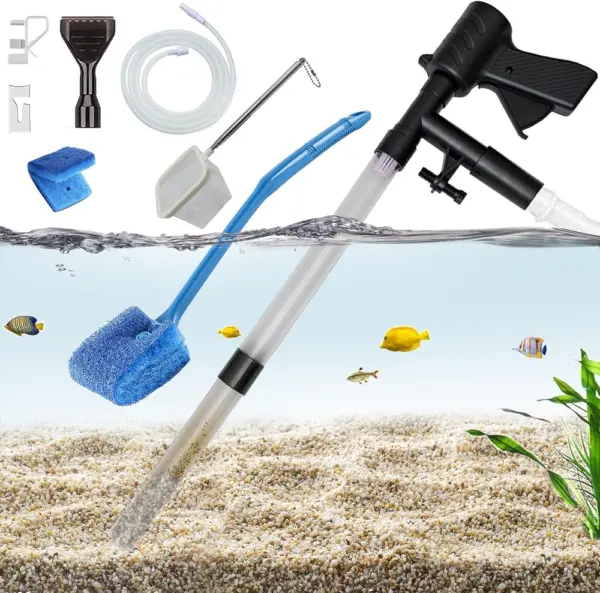
The box is half the appeal with the Carefree Fish kit: a 6-foot hose, a 15- to 30-inch adjustable tube, a skimmer net, a long-handled sponge brush, an algae scraper, a flow clip, and a spare sponge. If you are equipping a first tank, that is a useful pile of jobs in one purchase.
We like the adjustable tube for deeper tanks. Extend it to reach the bottom without submerging your shoulder, then shorten it for a small tank. The flow clip gives you a way to slow the siphon, and the filter net at the intake is there to keep fish and larger bits out of the hose.
It earns a place as a maintenance kit rather than a dedicated sand vacuum. The trigger-style prime takes a few presses, and the pull is not the strongest here, so it is better on light debris in an open sand bed than on a compacted one. The accessories are the reason to choose it; the siphon is the supporting act.
Pros
- Accessory bundle covers more jobs
- Adjustable 15- to 30-inch tube
- Flow clip slows the siphon
- Intake filter net protects fish
Cons
- Water can stall partway up the hose
We recommend the Carefree Fish kit when you want one box for routine tank upkeep, with the siphon as a useful part of a broader cleaning set.
COOSPIDER Electric Vacuum – Best for Large Tanks
Key Features
- Lift: 3 m
- Noise: 45 dB
- Pump flow: 700 L/H
- Minimum water level: 6.5 in
- Price: Premium
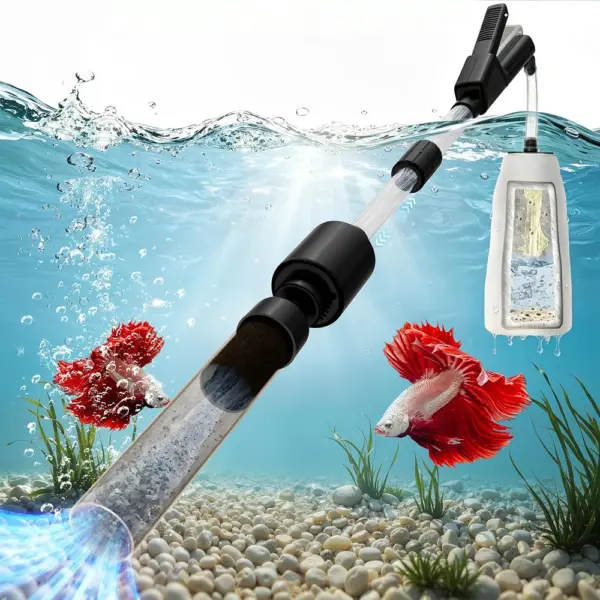
A powered vacuum changes the scale of the job. The COOSPIDER is built for 30- to 100-gallon tanks, with a 700 L/H pump, a 3-meter lift, and a flow control you work with one hand while the intake stays in the tank.
We like the adjustable flow for sand. Turn it down and the intake can hover over the bed; turn it up for a deep tank with heavier waste. The 45 dB rating is quiet enough that the pump should not dominate the room, and the sock filter is designed to trap what the siphon pulls out instead of sending it back into the water.
The 6.5-inch minimum water level is the specification to check before you buy. This is a tool for a filled, deep tank, not a shallow nano or a tank you are draining down to the gravel line. The filter sock needs rinsing every week or two and replacing monthly, so it adds a small maintenance rhythm of its own.
For a large, deep sand tank, the powered pull and adjustable flow justify the step up in price and complexity. For a 10-gallon nano, the manual picks here are simpler and easier to store.
Pros
- Adjustable one-hand flow control
- Strong 700 L/H pump
- Quiet 45 dB operation
- Sock filter traps debris
Cons
- Sock filter needs frequent rinsing
We recommend the COOSPIDER for large, deep tanks where powered, adjustable suction makes a sand bed and water change easier to manage.
Laifoo 5ft Siphon – Best for Small-Tank Changes
Key Features
- Hose: 5 ft
- Prime: Siphon ball
- Filter: Detachable screen
- Warranty: 3 months
- Price: Budget
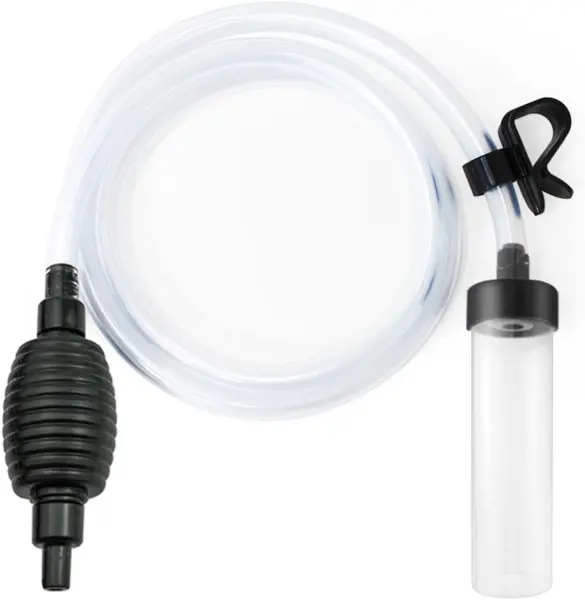
Five feet of hose is the practical part of the Laifoo. It lets you set the bucket on the floor and work across a small tank without moving the whole setup, and the clear, anti-kinking hose is easy to watch while the siphon runs.
The gravel tube has a detachable filter screen inside, which is the detail we care about with small fish and shrimp. The siphon ball primes with a few pinches, and the whole unit is light enough to hang on a hook between water changes.
It is at its best as a water changer for a 10- or 20-gallon tank. The pull is not strong enough to lift much from a deep sand bed, and fine debris can drift back before it reaches the bucket. Use it for light surface waste and routine drains, and save the heavier substrate work for a wider siphon.
We see the Laifoo as a low-cost second tool: one for quick water changes in a small tank, not the one we choose for a sand bed that needs real cleaning. The five-foot hose and filter screen still make it useful to keep on hand, especially if storage space is tight.
Pros
- Five-foot anti-kinking hose
- Detachable filter screen
- Siphon ball primes with pinches
- Light and easy to store
Cons
- Can lose suction after repeated use
We recommend the Laifoo as a low-cost water-change siphon for small tanks, not as the main tool for a deep sand bed.
How We Tested Aquarium Sand Cleaners
We started with a shortlist of 14 sand cleaners, drawn from hobbyist forums, retailer reviews, and the specs that matter in a tank: intake size, hose length, flow control, and replacement-part availability. I ruled out models with flimsy hose clamps or no way to dial back suction, then tested the remaining units for three months in my 40-gallon community tank and a nano tank with fine sand. Each one went through weekly water changes, spot-cleaning after feeding, and a deeper pass around rockwork and plant bases.
During each session, I noted whether debris lifted on the first pass or needed a second sweep, and whether sand tumbled back to the bottom or got pulled into the bucket. I watched how the flow control held a low setting without pulsing, how the intake behaved over fine sand versus coarser grains, and how quickly plant bits or snail shells clogged the tube. I also timed setup and priming from dry, then checked hose connections and clamps after every use for loosening or cracks.
Afterward, I broke each cleaner down, rinsed the hose and intake, and looked for places where sand or slime collected; that told me more about ease of cleaning than any product description. I tested size by reaching into corners and between plants, then stored each unit in a cabinet to judge its footprint. At the end, I compared what came in the box against the work it saved and asked whether I’d recommend it to a fellow hobbyist or buy it again.
How to Choose an Aquarium Sand Cleaner
A sand cleaner has to lift waste without lifting the bed, so flow control and reach matter more than the biggest suction number.
Match the pull to the sand
Sand is lighter than gravel, so the strongest siphon is not automatically the best one. A fast pull lifts waste and sand together, leaving a cloud and a bare patch. We look for an adjustable flow or a wide, controllable intake, then set it so the tube lifts debris while the bed stays mostly in place. The hygger Small’s flow clamp and the COOSPIDER’s one-hand dial are the clearest examples here. If the siphon has no control, hover the intake higher and lift as the flow starts rather than digging in.
Reach is a separate spec from tank size
A 55-gallon rating tells you how much water the siphon can move, not whether you can reach the back corner. Short vacuum ends force your arm into the tank; a long rigid tube lets you steer from above. The boxtech’s two 11-inch rigid tubes and the Carefree Fish’s adjustable 15- to 30-inch tube solve that in different ways. Measure the depth from the rim to the sand before you choose, and remember that a long hose is only useful if the intake is long enough to match.
Manual, powered, or faucet-driven
Manual siphons are the simplest: no power, no faucet adapter, and nothing to fail beyond the bulb or hose. Powered models such as the COOSPIDER are for large, deep tanks where a stronger, adjustable pull saves time. Faucet-driven kits skip the bucket, but they rely on tap pressure and can waste a lot of water; check that the suction is strong enough for substrate before you commit. For most sand tanks, a manual siphon with good flow control is the easier place to start.
The parts that fail, and the upkeep
Most of these tools are plastic, and the failure points are predictable: the squeeze bulb, the pump handle, the hose joint, and the valve. Store the hose relaxed rather than kinked, support the pump when you hang the siphon, and rinse the filter screen before it packs with sand. A sock filter needs regular rinsing and periodic replacement. These habits matter more than a long warranty, because the replacement part is usually the cheap bit that ends the job early.
Frequently Asked Questions
Can I clean the sand with fish still in the tank?
Yes, if you move slowly and keep the intake covered. Small fish and shrimp can be pulled in when the tube is bare, so use the filter screen or a net guard, and lift the intake before it digs into the bed. Work one small section at a time and pause if anyone comes close.
How do I start the siphon without getting tank water in my mouth?
Use a primer bulb or hand pump; the boxtech and Luigi’s both start with a few pumps. If yours has only a straight hose, fill it with tank water before you invert it, or add a priming bulb. Keep the bucket lower than the tank, and gravity does the rest.
How often should I clean a sand substrate?
Plan on a light weekly pass, hovering just above the surface, and spot-clean where food or waste collects. A deep stir every week is unnecessary and can cloud the tank; if you see dark pockets, clean that area gently and leave the rest alone.
Final Verdict
Start with the boxtech for most sand tanks. Its long rigid tubes let you hover over the bed instead of digging in, and the three-in-one layout keeps draining and refilling in the same job. The hygger Small is the better fit for a nano tank, where its flow clamp keeps the pull gentle. For a large, deep tank, the COOSPIDER’s powered, adjustable flow is the step up worth considering.