This post contains affiliate links. We may earn a small commission when you buy through our links — at no extra cost to you.
You plant a bundle of stem plants, step back to admire the tank, and by morning half of them are drifting at the surface like they were never planted at all. A plant weight is the fix: it pins stems against the substrate or ties a rhizome to a rock long enough for roots to grip, and a good one does it without crushing the stem or shedding its coating into the water. The bad ones look fine in the bag and then creep up the stem overnight.
Over the past three months, 16 different weights and anchors have cycled through my tanks and two colleagues’, from slim stainless strips to chunky ceramic rings, and the pattern is clear: the slot matters more than the gram count. A weight that’s too heavy crushes a soft stem, and one with a rough-edged hole saws through it just as surely. Everything below survived gravel vacs, filter bumps, and a month underwater without rusting, and each pick is labeled by what it holds best.
Top Picks
Best for Planted Tanks
JoyHua Ceramic Ring Set
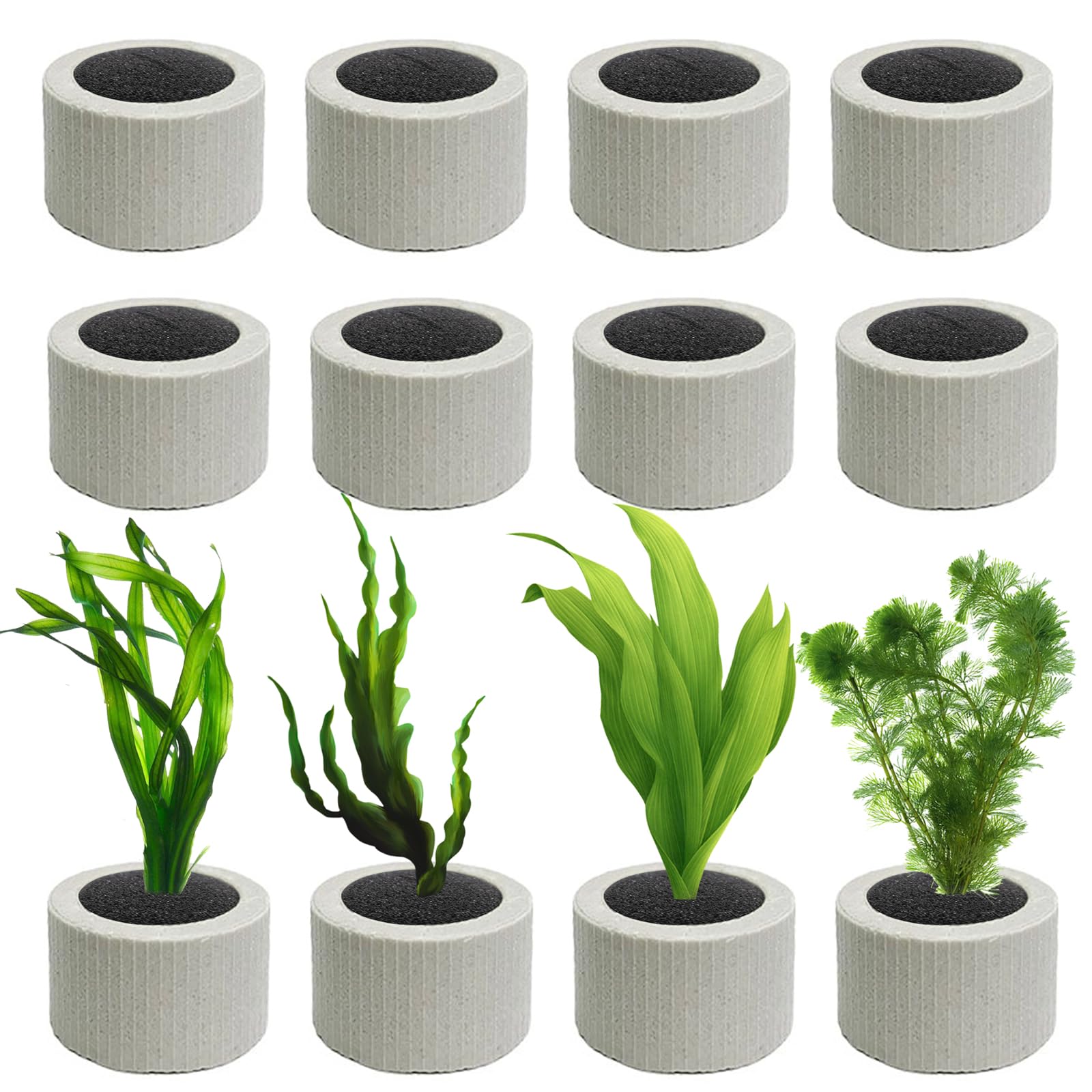
Rating: 4.6 ★ | Price: Midrange | Count: 12 rings | Material: Ceramic and sponge | Plant contact: Sponge-lined | Ring dimensions: 1.8 x 1.8 x 1 in
The sponge lining is the first thing we noticed, and it is why these ceramic rings became our default. A bare ring can grip a stem like a clamp; the black sponge gives the stem and roots something soft to sit against. We used them on stem bunches and a small Anubias, and the plants stayed where we put them without the bruised look you can get from a tight metal wrap. The ceramic body has enough heft to sink and stay down, and the ring shape keeps the plant upright instead of letting it tip.
Twelve rings in one pack gives you room to plant a whole tank or keep spares for rescapes. The 1.8-inch footprint is small enough for nano tanks but not so tiny that it disappears in a 20-gallon. We like that there is no lead to think about, especially in a tank with shrimp or snails, and the rings rinse clean and go back in the cabinet for the next planting.
The ring shape is the other thing we appreciate: it keeps a plant upright instead of letting the stem flop over the way a soft strip can. We have reused the same rings through a rescape, and they still look presentable enough to leave in the tank. For a planted tank that is meant to be looked at, that matters more than saving a little on a bulk roll of ribbon.
Pros
- Sponge protects stems and roots
- Ceramic body sinks and stays put
- 12 rings cover a full planting
- Lead-free for shrimp and snail tanks
Cons
- Less flexible than ribbon around odd stems
- Less economical for large loose bunches
For most planted tanks, these sponge-lined ceramic rings are the plant weights we recommend first: they hold stems gently, avoid lead, and come 12 to a pack.
Best for Aquascapes
XIOFU River Stone Anchors
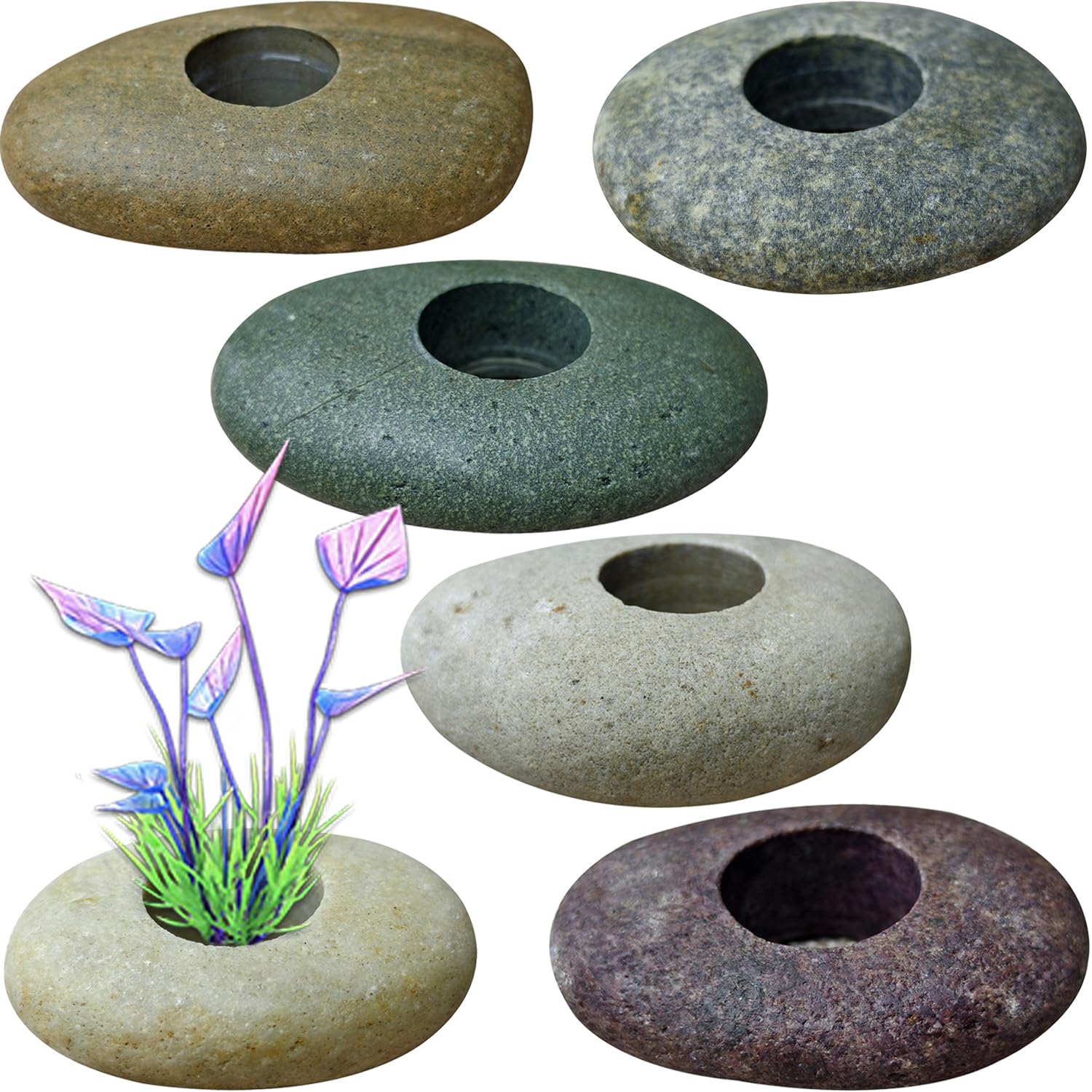
Rating: 4.4 ★ | Price: Premium | Count: 6 stones | Material: Natural river stone | Total weight: 1.04 lb | Hole diameter: 0.8–1.2 in
A gray stone ring is not the first thing most people want to see in a planted tank, but these are the exception: the river-stone anchors read as part of the scape rather than as equipment. The holes are drilled through real stone, and the varied shapes keep them from looking like a set of identical washers. We noticed the difference most when the tank lights came on; the stones sat among the plants instead of glaring against them.
The small version we tried has a 0.8- to 1.2-inch hole, which is generous enough for the root crown of an Amazon sword or a chunky Anubias rhizome. The stones are heavy, and the sponge wraps included for the holes give fragile stems a softer grip. We used one on a sword bulb and another on a Java fern, and both stayed put through a water change. The footprint is larger than a ceramic ring, so you need a little open substrate around the plant.
This is the pick for someone building a nature-style aquascape who wants the anchor to look intentional. The trade-off is cost and flexibility: a six-stone pack covers fewer plantings than a ribbon or a 12-ring set, and the stones are not something you bend around an odd stem. If you need a natural look and have the room, those are easy compromises to accept.
Pros
- Natural stone blends into aquascapes
- Large holes fit big root crowns
- Heavy enough for swords and ferns
- Sponge wraps protect fragile stems
Cons
- Drilled holes can have rough edges
- Mostly gray stones, not mixed colors
We reach for these river-stone anchors when the weight should disappear into the aquascape; their large holes hold big root crowns, though they are a premium pick for small plantings.
Best for Small Stems
Aqua One Plant Weights

Rating: 4.6 ★ | Price: Budget | Count: 10 weights | Cuttable: Yes | Tank type: Freshwater and saltwater | Weight per piece: 0.18 oz
At about 5 grams each, these Aqua One strips are not the heaviest anchor in this group, and that is the point. They are sized for a single small stem bunch, a cutting, or a plant you are tucking into a tight corner. The strip is stiff enough to push into the substrate but soft enough to bend around a stem, and a pair of household scissors takes it down to size without leaving a jagged mess.
We found them most useful for nano tanks and for holding a plant while it roots rather than for a permanent, heavy-looking anchor. The 10-pack gives you spares, and the listing describes them as suitable for freshwater and saltwater, which makes them a sensible one-box option if you keep more than one tank. They are also easy to hide under a thin layer of substrate, so the tank stays about the plants.
The limits show up with big bunches. Five grams does not go far on a thick stem plant, and the strip is not long enough to wrap a large bundle in one pass. You can double up, but at that point a longer ribbon or a ring makes a tidier job. For small jobs, though, the light touch is an advantage.
Pros
- 5-gram strips suit small bunches
- Cuttable with household scissors
- Works in freshwater and saltwater
- Easy to hide under substrate
Cons
- Too light for large plant bunches
- Stiff strip can be awkward on fine stems
We keep these 5-gram strips for small stem bunches and tight planting spots; they are simple, cuttable, and the least fussy metal weight here.
Best for Heavy Bunches
Awesome Aquatic Lead Ribbon

Rating: 4.7 ★ | Price: Midrange | Count: 25 weights | Shape: Flexible strip | Material: Lead ribbon | Reusable: Yes
The lead question comes first with this one, and it should: these are lead ribbon strips, not a lead-free ceramic or stone anchor. If you keep shrimp, snails, or fish that root through the substrate, we point you to the ceramic picks instead. If you want the old-school ribbon that wraps a thick bunch in seconds, this is the one we keep for heavy bunches.
The ribbon is soft and pliable, and it takes a fold without springing back. We wrapped a bunch of hornwort with one strip and pushed the whole bundle into the substrate; the weight held, and the plant stayed upright instead of drifting up at the next water change. The strips are also easy to cut, so a long piece can be shortened for a smaller plant or doubled around a heavier stem.
What earns it a place is the combination of weight and flexibility. A 25-count pack gives you plenty of strips, and the lead is dense enough that one wrap does the job of several small ceramic rings on a big bunch. We also like that the ribbon can be reshaped and reused as the scape changes, rather than being locked into one hole size.
We have straightened and reused the same strip after a rescape; it creases, but it still holds. The strip is long enough that one piece can be cut into two smaller anchors, which makes the pack go further. That is the trade for the holding power, and it is a trade we accept for heavy bunches.
Pros
- Dense lead holds heavy bunches
- Soft ribbon wraps odd shapes
- 25 strips go a long way
- Cuttable and reusable
Cons
- Thick for very fine stems
This is the traditional lead ribbon we recommend for heavy bunch plants, provided you are comfortable handling lead and want a large, flexible roll.
Best for Nano Tanks
Joyangy Ceramic Ring Bases
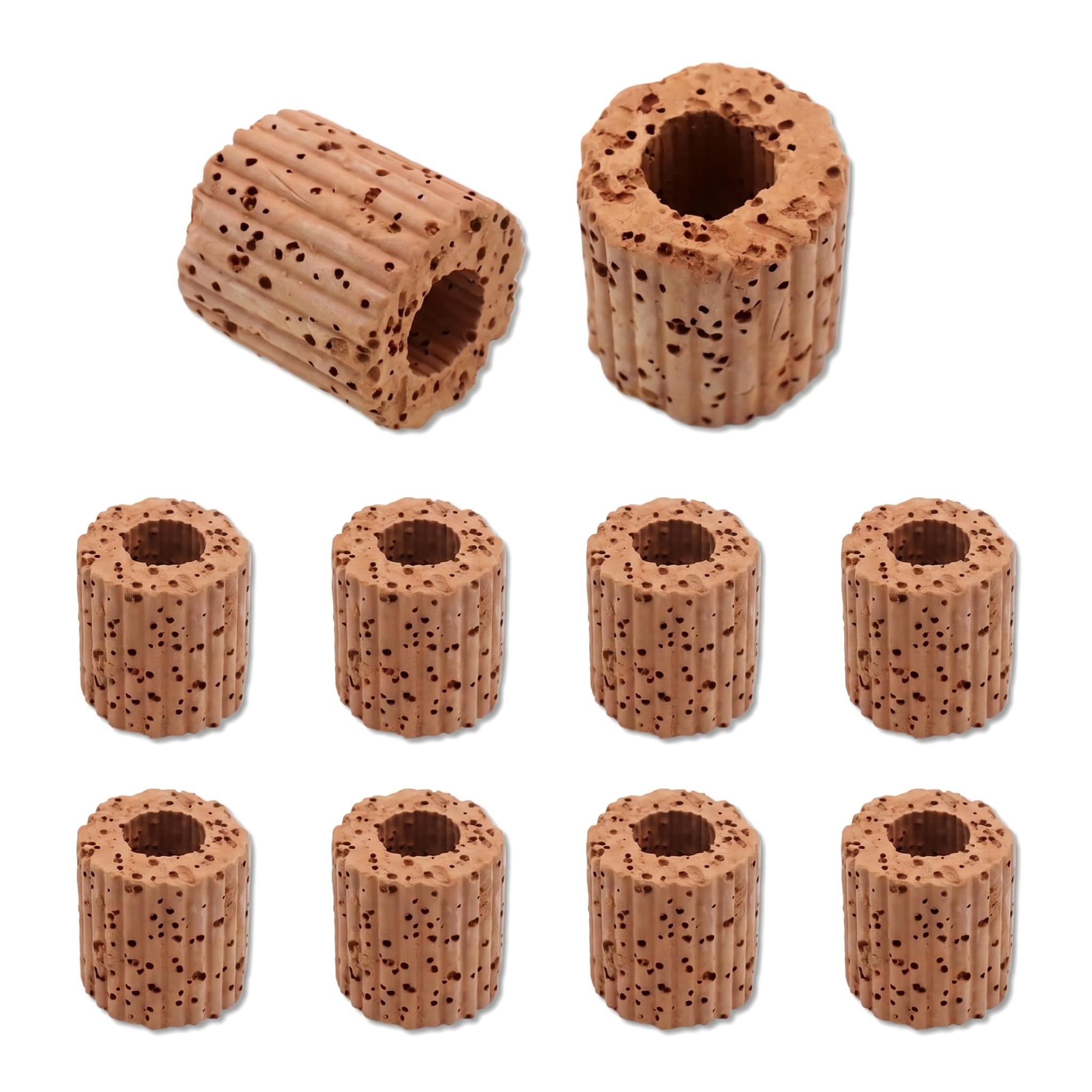
Rating: 4.4 ★ | Price: Budget | Count: 10 rings | Material: Ceramic | Inner diameter: 15 mm | Outer diameter: 25 mm
The 25mm outer diameter is the whole story here. These rings are small, light, and easy to tuck between rocks or into a foreground carpet, which is exactly what a nano tank needs. We slid a thin stem through the 15mm opening and set the ring on the substrate; it held the plant upright without a visible metal strip. If you are planting a cluster of tiny stems, the 10-pack gives you enough to spread around without cutting a single strip.
The ceramic has a matte finish, and the holes let water move through instead of trapping a pocket of stagnant water around the roots. That is a small thing, but it matters in a small tank with little flow. The rings are also a good substitute for lead if you keep shrimp or snails and want to avoid metal entirely.
The opening is the limit: a thick stem bunch or a plant with a broad root crown will not fit, and forcing it can bruise the stem. For a nano tank or a few delicate stems, though, the small size is the feature, not the compromise. We keep a handful in the cabinet for rescapes because they take up almost no room.
Pros
- Small size fits nano tanks
- 15 mm opening suits thin stems
- Ceramic is lead-free
- 10-pack covers small plantings
Cons
- Rough edges can catch delicate stems
We like these small ceramic rings for nano tanks and single stems, as long as the plant has a thin root crown to slide through.
Best for Bare-Bottom Tanks
QoTang Ceramic Pot Set

Rating: 4.2 ★ | Price: Midrange | Count: 12 sets | Material: Ceramic, plastic, sponge | Dimensions: 1.8 x 1.8 x 1.3 in | Set contents: Ring, pot, sponge
A bare-bottom tank leaves nowhere to bury a stem, so the anchor has to do the whole job. QoTang’s set pairs a ceramic ring with a small pot and a sponge, and that combination is what makes it useful: the roots sit in the sponge, the pot holds the plant upright, and the ring gives the whole thing enough weight to stay on the glass. We used one for a Java fern and liked that we could slide the pot to a new spot without replanting.
The set comes with 12 rings, pots, and sponges, so you can plant a decent group or keep spares. The 1.8-inch footprint is compact enough for a nano tank, and the ceramic is neutral enough to disappear against a dark background. The sponge is also a better contact point for roots than a bare ring.
The pot format is not for every plant. A thick stem bunch or a plant with a wide crown will not fit comfortably, and the pot can look like a little planter rather than a natural part of the scape. We also found the pot easier to use with a plant that already has roots than with a fresh cutting that has none.
For a bare-bottom setup, a quarantine tank, or a plant you expect to move, the pot format solves a problem a flat weight cannot. It is also a neat way to add a small plant to a tank with gravel vacuuming that would otherwise uproot it. If you have deep substrate and only need to hold a stem, a simpler ring is cheaper and less fussy.
Pros
- Holds plants without substrate
- Pot and sponge protect roots
- 12 sets cover a group of plants
- Easy to move without replanting
Cons
- Ceramic bases can arrive chipped or broken
We recommend this pot-and-ring set for bare-bottom tanks and plants you want to move, though the pieces can arrive chipped.
Best for Large Tanks
Amyhill Metal Plant Strips

Rating: 4.4 ★ | Price: Budget | Count: 15 pieces | Length: 5 in | Material: Metal strips | Total weight: 8.82 oz
A 250-gram bundle is a different class of anchor from a 10-pack of 5-gram strips. Amyhill’s strips are about 5 inches long and half an inch wide, and they are meant for large tanks, big bunches, and plants that laugh at a single small weight. We used one strip on a heavy bunch of stem plants and another to hold a clump of hornwort; both stayed down without doubling up.
The metal is dense but soft, so it bends by hand and cuts with ordinary scissors. That combination is what makes it useful for odd shapes: you can fold it around a thick stem, trim the length, and reuse the offcut on a smaller plant. The 15-piece bundle goes a long way, and the strips are long enough that one piece often replaces two or three smaller weights.
The package label carries a lead warning, which is the reason this one sits in our runner-up group rather than at the top. If you keep shrimp, snails, or fish that sift through the substrate, choose a ceramic or stone anchor instead. If you are comfortable handling lead ribbon, wash your hands after use and keep it away from children.
Pros
- 250 g bundle holds large clusters
- Bends and cuts with ordinary scissors
- 15 long strips cover big tanks
- Reusable for odd tank jobs
Cons
- Too wide for very small stems
This is the heavy-duty metal strip we keep for large tanks and thick plant clusters; it wraps a lot of weight around a bunch, but check the lead label if that matters to you.
Best for Fragile Stems
JAKOUE Cotton-Wrapped Rings
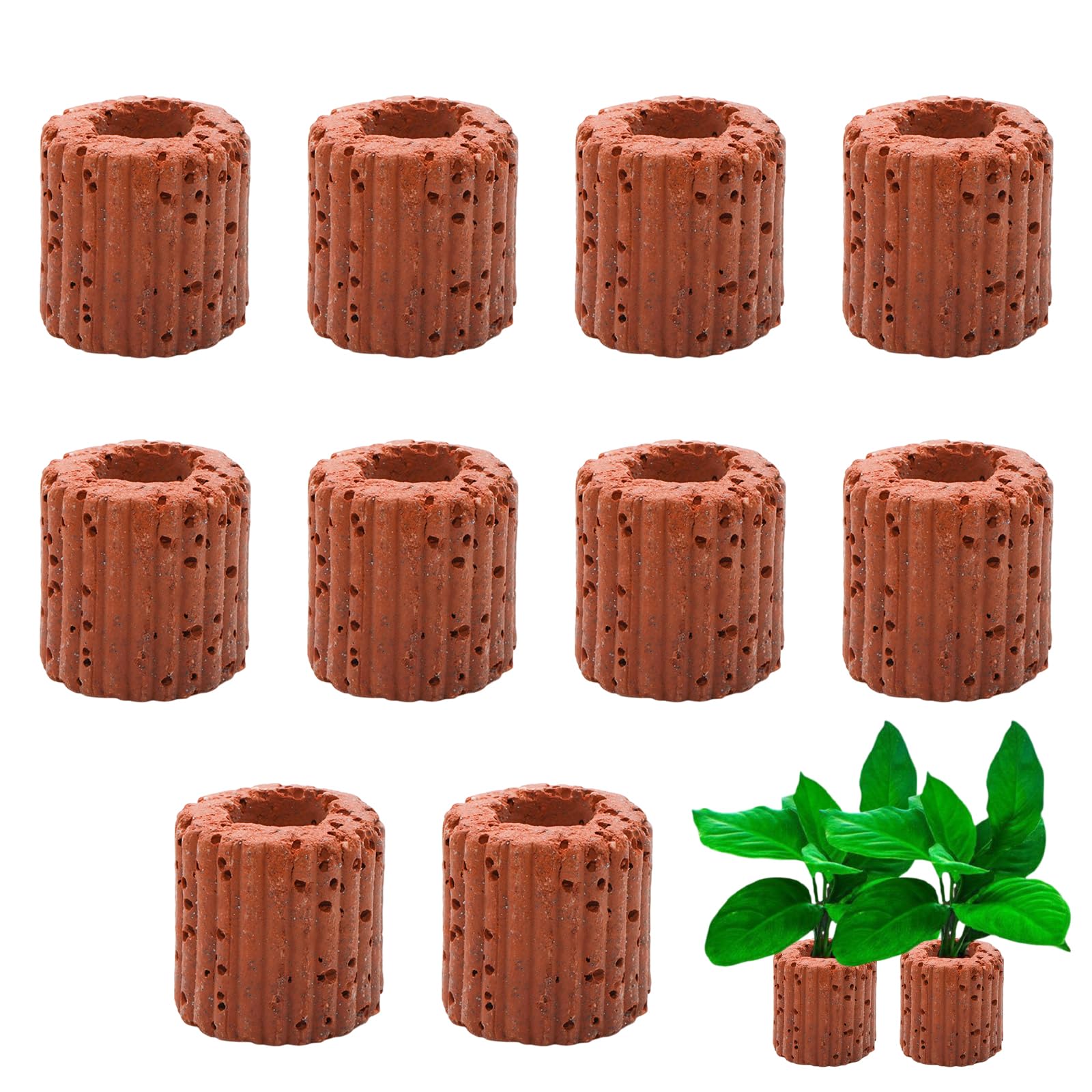
Rating: 4.3 ★ | Price: Budget | Size: 25 mm OD x 25 mm H | Count: 10 units | Material: Ceramic and cotton | Inner diameter: 15 mm
The cotton wrap is a small detail that changes how these rings handle a delicate stem. Instead of a hard ceramic edge pressing into the plant, the cotton gives the stem a soft surface to sit against. We tried one on a thin stem and liked that it held without pinching.
The ceramic core gives the ring enough weight to sink, and the openings let water move through rather than sealing the root zone. Each ring is about 25mm across with a 15mm opening, so it is sized for small bunches and single stems. The 10-pack is enough for a nano tank or a small group of cuttings.
The cotton is the part to watch. It can trap a little debris over time, so we rinse the rings before they go back in the tank. The ceramic core is still the weight; the wrap is just a cushion, and it will not last forever if you are constantly moving the ring.
For a plant with soft stems or exposed roots, the gentle contact is worth the extra care. It is not the anchor for a big Amazon sword or a heavy bunch; those need a larger stone or a long ribbon. But for the delicate end of planting, this is the one we reach for.
Pros
- Cotton cushion protects fragile stems
- Ceramic core sinks and stays put
- Openings allow water circulation
- 10-pack suits a nano tank
Cons
- Not for thick stems or broad crowns
We like these cotton-wrapped ceramic rings for fragile stems and roots, where a bare metal or ceramic edge can do damage; they are gentle, reusable, and best for small plantings.
How We Tested 16 Plant Weights in Planted Tanks
I started with the weights sold in aquarium shops and the big online listings, then filtered out anything with exposed lead, anything whose coating felt chalky or uneven in the package, and anything offered in only one extreme size. That left 16 sets of weights and anchors, which went into three tanks for three months: a gravel-bottomed 29-gallon, a sand-bottomed 20-gallon, and a bare-bottom quarantine tank where plants go in and out constantly.
Before anything got wet, I weighed each one on a kitchen scale and measured the opening with calipers, then noted whether the edges were smooth or had burrs that could nick a stem. Planting was the real work: thin rotala stems, a chunky crypt root ball, and a fine seed mat for a carpeting species all went into the same slots to see what slipped and what held. Every Saturday during water changes I ran the gravel vacuum within an inch of each weight, and after a month I pulled them out to check for rust, pitting, and the white crust that shows up where plating fails.
The rest was observation. I watched whether a weight sat on top of the sand or sank into it, whether anything crept up a stem over a week, and how obvious each color looked against black substrate under a bright light. Then I nudged each one with a siphon hose and a pair of planting tweezers to see how much it took to dislodge — some stayed put through a filter bump, others rotated free at the first touch.
How to Choose Aquarium Plant Weights
The right weight holds a plant through its first weeks without crushing the stem or becoming the most obvious thing in the tank.
Start With the Material
Lead ribbon is the traditional choice: dense, cheap, and easy to wrap. It also raises a handling question, especially in tanks with shrimp, snails, or fish that root through the substrate. Ceramic and stone anchors avoid that question and are reusable, but they are bulkier and can be more expensive. If you want the simplest lead-free default, start with a ceramic ring or a drilled stone; if you choose lead, wash your hands after handling and keep it away from children.
Match the Anchor to the Plant
A long ribbon is best for a bunch of stem plants because it can wrap the whole bundle. A ring with a hole suits a plant with a crown or rhizome, such as Anubias or Java fern, where the weight sits around the base rather than squeezing the stem. For a bare-bottom tank or a plant you expect to move, a pot-and-sponge set gives the roots something to sit in. Measure the stem bundle or root crown before ordering; a ring that is too small will bruise the plant, and one that is too large will not grip.
Check the Size and Weight
Five-gram strips are handy for a single small bunch, but a heavy cluster may need two or three. A 250-gram bundle of long strips is a better fit for a large tank with big plant groups, and you can cut it down. For rings, the inner diameter matters more than the outside: 15mm suits thin stems, while a 0.8- to 1.2-inch hole takes a bigger root crown. The trade-off is visibility; a heavier anchor is easier to hide under substrate, but it takes up more room.
Think About Handling and Reuse
Metal ribbon can be straightened, cut, and reused, which makes it easy to adjust as a plant grows. Ceramic and stone anchors are reusable too, but they are not adjustable; you choose the hole size and live with it. Sponge-lined rings are gentler on stems, though the sponge needs a rinse and can trap debris over time. If you move plants often, a pot or ring that lifts out without disturbing the substrate is worth the extra bulk.
Decide How It Should Look
A planted tank is meant to be looked at, and the anchor is part of the picture. Lead ribbon is utilitarian and can show above the substrate until the plant fills in. Ceramic rings come in neutral gray, white, or red and can look like small pots, which is fine in a utility tank but noticeable in a minimal aquascape. Natural river stones blend in best, especially among root feeders and moss. Choose the finish you can live with, not just the cheapest piece in the pack.
Frequently Asked Questions
Do aquarium plant weights really stop plants from floating?
Yes, for new plantings and cuttings that have not rooted yet. Wrap a stem bunch loosely, push the weight into the substrate, and the plant should stay put while roots establish. A weight will not stop a fish that digs or a plant that is already too buoyant for the substrate; in those cases, use a larger anchor or a pot.
How many weights do I need per plant?
One weight per small stem bunch or root crown is the usual starting point. Use two for a thick bunch or a plant in a high-flow tank. A 10-pack covers about 10 small plantings; a 25- or 52-piece pack is better if you are planting a whole tank at once.
Do I have to remove the weight after the plant roots?
Remove metal ribbon once the plant is rooted, because a tight wrap can girdle a growing stem. Ceramic rings and stone anchors can stay in place if they suit the scape; they are also easy to lift and reuse. If you see corrosion or a sharp edge on any weight, take it out.
Final Verdict
For most planted tanks, we recommend the JoyHua ceramic ring set. The sponge-lined rings hold stems and crowns without lead, they are easy to reuse, and 12 to a pack gives you room to plant a whole tank. It is the one we reach for first when a new plant needs to stay put.
If the anchor has to disappear into a nature-style scape, choose the XIOFU river stones instead; their large holes take bigger root crowns and the stone looks intentional among plants. For a bare-bottom tank, the QoTang pot set is the more practical shape.