This post contains affiliate links. We may earn a small commission when you buy through our links — at no extra cost to you.
Many sinking wafers and pellets for bottom feeders come with a promise of clear water and fast sinking. In practice, a lot of them float for a few seconds before sinking, or leave a cloudy haze in the tank. That mismatch between label and reality is frustrating, especially when you’re trying to keep corydoras healthy without compromising water quality.
The root cause isn’t poor manufacturing — it’s that formulations that hold together well enough to sink without disintegrating often contain binders that cloud water. Conversely, clear-water formulas may not sink reliably. The trick is finding a food that strikes the right balance for your tank size and corydoras size.
This guide focuses on foods that deliver on their sinking claims and keep water clear, across different pellet sizes and protein sources. Whether you have pygmy corydoras or a community tank with plecos, the picks below match the right food to the right fish.
Top Picks
Best for Pygmy & Dwarf Corydoras
Fluval Bug Bites Granules

Rating: 4.8 ★ | Price: Budget | Sinking Speed: Immediate | Water Clarity: Clear | Pellet Size: 1.4-1.6mm | Protein Source: BSFL+Salmon | Value per Ounce: Moderate
Fluval Bug Bites Granules sink immediately upon contact, and the water stays clear – no cloudiness from binders. The formula relies on black soldier fly larvae (40%) and salmon for a high-protein diet that mirrors natural insect intake.
The 1.4-1.6mm granule size is ideal for small corydoras mouths, including pygmy and dwarf species. Unlike some sinking foods that dissolve into a mess, these granules hold shape long enough for bottom feeders to eat, reducing waste and keeping the tank clean.
This is the best choice for keepers of small to medium corydoras who want a clean, insect-based staple. It is not suitable for large species that need bigger pellets – those fish are better served by larger wafers. The 1.6 oz bag is modest; heavy feeders will need to reorder regularly to keep stock.
Pros
- High insect protein content supports natural feeding behavior
- Sinks fast without clouding water, preserving tank clarity
- Granule size fits small corydoras mouths perfectly
Cons
- Granules may be too small for larger corydoras species
- 1.6 oz bag requires frequent reordering for heavy feeders
If you keep small to medium corydoras and want a food that won’t cloud the water, this is the granule to buy.
Best for Medium-Large Corydoras
Hikari Sinking Wafers

Rating: 4.7 ★ | Price: Mid-Range | Sinking Speed: Reliable | Water Clarity: Mostly clear | Pellet Size: Large (1cm) | Protein Source: Fish meal, spirulina, krill | Value per Ounce: Good
Decades of positive feedback and a gradual-soften disc shape make this wafer a trusted option for bottom feeders. Where the top pick offers tiny granules suitable for all corydoras sizes, this wafer is better matched to medium and large species like bronze or peppered corydoras.
This food works well for keepers who have larger corydoras or mixed tanks with plecos. The 1cm wafers are too large for pygmy corydoras unless crumbled, so those with small species should look to a smaller granule option.
Pros
- Fish readily accept these wafers.
- Water clarity stays good after feeding in most cases.
Cons
- Pellet size can be too large for small corydoras.
- Occasional sinking issues – some pellets float.
A solid choice for larger corydoras and plecos, with strong palatability and minimal water clouding.
Best for Picky Bottom Feeders
Tetra ShrimpWafers

Rating: 4.7 ★ | Price: Mid-Range | Sinking Speed: Good | Water Clarity: Some clouding | Pellet Size: Medium wafer | Protein Source: Shrimp protein | Value per Ounce: Good
The strong shrimp aroma of Tetra ShrimpWafers makes them especially effective for bottom feeders that are picky or slow to find food. Unlike budget blends that rely on plant fillers, the shrimp protein content gives these wafers a distinct advantage for catfish and loaches that prefer animal-based proteins.
This food suits mixed communities with corydoras, loaches, and other omnivorous bottom feeders. However, the wafers can cloud water if overfed, and they may dissolve quickly if fish are slow to eat — keep portions small and remove uneaten wafers after a few minutes.
Pros
- High palatability – catfish and loaches love them
- Good value for the size
Cons
- Water cloudiness can occur after feeding
- Some wafers dissolve before fish finish eating
If your bottom feeders need extra encouragement to eat, the shrimp scent makes these wafers a worthwhile choice — just feed sparingly to keep the water clear.
Best for Budget Community Tank
Tetra PRO PlecoWafers

Rating: 4.6 ★ | Price: Mid-Range | Sinking Speed: Inconsistent (some float) | Water Clarity: Sometimes cloudy | Pellet Size: Wafer | Protein Source: Vegetarian (algae) | Value per Ounce: Excellent (5.29 oz)
At 5.29 ounces, this wafer delivers the most volume per dollar of any sinking food in this roundup, making it a practical choice for tanks housing several algae-eaters or corydoras. The vegetarian algae formula appeals to a wide range of bottom feeders, and fish take to it readily. Compared to the shrimp-based alternative that prioritizes scent over quantity, the Tetra option stretches your feeding budget further.
This suits keepers running mixed community tanks who need to feed multiple bottom-dwellers daily and don’t mind the occasional haze in the water. The ‘Clear-Water’ claim on the label doesn’t always hold – cloudiness can appear, especially in smaller tanks or those with less aggressive filtration. Some wafers also float briefly before sinking, which may reduce access for corydoras that feed strictly on the substrate. For buyers who prioritize water clarity above all, the top pick’s instant-sink granules avoid both issues, but they come in a much smaller bag.
Pros
- High satisfaction with quality and value among a large number of buyers
- Fish love the taste – strong palatability for corydoras and other bottom feeders
- Largest package size at this price point, reducing reorder frequency
Cons
- In smaller or heavily stocked tanks, water cloudiness can occur despite the ‘Clear-Water’ formula
- Some wafers float on the surface before sinking, which may limit access for bottom-dwelling corydoras
Tetra PRO PlecoWafers work best for budget-minded hobbyists with larger community tanks who can overlook occasional cloudiness and floating wafers – the volume-to-price ratio is hard to beat.
Best for Carnivorous Bottom Feeders
Hikari Carnivore Pellets
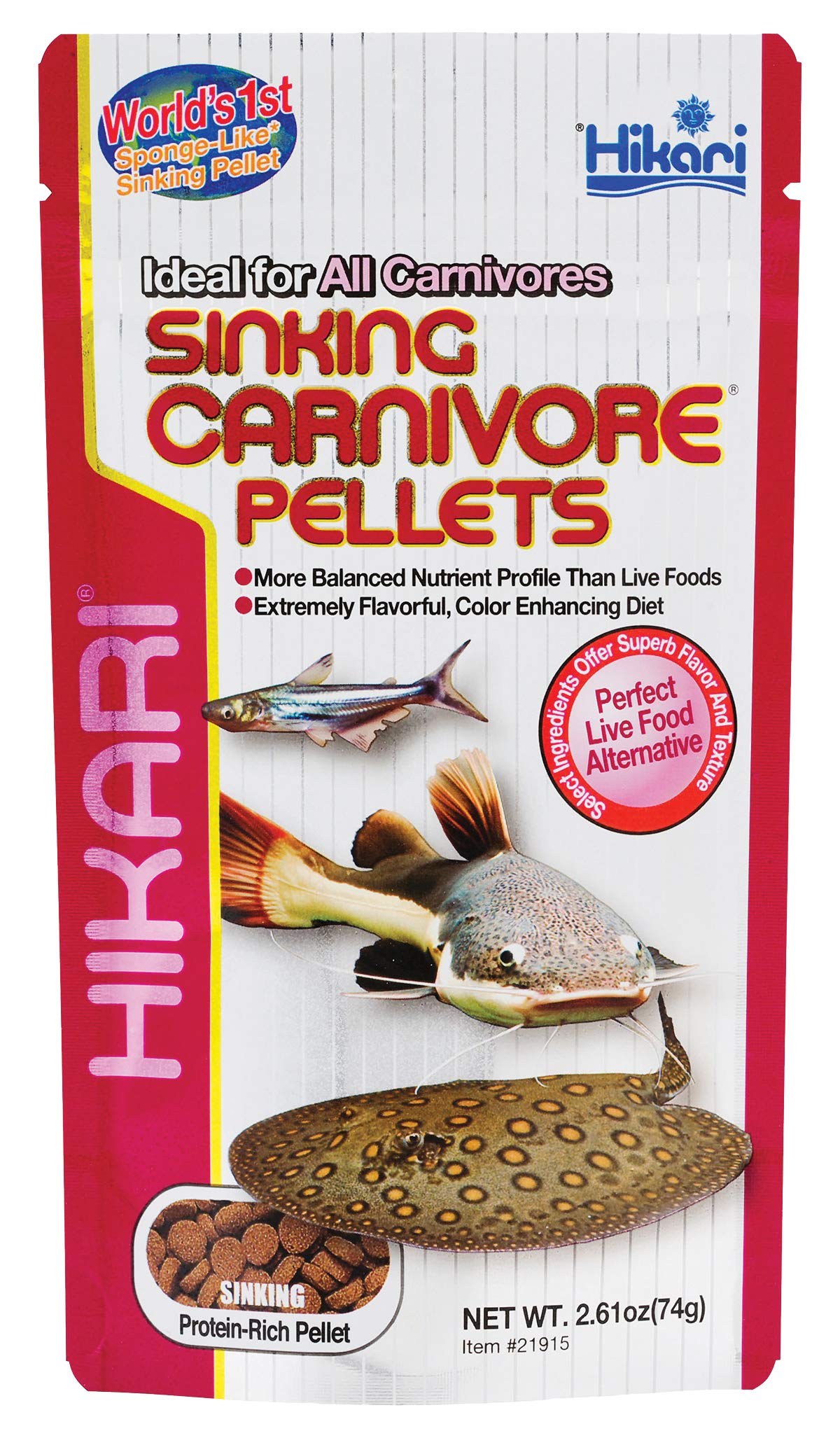
Rating: 4.8 ★ | Price: Premium | Sinking Speed: Fast | Pellet Size: Small | Protein Source: Krill meal, astaxanthin | Value per Ounce: Premium
Hikari Sinking Carnivore Pellets deliver a concentrated protein punch from krill meal and astaxanthin, sinking fast to reach bottom-dwellers. The small pellets are designed for predatory fish like pictus catfish, not for the mixed diet corydoras need.
This food works for keepers with a community of carnivores or as a high-protein supplement for specific species. For corydoras, the protein density is excessive and the price per feeding is high — a balanced wafer (like the top pick) better matches their omnivorous needs.
Pros
- Fish respond well to the high-quality protein blend
- Works for shrimp, axolotls, and other bottom feeders beyond catfish
- Sinks immediately with minimal surface scatter
Cons
- Pellet size may be too large for very small corydoras like pygmies
- High carnivore protein is unnecessary for omnivorous or plant-oriented corydoras
Best left for dedicated carnivore tanks or as an occasional supplement — not a daily staple for corydoras.
Best for Emergency Backup
API Bottom Feeder Pellets

Rating: 4.7 ★ | Price: Budget | Sinking Speed: Inconsistent | Water Clarity: Often cloudy | Pellet Size: Variable | Protein Source: Squid, mussel, seaweed | Value per Ounce: Cheap
API Bottom Feeder Pellets are the cheapest food you can grab for corydoras, and fish do eat them readily. However, some pellets may float instead of sinking, and water cloudiness can appear after feeding. Pellet size also varies between batches. These trade-offs make it unsuitable as a daily staple, but it works as a budget-friendly backup or for multi-tank setups where a few floating pellets won’t disrupt the bottom feeders.
Pros
- Very low price – budget-friendly
- Fish consume them readily
Cons
- Water cloudiness may occur after feeding
- Some pellets may float instead of sinking, reducing access for bottom feeders
Keep a bag on hand as a low-cost emergency backup, especially if you have large tanks or multiple setups where occasional floating pellets won’t matter.
Best for Large Community Tanks
Aqueon Shrimp Pellets

Rating: 4.6 ★ | Price: Budget | Sinking Speed: Often floats | Water Clarity: Sometimes cloudy | Pellet Size: 9mm | Protein Source: Shrimp meal, wheat | Value per Ounce: Very cheap (6.5 oz)
The Aqueon Shrimp Pellets provide a large 6.5 oz bag at a budget-friendly price, making them a cost-effective option for feeding big bottom feeders and goldfish. However, the 9mm pellets can float instead of sinking, and water cloudiness has been noted unpredictably – these issues and the large diameter make them a poor fit for smaller corydoras species. Other budget bulk options offer more consistent sinking for corydoras keepers.
Pros
- Large 6.5 oz bag at a budget-friendly price
- Fish enjoy the taste, especially goldfish and mollies
Cons
- Pellets can float instead of sinking, reducing access for bottom feeders
- Large 9mm size is too big for smaller corydoras species
A good fit for goldfish keepers on a budget who need bulk food, but not suitable for corydoras keepers who require consistent sinking and small pellets.
How to Choose
The most important thing to know when buying corydoras food is that ‘sinking’ and ‘won’t cloud water’ claims are often aspirational, not guaranteed.
Sinking Speed and Reliability
Corydoras are bottom feeders and need food that reaches the substrate quickly. Wafers or pellets that float for more than a few seconds may get eaten by mid-water fish or break apart before sinking. Denser formulas with less air content sink faster, but some manufacturers use binders that slow sinking to reduce dust. Look for foods with consistent reviews confirming they sink immediately.
Water Clarity Impact
Binders that prevent a wafer from disintegrating in the water often turn the water milky or hazy. Foods advertised as ‘clear-water’ formulas may still cloud the tank if they contain starches or gelatin that dissolve slowly. Insect-based granules like Fluval Bug Bites avoid this by holding shape without excess binders. Overfeeding amplifies the problem, so always start with a small pinch.
Pellet/Wafer Size
Corydoras species vary significantly in mouth size. Pygmy corydoras need granules under 2mm, while larger species like bronze corydoras can handle 1cm wafers. If the pellet is too large, the fish may nibble at it but not consume enough, leading to wasted food and rot. For mixed tanks, choose a food with a small granule size that breaks down easily, or crumble larger wafers by hand.
Protein Source
Corydoras are omnivores and thrive on a mix of protein and plant matter. Vegetarian wafers (like Tetra PRO PlecoWafers) are formulated for algae eaters and may not provide enough protein for active corydoras. Insect-based formulas (black soldier fly larvae) offer a high-quality protein that closely mimics their natural diet. Shrimp-based wafers are excellent for picky eaters but can be high in fat, so use as a supplement if needed.
Value per Ounce
Larger bags often cost less per feeding, but the trade-off is usually in ingredient quality or water clarity. Budget options like API Bottom Feeder Pellets are cheap but may float or cloud water, meaning you waste more food and spend more on water changes. Mid-range products around 3-6 ounces offer the best balance of cost and performance. Calculate the cost per feeding rather than per bag to see the true value.
FAQ
Why do my corydoras ignore sinking wafers?
Corydoras have small mouths; if the wafer is too large or too hard, they can’t bite it. Soak the wafer in tank water for a few minutes to soften it, or break it into smaller pieces. Alternatively, switch to a smaller granule like Fluval Bug Bites.
How to prevent fish food from clouding the aquarium water?
Choose foods with minimal binders, like insect-based granules that hold shape without disintegrating. Avoid overfeeding, and soak dry food before adding to reduce dust. The Fluval Bug Bites granules are a good example of a food that doesn’t cloud water.
Are freeze-dried bloodworms a complete diet for corydoras?
No. Freeze-dried bloodworms are a treat, not a staple. They lack fiber and other nutrients corydoras need. Use them occasionally as a supplement, but rely on a sinking pellet or wafer for daily nutrition.
What size pellets are best for pygmy corydoras?
Pygmy corydoras need pellets no larger than 1.5mm. The Fluval Bug Bites granules at 1.4-1.6mm are ideal. Larger wafers like Hikari Sinking Wafers are too big and should be crumbled.