This post contains affiliate links. We may earn a small commission when you buy through our links — at no extra cost to you.
Adding red plants to an aquarium instantly boosts visual depth, but many aquarists find artificial options fade to purple or shed leaves within weeks, while live plants demand specific light to keep their color. The gap between ad photos and actual performance is wide.
This guide cuts through that mismatch by focusing on what matters: color accuracy under typical tank lighting, construction durability, and the real-world trade-offs between plastic, silk, and live plants. You’ll walk away knowing which type fits your tank size, your fish’s safety, and your willingness to maintain conditions.
The right red plant is the one that stays red and stays put—without surprising you with glue failures or hidden light requirements.
Top Picks
Best for Budget Large Tanks
MyLifeUNIT 10-Pack 12in Wine Red

Rating: 4.5 ★ | Price: Budget | Height: 12 in | Material: Plastic | Quantity: 10 pcs | Color: Wine Red
The MyLifeUNIT 10-pack delivers the best price-to-quantity ratio for filling large tanks with artificial plants that sway naturally. Each 12-inch stem sits securely in a ceramic base and moves with the current, giving a convincing underwater look without the maintenance of live plants.
This set suits budget-focused aquarists who want dense coverage instantly. Keep in mind that the wine red color can shift toward purple under typical LEDs – a tradeoff for the price and volume.
Pros
- Ten tall plants at a budget price – ideal for covering large tanks quickly.
- Lifelike plastic leaves sway naturally with water currents, adding movement.
- Fish actively use the foliage for hiding and swimming through.
Cons
- Under typical LED lighting, the wine red color can appear more purplish than true red.
- Occasional leaf detachment from the base may occur over time – worth checking before planting.
For budget-conscious aquarists wanting an instant, full look without maintenance, this 10-pack is the clear call – just keep color expectations realistic.
Best for Planted Tanks
SubstrateSource Red Rubin
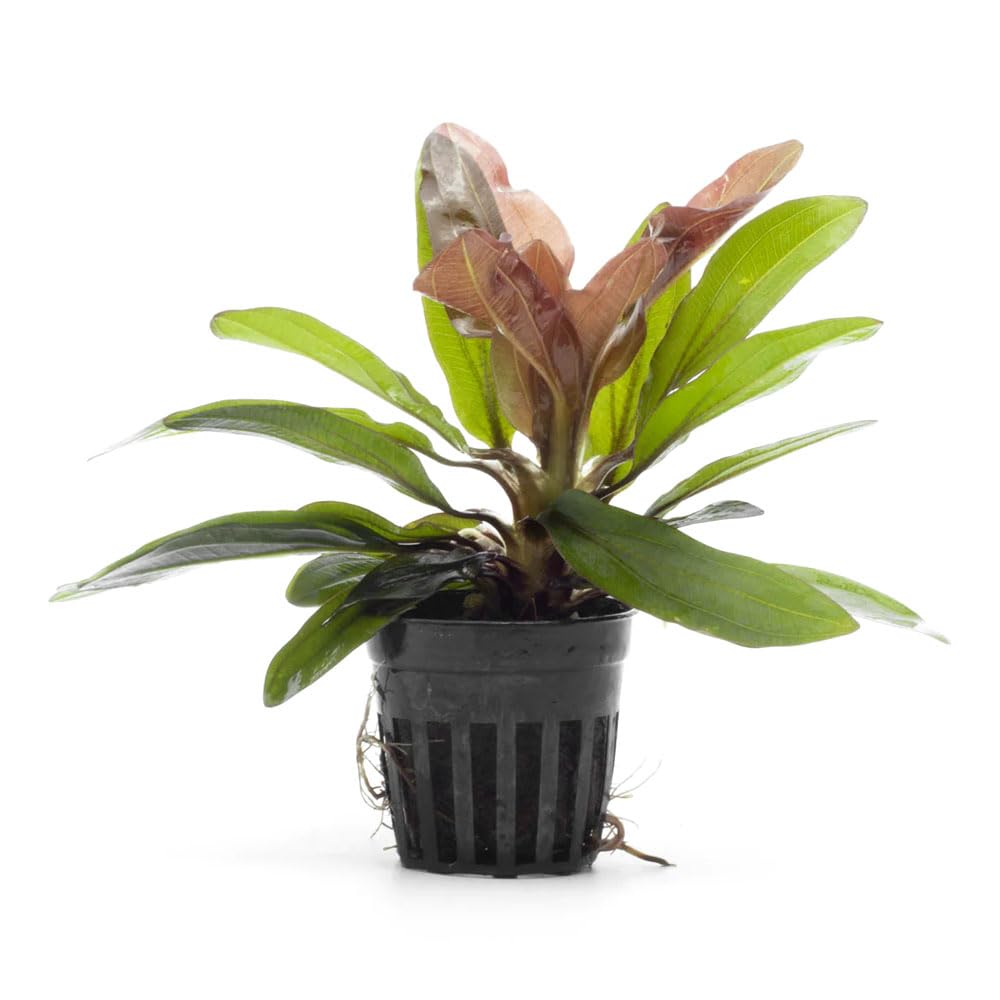
Rating: 4.4 ★ | Price: Budget | Height: Midground | Material: Live | Quantity: 1 pot | Color: Red-green
Healthy, large plants with strong root systems arrive ready to grow, and under medium to high light they develop rich red-green tones that add depth to the midground or background. The tradeoff: in lower light the leaves stay green, so this plant is best suited for aquascapers with strong, consistent lighting. Some leaves may melt during the first week of acclimation, but recovery is typical with stable conditions.
Pros
- Healthy, large plants with strong root systems for reliable growth.
- Beautiful red-green coloration adds visual depth under adequate light.
- Durable growth once established; thrives in many setups.
Cons
- Leaves may melt during the first week of acclimation before regrowing.
Aquascapers with medium to high light setups will get the most out of this hardy rooted plant; low-light tanks should stick to artificial red plants.
Best for Betta Tanks
Marina Silk Red Foreground

Rating: 4.4 ★ | Price: Budget | Height: 5–6 in | Material: Silk | Quantity: 1 pc | Color: Red
Where stiffer plastic red plants risk fin tears, this Marina silk option stays soft and forgiving — a crucial detail for long-finned bettas and delicate nano fish. The vibrant red color and leaf shape mimic live foreground plants, bringing a natural look to 5–10 gallon tanks. The plant is best used as a front or midground accent, not a background filler. At an actual height closer to 4–5 inches, it may look undersized in tanks taller than 12 inches. The silk edges can show fraying after months of submersion, so it suits owners who see it as a periodically replaceable decorative piece rather than a permanent fixture.
Pros
- Ultra-soft silk leaves won’t tear delicate betta fins.
- Vibrant red coloration that mimics live aquarium plants convincingly.
- Proportioned perfectly for foreground or midground placement in small tanks.
Cons
- Real-world height is about 4–5 inches, not the listed 5–6 inches, limiting background use.
- Silk edges can fray over time, reducing the crisp appearance.
A budget-friendly way to add safe red silk to a betta or nano tank, as long as you accept the compact height and plan to replace it after extended use.
Best for Tall Tanks
Hamiledyi 23.6in 2-Pack Red
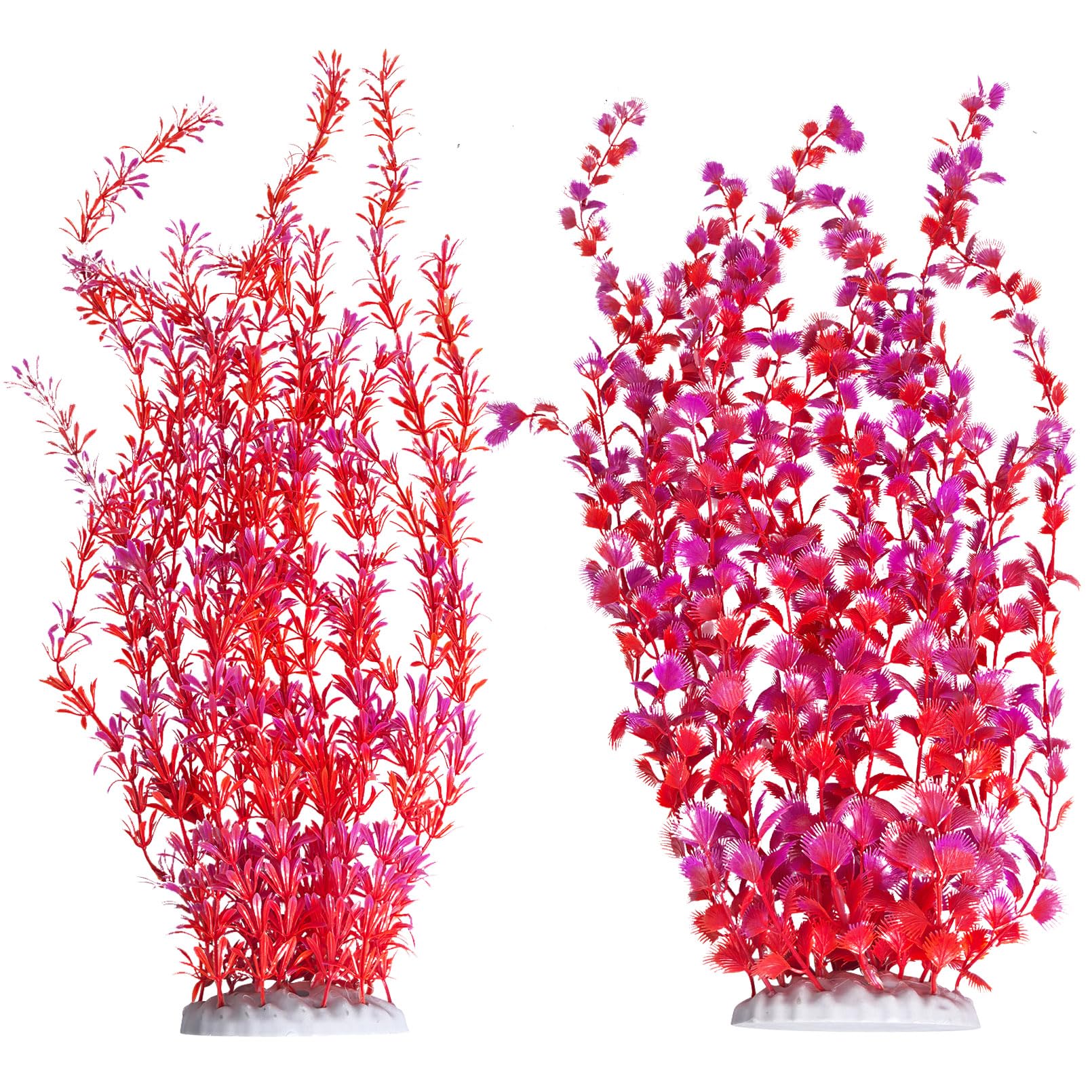
Rating: 4.5 ★ | Price: Mid-Range | Height: 23.6 in | Material: Plastic | Quantity: 2 pcs | Color: Red
Tallest artificial red plant at 23.6 inches, this Hamiledyi set is built for deep tanks where shorter decorations disappear. The two-piece design provides a symmetrical backdrop without live plant care, and the ceramic base stays put in gravel or sand. Best for 60+ gallon aquariums that need vertical presence—the top pick offers more volume for the price, but this one wins on sheer height.
Pros
- 23.6-inch height fills vertical space in tall aquariums
- Lifelike red appearance without lighting requirements
Cons
- Stems may separate from the ceramic base if handled roughly; occasional re-gluing is possible
The go-to choice for tall tank backdrops where artificial height matters.
Best for Shrimp Tanks
Aquarigram Red Root Floaters

Rating: 4.3 ★ | Price: Mid-Range | Material: Live | Quantity: 60+ leaves | Color: Red roots, green tops
Aquarigram’s Red Root Floaters deliver the deepest red roots among live aquarium plants, creating a natural canopy that shrimp and bettas love. The tradeoff is that these are living plants, not set-and-forget decor: they require moderate light, calm surface water, and temperatures below 90°F to avoid melting. This makes them a better fit for hobbyists comfortable adjusting water conditions than for beginners expecting the instant, no-maintenance look of artificial red plants.
Pros
- Healthy plants with strong root systems arrive ready to grow.
- Striking red roots that pop under aquarium lights.
- Bonus mystery plant adds unexpected value.
Cons
- Can melt under high surface agitation or temperatures above 90°F.
- Portion size may contain fewer leaves than the advertised count.
Choose these if you want authentic red color from a live floater and are ready to give it the calm, warm-water conditions it needs.
Best for Nano Tanks
FdcLixuvol Mini Grass 2-Pack
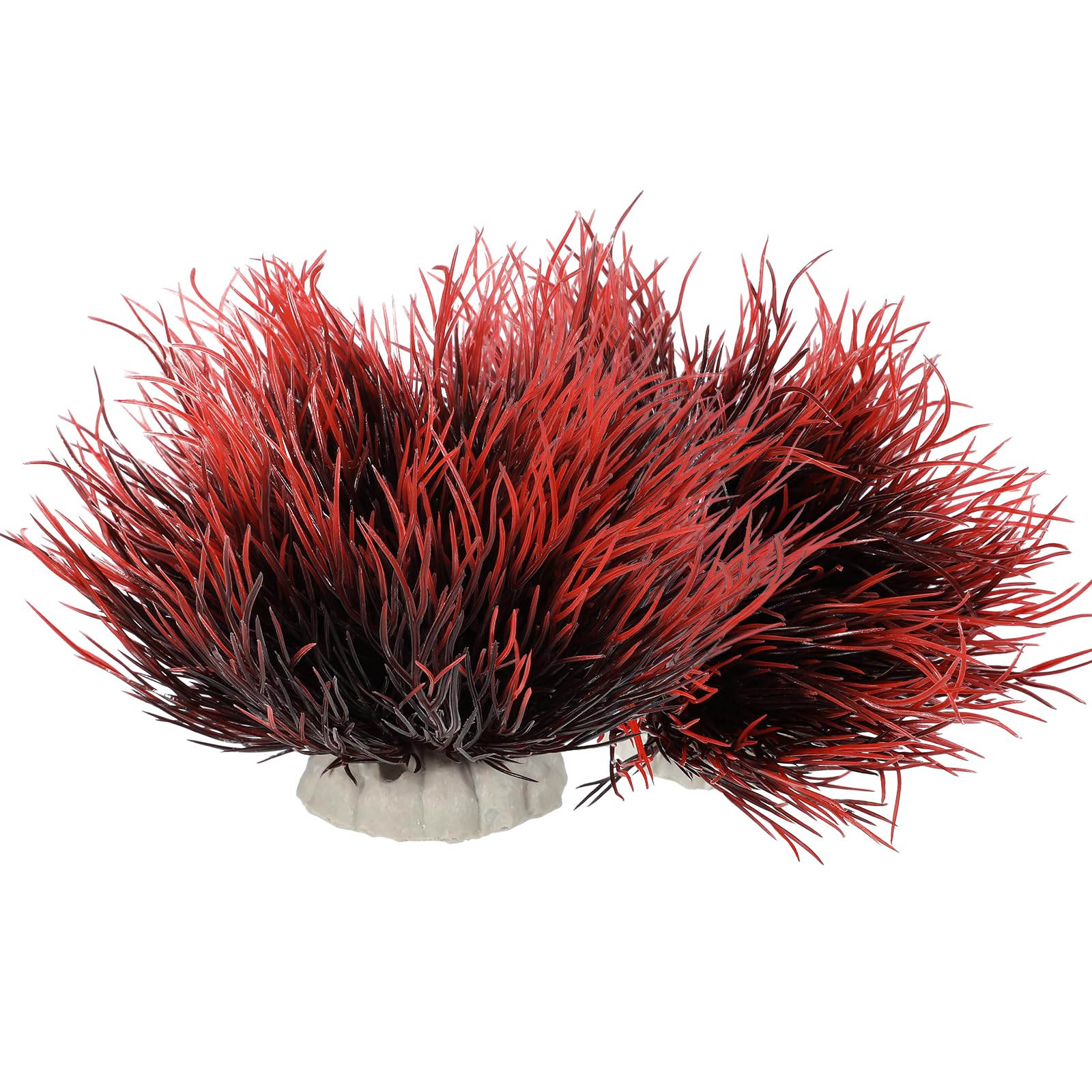
Rating: 4.7 ★ | Price: Budget | Height: 5.9 in | Material: PVC | Quantity: 2 pcs | Color: Black Red
Unlike the top pick’s generous 10-pack coverage for larger tanks, this 2-pack focuses on small-scale setups. The soft PVC blades mimic natural grass and feel safe for shrimp or dwarf frog habitats. At 5.9 inches tall, it stays proportional in tanks under 10 gallons without overwhelming the space.
Best for budget-minded aquarists setting up a nano tank who are fine with a subdued red-black color rather than a vivid pop. The dark tone works well as a background accent but won’t satisfy those looking for bright red plants. Limited review history means long-term durability is less documented than the more established MyLifeUNIT set.
Pros
- Soft, natural-looking texture that won’t harm delicate fish or shrimp.
- Budget-friendly entry point for adding red-toned decor to small tanks.
- Compact height suits nano tanks without blocking sightlines.
Cons
- Color reads dark red or black, not the bright red some buyers expect.
- Only appropriate for tanks under 10 gallons — too short for larger setups.
A capable, no-frills pick for nano-tank owners who prioritize affordability and soft texture over color brightness.
Best for Tall Tanks
JIHAQUA 21in 2-Pack Wine

Rating: 4.6 ★ | Price: Mid-Range | Height: 21 in | Material: Plastic | Quantity: 2 pcs | Color: Wine
These plastic plants bring tall, bushy cover to 55–75 gallon aquariums at a mid-range price. The wine-red color adds visual depth, and the dense leaves create ample hiding spots. However, the stems can separate from the base over time, so reinforcing with extra glue is worth planning for.
Pros
- Reaches 21 inches with full, dense foliage ideal for taller tanks.
- Cost-effective for the size, providing good coverage without breaking the budget.
Cons
- Stems can detach from the base, especially during cleaning or fish activity.
Best for budget-conscious owners of taller tanks who are comfortable applying extra adhesive for a secure setup.
Best for Cichlid Tanks
ALEGI 16in 2-Pack Red

Rating: 4.6 ★ | Price: Mid-Range | Height: 16 in | Material: Plastic | Quantity: 2 pcs | Color: Red
The ALEGI 2-pack delivers a vibrant true red that pops under aquarium lighting, making it a standout choice for cichlid or goldfish setups. The plastic material is stiff, however, and can tear the fins of bettas or other long-finned species — a clear boundary that keeps this from being a universal option.
Pros
- Vibrant red color that stands out under aquarium lighting.
- Lifelike appearance with natural sway in water currents.
Cons
Best for hardy freshwater tanks where bold red color is the priority over fin safety.
Best for Shrimp Tanks
Generic Red Root Floaters
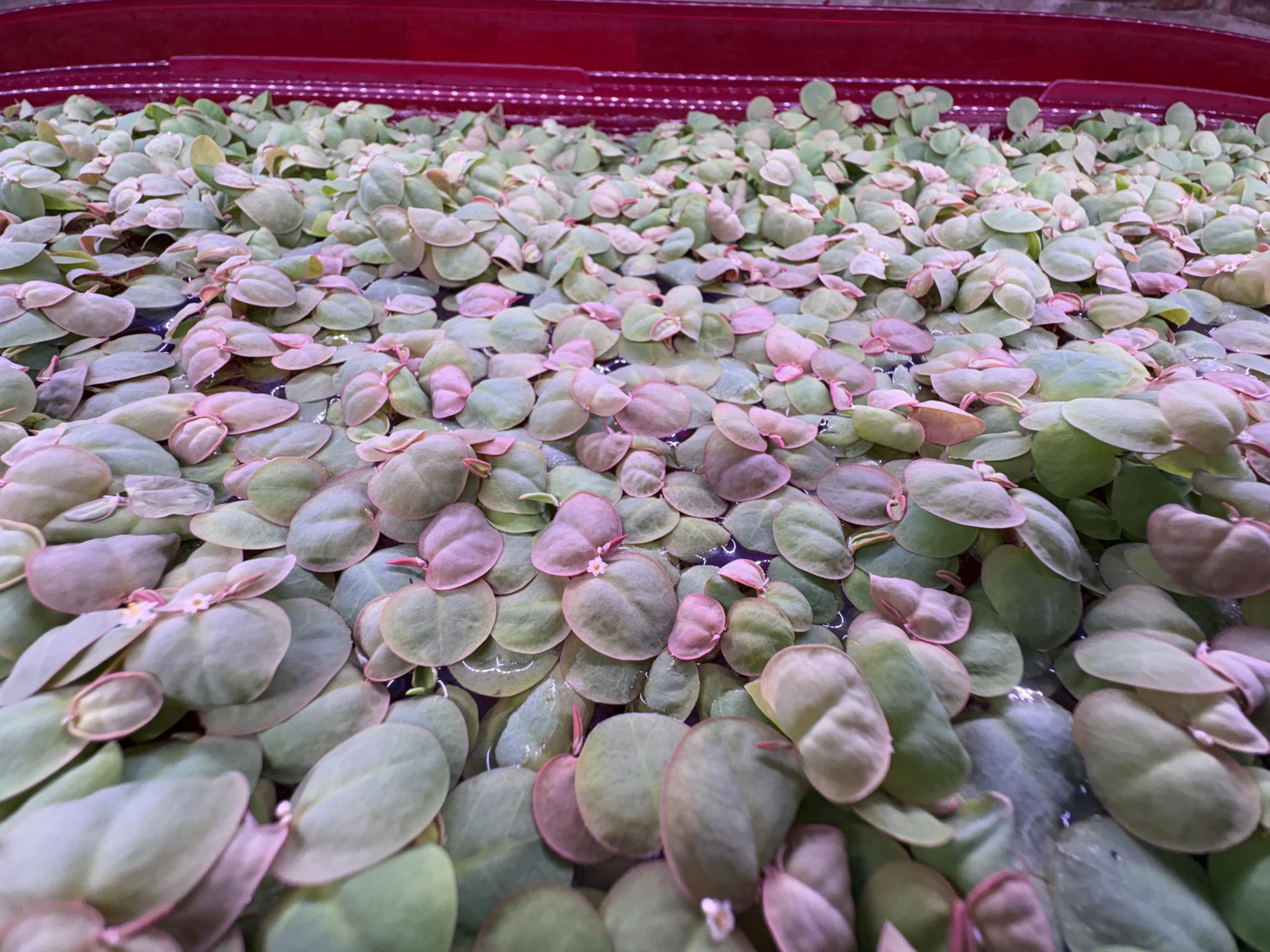
Rating: 4.4 ★ | Price: Mid-Range | Material: Live | Quantity: 60+ leaves | Color: Red/Green
These Phyllanthus fluitans arrive healthy and display the vivid red roots and fast growth that make floaters a favorite for shrimp and betta tanks. Priced below the more established Aquarigram offering, this is a solid option for buyers comfortable with live plants. The trade-off: the 60+ leaf count is a target, not a guarantee — some portions come with fewer leaves and occasional snail hitchhikers are possible. The plants also need gentle water flow and moderate light to avoid melting. For budget-conscious aquarists who can accept some leaf count variance, this delivers good value.
Pros
- Healthy plants with strong red roots and fast growth
- Good value for the quality of live plants received
Cons
- Portion size may be smaller than the advertised 60+ leaves
This is the right choice for aquarists who want live red floaters on a budget and are comfortable with possible leaf count variance and snail hitchhikers.
Best for Betta Tanks
DVHEY Silk 12in 2-Pack
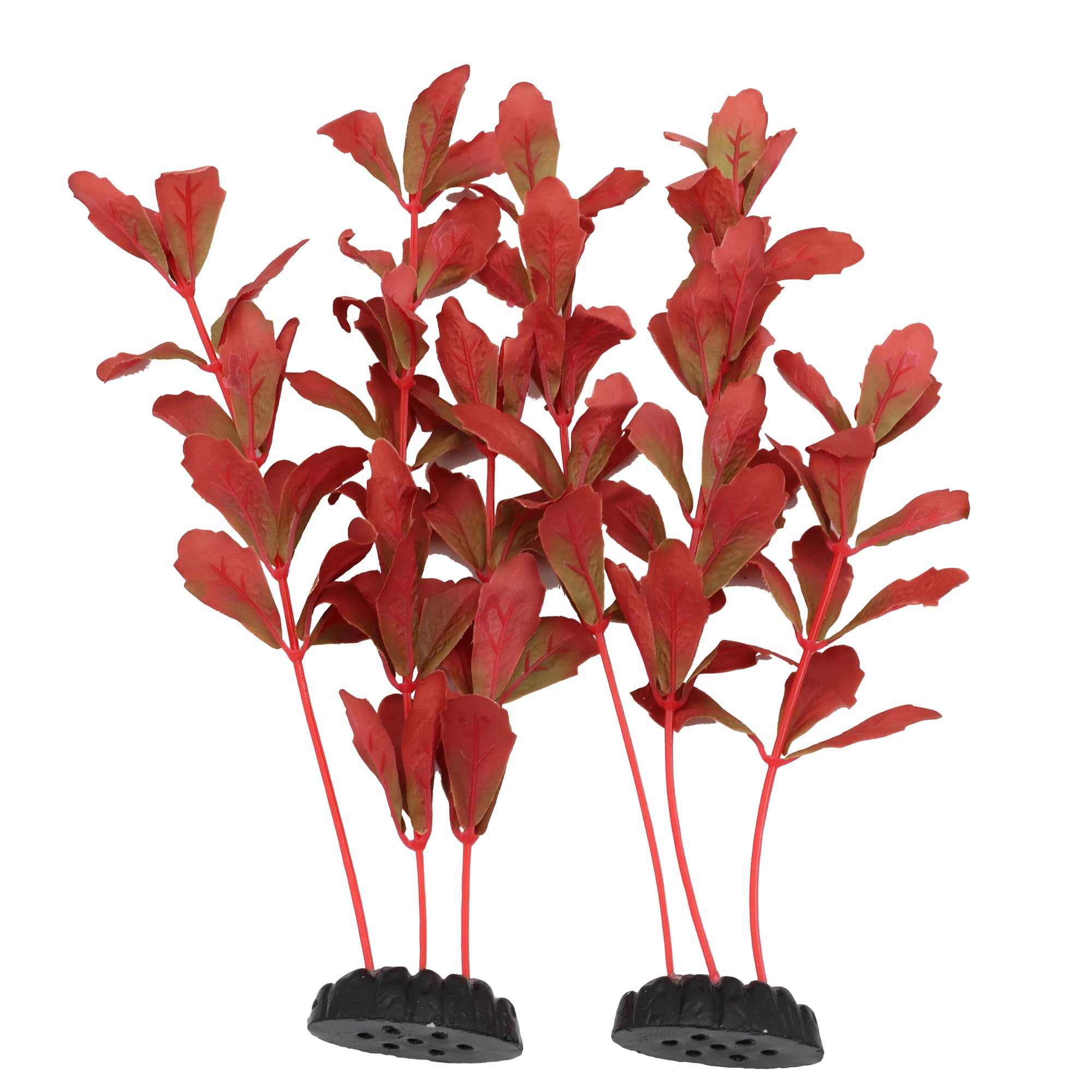
Rating: 4.5 ★ | Price: Budget | Height: 12 in | Material: Silk | Quantity: 2 pcs | Color: Red
The soft, silky material makes this a safe choice for delicate-finned fish like bettas or goldfish, and the red color adds a natural accent without harsh plastic edges. Some units may release tiny fibers into the water after placement, so a pre-rinse or watchful eye helps. Minor shedding reports keep this from competing with the more durable silk options, but for the price, it delivers a gentle plant that finicky fish can brush against safely.
Pros
- Ultra-soft silk that won’t damage fish fins
- Two red plants for a budget price
Cons
- Occasional fiber shedding after placement
Worth grabbing if you need a gentle red accent for a small tank and don’t mind a brief rinse before use — the low price and soft texture outweigh the occasional stray fiber.
Best for Temporary Setup
Mayitr 18in Rhodo Red

Rating: 4.6 ★ | Price: Budget | Height: 18 in | Material: Plastic | Quantity: 1 pc | Color: Rhodo Red
Offering the lowest entry price for an 18-inch red plant, the Mayitr delivers a full, tall look with realistic leaf movement in current. The stone base stays buried well, but stems and leaves can detach from the base after placement — this is a plant for temporary setups or low-stakes tanks rather than long-term decoration.
Pros
- Great value for a tall, full 18-inch red plant
- Natural sway in water current adds realism
Cons
- Stems and leaves can detach from the base after placement
Best as a temporary filler for low-stakes tanks, especially if you’re prepared to reattach parts with superglue.
Best for Enthusiasts
Midnight Glo Red Root Floaters
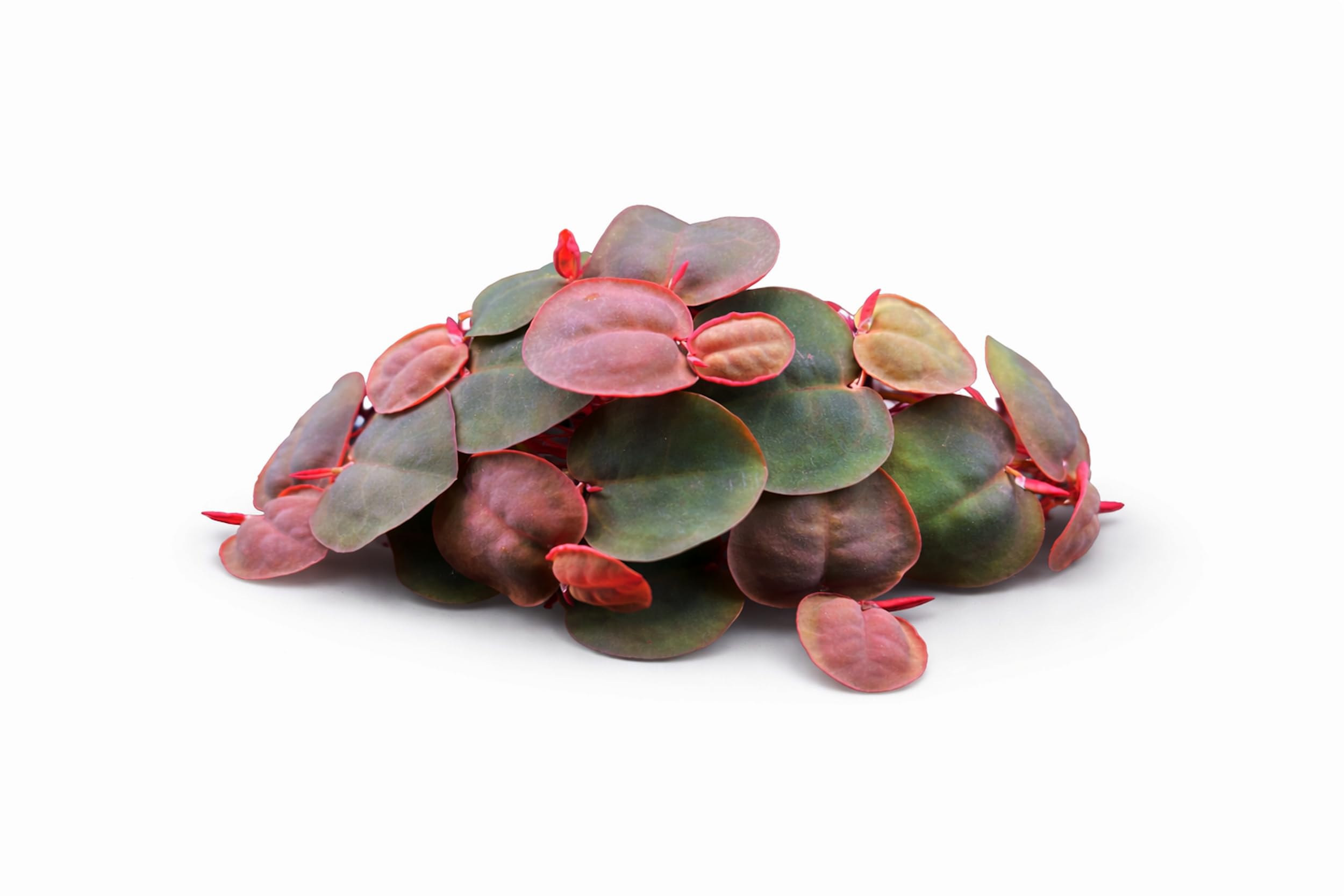
Rating: 4.6 ★ | Price: Premium | Material: Live | Quantity: 80+ leaves | Color: Red roots, green leaves
Midnight Glo delivers exceptionally healthy red root floaters with vivid red roots and a snail-free guarantee — a clear step up in quality. However, the premium pricing and some reports of receiving fewer than the advertised 80 leaves mean it competes with similar live floaters that offer more leaves for less. This makes it a targeted purchase for those who value health and assurance over quantity.
Pros
- Exceptional plant health and vibrant red roots under moderate light
- Snail-free guarantee ensures no unwanted hitchhikers in your tank
Cons
- Premium pricing puts it above similar options, and the leaf count can fall short of the advertised 80+
Best for hobbyists who prioritize health and snail-free assurance over getting the most leaves per dollar.
How to Choose
The biggest surprise with red aquarium plants is that color and structure depend far more on your tank’s light and water flow than on the product photo.
Height and Quantity
A single 12-inch plant will look sparse in a 55-gallon tank, while a 23-inch stem overwhelms a 10-gallon nano. Measure your tank’s depth and decide whether you need background, midground, or foreground coverage. Artificial plants are sold in packs of 1 to 10; live plants often come as one pot or a portion of floating stems. Buying extra pieces upfront saves later frustration.
For tall tanks (18+ inches depth), choose plants at least 20 inches tall or stack two shorter plants. For compact tanks (under 12 inches deep), foreground-height plants around 5 inches work better and avoid crowding the swimming area.
Material: Plastic vs. Silk vs. Live
Plastic plants hold their shape and color for years but can be stiff enough to tear the fins of bettas and other long-finned species. Softer plastics reduce that risk but may lack the same color saturation. Silk plants are the gentlest option for delicate fish, but the fabric edges fray over months of water movement and algae scrubbing.
Live plants offer the most natural look and actually improve water quality, but they require consistent light and nutrients. They also melt or die if your tank’s flow is too high or temperature swings. Choose plastic or silk for zero-maintenance color; choose live if you’re ready to adjust lighting and flow.
Color Accuracy
Many ‘wine red’ artificial plants appear purple or pink under standard aquarium LED lights. The pigment used is often a mix that shifts hue depending on the light spectrum. Always check customer photos in the reviews rather than the product image. If true deep red is essential, look for plants labeled ‘red’ or ‘rhodo red’ and read comments from users with similar lighting.
Live red plants only develop their signature color under moderate to high light (8–10 hours per day). In low-light tanks, they stay green or brown. If you cannot upgrade your light, stick with artificial for guaranteed red tones.
Light and Care Requirements
Live red floaters like Red Root Floaters need low surface agitation and temperatures below 90°F to prevent melting. High flow pushes them underwater and causes leaf die-off. Rooted live plants like Echinodorus Red Rubin require a nutrient-rich substrate and medium-high light to show red. Without these, the leaves remain green and the plant may melt during acclimation.
Artificial plants have no care requirements beyond occasional cleaning, but glue failures at the base are common across many brands. Plan to reinforce ceramic bases with aquarium-safe superglue if you want the plants to stay upright for more than a few months.
FAQ
Why do my artificial aquarium plants keep falling apart?
Most plastic plants are glued into ceramic bases with low-strength adhesives that degrade in water within weeks. Choose brands with better construction reputation (like MyLifeUNIT or Hamiledyi) or plan to reinforce every base with aquarium-safe superglue before placing the plants in the tank. This single fix doubles the lifespan.
How do I make red root floaters turn deep red?
Red root floaters need moderate to high light (at least 6 hours of strong LED) and very low surface agitation. If your filter creates ripples, the plants will stay small and green. Reduce flow by using a sponge filter or baffling the outflow. Keep water temperature below 85°F. With these conditions, roots become deep red within two weeks.
Are silk aquarium plants safe for betta fish fins?
Yes, silk is the safest material for bettas and other long-finned fish because it mimics the softness of live plants without sharp edges. Avoid plastic plants unless they are labeled extra-soft. Even then, run your fingers along the leaves before purchase to check for roughness that could tear fins.
What is the best red plant for a low light aquarium?
For low light, artificial red plants are the only reliable option because live red plants (like Red Rubin or Red Root Floaters) need medium-high light to develop their red tones. If you insist on live plants, choose hardy species like Ludwigia repens or Cryptocoryne wendtii ‘Bronze’ – they stay reddish-brown even in lower light, but won’t be bright red.