This post contains affiliate links. We may earn a small commission when you buy through our links — at no extra cost to you.
A five-gallon tank has about as much room for error as a shot glass. Drop in a plant that’s too tall and it swallows the whole aquascape; pick one that melts within three weeks and you spend your mornings netting brown leaves off the gravel. I’ve kept small tanks on kitchen counters and office desks for years, and the plants that last are rarely the showiest ones in the bag — they’re the ones sized right, rooted fast, and tough enough to shrug off a weekly water change. That’s what these picks fix.
Over the past four months my team and I have planted 18 of these, live and realistic silk alike, in tanks from three to ten gallons, and the differences showed up within a couple of weeks. Here’s something nobody tells a first-time buyer: a plant sold as easy-growing still has to match your light, and the smallest pots are the ones most likely to arrive crushed. The picks below are the ones that earned their spot.
Our Top Picks




The Best Small Aquarium Plants for Nano Tanks, Reviewed
AQUANEAT 10-Piece Plant Set – Best Overall
Key Features
- Base: Weighted base
- Material: Plastic
- Plant count: 10
- Height range: 8 at 2 to 4.5 in; 2 at 7.5 in
- Price: Budget
A ten-gallon tank can look overplanted fast. The AQUANEAT set avoids that by making eight of its ten plants 2 to 4.5 inches tall, with just two 7.5-inch stems for the back corner. That ratio is the reason it became our default for small tanks: you get enough pieces to build a foreground without turning the whole tank into a stem forest.
We found the small pieces easy to place along the front glass and around a feeding corner, and the green reads natural rather than fluorescent. The bases stayed put in gravel once we pushed them in past the base; in sand, they need a little more burial. The two taller pieces are clearly separated in the pack.
The set is all green, so it won’t add the candy-colored pop some people want. The trade-off is a planted look that suits shrimp, small tetras, and bettas without competing with the fish. If you want a single pack to cover the foreground and a little background, this is the one we reach for first.
Pros
- Eight pieces are 2 to 4.5 inches
- Weighted bases stay put in gravel
- All-green look suits natural tanks
- Enough pieces for a foreground
Cons
- Two 7.5-inch stems are too tall for nano cubes
For most small tanks, this is the pack we recommend: eight genuinely small plants, two taller accents, and bases that hold in gravel.
Ameliade 25-Piece Plant Set – Best Variety Pack
Key Features
- Mix: 12 short, 7 medium, 6 tall
- Material: Plastic
- Plant count: 25
- Height range: 2 to 12 in
- Price: Midrange
Twenty-five plants in one bag is the pitch, and the mix is what makes it work. Twelve pieces are short, seven are medium, and six are tall, so you can furnish a small tank’s foreground and still have a taller accent or two for the back. We like that the short pieces are genuinely short rather than trimmed-down background plants; they sit low enough to leave swim space above them.
The color range is the other reason it earns a place. If you want a bright, mixed community tank, this pack gives you more visual variety than the all-green sets. The tall 12-inch stems are the catch: in a nano cube they can crowd the water column, so plan to use them in a larger tank or trim the planting to the shorter pieces.
Pros
- 25 pieces across three heights
- Bright mixed colors
- Short pieces work in foreground
- More visual variety than all-green sets
Cons
- Some leaves arrive rough-edged
We recommend this 25-piece pack when you want the most color and variety in a small tank.
UreverFins Silk Plant Set – Best for Bettas
Key Features
- Base: Weighted driftwood-style
- Height: 6 in
- Material: Silk
- Plant count: 10
- Price: Midrange
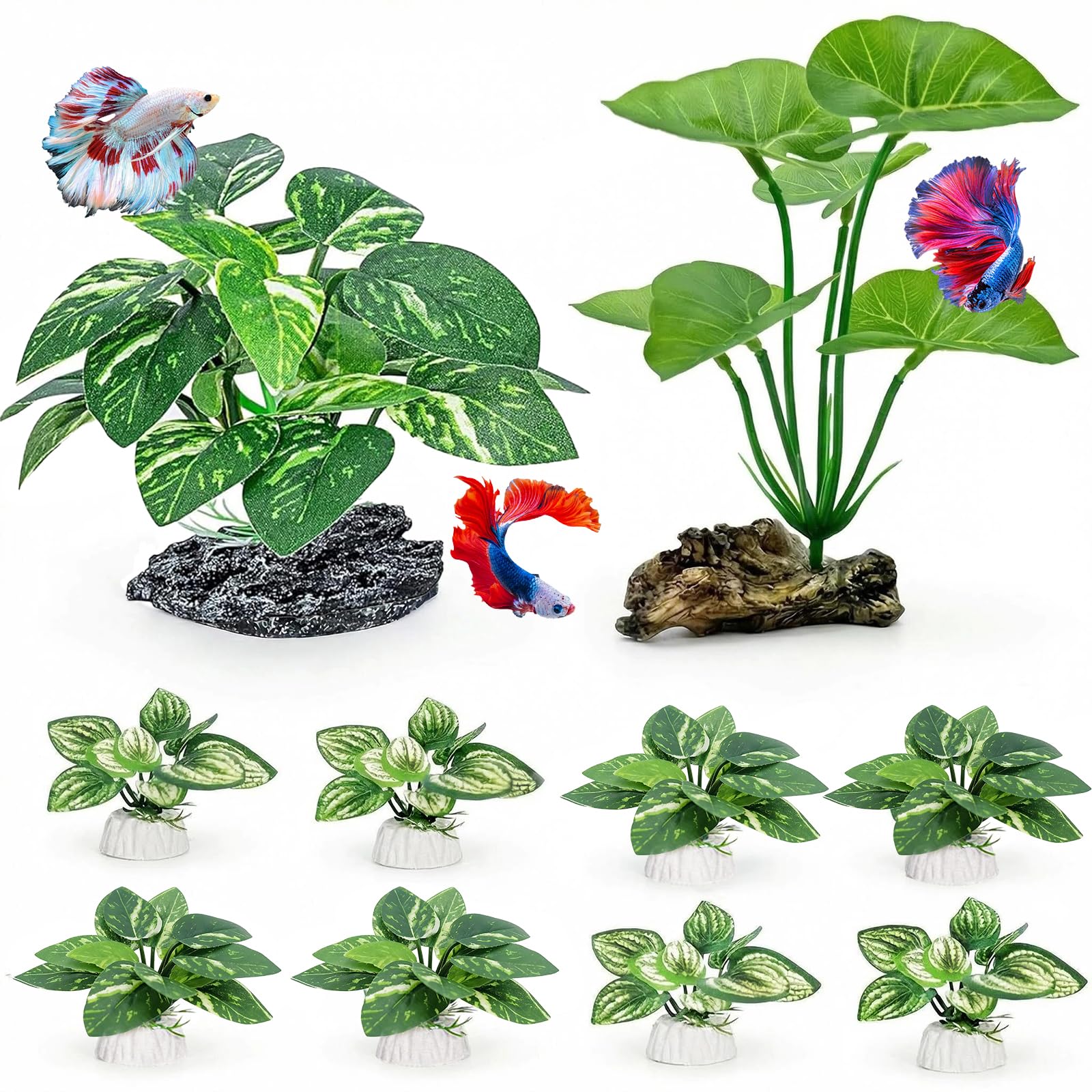
The reason to look at this set is the leaf material. It is sold as silk, and the soft, broad leaves are aimed at bettas and other long-finned fish that can snag on sharp plastic. The pack gives you ten plants, most around six inches, with weighted driftwood-style bases that make a small tank look planted without much fuss.
We liked the natural green tones and the way the leaves move in the current. The bases are stable enough for a five-gallon tank, and the plants are easy to reposition when you are cleaning. The catch is that the material is not consistent: some pieces feel more like plastic than silk. Check each plant before you put it in a betta tank.
For a betta tank where fin safety matters more than color, this is still the set we point to first. It costs more than the basic plastic packs, but you are paying for a softer look and a more natural silhouette. If you want maximum color for a community tank, the Ameliade set is the better buy; if you want the safest-feeling leaves, start here.
Pros
- Soft silk-style leaves
- Ten plants around six inches
- Weighted driftwood-style bases
- Natural green look
Cons
- Bases can detach from stems
For betta keepers, the soft-leaf look makes this the set we recommend, as long as you check each piece before adding it.
Smoothedo-Pets Mini Grass – Best for Nano Foregrounds
Key Features
- Height: 1 in
- Material: Plastic
- Plant count: 20
- Plant style: Mini grass
- Price: Budget
At about an inch tall, this is the set for the front pane, not for filling the middle of the tank. You get twenty tiny grass-like clumps with weighted bases, which is enough to run a low carpet along the foreground of a nano tank or to add a bit of green around a rock. The scale is the point: they stay below the sight line instead of blocking the view.
We liked how easy they were to group into small patches, and the bases are heavy enough to stay down in gravel. The pack arrived with a noticeable smell that needed a long soak before we were comfortable putting them in the tank. Once rinsed, they settled in and stayed put. If you want a low, grassy foreground and don’t mind a bit of prep, this is the pack to get.
Pros
- Twenty one-inch clumps
- Weighted bases stay down
- Ideal for nano foregrounds
- Easy to group into patches
Cons
- Looks less realistic up close
We like these one-inch clumps for a nano foreground carpet; they are the right scale and an easy way to add low cover.
COMSUN 4-Inch Plant Set – Best for Starter Tanks
Key Features
- Color: Green
- Height: 4 in approximate
- Material: Plastic
- Plant count: 10
- Price: Budget
Four inches is the sweet spot for a lot of small tanks: tall enough to read as a plant, short enough to leave room for fish to swim above it. This ten-piece set is built around that height, with simple green stems that work as foreground filler in a five- or ten-gallon tank. It is one of the least expensive ways to add a lot of green.
The plants are weighted and stay in place once tucked into gravel, and the green is bright without looking neon. We found them best used in a cluster rather than spaced individually; a group of three or four makes a fuller patch. A few pieces arrived with stray glue strands that needed trimming before they went in.
For a starter tank or a quarantine setup where you want cover without spending much, this is an easy yes. If you want a more natural silhouette, spend more on the UreverFins set; if you want the lowest-cost way to fill a foreground, this is it.
Pros
- Ten four-inch plants
- Weighted bases hold in gravel
- Bright green color
- Good for starter tanks
Cons
- Basic plastic look up close
This is our budget pick for small tanks: a ten-pack of four-inch plants that adds cover and color without costing much.
MyLifeUNIT 7-Piece Plant Set – Best for Taller Accents

Key Features
- Base: Ceramic
- Material: Plastic
- Plant count: 7
- Height range: 3.9 to 12.6 in
- Price: Premium
The first thing to know about this seven-pack is that it is not a nano-only set. The plants run from 3.9 to 12.6 inches, so the tallest pieces are background plants for a larger tank, not foreground filler for a five-gallon cube. If you have a small tank and want only short plants, this pack will leave you with extras.
The shorter pieces are useful. They have a ceramic base that feels more substantial than the all-plastic bases on basic sets, and the leaves are removable for cleaning. We liked that the ceramic bases stayed upright in gravel, though the taller stems can tip in sand unless they are pushed down deep.
The colors are muted compared with the brightest plastic packs, which suits a natural-looking tank. The mix is the point: a few short plants for the front and a couple of taller stems for the back. It is a set for someone with a slightly larger tank who wants a more finished look from the base up.
For a true nano tank, the AQUANEAT or Ameliade packs give you more usable small pieces. The ceramic bases are the reason to consider this one; the tall stems are the reason to pass if your tank is tiny.
Pros
- Ceramic bases feel substantial
- Leaves removable for cleaning
- Muted natural colors
- Mix of short and tall plants
Cons
- Fewer plants than the other packs
We recommend this set if you want ceramic bases and can use the taller stems; for a pure nano tank, the small-piece packs are a better fit.
ZYAQUDEC 11-Piece Plant Set – Colorful Starter Tank
Key Features
- Color: Multiple colors
- Material: Plastic
- Plant count: 11
- Height range: 3.9 to 9 in
- Price: Budget
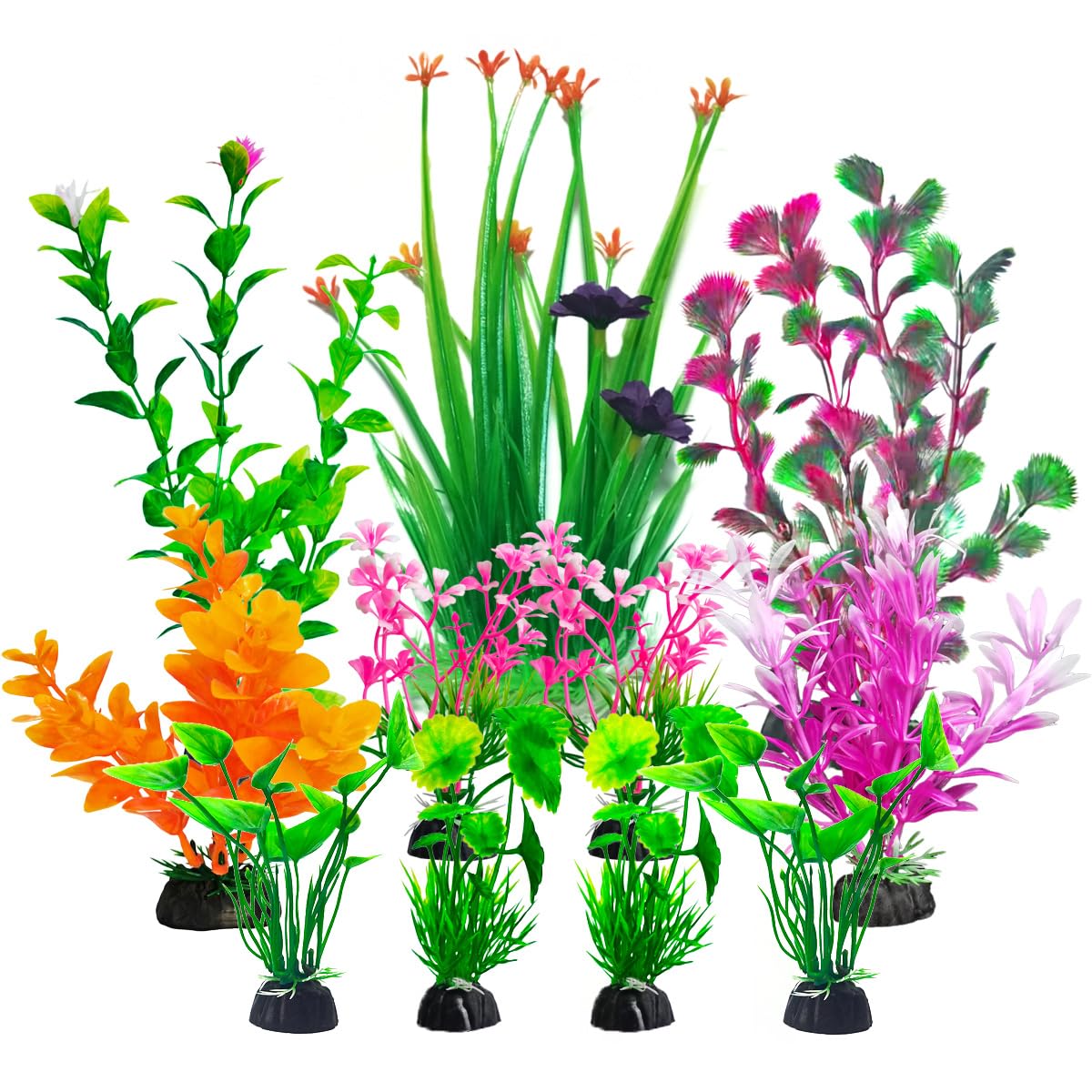
Eleven plants in a mix of greens, pinks, and purples is a lot of color for a small tank, and that is exactly what this set is for. The heights run from about 3.9 to 9 inches, so you get a few foreground pieces and several midground stems. We liked the variety in a community tank where the plants are part of the show, not just a green backdrop.
The plastic is on the stiffer side, and a few pieces arrived slightly bent or with loose bits that needed a rinse. It is not the set we choose for a betta tank, where soft leaves matter more, but for a colorful starter tank it does the job. If you want a more natural look, the all-green AQUANEAT set is the safer choice.
Pros
- 11 pieces in mixed colors
- Heights from 3.9 to 9 inches
- Variety of plant styles
- Brightens a small tank
Cons
- A few plants can come apart
We recommend this set when you want a lot of color in a small tank and don’t mind a stiffer plastic plant.
How We Tested Small Aquarium Plants
We started by pulling every plant that was genuinely small — listed at four inches or under, or sold as a foreground or nano variety — and reading the fine print: light needs, live versus silk, what the base was weighted with, and whether the seller gave a height range at all. That cut a field of several dozen down to 18 plants we ordered and planted ourselves. We passed on anything that only came in one oversized bunch, since a plant that outgrows a five-gallon tank in a month isn’t a small plant.
Planting happened on a Sunday afternoon at the kitchen table, with tweezers, a ruler, and a towel I didn’t care about. Each plant was measured and smelled straight out of the bag before it went near water — a few of the artificial ones had a sharp plastic odor that didn’t fade after a rinse. We checked stems and leaves for crush damage, frayed edges, and loose dye, then planted them across a three-gallon shrimp tank, a five-gallon betta tank, and a ten-gallon community tank to see how the same plant behaved at different sizes.
For four months we ran ordinary weekly water changes and paid attention to what happened next. We dragged the gravel vacuum within an inch of every base to see which plants stayed put and which floated to the surface, counted shed leaves, and photographed each one under the same LED at week one and week eight to judge whether the color held or faded. We noted which plants actually did a job — hiding the filter intake, giving fry somewhere to hide — and tracked how many had to be replaced, because value in this category really means cost per plant that survives.
The ones that rose to the top weren’t the rarest or the most dramatic. They held their color, stayed rooted through a water change, and never crowded the tank they were living in.
How to Choose Small Aquarium Plants
In a small tank, height matters more than the number of plants: a stem that looks compact online can still eat the swim lane.
Start with height and swim space
Measure the open water you want to keep, then choose plants that stay below it. For a nano tank, 1- to 4-inch pieces work as foreground and low midground; 6-inch plants can still fit, but they need to go toward the back. We treat 6 inches as the practical ceiling for a true nano foreground. Mixed packs are useful because you can use the short pieces and save the tall ones for another tank, but check the tallest stem before you buy. A 12-inch plant in a five-gallon cube is a background plant, not a small one.
Match leaf material to your fish
Soft silk or flexible plastic is the safer choice around bettas and other long-finned fish. Stiff leaves and sharp molded edges can catch fins, so run your fingers over a new plant before it goes in the tank. Silk looks softer and moves more naturally, but it can fray or come unglued; plastic is more durable but can feel stiff. We keep rough-edged plants out of betta tanks no matter how good they look from across the room.
Check the base against your substrate
A weighted base is only half the story; the substrate decides whether it stays put. In gravel, a pushed-in base usually locks into place. In sand, the same base can work loose unless it is buried deeper or tucked against a rock. Ceramic bases feel more stable and are easier to reposition, while all-plastic bases are lighter and may need more burial. If you keep digging up plants during cleaning, a heavier base or a small grouping is the fix.
Decide how much color and cover you want
All-green plants blend into a natural aquascape; mixed colors make the tank look busier and more decorative. Neither is wrong, but the choice should come before the pack size. A 10- to 25-piece set is enough to fill the foreground of a small tank, and more pieces give you room to swap plants during cleaning. Leave open water for the fish, and group plants in odd numbers rather than spacing them evenly.
Frequently Asked Questions
Do artificial aquarium plants need to be soaked before they go in the tank?
A short soak is worth the trouble. Rinse them in warm water, then soak for 10 to 15 minutes to loosen dust, packing smell, or stray glue. Skip soap and detergent, which can leave residue. If the plants still smell strong, soak them again and rinse before adding fish.
Can I use artificial plants with live plants in the same tank?
Yes, and the mix can work well. Use artificial plants for instant cover and live plants where you want natural growth; just leave enough space so the artificial leaves do not shade the live ones. Keep the artificial plants away from the light fixture if they get hot, and clean them when algae builds up.
How do I clean artificial aquarium plants?
Take them out during a water change and rinse them in tank water or dechlorinated tap water. Use a soft toothbrush for algae on plastic leaves and a gentle swish for silk. Avoid hot water and soap, which can warp plastic or leave residue. If a plant starts shedding strands or has exposed wire, replace it.
Are small plastic plants safe for shrimp and snails?
Usually, yes, but inspect the edges first. Shrimp and snails can get trapped in tight gaps or sharp wire, so choose plants with smooth leaves and solid bases. Rinse off loose glue or plastic flash before adding them. If you keep long-finned fish too, soft silk or flexible plastic is the safer choice.
Final Verdict
For most small tanks, the AQUANEAT 10-piece set is the one we recommend. Eight pieces are small enough for the foreground, the two taller stems can go in back, and the weighted bases stay put in gravel, which is the combination that makes a nano tank look planted without crowding the fish. If you keep a betta and fin safety comes first, choose the UreverFins silk-style set instead; its softer leaves are worth the trade in durability.