This post contains affiliate links. We may earn a small commission when you buy through our links — at no extra cost to you.
Cloudy aquarium water is one of the most common frustrations for fishkeepers. Liquid clarifiers clump particles together, but overdosing even slightly can stress or kill fish—especially sensitive species like discus or shrimp. Mechanical polishing pads and UV sterilizers avoid that risk entirely.
The real challenge is identifying what’s causing the haze. White or grey cloudiness usually comes from bacterial blooms after filter cleaning or new tank setup. Green water means free-floating algae, which no liquid clarifier can fix—only UV light kills it. Particles from uneaten food or dust need mechanical filtration.
Once you know the cause, the right tool becomes obvious. This guide walks you through each option’s trade-offs so you can choose the method that matches your tank’s specific needs and your comfort with dosing chemicals.
Top Picks
Best for Cloudy Water Relief
API ACCU-CLEAR Clarifier

Rating: 4.6 ★ | Price: Budget | Type: Liquid clarifier | Fish Safety: Overdose risk | Speed: Hours | Compatibility: Freshwater only
API ACCU-CLEAR clears white or grey cloudiness from freshwater aquariums within hours, using a 2 mL per 10-gallon dose. The liquid flocculant binds suspended particles so your filter can remove them – but precision is key: exceeding the recommended amount can stress or harm fish.
This clarifier suits budget-conscious aquarists who follow instructions exactly. It’s less appropriate for tanks with sensitive fish like discus or shrimp, or for anyone who prefers a set-it-and-forget approach. Mechanical polishing pads or UV sterilizers avoid the chemical risk entirely, at a higher upfront cost.
Pros
- Clears white or grey cloudiness within hours
- Small dose per treatment makes an 8 oz bottle last many applications
- API is a widely recognized brand with consistent formulation
Cons
- Fish health can be compromised if dosage is exceeded – precise measurement required
For aquarists who measure accurately and want fast results, this is the most affordable clarifier available. Mechanical alternatives exist for those who prefer to avoid chemical risk entirely.
Best for Chemical-Free Polish
Fluval Quick-Clear Pads

Rating: 4.8 ★ | Price: Budget | Type: Mechanical pad | Fish Safety: Chemical-free safe | Speed: Immediate | Compatibility: Fluval canisters only
Traps micro-particles for polished clarity without any additives – a clean alternative to liquid clarifiers. Limited to Fluval 306/307/406/407 canisters; other filter owners must cut pads to fit. Ideal for Fluval users prioritizing chemical-free water clarity and willing to replace pads after several gentle rinses.
Pros
- Traps micro-particles for polished clarity.
- Chemical-free and safe for all tank inhabitants.
- Perfect fit for Fluval 306/307/406/407 canisters.
Cons
- Pads may unravel if scrubbed or rinsed under strong pressure.
For Fluval canister owners who prioritize chemical-free clarity and accept gentle pad maintenance, this is a budget-friendly polishing alternative to liquid clarifiers.
Best for New Aquarists
Aqueon Clarifier

Rating: 4.5 ★ | Price: Budget | Type: Liquid clarifier | Fish Safety: Low fish risk | Speed: Hours to days | Compatibility: Freshwater, plants
Fewer fish death reports than API ACCU-CLEAR and a simple cap-dosing system make this a gentler option for tanks with sensitive inhabitants. The liquid flocculant binds particles over time, but clarity improvement can take longer than the top pick and some tanks see no change. It works best for mild haziness when dosed correctly. A fit for new aquarists who want a lower-risk formula and are concerned about plant safety, but are okay with variable results.
Pros
- Safe for fish and plants when used correctly
- Easy to dose with included cap
- Effective for most types of cloudiness
Cons
- Clarity improvement may be slow or not happen in some tanks
- If overdosed, fish loss can occur – precise measurement is required
The right pick for aquarists who value a lower-risk formula over raw speed, and can tolerate variable results.
Best for Shrimp/plant Tanks
KloudAway Clarifier

Rating: 4.4 ★ | Price: Mid-Range | Type: Liquid clarifier | Fish Safety: Safe for shrimp | Speed: Within hours | Compatibility: Freshwater, shrimp/plants
KloudAway is formulated with shrimp and plant safety as a priority, clearing white or grey particle haze quickly without stressing sensitive tank inhabitants. It does not work on green water algae blooms, so it’s best reserved for cloudiness from uneaten food or dust. Compared to faster-acting clarifiers like the top pick, this offers greater peace of mind for delicate tanks while covering a narrower range of water clarity issues.
Pros
- Safe for shrimp, invertebrates, and planted tanks – designed for sensitive aquariums.
- Clears white/grey particle haze quickly – often within hours.
Cons
- Effectiveness can vary – may not improve clarity if cloudiness is from dissolved organic compounds or non-particulate sources.
For shrimp and planted tank keepers who want a clarifier that won’t stress their livestock, this is a fair choice – just confirm your cloudiness is particulate.
Best for Extreme Budget
Tetra Clarifier

Rating: 4.5 ★ | Price: Budget | Type: Liquid clarifier | Fish Safety: Overdose risk | Speed: Hours | Compatibility: Freshwater
Tetra Water Clarifier is the cheapest liquid clarifier per ounce – ideal for budget-conscious aquarists. Unlike the top pick, which delivers faster and more consistent results, Tetra’s clarity improvement can be unpredictable and overdosing may harm fish. Best for temporary white haze in hardy freshwater tanks where cost savings outweigh the need for guaranteed outcomes. Not suitable for sensitive species or long-term maintenance.
Pros
- Lowest price per ounce among liquid clarifiers – stretches the budget for large tanks.
- Clumps particles to clear temporary white or grey haze.
Cons
The cheapest liquid clarifier works for temporary cloudiness in hardy tanks, but buyers should expect variable results and measure doses precisely.
Best for Green Water
Fluval UVC Clarifier

Rating: 4.5 ★ | Price: Premium | Type: UV sterilizer | Fish Safety: Chemical-free safe | Speed: Days (algae) | Compatibility: Inline with canister
As the only chemical-free UV clarifier that targets chronic green water, this inline unit kills free-floating algae without dosing. It installs onto canister filter hoses and runs on a built-in timer with no daily maintenance. However, the high upfront cost and sealed bulb (unit must be replaced after 30,000 hours) make it overkill for occasional cloudiness — it’s best reserved for tanks with persistent algae blooms.
Pros
- Clears persistent green water without adding chemicals.
- Inline installation with built-in timer for low-maintenance operation.
Cons
- No indicator light to confirm UV is on — requires disassembly to check operation.
Best for aquarists dealing with persistent green water who want a chemical-free solution and are comfortable with the premium price.
Best for Planted/reef Tanks
Seachem Clarity

Rating: 4.5 ★ | Price: Mid-Range | Type: Liquid clarifier | Fish Safety: Reef/plant safe | Speed: Varies | Compatibility: Freshwater and marine
Seachem Clarity is formulated for planted and reef tanks where other clarifiers may cause harm. Its concentrated dosing stretches the bottle further than many competitors. However, results vary – some tanks see no improvement, which makes this a higher-risk option for those seeking guaranteed clarity.
Pros
- Safe for planted and reef aquariums – no harm to delicate corals or plants.
- Highly concentrated formula means each bottle treats more water than typical liquid clarifiers.
Cons
- Effectiveness can vary between tanks – some see no improvement at all.
Best suited for aquarists already using Seachem products who want a clarifier safe for delicate inhabitants and are willing to accept variable results.
Best for Nitrate Reduction
MICROBE-LIFT Special Blend
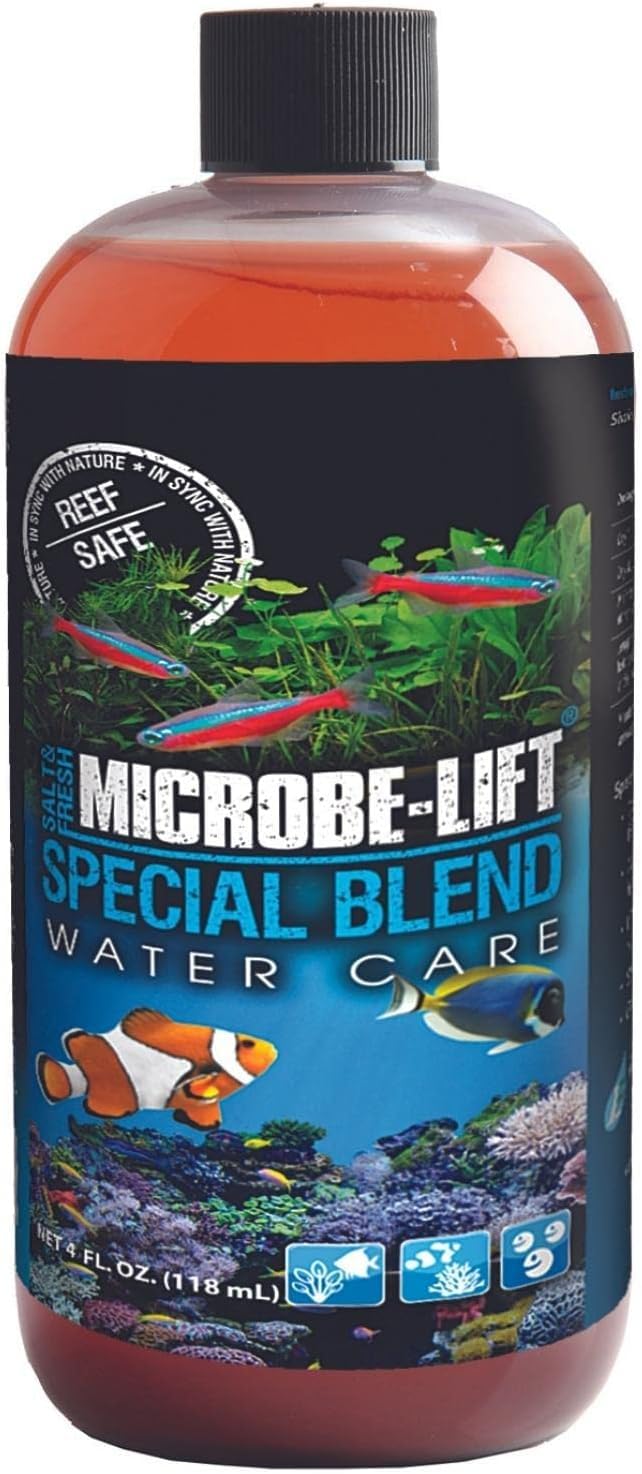
Rating: 4.3 ★ | Price: Budget | Type: Biological clarifier | Fish Safety: Stress risk | Speed: Days to weeks | Compatibility: Freshwater and saltwater
This biological clarifier works by breaking down organic waste and nitrates in established tanks with heavy bioload, improving water clarity over time. However, the extremely unpleasant odor requires dosing outdoors, and bacterial imbalances can stress sensitive fish, making it a niche tool for experienced aquarists who prioritize nitrate reduction over household convenience.
Pros
- Reduces nitrates and organic waste biologically
- Improves water clarity in established tanks with consistent use
Cons
- Extremely unpleasant sewage-like odor requires dosing outdoors
Best suited for experienced aquarists with mature, heavily stocked tanks who can tolerate the odor and monitor fish response carefully.
Best for Small Tanks
Acurel F Clarifier

Rating: 4.7 ★ | Price: Budget | Type: Liquid clarifier | Fish Safety: No complaints | Speed: 30 minutes | Compatibility: Freshwater
The Acurel F Clarifier clears haze within 30 minutes using a gentle drop dose that avoids fish stress. The tradeoff is the tiny 25 mL bottle, which supplies only about 100 gallons of treatment – a practical fit for nano tanks needing a quick fix, but less suited for larger aquariums.
Pros
- Clears water within 30 minutes using only a few drops per gallon.
- Fish-safe formulation with no negative health effects noted.
Cons
- Very small bottle (25 mL) treats only about 100 gallons total, limiting use to small tanks.
The Acurel F delivers instant clarity for nano tanks – the small volume is a non-issue when each treatment uses only a few drops.
Best for Nano Tanks
Fluval Quick Clear

Rating: 4.4 ★ | Price: Budget | Type: Liquid clarifier | Fish Safety: Mixed safety | Speed: Hours | Compatibility: Freshwater
At a budget-friendly price point, this clarifier handles mild haze in small tanks after maintenance. It’s less consistent than top picks like API or Tetra, making it a secondary option. The small bottle also limits long-term value. Best reserved for occasional use in Fluval setups.
Pros
- Very low price – one of the most affordable clarifiers for small tanks.
- Handles mild cloudiness – adequate for slight haze after water changes.
Cons
- Inconsistent results – some tanks may see no improvement, making it unreliable for persistent cloudiness.
A reasonable pick if you already use Fluval products and need a cheap fix for occasional haze, but not a dependable solution for recurring cloudiness.
How to Choose
The most important factor in choosing a water clarifier is identifying whether your cloudiness comes from bacteria, algae, or particles—each requires a different approach.
Type of Clarifier
Liquid clarifiers use flocculants to clump fine particles into larger ones that your filter can trap. They’re fast and cheap, but the chemicals can irritate fish if misused. Mechanical polishing pads physically trap particles without additives, offering a safer route for those with compatible filters.
UV sterilizers kill free-floating algae and bacteria with ultraviolet light, providing a chemical-free solution for green water. Each type solves a specific problem, so matching the type to the cloudiness is critical.
Fish Safety Record
Fish deaths from liquid clarifiers almost always stem from overdosing. The active ingredients can coat gills or stress sensitive species like discus, shrimp, and loaches. Products with precise dosing instructions and positive safety feedback (like Aqueon or KloudAway) reduce risk, but no liquid is 100% safe for all inhabitants.
Mechanical pads and UV sterilizers eliminate chemical exposure entirely, making them the safest choice for any tank. If you keep delicate fish or invertebrates, consider these options first.
Speed of Results
Liquid clarifiers typically clear white/grey haze within hours—some in as little as 30 minutes. Mechanical pads provide instant polishing when paired with fine media, but only for particles. UV sterilizers take 2–5 days to kill an algae bloom because they need to cycle the water volume.
Speed depends on the cause: bacterial blooms respond quickly to flocculants, while green water requires patience. If you need immediate clarity for an event, a liquid clarifier is the fastest option.
Compatibility with Your Tank
Liquid clarifiers are generally restricted to freshwater; only a few (like Seachem Clarity) are safe for marine aquariums. Mechanical pads require specific filter models—Fluval Quick-Clear pads only fit the 306/307/406/407 canisters. UV sterilizers must be plumbed inline with your existing filter.
For tanks with shrimp, snails, or live plants, choose a clarifier explicitly labelled safe for them (e.g., KloudAway or Seachem). Using an incompatible clarifier can kill invertebrates or melt plants.
FAQ
Can aquarium water clarifier kill my fish?
Yes, if overdosed. Liquid clarifiers use flocculants that can irritate or suffocate fish when too much is added. Always measure exactly as directed—never guess. Mechanical pads and UV sterilizers eliminate this risk entirely, making them safer for sensitive species.
How long does water clarifier take to clear a cloudy tank?
Liquid clarifiers typically work within hours for bacterial or particle haze. UV sterilizers take 2–5 days to kill green water algae. Mechanical pads provide immediate polishing when used with a fine media. Speed depends on the cause and the product.
What is the best water clarifier for green algae bloom?
UV sterilizers are the only reliable solution for green water. Liquid clarifiers cannot remove suspended algae; they only clump particles and bacteria. An inline UV unit like the Fluval UVC kills algae as water passes through, clearing the tank in days.
Is a UV clarifier better than a liquid clarifier for aquarium cloudiness?
It depends on the cloudiness type. For white or grey haze from bacteria or particles, liquid clarifiers are faster and cheaper. For green water (algae blooms), UV is the only effective option. UV is chemical-free and safer for fish, but costs more upfront and requires installation.