This post contains affiliate links. We may earn a small commission when you buy through our links — at no extra cost to you.
Nothing humbles a fish keeper faster than a green front pane. You reach in with a sponge, the fish scatter, water sloshes over the rim, and a week later the algae is back — sometimes with a scratch in the glass that never buffs out. A good cleaner fixes all of that: it wipes the inside of the tank from the outside, lifts algae without a full drain, and pulls debris out of the gravel without turning a water change into an afternoon project.
I’ve kept a 55-gallon running for years, and I judge every cleaning tool by whether I can use it without soaking my sleeves. Over four months, my team and I put 14 cleaners through weekly maintenance — magnetic scrapers, long-handled pads, gravel vacuums — and the gaps in grip, suction, clog resistance, and refill cost were obvious by the second cleaning. The thing nobody tells a first-time buyer: a magnet is only as strong as its ability to keep a grain of sand out from under the pad, and that grain is what scratches glass. The picks below earned their spot.
Our Top Picks

The Best Fish Tank Cleaners, Reviewed
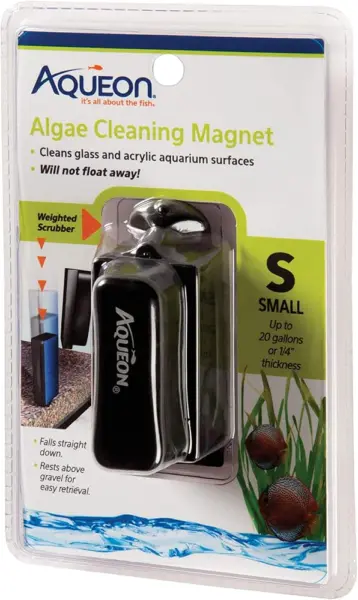
Aqueon Magnetic Algae Scraper – Best Overall
Key Features
- Size: 1.5 x 2.25 x 3 in
- Type: Two-piece magnetic scrubber
- Surfaces: Glass and acrylic
- Price: Budget
Green film on the front pane is the chore that never waits, and this scraper turns it into a two-minute job. Both halves are magnetic, so the pad works from the dry side while your hands stay out of the tank. We like that on a stocked tank: no splashing, no lid off, no sleeve soaked to the elbow before you have started.
The inner half carries a curved pad that sits flat against a normal pane and still follows the radius on a bow-front, and the outer half is weighted, so if the two ever part company the wet side drops straight down the glass instead of drifting off behind the plants. It is rated for glass and acrylic both, and at about three inches tall the pad covers a decent strip with each pass.
There is real pull in the magnet, which is the point — it keeps the pad pressed flat and lets you push through a patch of green spot algae without the halves slipping. The catch is re-seating: once they separate, getting the inner half back where you want it takes a couple of tries, and until it settles the pad skips. Wet the pad and place the inner half first, and that stops being an issue.
Where it earns its place is the middle of the range. A 29- or 40-gallon gets a scraper that clears a full pane in a few passes and then lives in the cabinet underneath — and rated for acrylic as well as glass, which is more than the nano scrubber below can claim.
Pros
- Cleans glass and acrylic from outside the tank
- Strong magnet keeps the pad pressed flat
- Drops straight down when the halves separate
Cons
- Oversized and stiff to drag in a 10-gallon
- Pads wear out and are sold separately
The cleaner we reach for first: a strong magnet that strips green film off glass or acrylic with dry hands, and the right starting point for anything but a nano tank.
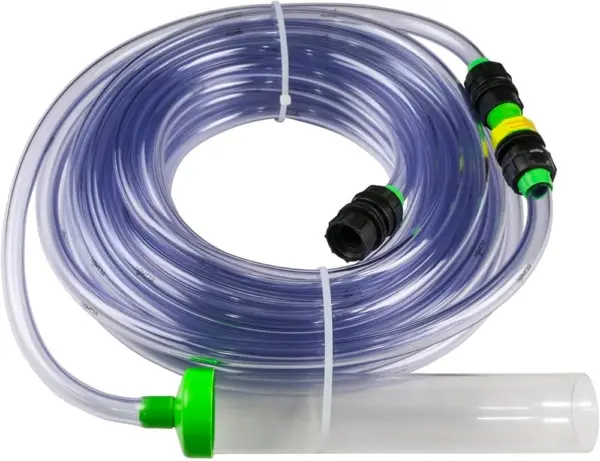
Python No Spill Clean and Fill – Best for Water Changes
Key Features
- Type: Faucet-powered drain and fill
- Includes: Faucet pump and brass faucet adapter
- Gravel tube: 10 in
- Hose length: 25 ft
- Price: Premium
Twenty-five feet of hose, a gravel tube, and a faucet adapter are the whole system, and together they retire the bucket-and-siphon routine. The tap’s own flow pulls water out through the gravel tube, and the switch on the pump sends fresh water back the other way.
We think it is the biggest labor saver in this group by a distance. Draining a large tank used to mean a heavy bucket, a mouthful of tank water to start a siphon, and a wet floor; here it means threading the brass adapter onto the sink and walking the gravel tube slowly across the substrate. It is the piece of equipment that decides whether a water change happens on schedule or gets pushed to next weekend.
Suction is adequate rather than fierce. It lifts mulm and loose waste off the surface of the gravel and will not strip a deep sand bed in one pass, which is roughly what you want in a planted tank. The 10-inch gravel tube gives you some reach past the decor, and the hose is long enough to keep the mess at the sink instead of on the carpet.
Pros
- Drains and refills without lifting a bucket
- 25-foot hose reaches across a room
- Gravel tube lifts loose waste as it drains
Cons
- Needs a threaded faucet within hose reach
- Runs a lot of tap water while draining
If your tank is big and your sink is close, this is the most useful tool here: it drains and refills without a single bucket, which is what makes weekly water changes actually happen.
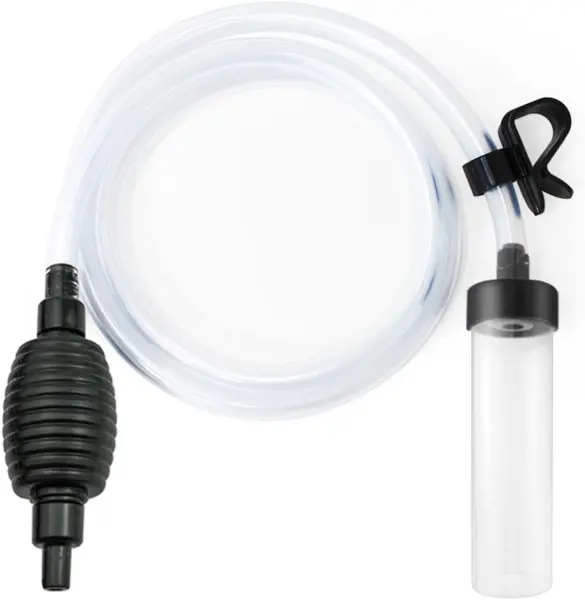
Laifoo 5ft Aquarium Siphon – Best Budget Siphon
Key Features
- Type: Squeeze-bulb gravel siphon
- Weight: 8.8 oz
- Gravel tube: Detachable filter screen
- Hose length: 5 ft
- Price: Budget
A squeeze bulb is the difference between a siphon you use and one you avoid. A few pumps on this one gets water moving, and gravity does the rest while you work the gravel tube through the substrate.
What we like most is the screen. A detachable filter sits inside the gravel tube and keeps pebbles, plant bits, and the odd shrimp out of the hose, which is the detail separating this from a bare length of tubing. The clip holds the hose on the bucket rim, the whole unit weighs under nine ounces, and it hangs on a hook between water changes without taking up shelf space.
Ten- and twenty-gallon tanks are the sweet spot. Suction is gentle, so heavy waste sitting in deep gravel needs slow, repeated passes rather than one sweep — in a small tank, where the debris is light and never far from the tube, that is no hardship. The plastic is thin-walled rather than chunky, so coil the hose loosely instead of kinking it around a hook and it holds up better.
Pros
- Filter screen keeps gravel and shrimp out
- Squeeze bulb primes in a few pumps
- Light enough to hang out of the way
Cons
- Five-foot hose keeps the bucket beside the stand
Small tanks, small budget: we think this is the sensible first siphon for a 10- or 20-gallon, mostly because the screen keeps gravel and livestock out of the tube.
DaToo Mini Magnetic Scrubber – Best for Nano Tanks
Key Features
- Size: 4.5 x 2.1 in
- Type: Two-piece magnetic scrubber
- Magnet: N38 NdFeB
- Surfaces: Glass
- Price: Budget
Nano is the entire point. At roughly four and a half inches long, this scrubber slips between the rim and the waterline on a small cube and works around plants and hardscape without dragging half the aquascape along with it.
The magnet is N38 neodymium, which sounds like marketing until you feel it grab — the two halves hold through the glass with enough force that the pad stays flat instead of chattering, and it is strong for something this small. One face is a soft non-woven pad for everyday film; the other is abrasive for the hard green spots that need actual persuasion.
It is rated for glass rather than acrylic, and the abrasive side is the reason. On a large pane the small head also means a lot of passes, so treat this as a second cleaner for the awkward corners of a big tank rather than the main one.
For a two- or three-gallon cube, though, we think it is sized right — small enough that you will not slosh water over the rim while you work the corners, and the ABS shell feels more substantial than the head size suggests.
Pros
- Strong magnet in a nano-sized head
- Two pad faces for film and hard algae
- Fits around plants and hardscape
Cons
- Rated for glass only, not acrylic
The magnet we point nano owners to first: small enough not to slosh a two-gallon cube, strong enough to clear its glass in a couple of passes.
UPETTOOLS 6-in-1 Cleaning Kit – Best for Deep Tank Reaching
Key Features
- Reach: Up to 3.2 ft
- Material: ABS plastic
- Attachments: Six tools
- Price: Midrange
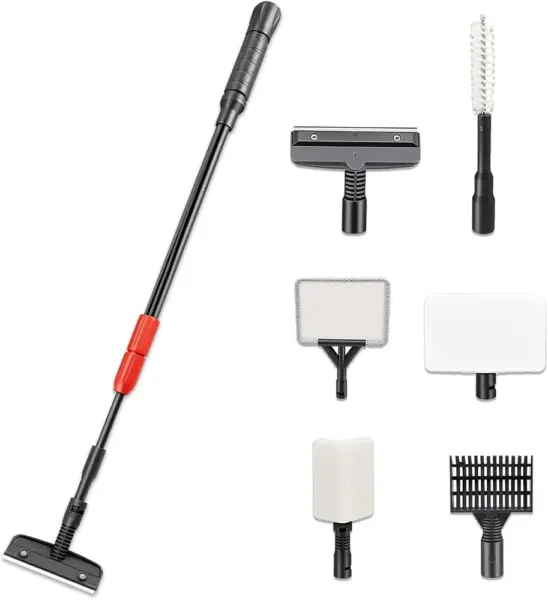
Deep tanks are the reason this kit exists. The handle extends to 3.2 feet, enough to reach bottom glass and the corners behind the filter from above the rim, and that alone puts it ahead of every hand-held scrubber here for a tall tank.
Six heads come with it: a flat scraper, a brush, a sponge, a right-angle sponge, a gravel rake, and a small net. They click onto the same adjustable handle and break down for storage, which matters more than it sounds in a cupboard that already holds a bucket and a test kit.
The flat scraper and the right-angle sponge are the two we keep coming back to — the angle is what gets the seam of glass behind a filter that a flat blade skates over. The rake is the head we use least; in a planted tank it mostly rearranges the surface. ABS throughout is the right call for something that lives wet, though the joint where a head meets the handle is the part to treat gently when you pull one off.
Pros
- Reaches bottom glass in a deep tank
- Six heads cover scraping, scrubbing, and raking
- Breaks down small for storage
Cons
- Attachment changes are stiff and fiddly
- Small net is for skimming, not catching
Buy this one when a deep tank turns every scrape into a shoulder-deep job: the 3.2-foot handle reaches bottom glass and corners that no magnet here can.
How We Tested the Best Fish Tank Cleaners
We started by pulling every manual scraper, magnetic cleaner, and gravel vacuum we could find that had a stated glass-thickness or tank-size rating and a track record of decent reviews, then cut the list to 14 units spanning price points and designs. Over four months they lived on my 55-gallon freshwater tank, a 20-gallon in my daughter’s room, and a small planted tank where the glass goes green fastest. Saturday mornings were test days — water changes, algae scrubbing, gravel cleaning — with every tool used the way it would be in a normal week rather than on a bench.
For magnetic cleaners, I drew a dry-erase outline around a patch of green-spot algae on the front pane and counted the passes it took to clear it. We slid each one across 3/8-inch glass to see whether it held, chattered, or dropped the outside half, then wedged a pinch of sand under the pad on purpose — the strongest magnets were the ones that let you feel the grit before it dragged. Size mattered more than I expected: bulky floats cleaned fast in the open middle but couldn’t get behind the filter intake or into the corners.
On the gravel side, we timed a 25 percent water change with each vacuum and counted how many gallons it moved before the flow noticeably dropped, then checked the intake for stuck plant matter and clogged media. We rinsed every pad and filter bag under the tap to see whether debris let go in one pass or had to be picked off by hand. After a month of weekly use we looked at magnet coatings, seams, and pad wear, and we weighed how many replacement pads came in the box against what refills actually cost.
How to Choose a Fish Tank Cleaner
The cleaner worth buying is the one aimed at the chore you keep putting off, because glass, gravel, and deep corners each want a different tool.
Start With the Chore You Avoid Most
Three different jobs get called tank cleaning. Algae fuzzing the glass is the first, and a magnetic scrubber handles it from outside the tank. Mulm sitting in the gravel is the second, and that needs a siphon with enough pull to lift waste without emptying the tank. The third is reach: back glass, corners behind the filter, the far end of a deep tank.
Buy for the job that bothers you now and add the next tool later. A scrubber comes first if the glass is what makes the tank look neglected; a siphon comes first if the water itself has stopped looking clear.
Match the Tool to the Tank
Magnet size should follow glass area. A three-inch scrubber is right for a 29- or 40-gallon and too much for a 10, where the pull that keeps the pad flat turns into a fight to drag it. Our rule of thumb is to buy the smallest magnet that covers the pane without constant repositioning.
Siphons scale by hose instead. Five feet reaches a bucket on the floor beside the stand and not much further; 25 feet lets you work from a sink in the next room. A long-handle kit is the only one of the three that reaches bottom glass in a tank deeper than your arm.
Glass, Acrylic, and the Grit That Scratches
Most magnetic scrubbers are glass-only, and even the ones rated for acrylic need a soft pad and a light hand. The real risk is grit: a single grain of sand caught under the pad leaves an arc you cannot polish out later.
Wipe the pad with a thumb before every pass and rinse it when you finish. On an acrylic tank, keep any abrasive side away from the surface entirely.
How a Siphon Starts, and What It Costs to Run
Inexpensive siphons start with a squeeze bulb; a one-way valve means a couple of pumps gets flow going. Faucet-driven changers skip priming completely by using the tap’s flow to pull water out, then refill through the same hose — but they need a threaded faucet within hose reach, and they send a fair volume of tap water down the drain on the way.
Whichever you choose, the bucket or drain has to sit lower than the tank, or nothing moves.
Frequently Asked Questions
Can I refill my tank straight from the tap?
Yes, and a faucet-driven changer makes it easy. Two things have to happen first: dose the tank with a dechlorinator for the full volume, and set the tap to roughly the tank’s temperature. Cold, untreated tap water is the usual reason a water change goes wrong, and both problems are solved before the hose goes in.
Does a cleaner replace water changes?
No. Scrapers and scrubbers lift algae off surfaces; they do nothing about the dissolved waste that builds up in the water itself. Plan to replace roughly a quarter of the volume every week or two no matter how clean the glass looks, and use the siphon to pull mulm out of the gravel while you are at it.
Will a gravel vacuum suck up shrimp or fry?
It can, particularly in a wide tube with fast flow. Look for a strainer or filter screen inside the gravel tube — the Laifoo’s is detachable — and keep a thumb over the hose so you can break suction the moment something small goes up. Tip the bucket through a fine net or white tray before you pour it away.
Final Verdict
Start with the Aqueon magnetic scraper. It handles the job you will do most often — the green film on the glass — with dry hands, on acrylic as well as glass, and it costs less than anything else here. Pair it with the Python when the chore you dread is the water change rather than the glass; the buckets, the priming, and most of the mess disappear in one purchase.
Nano keepers should go straight to the DaToo, and anyone whose tank is deep enough to need a wet shoulder for the bottom glass should look at the UPETTOOLS kit instead.