This post contains affiliate links. We may earn a small commission when you buy through our links — at no extra cost to you.
You drop a wafer into your tank — and watch it float at the surface, or slowly disintegrate into a cloudy haze. It’s a common frustration: bottom feeder foods that promise fast sinking and clear water often deliver neither.
The gap between marketing and real performance is wide in this category. Some wafers sink reliably and leave the water pristine, while others turn your tank into a mess. Your fish don’t care about claims, but your water quality does.
This guide cuts through the hype to focus on the products that actually do what they say. The right choice keeps your bottom feeders fed and your water clear — no drama, no trade-offs.
Top Picks
Best for Small Bottom Feeders
Fluval Bug Bites Bottom Feeder

Rating: 4.8 ★ | Price: $ | Sinking Reliability: Fast sinking | Water Clarity: Minimal clouding | Ingredient Quality: Insect protein | Pellet Size: Small 1.4-1.6mm | Fish Acceptance: High acceptance
These granules sink within seconds, reaching bottom feeders before other fish can intercept them, and the water stays clear after feeding — no dusty residue or haze that stresses planted tanks. The insect-based protein formula (black soldier fly larvae and salmon) provides a nutrient profile that small species readily accept.
Fish actively search out the granules — corydoras, kuhli loaches, and dwarf plecos respond well to the scent and taste. While a few granules may float briefly on the surface, the vast majority sink quickly, and the occasional floater can be pushed under without issue.
This food is ideal for small community bottom feeders with mouths sized for 1.4–1.6mm granules. It is not recommended for large plecos (6+ inches) that need bigger wafers to feel full — those fish are better served by larger-format foods. For tanks stocked with corys, loaches, and similarly sized fish, this food works as a daily staple.
Pros
- Fast sinking gets food to bottom feeders quickly, reducing waste.
- Water stays clear after feeding, supporting planted tank aesthetics.
- Fish actively seek out the insect-based protein formula.
Cons
- Granules are small — large plecos (6+ inches) may not find them satisfying.
- A few granules may float briefly before sinking, more noticeable in surface-feeding tanks.
For small to medium bottom feeders, this food combines fast sinking, clear water, and strong fish appeal at a budget price — a straightforward choice that delivers.
Best for Corys, Loaches
Hikari Tropical Sinking Wafers
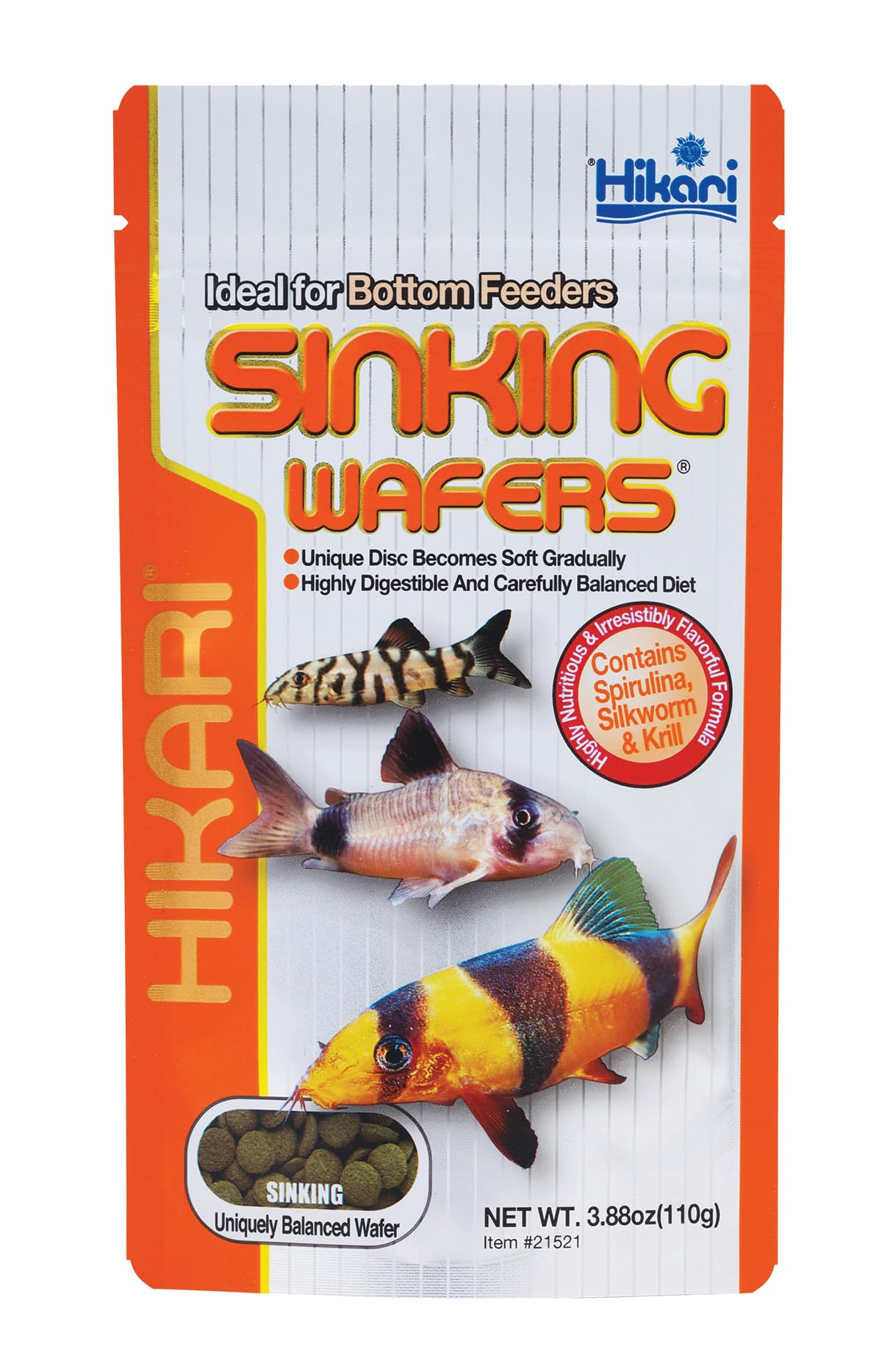
Rating: 4.8 ★ | Price: $$ | Sinking Reliability: Reliable sinking | Water Clarity: No clouding | Ingredient Quality: Spirulina, silkworm, krill | Pellet Size: Small disc wafers | Fish Acceptance: Near-universal
Hikari’s sinking wafers keep the water noticeably clearer than many alternatives, making them a strong fit for planted aquariums where light penetration and aesthetics matter. The disc shape holds together during feeding, reducing particulate waste that can cloud the tank. Compared to the top pick’s smaller granules, these wafers offer longer grazing time for bottom feeders, though the smaller diameter limits their appeal to large plecos.
Corydoras, loaches, and small catfish are the ideal audience here — fish that can nibble on a wafer without needing a larger surface area. The mid-range price reflects the consistent sinking and minimal water impact, not a bargain-bin cost. Keep in mind that the 3.88 oz bottle won’t suit a tank with plecos over 6 inches; those fish need bigger wafers to get enough food.
Pros
- Fish accept these wafers eagerly, even picky bottom feeders.
- Wafers sink quickly and stay on the bottom without floating.
- Water remains clear after feeding, with minimal clouding.
Cons
- Small wafer diameter may not satisfy large plecos (6+ inches) that need bigger portions.
- Protein content is higher than ideal for shrimp-only tanks, where a lower-protein food is better suited.
Best for planted tank keepers who prioritize crystal-clear water and have small to medium bottom feeders. If large plecos share the tank, the top pick’s granule size may be a better fit.
Best for Plecos, Ancistrus
Sera Pleco Chips
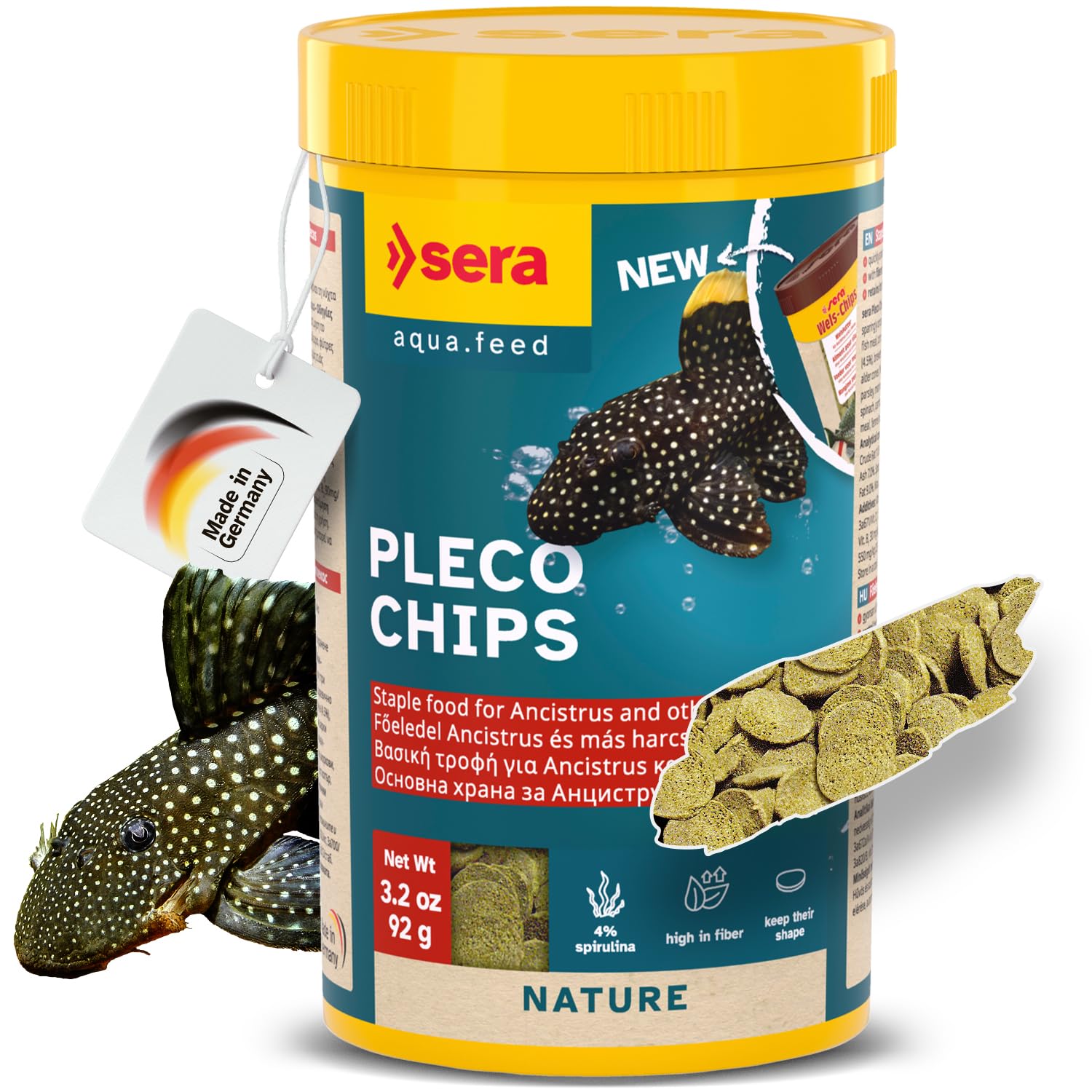
Rating: 4.8 ★ | Price: $$$ | Sinking Reliability: Quick sinking | Water Clarity: Minimal clouding | Ingredient Quality: Willow bark, alder cones | Pellet Size: Chip form, large | Fish Acceptance: Pleco favorite
Sera Pleco Chips remain intact in the water for more than an hour, unlike the top pick’s small granules that break down quickly. This means less waste and cleaner water for tanks with slow feeders. The trade-off is a premium cost per ounce and a formula optimized solely for rasping suckermouth fish — omnivorous bottom feeders like corydoras will miss out on protein they need.
This food suits keepers who value natural ingredients (spirulina, willow bark, alder cones) and minimal water pollution over budget-friendly bulk. It is ideal for tanks with shy or nocturnal plecos that graze over several hours, and for shrimp or snail setups where uneaten food can foul the water. For mixed communities with diverse bottom feeders, a more balanced omnivore wafer is a better fit.
Pros
- Stays intact for extended grazing without clouding the water
- Made with natural ingredients like willow bark and spirulina, no artificial dyes or preservatives
- High fiber content supports digestive health for herbivorous plecos and ancistrus
Cons
- Higher price per ounce than most bottom feeder foods; the bag is small for the cost
- Formulated for herbivorous plecos and ancistrus; omnivorous bottom feeders may not thrive on it alone
A specialist food that delivers on durability and natural composition for dedicated pleco keepers — but it is not a cost-effective staple for mixed-bottom-feeder tanks.
Best for Picky Plecos, Shrimp
Ultra Fresh Algae Wafers
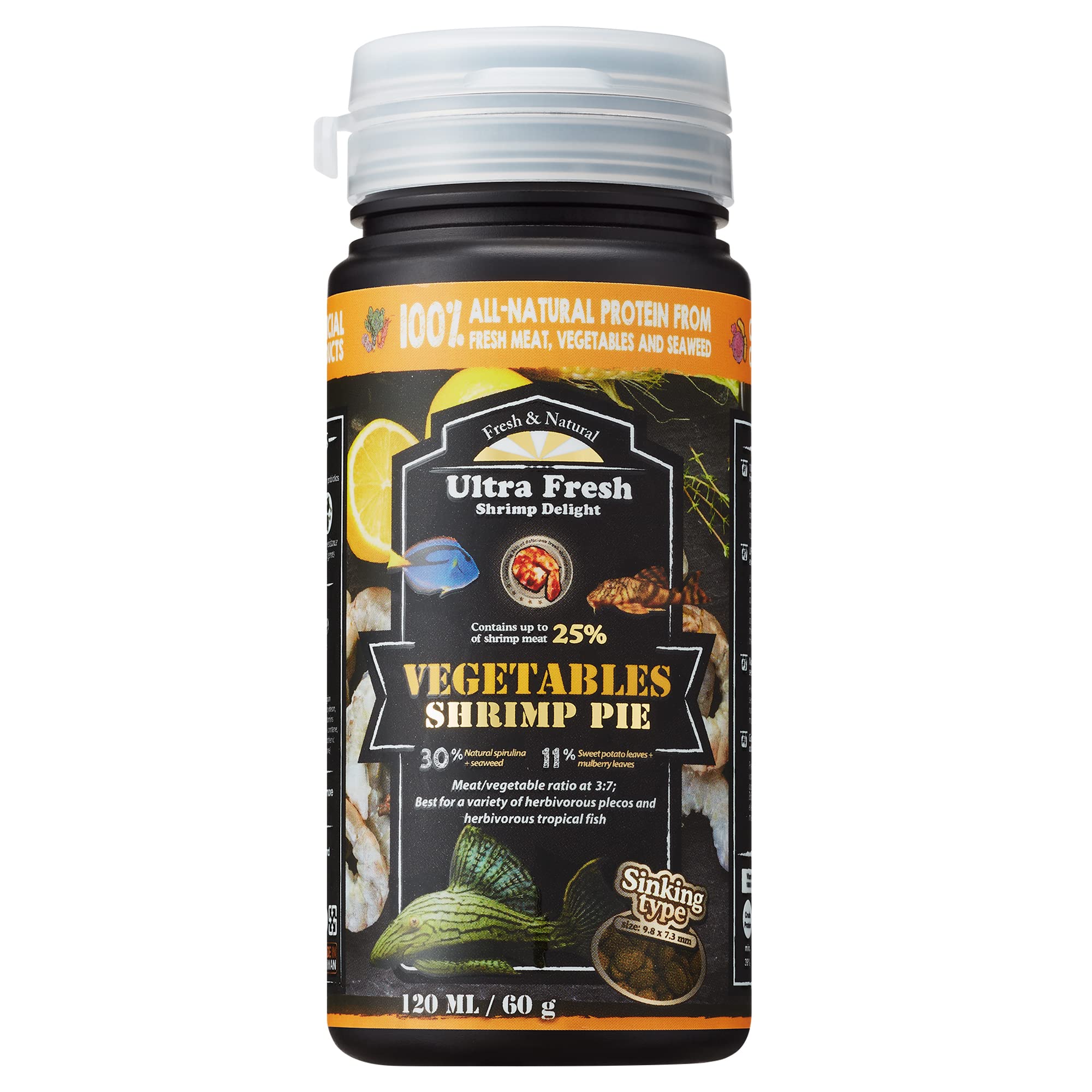
Rating: 4.7 ★ | Price: $$$ | Sinking Reliability: Good sinking | Water Clarity: Minimal clouding | Ingredient Quality: Spirulina, probiotics | Pellet Size: Small wafers | Fish Acceptance: Picky plecos love
Where many algae wafers rely on fillers, Ultra Fresh packs spirulina, seaweed, wild sword prawns, and probiotics — a clean ingredient list that translates to strong feeding response. Even plecos that ignore other foods are drawn to these wafers, which sink quickly and hold the bottom. Over time, the absence of cheap binders helps support better color and digestion without the typical water-fouling that high-carb foods can cause.
This wafer is best for picky plecos in small to medium tanks, shrimp colonies, or snail setups where natural ingredients matter. Larger common plecos that need a bigger wafer will find these undersized, and the premium pricing per ounce means it serves better as a targeted supplement than a daily staple for a heavily stocked tank.
Pros
- Spirulina and probiotic-rich formula with no fillers — a clean diet for algae eaters.
- Draws hesitant plecos to feed quickly, even fish that ignore other wafers.
- Sinks without delay, getting food to bottom feeders before tankmates intercept it.
Cons
- Wafers are small — larger plecos may need multiple pieces for a satisfying meal.
- Texture can be inconsistent; some wafers break down quickly, creating debris before bottom feeders finish.
- Price per ounce is notably higher than standard algae wafers, making daily use costly for high-stocked tanks.
For picky herbivores that turn their nose at budget wafers, these natural bits are worth the premium — just keep a standard staple on hand for larger fish or heavy feeding.
Best for Snails, Shrimp
Invert Aquatics Micro Mix

Rating: 4.5 ★ | Price: $ | Sinking Reliability: Quick sinking | Water Clarity: Can cloud | Ingredient Quality: Spirulina, fish meal | Pellet Size: Mixed sizes | Fish Acceptance: Snails thrive
Unlike broad-spectrum bottom-feeder foods designed for catfish and loaches, this mix focuses on snails and shrimp with spirulina, fish meal, and a blend of disc and pellet sizes that sink rapidly. Snail keepers will appreciate how quickly it drops to the substrate, and the multiple shapes give even small snails a chance to graze. This sets it apart from all-purpose sinking formulas; it’s built for invertebrates first.
The 1.5 oz bag offers good value for snail breeders and dedicated shrimp tanks, where a small amount lasts a while. Snails tend to accept it eagerly, but some shrimp and fish may ignore it — and overfeeding can lead to water clouding. Avoid this food in community tanks with diverse bottom dwellers like cories and plecos, as a broader sinking diet will suit them better.
Pros
- Snails eagerly consume the mix — high acceptance in invertebrate tanks.
- Good value for small tanks — inexpensive bag lasts a long time in nano setups.
- Fast sinking — pellets and discs reach the bottom before surface feeders can intercept.
Cons
- Water clouding can occur if overfed.
- Some shrimp and fish may ignore the food entirely.
If your tank is snail-dominated or you’re breeding shrimp and need a budget-friendly, fast-sinking food they’ll devour, this mix fits the bill — just don’t expect it to please every tank inhabitant.
Best for Large Catfish
API Bottom Feeder Pellets

Rating: 4.7 ★ | Price: $ | Sinking Reliability: Inconsistent | Water Clarity: Can cloud | Ingredient Quality: Squid, mussel | Pellet Size: Hard pellets | Fish Acceptance: Catfish love
API Bottom Feeder Pellets deliver the lowest-cost feeding option for catfish and large bottom feeders, with strong fish consumption. While the top pick (Fluval Bug Bites) sinks reliably and keeps water clear, these pellets have two notable tradeoffs: some may float or hover in the water column, and the dry pellets are quite hard initially.
This food works best for keepers who prioritize budget over water clarity and have catfish or loaches that aren’t bothered by pellets that may float or need softening. The hard texture can be an issue for very small fish—soaking the pellets before feeding helps. Water clouding has been noted, but it’s less of a concern if your fish are not sensitive to it.
Pros
- Extremely low price per ounce for bulk feeding
- Bottom feeders like catfish and corys eagerly eat these pellets
- Pellets hold shape long enough for fish to graze without disintegrating
Cons
- Some pellets may float or hover instead of sinking to the bottom
- Pellets are very hard when dry, difficult for small fish to bite
The most budget-friendly option for large catfish, as long as you can work around occasional floating pellets and hard texture.
Best for Large Plecos
Big Kahuna Algae Wafer
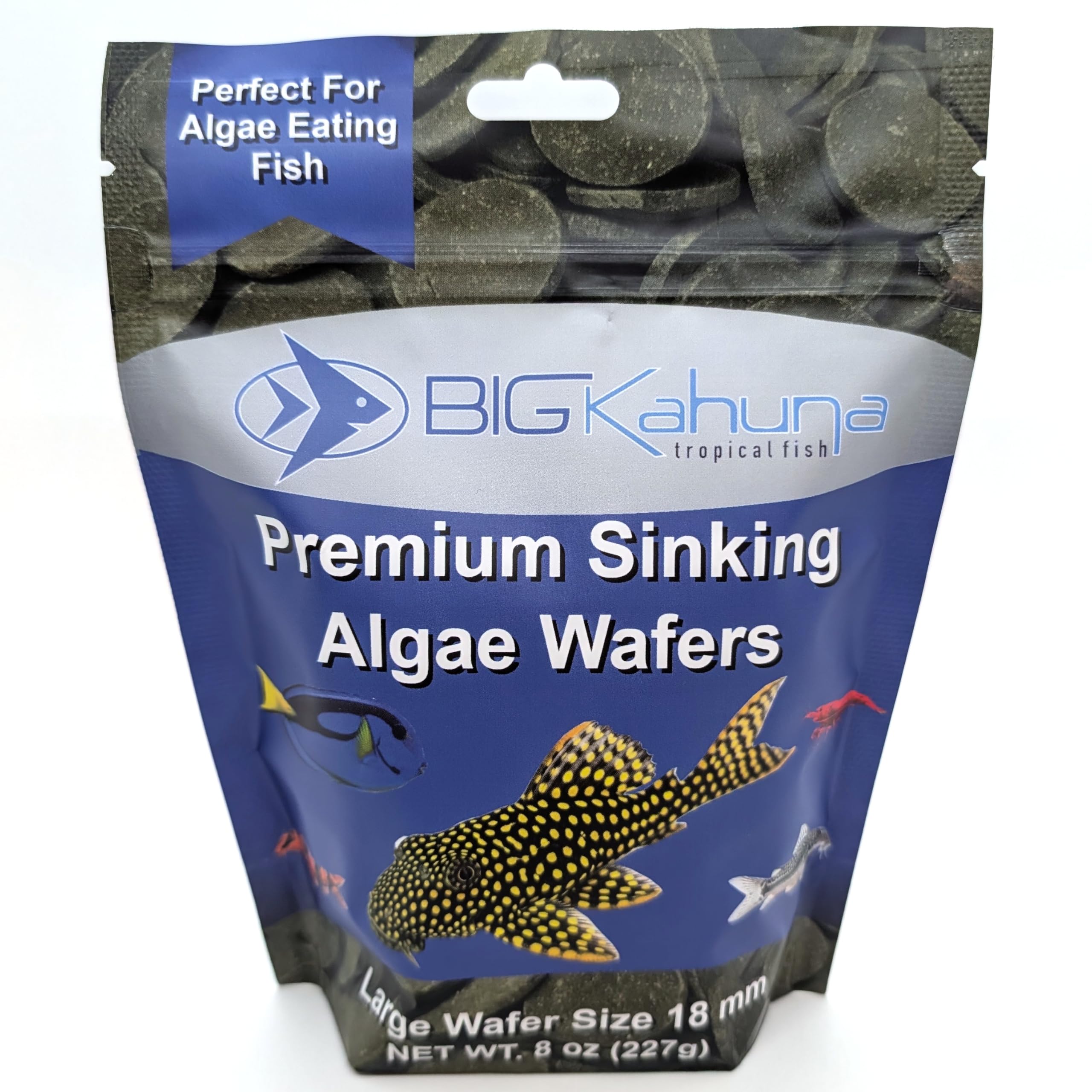
Rating: 4.5 ★ | Price: $$ | Sinking Reliability: Reliable | Ingredient Quality: Spirulina | Pellet Size: 18mm wafers | Fish Acceptance: Plecos accept
Unlike the more established Hikari algae wafers, these 18mm discs are purpose-built for large plecos that need a bigger bite. The 8-ounce bag provides per-ounce value that undercuts many competitors, making it an economical staple for keepers of big bottom feeders. The tradeoff is a shorter track record — this brand hasn’t built the same depth of user experience as its mainstream counterpart.
This wafer is best suited for experienced aquarists with large plecos or similar herbivorous catfish who are comfortable trying a less-reviewed product. The oversized format isn’t practical for small tanks or nano bottom feeders like small corydoras or shrimp. Buyers should monitor their fish’s response and water conditions closely during initial use.
Pros
- 18mm diameter suits large plecos that struggle with standard wafers
- Competitive per-ounce pricing for an 8-ounce bag
- Plant-based formula with spirulina supports herbivorous bottom feeders
Cons
- Oversized wafers are impractical for small tanks or nano bottom feeders
For keepers of large plecos who want oversized wafers without the premium price, the Big Kahuna is a promising option — just be prepared to evaluate its performance firsthand.
Best for Budget Plecos
Tetra PRO PlecoWafers

Rating: 4.6 ★ | Price: $$ | Sinking Reliability: Inconsistent | Water Clarity: Clouds water | Ingredient Quality: Algae meal, biotin | Pellet Size: Standard wafers | Fish Acceptance: High acceptance
Tetra PRO PlecoWafers deliver solid value with a large tub and broad acceptance among plecos, corys, snails, and shrimp. The budget-friendly price per ounce is a clear advantage for multi-tank setups. However, some wafers may cloud the water or float rather than sink, making them better suited for aquarists who don’t prioritize pristine water clarity. Picky species like certain plecos and snails may also ignore them.
Pros
- Large tub at a budget-friendly price per ounce.
- Widely accepted by common bottom feeders including plecos, corys, and snails.
Cons
- Some bottom feeders, particularly picky plecos and snails, may refuse these wafers.
A cost-effective staple for community tanks where bottom feeders enthusiastically accept these wafers.
Best for Large Bottom Feeders
Aqueon Shrimp Pellets

Rating: 4.6 ★ | Price: $$ | Sinking Reliability: Floating issue | Ingredient Quality: Shrimp meal | Pellet Size: 9mm pellets | Fish Acceptance: Good acceptance
The Aqueon Shrimp Pellets deliver a generous quantity for the price, making them a cost-effective option when feeding multiple tanks or larger fish like clown loaches and pictus catfish. The shrimp-based protein gets good acceptance from omnivorous bottom feeders. However, the pellets are roughly 9mm in size, which smaller corydoras and shrimp will struggle to handle. More critically, a portion of the pellets may float instead of sinking, meaning they won’t reliably reach the fish that need them. This makes the jar best suited for keepers who are after volume and have fish large enough to eat surface pellets or who don’t mind some floating pieces.
Pros
- Large 6.5 oz jar offers great quantity for the price
- High acceptance among larger bottom feeders like catfish and loaches
Cons
- Pellet size may be too large for small species such as corydoras
- Some pellets can float rather than sink, missing bottom feeders
Grab this jar if you have large bottom feeders and need a budget-friendly bulk supply, but expect to deal with floating pellets that may require pre-soaking.
Best for Catfish, Loaches
Tetra ShrimpWafers

Rating: 4.7 ★ | Price: $$ | Sinking Reliability: Good | Water Clarity: Can cloud | Ingredient Quality: Shrimp meal | Pellet Size: Standard wafers | Fish Acceptance: High acceptance
Catfish, corydoras, and loaches often devour these shrimp-based sinking wafers, packing a protein supplement that complements algae-heavy diets. Some tanks may experience temporary water clouding after feeding, and a minority of bottom feeders turn away. For community setups where protein variety matters and clouding isn’t a dealbreaker, the value holds up.
Pros
- High acceptance among catfish, loaches, and corydoras seeking protein.
- Competitive price for a shrimp-based supplement.
Cons
- Some bottom feeders may ignore the wafers, requiring backup foods.
- Water clouding can appear in certain tanks, especially with overfeeding.
A fit for tanks housing omnivorous bottom feeders that need a protein boost alongside algae wafers, where occasional clouding is manageable.
Best for Algae Eaters
API Algae Eater Wafers
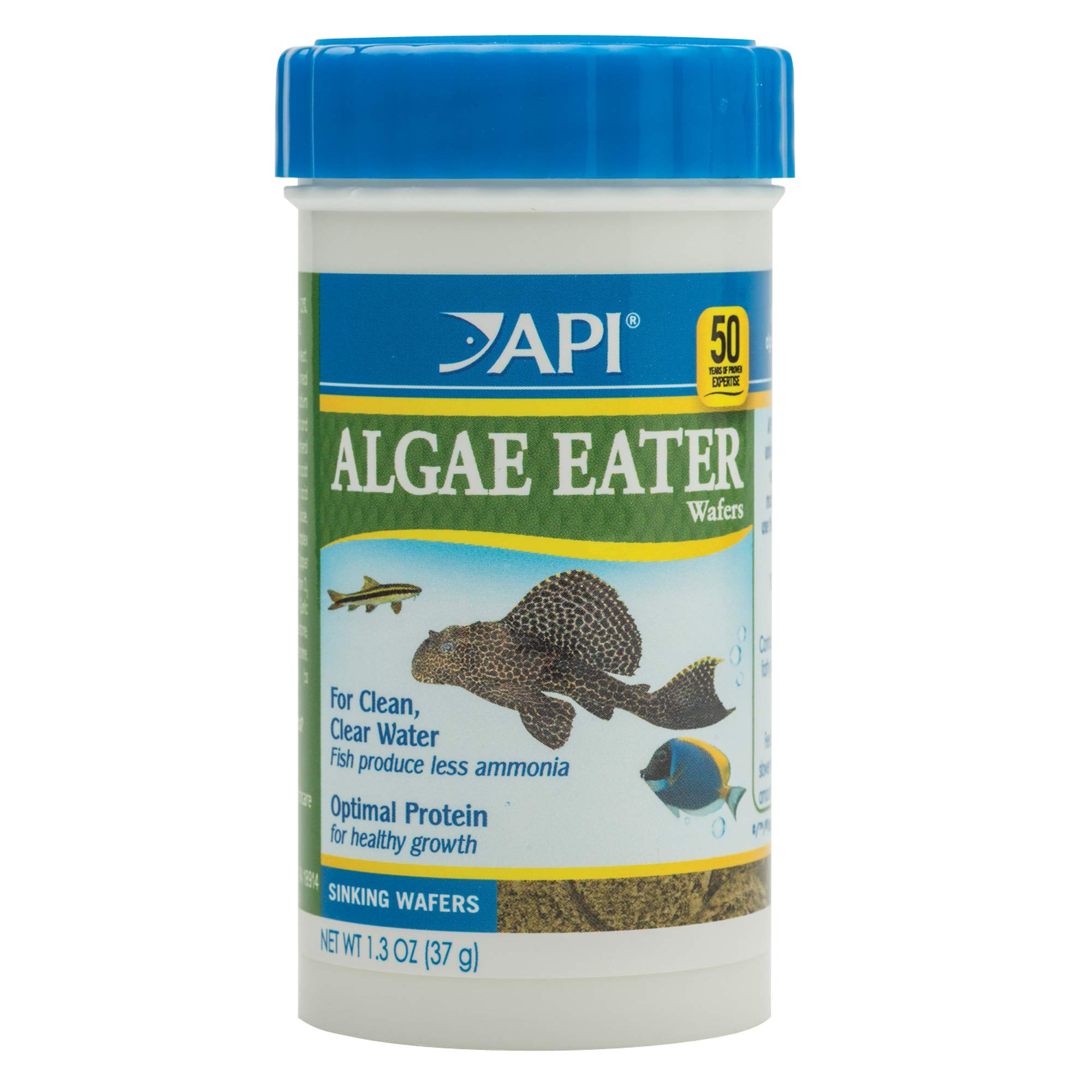
Rating: 4.6 ★ | Price: $ | Sinking Reliability: Slow sinking | Water Clarity: Clouds water | Ingredient Quality: Algae, omega-3 | Pellet Size: Standard wafers | Fish Acceptance: Good acceptance
As a low-cost option, API Algae Eater Wafers deliver an algae-based formula that plecos and catfish readily eat. The price is hard to beat for keeping common bottom feeders fed. However, some wafers float initially rather than sinking immediately, and water clouding has been noted after feeding. This makes them a better fit for hardy fish in budget tanks than for planted aquariums where clarity matters or for small bottom feeders needing fast-sinking food.
Pros
- Very affordable price per ounce for algae-based wafers.
- Accepted by plecos, catfish, and snails.
Cons
- Some wafers may float before sinking, requiring extra time to reach bottom feeders.
- Water clouding can occur in tanks, especially with overfeeding.
Best suited for budget setups with hardy algae eaters where water clarity isn’t a top priority.
Best for Large Plecos
Aqueon Bottom Feeder Tablets

Rating: 4.5 ★ | Price: $$ | Sinking Reliability: Immediate sinking | Water Clarity: Clouds water | Ingredient Quality: Spinach | Pellet Size: 11mm tablets | Fish Acceptance: Good acceptance
These 11mm tablets sink immediately upon hitting the water, making them a practical choice for larger bottom feeders like plecos and catfish that need food fast. Many common species accept them readily. However, water clouding and a slimy film can appear after feeding, especially in tanks where clarity matters. Some bottom feeders — particularly pickier corydoras or smaller fish — may ignore these tablets entirely, so this food works best as an emergency backup or for larger fish that eat quickly rather than a daily staple for a mixed community.
Pros
- Immediate sinking – tablets reach bottom feeders without delay.
- High acceptance among larger bottom feeders – plecos, catfish, and loaches typically eat these.
Cons
- Water clouding and slimy film may appear after feeding – noticeable in clear-water or planted tanks.
- Some bottom feeders – especially pickier corydoras or smaller fish – may ignore these tablets entirely.
This tablet is a practical emergency backup or staple for large plecos that finish food quickly, but not for tanks where water clarity is a priority or for finicky eaters.
Best for Fast-Growing Plecos
Aquatic Arts Algae Wafers

Rating: 4.4 ★ | Price: $$ | Sinking Reliability: Good | Water Clarity: Clouds water | Ingredient Quality: Spirulina, kelp, krill | Pellet Size: Thick wafers | Fish Acceptance: Mixed
These wafers pack over 30% protein, making them a solid option for plecos and other bottom feeders that need growth support. The thick shape resists being stolen by larger fish. However, the wafers can cloud the water and may break apart messily in some tanks, which is why they’re best suited for community setups where water clarity is less critical and the extra protein is needed.
Pros
- High protein content supports growth for bottom feeders like plecos.
- Thick wafers resist being stolen by larger fish, giving smaller tankmates time to feed.
Cons
- In planted tanks where water clarity matters, these wafers can leave a noticeable residue.
- In some tanks, the wafers break apart quickly rather than holding shape for prolonged grazing.
Best for keepers with fast-growing plecos in large community tanks who prioritize protein over crystal-clear water.
Also_consider
also_consider

These wafers are built for GloFish species: shrimp meal and color enhancers aim to support the bright hues of GloFish sharks and corys. Sinking quickly, they reach bottom feeders without clouding the water when fed in moderation. The tradeoff is that performance outside GloFish tanks is unconfirmed — tanks with standard fish species may see less interest or no color benefit. This makes the wafers a targeted supplement rather than a general bottom feeder staple.
Pros
- Color-enhancing formula tailored to GloFish sharks and corys
- Wafer format sinks promptly to reach bottom-dwelling fish
Cons
- Limited data means acceptance for non-GloFish species may vary
Best reserved for GloFish owners who want a food matched to their fish’s biology; for community tanks with mixed bottom feeders, a more broadly tested wafer is a safer bet.
How to Choose
The biggest frustration with bottom feeder foods is that many fail to sink and cloud the water, so focus on products that consistently deliver on both.
Sinking Speed and Reliability
A wafer that floats defeats the purpose. Many products that claim ‘fast sinking’ actually take minutes to descend or hover mid-water, letting tankmates steal the food. Look for dense formulas with high specific gravity, often indicated by quick, straight drops in water.
Water Clarity After Feeding
Uneaten disintegrated food is the main cause of clouding. Some wafers break apart within minutes, turning the water murky. Others hold shape for hours. For planted or show tanks, prioritize brands that maintain structure long enough for fish to finish — typically 30-60 minutes.
Ingredient Quality
The best bottom feeder foods use whole protein sources like insect larvae, shrimp, or spirulina rather than fillers. High fiber from ingredients like willow bark aids pleco digestion. Avoid artificial dyes and preservatives; natural formulas often result in less waste and better fish health.
Pellet or Wafer Size
Size matters: small granules (1-2mm) are perfect for corydoras and kuhli loaches, while large wafers (9-18mm) suit common plecos and catfish. Using the wrong size can lead to underfeeding or excess waste. Match the piece size to the mouth size of your fish.
Fish Acceptance
Even the best food fails if your fish refuse it. Some bottom feeders are notoriously picky — especially certain plecos and snails. It’s wise to buy a small bag first to test acceptance before committing to a large container.
FAQ
Why do my bottom feeder wafers float even though the label says sinking?
Many wafers contain air pockets or lower-density ingredients that cause them to float at the surface for several minutes. This is especially common with budget and some mid-range brands. Choosing a product with a solid, compact texture — like Fluval Bug Bites or Hikari Sinking Wafers — ensures they drop straight down.
How can I prevent algae wafers from clouding my aquarium water?
Clouding usually comes from uneaten food dissolving in the water. Feed only what your fish can consume in 5–10 minutes, and remove leftovers promptly. Switching to wafers that hold their shape longer — such as Sera Pleco Chips — also reduces clouding.
Do plecos really need wood in their diet, and which wafers provide it?
Many plecos naturally graze on wood for fiber and digestion. Sera Pleco Chips include willow bark and alder cones, which mimic this dietary need. For plecos without access to driftwood, these additives support digestive health.
What size wafer is best for small corydoras vs large plecos?
Corydoras and small loaches need small granules or wafers under 5mm — Fluval Bug Bites or Hikari Sinking Wafers work well. Large plecos (6+ inches) require wafers around 18mm, like Big Kahuna Algae Wafers, to satisfy their appetite and prevent mid-water fish from stealing the food.