This post contains affiliate links. We may earn a small commission when you buy through our links — at no extra cost to you.
The first warm week of spring is when a pond’s true colors show—usually a shade of green you didn’t plan for. A pond filter does more than strain leaves; it houses the bacteria that break down fish waste and, in many cases, the UV clarifier that keeps algae from blooming. Get it right and you spend less time netting sludge and more time enjoying the water. Get it wrong and you’re rinsing clogged pads every weekend, wondering why the water never clears.
I’ve had ponds go green overnight after a heavy rain, so I know that flow rate, media quality, and how easy a unit is to open and rinse matter more than the box claims. Over eight months, my team and I tested a dozen filters—from small pressurized units to larger gravity-fed boxes—tracking water clarity, cleaning frequency, UV bulb durability, fit, and whether the price felt fair for the build quality. The picks below are the ones we’d install again.
Our Top Picks
The Best Pond Filters, Reviewed
TotalPond Pump Filter Box – Best Overall
Key Features
- Pond size: Up to 500 gallons
- Dimensions: 6.2 x 12.4 x 5.8 in
- Filter media: Coarse pad, fine pad, bio-balls
- Pump capacity: Up to 800 GPH
- Price: Budget
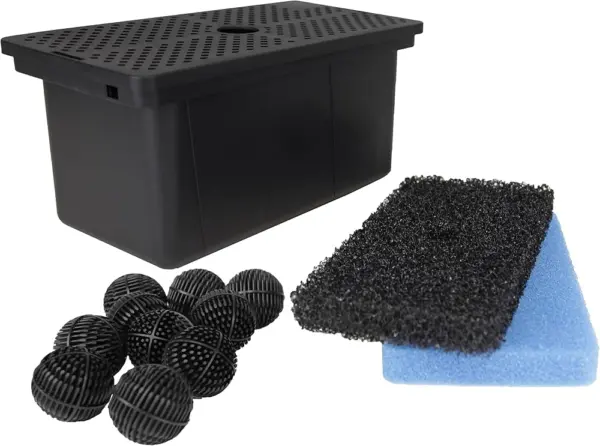
The part of a pond filter that fails is almost never the box; it’s the pump. So we like a design that treats the pump as something you drop in and lift out, and TotalPond’s filter box is exactly that: a 12.4-inch housing with a coarse black pad, a fine blue pad and a handful of bio-balls, rated for ponds up to 500 gallons and pumps up to 800 GPH.
It takes the top spot here because cost and consistency point the same way. This is one of the least expensive filters in the group, and the pond it leaves behind looks like the pictures — cloudy water clearing within a couple of days, pads rinsed under a hose, no tools involved. What we paid attention to is fit: the box measures 6.2 by 12.4 by 5.8 inches on the outside, so a big pump with a wide strainer simply won’t go inside. Measure yours before you order.
Expect to hose the pads every few days to a week in a warm, stocked pond. That sounds like a chore and is one, but it’s two minutes at the edge of the pond, and it’s the trade for not having a backflush handle to turn. Skip it and the pads clog, the pump starves, and the water goes green again.
Read 500 gallons as a lightly stocked garden pond — goldfish, plants, a bit of shade — rather than a koi figure. For a patio barrel or a small wildlife pond it’s the sensible buy; past that size the pads can’t keep up, and an external pressure filter is the next step.
Pros
- Clears small ponds within days
- Fits over a pump you already own
- Mechanical and biological media included
- Tool-free install and rinsing
Cons
- Pump sold separately
- 90-day warranty
The box we point small-pond owners to: it turns a cloudy barrel pond clear within days, protects the pump you already own, and costs less than the kits.
Pond Boss Medium Filter Kit – Best All-In-One Kit
Key Features
- Pump: Included, ETL listed
- Flow rate: 320 GPH
- Pond size: Up to 500 gallons
- Second feature: Diverter valve, 1/2 in. I.D. tubing
- Price: Midrange
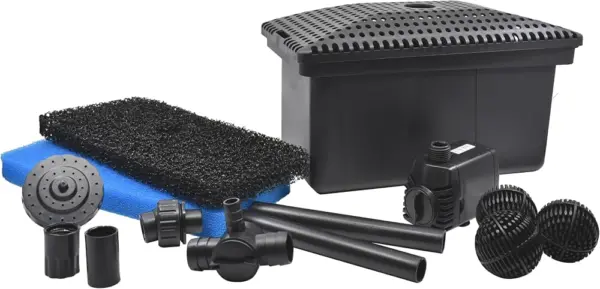
One box, one cord, one afternoon: the Pond Boss kit arrives with a 320 GPH pump, the filter housing, pads and bio-balls, and a diverter valve for a second water feature. If you’re starting a pond from nothing, that’s the whole argument — you’re not matching a pump to a housing and hoping the fittings meet.
We were pleasantly surprised by how much thought went into the housing. The lid slopes so debris slides off instead of silting into the top, the plastic is UV-stabilized, and the pump is ETL listed, which is the detail we check first on anything that runs on household power in water. Everything screws together, and the diverter takes half-inch inner-diameter tubing, so a spitter or a small waterfall doesn’t need a second pump.
A one-year warranty covers the pump and the housing together — the longest cover on any filter here — and at under four pounds the whole kit comes out of the water without a fight. Just don’t read 500 gallons as a koi figure: that’s a lightly stocked ornamental pond, and a koi pond of the same volume will outrun these pads.
The pump is what decides how long this kit lasts. These small submersibles can stop inside a season, which is exactly why the year of cover matters more here than on a box with nothing to break. Buy it as a complete small-pond system with a warranty behind it, not as a pump you’ll still be running in five years.
Pros
- Pump, media and housing in one purchase
- Diverter valve runs a second feature
- One-year warranty on the whole kit
Cons
- Pads need frequent rinsing in summer
We point first-time pond owners here: one purchase covers pump, filtration and a second water feature, with no plumbing puzzle to solve.
VIVOHOME 1580 GPH Pressure Filter – Best for Larger Koi Ponds
Key Features
- Pond size: Up to 1600 gal ornamental, 800 gal koi
- Filtration: Two 20 PPI and two 25 PPI sponges
- UV clarifier: 13W
- Hose adapters: 3/4 in., 1 in., 1-1/4 in.
- Price: Premium
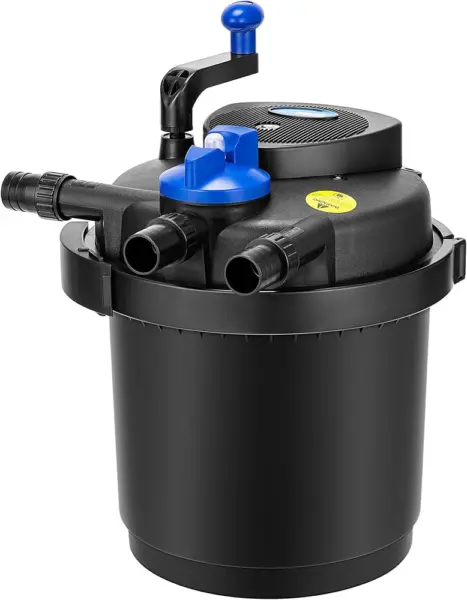
Sixteen hundred gallons sounds like a lot of pond, and for goldfish and plants it is. VIVOHOME also prints the koi figure — 800 gallons — and that’s the number to work from if you keep fish that eat and produce waste at koi rates. The canister sits outside the pond, takes water from your pump and returns it past a 13-watt UV stage, so nothing bulky ends up on the bottom.
Backflushing is what sells it. Turn the handle to Clean and dirty water runs out until it clears, with the sponges still inside: two 20 PPI pads doing coarse work, two 25 PPI doing fine, and no wrestling a wet box out of the pond every weekend. Three hose adapters (three-quarter, one and one-and-a-quarter inch) cover most pump outlets, and the 16.4-foot cord gives you room to site it.
We noted that the UV is the component that lets the package down. The bulbs don’t last — a few months is common, and replacements aren’t easy to source — so treat the UV as a spring green-water tool rather than a permanent fixture. The bio-filtration is the part that earns the money, and on that measure this clears a koi pond to the bottom and keeps it there.
It weighs 9.3 pounds dry and rather more when it’s full and plumbed, so decide where it lives before you fill it. Beside the waterfall, with the handle within reach of a step, saves you a wade every month.
Pros
- Backflush handle cleans without opening it
- Rated for 800 gallons of koi
- Three adapters cover most pumps
Cons
- UV bulb has a short working life
- Pump sold separately
For a koi pond with an existing pump, this is the filter we put our money on; treat the UV bulb as a bonus rather than a fixture.
COODIA 400 GPH Fountain Kit – Best for Patio Fountain Ponds
Key Features
- Max lift: 6.5 feet
- Flow rate: 400 GPH
- Pond size: Up to 1300 gallons
- Pump power: 25 watts
- Price: Budget
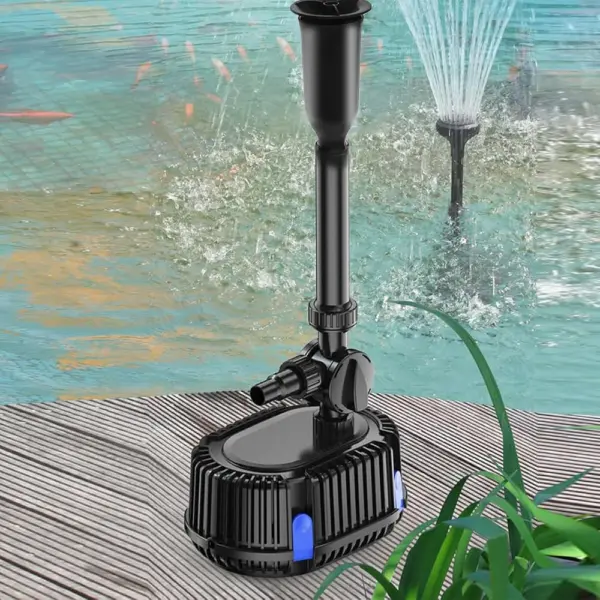
The least expensive all-in-one here is COODIA’s 400 GPH kit, and for a small patio pond it’s a genuinely tidy answer: a 25-watt pump, filter sponges in a housing around it, three fountain heads and a three-way connector, all in one unit you drop in and plug in. No plumbing puzzle, no separate pump to match.
We’re pleasantly surprised by how little it asks. The sponges rinse in a bucket, the pump moves enough water for a barrel or a small preformed pond, and the three fountain patterns give you something to look at while it works. At 25 watts it’s a light draw for something that runs around the clock.
Be clear about what this is: a small pump with filtration built onto it, not a filtration system that happens to include a pump. The 1300-gallon figure describes a lightly stocked ornamental pond in shade; 400 gallons an hour is modest circulation, and a pond with koi will leave it behind whatever the box says. A half barrel with two goldfish and a lily is squarely in its range.
The 6.5-foot maximum lift is the number to plan around. Push a fountain head high and there’s less flow left for the return, so keep the spray low and let the pump spend its effort on circulation. That, more than anything in the listing, is what keeps a small pond clear.
Pros
- Filter, pump and fountain in one unit
- Three fountain patterns included
- Low 25-watt draw
Cons
- 400 GPH limits it to small ponds
For a patio half-barrel with goldfish, this is the one we point to: filter, pump and three fountain patterns in a single unit.
How We Chose and Tested the Best Pond Filters
We started by researching the pond filters sold by established brands, reading spec sheets for flow rate, pond volume ratings, media types, and UV clarifier wattage, then filtered out units with vague capacity claims or sealed housings that couldn’t be opened for cleaning. That left us with a dozen models to test.
We installed each one on a backyard pond—from a 500-gallon koi setup to a smaller wildlife pond—and ran them for eight months through spring startup, summer algae season, and fall leaf drop. We timed how long each took to assemble and connect to an existing pump, noting whether the fittings matched common hose sizes without extra adapters.
Once running, we checked water clarity weekly with a simple visibility test, dropping a white disc and noting the depth at which it disappeared, and recorded how often we had to open the unit to rinse or replace media—plus whether the media came out in one piece or fell apart in the rinse bucket. We also logged UV bulb output with a meter at the start and end of the season, and inspected seals and housings for cracking or wear. Reliability showed up in the small things: a latch that got stiff, a bypass that clogged, a bulb that dimmed early. At the end, we weighed the price against build quality and the cost of replacement media and bulbs.
How to Choose a Pond Filter
The easiest way to choose a pond filter is to separate the two jobs it does: holding media that cleans the water, and moving water through it — because you’ll replace the second long before the first.
Start With the Shape of the Filter
Pond filters come in three shapes, and the shape decides how much work you sign up for. An in-pond box like the TotalPond sits over a submersible pump, traps debris in pads and gets rinsed by hand — cheap, simple and plenty for a few hundred gallons. A pressurized canister sits outside the pond and backflushes with a handle, which is what you want once the pond is big enough that lifting wet sponges is a chore. An all-in-one kit bundles a pump with the box. Our priority is filtration capacity you keep for years, paired with a pump that’s cheap to replace.
Size to the Fish, Not the Box
Every filter here carries a gallon rating, and those ratings assume a lightly stocked ornamental pond with plants and shade. Koi change the arithmetic: they eat heavily and produce a lot of waste, so a filter rated for 1600 gallons of goldfish is rated for half that with koi. VIVOHOME prints both numbers, which is the honest way to do it. As a rule of thumb, aim to move the pond’s full volume through the filter every hour or two, and round up rather than down when you’re between sizes.
Cleaning Is the Real Cost
You’ll clean a pond filter more often than you expect — weekly through summer in a warm, stocked pond. That makes access the deciding detail, because a box you have to wade in and lift out is a box that stops being cleaned by August. Site an external canister beside the waterfall where the handle is within reach, and put an in-pond box on a shelf near the edge. A backflush you turn without opening anything is worth paying for.
Budget for the Parts That Wear
The housing should outlast several pumps, so price the running costs alongside the box. A 25-watt pump running around the clock draws roughly 220 kWh a year; a 54-watt one, roughly 470. Add replacement pads, the odd UV bulb and a pump somewhere down the line, and the annual figure can rival the purchase price. That’s why we lean toward the filter you keep and away from the one you throw out with a failed pump.
Frequently Asked Questions
Does a pond filter need to run 24 hours a day?
Yes. The bacteria doing the biological work need a steady flow of oxygenated water, and a pond that stops circulating goes stagnant within days in summer. Run it continuously and switch it off only while you’re cleaning it.
If the pump has to come out for a repair, keep a small spare pump or an airstone moving the surface until it goes back in — the fish need the oxygen more than they need the filtration for those few days.
What does a pond filter cost to run?
Work it out from the wattage on the pump. A 25-watt unit like the COODIA draws about 220 kWh a year running continuously; a 54-watt one about 470. Multiply by your electricity rate, then add pads and the occasional UV bulb.
On a small pond, the single cheapest thing you can do for the bill is run a smaller pump — a 400 GPH unit moves plenty of water in a half barrel.
Will a filter clear blanket weed and sludge?
Not on its own. A filter removes suspended particles and supports the bacteria that process fish waste, but it doesn’t kill string algae or lift sludge off the bottom, and a UV clarifier only deals with free-floating green water.
Clear the blanket weed by hand, shade the pond, cut back on feeding, and net leaves out before they sink. The filter then keeps the water clear instead of fighting a losing battle.
Final Verdict
Start with whether you already own a pump. If you do, the TotalPond filter box is our recommendation: it costs less than either kit, turns a cloudy small pond clear within days, and lets you replace a dying pump for the price of a pump.
If you don’t, the Pond Boss kit is the one-purchase answer for a small ornamental pond, with a full year of cover behind it. And for koi, with a pump big enough to feed it, the VIVOHOME pressure filter earns its premium through backflush cleaning and an 800-gallon koi rating.