This post contains affiliate links. We may earn a small commission when you buy through our links — at no extra cost to you.
A fish tank cleaner that falls off the glass or a siphon that cracks after two uses turns a quick chore into a headache. Many listings boast strong magnets or durable hoses, but real-world performance often depends on your tank’s glass thickness or faucet threads.
This guide focuses on tools that actually hold up to weekly use—whether you’re battling algae in a 75-gallon cichlid tank or scrubbing a 5-gallon betta cube. The right match saves time, money, and keeps your fish stress-free.
Top Picks
Best for Frequent Water Changes
Python 25ft Water Changer

Rating: 4.6 ★ | Price: Premium | Type: Gravel vacuum, water changer | Compatibility: Glass/acrylic up to 1/2" | Build Durability: Heavy-duty tubing, brass
The Python system connects directly to a faucet to drain and refill the tank without lifting a single bucket. Water changes that once took 30 minutes of hauling now take minutes of watching the hose work. The tubing and brass connectors hold up well under repeated use, and the gravel tube pulls debris efficiently from the substrate.
Best suited for tanks of 40 gallons or more, where standard bucket changes become a genuine chore. The 25-foot hose reaches most sinks, and the no-spill valve makes stopping flow at the tank end clean. The faucet adapter requires a standard aerator thread — some sinks with non-standard threads may need an additional adapter. Hobbyists with limited mobility will appreciate eliminating trips to the sink.
Pros
- Makes water changes fast and mess-free with direct faucet connection
- High quality tubing and connectors hold up to regular use
- Eliminates manual bucketing, saving significant time and effort
Cons
- Faucet adapter may not fit sinks with non-standard aerator threads
- 25-foot hose is excessive for small tanks under 10 gallons
For anyone with a 40+ gallon tank who wants to stop carrying buckets, this is the single investment that changes how you maintain the aquarium.
Best for Reef Tanks
Flipper Magnet Cleaner
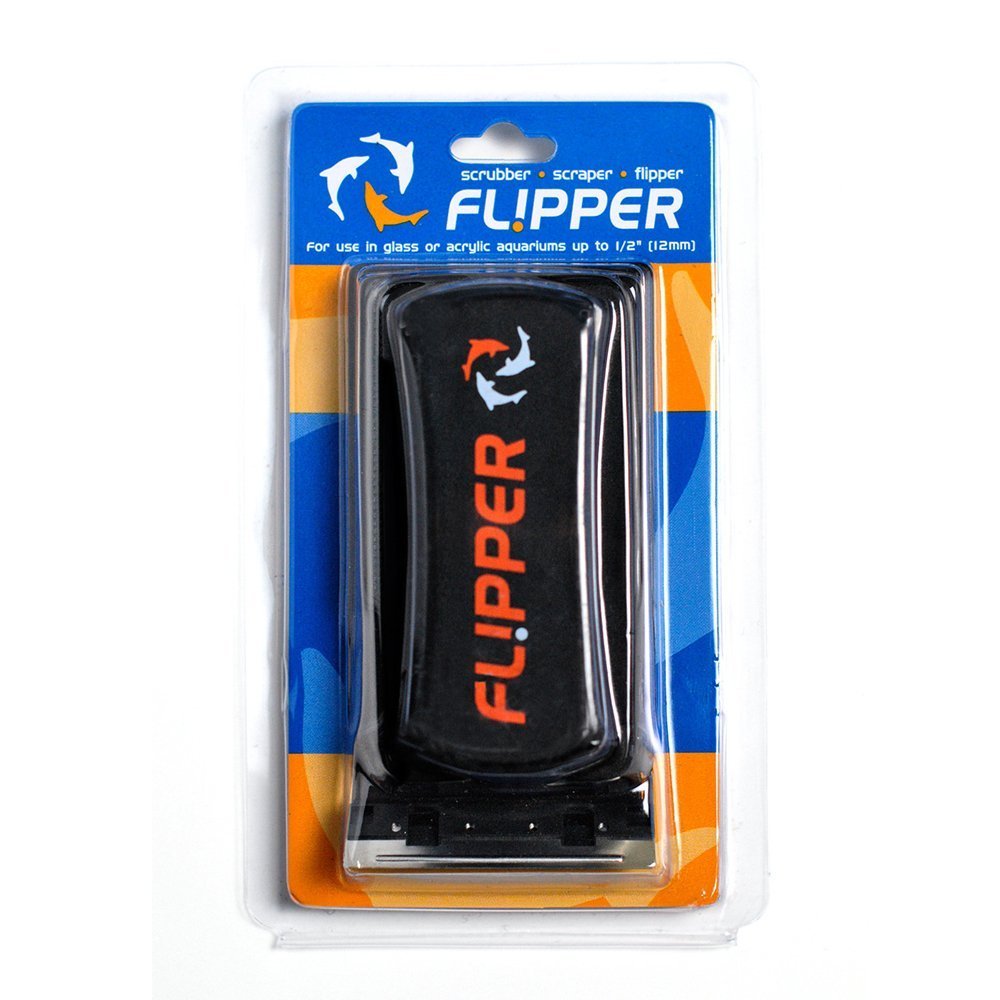
Rating: 4.6 ★ | Price: Premium | Type: Magnetic algae scraper | Compatibility: Glass/acrylic up to 1/2" | Build Durability: Strong magnet, steel blade
The Flipper Magnet Cleaner uses a dual scrubber and steel blade to target coralline algae, making it a specialized tool for saltwater aquariums. Its magnet holds securely on glass up to 1/2 inch, though debris trapped under the blade can scratch the surface if not rinsed. This suits experienced reef keepers with glass tanks who want to avoid chemical algae treatments. Acrylic owners can use the included plastic blade, but frequent cleaning is better left to dedicated acrylic tools.
Pros
- Dual scrubber and steel blade tackle tough coralline algae that other magnets leave behind.
- Swap between scrubber pad and metal or plastic blade for glass and acrylic surfaces.
- Strong magnet holds in place on glass up to 1/2 inch thick without slipping.
Cons
- Magnet strength is rated for glass up to 1/2 inch; thicker glass may require a stronger magnet.
For reef keepers with glass tanks up to 1/2 inch, this is the most effective magnetic cleaner for coralline algae — no chemicals required.
Best for Nano Tanks
DaToo Nano Magnet

Rating: 4.7 ★ | Price: Budget | Type: Magnetic nano scraper | Compatibility: Glass up to 8mm | Build Durability: N38 magnet, ABS casing
DaToo Nano Magnet packs a stronger hold than its size suggests, staying put on thin glass without slipping off during scrubbing. Unlike many budget magnets that can detach easily, this one remains firmly attached on glass up to 8mm. It is purpose-built for nano tanks up to 10 gallons – ideal for betta or shrimp setups. Larger tanks or thicker glass are outside its range.
Pros
- Magnet hold is strong enough to stay attached during scrubbing on thin glass.
- Cleans small tank walls quickly with minimal effort, reaching corners easily.
- Durable build and low price make it a cost-effective choice for nano tanks.
Cons
- Only works on glass tanks up to 5/16" thick – not suitable for larger tanks or thick glass.
A straightforward cleaning tool that does exactly what it claims for nano tanks, at a price that’s hard to beat.
Best for Cyanobacteria
Ultralife Slime Remover

Rating: 4.6 ★ | Price: Mid-Range | Type: Cyanobacteria treatment powder | Compatibility: All tanks | Build Durability: Powder bottle
Ultralife Slime Remover is the specialist solution for cyanobacteria (blue-green slime) in planted or shrimp tanks, working where general clarifiers cannot. It eradicates the slime while leaving fish, plants, and invertebrates unharmed, and results are typically long-lasting — the slime rarely returns after treatment. This makes it the right choice for aquarists with stubborn cyanobacteria outbreaks who have sensitive tank inhabitants. The main tradeoff is the small bottle size: each dose treats up to 32 gallons, but severe outbreaks may require multiple doses, raising the per-treatment cost compared to broad-spectrum algicides.
Pros
- Eliminates cyanobacteria without affecting fish, plants, or invertebrates
- Safe for planted tanks and shrimp when used as directed
- Slime rarely returns after treatment, reducing repeat applications
Cons
- Small bottle size may require multiple doses for severe outbreaks, increasing cost per treatment
This is the most reliable choice for cyanobacteria in sensitive planted or shrimp tanks.
Best for Medium-Large Glass
hygger Magnet Cleaner S
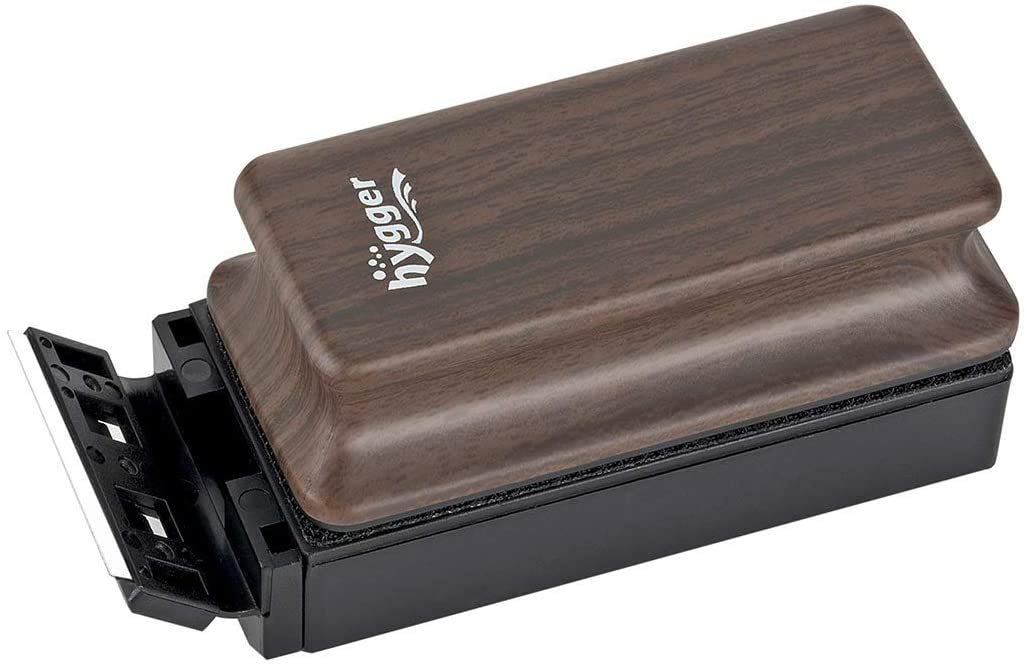
Rating: 4.6 ★ | Price: Mid-Range | Type: Magnetic algae scraper | Compatibility: Glass up to 3/8" | Build Durability: Strong magnet, ABS casing
The hygger Magnetic Cleaner S uses a strong magnet that stays attached on glass up to 3/8" and comes with both a metal blade for tough algae and a plastic blade for acrylic tanks. It removes stubborn algae effectively, and the wood-finish handle is comfortable to grip. Compared to professional-grade scrapers like the Flipper, the hygger delivers similar cleaning power at roughly half the cost. However, the magnets are very strong and can be difficult to separate — slide them apart rather than pull directly. Also, if debris gets trapped under the pad, it may scratch glass; keeping the pad clean and using the plastic blade on acrylic helps avoid this. This cleaner is best for medium to large glass tanks with persistent algae, not for very thin glass or acrylic without the plastic blade.
Pros
- Strong magnet stays attached on glass up to 3/8"; won’t drop mid-scrub.
- Metal scraper blade removes tough algae with less effort than pads alone.
- Wood-finish handle is comfortable and easy to grip during use.
Cons
- Magnets are very strong and can be difficult to separate after cleaning.
- Debris trapped under the pad may scratch glass if not cleaned regularly.
A cost-effective alternative to premium magnetic cleaners for glass tanks up to 3/8" — just account for the extra effort needed to separate the magnets and keep debris clear of the pad.
Best for Small-Medium Glass
Aqueon Mag Cleaner Small

Rating: 4.6 ★ | Price: Budget | Type: Magnetic algae scraper | Compatibility: Glass up to 3/8" | Build Durability: Moderate magnet, plastic
The Aqueon Mag Cleaner Small comes with both glass and acrylic pads, keeping the entry price low for basic algae removal. Its magnet holds securely on glass up to 3/8-inch thick, and the grip stays put during routine cleaning. Beyond that thickness, the hold drops off noticeably. Acrylic owners need to use the correct pad and rinse regularly to avoid scratches. This cleaner suits budget-conscious buyers with small to medium glass tanks who don’t need a stronger magnet for thicker glass.
Pros
- Dual-sided pads included for both glass and acrylic tanks.
- Holds securely on glass up to 3/8-inch thick.
- Budget-friendly price for a basic magnetic cleaner.
Cons
- Can scratch acrylic if the wrong pad is used or debris gets trapped between pads.
- Magnet grip weakens noticeably on glass thicker than 3/8 inch.
An effective no-frills option for small glass tanks — just keep glass thickness and pad selection in mind.
Best for Biological Maintenance
API Stress Zyme 4oz

Rating: 4.8 ★ | Price: Budget | Type: Biological sludge remover | Compatibility: All tanks | Build Durability: Liquid bottle
API Stress Zyme consumes sludge and supports biological filtration when dosed weekly. It suits routine maintenance in freshwater and saltwater tanks up to 20 gallons. However, it won’t clear cloudy water quickly or handle heavy organic waste — it’s a supplement, not a primary cleaner.
Pros
- Consumes sludge and keeps gravel clean with regular use
- Supports healthy biological filtration and fish health
Cons
- Requires consistent weekly dosing and won’t clear cloudy water quickly
Best for aquarists who want to maintain biological balance with routine dosing, not as a standalone solution for visible debris or sudden cloudiness.
Best for Quick Cloud Fix
API Accu-Clear 8oz

Rating: 4.6 ★ | Price: Budget | Type: Water clarifier | Compatibility: Freshwater only | Build Durability: Liquid bottle
Clears cloudy freshwater tanks within 24 hours by clumping particles for easy filter removal. The liquid formula works quickly in established tanks, but precise dosing is essential — overdose can harm shrimp, scaleless fish, or fry. Best suited for experienced aquarists who measure accurately and understand the risk to sensitive species.
Pros
- Clears cloudy water quickly, often within 24 hours.
- Budget-friendly price for an 8-ounce bottle that handles multiple doses.
Cons
- Can be harmful if overdosed; not safe for shrimp, scaleless fish, or fry.
A fast-acting clarifier that delivers on its promise for experienced owners who can dose accurately — skip it for nano tanks with delicate species or if you prefer a more forgiving option.
Best for Turtle Tanks
API Turtle Sludge 8oz

Rating: 4.6 ★ | Price: Budget | Type: Sludge remover | Compatibility: Turtle tanks | Build Durability: Liquid bottle
Formulated for high-bioload turtle and reptile tanks, this liquid sludge remover cuts down on odor and extends intervals between full cleanings. It is not a substitute for mechanical removal of heavy sludge, and a surface film may appear. For standard freshwater fish tanks, a biological maintenance additive is a better match.
Pros
- Reduces sludge and odor in turtle tanks
- Extends time between full tank cleanings
Cons
- May leave a surface film or not fully break down heavy sludge
Best for turtle and reptile owners seeking less frequent cleaning, but not a catch-all – heavy sludge still needs manual removal, and it’s not suitable for standard fish tanks.
Best for Deep Tanks
API Algae Scraper Long

Rating: 4.5 ★ | Price: Budget | Type: Manual long scraper | Compatibility: Glass only | Build Durability: Long handle, sponge
This long-handled scraper cleans algae from deep glass tanks without wetting your hands. It removes stubborn growth well, but lacks magnetic convenience and requires manual scrubbing. Not safe for acrylic tanks, and the pad may be awkward around decorations. Best for deep glass tanks where magnets can’t reach.
Pros
- Long handle keeps hands dry and reaches bottom of deep tanks.
- Removes stubborn algae from glass with minimal effort.
Cons
- No magnetic attachment – requires manual scrubbing.
Ideal for deep glass tanks where magnetic cleaners can’t reach, but skip if you have acrylic or need a hands-free approach.
Best for Small-Medium Tanks
Tetra Siphon 55gal

Rating: 4.5 ★ | Price: Budget | Type: Gravel siphon vacuum | Compatibility: Glass/acrylic | Build Durability: Primer bulb, plastic tube
The Tetra Siphon starts quickly and pulls debris from gravel effectively, making water changes straightforward in tanks up to 55 gallons. The trade-off is that the plastic primer bulb and tubing may develop cracks after a few months of use, so this works best as a backup for small tanks rather than a daily driver for larger setups.
Pros
- Starts siphoning with minimal effort
- Lifts visible waste from gravel efficiently
Cons
- Primer bulb and tubing can develop cracks over time
A budget-friendly siphon that handles routine water changes in small tanks — just don’t expect it to hold up to weekly heavy use.
Best for Occasional Use
Laifoo 5ft Siphon

Rating: 4.4 ★ | Price: Budget | Type: Gravel siphon vacuum | Compatibility: Glass/acrylic | Build Durability: Primer bulb, plastic
The Laifoo 5ft Siphon starts reliably with its squeeze bulb and handles gravel cleaning in small tanks at a budget-friendly price. However, its performance is inconsistent enough that it’s best considered a backup tool rather than a daily driver.
Pros
- Easy to start with squeeze bulb, no mouth priming needed
- Good value for budget users seeking an occasional-use cleaner
Cons
- Plastic components may crack and suction can weaken over time, limiting long-term use
Affordable but reliability is a gamble – better suited as a backup than a primary cleaning tool.
How to Choose
The real performance of a fish tank cleaner depends less on brand promises and more on matching the tool to your tank’s specific needs—from glass thickness to bioload.
Manual vs Chemical Cleaning
Manual tools like gravel vacuums and algae scrapers physically remove debris and algae, giving you immediate, visible results. They require effort and time, but they don’t introduce chemicals into your tank.
Chemical treatments (clarifiers, sludge removers, biological additives) work in the water column to clump particles or consume waste. They are convenient for maintenance but can’t replace mechanical cleaning. Over-reliance on chemicals without regular water changes leads to inconsistent water quality.
Tank Compatibility
Magnetic cleaners have a narrow glass thickness range—too weak a magnet falls off, too strong a magnet can crack thin glass or scratch acrylic. Measure your glass (including any rim overlaps) and choose a scraper rated for that thickness. Siphons are more forgiving but hose length and suction strength must match tank size.
Chemical Safety
Dosing accuracy is critical: overdosing clarifiers or algicides can kill fish, especially sensitive species like shrimp or scaleless fish. Always use the manufacturer’s recommended dose and measure with a dropper or syringe. Biological additives are safer but require consistent weekly dosing to maintain bacteria levels.
Build Durability
Cheap plastic primer bulbs and tubing often crack after a few water changes. Look for siphons with reinforced tubing or brass connectors. Magnetic cleaners should have sealed casings to prevent water ingress and rust. A $50 tool that lasts years is better than a $10 tool you replace every month.
FAQ
Why does my magnetic algae scraper keep falling off the glass?
Magnetic scrapers fall off when the magnet is too weak for your glass thickness. Measure your glass and buy a scraper rated for at least that thickness—undersized magnets can’t hold. If the magnet is strong but still detaches, debris buildup on the pad may reduce grip; clean the pad regularly.
Can I use API Accu-Clear safely with shrimp and snails?
API Accu-Clear is not recommended for tanks with shrimp or scaleless fish because the clumping agents can be harmful if overdosed. If you have sensitive species, skip chemical clarifiers and instead address the root cause of cloudiness, such as overfeeding or insufficient filtration.
How long does a Python water changer hose need to be for a 75-gallon tank?
For a 75-gallon tank, a 25-foot Python hose is sufficient if your faucet is within about 15 feet. The hose length should be enough to reach from the faucet to the tank without stretching; 25 feet covers most setups. If your faucet is farther, the 50-foot version is a better choice.
Will Ultralife Blue Green Slime Remover harm my live plants?
Ultralife is safe for live plants when used as directed. It targets cyanobacteria without harming most aquatic plants, including java moss and anubias. However, if you have very delicate species like certain stem plants, monitor them after treatment as a precaution.