This post contains affiliate links. We may earn a small commission when you buy through our links — at no extra cost to you.
Freshwater aquarium test kits come in two main forms: liquid drop tests and dip-and-read strips. The choice often comes down to accuracy versus convenience, but many strip kits leave out a critical parameter – ammonia – which is essential for new tanks and cycling.
The real challenge is matching the test kit to your tank’s stage and your maintenance style. A liquid kit delivers precise readings for multiple parameters but requires a few minutes per test. Strips offer speed but can be inconsistent, and without ammonia they’re useless for the first few months.
This guide focuses on which test kit fits your needs – whether you’re cycling a new tank, maintaining a planted setup, or keeping shrimp with specific hardness requirements. The goal is to get reliable data without buying more than you’ll use.
Top Picks
Best for New Tank Cycling
API Freshwater Master Test Kit

Rating: 4.8 ★ | Price: $$$ | Ammonia Test: Yes | Test Method: Liquid drops | Parameters: 5 | Tests Count: 800 tests
Liquid drop tests deliver readings you can trust for cycling a new tank or tracking ammonia spikes in sensitive setups. The kit covers pH, high-range pH, ammonia, nitrite, and nitrate – the five parameters that matter most for freshwater health. Where test strips can leave you guessing, these color-matched results give you the numbers to act on.
This is the right call for hobbyists who prioritize accuracy over speed – the 800-test supply means months of monitoring between purchases. The main tradeoff: hardness (GH/KH) tests are not included, so shrimp keepers and those monitoring buffering capacity will need an add-on kit. The four test tubes require one rinse-and-reuse step when testing all five parameters, a minor rhythm after a session or two.
Pros
- Drop-based ammonia test enables precise cycling and early warning for sensitive fish.
- 800 tests deliver strong value per reading for multi-tank owners.
- Consistent accuracy across all five critical parameters.
Cons
- Includes only 4 test tubes for 5 parameters – requires rinsing between tests.
- Lacks GH and KH tests – shrimp keepers and those tracking alkalinity need a separate purchase.
If you need reliable numbers for cycling and daily monitoring, this kit delivers – just plan for a separate hardness test if your setup depends on GH/KH.
Best for Shrimp & Copper Monitor
SJ WAVE 11-in-1 Strips
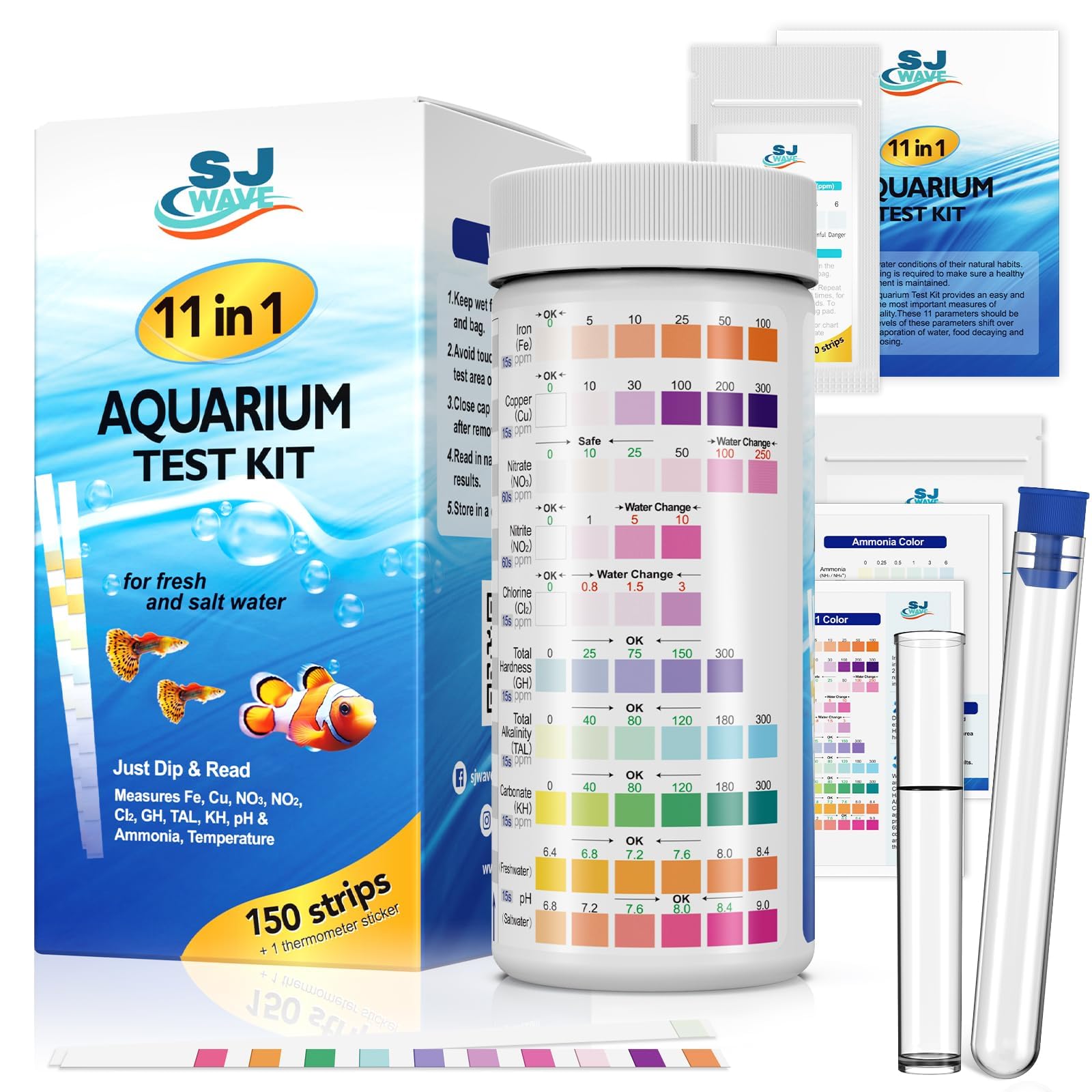
Rating: 4.5 ★ | Price: $$ | Ammonia Test: Yes | Test Method: Dip-and-read strips | Parameters: 11 | Tests Count: 150 strips
Tests 11 parameters including ammonia and copper – more than any other strip kit in this comparison. The dip-and-read operation is quick for routine checks on stable tanks. This kit is best for shrimp keepers who want copper monitoring alongside ammonia, and aquarists who prioritize breadth of parameters over pinpoint precision – if you need laboratory-grade accuracy for cycling, the liquid test kit is a better fit.
Pros
- Covers 11 parameters including ammonia and copper – unmatched strip coverage.
- 150 strips plus eBook and thermometer – a complete starter bundle.
Cons
- The separate ammonia strip requires a 3-minute wait, breaking the rhythm of quick checks.
A comprehensive strip kit for shrimp and planted tank keepers – the widest parameter set in this format, provided you can accept the accuracy tradeoff.
Best for Budget Ammonia Testing
DaToo 8-in-1 Strips

Rating: 4.2 ★ | Price: $ | Ammonia Test: Yes | Test Method: Dip-and-read strips | Parameters: 8 | Tests Count: 100 strips
At a price well under liquid kits, the DaToo 8-in-1 includes ammonia testing that other budget strips skip. The dip-and-read process is simple, making it easy to get a snapshot of eight parameters including pH, nitrite, and nitrate. This kit suits entry-level hobbyists building a first setup on a tight budget, where occasional imprecision in readings won’t derail basic tank maintenance.
Pros
- Includes ammonia testing at the lowest price point in this comparison.
- Simple dip-and-read operation — no timing or mixing required.
Cons
- For anyone tracking a new tank cycle, the ammonia readings can be off — not ideal for delicate fish.
Best for budget-constrained beginners who want basic ammonia visibility and can accept some precision loss.
Best for Shrimp Keepers Budget
SaySummer 9-in-1 Strips

Rating: 4.4 ★ | Price: $$ | Ammonia Test: Yes | Test Method: Dip-and-read strips | Parameters: 9 | Tests Count: 125 strips
Tests ammonia and copper together at a mid-range price, a combination rarely found in this class. This makes the SaySummer strips a natural fit for shrimp keepers who need both copper safety and ammonia tracking without buying separate kits. For general freshwater cycling or high-stakes monitoring, the ammonia pad may not always produce a readable result, which limits its use to routine checks rather than critical decisions.
Pros
- Covers copper and ammonia in a single dip, reducing test time for shrimp tanks
- 125 strips per pack suitable for regular monitoring without frequent reordering
Cons
- Ammonia pad may not register changes in some cases, making it unreliable for cycling verification
Best for shrimp keepers who want a budget-friendly way to keep an eye on copper and ammonia without needing liquid-level precision.
Best for Quick Established Tanks
API 5-in-1 Test Strips

Rating: 4.6 ★ | Price: $ | Ammonia Test: No | Test Method: Dip-and-read strips | Parameters: 5 | Tests Count: 25 strips
Extremely easy to use and includes GH and KH tests not found in the top pick liquid kit. The tradeoff is that ammonia is not tested, so these strips are limited to routine checks on established, cycled tanks where you already monitor ammonia separately. Best for aquarists who want a quick weekly snapshot of pH, nitrite, nitrate, and hardness without the mess of liquid tests, and who already own a separate ammonia kit.
Pros
- Extremely quick dip-and-read operation – no mixing, no waiting.
- Measures general and carbonate hardness (GH/KH) not covered by the leading liquid kit.
Cons
- Does not test for ammonia, making it unsuitable for cycling or detecting early toxicity.
- Color readings can vary between strips compared to liquid test results.
A practical choice for quick weekly checks on established tanks, provided you already have an ammonia test kit.
Best for Budget Ammonia Indicator
AAwipes 8-in-1 Strips

Rating: 4.4 ★ | Price: $ | Ammonia Test: Yes | Test Method: Dip-and-read strips | Parameters: 8 | Tests Count: 150 strips
Covers eight parameters including ammonia at a low cost per test, with enough strips for frequent checks. However, the ammonia test strip may fail to change color, making it unreliable for monitoring during cycling or for sensitive fish. Best suited as a rough indicator in established tanks where ammonia spikes are unexpected.
Pros
- Includes ammonia testing at a budget price point
- 150 strips provide long-lasting value for routine testing
Cons
- Color matching between strips and chart can be inconsistent, especially at intermediate levels.
Best for aquarium keepers who prioritize low cost and frequent testing over pinpoint accuracy across all parameters.
Best for Quick Weekly Checks
Tetra EasyStrips 6-in-1

Rating: 4.6 ★ | Price: $ | Ammonia Test: No | Test Method: Dip-and-read strips | Parameters: 6 | Tests Count: 25 strips
Tetra EasyStrips 6-in-1 provide a fast dip-and-read check for chlorine, pH, and hardness — useful for a quick glance at tap water or an established tank. Accuracy can vary between strips, making this a reference tool rather than a precision instrument.
Pros
- Fast dip-and-read operation for quick water checks.
- Includes chlorine test, a parameter many strip kits omit.
Cons
- No ammonia test — cannot be used for cycling or monitoring sensitive fish.
Suitable for established tank keepers who want a quick chlorine check — for comprehensive monitoring, look to liquid test kits.
Best for Budget Stable Tanks
FUNSWTM 7-in-1 Strips

Rating: 4.5 ★ | Price: $ | Ammonia Test: No | Test Method: Dip-and-read strips | Parameters: 7 | Tests Count: 100 strips
These 7-in-1 strips cover pH, nitrate, nitrite, hardness, chlorine, carbonate, and alkalinity – 100 strips per box keep per-test costs low. No ammonia test is included, so this kit cannot support tank cycling or new setup monitoring. Color readability can be inconsistent between strips. It works well for experienced keepers with stable, cycled tanks who want an affordable quick check.
Pros
- Affordable – 100 strips at a low price per test
- Simple dip-and-read operation – no mixing or timing required
Cons
- Color readability can vary between strips, making some readings ambiguous
A cost-effective option for routine checks on stable tanks, but skip if you need ammonia monitoring or precise readings.
Best for Very Basic Monitoring
HOVIRAN 7-in-1 Strips

Rating: 4.5 ★ | Price: $ | Ammonia Test: No | Test Method: Dip-and-read strips | Parameters: 7 | Tests Count: 125 strips
These strips cover chlorine, hardness, alkalinity, pH, nitrite, and nitrate at a very low price per test. The dip-and-read method is straightforward. However, some strips may not develop color, making results less consistent than liquid kits. Best suited for quick checks on mature, stable aquariums where you don’t need ammonia tracking.
Pros
- 125 strips for a budget-friendly price
- Simple dip-and-read operation
Cons
- No ammonia test — cannot be used for cycling or detecting early warning signs
A reasonable option for experienced aquarists running routine checks on well-established tanks, provided you accept the occasional strip that doesn’t respond.
Best for Quick Reference Checks
DIPSTIK 7-in-1 Strips

Rating: 4.5 ★ | Price: $ | Ammonia Test: No | Test Method: Dip-and-read strips | Parameters: 7 | Tests Count: 100 strips
The DIPSTIK 7-in-1 strips provide a budget-friendly way to check GH, KH, and pH in stable tanks. The missing ammonia test rules out use for cycling or sensitive fish. Color change consistency varies between strips, so treat results as quick reference for seasoned aquarists with separate ammonia monitoring.
Pros
- Good price per strip for routine hardness and pH checks.
- Color pads can be easy to read for most users.
Cons
- No ammonia test — cannot be used for cycling or monitoring the most critical parameter.
Best suited for experienced aquarists who need a quick check on GH, KH, and pH and already have an ammonia test kit.
Best for Basic Water Checks
Umlecoa 7-in-1 Strips

Rating: 4.4 ★ | Price: $ | Ammonia Test: No | Test Method: Dip-and-read strips | Parameters: 7 | Tests Count: 125 strips
This value pack provides 125 strips plus a thermometer and test tube, making it a budget-friendly option for routine checks on established freshwater tanks. The missing ammonia test, however, rules it out for cycling or sensitive setups, and color pads can bleed into each other, which may complicate parameter matching.
Pros
- 125 test strips with thermometer and test tube included
- Simple dip-and-read method for fast results
Cons
- No ammonia test and color pads may bleed, reducing readability
Best suited for hobbyists with stable, mature tanks who want a low-cost way to track non-ammonia parameters and can accept occasional color bleeding.
Best for Frequent Stable Tanks
JNW Direct 9-in-1 Strips

Rating: 4.3 ★ | Price: $ | Ammonia Test: No | Test Method: Dip-and-read strips | Parameters: 9 | Tests Count: 100 strips
The JNW Direct strips provide a low-cost way to check nine water parameters using a simple dip-and-read method and an easy color chart. They do not test for ammonia, limiting their use to mature tanks. The pads may bleed, which can affect reading accuracy, but the price per strip is attractive for routine monitoring.
Pros
- 100 test strips at a very low price for frequent monitoring.
- Color chart is easy to read with clear differentiation between parameters.
Cons
- Omits ammonia testing entirely, so not suitable for tanks in cycling or those requiring early warning.
Best for experienced hobbyists with stable, ammonia-free tanks who want a quick multi-parameter check at a low cost per test.
Best for Planted Tank Iron
Wutest 9-in-1 Strips

Rating: 4.5 ★ | Price: $$ | Ammonia Test: No | Test Method: Dip-and-read strips | Parameters: 9 | Tests Count: 150 strips
Tests copper and iron – a rare combination useful for planted tank enthusiasts and shrimp keepers. The 150-strip count provides good value for routine checks on these specific parameters. This kit suits those who already have a separate ammonia monitoring method and need a convenient way to track trace metals.
Pros
- Tests copper and iron, useful for shrimp and planted tanks
- Large 150-strip count
Cons
- No ammonia test – not suitable for tank cycling or as a sole monitoring kit
Best for planted tank and shrimp keepers who need a cost-effective strip solution for iron and copper, and already have ammonia testing covered.
Best for Quick Checks Iron
Aqueon 7-in-1 Strips
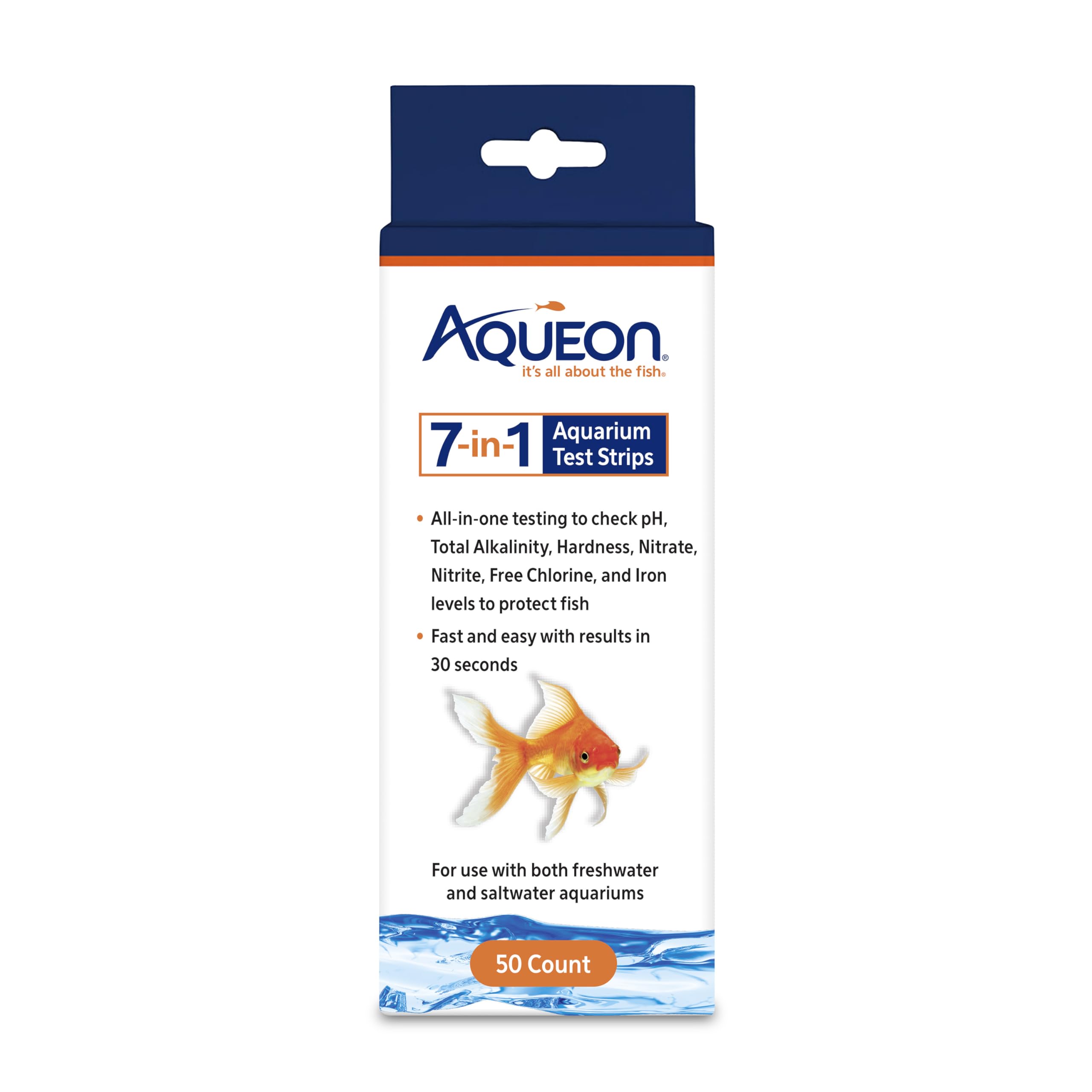
Rating: 4.3 ★ | Price: $ | Ammonia Test: No | Test Method: Dip-and-read strips | Parameters: 7 | Tests Count: 50 strips
These Aqueon strips include an iron test, a useful extra for planted freshwater tanks, and come from a brand many aquarists already trust. But they lack ammonia entirely and some strips may not change color, making them unsuitable for cycling or comprehensive monitoring. They work best as a quick check in stable, established tanks where iron levels matter and ammonia is not a concern.
Pros
- Tests iron, a useful parameter for planted freshwater tanks
- Backed by Aqueon’s reputation among aquarium enthusiasts
Cons
- Some strips may fail to change color, reducing confidence in results
Best for Aqueon loyalists with established planted tanks who want iron readings and don’t need ammonia monitoring.
Best for Curious Hobbyists Sulfate
A QUILA 9-in-1 Strips
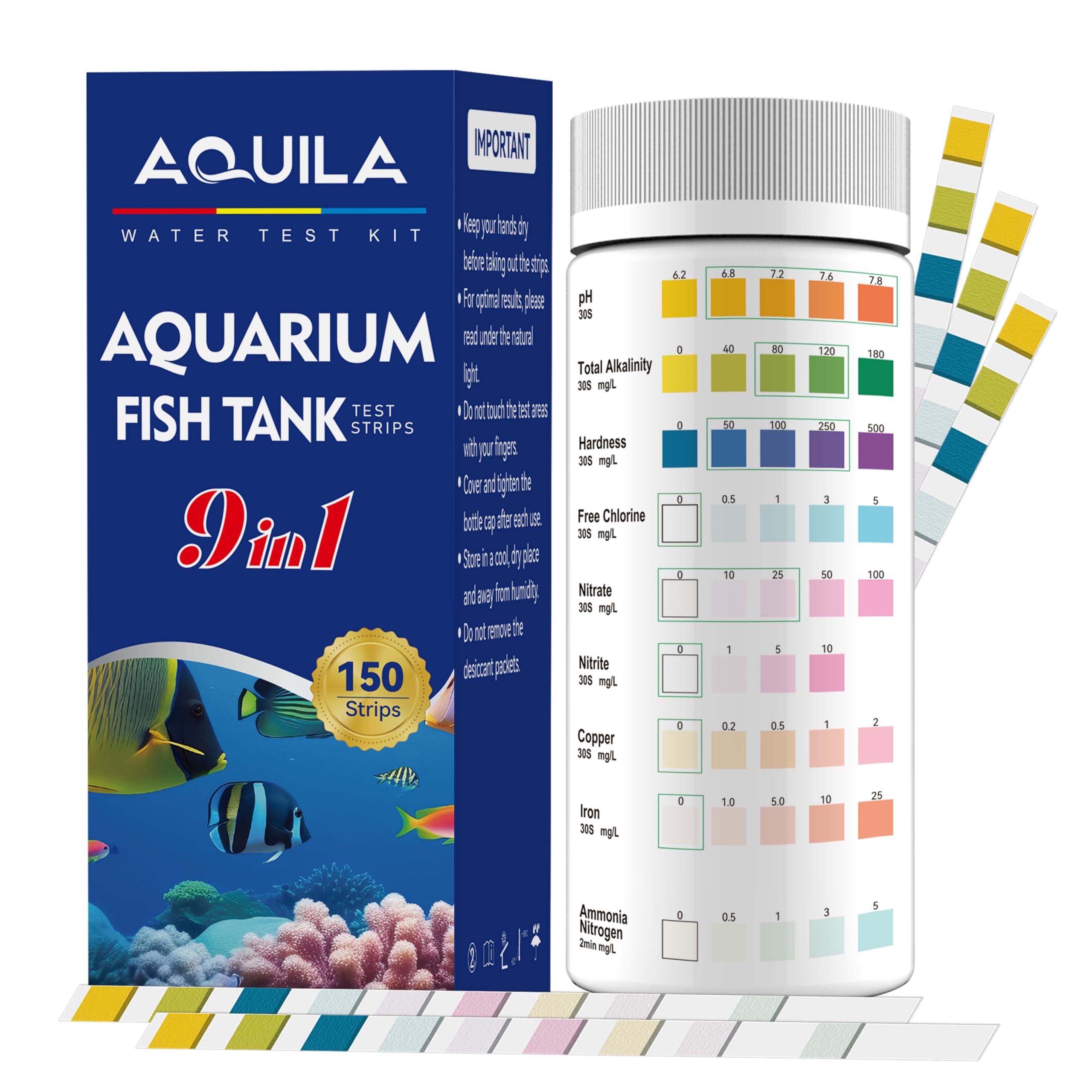
Rating: 4.3 ★ | Price: $ | Ammonia Test: Yes | Test Method: Dip-and-read strips | Parameters: 9 | Tests Count: 150 strips
A QUILA’s 9-in-1 strips test sulfate – a parameter most kits skip – plus ammonia and copper, making them a low-cost option for hobbyists exploring unusual water chemistry. However, limited feedback and occasional pH inaccuracies suggest these are more for curiosity than daily monitoring.
Pros
- Tests sulfate, a rare parameter, giving curious hobbyists a chance to check a metric most kits ignore.
- 150 strips per bottle at a budget price – enough for extensive testing without frequent repurchases.
Cons
- Chemical odor can be noticeable, and pH readings may be off – best verified with a liquid kit for critical decisions.
Best for hobbyists exploring unusual parameters like sulfate, but not a reliable stand-in for a liquid master test kit.
How to Choose
The biggest decision when buying a test kit is whether you need to track ammonia – if you’re cycling a new tank or keeping sensitive fish, a kit without ammonia is useless.
Ammonia Testing – Non-Negotiable for New Tanks
Ammonia is the most toxic nitrogen compound in aquarium water. During cycling and after adding fish, ammonia spikes must be caught early. Liquid test kits use a chemical reaction that reliably detects even low levels, while strips often omit ammonia entirely because the reagent is difficult to stabilize on a pad.
If you are cycling a new tank or keep sensitive species (discus, wild-caught fish), choose a kit that explicitly includes ammonia. Without it, you are flying blind until nitrate builds up – which can be too late.
Test Method – Liquid Drops vs. Dip Strips
Liquid drop tests measure water parameters by mixing reagent with a sample and comparing the resulting color to a chart. This process takes 2–5 minutes per parameter but yields repeatable, precise readings – especially for ammonia and pH. The chemical reaction is controlled and not affected by paper quality or humidity.
Dip strips are faster: one strip, one dip, and a 60-second wait. However, color matching is subjective, and pads can bleed or fail to change color if stored incorrectly. For quick weekly checks in a stable tank, strips suffice. For critical decisions, cross-check with a liquid test.
Number of Parameters – More Isn’t Always Better
Test kits measure anywhere from 5 to 11 parameters. The essential ones for freshwater are pH, ammonia, nitrite, and nitrate. Adding GH, KH, copper, or iron is helpful only if your setup demands it – for example, shrimp tanks need GH/KH and copper monitoring, while planted tanks benefit from iron tests.
A kit with many parameters may include tests you never use, raising the per-test cost. Focus on the parameters your tank actually needs rather than the highest number on the box.
Number of Tests – Cost Per Test Adds Up
Liquid test kits often provide 300–800 tests per bottle, making them significantly cheaper per test than strips. The API Freshwater Master Test Kit, for example, delivers 800 tests for one price. Strips typically offer 25–150 tests and must be replaced more frequently.
If you test regularly – daily during cycling, weekly after that – a liquid kit will last months longer than a box of strips. For occasional users, strips may be more economical despite higher per-test cost because they don’t expire as quickly after opening.
FAQ
Why doesn’t my test strip kit test for ammonia?
Ammonia is chemically unstable on paper pads; manufacturers often skip it to avoid false negatives and complaints. Liquid test kits handle ammonia detection reliably because the reaction happens in a controlled solution. If you need ammonia monitoring, choose a liquid kit or a strip kit that explicitly includes an ammonia pad.
Are liquid aquarium test kits more accurate than strips?
Yes, liquid kits are consistently more accurate because they use volumetric chemical reactions rather than color-matching on a pad. Strips are prone to reading errors due to lighting, pad bleeding, or improper storage. For cycling, dosing medications, or diagnosing fish stress, use a liquid kit. Strips are fine for routine quick checks.
What parameters do I really need to test in a freshwater aquarium?
At a minimum, you need pH, ammonia, nitrite, and nitrate. These four cover the nitrogen cycle and water stability. For shrimp or soft-water fish, add GH (general hardness) and KH (carbonate hardness). Copper testing is useful if you use medications or keep sensitive invertebrates. Ignore extra parameters you don’t have a reason to track.
How often should I test my aquarium water with a test kit?
During cycling, test daily for ammonia and nitrite. In an established tank, test weekly for nitrates and pH, and after any water change or new fish addition. If you see unusual fish behavior, test immediately. Over-testing is harmless but wasteful, under-testing can let problems develop unnoticed.