This post contains affiliate links. We may earn a small commission when you buy through our links — at no extra cost to you.
A thriving planted shrimp tank seems simple: pour in soil, add plants, and watch it grow. But many hobbyists find themselves staring at a brown, murky tank for a week, then losing shrimp to ammonia spikes they didn’t expect.
The real issue is that most “active” soils deliver nutrients but also release compounds that stress sensitive livestock. Inert alternatives skip that risk, but they lack built-in nutrition and often need heavy rinsing to clear the dust. The key is matching the substrate to your setup and your willingness to manage a cycling period.
This guide cuts through the confusing claims to highlight substrates that keep shrimp safe, minimize cloudiness, and support robust plant growth — whether you’re setting up a nano tank or a high-tech aquascape.
Top Picks
Best for Planted Shrimp Tanks
Fluval Plant & Shrimp Stratum
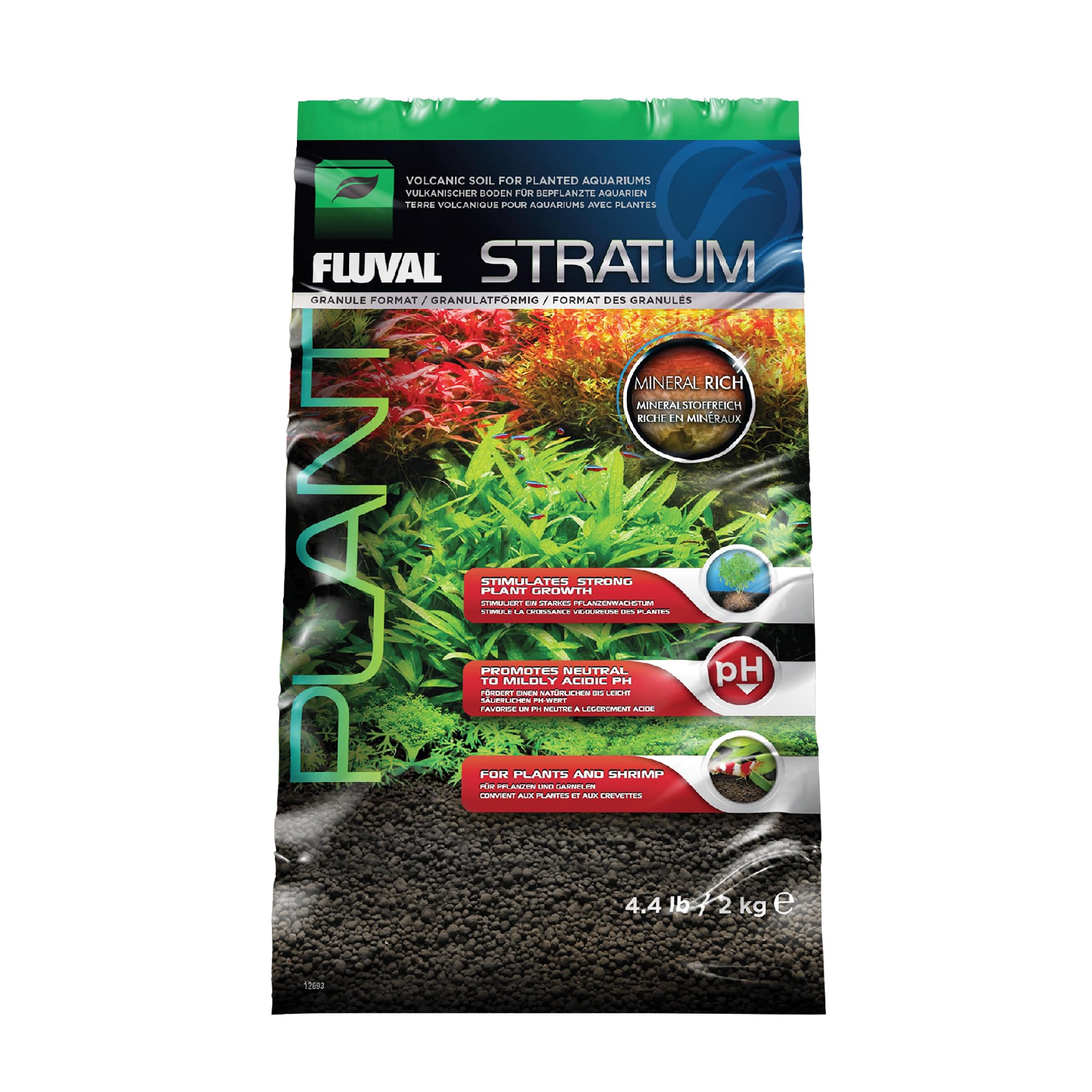
Rating: 4.7 ★ | Price: Mid-Range | Nutrient Content: Active soil | Grain Size & Texture: 2–5 mm porous granules | pH Buffering Effect: Neutral to slightly acidic | Rinsing Requirements: Not required, cloudiness possible | Volume-to-Weight Ratio: 4.4 lbs (bag)
Fluval Stratum supports strong root growth and lush foliage in planted shrimp tanks. The porous granules encourage beneficial bacteria, helping cycle the tank quickly. That same lightweight structure can cloud the water for a few days after setup—running a fine mechanical filter clears it. Some plants may drift before rooting, so anchors or denser planting techniques help.
This substrate suits shrimp keepers and planted tank enthusiasts who prioritize nutrient availability and neutral pH buffering over instant clarity. It works well for Caridina and Neocaridina shrimp, offering crevices for newborns. The initial cloudiness and lightweight granules are manageable tradeoffs for hobbyists willing to cycle with filtration and secure plants.
Pros
- Supports strong root development and full plant growth
- Safe for shrimp, including newborns, thanks to porous structure
- Granules hold shape and buffering capacity over months of use
Cons
- Water may appear cloudy for several days after initial fill, requiring fine mechanical filtration
- Lightweight granules can cause plants to float until roots establish; anchors or dense planting may help
For planted shrimp tanks where pH stability and root growth matter more than instant clarity, Fluval Stratum delivers consistent results.
Best for Beginner Tanks
CaribSea Eco-Complete
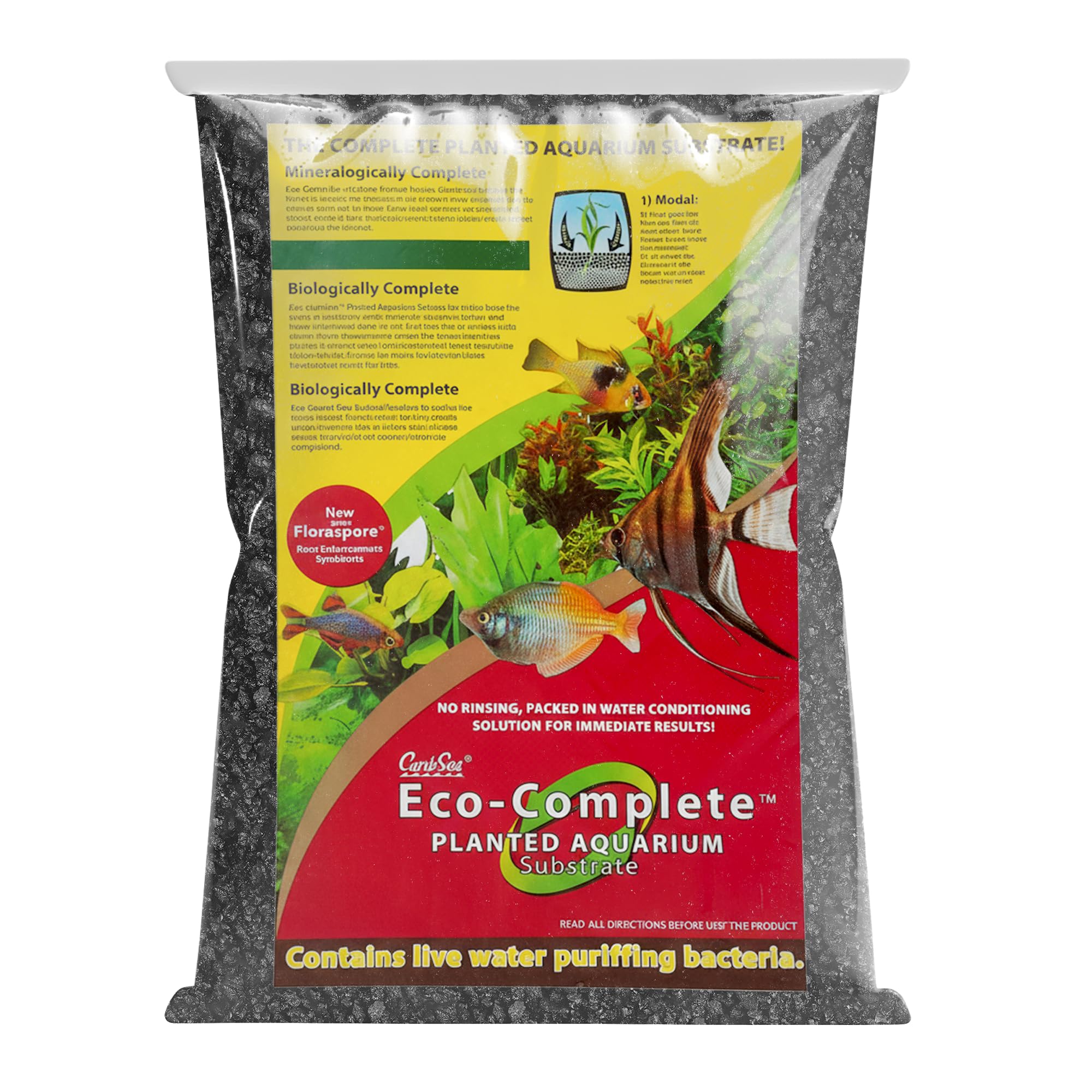
Rating: 4.6 ★ | Price: Mid-Range | Nutrient Content: Nutrient-rich (liquid included) | pH Buffering Effect: Neutral (inert with added nutrients) | Rinsing Requirements: Not required, cloudiness possible | Volume-to-Weight Ratio: 20 lbs (bag)
CaribSea Eco-Complete takes a different path from the shrimp-safe top pick: it focuses on no-rinse convenience and immediate biological support. The 20-pound bag includes a liquid packed with beneficial bacteria and trace elements, so you add it straight to the tank. Plants get a nutrient-rich rooting medium from day one, supporting fast growth and strong root development.
This substrate suits beginners and budget-conscious hobbyists setting up medium to large planted tanks where lush plant growth matters more than a true black look or shrimp-specific pH control. It’s not intended for delicate shrimp setups that need precise buffering. After setup, expect some cloudiness from the liquid that can take a few days to subside, and the color may shift to a brownish hue over time.
Pros
- Promotes strong plant growth and root development
- No rinsing needed for most setups, simplifying installation
- Generous 20-pound coverage offers great value for larger tanks
Cons
- Initial cloudiness from the included liquid may take several days to clear
- Color can appear brownish rather than true black over time
Skip this one for shrimp tanks where pH stability is critical. For planted setups prioritizing quick cycling and plant growth on a budget, it delivers strong results without the prep work.
Best for Long-Term Tanks
Seachem Flourite Black

Rating: 4.6 ★ | Price: Mid-Range | Nutrient Content: Inert (no nutrients) | Grain Size & Texture: Porous clay gravel | pH Buffering Effect: Does not alter pH | Rinsing Requirements: Required, dusty | Volume-to-Weight Ratio: 15.4 lbs (bag)
Seachem Flourite Black is an inert clay gravel that gives planted tanks a permanent base without altering pH or releasing ammonia — a safe choice for shrimp and sensitive species. It never breaks down, so you never replace it, and it’s compatible with under-gravel filtration. The trade-off: it provides no plant nutrients, so root tabs are essential, and it requires extensive rinsing to tame the dust; cloudiness can still linger for days. This is the substrate for aquarists who value long-term stability and don’t mind the upfront labor and separate fertilization.
Pros
- Plants establish strong root systems and grow well without the substrate breaking down.
- Keeps pH and water chemistry unchanged, safe for shrimp and other sensitive livestock.
- Deep black color looks natural and makes plants and fish stand out.
Cons
- Needs thorough rinsing to remove dust — not a pour-and-go substrate.
- Water can remain cloudy for days even after careful washing.
For a permanent, shrimp-safe planted tank that doesn’t meddle with water chemistry, this gravel is a solid choice, provided you have the time to rinse it thoroughly and supplement with root tabs.
Best for Budget Tanks
LANDEN Aqua Soil

Rating: 4.6 ★ | Price: Mid-Range | Nutrient Content: Active soil | Grain Size & Texture: 3–5 mm granules | pH Buffering Effect: Buffers to 6.0–6.5 (mildly acidic) | Rinsing Requirements: Rinse suggested | Volume-to-Weight Ratio: 10 lbs (5L)
LANDEN Aqua Soil delivers the acidity buffering and nutrient structure of premium planted substrates at a lower cost per liter, making it a practical choice for budget-conscious aquascapers. The 3–5 mm granules buffer water to a soft pH range of 6.0–6.5, supporting plant root development and shrimp activity without the premium price tag.
A moderate ammonia spike during the initial two weeks requires diligent water changes and testing — this substrate suits patient keepers building a planted shrimp tank from scratch, not those seeking an instant drop-and-go setup. Rinsing the gravel before use clears the occasional dust and debris, leaving clean water once the tank completes its cycle.
Pros
- Cost-effective volume for budget setups, delivering active soil benefits at a lower price per liter.
- Plants establish well and shrimp inhabit the substrate actively, with no harmful leaching.
- Water clears nicely after an initial settling period, with minimal lingering cloudiness.
Cons
- Bag may contain occasional bits of twigs and dust that require rinsing before use.
- Moderate ammonia release during the first weeks may require diligent water changes and testing to keep livestock safe.
For planted shrimp tanks on a budget, the LANDEN substrate hits the sweet spot of cost and performance — just be ready for a few weeks of extra water changes.
Best for High-Tech Aquascapes
ADA Amazonia Ver 2

Rating: 4.7 ★ | Price: Premium | Nutrient Content: High-nutrient active soil | Grain Size & Texture: Granular | pH Buffering Effect: Buffers to 5.5–6.5 (acidic) | Rinsing Requirements: Not required; ammonia spike | Volume-to-Weight Ratio: 9L (≈15.4 lbs)
ADA Amazonia Ver 2 pushes plant growth to the limit by buffering pH to 5.5–6.5 and releasing a concentrated ammonia charge that fuels demanding carpet plants and colorful stems in CO2-injected tanks. The trade-off is careful preparation: that initial ammonia load requires weeks of cycling before livestock can be added, and the persistently acidic water makes it incompatible with Neocaridina shrimp, which need near-neutral pH. Once cycled, the soil delivers crystal-clear water and a steady nutrient supply that curbs extra fertilization. This substrate is built for dedicated aquascapers who value maximum plant performance over shrimp compatibility and are equipped to manage water chemistry.
Pros
- Drives exceptional growth and vibrant color in difficult carpet and stem plants.
- Produces crystal-clear water after cycling, with a natural appearance.
- Sustains nutrient release over months, reducing the need for liquid fertilizers.
Cons
- Premium price makes it costly to fill medium and large planted tanks.
The go-to soil for CO2-injected aquascapes where maximum plant growth is the priority, and the inability to support Neocaridina shrimp is an accepted trade-off.
Best for Quick-Cycle Tanks
Aqua Natural Bio Kit

Rating: 4.7 ★ | Price: Budget | Nutrient Content: Live bacteria kit, low nutrients | Grain Size & Texture: 2–4 mm grains | pH Buffering Effect: Neutral (no buffering) | Rinsing Requirements: Rinse dry substrate recommended | Volume-to-Weight Ratio: 15 lbs (kit)
This 15-pound kit pairs bio-activated substrate with dry gravel, delivering live bacteria that accelerate the nitrogen cycle and produce clear water quickly. It targets new low-tech planted and shrimp tanks where instant cycling is valued over heavy nutrient content. The dry portion can carry dust that rinsing removes; rooted plants may need root tabs for robust growth. The natural riverbed look and budget-friendly price make it a practical choice for setup-focused hobbyists.
Pros
- Speeds up nitrogen cycle for faster, safer livestock introduction.
- Natural riverbed look that settles into a clean, tidy appearance.
- Budget-friendly 15-pound kit offers a complete substrate solution.
Cons
- Lower nutrient load than active soils; heavy plant growth may require supplemental root tabs.
For budget-minded aquarists starting a low-tech planted or shrimp tank, this kit delivers a quick cycle and natural look — just factor in additional fertilization for nutrient-hungry species.
Best for Carpet Plants
Fluval Bio Stratum
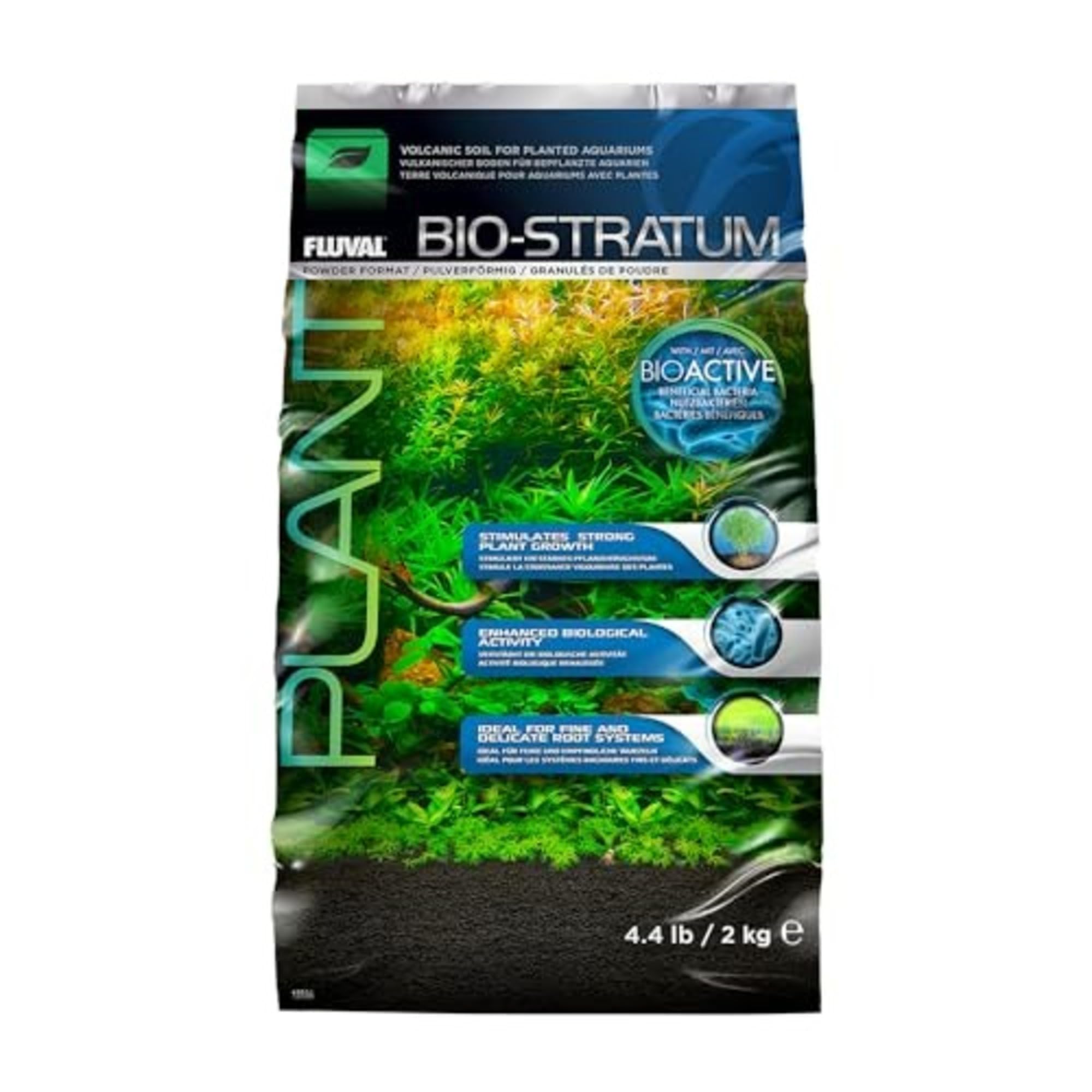
Rating: 4.7 ★ | Price: Mid-Range | Nutrient Content: Active soil | Grain Size & Texture: 1 mm powder granules | Rinsing Requirements: Not required, cloudiness possible | Volume-to-Weight Ratio: 4.4 lbs (bag)
The powder-like grain structure supports delicate root penetration that chunkier soils can’t match, and it cycles quickly with no reported ammonia spikes. For shrimp keepers eyeing a carpet, however, the small bag size means multiple purchases for anything beyond nano tanks, making it costlier per volume than the standard Fluval Stratum. Cloudiness may still appear post-setup, though it clears with patience.
Pros
- Fine granules allow carpet plants to root deeply without compacting.
- Works reliably in terrariums and paludariums beyond submerged use.
Cons
- Water cloudiness can occur for days after filling, even when filling gently.
Right for a nano planted tank or terrarium where you’re cultivating a fine carpet and need a substrate that won’t smother roots. For general community shrimp tanks, the standard Fluval Stratum offers better coverage and value.
Best for Nano Tanks
Aqueon Plant & Shrimp

Rating: 4.6 ★ | Price: Mid-Range | Nutrient Content: Inert (no nutrients) | pH Buffering Effect: Neutral (no buffering) | Rinsing Requirements: Not required | Volume-to-Weight Ratio: 5 lbs (bag)
Clay-based granules provide a dark, stable bed that anchors plants and stays pH-neutral, ideal for 5- to 10-gallon shrimp tanks. The bag covers only a small footprint, and the substrate is inert — root tabs are needed for plant nutrition. It delivers easy maintenance where size constraints outweigh nutrient demands.
Pros
- Smooth, spherical granules are safe for shrimp and hold plant roots securely.
- Debris sits on the surface for simple vacuuming, even in small aquariums.
Cons
- One 5 lb bag covers just a 5–10 gallon footprint; larger tanks may require multiple bags.
A pragmatic choice for a desktop shrimp tank or small planted setup where the 5-pound bag is enough and you’re willing to add root tabs.
Best for Bottom Dwellers
Seachem Flourite Sand
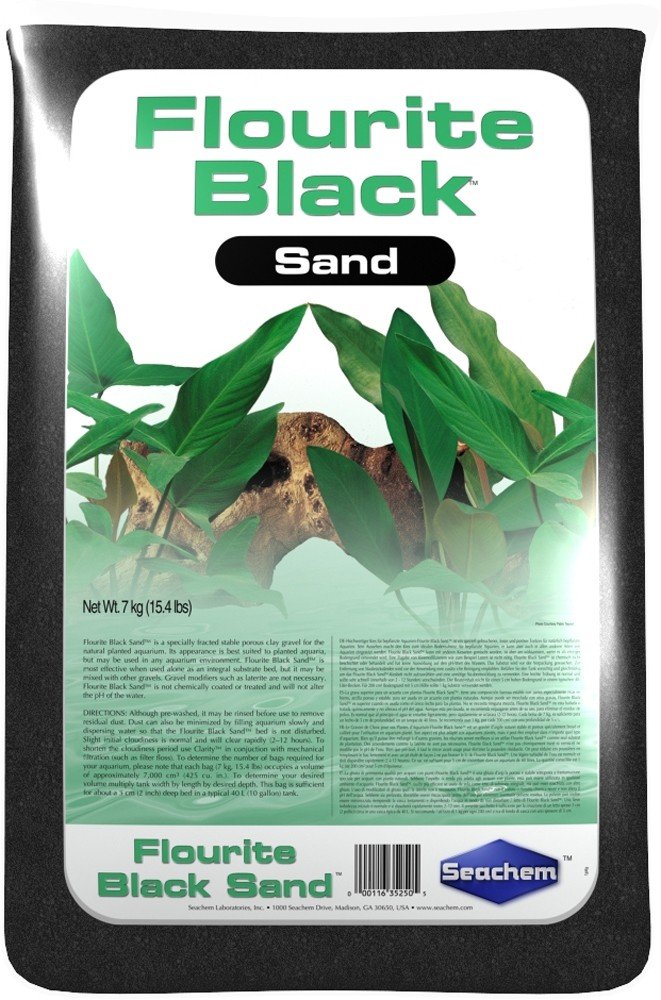
Rating: 4.5 ★ | Price: Mid-Range | Nutrient Content: Inert (no nutrients) | Grain Size & Texture: Fine sand (non-rounded) | pH Buffering Effect: Does not alter pH | Rinsing Requirements: Required, dusty | Volume-to-Weight Ratio: 15.4 lbs (bag)
The fine black sand provides a safe, soft substrate for bottom-dwelling fish and a striking backdrop for plants. It remains inert over time, never altering pH. However, it arrives with heavy dust, demanding multiple rinses; water may stay cloudy for a week. Plants will need root tabs, since the substrate does not supply nutrients.
Pros
- Beautiful black sand that enhances plant and fish colors
- Soft texture safe for bottom-dwelling fish like corydoras
Cons
- Heavy dust requires multiple rinses to avoid extended water cloudiness
Best suited for aquarists who want a long-lasting, soft black sand and are prepared for thorough rinsing.
How to Choose
The single most important decision is whether you need an active soil that releases ammonia for plant growth or an inert substrate that stays chemically stable from day one.
Active vs. Inert Substrate
Active soils contain organic matter that gradually breaks down, releasing ammonia and then nitrates that fuel lush plant growth. The hidden trade-off is that the initial ammonia spike can reach levels lethal to shrimp unless the tank is fully cycled (often 2–4 weeks).
Inert substrates like baked clay or sand won’t cycle at all and leave water chemistry untouched. They provide no nutrients, so you must add root tabs or liquid fertilizers for healthy plants. The payoff is zero ammonia stress and the ability to stock shrimp immediately if the filter is mature.
Grain Size & Texture
Fine granules (1 mm or less) allow delicate root penetration for carpet plants like Monte Carlo, but they can compact over time and create dead zones if layered too deep. Larger 2–5 mm grains are easier to plant in and vacuum, though some lightweight versions may let plants drift without anchors.
Sharp rough particles can damage shrimp antennae and legs, so rounded or smooth grains are essential for shrimp tanks.
pH Buffering Effect
Many active soils are designed to pull pH down to 5.5–6.5, which favors soft-water plants and Caridina shrimp but can stress Neocaridina cherry shrimp if pH dips below 6.0. The buffering fades over 12–18 months, after which pH drifts back toward tap water values.
Inert substrates leave pH entirely to your source water. This gives you control but means you must manage pH externally if your tap water is too alkaline for your chosen plants or shrimp.
Rinsing and Cloudiness
Inert clay gravels like Seachem Flourite arrive coated in fine dust; skipping an extensive rinse — sometimes 5–10 washes — guarantees days of murky water. Active soils may not need rinsing, but they still shed fines when first filled. Pouring water onto a plate or plastic bag greatly reduces cloudiness regardless of substrate type.
Volume-to-Weight Ratio
Bags are sold by weight (pounds) or volume (liters). A 10‑pound bag of lightweight soil may fill less tank floor than a denser inert gravel of the same weight. Before buying, calculate how many inches of substrate depth you need and compare the coverage each bag provides. Under‑estimating leads to thin spots where roots can’t anchor and shrimp lose hiding places.
FAQ
Why does my aquarium substrate turn the water cloudy even after rinsing?
Active soils contain fine dust and organic fines that become suspended during filling. Even with rinsing, residual dust may remain. Pour water slowly onto a plate or plastic bag to minimize disturbance. Mechanical filtration and patience — usually 2–3 days — will clear it.
How long does it take for ammonia levels to drop after adding active soil?
It typically takes 2–4 weeks for the nitrogen cycle to process the initial ammonia release from active soil. During that period, daily water changes of 50% are needed to keep levels below 0.5 ppm for shrimp safety. Use a test kit to confirm zero ammonia and nitrite before adding any livestock.
Can I use Fluval Stratum with cherry shrimp?
Yes, Fluval Plant and Shrimp Stratum is safe for Neocaridina cherry shrimp because it buffers pH to neutral–slightly acidic (6.5–7.0), within their comfort range. The granules are smooth and won’t cut shrimp, and many breeders report thriving colonies with this substrate.
Is ADA Amazonia soil safe for shrimp or does it lower pH too much?
ADA Amazonia Ver 2 heavily buffers pH down to 5.5–6.0, which is too low for cherry shrimp (Neocaridina) and can cause slow breeding or death. It suits Caridina shrimp and soft‑water fish. If you keep red cherry shrimp, choose a substrate with a milder buffer like Fluval Stratum or an inert option.