This post contains affiliate links. We may earn a small commission when you buy through our links — at no extra cost to you.
Many substrates marketed as “shrimp-safe” actually raise pH or come with “no rinse” promises that cloud your tank for days. The real challenge isn’t finding a safe base—it’s matching the substrate to how you keep your Neocaridina.
Buffering soils lower pH to the acidic range shrimp thrive in, but they often release ammonia during the first weeks. Inert sands are clean and stable, yet offer no nutrients for live plants. Neither choice is wrong—but each demands a different setup routine.
This guide cuts through the marketing to help you pick the right layer for your shrimp colony, whether you’re starting a planted aquascape or a simple bare-bottom tank.
Top Picks
Best for Planted Shrimp Tanks
Fluval Plant & Shrimp Stratum
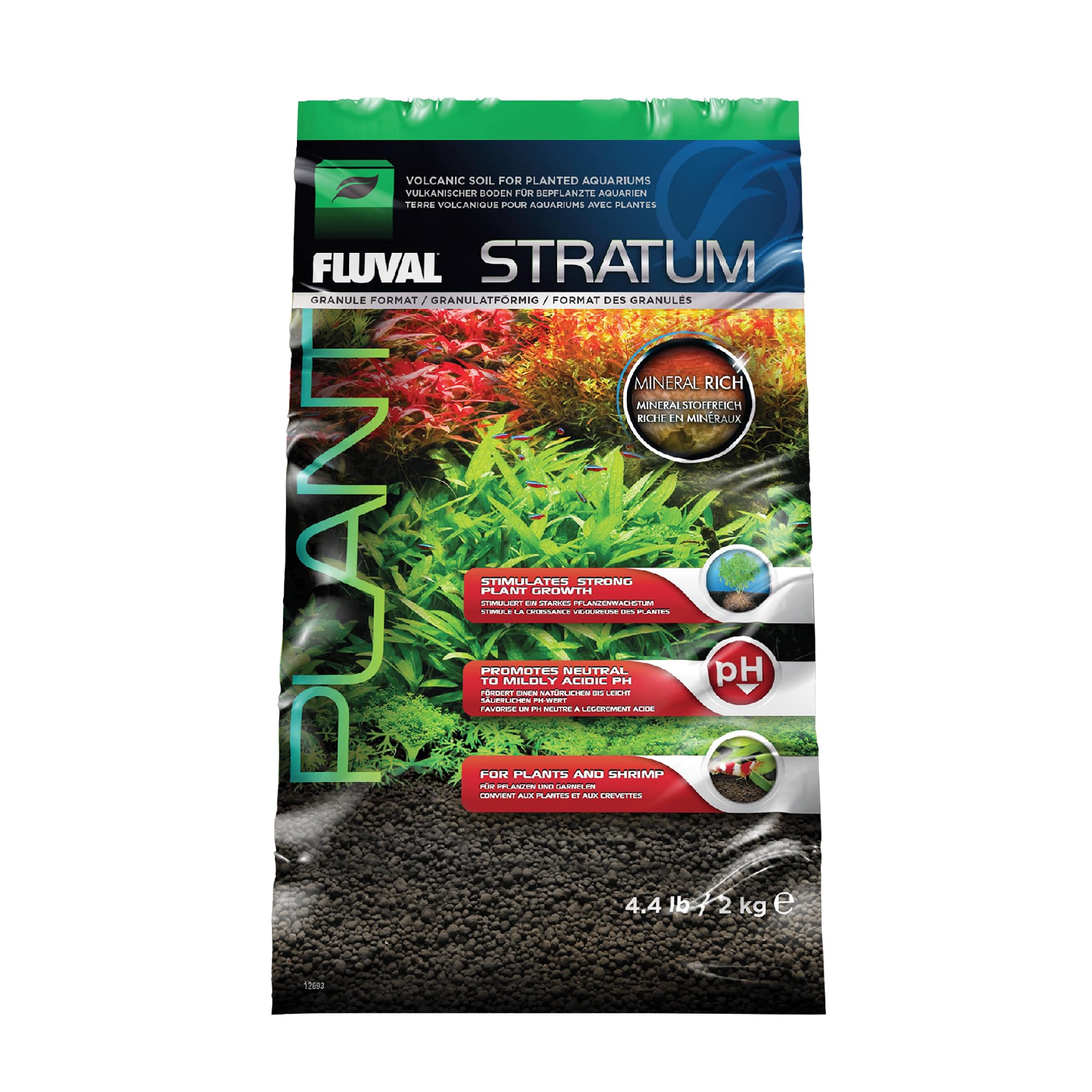
Rating: 4.7 ★ | Price: $$ | Buffering: Lowers pH to slightly acidic | Particle Size: 1-3mm fine granules | Cleanliness: Cloudy if filled too fast | Nutrients vs. Inert: Nutrient-rich clay | Bacteria/Ammonia: Mild ammonia spike
The Fluval Stratum is a porous volcanic soil that steadily buffers water toward a slightly acidic range while fueling dense root growth. Its fine, rounded granules let Neocaridina shrimp forage without leg damage and create countless micro-crevices where fry disappear from view — boosting survival rates in community setups. Most stem plants and crypts anchor quickly, drawing nutrients directly from the substrate and reducing reliance on liquid fertilizers. The soil arrives dry and resists sudden disintegration; it holds its granular structure over months, only softening gradually, which keeps long-term water clarity better than many competing aquasoils.
This substrate fits shrimp keepers who value stable, soft-water chemistry over a cloud-free first fill. When water is poured gently over a bowl, the initial haze dissipates within hours rather than days, but it isn’t for anyone who demands instant crystal clarity. In return, you get a long-lasting bed that suppresses alkaline spikes and gives shrimplets secure cover from day one. Tanks with persistently hard tap water or those needing an inert, zero-maintenance floor will be better served by a simple sand.
Pros
- Promotes lush plant growth and healthy shrimp foraging without extra supplements.
- Fine granules create safe hiding spots for shrimplets, boosting survival rates.
- Buffers pH to neutral/slightly acidic, ideal for Neocaridina, with proven long-term consistency.
Cons
- Light granules may shift after planting, requiring stems to be anchored or weighted until roots establish.
For shrimp breeders and planted-tank enthusiasts who value stable water chemistry over initial clarity, Fluval Stratum delivers consistent results with minimal tinkering.
Best for Minimalist Nano Tanks
Aqua Natural Sugar White Sand

Rating: 4.7 ★ | Price: $ | Buffering: Inert | Particle Size: 0.5-1mm fine sand | Cleanliness: Low dust, pre-washed | Nutrients vs. Inert: Inert
Unlike buffering soils that alter water chemistry, this inert sand leaves pH stable — a clear advantage for Neocaridina keepers wanting predictable parameters. The triple-washed grains are dust-free and soft on shrimp and bottom feeders, and the fine 0.5-1mm size allows easy foraging. Note that the sand appears off-white/beige when wet, not the pure white some expect. Best suited for minimalist nano tanks with low-light plants or artificial decor, where its bright aesthetic enhances the tank without demanding deep root nutrients.
Pros
- Dust-free and clean — minimal clouding during setup, saving prep time.
- Bright white color creates a clean, open look that lights up the tank.
- Soft texture protects delicate barbels of bottom-dwellers like corydoras.
Cons
- For heavy planted tanks, the shallow depth requires root tabs or a capped layer.
Best for shrimp keepers on a budget who want stable water parameters and a bright aesthetic, as long as pure white isn’t critical.
Best for Large Planted Tanks
CaribSea Eco-Complete
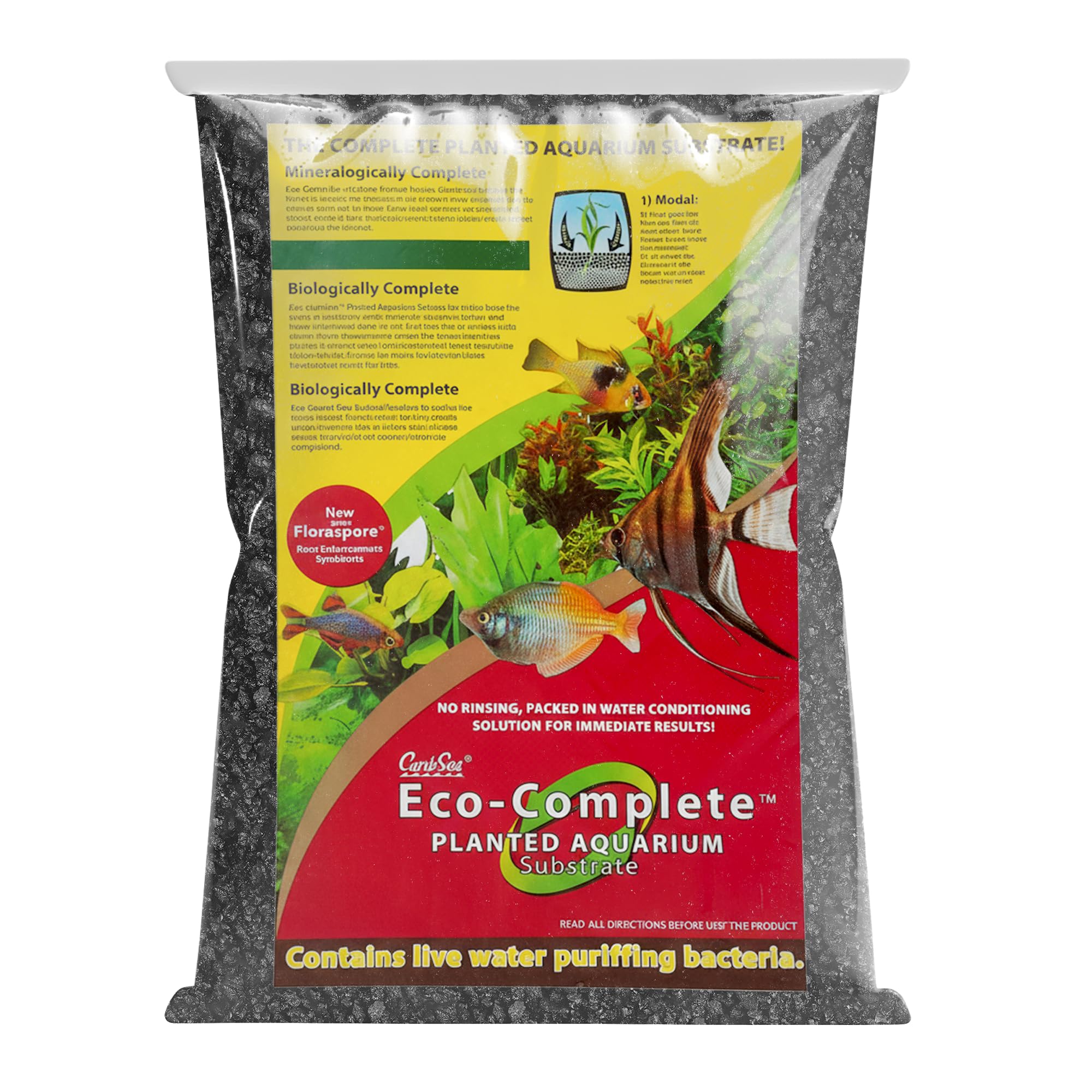
Rating: 4.6 ★ | Price: $$ | Buffering: Inert with trace elements | Particle Size: 2-5mm medium gravel | Cleanliness: Cloudy if not rinsed well | Nutrients vs. Inert: Nutrient-rich clay | Bacteria/Ammonia: Beneficial bacteria included
Unlike the top pick, this inert clay gravel doesn’t lower pH or soften water — it relies on embedded nutrients and the included bacteria liquid to support heavy root feeders. For shrimp keepers running a large planted tank (20+ gallons) who already use remineralized RO water or keep harder-water Neocaridina, this substrate works well as a cost-effective base. The tradeoff: you’ll need root tabs for demanding plants, and the medium gravel size is too coarse for shrimp-only setups without plants. Cloudiness can appear if the gravel isn’t rinsed thoroughly before use, and the black color may shift to brown over time — both manageable with preparation and expectations.
Pros
- Supports strong root development for stem plants and heavy feeders
- Large 20-lb bag covers deep planted tanks affordably
- Liquid contains dormant nitrifying bacteria to help cycle startup
Cons
- Requires thorough rinsing to avoid cloudy water that can last days
- Black color may fade to brown after months underwater
A solid match for planted tanks with Neocaridina shrimp where you want a nutrient-rich inert base without buffering — just rinse well and accept that color may shift over time.
Best for Fast Cycling Tanks
Fluval Bio Stratum
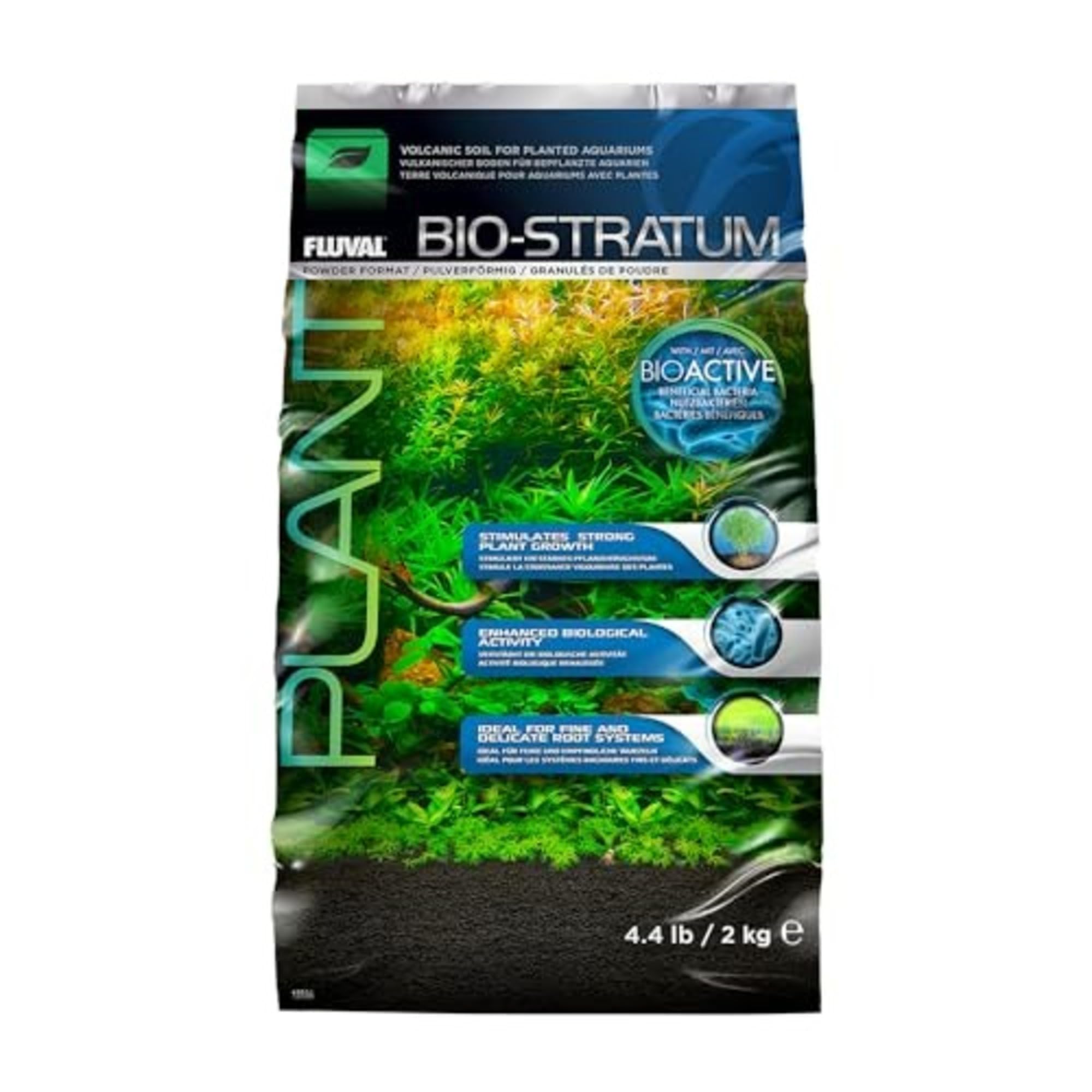
Rating: 4.7 ★ | Price: $$$ | Buffering: Lowers pH slightly | Particle Size: 1mm fine powder | Cleanliness: Initial cloudiness common | Nutrients vs. Inert: Volcanic soil nutrients | Bacteria/Ammonia: Dormant nitrifying bacteria
This fine-grain volcanic soil speeds up tank startup by introducing dormant nitrifying bacteria, allowing shrimp keepers to add Neocaridina sooner than with standard inert substrates. Compared to the top pick, it offers faster cycling but at a premium price per pound, and the fine powder can create stubborn cloudiness unless filled very slowly. This substrate suits those who prioritize a quicker cycle and have the budget for it, while being prepared for the temporary dust that clears in a few days.
Pros
- Dormant nitrifying bacteria shorten cycling time for new tanks.
- Mineral-rich volcanic soil supports healthy plant development and coloration.
- Fine 1mm granules are gentle for shrimp foraging and hold plants well.
Cons
- Premium price per pound compared to standard Stratum options.
For shrimp keepers who want to fast-track cycling and don’t mind the extra cost and careful setup, this volcanic soil delivers. Otherwise, the top pick is a more balanced option.
Best for High-End Planted Aquascapes
LANDEN Aqua Soil

Rating: 4.6 ★ | Price: $$$ | Buffering: Lowers pH to 6.0–6.5 | Particle Size: 3-5mm medium granules | Cleanliness: Low dust, no rinsing needed | Nutrients vs. Inert: Organic acid-rich soil | Bacteria/Ammonia: Significant ammonia spike
LANDEN Aqua Soil is a professional-grade buffering substrate that brings planted shrimp tanks to life, lowering pH naturally for Neocaridina without additives. The downside is a significant ammonia release during the first few weeks—plan for frequent water changes before adding shrimp.
This soil suits keepers who prioritize plant growth and stable acidic water over a fast setup and have the discipline to cycle properly. If you want immediate stocking or a budget-friendly option, look at inert alternatives that skip the buffering and ammonia phase.
Pros
- Buffers pH to 6.0–6.5, ideal for soft-water shrimp
- Supports strong plant growth with built-in nutrients
- Low dust out of the bag; no rinsing needed
Cons
- Ammonia spike during first 2–4 weeks requires many water changes
- Premium price per pound compared to inert gravels
A strong choice for dedicated shrimp aquascapers who can manage the ammonia phase, but not for impatient or tight-budget setups.
Best for Beginner Small Tanks
Aqueon Plant & Shrimp

Rating: 4.6 ★ | Price: $$ | Buffering: Inert | Particle Size: 2-4mm spherical clay | Cleanliness: Easy to clean, low cloud | Nutrients vs. Inert: Limited nutrients
The Aqueon Plant & Shrimp Substrate uses small spherical clay granules that lock together to anchor plants without collapsing, and they stay clean enough to vacuum without kicking up dust. Because it’s inert, it won’t shift pH — a safe choice for Neocaridina shrimp kept in typical tap water. The 5-pound bag covers a 5- to 10-gallon tank with a shallow 1–2 inch layer; larger tanks will need two or three bags. For heavy plant growth, root tabs are recommended since the clay carries only trace nutrients.
Pros
- Spherical shape stays intact and holds plant roots securely.
- Affordable for nano tanks — shrimp and low-light plants do well.
- Easy to vacuum after setup without clouding the water.
Cons
- For tanks with dense plant growth or demanding species, root tabs are needed — the clay is low in nutrients.
A solid entry-level option for small shrimp tanks, but if your tank exceeds 10 gallons or you want pH-buffering, the top pick offers better value.
Best for Nano Shrimp Tanks
Aqua Natural Galaxy Sand

Rating: 4.6 ★ | Price: $ | Buffering: Inert | Particle Size: 0.5-1mm very fine sand | Cleanliness: Cloudy for 1-2 days | Nutrients vs. Inert: Inert | Bacteria/Ammonia: Nitrifying bacteria added
This sparkly black sand carries dormant nitrifying bacteria that speed up tank cycling — a real advantage for small shrimp setups. Its fine texture is gentle on bottom feeders, but the 5 lb bag is only practical for tanks under 5 gallons; larger tanks require multiple bags.
Pros
- Contains beneficial bacteria for faster cycling
- Sparkly black appearance adds visual appeal under aquarium lights
Cons
- Water may appear cloudy for a day or two even without rinsing
Best for nano shrimp keepers who want a fast cycle and have a tank under 5 gallons.
Best for Budget Black Sand
Aqua Natural Diamond Black

Rating: 4.5 ★ | Price: $ | Buffering: Inert | Particle Size: 1-2mm fine gravel | Cleanliness: Extremely dusty | Nutrients vs. Inert: Inert
Sparkling black appearance under light gives tanks a dramatic look. The fine 1-2mm grain is soft for bottom feeders and doesn’t trap debris like sand. However, color is not true black (brown/white specks) and dust can make water cloudy. Less reliable than pricier black sands for planted tanks. Best for budget aesthetic upgrades in non-planted setups.
Pros
- Sparkling black appearance with a glitter effect under aquarium lights.
- Fine grain soft on bottom feeder barbels and won’t compact like sand.
Cons
- Extremely dusty – water may remain cloudy even after thorough rinsing.
A reasonable choice for hobbyists who want a budget-friendly black sand look in non-planted tanks and are willing to manage dust during setup.
Best for Community Tanks
Aqua Natural Midnight Pearl

Rating: 4.7 ★ | Price: $ | Buffering: Inert | Particle Size: 2-4mm fine gravel | Cleanliness: Low-dust | Nutrients vs. Inert: Inert
This gravel offers an attractive natural look and is notably low-dust after rinsing. However, the 2-4mm particles are coarser than ideal for Neocaridina shrimp, and some pieces have slightly abrasive edges that could harm delicate shrimp or shrimplets. For community tanks with robust fish, it’s a budget-friendly option, but shrimp keepers should look elsewhere.
Pros
- Natural multi-colored appearance with low-dust cleanup after rinsing.
- Practical gravel size stays in place and vacuums easily without being sucked up.
Cons
- Gravel edges can be slightly sharp – not suitable for sensitive shrimp or bottom dwellers.
Best suited for general community tanks or terrariums where shrimp safety is not a concern.
Best for High-Tech Planted Tanks
Seachem Flourite Black

Rating: 4.6 ★ | Price: $$$ | Buffering: Inert | Particle Size: 2-5mm fractured gravel | Cleanliness: Very dusty, multiple rinses needed | Nutrients vs. Inert: Nutrient-rich clay
This inert clay gravel provides a long-lasting, nutrient-rich base that anchors heavy root feeders and holds its natural black color over time. The flip side is a demanding setup process: the dust requires multiple rinses before the water runs clear, and the bag price adds up when covering larger tanks. For shrimp-only setups without demanding plants, it’s more substrate than needed.
Pros
- Natural black color contrasts beautifully with plants
- Does not decompose — remains intact for years
Cons
- Requires multiple thorough rinses to avoid persistent cloudiness
Best suited for planted tanks with heavy root feeders where plant health is the priority and the extra cleaning effort is acceptable.
How to Choose
The most overlooked factor in choosing shrimp substrate is whether it buffers pH down or remains inert—because Neocaridina need soft, acidic water to breed and thrive.
Buffering Capacity
Buffering substrates contain organic compounds that slowly release acids, lowering pH to 6.0–6.5. This is ideal for Neocaridina, but the same process can cause a mild ammonia spike during the first 2–4 weeks as the soil settles. Inert sands leave pH unchanged, so you rely on your water source. If your tap water is already soft and acidic, inert works; if it’s hard, you’ll need a buffering soil or other methods to lower pH.
Particle Size
Shrimp forage by sifting through substrate with their tiny legs. Grains smaller than 2mm let them pick up food particles easily, while larger gravel can trap waste and make it hard for shrimplets to move. Very fine sand (0.5–1mm) is ideal, but it can compact over time if not disturbed. Medium granules (2–4mm) strike a balance between foraging ease and water flow.
Cleanliness and Dust
Many substrates arrive coated in fine dust from manufacturing. If not rinsed thoroughly, this dust clouds the water for days and can irritate shrimp gills. Some products claim “no rinse needed,” but even they often release dust. A 30-minute slow rinse in a colander removes most particles. Budget sands and clays tend to be dustier; premium soils are cleaner but still benefit from careful filling.
Nutrients vs. Inert
Nutrient-rich substrates (like active soils or clay gravel) feed plant roots directly, reducing the need for liquid fertilizers. Inert sands provide no plant nutrition—if you want live plants, you must add root tabs or use them as a cap over a nutrient layer. For shrimp-only tanks with fake plants, inert is simpler and avoids water chemistry fluctuations.
Bacteria and Ammonia Risk
Some substrates come pre-loaded with dormant nitrifying bacteria that jump-start the nitrogen cycle. This can reduce cycling time from weeks to days. The trade-off: these products often release ammonia initially as the bacteria activate, requiring frequent water changes. Substrates without added bacteria are safer for immediate stocking but take longer to cycle. Always test water parameters for the first month.
FAQ
Why is my Fluval Stratum making the water cloudy even after rinsing?
The fine clay particles can remain suspended if water is poured too forcefully. Fill the tank by trickling water onto a plate or plastic bag to diffuse the flow. Cloudiness usually clears within 24–48 hours; using a fine filter pad helps. If it persists beyond two days, do a partial water change.
Can I use crushed coral for Neocaridina shrimp?
No. Crushed coral raises pH and hardness, which stresses Neocaridina that need soft, acidic water. It’s designed for marine tanks and African cichlids. Stick to inert sands or buffering soils that lower or maintain a low pH.
How long does an ammonia spike last with aquasoil in a shrimp tank?
Ammonia spikes from buffering soils like LANDEN or Fluval Stratum typically last 2–4 weeks. During this period, do 25–50% water changes every 2–3 days and test often. Once ammonia and nitrite drop to zero, the soil is safe for shrimp. Patience is essential—rushing can kill the colony.
What’s the best substrate for Neocaridina shrimp if I don’t want to use CO2?
An inert sand like Aqua Natural Sugar White Sand works well because it won’t alter pH or require CO2 injection. Pair it with root tabs under plants for nutrients. Alternatively, a buffering soil like Fluval Plant & Shrimp Stratum also supports low-tech planted tanks without CO2, as long as you manage the initial cloudiness and ammonia spike.