This post contains affiliate links. We may earn a small commission when you buy through our links — at no extra cost to you.
Every aquarium substrate promises healthy plants and clear water—but few deliver both on day one. Active soils often turn the tank milky for hours or days, while inert gravels give instant clarity but starve rooted plants. That trade‑off frustrates most new hobbyists.
The key is matching the substrate to your specific setup: planted tanks need nutrient‑holding granules that may cloud initially, while shrimp or sand‑sifting fish require clean, soft sand. A few extra minutes of rinsing or a short waiting period can unlock months of thriving growth.
Our guide walks through the physical differences between active soils, clay gravels, and natural sands, so you can decide which compromise fits your timeline and livestock.
Top Picks
Best for Planted Tanks Shrimp
Fluval Plant & Shrimp Stratum
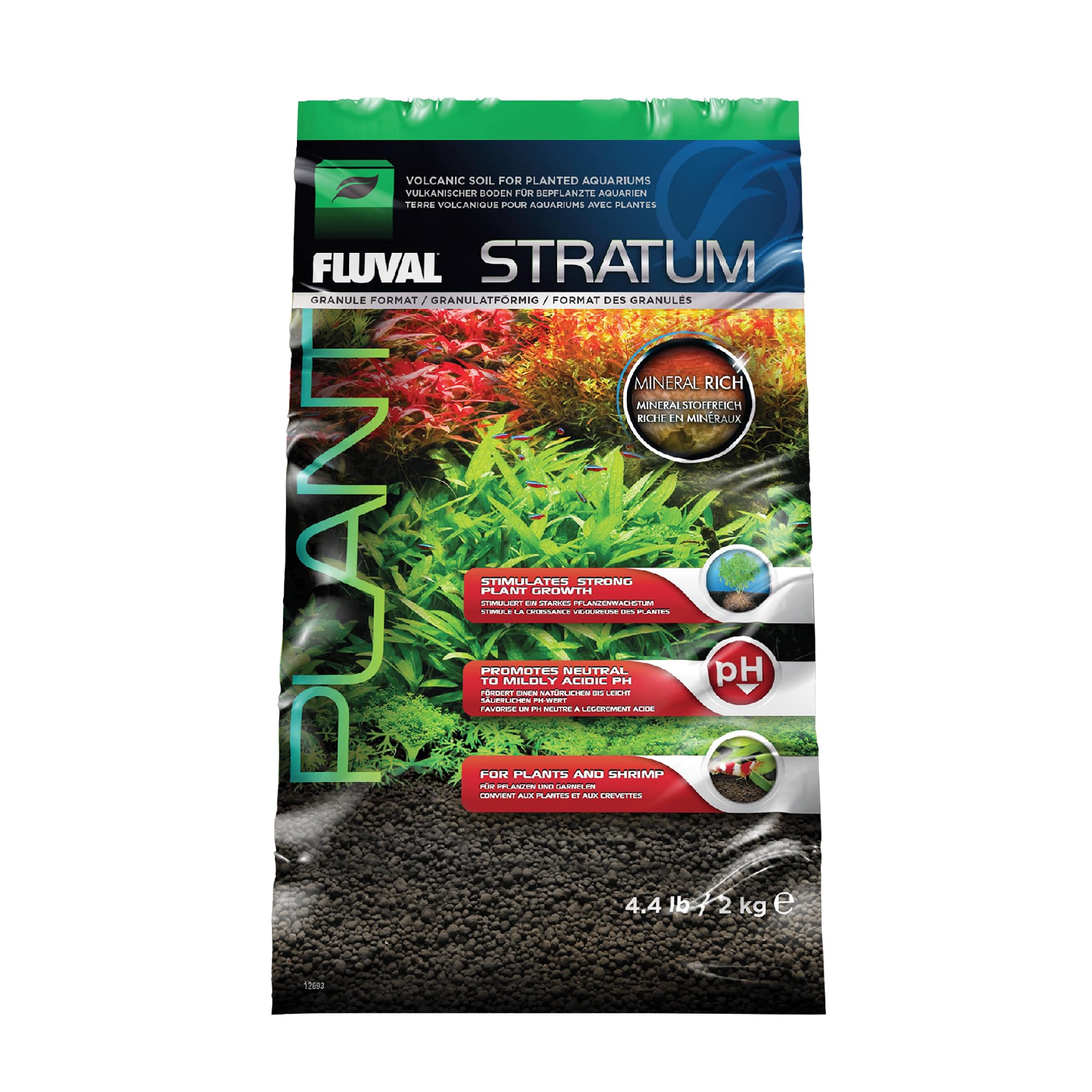
Rating: 4.7 ★ | Price: $$ | Type: Active soil | Grain Size: 2-3 mm | Key Feature: Nitrifying organisms
Fluval Plant & Shrimp Stratum is an active soil with porous granules that create an ideal rooting environment for aquatic plants. The lightweight, clay-based spheres house nitrifying bacteria, jump-starting the nitrogen cycle, and gently buffer pH toward neutral to slightly acidic levels—conditions that suit most tropical plants, Neocaridina shrimp, and soft-water fish.
The granules retain their structure over time, resisting the breakdown into mud that plagues some aquasoils. This long-term integrity maintains water flow through the substrate bed and provides a stable home for beneficial bacteria colonies, which continue to process waste well after initial cycling.
Initial setup demands patience. Without a deliberate, slow pour—such as into a bowl or onto a plastic sheet—the water turns milky and may stay cloudy for 24 to 48 hours. Even settled beds can release fine particles if disturbed. Lightweight granules also mean freshly inserted stems may float; a 2-inch depth or plant anchors keep them down.
This is the substrate for someone building a planted tank or shrimp colony and willing to trade a few days of haze for dense, healthy growth. If your priority is instant water clarity or a low-cost inert gravel bed, this soil overdelivers complexity you may not need.
Pros
- Promotes vigorous root development, with porous granules that anchor stems and facilitate nutrient uptake.
- Shrimp-safe pH buffering keeps water slightly acidic, supporting stable molting for Neocaridina and Caridina.
- Grain integrity lasts long-term without turning to sludge, preserving water flow through the substrate.
Cons
- Lightweight grains can allow newly planted stems to float without anchors or a deeper substrate layer.
- Water cloudiness persists for up to 48 hours during setup; careful pouring reduces but does not eliminate haze.
A substrate that prioritizes plant health and shrimp safety over immediate water clarity—reserve it for tanks where lush growth matters more than instant perfection.
Best for Bottom Dwellers
Aqua Natural Sugar White Sand

Rating: 4.7 ★ | Price: $$ | Type: Natural sand | Grain Size: 0.5-1 mm | Key Feature: Triple washed, kiln dried
Soft, clean fine sand that protects barbels and requires minimal rinsing. Triple-washed and kiln-dried, this substrate settles quickly after filling, and the gentle 0.5–1 mm grain size suits corydoras and loaches that sift through without risk of injury.
This sand works best for aquascapers wanting a natural, warm-toned backdrop — the off-white/light tan color makes fish colors stand out. But the “Sugar White” name overpromises; expect a creamy beige rather than pure white. For planted tanks, the 10-lb bag provides limited depth; pairing it with a nutrient layer below is recommended.
Pros
- Minimal rinsing needed – sand is clean out of the bag
- Soft texture safe for bottom-dwellers
- Bright natural appearance that makes fish colors pop
Cons
- Color is off-white/light tan, not pure white as marketed
- 10-lb bag may be insufficient for heavily planted tanks needing deeper substrate
For soft-bottom fish and natural-looking tanks, this is a hassle-free choice — just adjust expectations on the shade.
Best for Planted Tanks
CaribSea Eco-Complete Black
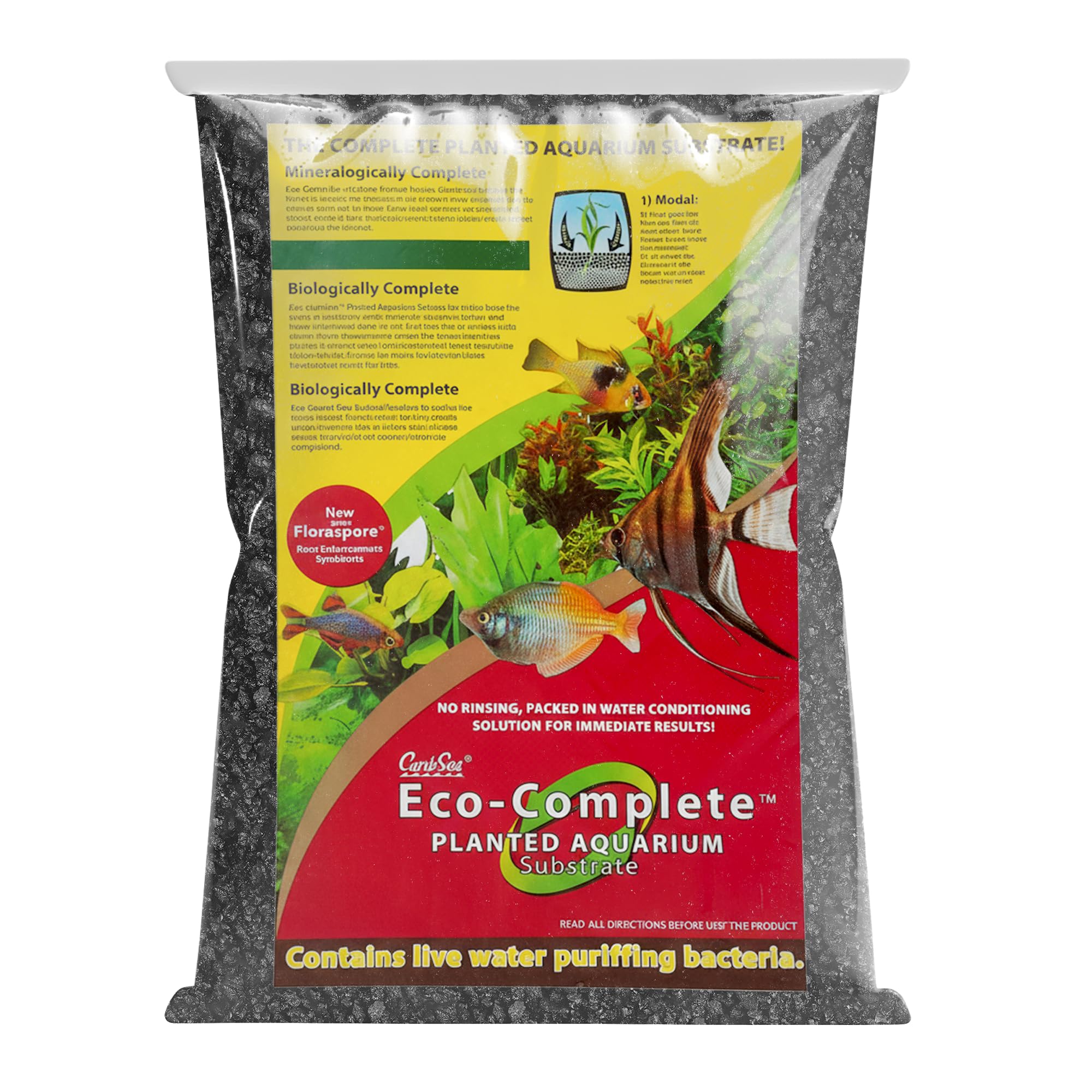
Rating: 4.6 ★ | Price: $$ | Type: Active substrate | Grain Size: ~1-3 mm | Key Feature: Trace elements, bacteria
The 20-pound bag delivers trace elements and beneficial bacteria right out of the bag, giving planted tanks a strong start without requiring root tabs. Compared to active soils that soften and buffer water (like the top pick), this substrate stays pH-neutral — a tradeoff that suits low-tech setups and hard water fish but doesn’t help shrimp needing acidic conditions.
This substrate is for serious planted tank enthusiasts who prioritize root growth and dark aesthetic over immediate clarity. The first few days after setup may produce cloudy water as dust settles, and occasional lighter grains can appear among the black. These are cosmetic and temporary issues that don’t affect plant performance. Anyone who needs crystal-clear water on day one or a shrimp tank with pH buffering should look at active soils instead.
Pros
- Supports vigorous plant root growth with trace elements and beneficial bacteria
- Attractive dark color that makes fish and plants pop
- Budget-friendly 20-pound bag covers large tanks without breaking the bank
Cons
- Water can become cloudy during setup; patience (or slow filling) helps
- Occasional lighter grains mixed in — not a uniform black throughout
A reliable, high-value substrate for planted tanks where neutral pH and large volume matter — just plan for a few days of haze.
Best for Beginners Planted
Aqueon Plant & Shrimp Substrate

Rating: 4.6 ★ | Price: $$ | Type: Clay-based inert | Grain Size: 2-3 mm | Key Feature: Maintains shape
The Aqueon Plant and Shrimp Substrate provides an affordable clay base that maintains its shape and does not cloud water heavily. Compared to active soils, it lacks built-in nutrients, so root tabs are needed for anything beyond low-light plants. The 5-pound bag covers a smaller area than many expect, making it best for tanks under 10 gallons.
This substrate suits budget-conscious beginners setting up small planted tanks or shrimp tanks, where the 5-pound bag is sufficient and plants can be fed with root tabs. Stable parameters and easy cleaning make it a forgiving option for newcomers who want a solid foundation without a steep investment.
Pros
- Cost-effective option comparable to premium planted substrates.
- Minimal water cloudiness after rinsing and easy to clean.
- Supports vigorous plant growth when root tabs are added.
Cons
- The 5-pound bag covers less area than expected; multiple bags needed for medium tanks.
- Lacks built-in nutrients, requiring root tabs for more demanding plant species.
A smart pick for small tanks and shrimp setups where cost matters and adding root tabs is part of the routine, but less economical for larger planted aquariums.
Best for Carpet Plants
Fluval Bio Stratum
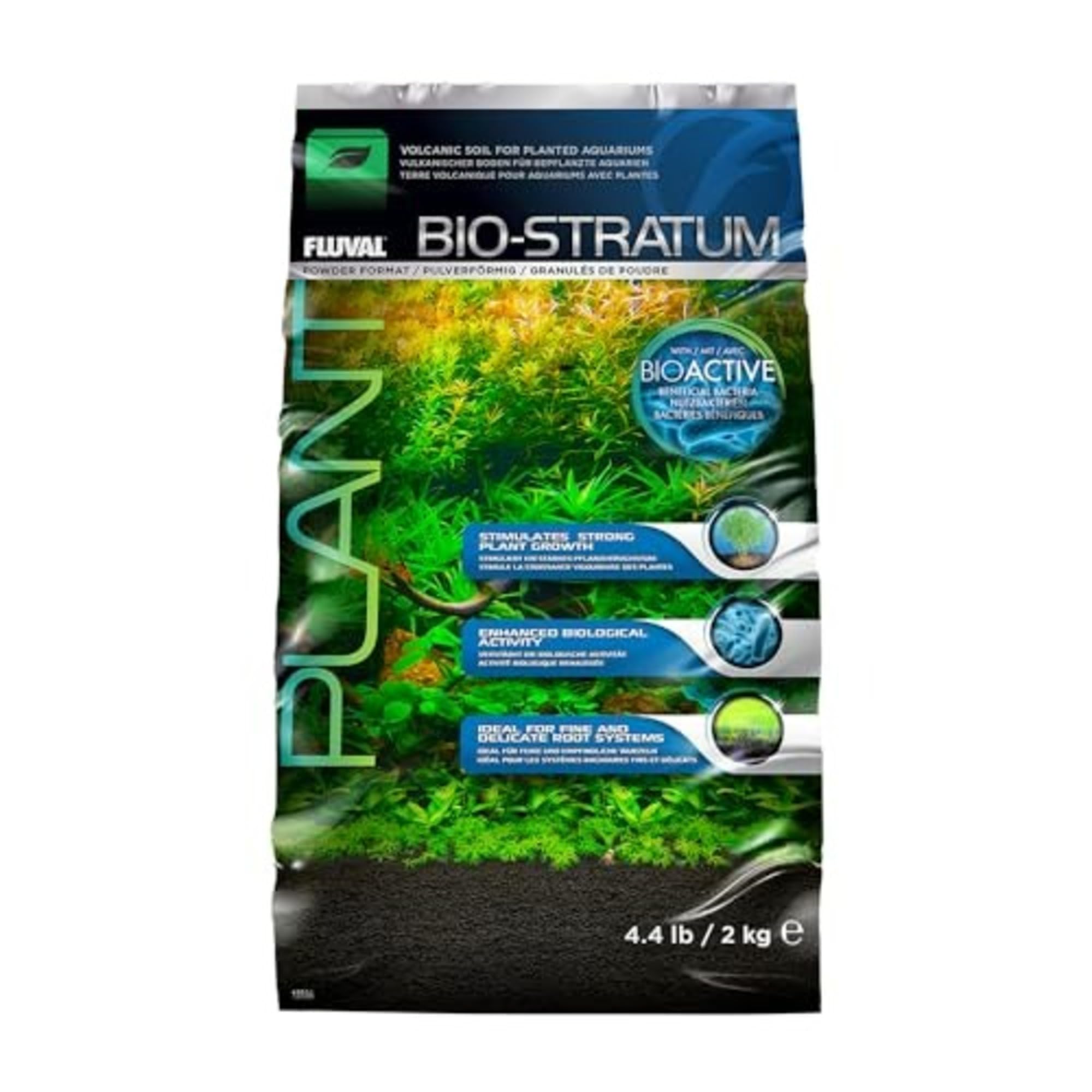
Rating: 4.7 ★ | Price: $$ | Type: Active soil (volcanic) | Grain Size: ~1 mm | Key Feature: Dormant nitrifying bacteria
The 1 mm grain size of Fluval Bio Stratum gives carpeting plants like Monte Carlo and Glosso the fine texture they need to spread roots quickly. Where the top pick uses larger pellets that suit general planting, this powder eliminates gaps that can slow delicate runners. It also crosses over into terrariums and houseplant propagation, holding moisture without compacting. Setup can bring temporary cloudiness that settles in hours, and the per-pound premium means it’s not the economical choice for tanks over 10 gallons. For a desktop nano scape focused on a lush foreground, though, that finer root zone payoff is tangible.
This substrate makes the most sense in 5–10 gallon planted tanks, especially those featuring demanding carpet species or shrimp colonies that benefit from the slight pH buffering. Houseplant growers will find it useful for water propagation or terrarium layers. If you’re filling a large aquarium or want a chunky gravel look, the cost and powder texture become real constraints — but those aren’t the scenarios it was designed for.
Pros
- Encourages rapid root spread for carpeting plants like Monte Carlo and Glosso.
- Works equally well for houseplant propagation in water or terrariums.
- Mineral-rich volcanic soil with dormant nitrifying bacteria for active biological support.
Cons
- Initial filling can cause cloudy water that may take hours to clear.
- Higher per-pound cost than inert gravel or sand, making large tanks expensive to fill.
For small planted tanks where carpet growth matters more than per-pound cost, Bio Stratum delivers the fine texture that coarser soils can’t match.
Best for Aquascapers
Seachem Flourite Black

Rating: 4.6 ★ | Price: $$$ | Type: Clay gravel (inert) | Grain Size: ~1-3 mm | Key Feature: Porous, supports biofiltration
Unlike cheaper black gravel blends that mix in off-color grains, Seachem Flourite Black delivers consistent dark color with a subtle sparkle when wet. Its fractured clay granules are porous, creating ideal surfaces for beneficial bacteria and giving plant roots something to latch onto. The substrate is inert, won’t alter pH, and won’t break down over time, making it a long-term foundation for planted aquascapes.
Setup demands patience. The clay arrives extremely dusty, and skipping a thorough rinse will turn the water opaque. Even with careful washing, some initial cloudiness can linger for days. This makes it best suited for fishless cycling setups or experienced aquascapers who can dedicate time to rinsing and expect a hazy tank at first. Not for quick-start tanks or existing setups with sensitive livestock.
Pros
- Porous clay structure anchors plant roots securely and supports beneficial bacterial colonies.
- Deep black color with a natural shimmer makes fish and plants visually stand out.
- Generous 15.4 lb bag provides good coverage per dollar for larger tanks.
Cons
- Requires multiple rounds of rinsing to remove fine clay dust, which is a tedious pre-setup step.
- Water may remain hazy for several days even after thorough rinsing, until the filter clears suspended particles.
For committed planted tank keepers who value deep black aesthetics and don’t mind the prep work, this substrate creates a striking, biologically active base that won’t alter water chemistry.
Best for Biotope Tanks
Aqua Natural Midnight Pearl Gravel

Rating: 4.7 ★ | Price: $ | Type: Natural gravel | Grain Size: 2-4 mm | Key Feature: Triple washed, kiln dried
This brown gravel delivers a natural riverbed appearance that hides debris well, and it’s notably clean after rinsing. The price for 10 pounds is budget-friendly. However, it’s inert—no nutrients for plants—and some bags may have finer grains than advertised or cause temporary cloudiness. For a simple biotope or bottom-dweller tank, it works well; for planted tanks, root tabs are necessary.
Pros
- Natural riverbed look that disguises debris effectively
- Low dust and easy to rinse; good value for the bag size
Cons
- Pebble size can be smaller than the stated 2–4 mm range
- Water cloudiness may occur after adding, even with thorough rinsing
Best for hobbyists building a natural brown biotope who don’t need plant nutrients and can handle minor cloudiness.
Best for Golden Shimmer
Aqua Natural Gold Pearl Gravel

Rating: 4.7 ★ | Price: $$ | Type: Natural river gravel | Grain Size: 2-4 mm | Key Feature: Triple washed
The Aqua Natural Gold Pearl Gravel delivers a warm golden shimmer that adds natural depth to community tanks and terrariums. It arrives cleaner than most competing gravels, cutting down on prep time. However, this is an inert substrate – it won’t support heavy plant growth without root tabs. For aquarists focused purely on aesthetics in a low-tech setup, it’s a solid value at its price tier.
Pros
- Adds a natural golden shimmer that enhances plants and fish
- Comes out of the bag with minimal dust, reducing rinsing effort
Cons
- Some grains are finer than stated, potentially creating sand-like dust
- May still need thorough rinsing despite the triple-washed claim
A good fit for fish keepers seeking an attractive, low-maintenance gravel for community tanks or terrariums, so long as they don’t plan to rely on the substrate for plant nutrition.
Best for Marine Tanks
CaribSea Fiji Pink Sand

Rating: 4.7 ★ | Price: $$$ | Type: Aragonite sand (marine) | Grain Size: Sugar-sized | Key Feature: Live bacteria, buffers pH
This live aragonite sand is formulated for saltwater environments, where it raises and buffers pH to 8.2 and introduces beneficial bacteria to accelerate cycling. Its fine, sugar-sized grains suit sand-sifting marine fish and coral growth. However, it is not appropriate for freshwater planted tanks – the high pH and lack of plant nutrients make it harmful to plants and soft-water fish.
Pros
- Raises and buffers pH to 8.2, creating stable conditions for coral and reef livestock.
- Live bacteria in the sand helps establish biological filtration faster in new tanks.
Cons
- Initial water cloudiness after setup can be noticeable until the sand settles.
For reef tank hobbyists who want biologically active sand that buffers pH and accelerates cycling, this is a solid choice – just plan for initial cloudiness.
Best for Nano Tanks
Aqua Natural Sugar White Bio-Sand

Rating: 4.6 ★ | Price: $ | Type: Bio-active sand | Grain Size: Fine sand | Key Feature: Seeded with nitrifying bacteria
This sand simplifies startup with pre-loaded nitrifying bacteria and a no-rinse setup, and its light beige tone brightens small tanks nicely. However, the color is off-white rather than pure white, and the 5-pound bag covers only shallow layers in tanks up to 5 gallons — larger setups require multiple bags, making this a specialized option for quick nano tanks rather than a general substrate.
Pros
- Very easy setup – no rinsing required per instructions.
- Bacterial seeding helps speed up cycling.
Cons
A convenient choice for nano tanks (5 gallons or less) where quick cycling and easy setup outweigh the off-white color and limited bag size.
Best for Large Tanks
Aqua Natural Galaxy Sand 20lb

Rating: 4.6 ★ | Price: $$ | Type: Fine black sand | Grain Size: ~0.5-1 mm | Key Feature: Large bag value
This black sand delivers a deep, glittering look for large aquariums at a price that’s hard to beat per pound. The tradeoff shows up before the first fish goes in: the sand arrives extremely dusty and requires repeated rinsing—even then, water cloudiness can linger. Color consistency also varies, with some bags containing brown or gray flecks rather than uniform black. For budget-conscious aquascapers setting up a new, large tank and willing to invest time in cleaning, the visual payoff and coverage make it a practical choice.
Pros
- Deep black color with subtle sparkle creates dramatic contrast in planted tanks.
- 20 lb bag provides generous coverage for medium to large tanks at a budget price.
Cons
- Color can vary between batches; some bags contain brown or gray flecks rather than uniform black.
- Heavy rinsing required to reduce dust; water cloudiness possible even after multiple washes.
This sand fits best for large tank owners on a budget who prioritize dramatic black contrast and are willing to spend extra time rinsing and accept some color variation.
Best for High-Tech Planted
LANDEN Aqua Soil 10lb

Rating: 4.6 ★ | Price: $$$ | Type: Active soil | Grain Size: 3-5 mm | Key Feature: No rinsing needed
LANDEN’s Aqua Soil accelerates plant growth and buffers pH to 6.0–6.5, rivaling pricier active substrates on a per-pound basis. After initial settling, water clarity is good. However, it leaches ammonia for weeks—requiring a fishless cycle—and bags may contain stray grass or leaf fragments that a quick sift removes. These demands suit experienced aquascapers with high-tech tanks or shrimp setups that need soft, acidic water, not beginners seeking a plug-and-play bottom layer.
Pros
- Accelerates healthy plant growth in high-tech setups with CO2.
- Costs less per pound than comparable active soils like ADA.
Cons
- Bags sometimes contain dried grass or leaf bits, so a pre-sift step is wise before adding water.
- Ammonia release can persist for weeks, demanding a careful fishless cycle and frequent water testing.
A sensible pick for the planted-tank hobbyist who already plans a deliberate fishless cycle and wants ADA-like performance at a lower cost—just factor in a quick debris check and a patient break-in period.
How to Choose
Most quality substrates sacrifice immediate clarity for long-term plant growth; the best choice depends on your tank’s inhabitants and your patience during setup.
Type: Inert Gravel vs. Active Soil
Inert gravels (clay, sand, river pebbles) do not alter water chemistry and require no cycling, but they lack nutrients for plants. Active soils (volcanic or baked clay) release ammonia initially, need a fishless cycle, and buffer pH to slightly acidic—ideal for shrimp and many tropical plants.
If you want to keep finicky fish or soft-bottom dwellers, inert sand is safer. For a lush planted tank, an active soil gives roots the nutrients and structure they need, even if it means waiting a few extra days for the water to clear.
Grain Size and Weight
Fine sand (0.5–1 mm) feels soft on fish barbels and allows bottom-dwellers to sift, but it compacts easily and can trap debris. Coarse gravel (2–5 mm) stays loose, making it easier to siphon, but the gaps may catch uneaten food and create dead spots.
For planted tanks, medium grains (1–3 mm) provide good root anchoring without floating. Lightweight pellets (like some active soils) can allow plants to drift unless you use a deeper layer or plant anchors.
Nutrient Content
Active soils contain built-in organic matter and trace elements that feed plants for months without extra fertilizers. Inert substrates require root tabs or liquid dosing to support anything beyond low-light plants.
If you prefer to control nutrients yourself or have a low-tech setup, choose an inert clay or sand and add root tabs. For a hands-off approach, an active soil provides a steady release but may cause algae if you over-feed through the water column.
Water Buffering (pH Impact)
Some substrates actively lower pH (e.g., Fluval Stratum buffers to ~6.5), which benefits soft-water fish, Caridina shrimp, and many Amazon plants. Others, like aragonite sand, raise pH to 8.2—fine for saltwater but toxic to freshwater plants and most tetras.
If you have sensitive species, match the substrate’s pH effect to your water source. A neutral inert substrate is the safest choice for community tanks with mixed needs.
Initial Dust and Cloudiness
Nearly every active soil will cloud the water for 24–72 hours after filling. Even triple-washed sands can release fine dust if poured too fast. The dust is harmless to fish but stresses them and reduces visibility.
Pour water slowly over a plate or use a spray bar to minimize disturbance. Most substrates clear on their own; a fine filter pad or diatom filter speeds it up. Patience is the trade-off for rapid plant growth.
FAQ
Why does my aquarium substrate turn the water cloudy after I set it up?
Cloudiness is common with active soils and some sands that contain fine dust or porous granules. It typically clears within 24–72 hours as particles settle. To minimize haze, rinse inert substrates thoroughly (but not active soils—rinsing removes nutrients) and fill the tank slowly over a baffle.
Can I use marine aragonite sand in a freshwater planted tank?
No. Aragonite sand buffers pH to around 8.2, which is too alkaline for most freshwater plants and soft-water fish like tetras and discus. Stick to inert sands or active soils designed for freshwater planted tanks.
How deep should my substrate be for live aquarium plants?
A depth of 2–3 inches is ideal for rooted plants. A shallower layer (1–1.5 inches) works for carpet plants, but heavy root feeders like Amazon swords need at least 2.5 inches. Deeper layers also help anchor lightweight pellets and prevent floating.
Is Fluval Stratum safe for shrimp and will it lower pH?
Yes, Fluval Stratum is widely used with Neocaridina and Caridina shrimp. It buffers pH to a slightly acidic range (around 6.5–6.8), which shrimp prefer. However, it releases ammonia during the first few weeks, so cycle the tank fully before adding shrimp.