This post contains affiliate links. We may earn a small commission when you buy through our links — at no extra cost to you.
Most aquarium products that claim to "remove" ammonia actually just bind it temporarily—your test kit still shows the same number. That’s fine for emergencies, but if you want ammonia physically gone, you need zeolite media, not a liquid conditioner.
The real split in this category isn’t brand vs brand—it’s removal mechanism vs detoxification. Filter media like zeolite and carbon absorb ammonia out of the water column. Liquid conditioners convert it into a non-toxic form that bacteria still have to process. Bacteria supplements do the biological work, but take days to establish.
This guide breaks down which approach fits your tank: pre-cut pads for convenience, bulk media for savings, liquids for crisis management, or bacteria for cycling. Match the tool to the job, and your fish stay safe without wasted effort.
Top Picks
Best for Freshwater Canister Owners
Fluval Zeo-Carb 3x150g

Rating: 4.8 ★ | Price: $ | Removal Mechanism: Zeolite + carbon bags | Water Type: Freshwater | Ease of Use: Pre-filled bags | Cost per Treatment: per bag | Replacement: Monthly
Fluval Zeo-Carb combines zeolite and activated carbon in three pre-filled nylon bags, ready to drop into a canister filter. It absorbs ammonia and clears water discoloration in one step, saving the hassle of measuring loose media. The 150-gram bags suit most freshwater canister setups and cost less than buying the two materials separately.
This media is designed for freshwater tanks only — saltwater aquariums will not benefit from zeolite’s ammonia-binding action. It fits ideally in canister filters where the bags can sit in a media tray; owners of hang-on-back filters should check dimensions first. For hobbyists who want a simple, effective chemical filtration option without the mess of loose carbon or separate zeolite, this budget-friendly option delivers consistent results.
Pros
- Removes ammonia and polishes water clarity in one product.
- Pre-measured bags eliminate dusty spills and measuring errors.
- More cost-effective than buying zeolite and carbon separately.
Cons
- Freshwater only — not effective in saltwater tanks.
- Bag dimensions may not fit some hang-on-back filters; verify clearance.
For freshwater canister filter users seeking a no-fuss ammonia and clarity solution, this pre-bagged blend saves money and effort without sacrificing performance.
Best for Injured or Stressed Fish
Seachem StressGuard 500ml

Rating: 4.8 ★ | Price: $$ | Removal Mechanism: Liquid slime coat | Water Type: Both | Ease of Use: Measure and dose | Cost per Treatment: 5ml/10gal | Replacement: As needed
Seachem StressGuard combines wound healing with ammonia detoxification in a single liquid — a protein-active colloid that binds to injuries while neutralizing ammonia toxicity. Unlike concentrated powders that prioritize bulk treatment cost, this formula targets fish recovery during stress or injury.
Best for reef keepers with sensitive invertebrates, fish with fin rot, or after transport stress. The same colloid that heals can leave a bluish stain on white silicone sealant, airline tubing, and suction cups — a tradeoff worth accepting for the medical benefit.
Pros
- Heals fish injuries and reduces stress effectively
- Improves fish health and immune response during transport
- Reduces ammonia toxicity while promoting wound recovery
Cons
- Can stain white silicone sealant, airline tubing, and suction cups a bluish tint
Prioritize healing and stress reduction over raw cost? StressGuard delivers — just account for the staining risk on light-colored gear.
Best for Simple All-In-One Media
Marineland Diamond Blend

Rating: 4.7 ★ | Price: $ | Removal Mechanism: Zeolite + carbon blend | Water Type: Freshwater | Ease of Use: Bulk in bags | Cost per Treatment: per bag | Replacement: Monthly
Marineland Diamond Blend packs zeolite and activated carbon into a single media bag, handling ammonia removal and water polishing without buying separate products. The blend delivers clear water and reduced odors for freshwater tanks, making it a straightforward all-in-one for canister and HOB filters.
This media works well for aquarists who want simplicity over customizing carbon vs. zeolite ratios. The carbon-to-zeolite blend can vary between bags, so it’s less predictable for hobbyists who need consistent carbon dosing for medication removal or other precise needs.
Pros
- Combines ammonia removal and water polishing in one media bag – simplifies filter maintenance
- Budget-friendly alternative to buying separate zeolite and carbon
Cons
- Carbon-to-zeolite blend ratio may vary between bags, reducing predictability for users who need consistent carbon dosing
A cost-effective two-in-one media for freshwater tanks, best suited for general chemical filtration where minor blend variation isn’t critical.
Best for Emergency Spikes
API Ammo-Lock 16oz

Rating: 4.6 ★ | Price: $$ | Removal Mechanism: Liquid detoxifier | Water Type: Both | Ease of Use: Measure and dose | Cost per Treatment: 5ml/10gal | Replacement: Every 2 days
API Ammo-Lock provides immediate protection when ammonia levels spike during cycling or overstocking. It binds toxic ammonia into a non-harmful form detectable on API test kits, buying time until biological filtration catches up. This is a temporary fix — water changes and a mature biofilter are still required to physically remove the ammonia. Best for emergency situations where fish are in distress, but not a long-term replacement for proper cycling.
Pros
- Rapidly reduces ammonia toxicity during spikes
- Commonly used by aquarists to support fish during tank cycling
Cons
- Only binds ammonia temporarily; test kits still show positive readings and biological filtration is needed to remove it
For emergency ammonia spikes, Ammo-Lock delivers fast detoxification — just know you’ll still need water changes and a mature biofilter to truly eliminate it.
Best for New Tank Cycling
FritzZyme 7 32oz
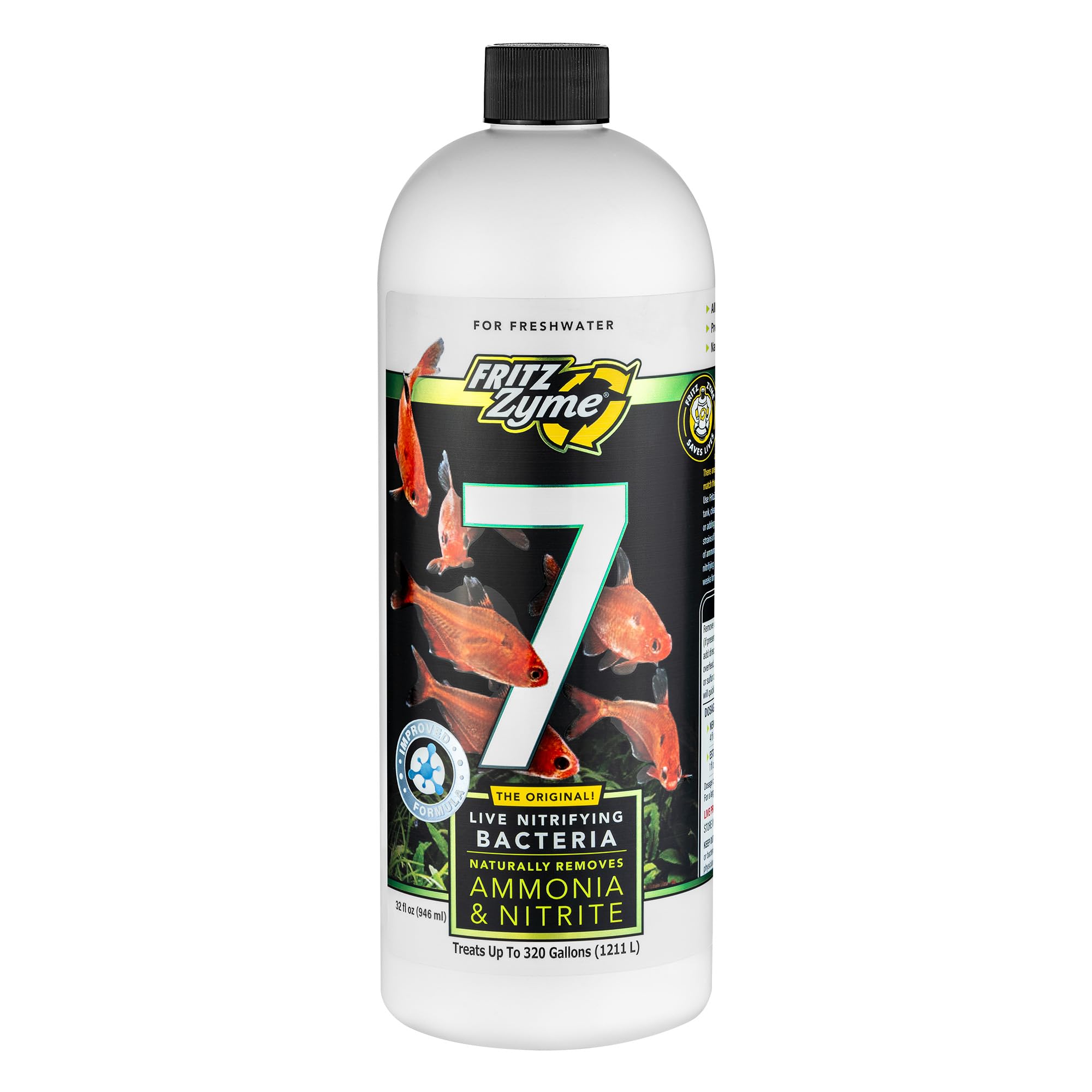
Rating: 4.6 ★ | Price: $$ | Removal Mechanism: Live nitrifying bacteria | Water Type: Freshwater | Ease of Use: Shake and pour | Replacement: As needed
Live Nitrosomonas and Nitrobacter strains that reduce ammonia and nitrite by establishing biological filtration over several days. Unlike chemical detoxifiers that temporarily bind ammonia, this bacteria supplement builds the biofilter from scratch, making it suited for new tank cycling or after filter crashes from medication or deep cleaning. The bacteria will not work in tanks with poor aeration, and bottles past their expiration date may show little effect — check freshness before purchase.
Pros
- Effective at cycling new tanks and recovering from filter disruptions
- Improves overall water quality when used correctly
Cons
- In low-oxygen tanks or with expired bottles, the bacteria may fail to establish — verify freshness and aeration.
A good choice for starting a new tank or rebuilding biofilter, provided you confirm freshness and maintain adequate oxygen levels.
Best for Large Tanks or Multi-Tank
Seachem Safe 250g

Rating: 4.7 ★ | Price: $ | Removal Mechanism: Powder dechlorinator | Water Type: Both | Ease of Use: Measure small amounts | Cost per Treatment: 1.25g/75gal | Replacement: As needed
Seachem Safe is a dry concentrate of the same active chemistry found in liquid Prime, but at a fraction of the per-dose cost. A single 250g jar treats roughly 50,000 gallons, making it the clear choice for owners of 100+ gallon tanks or multiple systems who already have a precise scale or measuring spoon. The powdered format eliminates shipping water weight and lasts years on the shelf. The tradeoff: opening the jar releases a strong sulfur smell that may be off-putting in a living area, and the required dose (1.25g per 300 gallons for chlorine) is too small to measure accurately in tanks under 20 gallons without a scale.
Pros
- Extremely cost-effective — a single jar treats up to 50,000 gallons of tap water.
- Works identically to liquid Prime but lasts months to years instead of weeks.
Cons
- When opening the jar, the sulfur odor can be noticeable in enclosed rooms — less of an issue in a garage or utility area.
Ideal for large tanks and multi-tank setups where the money saved outweighs the smell; not practical for small or nano tanks without a lab-grade scale.
Best for Aqueon Quietflow 10
Aqueon Ammonia Reducer Pads

Rating: 4.7 ★ | Price: $ | Removal Mechanism: Chemical filter pads | Water Type: Freshwater | Ease of Use: Drop-in replacement | Cost per Treatment: per pad | Replacement: 2-3 weeks
These pre-cut pads slide right into the QuietFlow 10 filter, removing ammonia and organic debris with no setup fuss. They are ideal for beginners maintaining small tanks up to 10 gallons. However, the per-pad cost is higher than buying bulk zeolite sheets and cutting them yourself, making this a convenience-first option rather than a budget value play.
Pros
- Pre-cut design fits Aqueon QuietFlow 10 filter without trimming
- Effectively removes ammonia and organic matter from small tanks
Cons
- Per-pad cost exceeds that of bulk zeolite sheets you cut yourself
Best for Aqueon QuietFlow 10 owners who prioritize drop-in convenience over the lowest cost per treatment.
Best for Fluval 306/307/406/407
Fluval Ammonia Remover Pad

Rating: 4.7 ★ | Price: $ | Removal Mechanism: Pre-cut pads | Water Type: Both | Ease of Use: Drop-in replacement | Cost per Treatment: per pad | Replacement: Monthly
These pre-cut pads slide into Fluval 306/307/406/407 canisters without trimming, making maintenance simple. They reduce ammonia and keep water clear effectively. But each pad costs more than bulk media with similar ammonia-removing ability, and they offer no carbon filtration. This limits their appeal to hobbyists who prefer drop-in convenience over economy or combination filtration.
Pros
- Pre-cut pads drop into Fluval 306/307/406/407 canisters with zero trimming.
- Reduces ammonia and keeps water clear effectively.
Cons
- Per-pad cost runs higher than buying bulk zeolite or Zeo-Carb alternatives.
Best for owners of Fluval canisters who value no-fuss monthly swaps over cost savings or combined carbon filtration.
Best for Ammonia + Nitrite Spikes
Fritz Complete 16oz
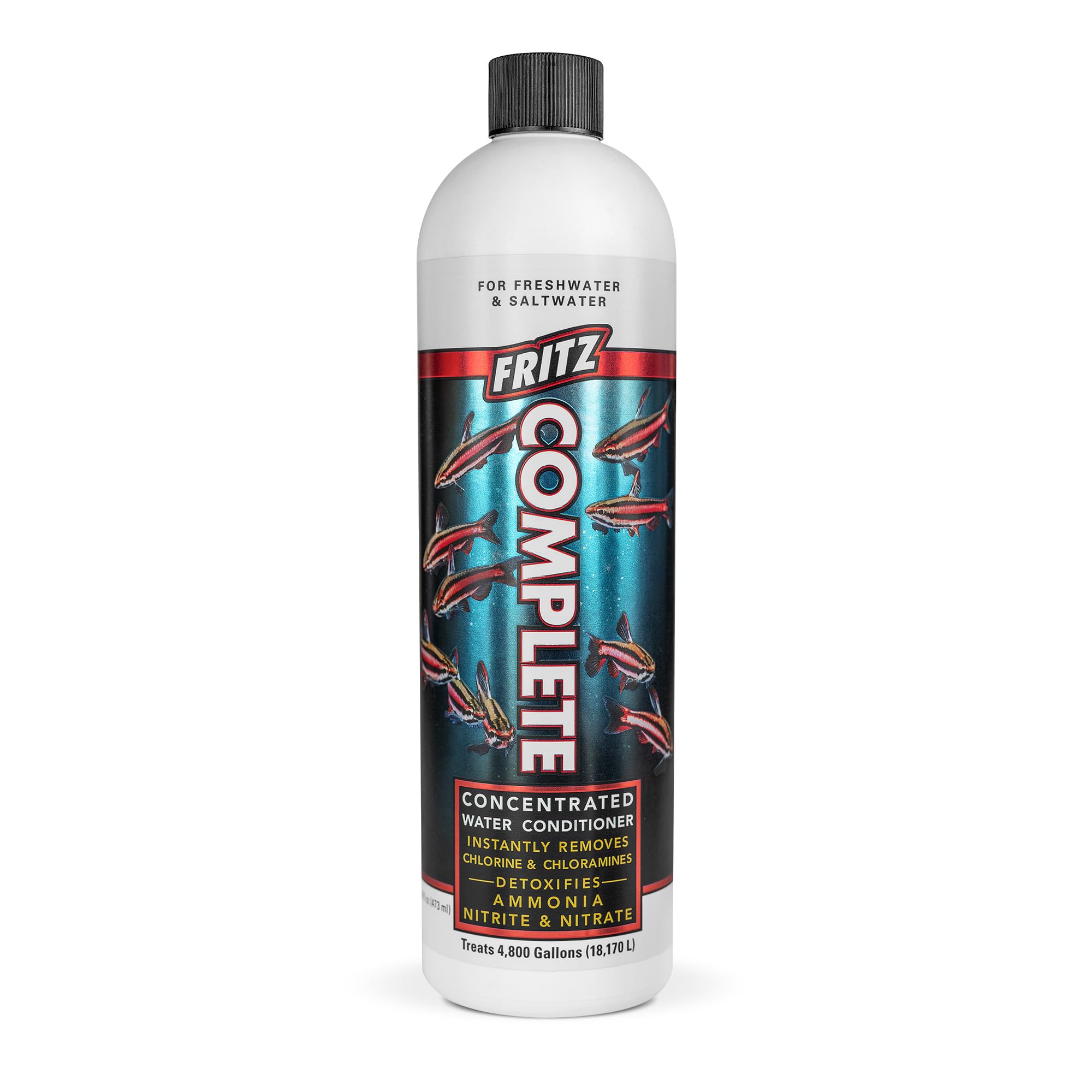
Rating: 4.8 ★ | Price: $$ | Removal Mechanism: Liquid detoxifier | Water Type: Both | Ease of Use: Measure and dose | Cost per Treatment: 1 tsp/50gal | Replacement: As needed
Fritz Complete effectively handles ammonia and nitrite spikes, providing broader protection than basic dechlorinators. However, it is less concentrated than Seachem Safe and carries a strong sulfur odor, making it a secondary choice for those prioritizing economy.
Pros
- Detoxifies both ammonia and nitrite, reducing the need for multiple products.
- Concentrated formula treats up to 800 gallons per 16-ounce bottle.
Cons
- Strong sulfur odor may be noticeable during dosing — less of an issue with good ventilation.
A viable alternative if you need nitrite detox and don’t mind the smell, but Seachem Safe offers better value for most setups.
Best for Regular Water Changes
TankFirst 500ml
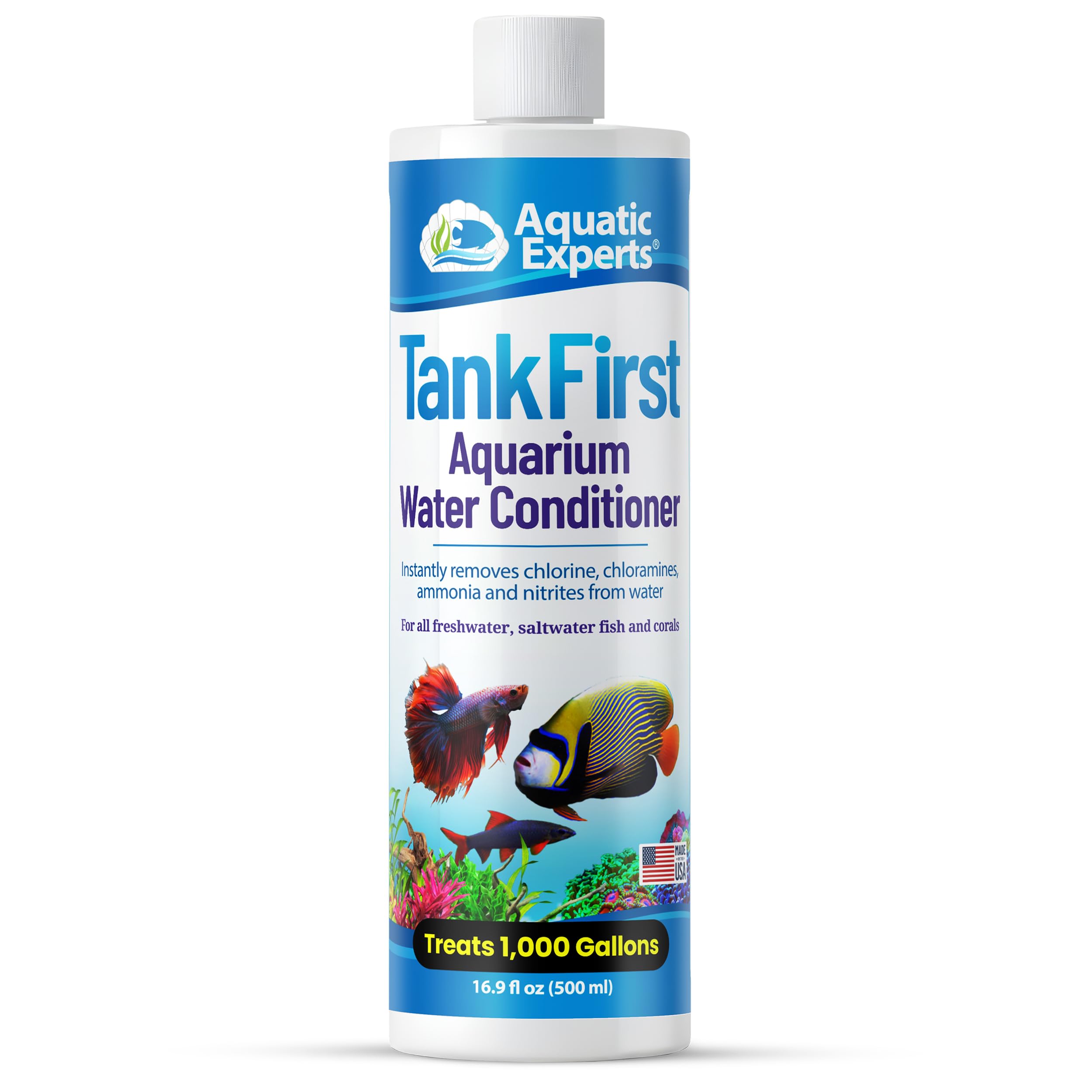
Rating: 4.7 ★ | Price: $$ | Removal Mechanism: Liquid conditioner | Water Type: Both | Ease of Use: Measure and dose | Cost per Treatment: 1 capful/10gal | Replacement: As needed
This liquid conditioner handles basic water prep for freshwater and reef tanks, removing chlorine and chloramines while detoxifying ammonia. It’s safe for sensitive fish and corals with no sulfur odor. However, it’s slower acting than dedicated ammonia products for spikes and does not address nitrites. It’s a competent option for routine water changes but lacks a distinct advantage over more established brands.
Pros
- Removes chlorine and detoxifies ammonia from tap water
- Safe for all aquatic life including sensitive fish and corals
Cons
- Does not remove nitrites or nitrates, which some buyers expect from an all-in-one conditioner
Best for regular water changes in reef or freshwater setups; for emergency ammonia spikes or nitrite issues, consider a faster or broader-spectrum product.
Best for Fresh & Saltwater Cycling
Nite-Out II 8oz

Rating: 4.6 ★ | Price: $ | Removal Mechanism: Live nitrifying bacteria | Water Type: Both | Ease of Use: Shake and pour | Replacement: As needed
Rapidly reduces ammonia and nitrite in fresh or saltwater tanks, helping new setups cycle faster. It’s a budget-friendly bacteria additive that works as advertised. A significant usability issue (detailed in the con) keeps it from being a top recommendation.
Pros
- Speeds up tank cycling significantly — can go from high ammonia to zero in days
- Works in both fresh and saltwater, making it suitable for diverse setups
Cons
- Bottle cap can be extremely difficult to open, sometimes requiring pliers
Best for hobbyists who prioritize effective cycling over packaging convenience and are willing to deal with a stubborn cap.
Best for Ponds or High-Waste Tanks
Marineland White Diamond

Rating: 4.7 ★ | Price: $$ | Removal Mechanism: Pure zeolite pellets | Water Type: Freshwater | Ease of Use: Rinse before use | Replacement: Monthly
Marineland White Diamond delivers bulk US-sourced clinoptilolite that effectively reduces ammonia in high-waste freshwater tanks and ponds. However, it lacks carbon filtration and requires thorough rinsing to avoid initial cloudiness. For most aquariums needing both ammonia removal and water polishing, the Diamond Blend offers better all-in-one value.
Pros
- Reduces ammonia levels quickly, often to zero within days.
- Bulk quantity provides cost-effective treatment for large tanks or ponds.
Cons
- Can cause water cloudiness if not rinsed thoroughly before use.
Best suited for dedicated ammonia removal in ponds or high-waste FW tanks where carbon isn’t needed, and you’re willing to rinse the media before use.
Best for Budget Freshwater Tanks
Fluval Ammonia Remover 3pk

Rating: 4.6 ★ | Price: $ | Removal Mechanism: Zeolite bags | Water Type: Freshwater | Ease of Use: Drop-in bags | Cost per Treatment: per bag | Replacement: Monthly
This three-pack of zeolite bags offers the lowest entry price for basic ammonia removal in freshwater tanks, but lacks the carbon polishing of the top pick. Performance can vary — some aquariums see no reduction, so expect occasional inconsistency.
Pros
- Reduces ammonia levels effectively in freshwater tanks
- Easy to drop into filter — no mess or measuring
Cons
- Ammonia reduction may not occur in some aquarium conditions
Best for budget-focused Fluval canister owners who don’t need carbon filtration and can accept occasional variability.
How to Choose
The single most important buying insight is that not all ammonia removers actually remove ammonia—some just bind it temporarily, so matching the mechanism to your situation is critical.
Removal Mechanism
Three approaches exist: media absorption (zeolite/carbon physically traps ammonia), chemical detoxification (liquids bind ammonia into a non-toxic form), and biological conversion (bacteria consume ammonia). Media absorption removes it from the water column—test kits will show a drop. Detoxification only makes it harmless; test kits still detect it because the ammonia molecule is still present. Biological conversion takes days to establish and requires oxygen.
Choose media if you want immediate, measurable removal. Choose liquid detoxifiers for emergencies or when you need to protect fish while the biofilter catches up. Choose bacteria only if you’re cycling a new tank and can wait 3–7 days.
Water Type
Zeolite-based media (pads, pellets, bags) do not work in saltwater—the sodium ions in seawater block the absorption sites. All liquid conditioners and bacteria supplements are safe for both fresh and saltwater, but always double-check the label. Some combination products like Fluval Zeo-Carb are marked freshwater only.
If you run a reef tank, skip zeolite entirely. Stick to liquid detoxifiers or bottled bacteria. For freshwater, zeolite is the most effective physical removal option.
Ease of Use
Pre-cut pads and pre-filled bags are drop-in ready—no measuring, no mess. Bulk zeolite or loose pellets require rinsing before use to avoid cloudy water, and you need to cut or fill your own media bags. Liquid conditioners and bacteria need measuring (often with tiny spoons or caps) and must be stored properly to maintain potency.
The trade-off is convenience vs cost. Pre-cut pads are more expensive per treatment. Bulk media and powder conditioners save money but demand more handling and precision.
Cost per Treatment
Liquid conditioners like Seachem Safe cost pennies per 100 gallons when bought in powder form. Pre-cut pads like Aqueon’s run $2–3 per pad, replaced every 2–3 weeks. Bulk zeolite (e.g., Marineland White Diamond) is cheap per ounce but requires rinsing and bagging.
The real cost isn’t just the purchase price—it’s the frequency of replacement. Zeolite becomes saturated and must be replaced or recharged. Liquids are used as needed, so they last longer for small or stable tanks. For large tanks or high bioloads, bulk media or concentrated powder wins on long-term expense.
Replacement Frequency
Zeolite media typically needs replacement every 2–4 weeks depending on ammonia load. Pre-cut pads often specify 2–3 weeks; bulk zeolite can last up to a month if not overloaded. Liquid conditioners are dosed as needed—daily during spikes, weekly for maintenance. Bacteria supplements are a one-time dose for cycling, not a recurring consumable.
The hidden cost of media is forgetting to replace it. Saturated zeolite stops working and can even release ammonia back into the water. Set a calendar reminder. Liquids are more forgiving—you can test and dose accordingly.
FAQ
Will zeolite remove ammonia from saltwater aquariums?
No. Zeolite requires low sodium levels to absorb ammonia. In saltwater, the high salt content saturates the zeolite’s ion exchange sites, making it ineffective. Use a liquid detoxifier like Seachem StressGuard or API Ammo-Lock for saltwater tanks instead.
Does Seachem Safe smell bad and is it normal?
Yes, Seachem Safe has a strong sulfur (rotten egg) odor. This is normal for concentrated dechlorinators that use a sodium thiosulfate base. The smell does not affect performance. Store the jar in a sealed container to minimize odor in the room.
How often should I replace Fluval Zeo-Carb bags?
Replace Fluval Zeo-Carb bags every month. In heavily stocked tanks or during a cycle, you may need to change them every 2 weeks. Once the bags stop removing ammonia (test kit shows no change), they are saturated and must be replaced—do not try to recharge them.
Can I use API Ammo-Lock while cycling my tank?
Yes, API Ammo-Lock is designed for emergency ammonia protection during cycling. It binds ammonia into a non-toxic form that is still detectable on test kits, so you will see ammonia readings. Combine with a bacterial supplement (e.g., FritzZyme 7) and water changes to actually remove the ammonia over time.