This post contains affiliate links. We may earn a small commission when you buy through our links — at no extra cost to you.
Many aquarium bacteria supplements promise instant cycling with minimal effort. In practice, results vary widely—some bottles deliver a robust biofilter in days, others leave you with cloudy water and unchanged ammonia.
The real trade-off comes down to bacteria type. Live nitrifying bacteria can cycle a tank faster but are sensitive to shipping conditions and storage. Enzyme-based formulas offer more consistent performance but may take slightly longer. Your choice depends on your patience, tank size, and tolerance for risk.
This guide cuts through the marketing to match you with the supplement that fits your specific setup—whether you’re setting up a nano betta tank or a large saltwater reef.
Top Picks
Best for New Tank Setups
API Quick Start 4 oz

Rating: 4.8 ★ | Price: $ | Bacteria Type: Enzyme-based | Bottle Size: 4 oz | Water Types: Freshwater & Saltwater | Cycle Speed: Immediate fish addition
API Quick Start is an enzyme-based bacteria supplement that helps cycle new tanks and maintain water quality in both freshwater and saltwater setups. It allows fish to be added immediately, though results can vary — some aquarists may need multiple doses to see ammonia levels drop. This makes it a good fit for budget-conscious beginners setting up smaller tanks who want a safe, low-cost start.
Clear instructions and simple dosing make it easy to use. Most users see stable ammonia and successful cycling over a week or two, but a minority may not notice immediate changes — a typical behavior for enzyme-based products rather than live bacteria. For those cases, re-dosing and monitoring water parameters usually resolves the issue.
Pros
- Helps cycle new tanks with stable ammonia levels.
- Affordable per dose and lasts through tank setup.
- Works for both freshwater and saltwater aquariums.
Cons
- Cycling results may require additional doses for some water conditions.
- Water quality improvement can be subtle in tanks with heavy bioload.
For new tank setups on a budget, this is a safe starting point that works for both fresh and saltwater — no need to overcomplicate bacteria supplements.
Best for Established Tank Maintenance
Seachem Stability 16.9 oz

Rating: 4.8 ★ | Price: $$ | Bacteria Type: Multi-strain bacteria | Bottle Size: 16.9 oz | Water Types: Freshwater & Marine | Cycle Speed: Cycling support
Seachem Stability provides a 16.9 oz bottle with multi-strain bacteria tailored for long-term biological filter maintenance. Unlike the top pick, which is geared toward fast cycling for new tanks, this formula suits hobbyists who already have an established aquarium and want to maintain stable water parameters. It demands a full week of daily dosing to take effect, so anyone expecting overnight results will be frustrated. However, the bottle size offers better value for regular use across multiple water changes, and it works in both freshwater and marine setups.
Pros
- Helps establish and maintain biological filtration in freshwater and marine tanks.
- Large 16.9 oz bottle offers enough product for extended use, reducing frequent repurchases.
- Promotes healthy fish with minimal stress during water changes and filter cleanings.
Cons
- Water parameter improvements may not appear in every tank.
- Ammonia or nitrite spikes have been reported during initial dosing.
For aquarists who maintain established tanks and want a cost-effective, multi-strain bacteria supplement, Seachem Stability makes sense. Just plan on a week of daily dosing before expecting results.
Best for Large Tank Cycling
FritzZyme 7 32 oz
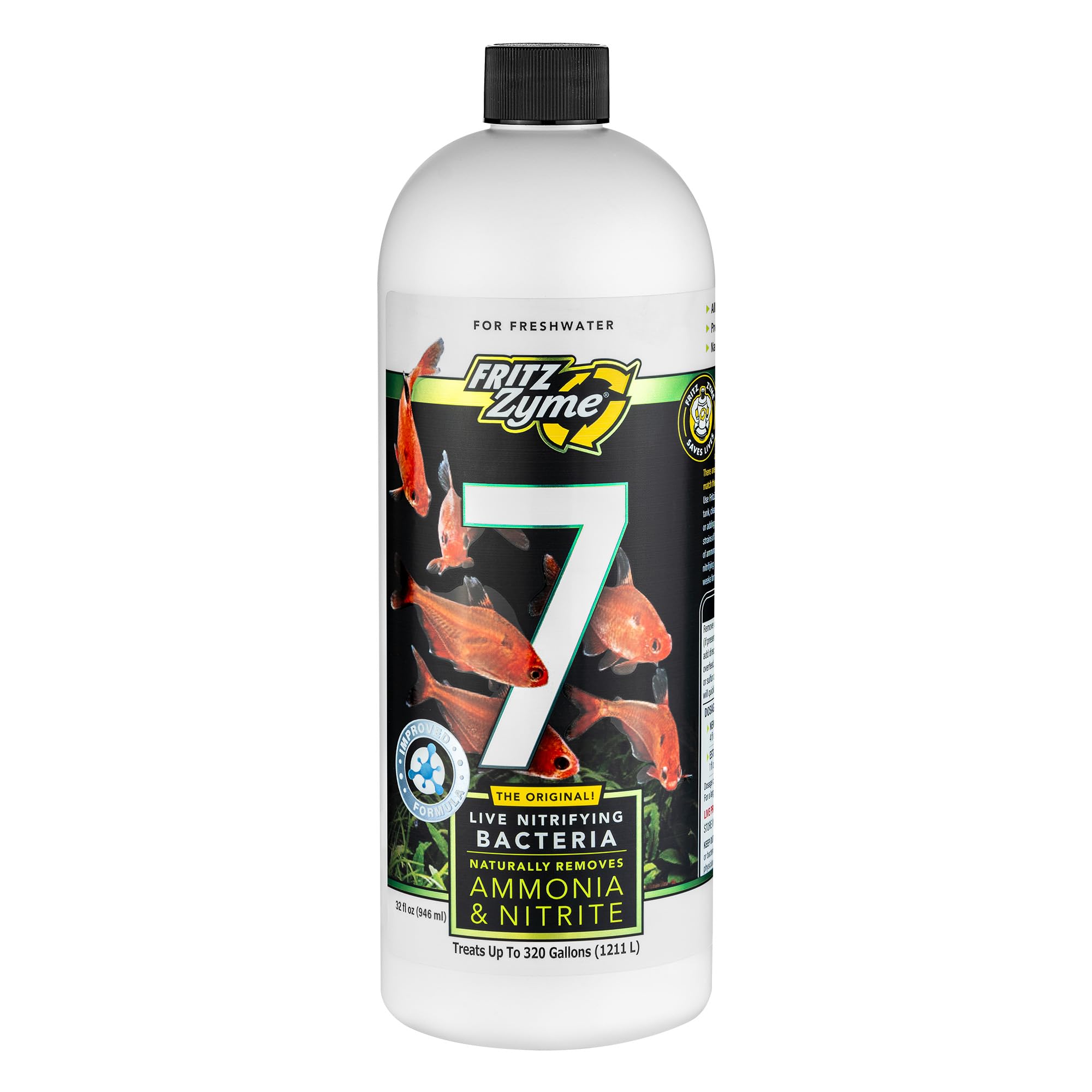
Rating: 4.6 ★ | Price: $$ | Bacteria Type: Live nitrifying | Bottle Size: 32 oz | Water Types: Freshwater & Brackish | Cycle Speed: Rapid cycle (under 2 weeks)
The FritzZyme 7’s 32 oz bottle treats hundreds of gallons, making it a cost-effective alternative to smaller cycling supplements. Unlike the top pick, which offers consistent results, FritzZyme’s live bacteria require a fresh batch date and cool shipping to remain active. Best for experienced aquarists cycling large tanks who want fast results and don’t mind verifying batch freshness.
Pros
- 32 oz bottle treats hundreds of gallons – exceptional value for large tanks.
- Rapidly reduces ammonia and nitrite during new tank cycling.
- Helps maintain stable water parameters once the cycle is established.
Cons
- Bacterial viability can be compromised by heat during shipping – bottles may arrive with a rotten odor.
For large-tank cycling where speed matters, FritzZyme 7 offers exceptional value – but only if you get a fresh bottle. Buy from a retailer with high turnover or check the date at purchase.
Best for Saltwater Nitrate Control
Brightwell MicroBacter7 16.9 oz

Rating: 4.7 ★ | Price: $$$ | Bacteria Type: Live + enzyme blend | Bottle Size: 16.9 oz | Water Types: Freshwater & Marine (reef) | Cycle Speed: 2-week cycle possible
While API Quick Start is the safer bet for cycling a new tank from scratch, MicroBacter7 targets a different need: nutrient control in established systems. It actively lowers nitrates and phosphates, leaving water crystal clear within days – a capability most budget starters lack. It can also help speed up biological filter establishment in new tanks, but this is secondary to its maintenance role.
This bioculture is designed for experienced aquarists managing reef or high-bioload tanks, not for freshwater beginners looking to cycle a first aquarium. In new or unstable systems, ammonia spikes and occasional livestock losses have been noted, so it fits best after the initial cycle is complete and nutrient reduction is the goal.
Pros
- Water clarity improves noticeably within days of use.
- Reduces nitrates and phosphates in established reef tanks.
- Can accelerate biological filter maturation when used alongside a cycling method.
Cons
- Designed more for ongoing maintenance than for kickstarting a new tank’s cycle.
- In new or unstable tanks, ammonia spikes or livestock losses can occur – better suited to established systems.
For reef keepers managing high nutrients, this delivers clarity and control that budget starters can’t match.
Best for Freshwater Fish-In Cycling
Tetra SafeStart Plus 8.45 oz
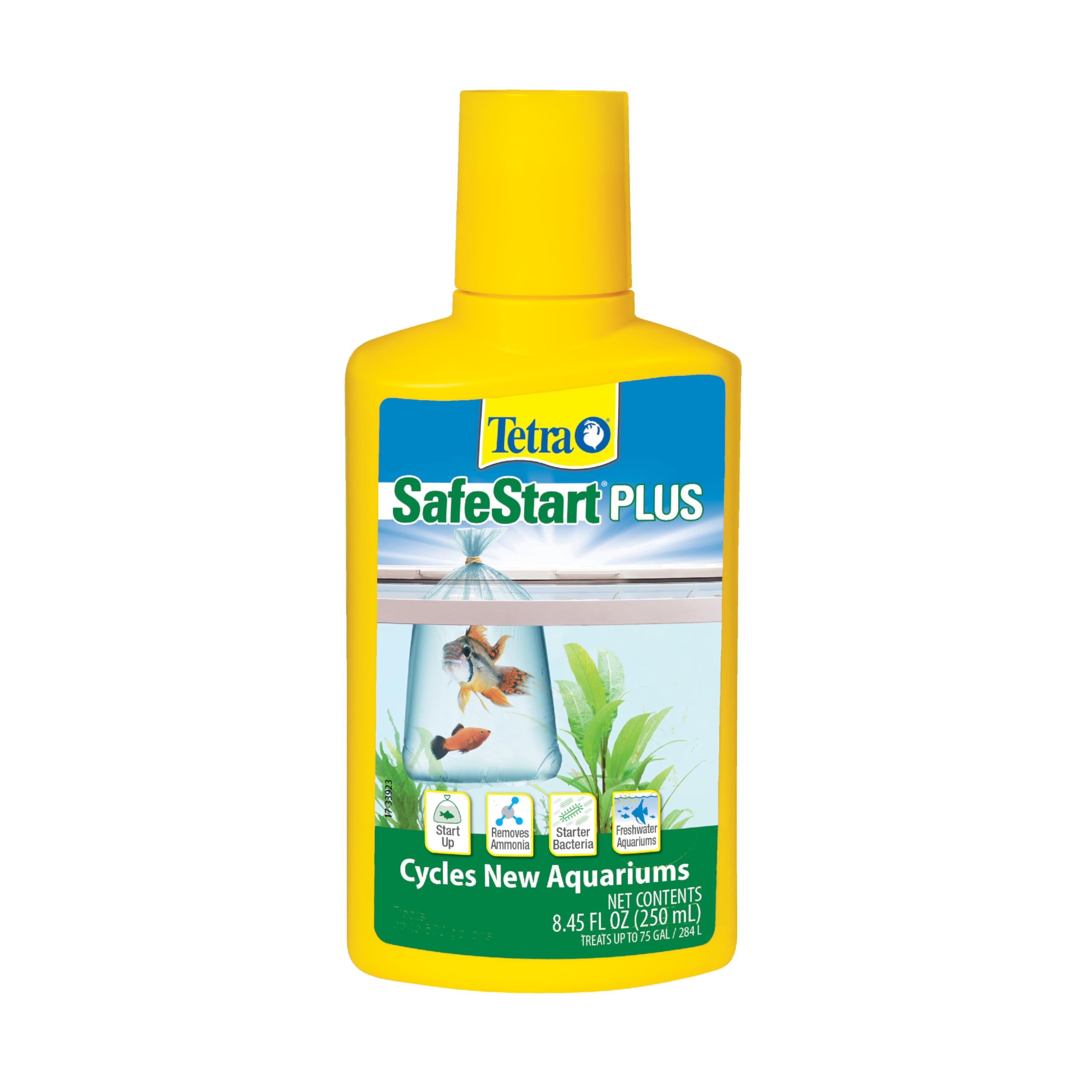
Rating: 4.6 ★ | Price: $$ | Bacteria Type: Live bacteria | Bottle Size: 8.45 oz | Water Types: Freshwater only | Cycle Speed: 7-10 day cycle
This live bacteria supplement cycles freshwater tanks in 7-10 days, faster than many enzyme-based starters. It handles fish-in cycling with minimal stress to fish, making it a practical choice for hobbyists who want to add fish early. Best suited for tanks up to 50 gallons where speed and fish safety are priorities.
Pros
- Cycles freshwater tanks in 7-10 days, reducing the waiting period for new setups.
- Low-stress fish-in cycling – fish remain active and healthy during the process.
Cons
- Higher cost per ounce than competing cycling supplements, especially for larger tanks.
- Some bottles may arrive with non-viable bacteria due to storage or shipping conditions.
A solid choice for freshwater tanks under 50 gallons where a quick, safe cycle is worth the extra cost. Check bottle condition on arrival to ensure bacteria are active.
Best for Sludge Control Maintenance
API Stress Zyme 4 oz

Rating: 4.8 ★ | Price: $ | Bacteria Type: Cleaner / sludge eater | Bottle Size: 4 oz | Water Types: Freshwater & Saltwater | Cycle Speed: Not for cycling (maintenance)
For established tanks with messy fish like goldfish, API Stress Zyme keeps water visibly clear and gravel sludge-free with minimal effort. It breaks down organic waste and reduces the need for frequent gravel vacuuming. However, this is a maintenance product—it will not cycle a new tank or establish biological filtration from scratch. In tanks with sensitive invertebrates such as shrimp or snails, some users have noted stress or losses; starting with a reduced dose is advisable.
Pros
- Keeps water crystal clear and gravel clean with regular use.
- Budget-friendly – a small bottle goes a long way for routine maintenance.
- Fish often show improved activity and clarity in treated tanks.
Cons
- Not suited for cycling new tanks – works only on established biological filters.
- In tanks with sensitive invertebrates, a reduced starting dose is advisable to avoid stress.
For aquarists with an established, messy tank who want clear water without frequent gravel vacuuming, this is a cost-effective solution. Skip it if you need to cycle a new aquarium.
Best for Filter Media Enhancer
Fluval Cycle 16.9 oz

Rating: 4.7 ★ | Price: $$ | Bacteria Type: Enzyme-based | Bottle Size: 16.9 oz | Water Types: Freshwater & Saltwater | Cycle Speed: Cycling enhancer
This enzyme-based biological enhancer pairs well with Fluval filters and offers good value for the bottle size. Some users have experienced temporary cloudiness after dosing, and occasional livestock losses have been reported—likely tied to pre-existing water conditions. Best for Fluval filter owners who prioritize brand synergy and can accept these tradeoffs.
Pros
- Boosts beneficial bacteria and stabilizes cycles
- Good value for the bottle size
Cons
- May cause temporary cloudiness after dosing
For Fluval filter owners who want a brand-compatible enhancer and can accept occasional cloudiness, this is a cost-effective option.
Best for Nano Betta Tanks
Tetra SafeStart 3.38 oz

Rating: 4.7 ★ | Price: $ | Bacteria Type: Live bacteria starter | Bottle Size: 3.38 oz | Water Types: Freshwater only | Cycle Speed: 24-48 hr drop
Tetra SafeStart delivers quick cycling for nano tanks (5-10 gallons) at an entry-level price. The 3.38 oz bottle treats up to 20 gallons, but for larger tanks the cost per dose adds up – a larger bottle or alternative is more economical. Best kept for small freshwater setups.
Pros
- Quick ammonia drop in small tanks within 24-48 hours.
- Budget-friendly entry point – under $9 per bottle.
Cons
- Small bottle size makes it uneconomical for tanks over 20 gallons.
Ideal for nano tank and betta owners seeking a low-cost cycling starter, but not a good fit for larger aquariums.
Best for Budget Cycling Starter
Microbe-Lift Nite-Out II 8 oz

Rating: 4.6 ★ | Price: $ | Bacteria Type: Live Nitrosomonas/Nitrobacter | Bottle Size: 8 oz | Water Types: Freshwater & Saltwater | Cycle Speed: 48-hour reduction
For quick ammonia reduction during new tank setup, Nite-Out II delivers noticeable results within two days for both freshwater and saltwater systems. The bottle’s nearly impossible-to-open cap may require tools, and some users note an unpleasant odor that fades. These quirks keep it from top tiers, but the performance and value suit hobbyists willing to accept minor frustrations.
Pros
- Reduces ammonia and nitrite levels noticeably within 48 hours.
- Budget-friendly for the cycling results it provides.
Cons
- Bottle cap demands considerable force to open; some users rely on tools.
Best for budget-conscious aquarists who prioritize cycling speed over packaging convenience and can tolerate a minor odor that dissipates.
Best for Small Freshwater Tanks
Brightwell Start XLF 4.22 oz

Rating: 4.6 ★ | Price: $$ | Bacteria Type: Concentrated freshwater bacteria | Bottle Size: 4.22 oz | Water Types: Freshwater only | Cycle Speed: Quick cycle with small doses
The 15x concentration treats small aquariums with just a few drops, making it economical per dose even though the bottle is compact. It rapidly seeds nitrifying bacteria to reset biofiltration after filter cleaning or medication. In some systems, ammonia or nitrite levels may not show a measurable change — this is more common when the existing biofilm already handles the bioload. The small bottle size yields a higher per-ounce cost than bulk options, but for a 5-20 gallon tank, the total volume needed stays modest.
Pros
- Highly concentrated formula requires only a few drops per dose, keeping cost per treatment low
- Quickly establishes nitrifying bacteria to shorten cycling time after filter disruptions
Cons
- Small bottle size pushes the per-ounce price above some larger-format starters
If you’re maintaining a small freshwater tank and already trust Brightwell’s ecosystem, this concentrated starter can be a practical tool for cycle reboots.
Best for Sludge Control Maintenance
Seachem Pristine 3.4 oz

Rating: 4.6 ★ | Price: $$ | Bacteria Type: Waste reducer | Bottle Size: 3.4 oz | Water Types: Freshwater & Marine | Cycle Speed: Not for cycling (waste)
Seachem Pristine breaks down sludge and detritus, improving water clarity in established tanks — but it is not a cycling product. The small bottle carries a premium price, and results can be inconsistent among users. Best suited as a supplement to a regular bacteria regimen, not as a primary filter starter.
Pros
- Reduces visible waste buildup in high-bioload tanks
- Safe for sensitive reef setups when dosed correctly
Cons
- Small bottle at a premium price with mixed effectiveness in some setups
A worthwhile addition for reef keepers or high-bioload tanks already using a bacteria supplement — not for new tank cycling.
Best for Heavily Stocked Tanks
Fluval Waste Control 8.4 oz

Rating: 4.5 ★ | Price: $ | Bacteria Type: Waste breakdown | Bottle Size: 8.4 oz | Water Types: Freshwater & Saltwater | Cycle Speed: Not for cycling (cleaner)
This Fluval formulation aggressively breaks down organic waste, cutting down gravel cleaning and filter maintenance for heavily stocked freshwater tanks. The biological process can cause water parameter swings, making it a tradeoff for aquarists willing to monitor closely rather than a set-and-forget solution.
Pros
- Effectively breaks down organic waste for noticeably clearer water.
- Reduces frequency of gravel cleaning and filter maintenance – saves time.
Cons
- Higher risk of harming sensitive fish or invertebrates when used in tanks with delicate species.
Best suited for experienced aquarists with heavily stocked tanks who can monitor water parameters and accept the occasional livestock risk.
How to Choose
The real key to success is using the right bacteria type for your goal—cycling or maintenance—and following the dosing schedule precisely.
Bacteria Type: Live vs. Enzyme vs. Maintenance
Live nitrifying bacteria (like those in FritzZyme and Brightwell) colonize your filter media directly and can cycle a tank in under two weeks. They are fragile—exposure to heat during shipping can kill them, leaving you with an expensive bottle of dead bacteria.
Enzyme-based supplements (API Quick Start, Fluval Cycle) use dormant bacteria that become active once added to the tank. They are more shelf-stable and produce consistent results, but cycle times tend to be slightly longer—often two to three weeks instead of days. Maintenance products (API Stress Zyme, Seachem Pristine) consume organic waste but do not establish the nitrogen cycle at all.
Bottle Size and Treatable Volume
A 4-ounce bottle may treat a 20-gallon tank for a few doses, but large tanks (75+ gallons) require significantly more product. FritzZyme 7’s 32-ounce bottle offers the best cost-per-dose for big setups, while Tetra SafeStart’s tiny 3.38-ounce bottle is perfect for a single nano tank. Match the bottle volume to your tank size and expected dosing frequency.
Water Type Compatibility
Many supplements work for both freshwater and saltwater, but some are freshwater-only (Tetra SafeStart). Brightwell MicroBacter7 excels in saltwater and reef tanks due to its nitrate-reducing strains. If you plan to switch between fresh and salt setups, choose a product labeled for both to avoid buying separate bottles.
Cycle Speed Claims vs. Reality
Brands often advertise ‘instant cycling’ or ‘add fish immediately,’ but real-world results depend on tank parameters, temperature, and bioload. API Quick Start allows fish introduction within 24 hours if instructions are followed, but many users see full cycle only after one to two weeks. Live bacteria products like Tetra SafeStart Plus can cycle in 7–10 days, but shipping damage may delay results. Always test water parameters and dose daily as directed, not only once.
FAQ
Why did my aquarium bacteria supplement make the water cloudy?
Cloudiness is usually a bacterial bloom—a temporary spike in free-floating bacteria as they multiply. It is most common with live bacteria products (like FritzZyme or Tetra SafeStart) and typically clears within 2–4 days. Reduce feeding and ensure adequate aeration; the bloom is harmless and actually signals that the bacteria are working.
Can I add fish immediately after using a bacteria starter?
Only if the product explicitly states it allows fish-in cycling AND you dose correctly. API Quick Start allows adding fish after 24 hours when used as directed, but you must test ammonia and nitrite daily. For live bacteria starters, wait at least 48 hours after dosing before adding fish, and always use a water test kit to confirm safe levels.
Which is better for a new saltwater tank – Seachem Stability or Brightwell MicroBacter7?
For a new saltwater tank, Stability is the safer choice because it is designed for cycling and has a lower risk of livestock stress. MicroBacter7 is better for established reef tanks that need nitrate control; using it on a new tank can sometimes cause ammonia spikes. Start with Stability, then switch to MicroBacter7 once the tank is stable.
How long does it really take to cycle a tank with API Quick Start?
Most users report a full cycle (ammonia and nitrite at zero) within 10–14 days when dosing daily as directed. Some see results in as little as 5 days, while a minority experience no change for weeks. It is not an instant solution, but it is one of the most reliable enzyme-based options.