This post contains affiliate links. We may earn a small commission when you buy through our links — at no extra cost to you.
Most cichlid food labels promise slow-sinking pellets and crystal-clear water. In practice, many pellets drop like stones the second they hit the surface, and cloudiness appears regardless of what the bag says. That gap between marketing and real tank performance makes choosing the right food harder than it should be.
This guide cuts through those claims by focusing on what actually matters: pellet size that matches your fish’s mouth, sinking behavior that fits your feeding strategy, and ingredients that deliver color and health without fouling the water. The right choice depends on your cichlid species and setup, not brand hype.
We sorted through dozens of options to find the foods that work consistently – the ones that sink when they should, float when they should, and get eaten instead of ignored. Here’s what a cichlid keeper actually needs to look for.
Top Picks
Best for African Cichlids, Bottom Feeders
Hikari Sinking Gold Mini

Rating: 4.7 ★ | Price: Mid-Range | Form: Sinking mini pellet | Key Feature: Beta-carotene, 40% protein
Hikari Sinking Gold Mini draws on a 40% protein formula with beta-carotene to bring out natural coloration across African and South American cichlids. The mini pellet size fits most medium-sized fish, and acceptance rates are high among cichlids, koi, and oscars.
The pellets sink fast — a pro for bottom feeders like catfish and mbuna, but not a slow-sinking food for mid-water or surface feeders. In tanks with gravel, some pellets can settle out of reach, so adjust feeding spots accordingly. Water cloudiness is possible in a minority of cases, typically when too much is added at once.
Best for keepers of medium to large community cichlid tanks who want a single staple that supports both color and growth. Not ideal for adult Oscars or other very large cichlids that need bigger pellets, nor for herbivore-specific diets like mbuna that require a spirulina-based food.
Pros
- Widely accepted by cichlids, koi, and oscars across tank sizes.
- Noticeably enhances reds, yellows, and blues within weeks of feeding.
- Sinks quickly for bottom feeders, reducing waste at the surface.
Cons
- Mini pellets may be too small for large cichlids like adult Oscars — best for medium fish.
- Fast sinking can cause pellets to disappear into gravel or miss surface-oriented fish.
A capable daily staple for community cichlid tanks where sinking food and color enhancement are the priority.
Best for Large Tanks, Budget
TetraCichlid Flakes 5.65 oz

Rating: 4.8 ★ | Price: Budget | Form: Flake | Key Feature: Clear-water formula, ProCare
The TetraCichlid Flakes deliver the lowest cost per ounce among cichlid-specific foods, with large flakes that cichlids eagerly eat. These are best for top- and mid-water feeders in large community tanks; fish that prefer sinking pellets may ignore them entirely. A small number of keepers have noted temporary water cloudiness, but for budget-conscious owners of multiple cichlid tanks who prioritize quantity over specialty formulas, the value is hard to beat.
Pros
- Large 5.65 oz can at a budget-friendly price per ounce.
- Cichlids readily accept the flakes, including angels and large species.
- Flakes hold their shape with minimal dust or powder.
Cons
- Flakes may be ignored by fish that prefer sinking pellets or bottom feeders.
- Water cloudiness can occur in some tanks, especially when feeding more than a pinch.
If your cichlids take flakes and you feed multiple large tanks daily, this is the most economical staple. For fish that need sinking pellets, the top pick is a better fit.
Best for African Cichlids Color
Xtreme Peewee 1.5mm 20oz
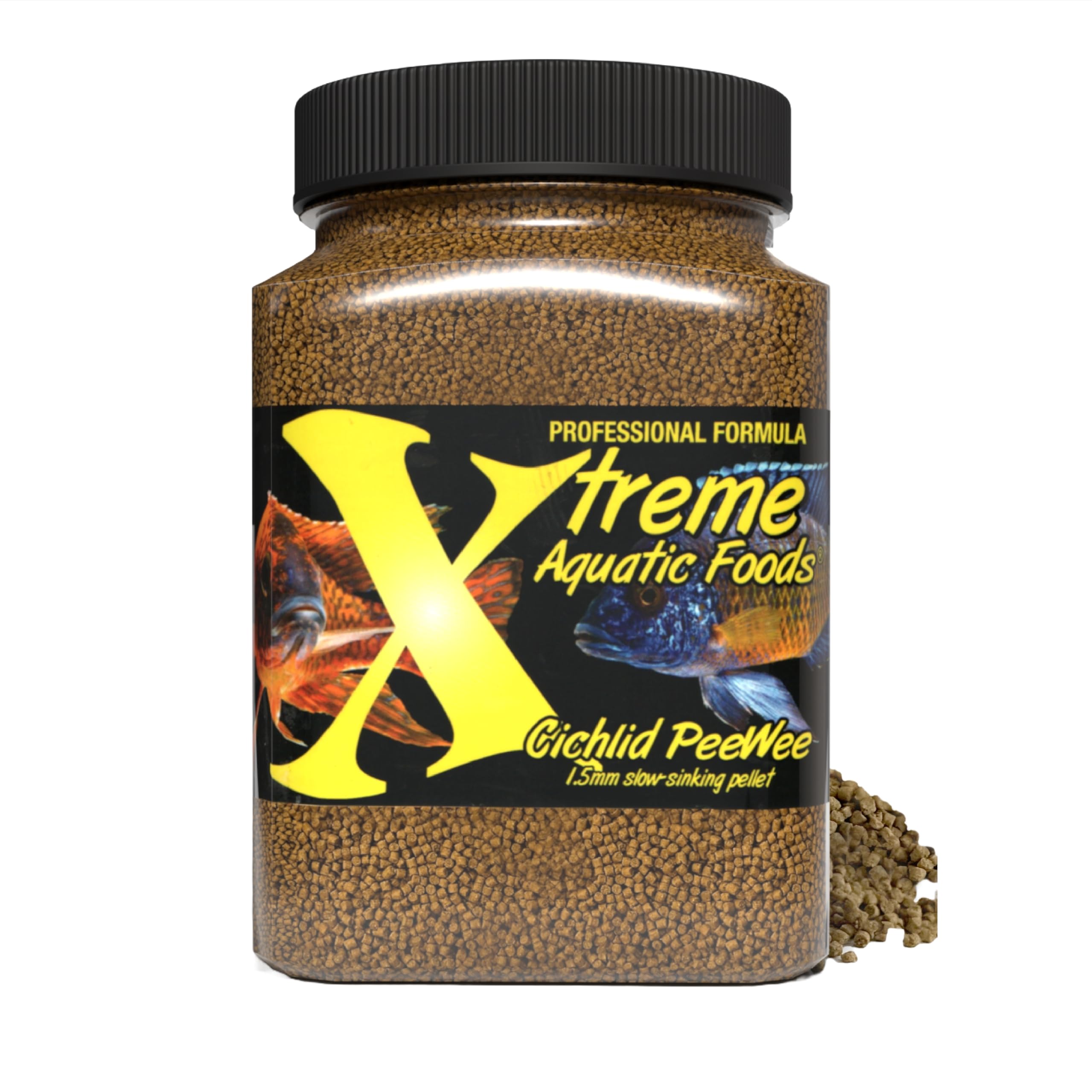
Rating: 4.6 ★ | Price: Premium | Form: Sinking pellet 1.5mm | Key Feature: Krill, shrimp, squid, spirulina
This pellet delivers striking color gains and feeding enthusiasm that few foods match, thanks to a dense blend of krill, shrimp, and spirulina. The 1.5mm size suits peacocks, mbuna, and similar fish perfectly, but it sinks fast — ignore the “slow sinking” label. Keepers of larger cichlids should look at the top pick (Hikari Sinking Gold) for a pellet that fits bigger mouths and floats longer.
Pros
- Cichlids show strong feeding response, even picky individuals.
- Dramatic color brightening visible within a couple of weeks.
- Made with natural ingredients — no fillers or artificial additives.
Cons
- Pellets sink immediately in most tanks despite the “slow sinking” claim.
If you keep small to medium African cichlids and prioritize color over floating behavior, this is a strong daily staple. Skip it for Oscars or any fish that need a larger pellet.
Best for Herbivorous African Cichlids
Hikari Excel Sinking Mini

Rating: 4.7 ★ | Price: Mid-Range | Form: Sinking mini pellet | Key Feature: Spirulina-rich, plant-based
Hikari Excel Sinking Mini delivers a plant-based formula with spirulina as a key ingredient, making it a direct match for mbuna and other herbivorous cichlids that need a diet low in animal protein. It sinks quickly, reaching bottom feeders without surface waste, though the mini pellet size may be too small for larger cichlids and occasional water cloudiness has been noted in some tanks.
Pros
- Spirulina-rich, plant-based formula supports the health and color of herbivorous cichlids.
- Sinks rapidly to deliver food directly to bottom-dwelling cichlids without surface waste.
- Offers strong value for a specialized herbivore food at a mid-range price.
Cons
- Mini pellet size can be too small for larger cichlids, limiting use to smaller species.
- Water cloudiness may occur in some setups, depending on feeding routine and tank conditions.
A dedicated herbivore pellet that fits best for mbuna and small to medium African cichlid keepers who value a spirulina-rich formula and accept the mini size and possible cloudiness.
Best for Large Cichlids (Oscars)
Hikari Floating Large 8.8oz

Rating: 4.6 ★ | Price: Mid-Range | Form: Floating large pellet | Key Feature: Vitamin C, immune support
Unlike the top pick’s sinking pellet, this floating formula keeps food visible so you can track exactly how much each fish eats. The large size suits Oscars, Flowerhorns, and similar big mouths, and fish accept it readily. Best for keepers of large cichlids who value feeding visibility. Pellets are too big for small cichlids, and the smaller review base means less long-term data than Hikari’s other lines — something to consider if you prefer well-established formulas.
Pros
- Pellet size matches large cichlid mouths like Oscars and Flowerhorns.
- Good value for a mid-range floating staple.
- Fish accept it well and maintain health over time.
Cons
- Water clarity may shift in some tanks – worth monitoring after switching.
A fair-priced floating staple for large cichlid keepers who want feeding visibility, though the smaller review base means less long-term track record than Hikari’s top-selling line.
Best for Budget Floating Pellets
Tetra Floating Pellets 6 oz

Rating: 4.6 ★ | Price: Budget | Form: Floating pellet | Key Feature: ProCare, clear-water
A low-cost floating pellet for large cichlids, packing 6 ounces into a budget-friendly container. The pellets generally float long enough to monitor feeding, though a portion may sink quickly. Acceptance is hit-or-miss — some fish eat them readily, others ignore them entirely, and the refusal rate is higher than the top floating pellet option. This works well as a supplementary food or for keepers who want to test acceptance risk, but it’s not a reliable daily staple for picky eaters.
Pros
- Low per-ounce cost for a large 6-ounce container
- Floats well for easy feeding observation
Cons
- Some pellets sink immediately despite the floating claim
A budget pick if your large cichlids accept the pellets and you don’t need consistent float behavior — best as a trial or supplement rather than a sole staple.
Best for Small-Medium Cichlids
Omega One Super Color 2mm
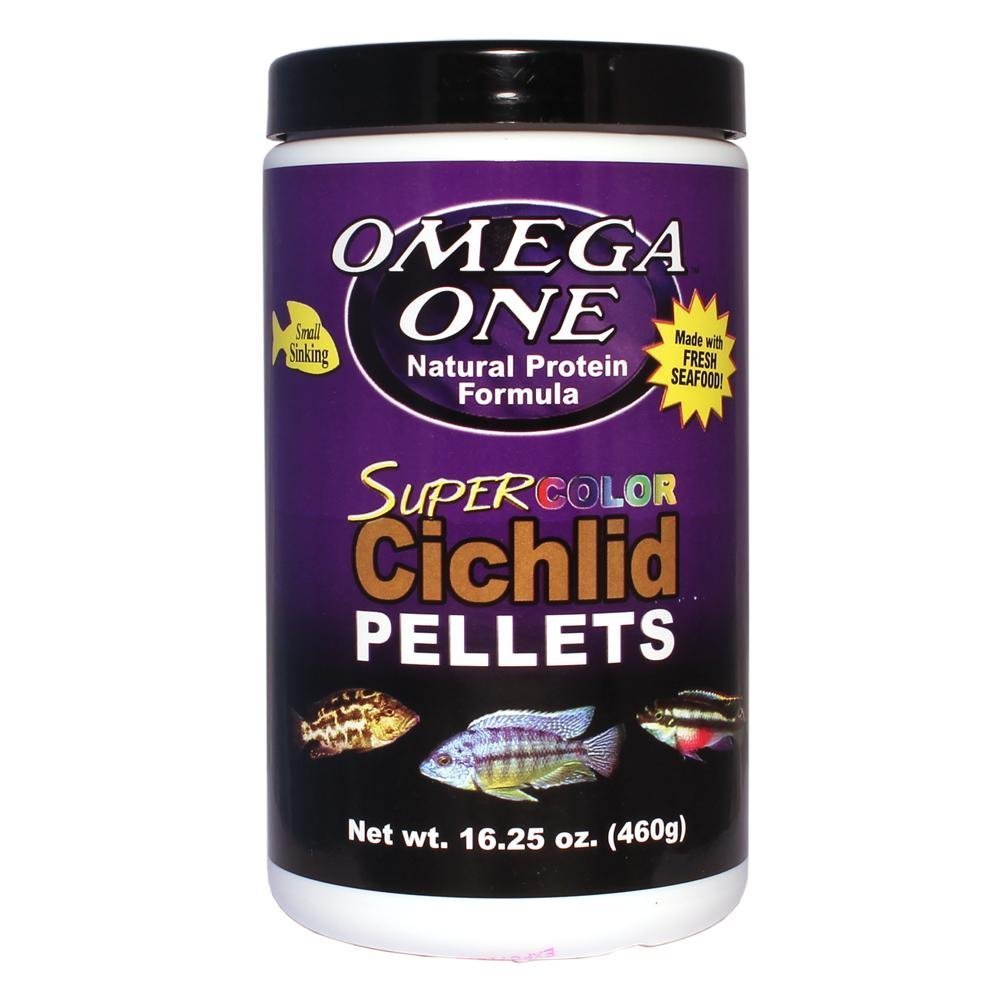
Rating: 4.7 ★ | Price: Premium | Form: Sinking 2mm pellet | Key Feature: Wild seafood, no fillers
Omega One Super Color delivers solid nutrition with wild-caught seafood and 42% protein in a bulk 16oz bag, giving small to medium cichlids a strong feeding response. However, the 2mm pellets are too small for larger cichlids like Oscars, and they sink fast rather than slowly—making this a good match for keepers with African cichlids or peacocks, not those with large fish.
Pros
- High protein with quality seafood ingredients
- Fish love it and eat eagerly
Cons
- 2mm pellet size is too small for large cichlids like Oscars or Flowerhorns
Best for small to medium cichlid keepers who want a bulk premium food; skip if your fish need larger pellets or a slow-sinking option.
Best for Insect Protein Diet
Fluval Bug Bites Med/Lg

Rating: 4.6 ★ | Price: Premium | Form: Sinking pellet (large) | Key Feature: Insect protein, omega-3
Insect protein from black soldier fly larvae makes this a natural, high-protein choice for large cichlids that can handle big pellets. However, the pellets sink immediately rather than slowly, and their size excludes medium-sized fish. The 3.53 oz bag means frequent reorders for daily feeding.
Pros
- Black soldier fly larvae as first ingredient – a clean, sustainable protein source.
- Enhances color and health in large cichlids that accept the pellet size.
Cons
- Pellet size is large and sinking is fast – ensures it reaches only big-mouthed fish quickly, but may not suit medium cichlids or those wanting slow-sinking food.
Best for large cichlid keepers who value insect-based ingredients over slow-sinking performance and are comfortable with fast-dropping, big pellets.
Best for Dwarf Cichlids, Juveniles
Fluval Bug Bites Sm/Med

Rating: 4.7 ★ | Price: Premium | Form: Slow-sinking granule 1.4mm | Key Feature: Insect-based, small size
This insect-based granule is sized perfectly for dwarf cichlids, rams, and juvenile fish – even the pickiest eaters take it readily. The 1.59 oz bag is one of the most expensive options per ounce, making it a specialized choice for small tanks rather than a bulk staple for larger setups.
Pros
- Granule size is ideal for small-mouthed cichlids; fish accept it readily.
- Insect-based recipe provides natural protein and supports digestive health.
Cons
- In a large tank with multiple fish, the 1.59 oz bag is premium-priced per ounce.
Best for keepers who need a tiny, highly palatable granule for dwarf cichlids or juveniles and are willing to pay a premium for the perfect size – not a budget bulk option.
Best for Medium-Large Treat
Xtreme Big Fella 3mm

Rating: 4.6 ★ | Price: Premium | Form: Pellet 3mm | Key Feature: Marine-based, color enhancer
The Xtreme Big Fella 3mm pellets deliver strong fish acceptance and noticeable color enhancement, making them an appealing trial-size option. However, the bag holds only 2.5oz at a premium price, and despite the name, the pellets are smaller than many large cichlid keepers expect – better suited for single fish or small tanks than a daily staple.
Pros
- Strong palatability – cichlids accept the food readily.
- Visible color improvement reported within weeks of regular feeding.
Cons
- Pellet size is smaller than ‘Big Fella’ suggests – may be too small for large cichlids like Oscars.
Worth considering only if you have a single medium-large cichlid and want to try a high-quality food without committing to a large bag.
Best for Filler-Free Natural
Northfin Cichlid 3mm 500g
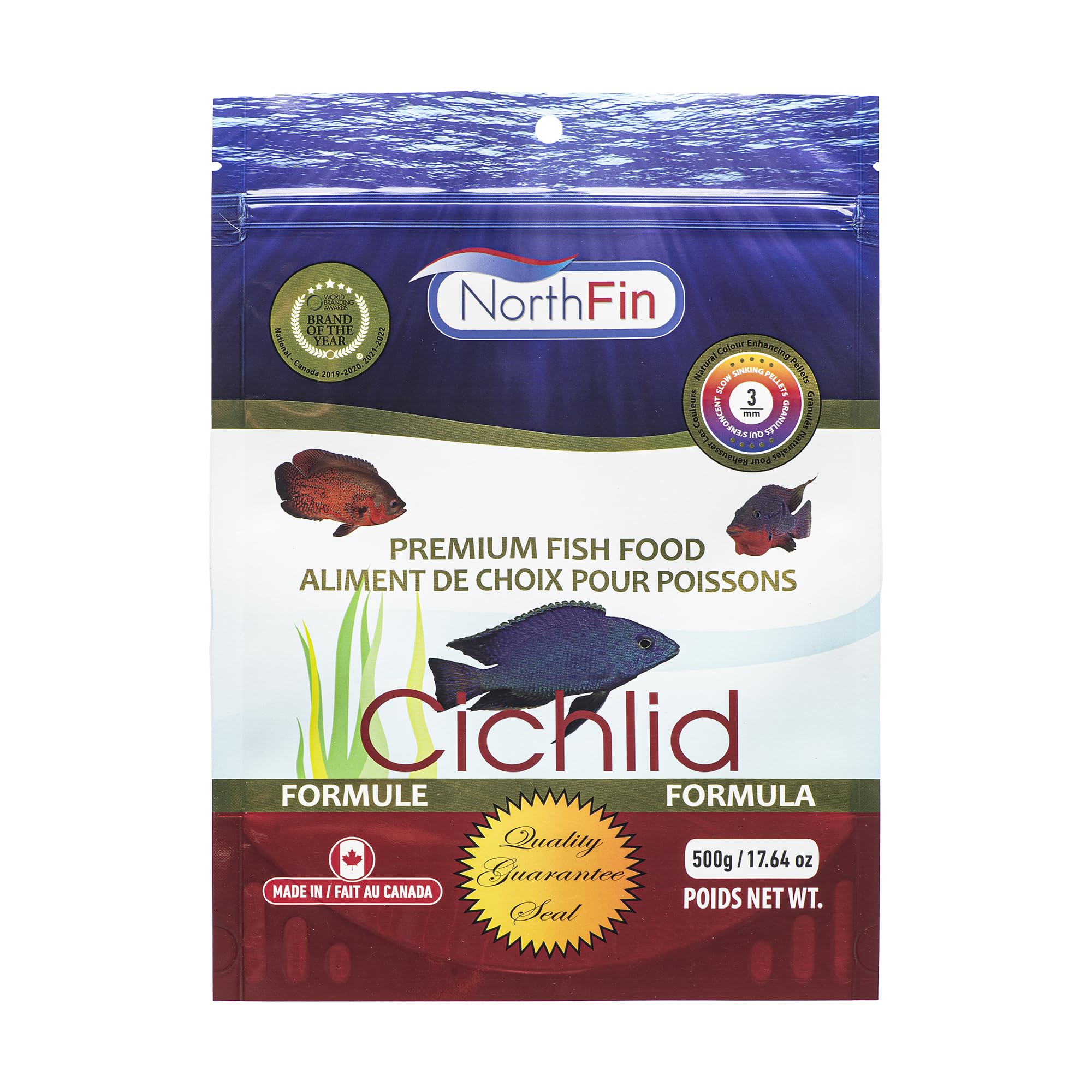
Rating: 4.5 ★ | Price: Premium | Form: Sinking pellet 3mm | Key Feature: Filler-free, no hormones
Pure ingredient list with no fillers appeals to keepers who prioritize diet purity. However, pellet sink speed is fast despite labeling, and the price per ounce is higher than top picks. Suited for those who value clean ingredients over functional advantages.
Pros
- No fillers, hormones, or artificial additives – clean ingredient profile.
- Fish show improved color and health with regular feeding.
Cons
- Pellets sink too fast for surface feeding; not truly slow-sinking.
Best for cichlid keepers who insist on filler-free food and accept faster sinking and a premium price.
How to Choose
The most important decision when buying cichlid food isn’t brand – it’s matching the food’s form and sinking behavior to your fish’s feeding habits and mouth size.
Food Form and Sinking vs Floating
Flakes stay at the surface and are great for top- and mid-water feeders, but they create more waste if uneaten. Pellets come in sinking or floating versions – but ‘slow sinking’ is rarely accurate. Most pellets sink immediately, which can bury food in gravel or miss surface-oriented fish.
If you have bottom feeders like catfish or mbuna that graze on rocks, sinking pellets are ideal. For Oscars and Flowerhorns that feed at the surface, floating pellets let you watch them eat and avoid waste. Check user reviews for actual sinking speed, since package claims are often misleading.
Pellet Size vs Fish Mouth
Pellet size is the most overlooked spec. A 3mm pellet is too large for a 2-inch ram, and a 1.5mm pellet is too small for an adult Oscar. The wrong size leads to choking, refusal, or wasted food. Measure your fish’s mouth opening and choose accordingly.
For mixed tanks, a mid-size pellet (2-3mm) works for most medium cichlids. If you have both small and large fish, consider crushing larger pellets or using two different foods. Many premium brands offer multiple sizes for the same recipe.
Protein Content and Sources
Cichlids need high protein – 35-45% is typical for most species. Herbivorous cichlids (mbuna, Tropheus) need more plant-based protein from spirulina, while carnivorous species (Oscars, Flowerhorns) do better with fish meal or krill. Protein percentage alone isn’t enough; the source matters.
Foods with whole seafood or insects as the first ingredient (like Fluval Bug Bites or Omega One) provide better amino acid profiles than those using generic fish meal. But higher protein often means more waste, so adjust feeding amounts to avoid water quality issues.
Color Enhancing Ingredients
Color-enhancing foods typically add astaxanthin, spirulina, or krill to bring out reds, oranges, and yellows in cichlids. These pigments work best when fed consistently for 2-4 weeks. The effect is most visible on light-colored fish like peacocks and zebra cichlids.
However, color enhancers can sometimes cause water cloudiness if overfed. Start with small amounts and observe your tank. Not all cichlids respond equally – genetics also play a role. If you don’t see a change after a month, the food’s pigment levels may be too low.
Water Clarity Impact
Cloudy water after feeding is usually from uneaten food breaking down or from fillers that dissolve quickly. Premium foods with whole ingredients tend to produce less waste, but even high-quality pellets can cloud the tank if you overfeed. The solution is portion control, not switching brands.
Some foods marketed as ‘clear water’ still cause cloudiness in certain conditions – especially if you have heavy stocking or weak filtration. Test a new food with a small amount first. If clouding persists, reduce the feeding amount and remove leftovers after 5 minutes.
FAQ
Why do my cichlids spit out sinking pellets?
Spitting usually means the pellet is too large or too hard. Try crushing the pellet into smaller pieces or soaking it for a few minutes to soften it. Some cichlids are also picky about ingredients – switching to a fishmeal or insect-based formula may improve acceptance. If only one type of food is rejected, the texture or taste is the likely cause.
How do I keep cichlid food from clouding my tank water?
Clouding is almost always from overfeeding. Start with a pinch per fish and remove any uneaten food after 3-5 minutes. If clouding persists, check your filter for adequate mechanical media (fine sponge or filter floss). Some premium foods like Northfin and Xtreme Peewee are reported to cause less clouding than budget alternatives, but no food is cloud-proof if too much goes in.
What size pellet should I feed my adult African cichlids?
For most adult peacocks and haps, 2–3mm pellets work well. Mbuna with smaller mouths do better with 1.5–2mm pellets. If you have a mix, a 2mm sinking pellet like Omega One Super Color is a safe middle ground. For large cichlids like Oscars, use 4mm or larger floating pellets – they can swallow bigger pieces.
Hikari vs Northfin vs Xtreme – which cichlid food is best for color?
Xtreme Peewee has the strongest anecdotal results for color improvement, thanks to its high krill and spirulina content. Hikari Sinking Gold also boosts color but more gradually. Northfin is cleaner (no fillers) but its color enhancement is less dramatic. For the fastest visible change, go with Xtreme; for a well-rounded staple that also enhances color, Hikari Gold is the more proven choice.