This post contains affiliate links. We may earn a small commission when you buy through our links — at no extra cost to you.
Many fishkeepers have seen a pellet labeled ‘sinking’ bob on the surface, or a ‘mini’ pellet that’s too big for a betta’s mouth. Marketing can overpromise; real-world behavior often tells a different story.
The recommendations here prioritize consistent pellet size, reliable sinking performance, and ingredients that keep water clear. These factors matter more than flashy claims when you’re feeding your fish daily.
The right pellet fits your fish’s size, feeding style, and tank conditions — not just the promises on the package.
Top Picks
Best for Goldfish Keepers
Tetra Goldfish Variety Pellets
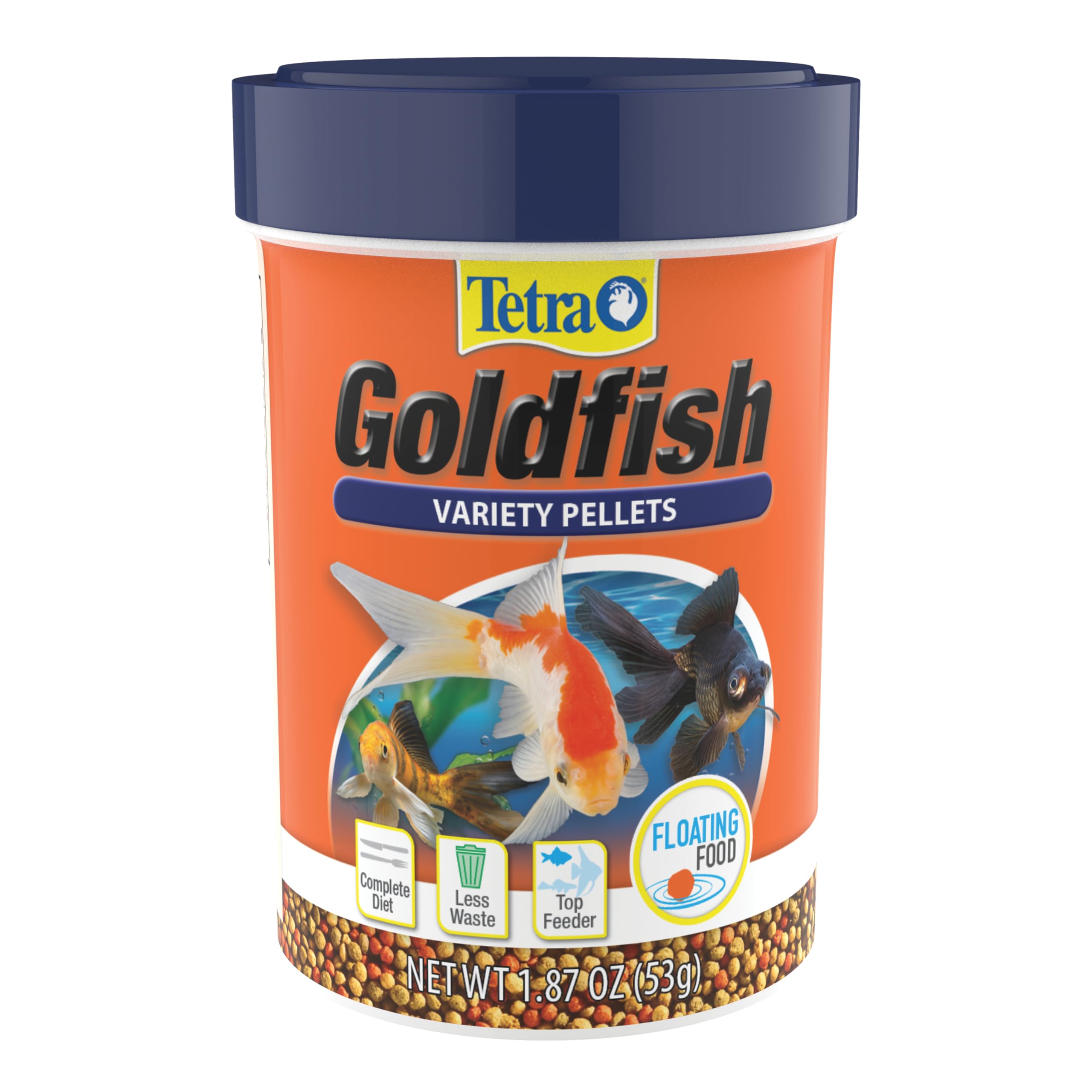
Rating: 4.7 ★ | Price: $ | Pellet Type: Floating | Target Species: Goldfish | Key Ingredient: ProCare blend | Container Size: 1.87 oz
Goldfish keepers consistently find that these floating pellets disappear quickly at feeding time – fish readily accept the blend, and the ProCare immune support adds a practical health layer. The 1.87-ounce container keeps a single tank fed for weeks without requiring frequent re-orders, making the per-serving cost noticeably low.
This formula fits best in established goldfish tanks with decent filtration and moderate stocking levels. In smaller tanks where even a few uneaten pellets can quickly affect water quality, a different food with tighter portion control may be a better fit. Larger aquariums and multi-tank households will appreciate the value and consistent acceptance across different goldfish varieties.
Pros
- Exceptional value for money
- Highly palatable; fish love it
- Large container lasts months
Cons
- Water cloudiness may appear in tanks with light filtration or heavy feeding
- Uneaten pellets in small tanks can degrade water quality faster than alternatives
A straightforward, well-tested pellet that delivers solid nutrition and value for goldfish – just keep an eye on water clarity in smaller or lightly filtered setups.
Best for Cichlid Keepers
Hikari Cichlid Gold Mini

Rating: 4.7 ★ | Price: $$ | Pellet Type: Sinking | Target Species: Cichlids | Key Ingredient: Color enhancers | Container Size: 12 oz
This pellet’s high-protein formula with color enhancers is specifically designed to bring out vibrant hues in African and South American cichlids. The mini size works well for many species, but larger cichlids may need a larger pellet, and very small fry might find these pellets too big. Compared to the top goldfish pellet, this is a targeted food for cichlid keepers who want sinking food with proven color benefits.
Pros
- High-quality ingredients support healthy growth and vitality.
- Enhances natural coloration in cichlids.
- Good value for cichlid-specific food; mid-range pricing.
Cons
- Pellet size may not suit very large or very small cichlids.
- Some pellets may float briefly before sinking, which can be a concern for fish that prefer immediate sinking food.
This is the right choice for cichlid keepers who want a premium sinking pellet with proven color enhancement, as long as the mini size matches their fish.
Best for Betta Keepers
Hikari Betta Bio-Gold

Rating: 4.8 ★ | Price: $$ | Pellet Type: Floating | Target Species: Betta | Key Ingredient: Bio-Gold formula | Container Size: 3-pack
These ultra-tiny floating pellets are sized for bettas’ small mouths and include color-enhancing ingredients. The 3-pack supplies multiple tanks at a mid-range cost, offering practical value. Where the top pick targets goldfish, this product is narrowly focused on bettas — welcome specialization for that audience. The snip-and-pour packaging can make precise dispensing tricky; transferring to a jar solves this. Best for betta keepers who want size-appropriate food and color support rather than a general-purpose pellet.
Pros
- Bettas show strong preference for these pellets.
- Tiny size prevents overfeeding and matches betta mouth.
- Three-pack offers good value for multi-tank owners.
Cons
- Packaging requires snipping and pouring, which can lead to imprecise dispensing.
For betta owners who want a size-optimized, color-enhancing pellet in a practical bulk pack, this is the right choice.
Best for Pond Owners
Blue Ridge Koi Mini Growth

Rating: 4.6 ★ | Price: $ | Pellet Type: Floating | Target Species: Koi/Goldfish | Key Ingredient: Growth formula | Container Size: 5 lb bag
At roughly half the cost per ounce of most pond pellets, this 5-pound bag is the clear budget choice for owners feeding multiple koi or goldfish. The floating mini pellets are appropriately sized for small to medium pond fish and have shown improvements in color and health. However, palatability can vary—some fish may refuse the pellets—so this food is best suited for non-picky eaters and situations where a few uneaten pellets are acceptable. This is not intended for small aquarium setups.
Pros
- Budget-friendly cost per ounce for feeding large pond populations
- Pellet size suits small to medium pond fish
- Fish show noticeable improvements in color and overall condition
Cons
- Water clarity issues have been noted in some cases, including reports of cloudy water
This is the most cost-effective bulk pond food for owners who prioritize value above all else.
Best for Bottom Feeders
API Bottom Feeder Pellets

Rating: 4.7 ★ | Price: $$ | Pellet Type: Sinking (intended) | Target Species: Bottom feeders | Key Ingredient: Squid | Container Size: 7.9 oz
API’s squid-based pellets trigger a strong feeding response from plecos and loaches, outperforming many budget bottom-feeder foods that struggle with consistency. The pellets hold together well after hitting the water, minimizing messy breakdown.
The 7.9 oz container is best suited for tanks with larger bottom feeders where occasional floating pellets and minor cloudiness aren’t dealbreakers. Small species like corydoras will find the pellets too hard and large to consume comfortably.
Pros
- Highly palatable; catfish and loaches eagerly consume these squid-based pellets.
- Good value; the container size lasts longer than many similarly priced options.
- Pellet integrity holds well, reducing messy disintegration in the tank.
Cons
- Some pellets may float despite the sinking label, requiring pre-soaking or surface skimming.
- Can cause temporary cloudiness in water, especially in tanks with less robust filtration.
If you keep plecos or clown loaches and don’t mind pre-soaking pellets to ensure sinking, the container offers solid value. Tanks that require crystal-clear water or house tiny bottom-dwellers should look elsewhere.
Best for Small Tropical Fish
Hikari Micro Pellets

Rating: 4.7 ★ | Price: $$$ | Pellet Type: Semi-floating | Target Species: Small tropical fish | Key Ingredient: Micro-coating | Container Size: 0.77 oz
The micro-coating prevents nutrient loss and keeps water clear, making it ideal for tetras, rasboras, and guppies. The premium price per ounce limits its appeal compared to bulkier options – a focused buy for auto-feeder users.
Pros
- Fish health and activity improve with regular feeding.
- Suits small-mouthed species like tetras, rasboras, and guppies.
Cons
- For tanks with nano fish like ember tetras, pellet size can be too large – worth checking against your smallest fish.
A specialized pellet for keepers of small community fish who prioritize water clarity and use an automatic feeder – worth its premium for that exact use case.
Best for Cichlid Owners
TetraCichlid Pellets

Rating: 4.6 ★ | Price: $$ | Pellet Type: Floating | Target Species: Cichlids | Key Ingredient: ProCare blend | Container Size: 6 oz
TetraCichlid Pellets deliver solid nutrition at a budget-friendly price, making them a reasonable everyday option for cichlid owners. The ProCare immune support formula adds practical value, though floating consistency can vary and some pellets sink. For keepers who want more specialized ingredients, the premium alternative in this category offers greater precision.
Pros
- Good quality ingredients for cichlid health.
- Cost-effective for regular feeding.
Cons
- Some pellets sink despite floating label, which may not suit fish that prefer top-feeding.
For cichlid keepers on a budget who can accept occasional sinking pellets, this is a solid everyday choice.
Best for Large Cichlids
Fluval Bug Bites Cichlid

Rating: 4.6 ★ | Price: $$ | Pellet Type: Slow sinking | Target Species: Large cichlids | Key Ingredient: Black soldier fly larvae | Container Size: 3.53 oz
This pellet’s insect-based formula provides natural protein and can improve coloration in larger cichlids. A tradeoff: pellets may float instead of sinking slowly, which limits their appeal for fish that prefer sinking food. Best for owners of large cichlids who prioritize ingredient quality.
Pros
- High-quality natural ingredients with no artificial fillers
- Enhances fish coloration
Cons
- Pellets may float instead of sinking slowly as advertised
A good match for large cichlid keepers who value natural ingredients and can accommodate occasional floating pellets.
Best for Cichlid Keepers
Omega One Cichlid Pellets
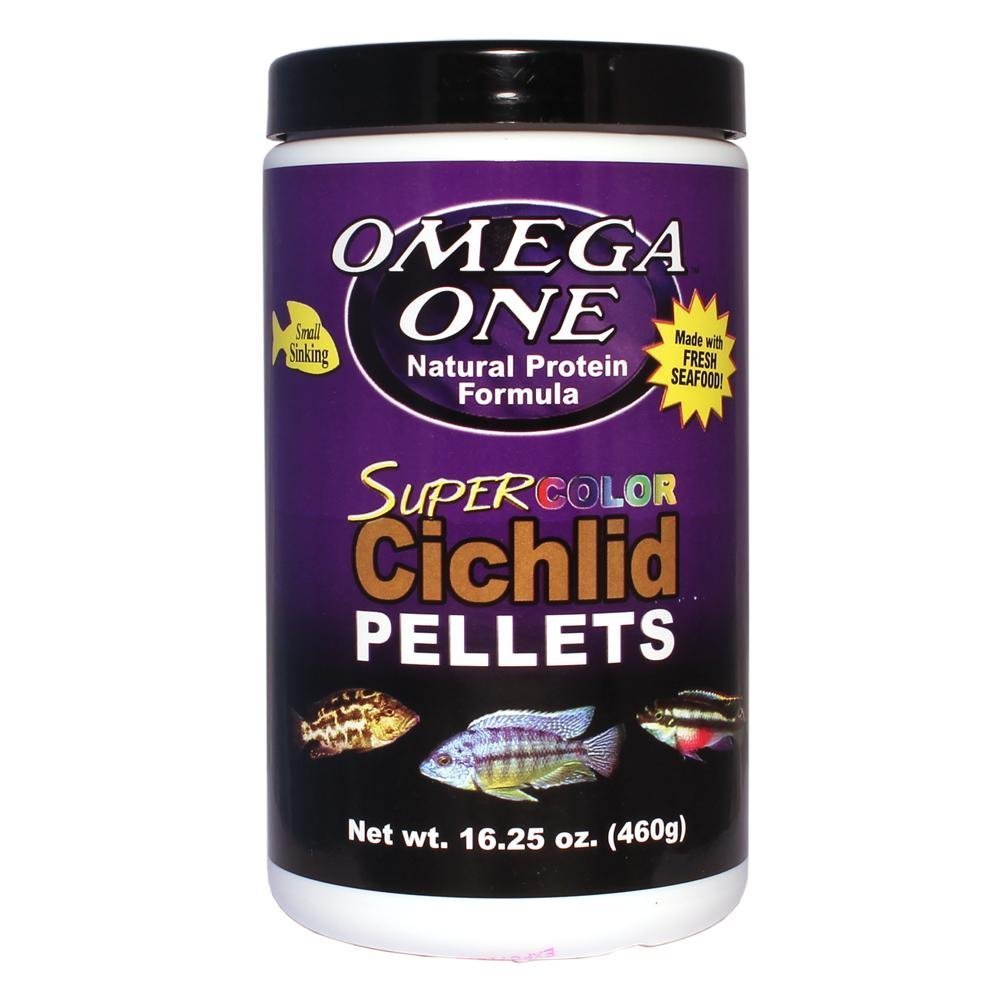
Rating: 4.7 ★ | Price: $$ | Pellet Type: Sinking | Target Species: Medium-large cichlids | Key Ingredient: 42% protein | Container Size: 16.25 oz
These pellets deliver 42% protein for steady growth and come in a large container at a mid-range price. The 2mm sinking size works well for medium to large cichlids, but can be too large for dwarf cichlids or very small fish. This is a solid option when the fish match the pellet size.
Pros
- 42% minimum protein content supports healthy growth.
- Large container offers good value for regular feeding.
Cons
- 2mm pellet size may be too large for dwarf cichlids or small fish.
Best for owners of medium to large cichlids who need a high-protein sinking pellet in bulk, but not suitable for tanks with dwarf species.
Best for Nano Tanks
Ultra Fresh Micro Pellet

Rating: 4.6 ★ | Price: $$$ | Pellet Type: Slow sinking | Target Species: Nano fish | Key Ingredient: 40% wild sword prawns | Container Size: 1.87 oz
Built with 40% wild sword prawns, these 0.6mm micro pellets offer high palatability for nano fish and fry without clouding water. The premium price per ounce and occasionally fast sinking limit this to micro-tank specialists, not general community fish.
Pros
- High palatability — fish readily accept the natural prawn-based formula.
- Does not cloud water, keeping the tank clear after feeding.
Cons
- Pellets may be too small for larger small fish — worth checking your fish’s mouth size.
Best for dedicated nano fish keepers who prioritize natural ingredients over cost — not a general-purpose pellet.
Best for Carnivore Fish
Hikari Carnivore Pellets
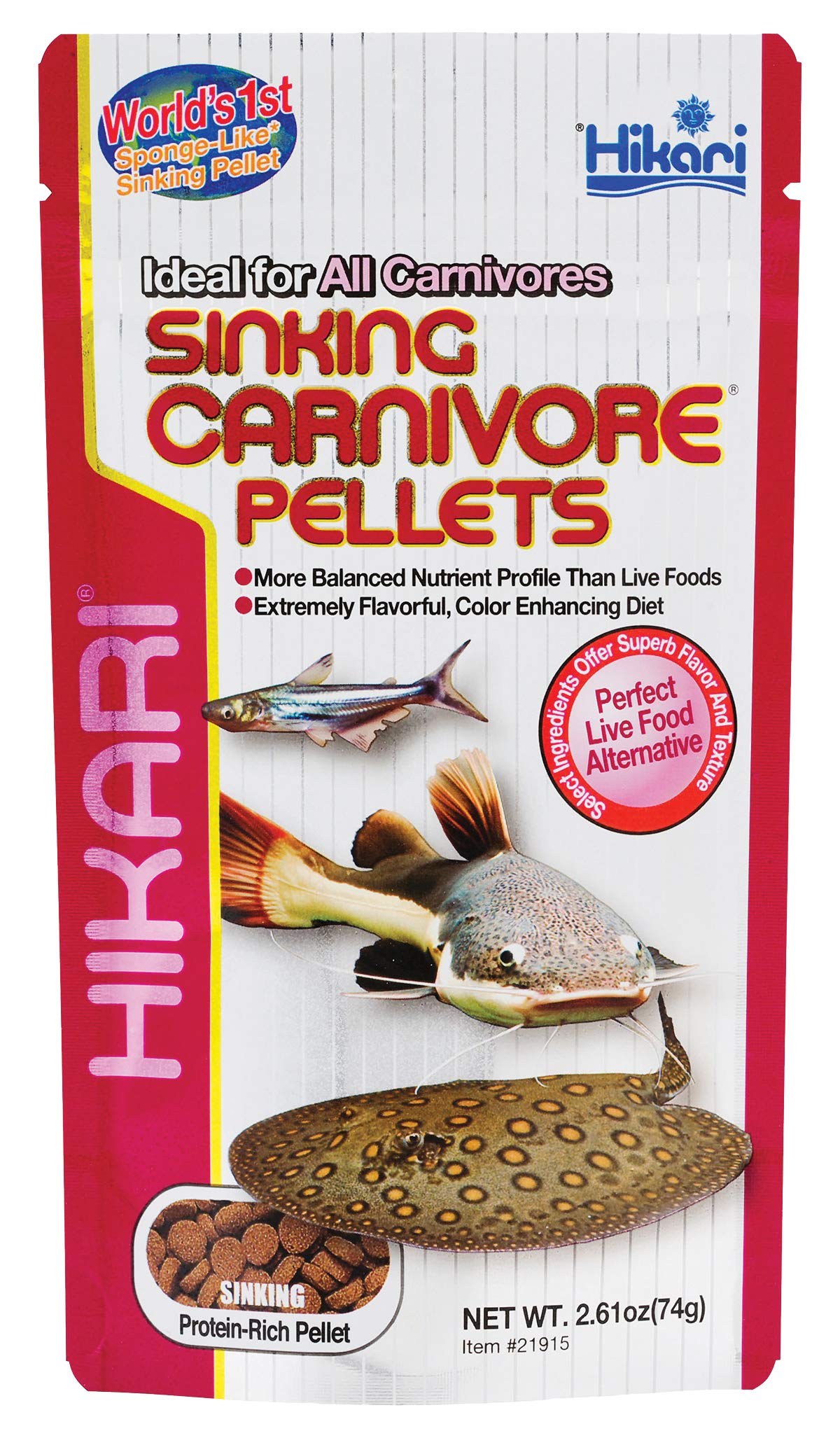
Rating: 4.8 ★ | Price: $$$ | Pellet Type: Sinking | Target Species: Carnivorous fish | Key Ingredient: Rapid water absorption | Container Size: 2.61 oz
Rapid water absorption yields a soft pellet that carnivorous fish, axolotls, and shrimp accept readily. Palatability is high. The premium price and focus on carnivores limit its suitability for mixed tanks or budget-minded keepers.
Pros
- High palatability encourages feeding in picky carnivores.
- Adaptable to many bottom-dwelling species including axolotls, shrimp, and cichlids.
Cons
- Small pellet size may not satisfy large carnivorous fish like adult oscars.
Best for keepers of axolotls, shrimp, or carnivorous fish who prioritize fast-softening texture over cost-per-serving.
How to Choose
The most important thing to know when buying fish pellets is that pellet size and sinking behavior vary greatly even within the same label – always check recent buyer feedback for real-world performance.
Pellet Size and Sinking Behavior
Pellets labeled ‘mini’ can range from 0.6mm to over 2mm. A pellet too large for a fish’s mouth will be ignored or cause stress, while overly tiny pellets may not satisfy larger fish.
Sinking pellets rely on density; air pockets from manufacturing can cause them to float. Always test a small amount before feeding a full portion, especially for bottom feeders that depend on sinking food.
Target Species Compatibility
Different fish have different nutritional needs. Goldfish require lower protein and higher fiber than cichlids or carnivores. Feeding a high-protein cichlid pellet to goldfish can cause digestive issues over time.
Match the pellet to your fish’s natural diet — herbivores need plant-based ingredients, carnivores need animal proteins, and omnivores do best with balanced formulas.
Nutritional Profile and Ingredients
Look for whole-food ingredients like fish meal, shrimp, or insect larvae as the first ingredient, rather than fillers like wheat or corn. High-quality pellets will list specific protein sources and avoid artificial colors.
Color enhancers like astaxanthin and spirulina can improve your fish’s natural coloration, but they are not a substitute for balanced nutrition. The pellet should also contain essential vitamins and minerals for immune health.
Container Size and Value per Ounce
Larger containers offer lower cost per feeding, but only if your fish accept the food. Buying a small bag or jar first lets you test palatability before committing to bulk.
Store pellets in a cool, dry place and use them within 6–12 months. Moisture and heat degrade nutrients and can cause spoilage, negating any savings from bulk buying.
Water Clarity Impact
Some pellets break down quickly and cloud the water, especially those with high starch or low binding quality. This can stress fish and increase maintenance frequency.
Pellets that hold their shape in water for several minutes without disintegrating are less likely to foul the tank. Reading reviews for mentions of water clouding helps avoid this issue.
FAQ
Why do my bottom feeder pellets float instead of sink?
Many pellets labeled ‘sinking’ contain air pockets from the manufacturing process that cause them to float. This is more common with budget brands. Test a small batch before feeding, and if most pellets float, consider switching to a brand with consistently dense pellets like Hikari’s sinking formulas.
Are goldfish pellets the same as tropical fish pellets?
No. Goldfish are omnivores with a lower protein requirement (around 30%) and higher fiber needs compared to most tropical fish. Tropical pellets often have 40%+ protein and less fiber, which can cause digestive problems for goldfish. Stick to species-specific formulas.
How long do fish pellets stay fresh after opening?
Opened pellets are best used within 6 months for optimal nutrient value, though they remain edible for up to 12 months if stored in a cool, dry place away from sunlight and humidity. Seal the bag or container tightly after each use to prevent moisture absorption.
Can I feed betta pellets to other tropical fish?
Betta pellets are high in protein and small in size, so they can be fed to other small fish like tetras or rasboras in small amounts. However, they lack the fiber and plant content that community fish need, so they should not be the primary food for non-bettas.