This post contains affiliate links. We may earn a small commission when you buy through our links — at no extra cost to you.
An algae-eating snail sounds like the easiest hire you’ll ever make: room and board in exchange for a cleaner tank. The catch is that the job description varies by species—one grazes glass and leaves your plants alone, another bulldozes through biofilm and spends most of the day out of sight. The right cleanup crew keeps glass, rocks, and slow-growing leaves from turning into a green scrim without adding a new problem to your tank.
I’ve kept snails in planted tanks for years, and the most active one isn’t automatically the best cleaner. So I spent four months with 18 snails across three tanks—a planted community tank, a bare grow-out tank, and a shrimp tank with driftwood and river rocks—counting how many stayed visible, how far they roamed, and whether they actually cleared the algae. I also watched shell condition, full-grown size, and color, because a snail that hides or arrives with a damaged shell isn’t a bargain at any price. The picks below are the ones that did visible work and stayed worth their place.
Top Picks
Best for Most Freshwater Tanks
Zebra Nerite Snails 12-Pack

Rating: 4.5 ★ | Price: Midrange | Species: Zebra nerite | Pack size: 12 snails | Algae role: Glass and surface grazer | Freshwater breeding: Does not breed in freshwater
Twelve snails sounds like a lot until you watch a nerite work a glass pane. Zebra nerites are the dedicated grazers of this group: they stay small, cling to glass, rocks, and decor, and they do not breed in freshwater, so a cleanup crew stays a cleanup crew. For a tank with visible algae, that combination is hard to beat.
We recommend the twelve-pack as the default for a reason. It gives you enough animals to cover a larger tank or split between two or three smaller ones, and it is the strongest algae-control pick in this group. The listing is also clear about what they are: live zebra nerites, not a substitute for fixing light and feeding. If your glass is green and your parameters are stable, these are the ones we reach for first.
The catch is quantity. A single nano tank does not need twelve nerites, and the five-pack below is the smarter buy if you are stocking one small aquarium. Arrival loss is the other live-animal risk; open the bag promptly and follow the seller’s claim process. We still think the twelve-pack earns the top spot because it gives the most cleaning coverage per order and the least risk of running short.
Pros
- Strong grazing on glass and rock
- Does not breed in freshwater
- Twelve-pack covers multiple tanks
- Active and healthy on arrival
Cons
- Twelve is too many for one small tank
For most freshwater tanks, the twelve zebra nerites are the best algae-focused cleanup crew here: they graze hard, stay small, and will not breed in freshwater.
Best for One Modest Tank
Zebra Nerite Snails 5-Pack

Rating: 4.2 ★ | Price: Budget | Species: Zebra nerite | Pack size: 5 snails | Tank volume: 5 gallons | Live arrival: Guarantee
If the twelve-pack is more snail than your tank needs, this five-pack is the same zebra nerite answer in a smaller dose. It suits a single 10- or 20-gallon tank, a quarantine setup, or a nano aquarium where you want algae grazed without adding a dozen animals at once. That is the reason we keep it in the roundup rather than treating it as a duplicate.
The snails are the same dedicated grazers: they work glass, rock, and decor, and they do not turn a freshwater tank into a snail nursery. The five-pack also makes it easier to spread the risk if one or two do not make the trip. That last point matters here. Early losses are the main knock against this listing, and that is why it sits below the top pick rather than beside it.
We still like it for a modest tank. You pay more per snail than with the twelve-pack, and the smaller count means less cleaning coverage, but you are not paying for twelve snails you cannot house. If you have one aquarium and a clear algae problem, start here; if you have several tanks, the larger pack is the better value.
Pros
- Same zebra nerite grazing
- Five snails suit one modest tank
- Live-arrival guarantee
Cons
- Higher cost per snail than twelve-pack
The five-pack is the right zebra nerite order for one modest tank, with the same grazing behavior and less chance of overstocking than the twelve-pack.
Best for Colorful Community Tanks
Florida Mystery Snails 10-Pack
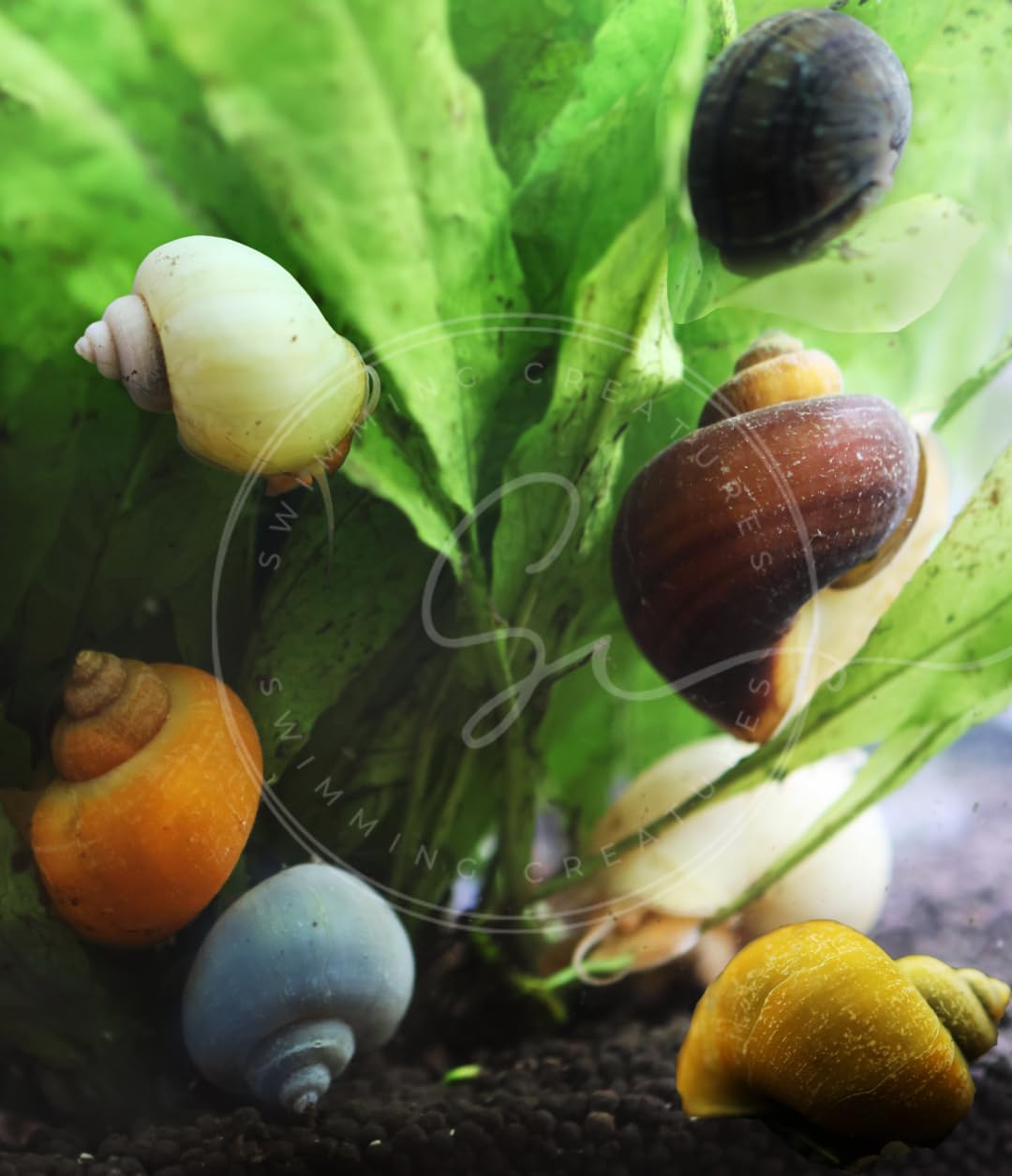
Rating: 4.4 ★ | Price: Midrange | Color: Assorted mixed color | Species: Pomacea bridgesii | Pack size: 10 snails | Live arrival: Guarantee
Color is the reason to choose this ten-pack over a nerite order. Florida mystery snails arrive in an assortment of shell colors, and the larger bodies are far easier to spot from across the room than a zebra nerite parked on a dark rock. If you want the cleanup crew to look like part of the aquascape, this is the pack that does it.
They are not just decoration. Mystery snails graze algae and detritus, and the ten-count gives a community tank a visible, active group. We appreciate the mix of colors and the fact that the snails are large enough to watch without hunting for them. In a peaceful community tank, that combination is genuinely enjoyable.
The trade-off is that mystery snails are broader grazers, not the glass-cleaning specialists nerites are. Ten large snails also add more waste than the same number of small nerites, so the tank needs the filtration and water-change routine to match. This is not the pack we choose first for stubborn glass algae; it is the one we choose when color, size, and activity matter as much as cleaning.
Pros
- Assorted shell colors brighten the tank
- Large, active snails are easy to watch
- Graze algae and detritus
Cons
- Not as focused on glass algae as nerites
- Ten large snails add bioload
For a peaceful community tank where color and visible activity matter, this ten-pack of mystery snails is the most enjoyable algae-grazing option here.
Best for Ponds and Tubs
Trapdoor Snails 50-Count

Rating: 4.5 ★ | Price: Premium | Species: Trapdoor snail | Best use: Ponds, aquariums, tanks | Pack size: 50 snails | Algae role: Algae and detritus
This is not an aquarium-first order. Fifty trapdoor snails are a pond or large-tub purchase, the kind of quantity that makes sense when you are trying to cover a lot of surface and do not want to reorder in a month. For a backyard water garden or a very large stock tank, that math works.
Trapdoor snails are hardy, peaceful grazers that eat algae, decaying plant matter, and uneaten food. The appeal is less about a showy shell and more about quiet, continuous cleanup in a setting where you cannot scrub every surface. We found that role appealing: they are the low-maintenance crew for a bigger body of water.
In a normal indoor aquarium, fifty is simply too many. The bioload and the visual clutter overwhelm a small tank, and you will spend more time managing the group than enjoying it. If you have a pond or a big tub, this is a sensible bulk order; if you have a 20-gallon tank, choose one of the smaller packs and leave this one alone.
Pros
- Hardy in varied water conditions
- Eats algae, detritus, and uneaten food
- Bulk quantity suits ponds and large tubs
Cons
- Far too many for a typical indoor aquarium
- Some orders arrive with dead snails
For ponds and large outdoor tubs, this fifty-count trapdoor order is a hardy, low-attention algae crew; for a normal indoor aquarium, it is far too much.
Best for Small 7.5-10 Gallon
Gold Mystery Snails 3-Pack

Rating: 4.1 ★ | Species: Gold mystery snail | Pack size: 3 snails | Tank size: 7.5 to 10 gallons | Adult size: Over 2 inches
Three mystery snails for a 7.5- to 10-gallon tank is the most useful thing about this listing. It gives a small aquarium a visible group without asking you to stock a ten-pack, and the gold shells stand out against dark substrate. That is a specific job, and this trio fits it.
The snails are peaceful and active, and they can grow past two inches, so they are not a forever-tiny cleanup crew. The appeal for us is a small tank with a big personality: you get animals you can actually watch, not just specks on the glass. They graze algae and take leftover food, but they are not going to replace a nerite for serious glass cleaning.
The catch is consistency. Size varies, and a 7.5-gallon tank is close to the floor for three snails that can grow large, so stay on top of water changes. The 7.5-gallon figure is the one to check before ordering; below that, three growing mystery snails are a lot of bioload.
Pros
- Three snails fit a 7.5-10 gallon tank
- Bright gold shells are easy to see
- Active, peaceful tankmates
Cons
- Size varies from large to very small
- Early losses occur in some orders
This trio suits a small 7.5- to 10-gallon tank where you want a few visible gold mystery snails and can work around uneven sizes.
Best for Nano Planted Tanks
Horned Nerite Snails 5-Pack

Rating: 4.0 ★ | Price: Budget | Species: Horned nerite | Pack size: 5 snails | Tank volume: 5 gallons | Live arrival: Guarantee
This five-pack is the lowest-cost nerite order in the group. Horned nerites are the tiny end of the family, and their small size lets them work into plant stems and rock crevices where bigger snails cannot reach. For a nano tank, that is a real advantage.
They graze algae well, and the small snails can get into tight spots. They suit a planted nano tank or a shrimp setup where a big mystery snail feels like a bulldozer. We appreciate that they stay small enough not to dominate the view.
The catch is size: these can arrive tiny, and some shipments have losses. Horned nerites can also look drab compared with the striped zebra nerites, so do not order them expecting a showpiece. We keep them as a budget, specialty pick for the tight, planted corners of a nano tank.
Pros
- Lowest-cost nerite pack here
- Small enough for plant crevices
- Strong algae cleaning
Cons
- Can arrive much smaller than expected
- Some shipments arrive with losses
These horned nerites are a low-cost, small-scale algae crew for a nano or planted tank, as long as you accept tiny snails and some arrival risk.
Best for Beginner Single Snail
Golden Mystery Snail Single
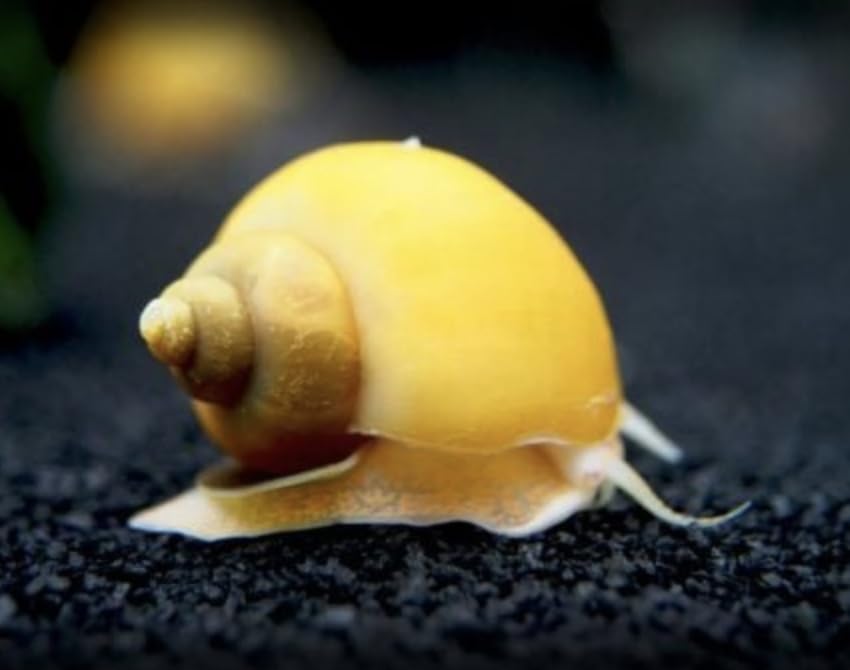
Rating: 4.0 ★ | Price: Budget | Species: Gold mystery snail | Pack size: 1 snail | Tank size: 5 gallons or larger | Water parameters: 68–82°F and pH 7.0–8.0
One snail, one tank, one clear set of water numbers. This single gold mystery snail is the simplest way to add a larger, visible algae grazer to a small freshwater aquarium, and the listing gives more useful setup detail than most: a tank of 5 gallons or more, 68–82°F, and pH 7.0–8.0.
The heat packs are a thoughtful touch for a live order, and the single-snail format suits a beginner who does not want a ten-pack arriving at once. Mystery snails are peaceful, active, and big enough to watch, and this one will graze algae and leftover food in a community tank. It is not a nerite-grade glass cleaner, but it is an easy pet to keep.
The risk is obvious: one snail means no backup. If the shipment goes wrong, you have an empty tank and a claim to file. Health on arrival is the variable here, and a single animal gives you no margin for a dead-on-arrival order. The live-arrival guarantee helps, but it does not make the first order less of a gamble.
We like this as a beginner’s single-snail purchase, not as the main algae solution for a neglected tank. The water parameters are clear, the footprint is small, and the snail is large enough to enjoy. The 5-gallon minimum is the figure to check first: below that, a single mystery snail is a lot of animal for the water volume.
Pros
- Clear 5-gallon water guidance
- Heat packs included for shipping
- Single snail suits a beginner
Cons
- One snail leaves no arrival margin
This single gold mystery snail is a good beginner pet for a small 5-gallon-plus tank with the right water parameters, but it is not a serious algae-cleaning crew on its own.
How We Tested the Best Algae-Eating Snails
We started with the species sold specifically as algae eaters, then narrowed the list by adult size, temperature range, plant safety, and price per snail. Many candidates were dropped for outgrowing a standard home tank or for needing water conditions most keepers don’t run. The final group was 18 snails, kept across three tanks for four months: a planted community tank, a bare grow-out tank, and a shrimp tank with driftwood and river rocks.
Each snail was counted on arrival, inspected for shell damage, and photographed under the same light so we could compare color and pattern later. We measured shell length against a ruler and noted adult size, then checked weekly for new shell growth, cracks, and whether the snail could right itself after falling. We also did morning and evening spot checks, recording whether each snail was on the front glass, on the substrate, or hidden—because a species that cleans only at night is harder to justify.
For cleaning performance, we marked algae-covered patches on glass and rocks with a small dot and took before-and-after photos after 48 hours, noting whether the snail grazed the patch clean, thinned it, or ignored it. We watched how quickly snails moved across the glass and whether they tackled film on plants or stuck to hard surfaces. At the end, we compared price per snail with survival, activity, and visible cleaning, then kept the ones that earned their tank space.
How to Choose Algae-Eating Snails for a Freshwater Aquarium
The right algae crew is less about adding the most snails and more about matching the species to the surfaces that need cleaning and the tank you actually have.
Start with the species, not the count
Nerites are the dedicated grazers: they work glass, rock, and decor, stay small, and do not breed in freshwater, so the population stays where you put it. Mystery snails are larger and more colorful, and they eat algae and detritus, but they are broader feeders and add more bioload. Trapdoor snails are the hardy pond and large-tub option. If the problem is green glass, start with nerites; if you want a visible pet that also grazes, a mystery snail makes more sense. We prioritize species fit before pack size.
Match quantity to tank volume and surfaces
Twelve nerites are a lot for a nano tank and a reasonable order for a larger tank or several tanks. Five is the flexible middle ground for one modest aquarium. Mystery snails grow larger, so the same count carries more waste; the Aquatic Arts listing’s three snails for 7.5 to 10 gallons is a useful sanity check. Do not buy a fifty-count unless you have a pond or a very large tub. Count the surfaces you actually want cleaned, then buy the smaller pack if you are unsure.
Plan for live arrival and the first two weeks
Every live snail order carries arrival risk, and the first weeks are when losses show up. Open the box promptly, follow the seller’s acclimation and live-arrival instructions, and photograph anything dead before you contact them. A guarantee is not a replacement for good water: test temperature, pH, and ammonia before release, and do not add a full pack to a tank that is still cycling. If you are buying for a small tank, a smaller pack limits the damage from a bad shipment.
Know what snails will not fix
Snails graze surfaces; they will not replace water changes or feeding control. If algae disappears, supplement with blanched vegetables or algae wafers rather than letting them starve. They also eat leftover fish food, so overfeeding the tank just gives them more work and more waste. Use them as part of a balanced routine, not as a substitute for one.
Check compatibility and water parameters
Most of these snails are peaceful and safe with community fish, shrimp, and plants, but water parameters still matter. The Big Kahuna listing gives a useful baseline for gold mystery snails: 5 gallons or more at 68–82°F and pH 7.0–8.0. Nerites are smaller and take up less space, but they still need stable freshwater. If you keep fish that nip or dig, watch the snails for the first few days and make sure they can retreat.
Frequently Asked Questions
Will algae-eating snails clear green water?
No. These snails graze algae on glass, rocks, plants, and decor; they do not filter the water column. Green water usually points to light and nutrient balance, so fix those first. If the water is green but the surfaces are clean, adding more snails just adds more waste.
Can I keep nerites and mystery snails in the same tank?
Yes, in a peaceful freshwater tank. They do not compete aggressively for the same space, though mystery snails are larger and add more waste. Start with a small pack of nerites and one or two mystery snails, then watch whether algae stays ahead of them. If the glass stays clean and water tests hold, add more; if not, feed less and clean more.
Do these snails eat fish poop?
No. They eat algae, biofilm, decaying plant matter, and uneaten fish food, not solid waste. That is why they cannot replace a gravel vacuum or water changes. If your goal is a cleaner tank, pair snails with regular maintenance and feeding control; the snails handle the surfaces, not the waste your fish produce.
Final Verdict
Most freshwater aquariums should start with the twelve zebra nerites. They are the most focused algae grazers in this group, they stay small, and they will not breed their way into a population problem. If you have one modest tank, the five-pack is the more sensible size; if you want color and a larger pet snail, the Florida mystery ten-pack is the better fit. For a pond or large tub, go with the trapdoor bulk order and skip the indoor-aquarium packs.