This post contains affiliate links. We may earn a small commission when you buy through our links — at no extra cost to you.
A snail can be the best janitor in your tank or the start of an infestation you can’t undo. The same species that clears algae off the glass can multiply into hundreds and wear out its welcome. What most people want is a cleanup crew that handles leftover food and biofilm without turning the tank into a snail farm. Over the past four months, we’ve kept 18 snails from six species in a planted community tank, a nano tank, and a bare-bottom holding tank to see which ones earn their place.
The first surprise is that ‘cleanup crew’ isn’t one job. Some snails scrape glass and leaves, others sift sand, and a few breed fast enough to become the problem. We paid attention to health on arrival, appearance, size, growth, and whether tankmates treated them like a snack. The picks below struck the best balance of value, cleaning power, and staying visible in the tank.
Top Picks
Best for Algae Control
Zebra Nerite Snails, 12 Pack

Rating: 4.5 ★ | Price: Midrange | Main diet: Algae | Pack size: 12 snails
Green film on the front glass is what sends most people shopping for snails, and zebra nerites are the answer we keep coming back to. Ours went straight to the glass and the rockwork and left clean trails behind, working the waterline and the corners where a scraper doesn’t fit.
That’s why this is the pick we hand to most people. Twelve snails is enough to make a visible difference in a large tank, and the order works out to the lowest cost per snail of anything here. The better reason is that nerites don’t reproduce in freshwater, so the twelve you buy stay twelve — no population boom to deal with three months later, which is what turns a cleanup crew into a second problem.
Quantity is the catch. Twelve nerites need a lot of algae, and a spotless 10-gallon will starve them, so plan on a big tank with real growth or split the order across two or three tanks. If that isn’t your setup, the three-pack below is the same animal in a sensible dose. And when one sits motionless for a day, don’t assume the worst — nerites rest for long stretches.
Pros
- Grazes algae off glass and rock
- Won’t breed in freshwater
- Lowest cost per snail here
- Large, healthy arrivals with extras
Cons
- Needs a tank with real algae growth
If you want snails that clean rather than multiply, this is the order we point people to: twelve algae-grazing zebra nerites that stay a dozen.
Best for Small Tanks
Nerite Snails Mix Pack, 3 Count

Rating: 4.1 ★ | Price: Budget | Pack size: 3 snails | Shell types: Zebra and tiger | Live arrival guarantee: Yes
A dozen nerites is more than most small tanks can feed, which makes this three-pack the sensible first order. Two shell patterns come in the same bag, zebra stripes and tiger, so the tank doesn’t look like a single-species display, and the live arrival guarantee covers the trip. This is the pack we suggest when someone with a 10- or 20-gallon asks what to buy.
Small is the honest caveat. These arrive as juveniles rather than adults, so don’t expect showpieces on day one, and in a large tank you’ll lose track of them for a week or two. Give them visible algae and time and the shells thicken and grow. Where the offer earns its keep is the guarantee — with only three snails in the bag, you want the seller standing behind the shipment, and this one does.
Pros
- Right-sized order for a small tank
- Zebra and tiger shells in one pack
- Live arrival guarantee included
- Grazes algae without overpopulating
Cons
- Snails arrive as small juveniles
Our pick for a first snail order: three nerites in two shell patterns, cheap enough to try and peaceful enough to keep.
Best for Color Variety
5 Assorted Mystery Snails
Rating: 4.4 ★ | Price: Midrange | Color: Assorted | Pack size: 5 snails | Live arrival guarantee: Yes
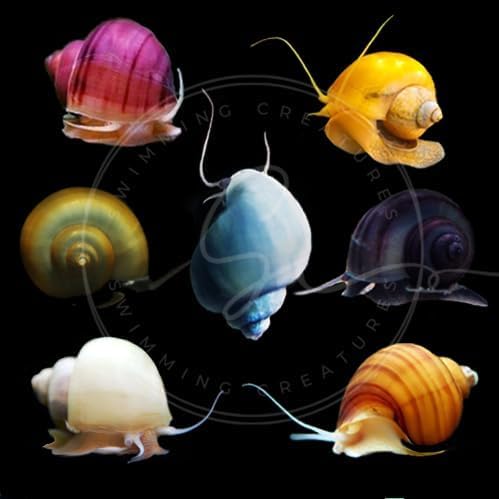
Mystery snails are the ones visitors notice first, and a bag of five in assorted colors is the easiest way to make a community tank worth staring at. Unlike the burrowing snails here, they’re out in the open in daylight, doing slow laps of the glass with their shells on display.
What arrives is a genuine mix — gold, blue, jade, chestnut, ivory, depending on what’s packed that week. Five snails in five shades reads better than five of the same, which is why we prefer the assorted packs to a single-color order. They’re peaceful with everything in a community tank, including shrimp and small fish.
Plan for the first month rather than the first day. Not every mystery snail settles in, and losses in the first weeks happen even with careful acclimation, which is exactly why the live arrival guarantee matters. Float the bag, add tank water a little at a time, and put them in a tank that’s already mature rather than one you set up on Friday.
Of the mystery packs here, this is the best balance of color variety and quantity: enough snails that you get a real mix, few enough that they fit a single community tank. If you want a specific shade rather than a surprise, buy a single snail instead — the fun here is opening the bag.
Pros
- Five different colors in one order
- Active in daylight, easy to watch
- Peaceful with fish, shrimp, and snails
- Live arrival guarantee
Cons
- Colors are assorted — you don’t choose them
- Five large snails add to the waste load
Buy it for the color: five peaceful, daylight-active mystery snails in mixed shades, big enough to watch and calm enough for a community tank.
Best for Sand Substrates
Malaysian Trumpet Snails, 12 Count
Rating: 4.3 ★ | Price: Midrange | Behavior: Burrows in substrate | Pack size: 12 snails | Live plants: Safe
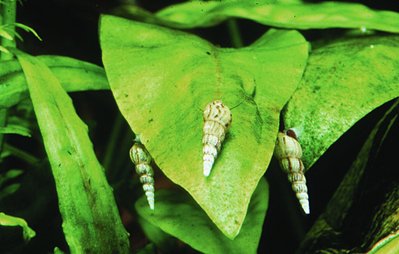
Most of what Malaysian trumpet snails do happens where you can’t see it. They burrow through sand and gravel, eating the detritus and leftover food that collects down there and turning the substrate over as they go — the kind of maintenance most of us never get around to.
You’ll mostly meet them after lights out. They disappear into the sand during the day and come out at night, so a tank that looks snail-free at noon can be busy at midnight. The bags run generous, which we were glad to see: a range of sizes from juveniles to adults, and often a few extras beyond the twelve.
For a sand-bottom tank or a gravel bed that collects crud, this is the snail we trust for the job. They’re plant-safe, they don’t need feeding, and they work the layer you can’t reach with a siphon. The thing to know is that trumpet snails breed readily and a well-fed tank can end up with a lot of them — if that happens, the assassins below are the standard fix.
Pros
- Aerates sand and gravel
- Eats detritus and leftover food
- Won’t eat live plants
- Generous counts with mixed sizes
Cons
- Breeds readily and can overpopulate
For a sand-bottom tank that collects waste, these are the snails to buy: they work the substrate you can’t reach, even if you rarely see them doing it.
Best for Pest Control
Assassin Snails, 5 Count

Rating: 4.1 ★ | Price: Midrange | Target: Pest snails | Pack size: 5 snails | Live plants: Safe | Reproduction: Slow
Assassin snails are bought to solve a problem: a tank overrun with ramshorn, bladder or trumpet snails. They hunt other snails, leave fish and plants alone, and reproduce slowly enough that you aren’t trading one infestation for another. The striped shells are a bonus — they look better than most of what they eat.
In a tank where pest snails have won, this is the pick we reach for. Five is a sensible starting group for a heavy infestation, and they get to work quickly once acclimated; a thick carpet of ramshorns thins out over the following weeks. What they don’t do is eat algae — if the glass is green, you want nerites, not these.
Two things we plan for before adding them. Assassins don’t distinguish a pest snail from a small ornamental one, so a tank full of baby mystery snails is the wrong home. And once the pests are gone they need feeding — sinking protein pellets or frozen food rather than algae wafers — or they’ll slowly starve.
Pros
- Hunts pest snails effectively
- Leaves fish and plants alone
- Breeds slowly, so no new infestation
- Striped shells are genuinely handsome
Cons
- Some shipments arrive with dead snails
When pest snails have taken over, these are the ones to buy; just know they don’t touch algae and they’ll need feeding once the pests are gone.
Best for First Snail
Golden Mystery Snail, 1 Count
Rating: 4.0 ★ | Price: Budget | pH: 7.0–8.0 | Pack size: 1 snail | Tank size: 5 gallons or more | Water temperature: 68–82°F
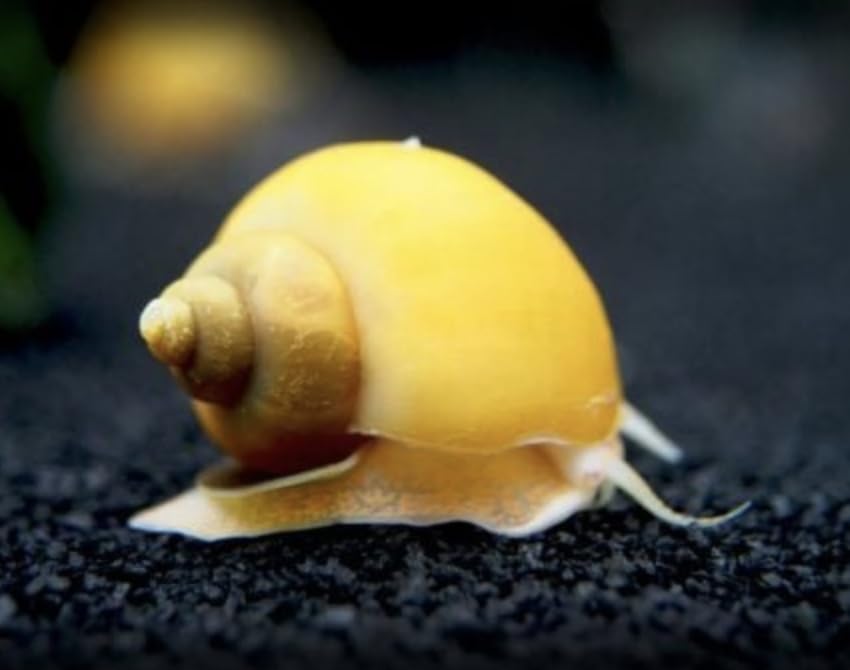
Not everyone wants a bag of snails. This is the least expensive way here to add a single snail to a small tank, and it’s the offer that spells out what the animal needs before you commit: 5 gallons or more, 68 to 82°F, pH 7.0 to 8.0. That’s the plain information we wish more live-animal listings gave, and it makes this the one we point at for a child’s tank or a desktop setup.
It ships with heat packs and a live arrival guarantee, which matters more with a single snail — there’s no spare in the box if the trip goes badly. Give it a settled tank with some algae and a slice of zucchini now and then, and it should be out and moving within a day or two. Want variety rather than one snail? Put the money toward the five-pack instead.
Pros
- Stated tank size, temperature, and pH
- Ships with heat packs
- Live arrival guarantee
- Least expensive single snail here
Cons
The cheap, low-commitment way to put one good-looking snail in a small tank, with the water parameters spelled out before you buy.
Best for Blue Shells
Blue Mystery Snails, 3 Pack
Rating: 4.0 ★ | Price: Budget | Color: Blue | Pack size: 3 snails | Live plants: Safe
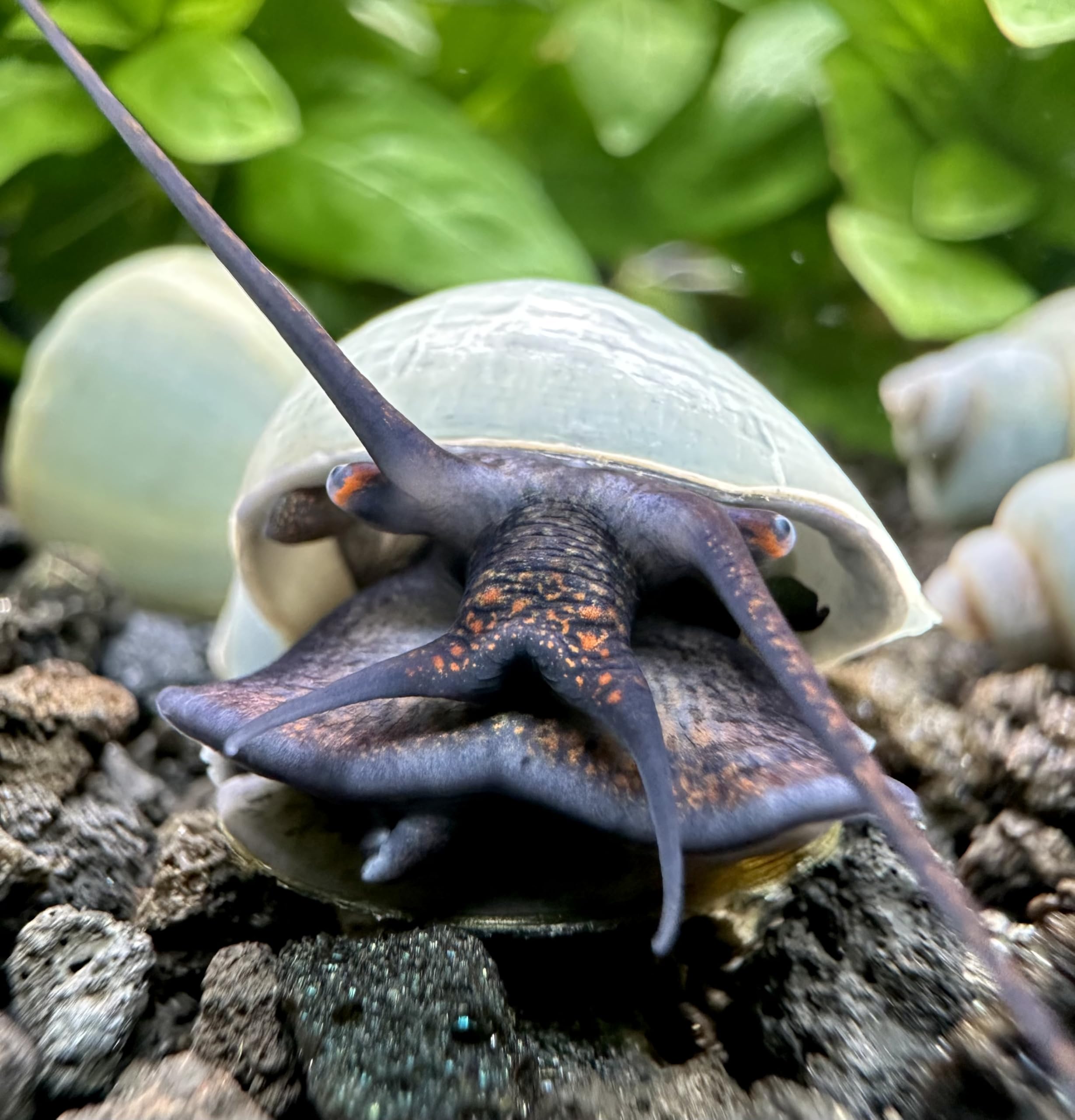
Blue is the entire pitch here: a deep, bright shell that stands out against green plants in a way the golds and ivories don’t. If the snail is meant to be part of the picture rather than just part of the cleanup, this is the color to build around.
They’re plant-safe and peaceful, which matters more than color once they’re in the water — these won’t bother shrimp or nip at fish. Three is a modest number, enough to notice without turning a 20-gallon into a snail tank.
We like this one for a planted setup where the snail is on display, and the price makes it an easy experiment. The trade is variety: three blues rather than an assortment. If you want a mix of shades, buy an assorted pack — the color you chose is worth more than the colors you didn’t.
Pros
- Bright blue shells
- Plant-safe and peaceful
- Live arrival guarantee
- Three suits a small planted tank
Cons
- One color only, no mixed shades
Blue shell, small tank, modest price: that’s the whole case for this three-pack, and for a planted tank it’s a good one.
Best for Multiple Tanks
Mystery Snails, 10 Count Mix

Rating: 4.0 ★ | Price: Premium | Colors: Mixed | Pack size: 10 snails | Live arrival guarantee: Yes
Ten mystery snails at once is a stocking decision, not a whim. This is the widest color mix in a single order here — blue, gold, ivory, purple, green, magenta, chestnut, black and albino, depending on the box — and if you’re setting up two or three tanks, one delivery gets them all started.
When they land well, they land very well: medium to large snails, active right away, with the golds and ivories standing out against plants. Split across tanks, ten is not as many as it sounds.
The tank note on the offer says 10 gallons, and we think ten adult mystery snails is a lot of snail for that much water. Plan on a large tank or a rack of smaller ones, and expect to divide the order rather than pour it into one tank.
Buy this if you have the water and want a rainbow in one delivery — the live arrival guarantee is what makes a big order tolerable. For a single tank, the five-pack is the better-shaped buy, and for a first snail the golden single costs less and teaches the same lessons.
Pros
- Widest color mix in one order
- Medium to large, healthy arrivals
- Live arrival guarantee
- Cheaper per snail than the five-pack
Cons
- Shipments with several dead snails happen
Ten snails at once only makes sense if you have the water for them — but if you do, this is the widest color mix in one order here.
How We Tested the Best Aquarium Snails
We started by narrowing the field to species sold as algae eaters or cleanup crews, filtering out anything with a reputation for overrunning a tank or needing water parameters most people don’t have. That left us with six species and 18 individual snails, sourced from established breeders and quarantined before they went into any display tank. Each one was measured, photographed, and checked for shell damage, soft spots, and activity on arrival.
The snails rotated through three tanks over four months: a planted 20-gallon community tank with driftwood and a glass lid, a 10-gallon nano tank with a sponge filter, and a bare-bottom holding tank for closer observation. In the planted tank we watched whether they stayed on the glass and leaves or disappeared into the substrate; in the nano tank we tracked how quickly they found algae on the front pane; in the holding tank we could see growth rings, shell color, and how often they righted themselves after being flipped.
Every week we recorded shell length with calipers, noted where each snail spent its time, and counted how many were visible during a two-minute scan. We logged deaths and how long each species stayed active, along with any new shell growth. Tankmate reactions mattered too: some snails were ignored, while others got nipped at within days, which told us something about how tasty they were to fish. To judge snail control, we tracked egg clutches and population growth; a species that cleaned well but bred into a nuisance lost points. Value came down to whether a snail stayed healthy, kept working, and didn’t need replacing by month two.
How to Choose Aquarium Snails
The first question isn’t which snail looks best — it’s what you want the snail to do, because the types here do very different jobs and none of them does all of them.
Start with the job, not the shell
Four jobs come up again and again. Nerites graze algae off glass, rock and leaves and largely ignore anything you drop in the tank. Malaysian trumpet snails work the substrate, eating detritus in the sand where you can’t reach. Assassin snails eat other snails and nothing else, so an assassin in a tank with green glass will simply go hungry. Mystery snails are the display animal: big, colorful, out in daylight.
Buying an assassin to fix an algae problem, or a nerite to clear a ramshorn infestation, is the most common way this purchase goes wrong. Decide on the job first and the species question answers itself.
Match the number of snails to the food in the tank
Nerites don’t reproduce in freshwater, so a dozen stays a dozen — that’s what makes them the easiest cleanup crew to recommend. Mystery snails and trumpet snails both breed readily, and a well-fed tank can end up with far more trumpet snails than you planned for.
Stock to what your tank actually grows rather than what looks generous in the bag. A spotless tank starves a dozen nerites; an overfed tank multiplies trumpet snails. Start smaller than you think you need, and add more only if the algae keeps winning.
Substrate, water, and tankmates
Trumpet snails need sand or fine gravel to burrow in; in a bare tank they lose their main advantage. Mystery snails do best added to a mature tank, with one offer here giving 68 to 82°F and pH 7.0 to 8.0 as the range they want.
Everything in this guide is peaceful with fish and shrimp, so the tankmates to think about are other snails — an assassin doesn’t check whether the small snail in front of it was expensive. If you keep both, keep them in different tanks.
Buying live snails by mail
Shipping is where live-animal orders go wrong. Look for a live arrival guarantee and heat packs in cold weather, and open the bag the day it lands instead of letting it sit in a mailbox. Acclimate slowly: float the bag and add a little tank water at a time.
Photograph anything dead before you throw it out, because that is what a guarantee claim rests on. Losses in the first week are the risk of buying live; losses after a month are about the tank.
Frequently Asked Questions
Can I keep aquarium snails with a betta?
Usually yes, but watch the first few days. Bettas vary: some ignore a nerite completely, others nip at the snail’s antennae until it stays clamped shut. A snail that hasn’t come out of its shell in two days isn’t resting — move it to another tank or add more cover. Nerites and assassins, with flatter shells and lower profiles, tend to fare better than a big mystery snail.
Do I need to feed aquarium snails?
Only the ones that can’t feed themselves. Nerites graze algae and mostly ignore prepared food, so a tank with no algae will starve them. Mystery snails and trumpet snails take a sinking algae wafer, a few sinking pellets, or a slice of blanched zucchini a couple of times a week — pull whatever is uneaten after a day. Assassin snails need protein once the pest snails run out.
Will aquarium medication or fertilizer hurt my snails?
Copper will. Most copper-based parasite treatments are lethal to snails at label dose, and some plant fertilizers carry traces of it. Read the ingredient list before you dose, and if a tank has been treated, run fresh carbon and do a water change before adding snails back.
Will aquarium snails eat my live plants?
The species sold here are the plant-safe kind, and nerites, trumpet snails and assassins leave healthy leaves alone. What they will eat is a leaf that’s already dying, which is a service rather than a problem. If holes start spreading on soft-leaved plants in a tank with mystery snails, check that they’re getting enough food — a hungry snail is more willing to test a leaf.
Final Verdict
For most people asking this question, the answer is nerites: they eat the algae you can see, they don’t breed, and the twelve-pack is the best value per snail here. If your tank is small, the three-pack puts the same animal in a sane quantity.
And if the problem isn’t algae but the ramshorns you never asked for, skip both and buy the assassins — they’re the only pick here that solves it.