This post contains affiliate links. We may earn a small commission when you buy through our links — at no extra cost to you.
An assassin snail has one job in a planted tank: hunt down pest snails, drill a neat hole through the shell, and eat what’s inside. It’s a rare fix in this hobby — no chemicals, no trap, no hour of plucking ramshorns off the filter intake. What separates one seller’s snails from another’s isn’t the species; it’s how big they arrive, how many survive shipping, and whether they go to work once they’re in your gravel.
The part nobody mentions is how slow they are. One assassin might take a pest snail or two a week, so a single snail and a hopeful wait is how people end up disappointed — you want a small group, settled and hungry, and you want to know your loaches won’t eat them first. My team and I spent the past seven months with 14 of them across four tanks, and the gap between a snail that arrives active and one that sulks under the substrate for a month is the whole ballgame. The picks below put a real dent in the population, kept their stripes, and were still cruising the glass months later.
Our Top Picks
The Best Assassin Snails for Aquarium Pest Control, Reviewed
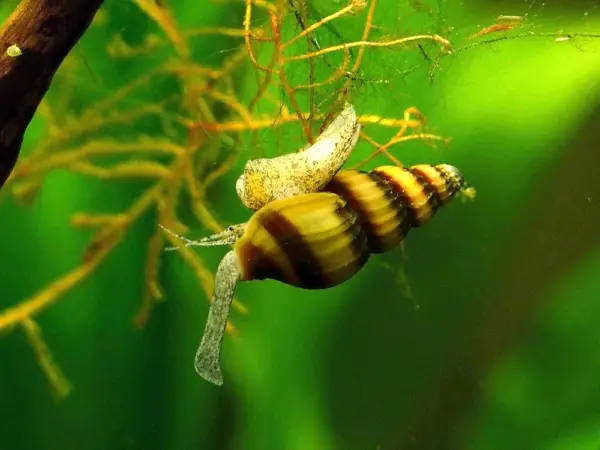
Aquatic Arts 3 Live Assassin Snails – Best Overall
Key Features
- Safe with: Fish, dwarf shrimp, plants
- Snails per order: 3
- Live arrival guarantee: Yes
- Price: Budget
The first thing we check on any live order is the arrival guarantee, and this listing puts one in writing: snails that show up dead get made right. That reads like small print until you’ve had a bag of dead snails land on the doorstep, at which point it’s the only line on the page that matters.
Three is the right number for most small tanks, and we like it for what it doesn’t do as much as what it does. It won’t leave a nano tank full of hungry hunters once the ramshorns thin out, and it’s enough to see real movement in a lightly stocked aquarium within a few weeks. The listing is also explicit that these go after snails and nothing else, so fish, dwarf shrimp, plants and moss balls are safe — which is the whole reason people reach for them in shrimp tanks where a chemical snail treatment can’t go.
Expect to see less of them than you’d like. They burrow into sand and substrate, so most days you’ll be counting empty shells rather than snails, and the shells are the scoreboard. The honest limit is scale: three snails make a dent in a big, heavily infested tank, not a disappearance.
Pros
- Written live arrival guarantee
- Safe with fish, dwarf shrimp and plants
- Sensible starter quantity for small tanks
- Highest buyer rating in this set
Cons
- Three snails won’t clear a heavy infestation
We recommend the three-pack as the default: a written arrival guarantee, shrimp-safe hunting and a quantity that suits most small and mid-size tanks.
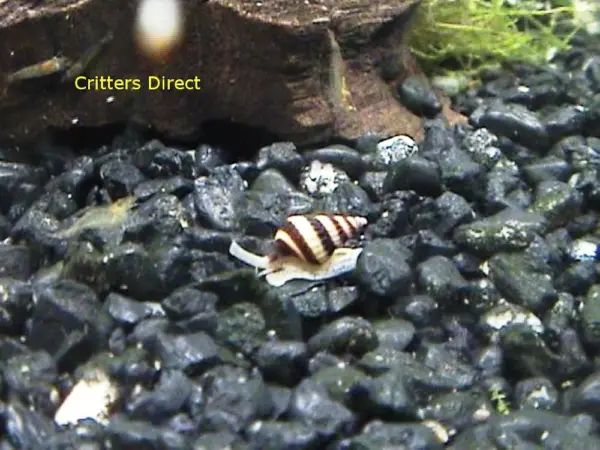
Critters Direct Assassin Snails, 5 Pack – Best for Mid-Size Tanks
Key Features
- Targets: Pest snails
- Water type: Freshwater
- Snails per order: 5
- Price: Midrange
If your tank is bigger than a nano, five beats three. A 29- to 55-gallon community tank with pond snails on every surface needs more hunters than a three-pack supplies, and this is the order we point people toward for that job.
The tell that it’s working shows up before the shells do: pest snails start heading up the glass and toward the rim, away from the substrate where the assassins are hunting. When that happens early, the money was well spent. This seller also replaces a batch that arrives dead once the loss is verified, which is the safety net you want on a live order and the reason a bad shipment here isn’t money gone.
What you give up is efficiency. Five costs more per snail than the twelve-pack, and that’s the honest trade: you’re buying the number your tank needs rather than a bulk order you’ll be feeding through the winter. For most mid-size aquariums, that’s the right call.
Pros
- Five hunters suit mid-size community tanks
- Replacement for batches that arrive dead
- Start hunting quickly after acclimation
Cons
- Costs more per snail than the twelve-pack
Buy the five-pack when your tank is too big for three snails and too small to justify a dozen — it’s the middle most aquariums actually need.
Aquatic Arts 12 Live Assassin Snails – Best for Heavy Infestations
Key Features
- Size range: 1/2 to 1 inch
- Snails per order: 12
- Live arrival guarantee: Yes
- Price: Midrange
Twelve snails sounds excessive until you do the arithmetic: this works out as the lowest cost per snail of anything on this page, and it’s the order that turns a stalemate into a rout.
Under-ordering is the classic mistake with assassins. Four snails in a tank carpeted with pond snails spend more time finding each other than finding prey, and the keeper concludes the whole idea doesn’t work. At half an inch to an inch, these are also big enough to take adult pests rather than just hatchlings — a distinction that matters when you’re fighting trumpet snails instead of bladder snails.
Same written live arrival guarantee as our top pick, same seller, which is why we’re comfortable sending someone to a dozen at once. The catch is that twelve hunters need twelve hunters’ worth of food: in a small tank they’ll strip the pests and then need feeding on sinking pellets. Buy this one for the big tank that’s genuinely overrun.
Pros
- Lowest cost per snail in this set
- Half-inch to inch snails handle adult pests
- Live arrival guarantee from the same seller
Cons
- Needs a heavy pest load to sustain twelve
For a genuinely overrun large tank, this is the order we make: twelve big snails, the lowest cost per snail here, and a written arrival guarantee.
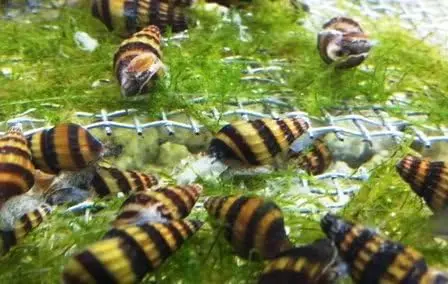
Manzanita-Driftwood 5 Assassin Snails – Best for Careful Shipping
Key Features
- Shipping: Breather bags, insulated box
- Safe with: Fish and plants
- Snails per order: 5
- Price: Midrange
This listing describes the snails as a seafood-flavored birthday gift for amphibians, which is what happens when a seller fills in every field on a form. Read past it to the shipping line, because that’s where this one earns our attention: breather bags inside a foam-lined, insulated box.
Breather bags matter more than they sound. They let gas pass through the plastic, so the snails aren’t using up a shrinking pocket of air during a day or two in a sorting office. Paired with insulation, that’s the difference between arriving sluggish and arriving dead, and we’ll take that over a bigger box any day. The animal is the same deal as everywhere else here: no interest in plants or fish, and a slow reproductive rate, so your five stay five.
The gap is the guarantee. There’s no written live arrival promise on this listing, and a batch can still turn up with losses. Careful packing lowers the odds; it doesn’t cover you when they don’t. If a written guarantee is what lets you click buy on live stock, one of the Aquatic Arts listings is the better fit; if you want the shipping done properly and can carry the risk, this five-pack delivers.
Pros
- Breather bags in an insulated box
- No harm to plants or fish
- Slow reproduction keeps numbers in check
Cons
- No written live arrival guarantee
Well-packed snails in breather bags with a slow-breeding, plant-safe animal — a good five-pack if you’re comfortable ordering live stock without a written guarantee.
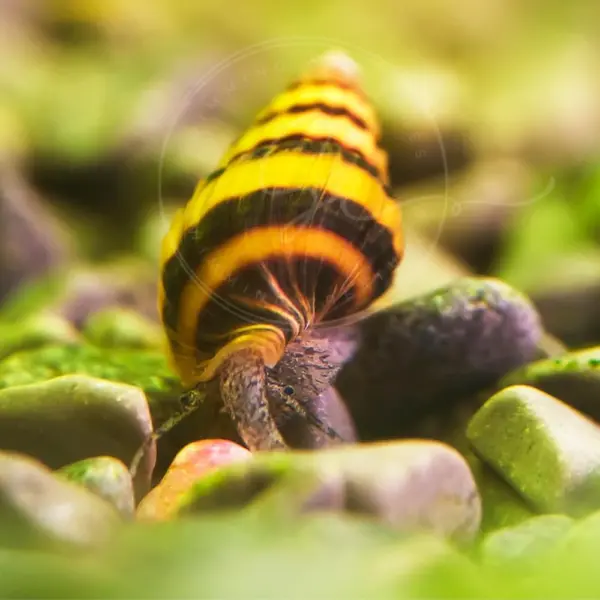
Swimming Creatures 6 Assassin Snails – Best for Community Tanks
Key Features
- Size range: 0.5 to 1 inch
- Snails per order: 6
- Live arrival guarantee: Yes
- Price: Midrange
What we appreciated most was the least exciting thing in the box: acclimation instructions. Float the bag, then let them into the tank. For a first live-snail order, being told what to do beats guessing, and it’s a detail most listings here skip entirely.
Six is an odd number and a useful one. It sits between our top pick’s three and the twelve-pack, and for a planted community tank with a moderate ramshorn population it’s the size of order that gets the job done without leaving a clean-up crew with nothing to eat. The listing also spells out a maintenance diet — sinking pellets, algae wafers and the occasional protein-rich food — which is the part that keeps assassins going after the pests are gone.
The knock is that losses don’t always stop at the bag. Some of these die in the first couple of weeks even in tanks where everything else looks right, and there’s no pattern you can screen for before ordering. The guarantee covers the shipment, not the fortnight after it, so treat those first two weeks as the real test.
Pros
- Acclimation instructions included
- Half-inch to inch snails
- Live arrival guarantee
- Feeding guidance for after the pests
Cons
- High cost per snail for a six-count
Six good-sized snails with instructions in the box and a written arrival guarantee — our pick for a planted community tank that needs a moderate crew.
10 Live Freshwater Assassin Snails – Fast Delivery
Key Features
- Transit: 2-day shipping
- Size range: 0.5 to 1 inch
- Snails per order: 10
- Price: Premium
The listing promises half an inch to an inch. What turns up can run smaller, and that changes what the order does: a quarter-inch assassin isn’t taking down a full-grown trumpet snail, though it will happily work through hatchlings. We size-check every live order for exactly this reason.
Two-day shipping is the real feature. Less time in a box means less time at the wrong temperature, and for live stock that’s worth paying a premium for. Ten snails also let you split the crew across two or three tanks instead of concentrating everything in one, which is handy if you run more than one aquarium and one of them is worse than the other.
So it’s a specialist order rather than a default. Buy it when speed of arrival matters and the pests you’re fighting are small-bodied; if you’re chasing adult trumpet snails, order the bigger size class instead and let the hunters grow into the job.
Pros
- Two-day shipping shortens transit
- Ten snails can be split across tanks
Cons
- Priciest order in this lineup
Worth it when you need ten snails fast and your pest snails are small — otherwise the twelve-pack does more per snail for less.
How We Tested Assassin Snails in Four Real Tanks
We started with a long list of sellers rather than a list of snails. The species is the same everywhere, so the things that actually vary are listed size, how many arrive per order, live-arrival terms, and price per snail. We dropped any listing that wouldn’t state a size, then ordered 14 snails in small batches from several suppliers so we could compare how each batch shipped and what it looked like on arrival.
Each snail went into one of four established planted tanks with a known pest-snail problem, including one with soft water and one with hard. For the first week I checked before the lights came on, when assassins are most active, and noted whether each was buried, climbing glass, or dead in the bag. Dead-on-arrival counts got logged against what we paid, which is where the value question really gets answered — a cheap pack that shows up with two empty shells isn’t cheap. Every few weeks we held a ruler to the glass to measure shell length and noted whether the dark stripes deepened or faded.
To judge snail control, I counted pest snails on a marked four-inch square of front glass every Sunday after feeding, before and after each introduction, and compared the numbers. I also watched how they hunted: some sat in one spot for days, others patrolled the substrate at night. Because plenty of tanks already hold loaches, puffers, or big barbs that will happily eat a small snail, we noted which ones got picked at and which were left alone. After seven months we knew which snails had grown, which had lasted, and which had quietly vanished.
How to Choose Assassin Snails for Your Aquarium
The number and the size of the snails you order decide whether they work, and both matter more than the price on the listing.
How Many Snails to Order
Assassin snails hunt one snail at a time, so a handful takes a while to show on a big population. Our rule of thumb: three or four for a nano or a lightly stocked tank, five to ten for a 29- to 55-gallon community tank with pests on every surface, and a dozen for a large tank that is genuinely overrun.
Under-ordering is the classic mistake — four snails in a carpeted tank spend their time finding each other rather than hunting. Over-ordering leaves you with a crew and no work, and you will be feeding them sinking pellets within a month.
Size Matters More Than the Photo Suggests
Assassins are sold anywhere from a quarter inch to a full inch, and the size class decides what they can tackle. A quarter-inch juvenile is limited to small, thin-shelled prey; half an inch and up is what takes on adult ramshorns and trumpet snails. If your infestation is mature, buy a listing that states a half-inch to an inch — three of the picks here do.
Shipping, Weather and What a Guarantee Covers
Live snails travel in breather bags inside insulated boxes, and the sellers who do it well say so on the page. A written live arrival guarantee is the clearest signal of confidence: it turns a dead-on-arrival bag into a replacement rather than a loss.
Read the terms, though. It covers arrival, not the weeks after, and most sellers want the bag photographed before you open it. In a heatwave or a cold snap, ask for a weather hold instead of gambling on a two-day service.
What They Will and Won’t Do in Your Tank
Assassin snails eat pest snails — pond, bladder, ramshorn, trumpet — and the listings state they leave fish, dwarf shrimp and plants alone, which is why they suit shrimp tanks where a chemical treatment cannot go. They burrow, so you will see empty shells more often than snails.
What they won’t do is wipe out every last pest, and they won’t fix the overfeeding that built the population in the first place. Once the pests thin out, feed sinking pellets, wafers or the occasional protein so the hunters don’t starve.
Frequently Asked Questions
What do I do with assassin snails when they arrive?
Float the unopened bag in the tank for 15 to 30 minutes so the temperature evens out, then net the snails into the aquarium rather than pouring the shipping water in. Expect them to sit still for a day while they adjust; movement on day two is normal, and a motionless snail on day one isn’t a lost cause.
Will assassin snails breed and take over like the pest snails did?
No. They reproduce slowly, need a partner, and each one needs a steady supply of snails to get into breeding condition — exactly what disappears once the tank is clean. You’ll see the odd juvenile, not a boom. Buy for the pests you have rather than stocking extra in the hope of a self-sustaining colony.
How long does it take for the pest snails to disappear?
Weeks, not days. A light infestation in a small tank can clear in about a week; a heavy one in a big tank takes a couple of months. Judge progress at the three- or four-week mark rather than on day three, and count two things: empty shells, and pest snails climbing the glass.
Final Verdict
For most tanks, the Aquatic Arts three-pack is the one to buy: a written arrival guarantee, snails that leave shrimp and plants alone, and a quantity that matches a small or mid-size aquarium.
If the tank is genuinely overrun, skip to the twelve-pack — same seller, same guarantee, twelve half-inch-plus hunters and the lowest cost per snail here. Everything in between is a question of how many pests you’re actually looking at.