This post contains affiliate links. We may earn a small commission when you buy through our links — at no extra cost to you.
Ceramic CO2 diffusers are the standard for fine mist in planted tanks, but many hobbyists discover within weeks that the same pores that create micro-bubbles also trap debris and algae. The result is a slow decline in bubble output or a complete stop unless the disc is cleaned – a maintenance step rarely mentioned in product descriptions.
Design choices like disc size, pressure rating, and whether a bubble counter is integrated all affect how often cleaning is needed and how easy it is to restore performance. Some diffusers tolerate lower pressures well; others require a strong CO2 source to push through clogging pores.
This guide focuses on diffusers that delay clogging through better materials and design, and where cleaning is straightforward enough that it becomes a routine rather than a frustration.
Top Picks
Best for Medium Planted Tanks
Aquario Neo Diffuser M
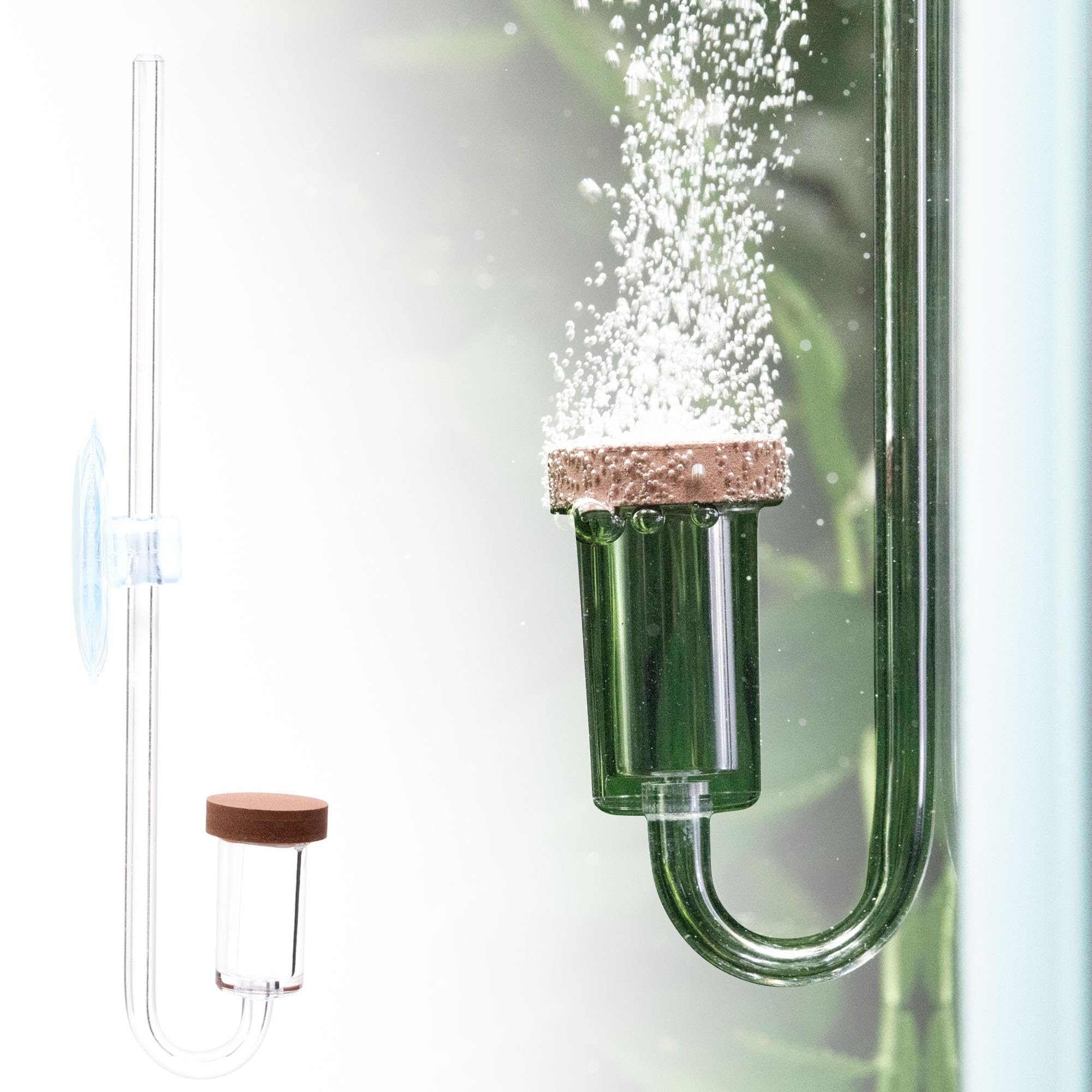
Rating: 4.3 ★ | Price: Mid-Range | Bubble Fineness: Fine mist | Type: Submersible | Bubble Counter: Yes | Durability: Occasional disc detachment
The Aquario Normal Original Medium produces a consistent fine mist of CO2 with a built-in bubble counter, priced competitively for its build quality. The acrylic body and ceramic disc deliver micro bubbles that dissolve effectively in medium tanks up to 32 gallons. Unlike the budget-oriented version without a bubble counter, this model gives you real-time CO2 rate visibility.
Over weeks of use, the ceramic disc may require cleaning to maintain that fine output — a soak in bleach solution restores performance. In rare instances, the disc may detach from the housing after months, though this is not typical. This diffuser suits planted tank hobbyists who are comfortable with periodic maintenance and have tanks in the 13-32 gallon range. It is not for those wanting a completely maintenance-free setup or for tanks larger than 32 gallons.
Pros
- Produces a very fine, consistent mist of CO2 for efficient plant uptake
- Good build quality and value for money
- Integrated bubble counter simplifies CO2 rate adjustments
Cons
- After several weeks of use, the ceramic disc may need cleaning to maintain fine bubble output
- In some cases, the ceramic disc can detach from the housing over months of use
For planted tank owners with medium setups, the Aquario Normal Original delivers consistent fine mist at a fair price — the occasional cleaning is a minor tradeoff for the performance.
Best for Diy Co2 Systems
Fzone Neo CO2 Diffuser L

Rating: 4.2 ★ | Price: Mid-Range | Bubble Fineness: Micro-porous fine bubbles | Type: Submersible | Bubble Counter: Yes | Durability: Possible cracking
This diffuser produces an impressively fine mist that dissolves well in medium to large tanks, and it pairs naturally with yeast or citric acid DIY systems — the built-in bubble counter makes dialing in your CO2 rate straightforward. The acrylic body feels substantial for its price. However, a portion of units need pressure above the advertised 20 PSI to start flowing, and occasional cosmetic cracks in the ceramic disc have been noted. For hobbyists running DIY CO2 who want a bubble counter without moving to a premium inline setup, this is a capable choice if you don’t mind checking the initial performance.
Pros
- Produces very fine bubbles that saturate the water column efficiently
- Works effectively with low-pressure DIY CO2 systems such as yeast or citric acid
- Solid acrylic construction with an accurate built-in bubble counter
Cons
- Some units require higher pressure (40-50 PSI) to start flowing despite the 20 PSI claim
- Occasional reports of the ceramic disc cracking or leaking shortly after setup
For DIY CO2 users with medium to large tanks, this diffuser offers good bubble diffusion and a bubble counter at a fair price — just plan to verify startup pressure and inspect the ceramic on arrival.
Best for Budget Inline Users
Aqualexs Inline Atomizer

Rating: 4.4 ★ | Price: Budget | Bubble Fineness: Fine bubbles | Type: Inline | Bubble Counter: No | Durability: Cartridge clogs
This inline atomizer fits directly into the return line of a canister filter, producing a fine mist of CO2 without taking up space inside the aquarium. The metal and plastic body feels sturdy, and standard 12mm tubing connects with a tight seal that minimizes leaks.
Best for budget-conscious aquarists who already have a canister filter and prefer an inline setup to keep the tank uncluttered. The ceramic cartridge delivers consistent bubble size, but it can eventually clog and is not easy to clean — replacement cartridges are available and inexpensive. A separate bubble counter is needed.
Pros
- Fine bubble output that improves CO2 distribution for plant growth.
- Sturdy build with snug fit on standard tubing, reducing leakage risk.
Cons
- Ceramic cartridge may clog over time and is difficult to clean thoroughly.
A cost-effective way to add inline CO2 diffusion for planted tanks — works well as long as you accept the occasional need for cartridge replacement.
Best for Large Canister Tanks
FZONE Inline CO2 Diffuser
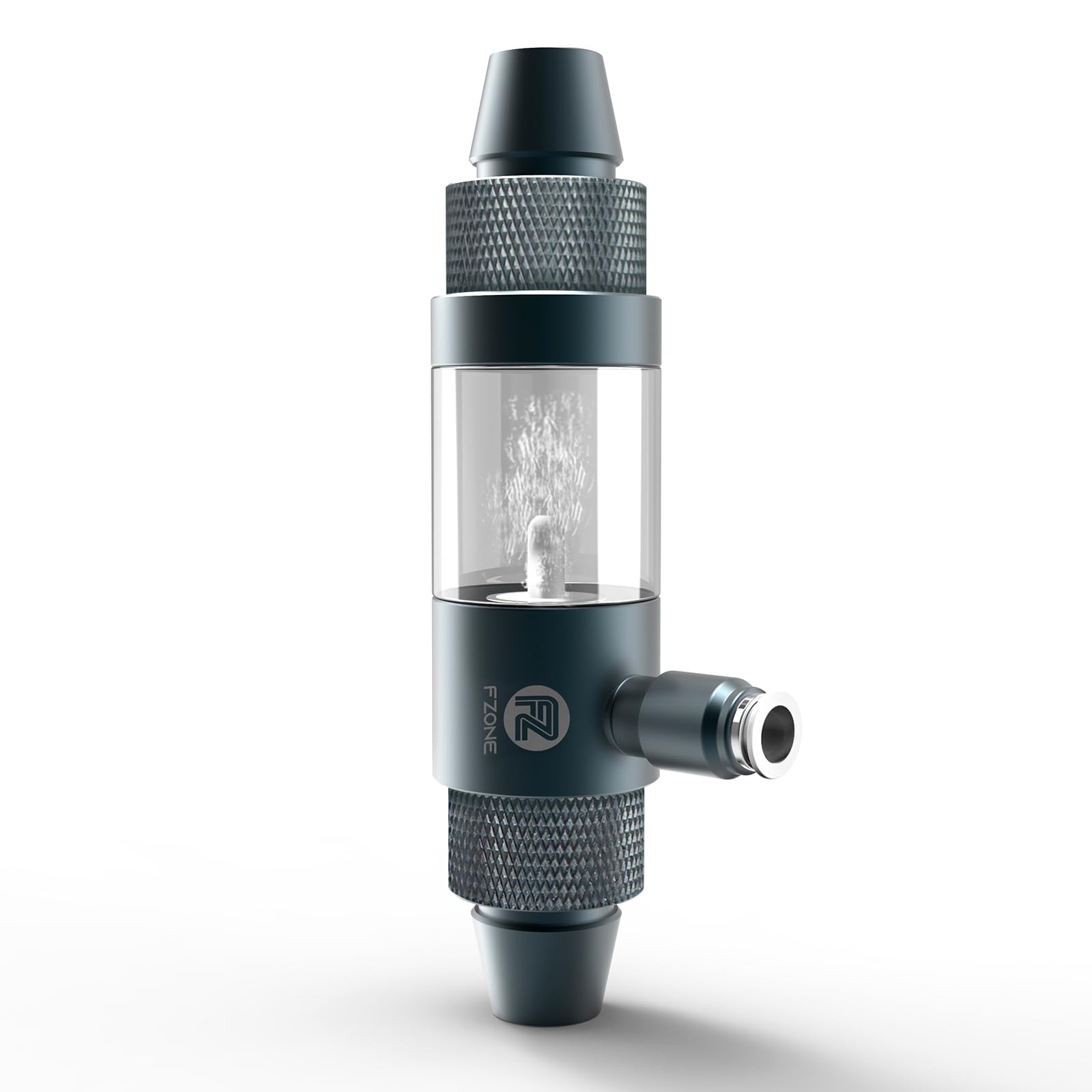
Rating: 4.0 ★ | Price: Premium | Bubble Fineness: <0.1mm claimed | Type: Inline | Bubble Counter: No | Durability: Flow issues reported
The FZONE inline diffuser uses an aluminum body and a replaceable ceramic disc, designed for high-pressure CO2 setups. Placement after the filter allows even distribution of fine bubbles without cluttering the tank interior.
Best suited for hobbyists with canister filters on tanks 30 gallons or larger who want a clean external setup. The premium price and occasional reports of water flow issues or leaks at the CO2 connection mean this fits experienced users willing to troubleshoot.
Pros
- Aluminum body provides durable, corrosion-resistant build.
- Tool-free installation onto standard 1/2-inch tubing.
- Replaceable ceramic diffuser extends service life.
Cons
- Some units can block CO2 flow until pressure builds – soaking before use helps.
- CO2 tubing connection may leak, losing gas.
A solid build for high-pressure canister setups, provided you’re comfortable troubleshooting initial flow or connection quirks.
Best for Nano Tanks
Aquario Neo Diffuser L
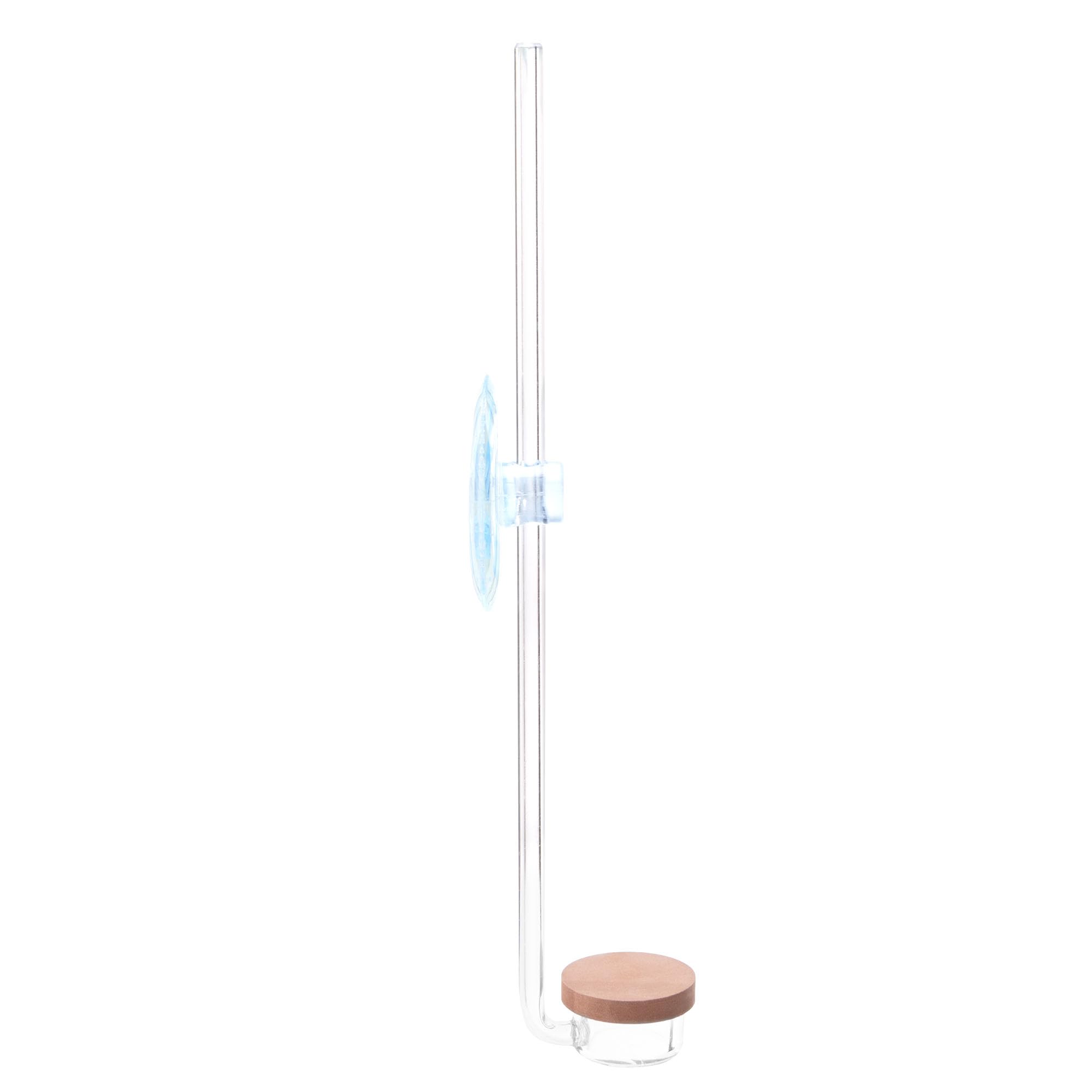
Rating: 4.2 ★ | Price: Mid-Range | Type: Submersible | Bubble Counter: No | Durability: Quick clogging
This is the most affordable submersible ceramic diffuser, offered in multiple sizes. It lacks a bubble counter, and the ceramic disc can clog within weeks; since it is not replaceable, the whole unit must be swapped. This makes it suitable only for budget-focused hobbyists who can monitor output visually and are prepared for frequent replacement.
Pros
- Lowest-cost submersible CO2 diffuser – no bubble counter, but a clear budget pick.
- Available in multiple sizes to match different tank volumes.
Cons
- Ceramic disc may clog within days or weeks and cannot be replaced separately; entire diffuser needs replacement.
Choose this if saving money upfront matters more than long-term convenience and you can handle regular diffuser swaps.
How to Choose
The most overlooked aspect of ceramic CO2 diffusers is that regular cleaning is required to maintain fine bubbles – choosing a diffuser with an easily removable disc saves time and frustration.
Bubble Fineness and Mist Quality
The size of CO2 bubbles determines how efficiently gas dissolves in tank water. Finer bubbles have more surface area and stay suspended longer, improving plant uptake. However, the same micro-pores that produce fine mist are more prone to clogging from algae and mineral deposits.
Diffusers that claim sub-0.1mm bubbles often require higher pressure to push CO2 through those tiny pores. For most planted tanks, a consistent moderate-sized bubble is more reliable than an ultra-fine mist that stops after a few weeks.
Pressure Requirement (PSI)
CO2 diffusers have a minimum operating pressure, usually between 20 and 30 PSI. If your CO2 system (pressurized or DIY) cannot consistently deliver that pressure, the diffuser may fail to start or produce uneven bubbles.
Check your regulator output and consider whether you use a high-pressure system or a low-pressure DIY yeast setup. Diffusers labeled for low pressure (20 PSI) may still need 40-50 PSI to work reliably, as some units have tighter manufacturing tolerances.
Type: Submersible vs Inline
Submersible diffusers sit inside the tank, creating a visible mist that can be placed near plants. They are easy to install and allow direct observation of bubble size. The downside is they take up tank space and are more exposed to algae growth on the ceramic disc.
Inline diffusers mount on the filter outflow hose, mixing CO2 with water outside the tank before it enters. This keeps the tank clean and provides even distribution but requires the correct tubing size and a canister filter. Inline models often have lower clogging rates because the disc is not submerged in direct light.
Built-in Bubble Counter
A bubble counter lets you precisely count CO2 bubbles per second, making it easier to dial in the right dose for your tank. Built-in counters are convenient but add an extra seal that can leak over time.
Separate bubble counters are generally more reliable and can be placed in-line with any diffuser. If you prefer simplicity, a diffuser without a counter combined with a standalone bubble counter may be more durable.
Durability and Clogging Resistance
Ceramic discs are the most common failure point. Cheaper discs may crack from thermal stress or pressure spikes. Higher-quality diffusers use denser ceramic that resists clogging longer, but require higher pressure to start.
Regular cleaning with a diluted bleach or vinegar soak can restore flow. Diffusers with removable discs are easier to clean and replace. Models with glued discs (e.g., some budget inline cartridges) must be replaced entirely when clogged.
FAQ
Why is my CO2 diffuser not producing bubbles after a few weeks?
The ceramic disc has likely become clogged with algae, biofilm, or mineral deposits. This is normal and happens to all ceramic diffusers over time. The fix is to remove the disc and soak it in a 1:20 bleach-water solution or white vinegar for 30 minutes, then rinse thoroughly. If bubbles still do not appear, the disc may need replacement.
How do I clean a clogged ceramic CO2 diffuser?
Disconnect the diffuser and remove the ceramic disc if possible. Soak the disc in a diluted bleach solution (1 part bleach to 20 parts water) for 30 minutes, or use white vinegar for mineral clogs. Rinse with dechlorinated water and reinstall. For inline diffusers, run the cleaning solution through the system with a syringe. Regular cleaning every month prevents complete blockage.
Inline vs submersible CO2 diffuser: which is better for a planted tank?
Inline diffusers are better for canister filter users who want a clean tank and even CO2 distribution, while submersible diffusers are easier to install and allow you to see the mist directly. Inline models tend to clog less because the disc is not exposed to light, but they require correct hose size. For tanks under 20 gallons, a submersible is usually simpler and more cost-effective.
Can I use a ceramic CO2 diffuser with a DIY yeast system?
Yes, but you need a diffuser that operates at low pressure. Some ceramic diffusers require 20-30 PSI, which DIY systems often cannot sustain. Look for models explicitly designed for low pressure, like the Fzone Neo, which works with yeast and citric acid setups. Even then, expect slower startup and more frequent cleaning due to inconsistent pressure.