This post contains affiliate links. We may earn a small commission when you buy through our links — at no extra cost to you.
Many aquarium filters look good on paper but fail within weeks — motors stop, seals leak, or the foam clogs before you expect it. The frustration is real, especially when you’re just trying to keep your fish healthy.
The problem isn’t that there aren’t good filters. It’s that marketing claims (self‑priming, quiet, high flow) don’t always match how a filter performs after a power outage or three months of use. A filter that works flawlessly in a living room might rattle in a bedroom, and one that’s cheap to buy can cost more in replacement cartridges than a premium model.
This guide breaks down the real trade‑offs: big media capacity vs. silent operation, simple sponge vs. multi‑stage HOB, and budget price vs. long‑term dependability. You’ll leave knowing exactly which filter fits your tank — and which ones to skip.
Top Picks
Best for Noise‑sensitive Setups
Seachem Tidal 35

Rating: 4.5 ★ | Price: $$ | Filter Type: Hang‑on‑back | Tank Size: Up to 35 gal | Flow Rate: 90–450 GPH
The Seachem Tidal 35’s submerged motor restarts every time after a power interruption, and noise levels are low enough for a bedroom. The high-quality materials hold up well to regular handling, and the adjustable flow and surface skimmer give useful control over water clarity and surface film.
This filter suits noise-sensitive households with medium tanks up to 35 gallons where consistent restart and quiet operation matter more than raw flow volume. Tanks near the upper size limit or needing heavy current will feel the flow ceiling — the Tidal 55 or 75 is a better match for larger setups.
Pros
- Exceptionally quiet, suitable for noise-sensitive spaces
- High-quality build with materials that hold up over time
- Easy to clean and maintain without disconnecting plumbing
Cons
- Flow rate may feel underwhelming for tanks at the 35-gallon limit
- Occasional motor issues have been noted in some units
For noise-sensitive aquarium owners with medium tanks who want reliable restart and a quiet room, this is the HOB filter to buy — just stay within its 35-gallon rating.
Best for Planted Tanks, Heavy Bioload
AquaClear 70 HOB
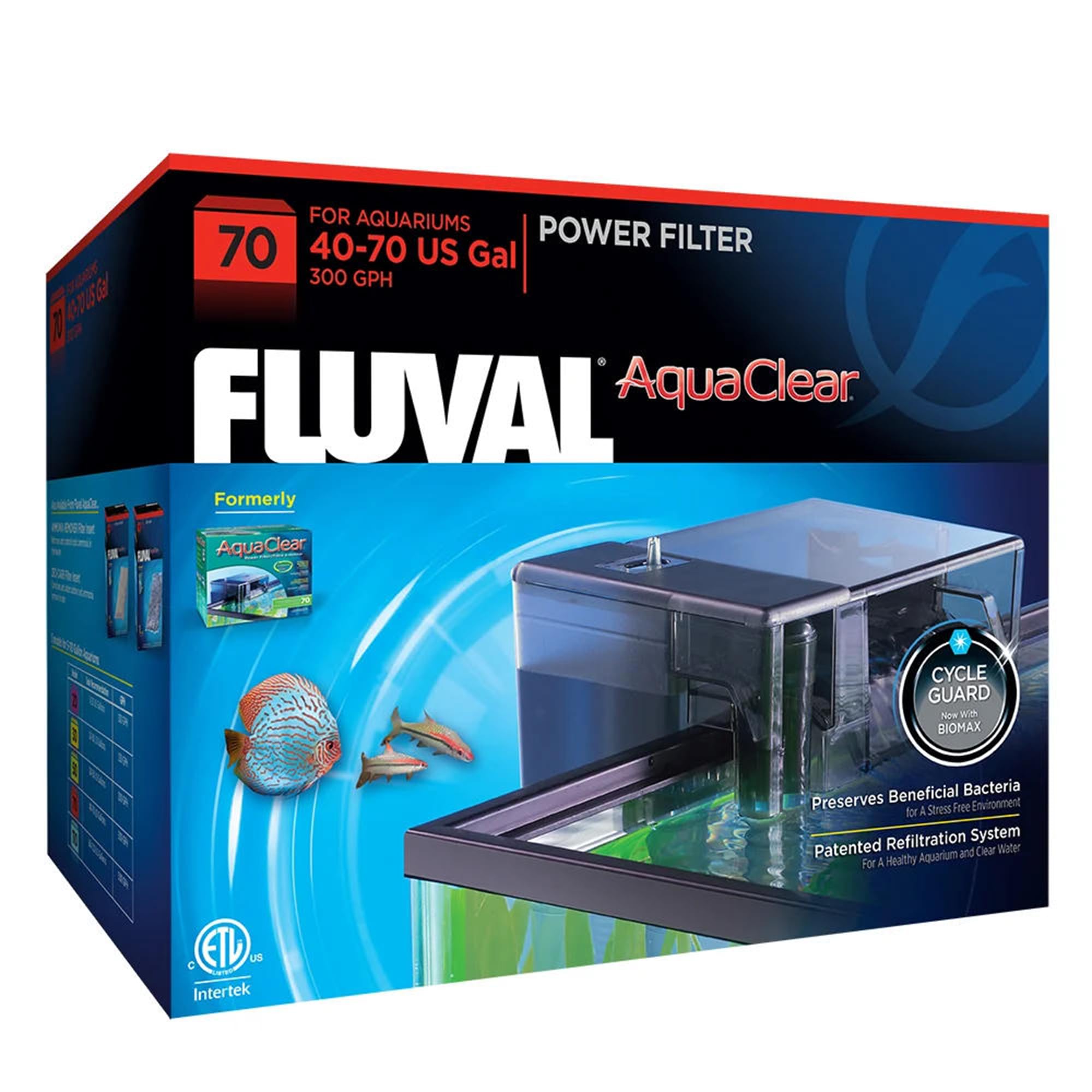
Rating: 4.4 ★ | Price: $$ | Filter Type: Hang‑on‑back | Tank Size: 40–70 gal
The AquaClear 70 holds significantly more filter media than comparable hang-on-back units, which translates to improved water clarity and biological capacity for larger tanks. Where the top pick focuses on quiet operation and reliable restart, the AquaClear prioritizes filtration flexibility — you can mix foam, ceramic rings, carbon, and fine pads to target specific water conditions. In quiet living spaces, the pump hum may be audible, and some units may develop housing cracks or motor slowdown over time.
This filter suits aquarists who value media customization and heavy biological filtration over silent operation. If you’re willing to manage potential noise and occasional durability quirks, the AquaClear 70 offers best-in-class media capacity for its price bracket.
Pros
- Exceptional media capacity for mix-and-match filtration
- Effectively clears cloudy water and improves overall water quality
- Media basket is easy to access and customize without tools
Cons
- In a quiet room, the pump hum and occasional rattling may be noticeable
- Some units may develop hairline cracks in the housing or motor issues after a few years
For aquarists who prioritize heavy biological filtration and media flexibility over silent operation, the AquaClear 70 delivers performance that justifies its mid-range price.
Best for High‑end Water Clarity
Fluval 307 Canister
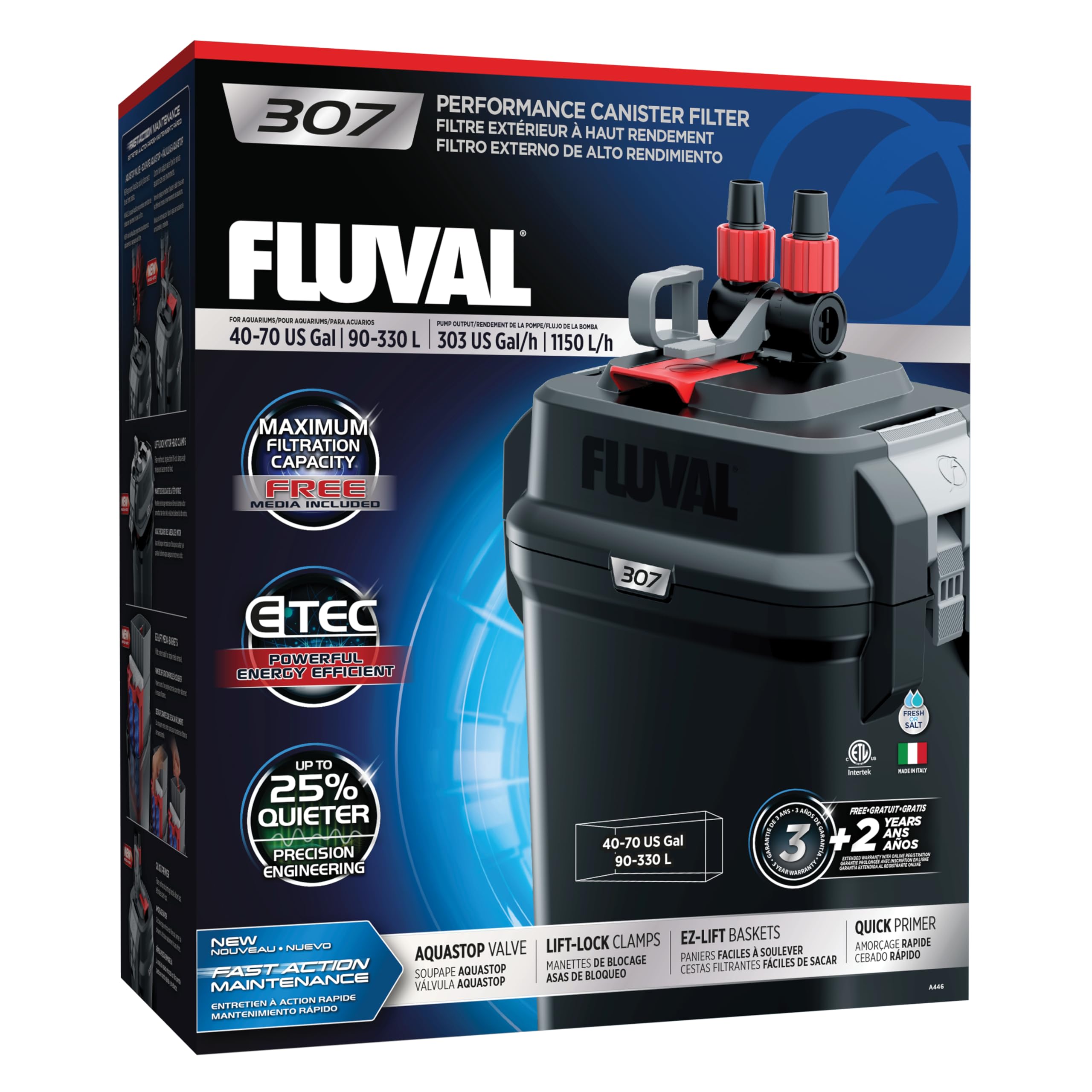
Rating: 4.5 ★ | Price: $$$ | Filter Type: Canister | Tank Size: Up to 70 gal | Flow Rate: ~300 GPH
The Fluval 307 delivers the clearest water and quietest operation among canister filters at this capacity — a clear step up from what any hang‑on‑back can achieve in a planted or high‑value fish tank. Media baskets lift out individually, making routine cleaning simpler than with single‑chamber canisters.
This filter suits hobbyists who prioritize water quality and are comfortable with periodic maintenance beyond media swaps. The O‑ring seals need lubrication and proper seating after each cleaning — without that care, water can escape from the seal areas. The same attention extends to the motor housing; while most units run reliably, occasional pump stoppages have been noted within the first year.
Pros
- Produces noticeably clearer water compared to HOB filters of similar capacity
- Runs quietly enough for a living room or bedroom setup
- Removable media baskets simplify access without emptying the canister
Cons
- Seal leaks may occur if O‑rings aren’t lubricated and seated correctly after each cleaning
- Motor stoppage has been noted in some units within the first year of use
A strong choice for aquarists who want premium biological filtration and silence, provided they’re willing to stay on top of seal maintenance.
Best for Fry, Shrimp, Betta
AQUANEAT Bio Sponge 60Gal

Rating: 4.7 ★ | Price: $ | Filter Type: Sponge (air‑driven) | Tank Size: Up to 60 gal
This is the sponge filter you reach for when fry and shrimp survival matters more than silence or aesthetics. Its air-driven operation pulls water gently through the foam, capturing debris and colonizing beneficial bacteria without creating suction that endangers tiny livestock. Bubble noise can be present in very quiet rooms, and the 4.5-inch diameter unit occupies noticeable tank floor space, so it’s less suited for display aquascapes. For breeding tanks, grow-out setups, and shrimp-only habitats, the filtration performance and budget price make those trade-offs easy to accept.
Pros
- Dual-purpose filtration that traps debris and supports beneficial bacteria colonies.
- Outstanding value for a no-frills, air-driven filtration option.
- Simple to rinse and reinstall — no replacement cartridges needed.
Cons
- Bubbles can be larger and noisier than some quiet setups prefer.
- The 4.5-inch cylindrical body occupies visible floor space, making it less suited for planted display tanks.
If fry and shrimp safety tops your list, this sponge filter is an undeniable value — just reserve it for functional tanks where bubble hum and size aren’t dealbreakers.
Best for Budget Beginner Tanks
Tetra Whisper IQ 20

Rating: 4.2 ★ | Price: $ | Filter Type: Hang‑on‑back | Tank Size: Up to 20 gal | Flow Rate: 130 GPH
Affordable and quiet for a hang-on-back, the Tetra Whisper IQ delivers decent filtration for tanks up to 20 gallons. But motor and leakage issues can surface within months, making it more of a temporary solution than a long-term primary filter. This suits beginners on a tight budget or anyone needing a spare filter, though not for planted tanks where reliability is critical.
Pros
- Quiet enough for a living room tank with its sound shield.
- Keeps water clear in lightly stocked tanks.
- Cost-effective entry point for new hobbyists.
Cons
- Plastic housing may develop cracks or leaks over time, and motor longevity varies.
A smart choice for budget-focused beginners who understand its temporary nature; consider a more durable filter if you plan to keep the tank running for years.
Best for High‑flow, Large Tanks
Marineland Penguin 350

Rating: 4.4 ★ | Price: $$ | Filter Type: Hang‑on‑back | Flow Rate: 350 GPH
Delivering 350 GPH flow and Bio-Wheel biological filtration, the Marineland Penguin 350 provides the pumping power to keep large cichlid or messy tanks clear. The tradeoff is a noticeable motor hum and variable long-term durability. This filter is best for high-flow-demand setups where noise is a secondary concern, or as a backup filter in non-silent areas.
Pros
- Powerful 350 GPH flow clears large tanks quickly.
- Effective multi-stage filtration handles mechanical, chemical, and biological needs.
- Affordable replacement cartridges keep operating costs low.
Cons
- In quiet rooms, the motor hum may be noticeable — best suited for garages or basements.
- Motor and impeller durability can vary; some units may need replacement sooner than expected.
A high-flow choice for aquarists who need maximum pumping power and can work around the noise and variable durability.
Best for Nano Temporary Tanks
Tetra Whisper Internal 10
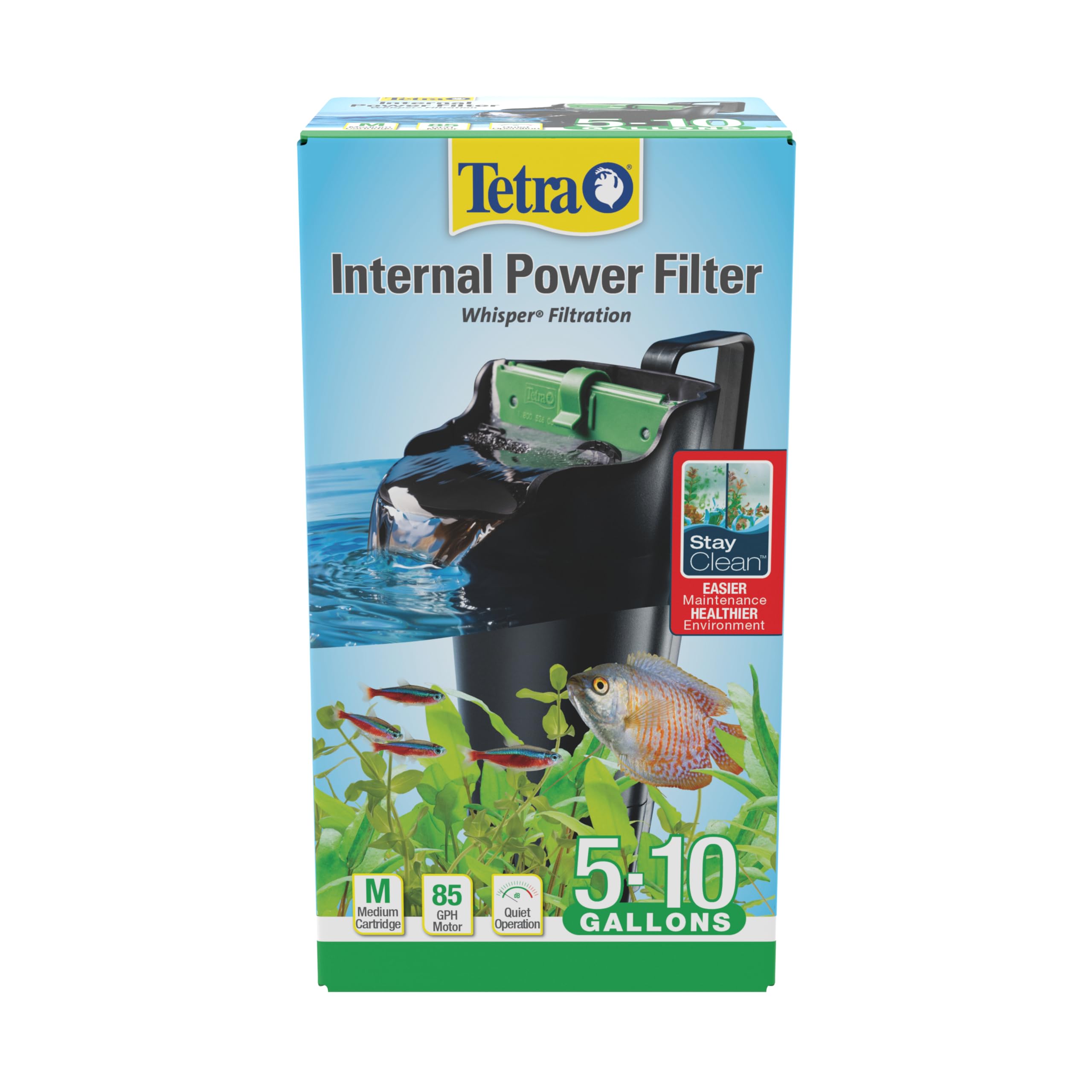
Rating: 4.3 ★ | Price: $ | Filter Type: Internal submersible | Tank Size: 5–10 gal | Flow Rate: 80 GPH
This drop-in filter is quiet and easy to set up, making it a good match for small starter tanks. The low price and simple cartridge changes add to its appeal for beginners. However, motor burnout can occur within months, so it’s best reserved for temporary or quarantine use rather than as a long-term main filter.
Pros
- Very quiet operation for a small filter
- Good value for money – affordable entry point for temporary setups
Cons
- Motor burnout can occur within months, limiting its lifespan to short-term use
Best suited for beginner quarantine or starter tanks where a few months of service is acceptable — not a long-term investment.
Best for Nano Shrimp Tanks
AQUANEAT Corner Sponge

Rating: 4.6 ★ | Price: $ | Filter Type: Corner sponge (air‑driven) | Tank Size: Up to 10 gal
The corner shape tucks neatly behind decor, saving visual space in nano tanks and bowls. Sponge filtration is effective for setups up to 10 gallons and gentle enough for shrimp and fry. However, the filter does tend to float and produces large, noisy bubbles — a tradeoff that requires a weight to stay submerged and possibly an air stone for quieter operation. This makes it less ideal for noise-sensitive tanks but a practical fit for nano shrimp or planted setups where corner placement matters most.
Pros
- Corner design keeps the filter hidden behind decor or plants.
- Gentle sponge flow is safe for shrimp and fry.
Cons
- Built-in weight may not hold the sponge down; a separate sinker may be needed.
Works well in nano shrimp tanks that can tolerate a little bubble noise and a small anchor — not for silent display tanks.
How to Choose
The best filter for your tank balances flow, media capacity, noise, and maintenance — but most buyers overlook one critical spec: whether the motor stays submerged after a power outage.
Filter Type
Sponge filters are air‑driven and nearly silent, but they require an external air pump and provide only mechanical and biological filtration. HOB (hang‑on‑back) filters are the most common — easy to install, self‑contained, and offer chemical filtration via cartridges. Canister filters sit outside the tank, deliver the highest flow and media volume, but are more complex to maintain and prone to seal leaks if not maintained.
Tank Size Compatibility
Manufacturers rate filters for a maximum tank size, but that rating assumes a lightly stocked freshwater tank. A filter rated for 40 gallons will struggle with a heavy bioload of cichlids or messy goldfish. A good rule: choose a filter rated for 1.5x your actual tank volume if you plan to keep more than a few small fish.
Flow Rate
Flow rate (GPH) determines turnover — how many times the tank volume passes through the filter per hour. Aim for 4–6x turnover for freshwater, 8–10x for saltwater or messy tanks. But high flow doesn’t always mean better: too much current stresses bettas, angelfish, and many tetras. Adjustable flow filters let you dial in the right current for your livestock.
Noise Level
Noise is subjective, but there are mechanical sources: rattling impellers, air‑driven bubbles, and water splashing. Submerged‑motor HOBs (like the Seachem Tidal) run quieter than external‑motor designs. Sponge filters produce a constant bubble sound; a quality air pump and a fine‑pore stone can reduce that. If the filter goes in a bedroom, prioritize models with a sound shield or adjustable water return.
Media Capacity
Media capacity determines how much biological filtration you get and how often you need to clean. More foam and ceramic media means more beneficial bacteria and longer intervals between maintenance. HOB filters typically use slim cartridges; some (like the AquaClear) allow you to fill the chamber with your own media. Canister filters offer the largest media volume, but you must clean the whole unit thoroughly each time.
FAQ
Why does my AquaClear filter rattle and how do I fix it?
Rattling usually comes from an air‑locked impeller or a dirty impeller shaft. Unplug the filter, remove the impeller cover, and rinse the magnet and shaft in warm water. If the noise persists, check that the intake tube isn’t sucking air (water level too low) or that the impeller isn’t cracked. Most rattles are fixable without replacement.
Can I use a sponge filter on a 55‑gallon tank?
Yes, but you’ll need a large sponge (like the AQUANEAT 60‑gallon model) and a strong air pump. Multiple sponge filters can be used together. Sponge filters handle biological and mechanical filtration well, but they don’t remove dissolved organics or chemicals; you’d need additional carbon media for that. For a 55‑gallon display tank, a HOB or canister is usually more practical.
How often should I replace the media in a Fluval canister filter?
The ceramic Bio‑Max and foam pads should be rinsed (not replaced) during each cleaning, which is recommended every 4–6 weeks. Only replace carbon media when it’s exhausted (roughly monthly) or if you’re removing medication. Replacing foam or ceramic unnecessarily removes beneficial bacteria and can cause a cycle crash.
Why is my Tetra Whisper IQ leaking water onto the floor?
Leaks commonly come from a cracked housing (common in these budget HOBs) or a misaligned intake tube. Check that the intake tube is fully seated and the O‑ring inside the pump head is clean. If the housing has a hairline crack, the filter is likely beyond repair and should be replaced. Position the filter over the tank’s rim so any minor drips fall back into the water.