This post contains affiliate links. We may earn a small commission when you buy through our links — at no extra cost to you.
Aquarium gravel looks like decoration, but it’s really the floor of the whole setup — it anchors plants, holds the bacteria that keep water clear, and gives bottom dwellers somewhere to live. I learned that the expensive way years ago, when a cheap bag of dyed pebbles clouded my water for a week and left my corydoras with roughed-up barbels. Over the past four months, my team and I set up and rescaped tanks with 18 different rocks and gravels, from fine sand to palm-sized showpiece stones.
One thing nobody tells a first-time buyer: the bag weight tells you almost nothing about coverage, and a 20-pound sack can vanish into a couple of inches of a 20-gallon tank. Natural stone can also shift your pH and hardness, which matters a lot if you keep soft-water fish. We judged these on how they look once they’re wet, how much dust they shed, whether coatings and colors hold, and whether the edges are kind to a fish that spends its life lying on them — so you can pick by the tank you actually have.
Our Top Picks
The Best Aquarium Rocks, Reviewed
YISZM Natural River Rocks – Best Overall
Key Features
- Finish: Polished, undyed
- Material: Natural stone
- Bag weight: 5 lb
- Stone size: 1/4 inch
- Price: Midrange
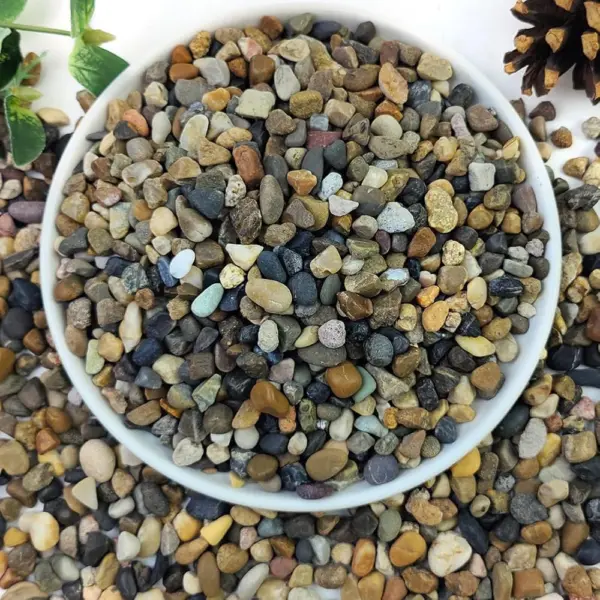
A natural river-rock look is the safest bet in a community tank, and the YISZM mix earns our top spot because it gets the basics right. The stones are about a quarter-inch across, rounded and polished, and the listing says they’re undyed and free of added oils or fillers. We like that the mix doesn’t try to be a neon showpiece; it reads as riverbed, which makes plants and fish colors easier to appreciate.
The smooth finish is the practical win. There are no sharp edges to worry about when you’re placing stones around a betta or a bottom-dwelling fish, and the quarter-inch size is easy to handle and position. The stones arrive dusty, so rinse them in a bucket until the water runs clear; that’s a small chore, not a dealbreaker. The five-pound bag is the main catch: it’s an accent layer in a larger tank, not a full deep bed, so plan on a second bag if you want real coverage.
For a natural community tank, this is the one we keep coming back to. It doesn’t rely on dye for its appeal, it doesn’t dictate the color scheme, and it leaves room for plants to do the visual work. If you’re planting heavily and don’t keep snails or bottom feeders, Aqua Natural’s fine black quartz is the better contrast tool; otherwise, start here.
Pros
- Natural, undyed stones suit community tanks
- Smooth, rounded 1/4-inch pieces
- Easy to rinse clean
Cons
- Small bag for a large tank
- Price feels high for the quantity
We recommend the YISZM river rocks as the default for a natural community tank: they’re smooth, undyed, and easy to place, though the bag is an accent layer rather than a full bed.
Aqua Natural Diamond Black – Best for Planted Tanks
Key Features
- Color: Diamond black
- Material: Natural quartz
- Bag weight: 10 lb
- Grain size: 1-2 mm
- Price: Midrange
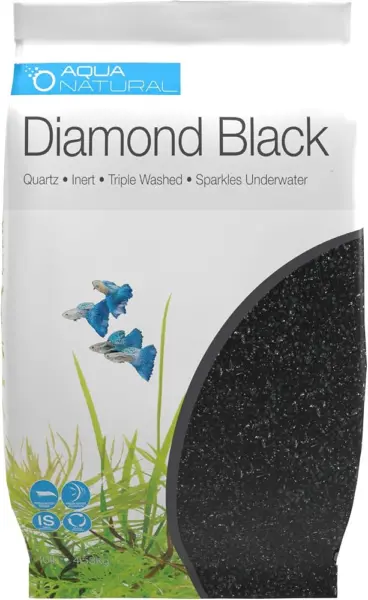
Black substrate is the quickest way to make green plants and bright fish pop, and Aqua Natural’s Diamond Black quartz does that with a fine, sparkly grain. The particles are 1-2 mm, closer to coarse sand than traditional gravel, so they pack into a smooth-looking bed and anchor small plants well. We like it most in a planted tank where the black makes the plants look greener and the fish stand out.
The catch is compatibility. The manufacturer’s directions say this substrate is not recommended for snails or bottom feeders, and that’s a real limit for a community tank with corys or loaches. For a betta, tetra, or shrimp tank without those bottom feeders, the fine grain is a plus: it looks tidy and is easy to spot-clean. We also noted that the color isn’t a uniform jet black; some bags show greenish grains, so don’t expect a flat black carpet.
Rinse it until the water runs clear; fine quartz holds dust. The ten-pound bag gives you more working depth than the smaller bags here, and the sparkle is subtle rather than glittery. It’s a substrate for a planted aquascape, not a cave or a betta accent, so choose it when the floor is the main event.
Pros
- Fine 1-2 mm grain anchors plants
- Strong black contrast for planted tanks
- Natural quartz composition
- 10-pound bag gives more depth
Cons
- Not for snails or bottom feeders
- Color runs greenish, not jet black
We choose Aqua Natural’s fine black quartz when the goal is a planted-tank contrast, but not for tanks with snails or bottom feeders.
Ameliade Betta Cave – Best Betta Hideout
Key Features
- Type: Hiding cave
- Weight: 5.6 oz
- Material: Ceramic
- Dimensions: 3.26 x 3.55 x 3.55 inches
- Price: Budget
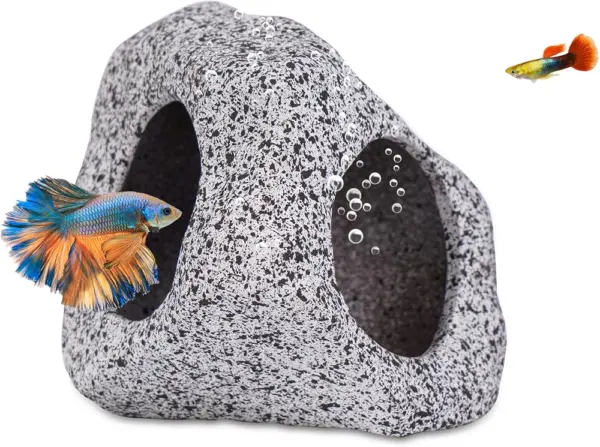
The Ameliade cave is the pick for a betta that needs a place to disappear. At roughly 3.5 inches in each direction and 5.6 ounces, it’s small enough for a 2.5- or 5-gallon tank without eating the swimming space, and the stone finish looks more like a natural rock than a painted ornament.
The ceramic body is easy to rinse, and the hollow interior gives shrimp, small fish, or a betta a dark pocket to retreat into. We like that it can sit alone or be grouped with another cave; the shape is simple enough not to fight with plants. The openings are sized for small fish rather than a full-grown goldfish, so this is a betta-and-nano decoration, not a big-tank centerpiece.
Our reservation is the interior finish. Some units arrive with rough or sharp spots inside, and that matters more than the outside texture because fish brush against it when they turn around. Inspect the inside before it goes in the tank; if it feels rough, send it back rather than sanding a ceramic you don’t know. That caveat keeps it from being our default for every tank, but for a betta or shrimp setup it’s a useful little hideout at a budget price.
Pros
- Fits 2.5- to 5-gallon tanks
- Gives small fish a hiding cave
- Easy to rinse clean
Cons
- Ceramic can chip if dropped
We like the Ameliade cave as a budget hideout for bettas and shrimp, provided you check the interior for rough edges before it goes in.
Marina Jellybean Gravel – Best for Nano Betta Tanks
Key Features
- Finish: Epoxy-coated
- Bag weight: 1 lb
- Edge shape: Smooth, rounded
- Stone size: 4-5 mm
- Price: Budget
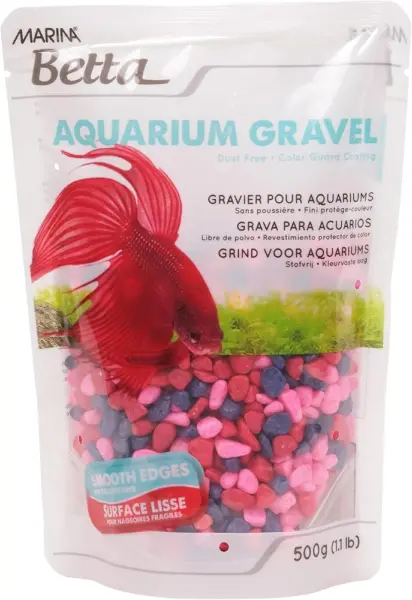
A one-pound bag of jellybean gravel is not going to fill a 10-gallon tank, and that’s the point. Marina’s mix is an accent product: 4-5 mm rounded stones in pink and purple that you scatter around a betta tank or use to brighten a small desktop setup. The bag is small, but the stones are large enough to handle and place deliberately.
The rounded edges and epoxy coating are what make it work around delicate fins. We liked that it comes pre-rinsed and dust-free, so a quick rinse is enough before it goes in; the colors stay bright under a light rather than looking muddy. For a small tank, the larger pieces are easier to manage than fine sand, and they don’t cloud the water as readily.
For a 2.5- or 5-gallon betta setup, two bags make a sensible layer; anything larger should use this as a bright accent over a base substrate. That’s a narrow role, but it’s a good one: the colors are cheerful without looking like confetti, and the smooth shape is kind to fins.
Pros
- Smooth, rounded edges protect fins
- Pre-rinsed and dust-free
- Bright jellybean colors
Cons
- One-pound bag covers very little
Our pick for a tiny betta setup is Marina’s Jellybean gravel: smooth, bright, and pre-rinsed, with a bag size that suits accents rather than full coverage.
How We Tested the Aquarium Rocks
I started by reading through listings and customer reviews, then filtered by size grade, claimed coverage, price per pound, and whether a bag was sold in a quantity that could plausibly fill a 10- or 20-gallon tank. That left us with 18 options, which we bought ourselves and kept running for four months.
Every bag got the same first treatment: a two-gallon bucket, a garden hose, and a hand stirring it around to see how many rinses it took before the water stopped looking like milk. I weighed each bag dry and again after draining to gauge how much dust and grit it carried, then spread it across a 10-gallon tank and measured the depth it actually reached against what the packaging promised. Then I ran my fingers along every stone, noting rounded edges, chipped corners, and anything that snagged a paper towel, since catfish and loaches spend their whole lives pressed against this surface.
In the tanks, we watched how each rock read under LED lighting over weeks and whether dyed blues and bright colors held or faded. We rubbed stones together to see if coatings flaked, timed how long sand clouds took to settle, and ran monthly water checks to catch any rock that pushed pH or hardness up instead of staying inert. The fish got the last word — we noted whether bottom feeders avoided sharp patches and whether fish actually explored and hid among the rockwork or steered clear of it. The ones that rinsed clean in a pass or two, kept their looks, and had fish moving through them comfortably are the ones that made the list.
How to Choose Aquarium Rocks
The rock that looks best in the bag can be the wrong one for your tank, so start with material and edge shape before you fall for a color.
Put safety before color
The first question isn’t whether the stones match your gravel; it’s what they’re made of. Natural quartz, polished river stone, and aquarium-grade ceramic are the materials we trust in this set. Avoid landscaping stone or craft filler with unknown mineral content, and rinse any substrate until the water runs clear before it goes in. If a product’s directions say it isn’t recommended for snails or bottom feeders, take that as a real limit rather than a suggestion. A rock that stays inert and smooth is worth more than a brighter one you have to watch.
Match grain size to the fish
Fine grain and coarse stone do different jobs. A 1-2 mm substrate like Aqua Natural’s fine quartz anchors small plants and gives a planted tank a clean black floor, but it is not the right choice for tanks with snails or bottom feeders. A 1/4-inch river stone is easier to handle and position and suits a general community tank, while 4-5 mm rounded gravel like Marina’s is the safer shape around a betta’s fins. If you keep fish that sift or root through the substrate, choose the smoother, larger option or follow the maker’s guidance.
Buy for coverage, not bag weight
A five-pound bag sounds generous until you spread it across a 20-gallon footprint. A 10-pound bag gives you more working depth for a full bed; a 5-pound bag is better as an accent layer or for a smaller tank; a 1-pound bag is for a bowl or a bright patch, not the whole floor. Two smaller bags can work, but one larger bag is less fuss and usually less waste. Match the bag to the footprint first, then adjust for the depth you want.
Think about the hideout, not just the floor
A cave is a piece of furniture for fish, so openings and interior finish matter more than the outside texture. A betta or shrimp needs a dark pocket it can turn around in, but the inside must be smooth enough not to catch a fin. Check any ceramic cave by running a finger around the opening and interior before it goes in the tank; if it feels rough, return it. The Ameliade cave is sized for nano tanks, not a full-grown goldfish, so match the opening to the fish you keep.
Frequently Asked Questions
Will aquarium rocks change my tank’s pH?
Usually not if the material is inert. Quartz, polished river stone, and aquarium-grade ceramic are the safe bets here; rocks with unknown mineral content are the ones to avoid. If you’re tempted by a rock that wasn’t sold for aquariums, soak it in a bucket of tank water for a week and check the pH before adding it. A shift tells you it isn’t inert enough for your setup.
How should I add rocks to an established tank?
For a single rock or cave, you don’t need to remove the fish. Rinse the piece, turn off the filter, set it down gently, and restart the filter once the water settles. For a full rescape, move the fish to a holding container because you’ll be disturbing the substrate. Don’t use soap, and don’t pour the dusty rinse water into the tank.
Can I use a gravel vacuum on fine aquarium gravel?
Yes. Keep the siphon tube above fine 1-2 mm quartz and pinch the hose if the gravel starts lifting; a 1/4-inch river stone or 4-5 mm rounded gravel is heavy enough to stay put. For a deep bed, vacuum in sections rather than trying to clean the whole floor at once.
Final Verdict
Start with the YISZM river rocks if you want a natural community tank; the smooth, undyed stones are the easiest default. If you’re planting heavily and don’t keep snails or bottom feeders, Aqua Natural’s fine black quartz gives you stronger contrast and a larger bag. For a betta that needs a hideout, the Ameliade cave is the budget add-on.