This post contains affiliate links. We may earn a small commission when you buy through our links — at no extra cost to you.
Aquarium gravel seems simple—until you pour it in and your tank turns into a mud puddle. Many bags labeled ‘pre-washed’ still require multiple rinses, and painted options can flake off, leading to fish health issues.
The key is knowing which materials work for your setup: natural river rocks for aesthetics, clay-based substrates for planted tanks. This guide cuts through the marketing to help you pick gravel that stays clear and keeps your fish safe.
From budget-friendly pea gravel to premium planted soils, we cover what actually works in a freshwater tank.
Top Picks
Best for Planted Tanks
Fluval Plant & Shrimp Stratum
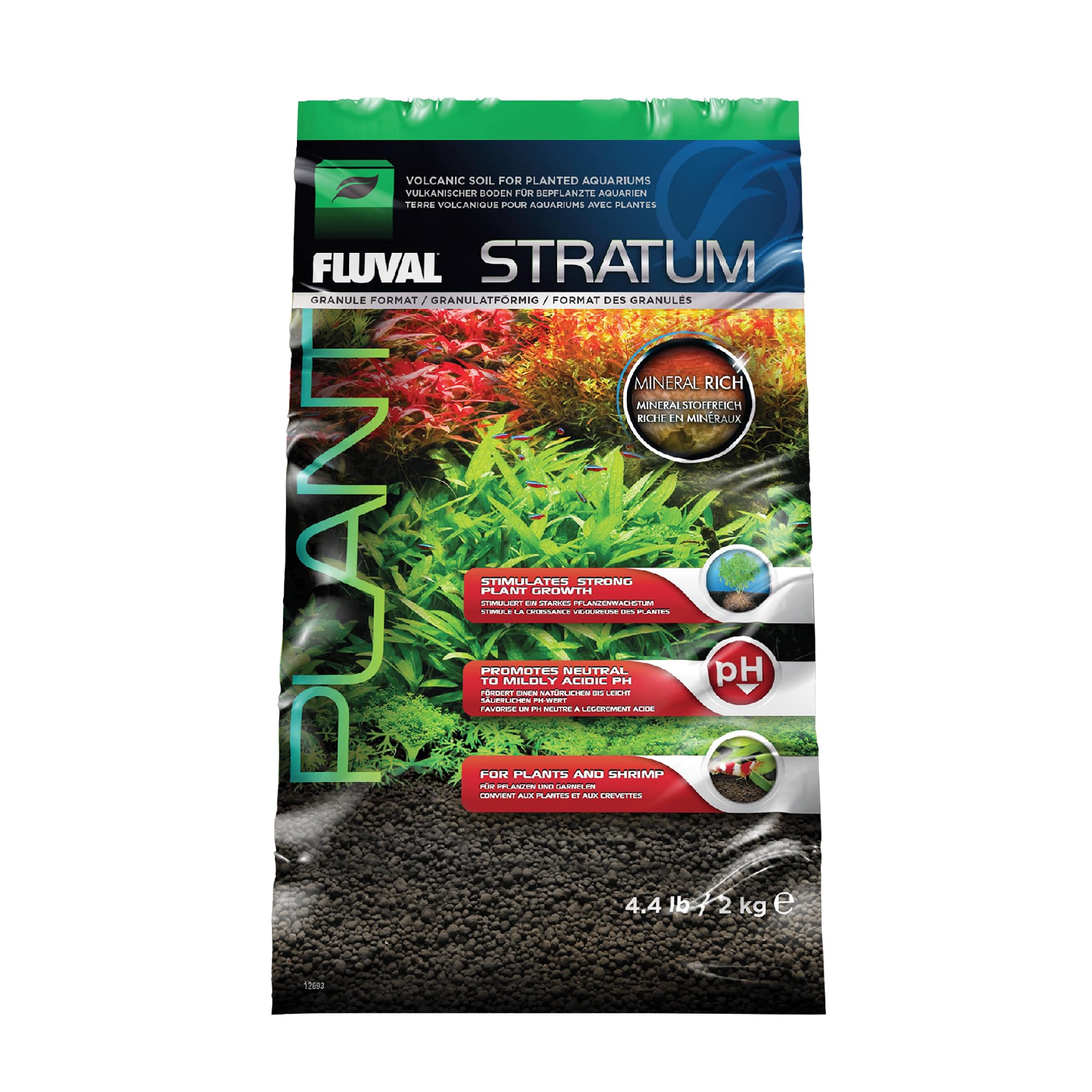
Rating: 4.7 ★ | Price: $$ | Bag Weight: 4.4 lbs | Material: Porous clay | Nutrient Content: Rich plant nutrients
The Fluval Stratum uses porous clay granules that buffer water to a neutral or slightly acidic pH, creating the conditions that rooted plants and shrimp thrive in. Growth rates are consistently strong across a range of freshwater plants, from carpeting species to stem plants.
This substrate is best for aquarists focused on planted tanks or shrimp colonies. Expect a temporary cloudiness for 24 to 48 hours after filling, which clears with filtration. The lightweight pellets can also drift upward if plants aren’t anchored with weights or deep planting — a small extra step for reliable results. Tanks with large digging fish that disturb the substrate are not a good match.
Pros
- Promotes strong root growth and leafy development in planted tanks.
- Safe for shrimp and helps maintain stable water chemistry.
- Clay granules hold shape and don’t break down over time.
Cons
- In a new setup, water may turn cloudy for 24–48 hours until the filter clears it.
- Lightweight pellets can float unless plants are secured with anchors or weights.
For planted tank enthusiasts who can tolerate a brief cloudy startup, this substrate offers the most consistent plant growth results in its class.
Best for Large Planted Tanks
CaribSea Eco-Complete 20lb
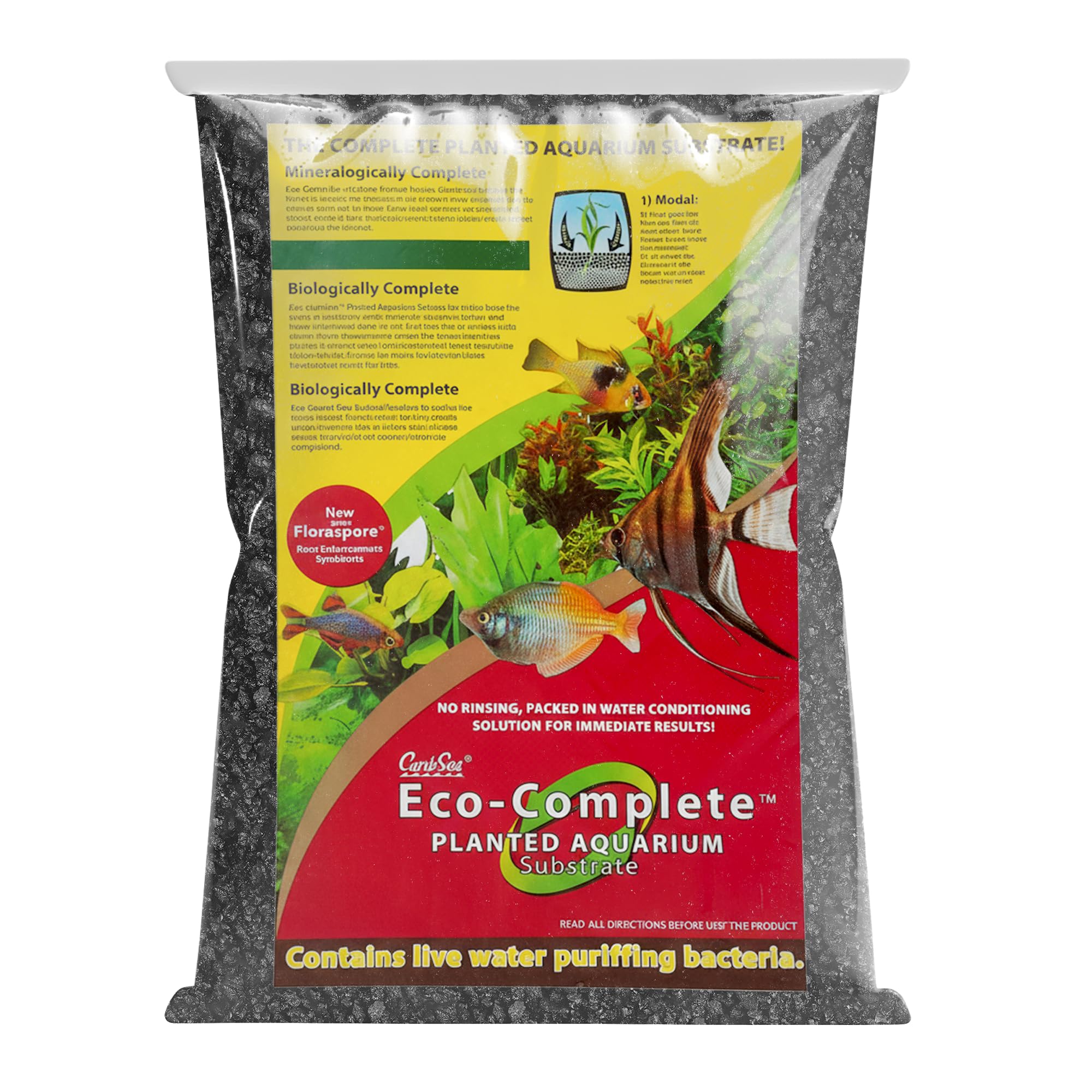
Rating: 4.6 ★ | Price: $$ | Bag Weight: 20 lbs | Material: Nutrient-rich gravel | Nutrient Content: Trace elements
CaribSea Eco-Complete provides a nutrient-rich base that supports strong root growth in freshwater planted tanks, containing trace elements and beneficial bacteria to ease tank cycling.
Best suited for aquascapers setting up larger aquariums (30+ gallons) who want a ready-to-use substrate without additional fertilizers. The initial water cloudiness can last up to two days — a tradeoff for those who prioritize immediate clarity.
Pros
- Roots thrive in the porous, nutrient-rich substrate — promotes vigorous plant growth.
- Dark color makes fish colors pop, enhancing the visual appeal of the tank.
Cons
For large planted tanks where initial cloudiness is acceptable, this substrate delivers solid growth and cycling benefits.
Best for Natural Tanks
FANTIAN 5lb Pea Gravel

Rating: 4.8 ★ | Price: $$ | Particle Size: ~6 mm | Bag Weight: 5 lbs | Material: River rock
FANTIAN’s 5 lb pea gravel is praised for its natural appearance and low dust. The 1/4-inch river stones settle quickly and stay clear, making it a no-fuss option for small to medium freshwater tanks. For planted tanks, note that this is inert gravel – plants need root tabs or liquid fertilizers.
Pros
- Natural river stones retain rich color underwater
- Minimal dust after rinsing – ready to use quickly
- Consistent 1/4-inch size works well in 10–20 gallon tanks
Cons
- Price per pound can be higher than bulk gravel from hardware stores – better suited for small to medium tanks
For a clean, natural-looking gravel that requires little prep and works well in tanks under 20 gallons, this is a solid choice. Supplement with fertilizers if growing live plants.
Best for Budget Planted
Aqueon Plant & Shrimp 5lb

Rating: 4.6 ★ | Price: $$ | Bag Weight: 5 lbs | Material: Clay-based granules | Nutrient Content: Low
The Aqueon Plant and Shrimp Substrate uses clay-based spherical granules that support plant rooting and shrimp grazing without clouding water. At mid-range pricing for a 5-pound bag, it’s a cost-effective entry point compared to the premium nutrient-dense option on the market. This works best for tanks under 10 gallons, beginners, or shrimp enthusiasts who don’t need deep nutrient reserves. The bag size is modest—plan on buying two bags for a 20-gallon tank.
Pros
- Supports plant growth and shrimp activity in small tanks.
- Cost-effective option for budget-conscious aquascapers.
Cons
- Bag contains less volume than expected; a 20-gallon tank may need two bags.
A solid starting point for small planted tanks and shrimp setups when you know the volume limits upfront.
Best for Decorative Tanks
Aqua Natural Gold Pearl 10lb

Rating: 4.7 ★ | Price: $$ | Particle Size: 2–4 mm | Bag Weight: 10 lbs | Material: NZ natural stone
This natural New Zealand stone delivers a warm gold shimmer that makes green plants pop – a clear alternative to the stark look of black quartz substrates. The 2–4 mm particles are uniformly sized and clean out of the bag, though the triple-wash claim doesn’t eliminate all dust; expect to rinse thoroughly before adding to the tank. The gold tone is subtle and natural, complementing both bright and subdued lighting. Best suited for decorative setups where the golden tone is the goal, rather than planted tanks needing nutrient-rich soil.
Pros
- Gold hue brightens the tank and complements green plants and colorful fish.
- Uniform 2–4 mm particles give a clean, consistent look with no jagged edges.
- A 10-pound bag offers good volume for the price – cost-effective for mid-range decorative gravel.
Cons
- Can be dusty even after a first rinse, requiring additional washing to clear the water.
If you want a warm golden floor for a decorative tank and don’t mind a few extra rinses, this is an affordable way to achieve the look.
Best for Bottom Dwellers
Aqua Natural Diamond Black 10lb

Rating: 4.5 ★ | Price: $$ | Particle Size: 1–2 mm | Bag Weight: 10 lbs | Material: Natural quartz
The fine 1–2 mm quartz gravel sparkles under aquarium lights, creating a dramatic backdrop that enhances the colors of bright fish. Its smooth texture is safe for bottom dwellers like corydoras. However, the gravel is not a solid black—lighter specks are present, and some fish may attempt to eat them. Additionally, even after multiple rinses, the water can become cloudy, requiring patience during setup. This substrate suits hobbyists who value visual flair over color uniformity and don’t mind extra prep work.
Pros
- Sparkling crystals create a shimmering effect under aquarium lights
- Fine 1–2 mm texture is gentle on barbels, safe for bottom dwellers like corydoras
- High contrast makes brightly colored fish stand out
Cons
- Lighter flecks within the black gravel may be mistaken for food by some fish
- Water cloudiness can persist even after multiple rinses, requiring extra preparation
A visually striking option for aquarists who value sparkle over uniformity and don’t mind extra rinsing.
Best for New Tank Cycling
Fluval Bio Stratum 4.4lb
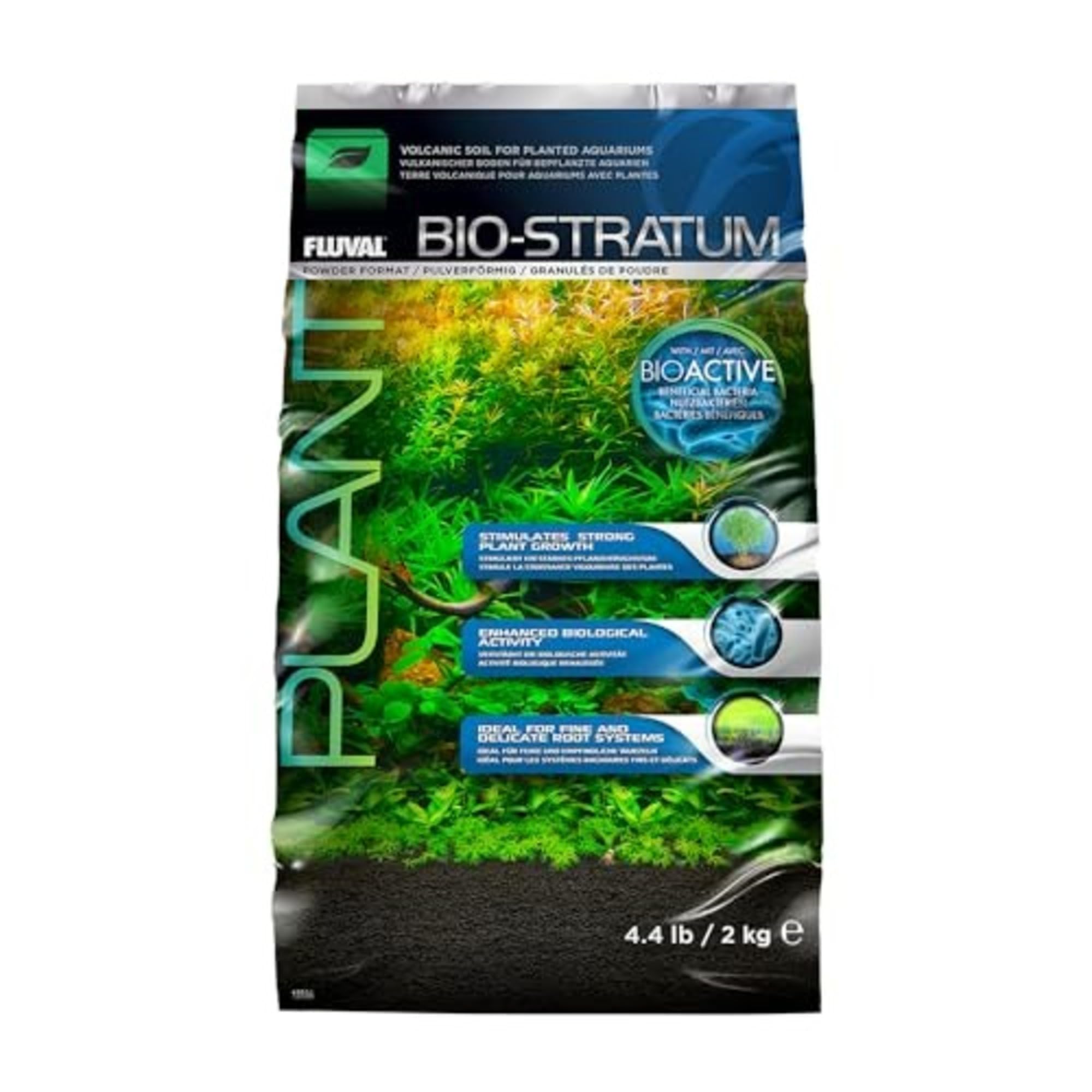
Rating: 4.7 ★ | Price: $$ | Particle Size: 1 mm (fine) | Bag Weight: 4.4 lbs | Material: Volcanic soil | Nutrient Content: Rich + bacteria
This substrate contains dormant nitrifying bacteria that reduce ammonia during cycling, giving new planted tanks a biological head start. The fine powder supports delicate roots but can cloud water temporarily. It costs more per pound than the top Stratum, so it suits small shrimp tanks or propagation setups.
Pros
- Enhances plant health and accelerates root growth in new planted tanks.
- Contains beneficial bacteria that help cycle new tanks by reducing ammonia.
Cons
- Water may become murky initially after setup, requiring patience and a good filter to clear.
Best for aquarists who prioritize biological cycling benefits and are patient with initial water cloudiness, especially in small planted or shrimp tanks.
Best for Root Growth
Seachem Flourite Black 15.4lb

Rating: 4.6 ★ | Price: $$$ | Bag Weight: 15.4 lbs | Material: Fracted clay | Nutrient Content: Trace minerals
This clay gravel delivers strong root growth and a deep black look for serious planted tanks. However, the bag contains substantial dust that requires multiple thorough rinses to avoid cloudy water. The high price and prep effort make it a better fit for dedicated aquascapers willing to invest time, not casual setups.
Pros
- Promotes strong root development and plant growth.
- Deep black color provides visual contrast in planted aquariums.
Cons
- Requires multiple washes to prevent brown clouding – a time-consuming prep step.
Best for planted tank enthusiasts who prioritize root growth and are prepared for a thorough rinsing process.
Best for Natural Tanks
YISZM 5lb Natural Gravel

Rating: 4.6 ★ | Price: $$ | Particle Size: ~6 mm | Bag Weight: 5 lbs | Material: River rock
These 1/4-inch river stones offer a natural, mixed-color appearance that suits freshwater tanks and landscaping equally well. The 5-pound bag provides enough to cover a small to medium tank bottom. However, the per-pound cost runs higher than what you’d find at a local landscaping supplier, making it a convenience play rather than a budget choice. For buyers who prioritize easy online ordering and a consistent, natural look, this is a fine option — just not a standout versus higher-rated alternatives.
Pros
- Natural stone mix with warm tones that complement most freshwater setups.
- Good 1/4-inch particle size suitable for small to medium tanks.
Cons
- Price per pound runs higher than local bulk alternatives — a convenience premium.
A convenient choice for aquarium hobbyists who want natural gravel delivered quickly, provided you’re okay with paying a slight premium for it.
Best for Small Projects
TOYPOPOR Mixed Pebbles 2.2lb
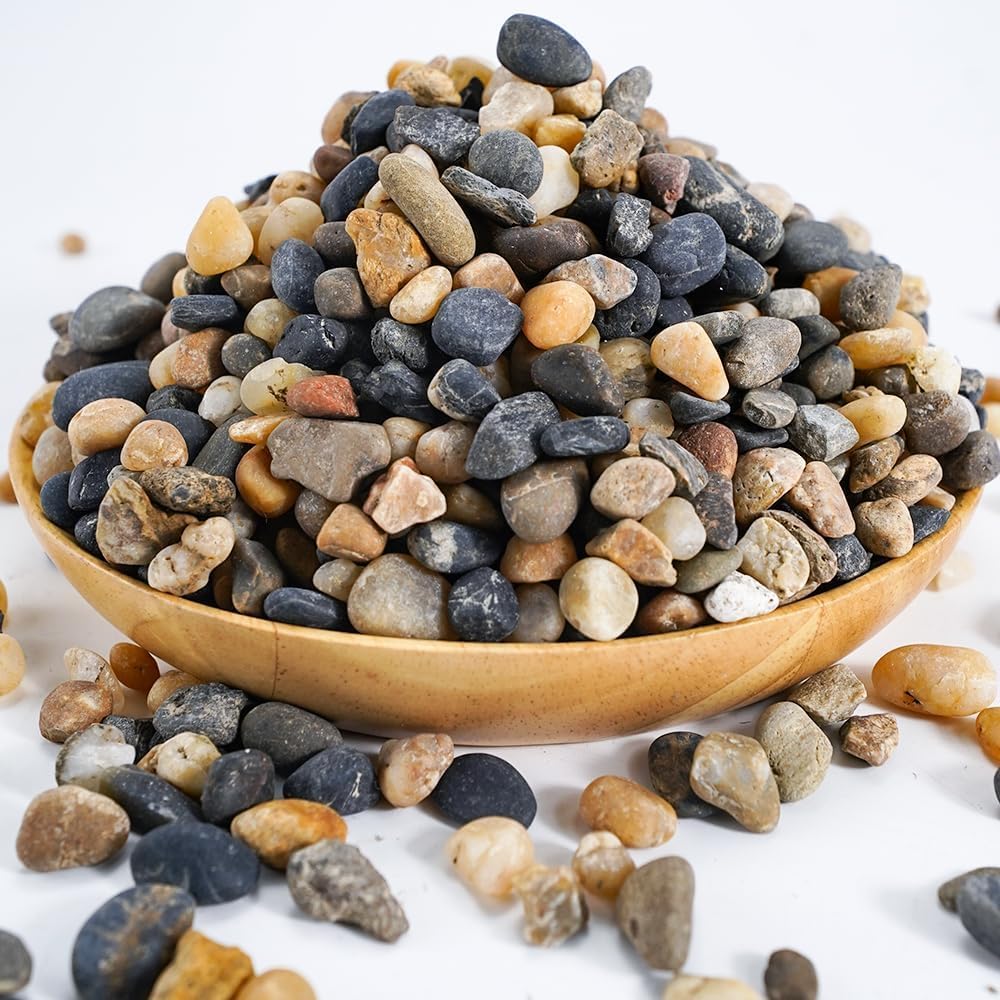
Rating: 4.6 ★ | Price: $ | Particle Size: 2–4 mm | Bag Weight: 2.2 lbs | Material: Natural stone
These smooth, naturally colored pebbles add a clean, decorative top layer for small planters, succulent pots, or a nano fish tank. The 2–4 mm size drains well and won’t shift around in a shallow dish. However, the 2.2-pound bag covers only a thin layer in a 5-gallon tank — fine for accent use, but not enough for a full substrate bed.
Pros
- Attractive natural colors and smooth texture
- Good drainage properties for plants
Cons
- Bag is small at 2.2lb; cost per pound is higher than bulk alternatives for larger projects
A fine choice for top-dressing a few potted plants or a tiny shrimp bowl, but not cost-effective for a full aquarium substrate.
Best for Decorative Accents
YISZM 2lb Pebbles

Rating: 4.6 ★ | Price: $ | Particle Size: ~5 mm | Bag Weight: 2 lbs | Material: Polished stone
These polished stones add a natural, colorful touch to succulent pots and humidity trays. The bag is only two pounds, so cost per pound is high — this suits craft projects rather than fish tanks.
Pros
- Beautiful polished mixed colors enhance visual appeal
- Ideal for drainage and top dressing in pots
Cons
- Small bag size makes cost per pound high for any project beyond tiny accents
Best for small decorative projects like succulent pots and humidity trays where a handful of colorful stones adds charm without needing bulk.
Best for Top Dressing
FANTIAN 2lb Mixed Gravel

Rating: 4.6 ★ | Price: $ | Particle Size: ~10 mm | Bag Weight: 2 lbs | Material: Crushed stone
These natural mixed-color stones add a clean, polished look to succulent pots and craft projects. The smooth texture makes them easy to handle. However, the 2-pound bag is too small for any practical aquarium use—consider this for top dressing or mini terrariums, not as a fish tank substrate.
Pros
- Attractive mix of natural colors that enhance planters and terrariums
- Pebbles are smooth and safe to handle for decorative projects
Cons
- Small bag size limits this to decorative accents rather than aquarium substrate
Works well as a decorative top dressing for potted plants or in tiny terrariums, but is not a viable option for a fish tank.
Best for Mini Gardens
FANTIAN 1lb Polished Gravel

Rating: 4.7 ★ | Price: $ | Particle Size: ~10 mm | Bag Weight: 1 lb | Material: Polished stone w/ wax
These polished pebbles deliver a striking, shiny finish that works well as a top dressing for succulent pots, fairy gardens, or craft projects. The colorful mix adds visual appeal, but the 1-pound bag is not enough for any aquarium use or even a medium-sized planter; it suits only miniature accents.
Pros
- Polished stone surface with high gloss elevates the look of small displays.
- Colorful mix adds decorative variety to terrariums and craft work.
Cons
- The 1-pound bag covers only a tiny area, limiting use to a single small pot or accent.
Best for adding a polished accent to a fairy garden or a single houseplant pot where bag size matches the project.
Best for Accent Decor
Virekm River Rocks 1lb

Rating: 4.5 ★ | Price: $ | Particle Size: 0.5–1.2 in | Bag Weight: 1 lb | Material: Polished river rock
These smooth, polished stones add a clean visual finish to pebble trays, fairy gardens, and vase fillers. However, the 1-pound bag holds only about 45 stones, and the 0.5–1.2 inch size is too large for standard fish tank use. The cost per stone makes this an accent piece rather than a budget substrate option.
Pros
- Smooth polished surface and natural color mix enhance decorative projects.
- Works well in small-scale accents like humidity trays and terrariums.
Cons
- Only 1 lb with about 45 stones; expensive per pound for covering a tank.
Ideal for craft projects and plant trays, but not a practical choice when you need full aquarium gravel in any quantity.
How to Choose
The right aquarium gravel depends on whether you prioritize plant growth, fish safety, or aesthetics—and understanding the trade-offs between them.
Particle Size
Particle size determines how well roots anchor and how safe the gravel is for bottom-dwelling fish. Smaller grains (1–2 mm) allow corydoras and loaches to sift without injury, but they compact easily and can trap debris. Larger pebbles (4–6 mm) let water flow through, reducing dead zones, but may be too coarse for delicate barbels.
For planted tanks, a mix of sizes or a clay-based substrate with fine particles (1–3 mm) gives roots the best grip. Avoid oversized decorative stones as the primary layer—plants struggle to root and waste accumulates underneath.
Bag Weight
A standard rule is 1–1.5 pounds of gravel per gallon of tank water to achieve a 1–2 inch depth. A 10-gallon tank needs roughly 10–15 pounds. Buying a single larger bag (15–20 lbs) often costs less per pound than multiple small bags, but heavier bags can be awkward to handle.
If you plan a deep planted bed (2+ inches), budget for at least 20 lbs for a 20-gallon tank. Always check the coverage estimate on the bag, but expect to buy 10–20% extra to reach your target depth after settling.
Material
Natural river rock and quartz gravel are chemically inert, won’t alter pH, and are safe for all fish. The downside: they provide zero nutrition for plants. Clay-based substrates like fired clay or volcanic soil release trace elements and buffer pH slightly acidic, which benefits shrimp and many tropical plants.
Avoid painted, coated, or glow-in-the-dark gravels. The coating can flake off and release toxins into the water. Multiple reports of fish deaths within hours of use confirm this risk is real. Stick with natural stone or purpose-built aqua soils.
Nutrient Content
Nutrient-rich substrates contain organic matter, iron, and other minerals that feed plant roots directly. They eliminate the need for root tabs for the first 6–12 months, but they can leach ammonia initially and require a cycling period. Plain gravel demands external fertilization (liquid or root tabs) to sustain live plants.
For a low-maintenance planted tank, a nutrient-loaded substrate like Fluval Stratum or CaribSea Eco-Complete simplifies care. For a fish-only or artificial plant setup, plain gravel is cheaper and easier to clean—just rinse well before use.
FAQ
How long does aquarium gravel take to clear after adding?
With thorough pre-rinsing, most gravel clears within 24–48 hours using a standard filter. Clay-based substrates like Fluval Stratum may stay cloudy for up to 72 hours due to fine dust. Using a polishing filter pad or adding liquid clarifier can speed the process. If cloudiness persists beyond three days, check for trapped air or insufficient filtration.
Can colored aquarium gravel harm fish?
Yes, painted or coated gravels carry a real risk. Multiple reports (including the GloFish Black Gravel) show fish dying within hours of addition, even after rinsing. The coating flakes off and appears toxic. Stick with natural, uncoated gravel or purpose-built aqua soils—bright colors can be achieved with safe ceramic or glass alternatives.
Is expensive aquarium substrate worth it for plants?
For serious planted tanks, yes. Active substrates like Fluval Stratum or CaribSea Eco-Complete provide nutrients, buffer pH, and promote strong root growth. Plain gravel requires regular fertilization and yields slower growth. For a low-tech setup with easy plants (Java fern, Anubias), a budget option like Aqueon Plant & Shrimp works well. For high-light or demanding plants, the investment pays off.
How much gravel do I need for a 10-gallon tank?
For a 1–2 inch layer, plan on 10–15 pounds of gravel. That usually means one 10-pound bag plus a smaller top-up, or a single 15–20 pound bag if you want deeper substrate for planted tanks. Adjust up 20% if you use light, porous clay substrates—they take more volume to reach the same depth.