This post contains affiliate links. We may earn a small commission when you buy through our links — at no extra cost to you.
Most white aquarium sands aren’t really white. They’re off-white, light tan, or beige. Even the ones labeled ‘pre-washed’ often need rinsing to avoid turning your tank into a cloudy mess. That’s the trade-off many buyers discover after unboxing.
The best white sands balance color accuracy with ease of use. You’ll find options that are truly white but require more rinsing, and others that are nearly white but pour straight into the tank. Grain size also matters – too fine and it clouds easily, too coarse and it’s not safe for bottom feeders like corydoras.
This guide helps you pick based on your specific needs: the brightness you expect, the fish you keep, and the setup effort you’re willing to invest. Knowing these trade-offs upfront saves hours of frustration.
Top Picks
Best for Aquascaping, Bottom Feeders
Aqua Natural Sugar White Sand

Rating: 4.7★ | Price: Budget | Grain Size: 0.5-1mm | Pre-Washed: Triple washed | Color Accuracy: Off-white | Bag Weight: 10 lb | Bottom Feeder Safe: Soft fine grain
Aqua Natural Sugar White Sand arrives exceptionally clean after triple washing and kiln drying, cutting the usual rinse cycle to practically nothing. The 0.5–1mm grains are soft enough for corydoras and loaches to sift without injury, and the off-white tone brightens the tank without looking artificial. Bottom-dwelling species thrive on the gentle bed, while the natural hue lets fish colors pop against a clean backdrop.
This sand suits planted tanks and budget-minded beginners who want a straightforward setup. The color is a warm off-white — not a stark snow-white — so aquarists chasing a high-contrast bright substrate may want a purer quartz alternative. It performs best in tanks with gentle flow; in high-current setups, the fine grains can lift and cloud the water.
Pros
- Exceptionally clean and pre-washed – reduces setup time significantly
- Fine, soft texture ideal for bottom feeders like corydoras and loaches
- Bright, natural off-white appearance that enhances fish colors
Cons
- Color is off-white/light tan, not pure white – may disappoint those expecting snow-white sand
A great value for the freshwater keeper who wants a clean, ready-to-use substrate with a natural look. Those chasing a pure white aesthetic will need to look at the quartz-based alternative in this set.
Best for Large Tanks, Budget
AMTRA White Quartz Sand

Rating: 4.5★ | Price: Budget | Grain Size: 0.1-0.7mm | Color Accuracy: White quartz | Bag Weight: 11 lb | Bottom Feeder Safe: Very fine, gentle
This sand delivers a bright, pure white color that stands out in any freshwater tank – a rare find at this price point. It’s significantly cheaper than the top pick, but the tradeoff is a very fine grain (0.1-0.7mm) that demands thorough rinsing before use, and English-language reviews are limited – the available feedback comes from European buyers. Best for aquarists who want a snow-white substrate on a tight budget and don’t mind extra prep work.
Pros
- True white quartz color that stays bright under aquarium lights.
- Lowest price per pound among white sands in this comparison.
- Suitable for both freshwater and saltwater tanks.
Cons
- English-language reviews are scarce, making it harder to gauge common user experiences.
For pure white color on a budget, this sand delivers – provided you’re willing to put in the rinsing time.
Best for Show Fish, Aquascaping
Carib Sea Moonlight Sand
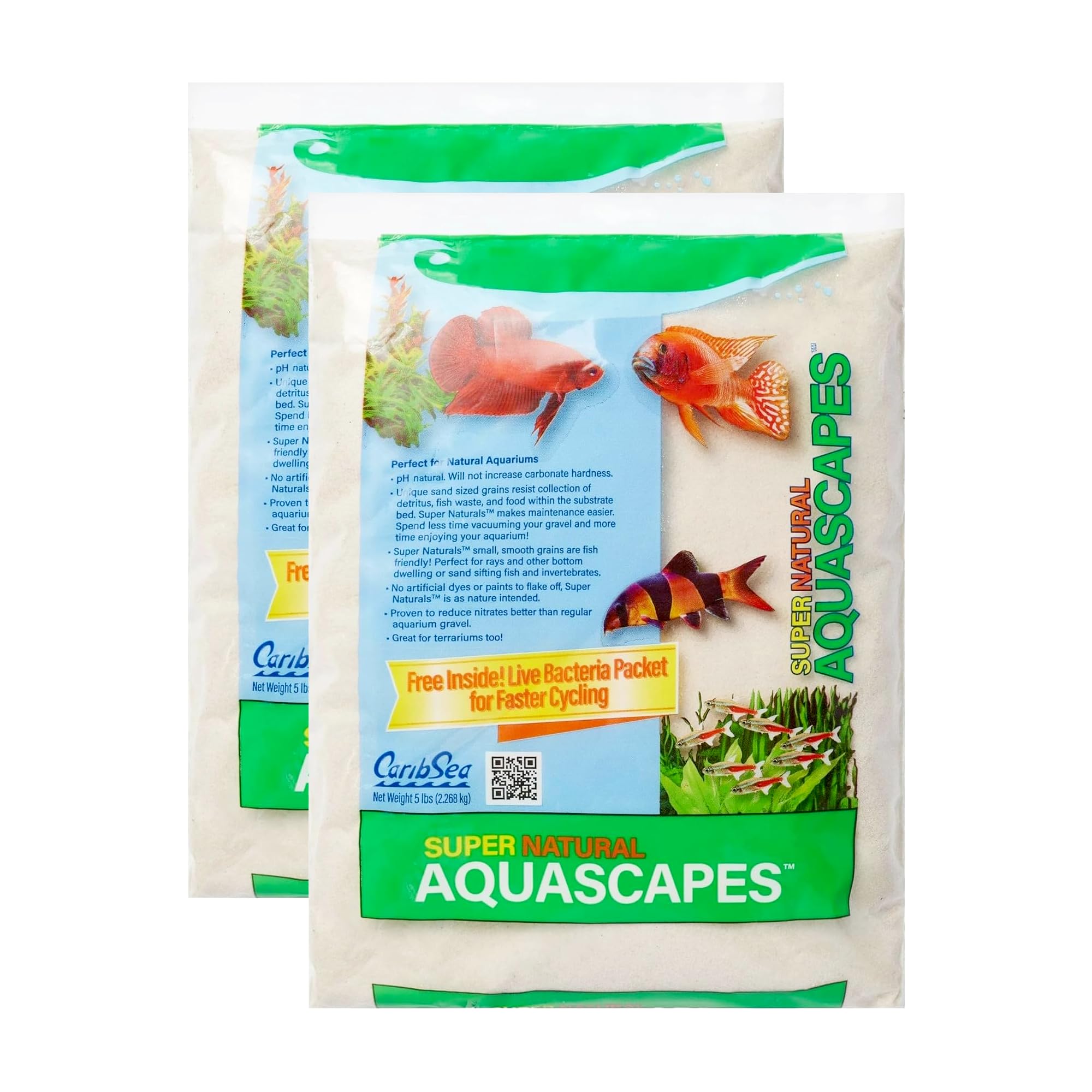
Rating: 4.5★ | Price: Mid-Range | Grain Size: <0.5mm | Color Accuracy: Light tan | Bag Weight: 10 lb | Bottom Feeder Safe: Ultra-fine, silky
Where the top pick offers a convenient off-white sand, Carib Sea Moonlight Sand delivers a distinctive shimmering appearance under lighting, making it a strong choice for aquascapers focused on aesthetics. The very fine, soft grains are safe for delicate fish like discus and bottom feeders, and the included water clarifier helps reduce initial cloudiness. However, the color is a light tan rather than pure white, which may disappoint buyers seeking a bright white substrate, and the fine sand can stir up easily in high-flow setups.
Pros
- Very fine, soft sand safe for delicate fish and bottom feeders
- Beautiful shimmering appearance under aquarium lights
- Includes water clarifier packet to help settle initial cloudiness
Cons
- Color is light tan/beige rather than pure white – a consideration for those seeking bright white substrate
- Fine grain can be easily stirred up, leading to cloudiness if not rinsed well or in high-flow tanks
Best for aquascapers who value the moonlit shimmer over pure white color, and are willing to accept a higher price for the aesthetic effect.
Best for Shrimp, Betta Tanks
Stoney River White Sand

Rating: 4.4★ | Price: Mid-Range | Grain Size: Fine | Color Accuracy: White (off-white) | Bag Weight: 5 lb | Bottom Feeder Safe: Safe for bottom feeders
The Stoney River White Sand uses a non-toxic coating that keeps pH stable — a clear advantage for shrimp tanks and betta setups where water chemistry matters. The fine grain is gentle on bottom feeders and clears to a crisp white after proper rinsing. However, bag quality can vary: some bags arrive with noticeable dust and floating particles that demand extra rinsing. Price isn’t currently listed on Amazon, so comparing value requires a bit of legwork. This is the right sand when pH neutrality is non-negotiable, but buyers who want consistent out-of-bag convenience are better off with the top pick.
Pros
- pH-neutral coating prevents water chemistry shifts for sensitive species.
- Fine grain suits bottom feeders without excessive dust after rinsing.
- Water clears to crystal clarity once the sand settles.
Cons
- Some bags may contain noticeable dust and floating particles that require extra rinsing.
- Price is not listed on Amazon, making cost comparison difficult.
For betta and shrimp tanks that demand stable pH, this sand delivers — just expect to rinse thoroughly and check local pricing before buying.
Best for Nano Tanks
YISZM White Aquarium Sand

Rating: 4.5★ | Price: Budget | Grain Size: Very fine | Pre-Washed: Dusty, requires rinsing | Color Accuracy: White | Bag Weight: 2 lb | Bottom Feeder Safe: Fine, gentle
The 2lb bag is portioned specifically for nano aquariums under 5 gallons, offering an affordable way to get a clean, natural white sand look in small setups. The fine grain settles into a smooth surface that suits shrimp and small fish, but the sand arrives dusty and may require ten or more rinses to stop clouding the water. For larger tanks, the bag is too small and the per-pound cost adds up, so this works best for keepers of tiny tanks who are comfortable with extra prep work.
Pros
- Fine, smooth white sand that creates a clean natural look in small tanks.
- Budget-friendly entry price for nano aquariums and terrariums.
Cons
- Bag provides only 2lb – sufficient for tanks under 5 gallons, not for larger setups.
- Sand arrives dusty and may require ten or more rinses to clear cloudiness in the water.
A good fit for nano tank owners who want white sand on a budget and are willing to rinse thoroughly; not economical or practical for tanks larger than 5 gallons.
Best for Crafts, Small Tanks
FANTIAN White Sand 0.8-2mm

Rating: 4.5★ | Price: Mid-Range | Grain Size: 0.8-2mm | Pre-Washed: Very dusty | Color Accuracy: White after wash | Bag Weight: 5 lb | Bottom Feeder Safe: Coarse, not for corydoras
Turns bright white after washing and can be used for small tanks or craft projects. The 0.8-2mm grain is coarse (more like fine gravel) and the bag contains significant dust that requires heavy rinsing, making it a better fit for decorative use than standard aquarium setups.
Pros
- Bright white color after washing.
- Suitable for aquarium, crafts, and decorative projects.
Cons
- Coarse grain size (0.8-2mm) may be too rough for bottom-feeding fish.
Best for craft projects or small tanks without bottom feeders, but not the first choice for a community aquarium.
Best for Planted Tanks
Pettex Roman Gravel Sand

Rating: 4.5★ | Price: Mid-Range | Grain Size: Fine gravel | Pre-Washed: Requires 7-8 washes | Color Accuracy: White quartz | Bag Weight: 17.6 lb | Bottom Feeder Safe: Coarse, not for bottom feeders
The Pettex Roman Gravel delivers a large bag of bright white quartz at a low per-pound cost, suitable for planted tanks where a coarser substrate works. This is not sand – the grain size is fine gravel, which can be too sharp for bottom feeders that need soft substrate. Rinsing is necessary to remove dust, and availability is limited with shipping windows up to six months.
Pros
- Large 8 kg bag offers good coverage for the price
- Bright white color enhances tank appearance
Cons
- Grain size is fine gravel, not sand – unsuitable for bottom feeders that require a soft substrate
A good fit for planted tank owners who want bulk white substrate and don’t need a soft sand bottom – provided they can work around the extended delivery time and extra rinsing.
How to Choose
The trade-off between true white color and convenience is the single most important factor when choosing white aquarium sand.
Grain Size
Grain size directly affects how the sand behaves in your tank and whether it’s safe for your fish. Very fine sand (0.1-0.7mm) feels soft on bottom feeders but can get kicked up by strong filters or currents, creating cloudiness. Coarser sand (0.8-2mm) stays put but can damage corydoras barbels over time.
The ideal range for most freshwater tanks is 0.5-1mm. It’s fine enough for bottom feeders yet heavy enough to settle quickly. If you keep shrimp or loaches, stick with ultra-fine options below 0.5mm.
Pre-Washing and Dust
‘Pre-washed’ on the label means the manufacturer has reduced the initial dust load, but it does not mean you can pour it directly into your tank. Even triple-washed sands release fine particles during transport. Plan on rinsing the sand in small batches until the water runs clear.
Skipping this step will cloud your water for days or weeks. A colander or fine-mesh sieve makes the process faster. For sands with heavy dust, expect 5-10 rinse cycles.
Color Accuracy
Most white aquarium sands are actually off-white, light tan, or beige. True pure white is rare because natural quartz often contains trace minerals that tint the sand. The only reliable way to get bright white is to choose a product specifically labeled as white quartz or one that reviewers consistently confirm the color.
Photos online can be misleading – look for customer-submitted images in reviews to see the real shade under tank lights. Off-white sands still look bright in a well-lit tank, but they won’t match the crisp snow-white you might expect.
Bag Weight and Coverage
The weight you need depends on tank size and desired depth. A 1-inch layer in a standard 10-gallon tank requires about 10 pounds of sand. For a 20-gallon long (24×12 inches), 20 pounds gives a 1-inch depth; for 2 inches, double it.
Consider buying multiple bags if your tank is large – it’s often cheaper per pound to buy a bigger bag than several small ones. Also, remember that bag weight is not always accurate for volume; grains vary in density.
Bottom Feeder Safety
Corydoras, loaches, and other bottom feeders have delicate barbels that can be abraded by sharp or coarse sand. Soft, fine sand (0.5mm or finer) allows them to sift without injury. Coarse sand or fine gravel can cause infections over time.
If your tank includes bottom feeders, prioritize grain size over color. Even the whitest coarse sand is a bad fit. Stick to products that specifically mention softness or bottom feeder suitability.
FAQ
Why is my white aquarium sand still cloudy after rinsing?
Cloudiness after rinsing usually means you haven’t rinsed enough. Even pre-washed sand holds fine dust particles that need multiple passes under running water. Rinse in small batches until the water runs perfectly clear. If it persists, try using a water clarifier or temporarily running a fine filter pad to catch lingering particles.
Is white sand safe for corydoras catfish?
Yes, as long as the grain is fine and soft – 0.5-1mm or smaller. Coarse sand or fine gravel can damage their barbels. Look for sands labeled as soft or suitable for bottom feeders. Aqua Natural Sugar White Sand and Carib Sea Moonlight Sand are both safe choices.
How much white sand do I need for a 20 gallon tank?
For a 1-inch deep layer, plan on about 20 pounds of sand. A standard 20-gallon long tank (24×12 inches) needs roughly 20 lbs. For a 2-inch layer, double to 40 lbs. Use the formula: length x width x desired depth in inches, then divide by 10 for pounds.
Does white aquarium sand fade or discolor over time?
True white quartz sand stays bright, but off-white sands can darken as algae and waste accumulate. Regular vacuuming and good lighting help maintain the look. Among the options, AMTRA White Quartz Sand is most resistant to discoloration because of its pure quartz composition.