This post contains affiliate links. We may earn a small commission when you buy through our links — at no extra cost to you.
Many fish keepers default to one brand and hope for the best. The problem is that different fish species need different food forms and ingredients. A betta’s preferences differ from a cichlid’s, and what works for a goldfish pond might not suit a tropical community tank.
The most common frustrations—water clouding, fish refusing to eat, or pellets floating instead of sinking—aren’t random. They come from mismatched food characteristics. This guide focuses on those specific trade-offs: flake size versus water clarity, sinking reliability, and which species actually accept each formula.
Choosing the right food means understanding your fish’s mouth size, feeding behavior, and dietary needs rather than just picking the highest-rated product. That’s where this guide helps.
Top Picks
Best for Tropical Community
TetraMin Tropical Flakes

Rating: 4.8 ★ | Price: $$ | Food Form: Flake | Target Species: Tropical | Sinking / Floating: Floating
TetraMin delivers a nutritionally balanced flake that fish across most tropical community tanks accept readily. The Clear-Water Formula helps keep the tank clear when portions are reasonable, and the 7.06 oz container offers long-lasting value for bulk buyers.
The flakes are noticeably larger than some alternatives. For smaller tetras or nano fish, you may need to crush them between your fingers before feeding. This is a minor extra step for keepers who prioritize the reliable nutrition and strong fish acceptance that TetraMin provides. Bottom feeders like corydoras are better served by sinking wafers.
Pros
- Broad acceptance across tropical community fish
- Balanced nutrition supports long-term health
- Clear-water formula minimizes clouding when fed properly
Cons
- Flake size may require crushing for small-mouthed fish
- Overfeeding can lead to temporary water clouding
The go-to tropical flake for community tanks that need a balanced staple with broad fish acceptance and bulk value.
Best for Goldfish
Tetra Goldfish Pellets
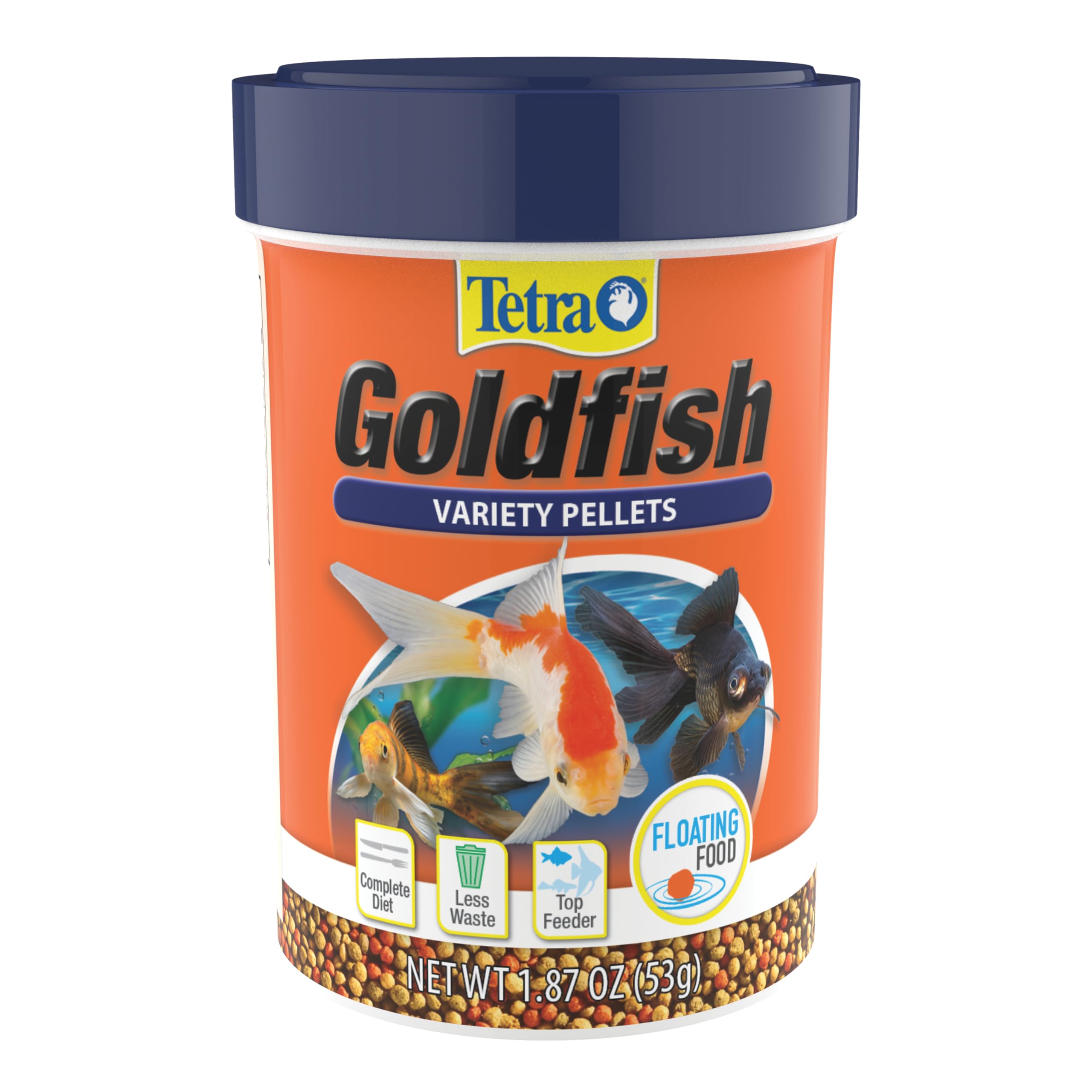
Rating: 4.7 ★ | Price: $$ | Food Form: Pellet | Target Species: Goldfish | Sinking / Floating: Floating
Tetra Goldfish Pellets deliver a floating pellet formulation with strong acceptance rates among goldfish, making feeding straightforward. Unlike the top pick tropical flakes, this formula targets goldfish-specific nutrition with a floating design. The water clouding tradeoff is worth noting for display tanks — these pellets can murk the water, so they suit dedicated goldfish tanks better than crystal-clear aquariums. Some goldfish may refuse them, so a trial batch is recommended. The container size provides reasonable value for regular feeding.
Pros
- Goldfish-specific floating pellet encourages natural surface feeding.
- High acceptance by goldfish reduces wasted food.
- Good value for the container size for daily feeding.
Cons
- In display tanks where water clarity is a priority, these pellets can cloud the water noticeably.
- Some goldfish may refuse the pellets, so a trial batch is advisable.
For goldfish keepers who prioritize a floating pellet their fish will eat over water clarity, this is a sensible mid-range choice.
Best for Large Cichlids
Hikari Vibra Bites

Rating: 4.8 ★ | Price: $$ | Food Form: Stick | Target Species: Tropical / Cichlid | Sinking / Floating: Slow-sinking
The stick shape and texture closely resemble live worms, which triggers a strong feeding response in cichlids that prefer wriggling food. The formula includes color enhancers that show noticeable results in reds and yellows. This food suits keepers with medium to large cichlids — smaller fish won’t be able to handle the stick size.
Pros
- Mimics live food shape to entice cichlids that prefer wriggling prey.
- Enhances reds and yellows in cichlid coloration.
- Good value for the ingredient quality offered.
Cons
- Some individual fish may refuse the taste or texture — worth testing with a small batch.
This premium worm-mimicking formula delivers on color and palatability for medium to large cichlids that enjoy live-food textures.
Best for Bettas
Ultra Fresh Betta Pro

Rating: 4.6 ★ | Price: $$ | Food Form: Pellet | Target Species: Betta | Protein Source: Sword Prawns & Akiami | Sinking / Floating: Sinking
Ultra Fresh Betta Pro Shrimp Patties put whole sword prawns and akiami paste shrimps as the first ingredients, backed by probiotics for digestive support. The tiny pellets pack more natural protein than most betta foods, which matters for owners who prioritize ingredient lists over convenience. Unlike floating flakes, these sink quickly — fine for hand-feeders or fish that forage near the bottom, but a mismatch for bettas that only take food off the surface. Acceptance is strong among shrimp-eager bettas, though some individuals may refuse the texture entirely.
Pros
- Sword prawns and akiami are the first two ingredients — no grain fillers.
- Pellet size is small enough for adult bettas to eat whole.
- Most bettas show strong feeding response to the shrimp taste.
Cons
- Pellets sink rapidly, requiring hand-feeding or a feeding dish to prevent waste.
- Some bettas may reject the pellet texture entirely — worth buying a small bag first.
A good match for betta keepers who hand-feed and want a protein-first ingredient list — less suitable if your fish ignores sinking food or you prefer drop-and-walk convenience.
Best for Large Koi Ponds
Kaytee Koi’s Choice 10lb

Rating: 4.6 ★ | Price: $$ | Food Form: Granule | Target Species: Pond Koi / Goldfish | Protein Source: 35% protein | Sinking / Floating: Floating
The Kaytee Koi’s Choice delivers a 10-pound bag of floating pellets with 35% protein, offering solid value for large koi ponds. Unlike the softer pond stick alternative, these pellets stay on the surface for visible feeding, but they have tradeoffs: the pellets can be crumbly, and some fish may refuse them. This food is best for pond keepers with larger koi who feed frequently and can accept occasional dust, rather than for small goldfish or picky eaters.
Pros
- Good value for bulk pond food – 10lb bag at a mid-range price.
- Floats well for surface feeding – encourages natural feeding behavior.
- Palatable to many koi and goldfish – high acceptance rate.
Cons
- Pellets can be crumbly, producing dust that may cloud the water.
- Some fish may refuse these pellets – palatability varies between individuals.
This bulk pellet works well for large koi ponds where volume and floating feed are priorities, but if your fish are picky or you need a dust-free feed, the pond stick alternative is worth considering.
Best for Bottom Feeders
Fluval Bug Bites Bottom

Rating: 4.8 ★ | Price: $ | Food Form: Granule | Target Species: Bottom Feeders | Protein Source: Insect-based | Sinking / Floating: Sinking
Fluval Bug Bites Bottom uses insect protein and sinks rapidly, delivering food directly to bottom dwellers while surface fish can’t intercept it. Acceptance among corydoras, loaches, and plecos is consistently high — most fish take to it without a transition period. The budget price makes it viable as a staple diet. The granules are sized for small-to-medium bottom feeders; keepers of very small species (dwarf corydoras, nano fry) may find them too large to manage comfortably. Some granules occasionally float, but the majority sink as intended.
Pros
- Insect-based protein matches the natural diet of many bottom feeders
- Granules sink quickly, reducing waste from uneaten food
- Budget-friendly price suitable for regular feeding
Cons
- Occasional granules may float instead of sinking, requiring manual sinking or pre-soaking
- Granule size can be too large for very small bottom feeders like dwarf corydoras
If you keep corydoras, loaches, or small plecos, this is a cost-effective staple they’ll actually eat — just check the granule size against your smallest fish.
Best for Small Tropical
Fluval Bug Bites Tropical

Rating: 4.7 ★ | Price: $ | Food Form: Granule | Target Species: Tropical | Protein Source: Insect & Salmon | Sinking / Floating: Sinking
The Fluval Bug Bites Tropical granules deliver high-quality insect and salmon protein in a small size that small tropical fish accept readily. However, granule size inconsistency can make feeding less predictable, and the fast-sinking formula is not suitable for top-feeding species — a limitation that reduces its appeal for mixed communities compared to a more flexible flake.
Pros
- Small tropical fish show strong feeding response to the insect-based granules.
- High-quality protein from insects and salmon at a budget-friendly price.
Cons
- Granule size varies between batches, which can make portion control less precise for very small fish.
Best suited for keepers of small tropical fish that feed from mid-water or bottom, where the insect protein and low price outweigh the granule size variance and sinking behavior.
Best for Large Bottom Feeders
Aqueon Shrimp Pellets

Rating: 4.6 ★ | Price: $ | Food Form: Pellet | Target Species: Bottom Feeders | Protein Source: Shrimp | Sinking / Floating: Sinking
Delivers solid value and high acceptance among large bottom feeders. The pellets can float, and at 9mm, they are too large for small fish. This makes the food best for bottom feeders that don’t mind surface feeding.
Pros
- High acceptance among bottom feeders
- Budget-friendly option for feeding multiple fish
Cons
- Large 9mm pellets may be too big for small bottom feeders
Best for aquarists with large bottom feeders who want an inexpensive food and can accept floating pellets.
How to Choose
The food that works for one fish species may be refused by another, so matching form and sinking behavior to your fish’s mouth and feeding zone is the first step.
Food Form
Flakes, pellets, granules, wafers, and sticks each suit different fish. Flakes float and break down quickly, making them ideal for surface feeders but messy for bottom dwellers. Pellets and granules sink at varying speeds, while wafers are designed for plecos and catfish that graze.
The trade-off: larger flakes require crushing for small fish, and hard crisps may be too tough for delicate mouths. Choose a form that matches your fish’s natural feeding position and jaw strength.
Target Species
Foods are formulated with specific species in mind. Goldfish need higher vegetable content, cichlids benefit from protein-rich sticks, and bettas thrive on high-protein pellets. Using a tropical blend for a goldfish can lead to digestive issues and poor growth.
Always check the label for the intended fish type. A food marked ‘tropical’ is not a universal substitute for species-specific formulas.
Protein Source & Nutrition
The protein source matters for palatability and health. Insect-based foods (black soldier fly larvae) mimic natural diets and are highly digestible, while traditional fish meal is cheaper but may contain fillers. Shrimp and salmon provide high-quality protein but increase cost.
Some foods include color enhancers like astaxanthin, which can improve fish appearance but may tint the water orange or red. Decide whether visual impact or water clarity is your priority.
Water Clarity
Water clouding is the top complaint across all food types. It usually results from uneaten particles or foods that disintegrate rapidly. Clear-water formulas use binders to reduce dust, but overfeeding remains the main culprit.
To minimize clouding, feed small amounts multiple times a day rather than one large portion. Avoid foods with loose powder or excessive fines.
Sinking vs Floating
Sinking foods target bottom feeders, but not all pellets sink reliably. Some float due to trapped air or low density, leaving bottom dwellers hungry. Floating foods work for surface feeders like goldfish and bettas, but they can foul the water if uneaten.
Test a few pellets before committing to a large bag. If a ‘sinking’ food consistently floats, it may not suit your tank.
FAQ
Why does my fish food make the water cloudy?
Cloudy water is usually caused by uneaten food breaking down or by fine particles in the food itself. Many brands use binders to reduce dust, but overfeeding is the most common trigger. Feed only what your fish can consume in 2–3 minutes, and consider switching to a food with a clear-water formula if the problem persists.
What is the best fish food for betta fish?
Bettas are insectivores that need high-protein diets. The Ultra Fresh Betta Pro Shrimp Patties offer a natural protein source with probiotics, but their sinking speed may require hand-feeding. Alternatively, look for floating betta pellets with at least 40% crude protein. Avoid large flakes or vegetarian wafers.
Are bug-based fish foods better than traditional flakes?
Insect-based foods (like Fluval Bug Bites) provide a more natural protein profile and are highly digestible, often leading to less waste and clearer water. However, they may not be accepted by all fish, and the granules can be inconsistent in size. They are an excellent complement to a varied diet but not a replacement for a balanced staple if your fish refuse them.
Do sinking pellets always sink?
Not always. A significant number of sinking pellets float due to manufacturing inconsistencies or trapped air. This is especially common with budget brands. Always check recent reviews for the specific size you’re buying, and test a few pellets in a cup of tank water before feeding to avoid hungry bottom feeders.