This post contains affiliate links. We may earn a small commission when you buy through our links — at no extra cost to you.
Finding a molly food that does what it says is harder than it should be. Many ‘semi-floating’ pellets sink before fish notice, while some flakes turn the water cloudy. The problem isn’t that mollies are picky — they’ll eat almost any tropical food — it’s that product behavior doesn’t always match the label.
The most dependable option in this category is a budget-friendly flake that has been a staple for decades. Its success comes from reliable water quality and universal fish acceptance, not fancy ingredients. Newer foods with insect protein or probiotics offer clear benefits but often carry trade-offs like faster sinking or inconsistent particle size. The tough choice is between the proven simplicity of a classic flake and the targeted nutrition of a livebearer-specific pellet.
This guide breaks down those trade-offs to help you choose a food that matches your molly’s mouth size, your feeding routine, and your tolerance for experimentation.
Top Picks
Best for Mixed Community
TetraMin Tropical Flakes

Rating: 4.8 ★ | Price: $ | Form: Flake | Size: Large, crush needed | Sink vs Float: Floats then sinks | Protein Source: Prebiotic blend
TetraMin tropical flakes have been a go-to for decades — the clear-water formula keeps tanks clear while delivering balanced nutrition that mollies readily accept. This is one of the most widely accepted tropical flakes for good reason: it works as a consistent staple without the cloudiness that plagues lower-end foods. The formula includes prebiotics to aid digestion, supporting long-term vitality.
The main tradeoff is flake size. Mollies with small mouths may need flakes crushed before feeding — a quick pinch between fingers solves this. For community tanks with a mix of fish sizes, this is a minor extra step. Best for budget-conscious beginners and mixed community tanks where fish size varies. If you keep only tiny nano fish, a micro pellet may be a better fit.
Pros
- Exceptional value for a daily feeding staple
- Widely accepted by mollies and other community fish
- Clear-water formula keeps tank visibility high
Cons
- Large flake size can require crushing for mollies with small mouths — a minor extra step
For a budget-friendly staple that mollies readily eat, this is the default choice — just plan to crush flakes for smaller individuals.
Best for Insect-Based Protein
Fluval Bug Bites Granules

Rating: 4.7 ★ | Price: $$ | Form: Granule | Size: 0.7-1mm | Sink vs Float: Slow-sinking | Protein Source: BSFL + salmon
Insect protein from black soldier fly larvae and salmon gives Fluval Bug Bites a clean ingredient profile absent from most staple flakes. The tradeoff is in feeding behavior: granule size varies batch to batch, and the pieces sink faster than the slow-sinking claim suggests. For molly keepers who value natural protein over effortless feeding, this works well when paired with bottom-feeding tank mates — but expect to crush larger granules for smaller mollies and adjust how you deliver the food to the water column.
Pros
- Black soldier fly larvae and salmon provide a robust amino acid profile.
- Most small tropical fish readily eat these granules.
- Granule size suits nano fish and bottom feeders.
Cons
- Granule size can be inconsistent; some pieces may be too large for very small fish.
- Sinks faster than described, not truly slow-sinking.
A strong choice for keepers who prioritize insect-based protein over feeding convenience — expect to manage sinking and sizing rather than set-and-forget.
Best for Livebearer Breeders
Ultra Fresh Royal Guppy

Rating: 4.6 ★ | Price: $$ | Form: Pellet | Size: 0.6mm | Sink vs Float: Sinks quickly | Protein Source: Sword prawns, spirulina
The Ultra Fresh Royal Guppy Mignon Pellet delivers 0.6mm pellets packed with sword prawns and spirulina — a tailored formula for molly and guppy nutrition. Unlike the top pick TetraMin, which suits general tropical tanks, this food prioritizes livebearer-specific ingredients and probiotics for cleaner water. However, the pellets sink quickly, so mollies that prefer surface feeding may need to chase them down. This food is best for dedicated molly or guppy breeders who value natural ingredients and are willing to adjust feeding technique; less ideal for community tanks or fish that refuse sinking pellets.
Pros
- All-natural ingredients with sword prawns and spirulina support livebearer health.
- Tiny 0.6mm pellets fit molly and guppy mouths, including fry.
- Probiotics help maintain water quality.
Cons
- In some cases, the pellets can cloud the water.
A strong choice for livebearer specialists who want natural ingredients and don’t mind adjusting for sinking; for general molly keepers, the top pick TetraMin offers broader acceptance.
Best for Multi-Tank Owners
TetraPro Tropical Crisps
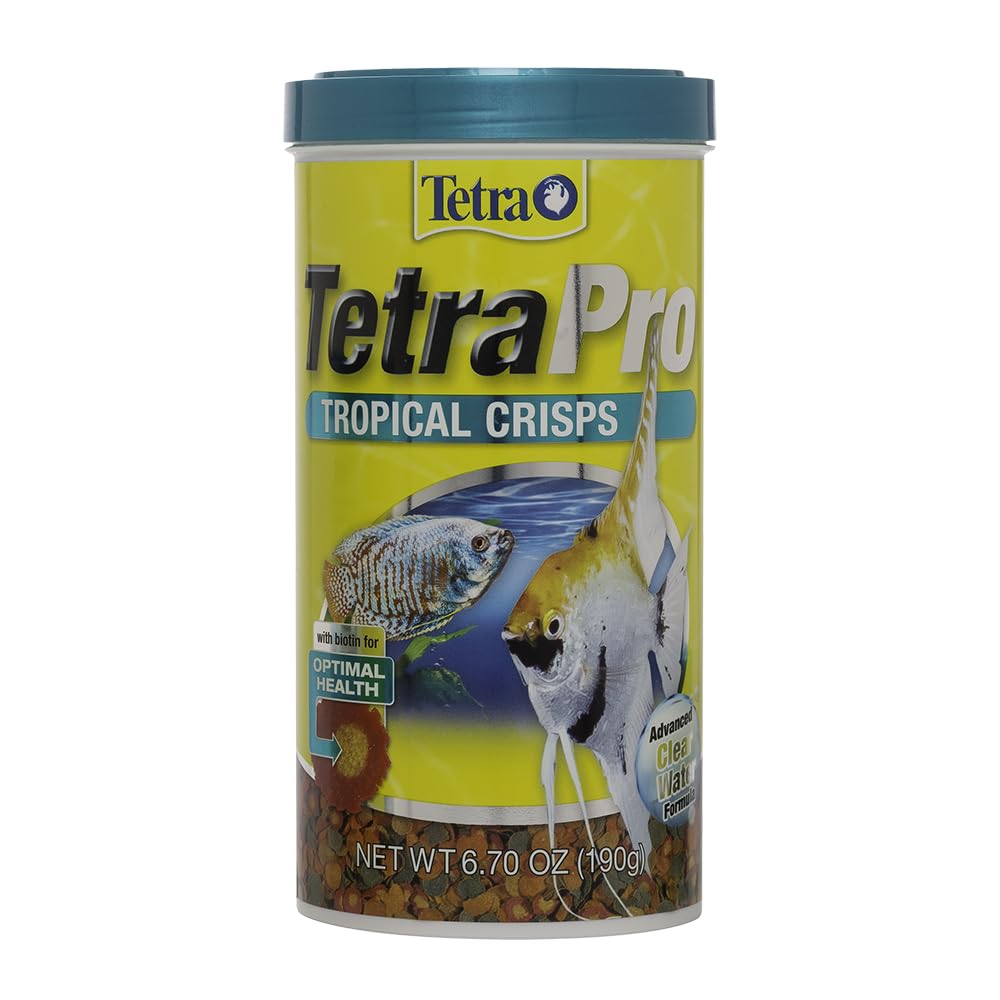
Rating: 4.8 ★ | Price: $$ | Form: Crisp | Size: Medium, firm | Sink vs Float: Floats well | Protein Source: Krill
The crisp format holds its shape without disintegrating, reducing cloudiness compared to flakes — a clear advantage for keepers who prioritize water clarity. The large container offers strong long-term value for multiple tanks. However, some mollies may not accept the crisp texture; this is better suited for fish already accustomed to non-flake foods or for keepers willing to transition gradually.
Pros
- Large container provides strong value for multiple tanks
- Crisp format stays intact, reducing cloudiness and waste
Cons
- Crisp size can be large for smaller mollies with tiny mouths
For molly keepers who want clearer water and less mess, this crisp works well if fish accept it; otherwise, TetraMin flakes remain the safer choice.
Best for Auto Feeder Use
Hikari Micro Pellets

Rating: 4.7 ★ | Price: $$ | Form: Micro pellet | Size: 0.7-1mm | Sink vs Float: Semi-floating | Protein Source: Krill, spirulina
Hikari’s Micro Pellets pack a krill-and-spirulina blend into tiny 0.7–1mm pieces, making them a solid fit for fish that feed in the mid-to-lower water column. Unlike the top pick’s floating flakes, these pellets drop quickly, which can bypass surface-specialized mollies but works well with auto feeders and bottom-dwelling tankmates.
This food suits keepers who already target the middle and bottom of the tank with their feeding routine, or those relying on an automatic feeder. The fast sink means less surface action, so mollies that prefer snatching food from the top may need a separate floating option alongside it.
Pros
- High-quality nutrition from krill and spirulina in a dense pellet form.
- Small size flows reliably through most automatic feeders.
Cons
- Pellets sink faster than ‘semi-floating’ claims — surface feeders may miss meals.
A worthwhile staple for community tanks with mixed feeding zones, especially if you use an auto feeder — just pair with a floating food if your mollies prefer top-feeding.
Best for Color Enhancement
Hikari Vibra Bites

Rating: 4.8 ★ | Price: $$ | Form: Stick | Size: Stick, worm-like | Sink vs Float: Slow-sinking | Protein Source: Krill, mealworms
Hikari Vibra Bites are effective at bringing out richer coloration in larger cichlids and angelfish, thanks to high-quality ingredients like krill meal. However, the stick size is too large for small-mouthed mollies, making this a treat rather than a staple for livebearer-focused tanks.
Pros
- Noticeably enhances fish coloration
- Good value for a bulk-sized package
Cons
- Stick size is too large for small-mouthed mollies, limiting its use as a daily staple
Best suited for cichlid and angelfish owners looking to enhance color, not as a primary food for mollies.
Best for Auto Feeder Flake
Aqueon Tropical Flakes

Rating: 4.6 ★ | Price: $ | Form: Flake | Size: Very small, powdery | Sink vs Float: Floats then sinks | Protein Source: Fish, spirulina, squid
These flakes are exceptionally small, making them a good match for automatic feeders where larger flakes jam. The fine texture is accepted by most tropical fish, including mollies. However, the powdery consistency can cloud water in some cases, and those wanting large, visible flakes should look elsewhere. This is a cost-effective staple for keepers who prioritize auto-feeder compatibility over crystal-clear water.
Pros
- Cost-effective container size for budget-conscious keepers.
- Fine flake size prevents jams in automatic feeders.
Cons
- Powdery flakes can create dust that clouds the water.
Best for molly keepers using automatic feeders who don’t mind occasional water clouding and want a low-cost staple.
How to Choose
The best food for molly fish depends more on how it behaves in your tank than on the ingredient list.
Flake, Pellet, or Crisp?
Flakes are the most widely accepted form and work well for community tanks, but fine flakes can create dust that clouds water. Pellets offer consistent portion control but sink speed varies widely. Crisps hold their shape and reduce mess, but some fish refuse them.
Your choice should match your feeding routine: flakes for surface feeders, slow-sinking pellets for bottom feeders, and crisps for a balance of float time and waste reduction.
Size Matters for Small Mouths
Mollies have small mouths, especially juveniles. Pellets larger than 1mm often require crushing, and flake size can be inconsistent. A food that is too large means fish struggle to eat it, leading to wasted food and water quality issues.
Check the stated diameter – 0.5–0.8mm pellets are ideal. If using flakes, look for a ‘fine’ or ‘small’ variety, or be prepared to crush them.
Sinking vs Floating – A Reality Check
Many foods labeled ‘semi-floating’ sink faster than advertised due to density and water absorption. Mollies prefer to feed at the surface, so a food that sinks immediately may go uneaten by top-swimming fish.
Floating flakes or slow-sinking pellets that stay suspended longer give mollies more time to feed. Pre-soaking pellets for a few seconds can also slow their descent.
Protein Source and Ingredient Quality
High-protein insect sources like black soldier fly larvae are natural and nutritious, but some fish are picky. Classic fish meal and spirulina blends are reliably accepted. Probiotics can aid digestion but are not essential for healthy mollies.
Avoid foods with excessive fillers like wheat or corn; the first ingredient should be a protein source. For most keepers, a balanced tropical flake with moderate protein (35–40%) is sufficient.
Water Clarity After Feeding
Fine flakes and dusty pellets release particles that linger in the water column, causing cloudiness. Foods with ‘clear-water formula’ or that stay intact reduce this issue. Overfeeding exacerbates the problem.
If your tank tends to cloud, choose larger, solid pieces (crisps or pellets) and feed sparingly. A good test: if you see a cloud form immediately after feeding, the food is too dusty for your setup.
FAQ
Why does my molly food sink instead of float?
Many ‘semi-floating’ and ‘slow-sinking’ labels are optimistic. Actual sinking speed depends on pellet density, water currents, and temperature. If you need floating food, choose a dedicated floating flake or crisp. Pre-soaking pellets can also slow their descent.
What causes cloudy water after feeding mollies?
Fine particles from crushed flakes or dusty pellets that fish miss create cloudiness. Overfeeding adds to the problem. Switch to a clear-water formula or larger, intact pieces like crisps. Feed only what mollies consume in 2 minutes.
Are insect-based fish foods better for mollies?
Insect protein (like black soldier fly larvae) is high-quality and natural, but not essential. Mollies thrive on standard tropical flakes. If you want the best protein source, insect-based is excellent, but be prepared for potential pickiness – some fish refuse it.
How can I make sinking pellets more accessible for top-feeding mollies?
Soften pellets by soaking them in tank water for a few seconds before feeding – this slows sinking. Use a feeding ring to concentrate food in one spot. Another method: mix sinking pellets with floating flakes to encourage mollies to feed at the surface.