This post contains affiliate links. We may earn a small commission when you buy through our links — at no extra cost to you.
Every goldfish owner knows the frustration: you add a nice plant to the tank, and within a day it’s floating sideways or the fish has torn a fin on a sharp plastic edge. The problem isn’t that goldfish can’t have plants — it’s that most aquarium plants aren’t designed for goldfish behavior.
Goldfish dig, nibble, and push things around. Artificial plants need bases heavy enough to stay buried and leaves soft enough to avoid damage. Live plants need to be attached to rocks or wood because any rooted plant will be yanked out. Floating plants offer a natural food source but get eaten fast.
This guide focuses on the plants that survive goldfish — not just look good on arrival. Whether you want artificial volume, low-maintenance live greenery, or a self-replenishing snack, the right pick depends on your tank size, fish personality, and how much effort you want to put into anchoring.
Top Picks
Best for Large Tanks
MyLifeUNIT 10-Pack Seaweed

Rating: 4.5 ★ | Price: $ | Material Safety: Soft plastic | Anchoring: Weighted ceramic base | Plant Type: Artificial rooted | Size & Coverage: 12 in, 10 pieces | Durability: Glue joint may fail
Soft 12-inch plastic seaweed with weighted ceramic bases stands upright in tanks over 14 inches tall. The realistically textured leaves are gentle on goldfish fins, and fish enjoy swimming through the fronds. A 10-pack at a budget-friendly price adds noticeable volume to a larger aquarium.
Best for goldfish keepers with deeper tanks where the weighted bases can be buried under gravel to prevent floating. In shallow tanks or with digging goldfish, the plants may tip. The glue joints that secure leaves to stems can also loosen over time – a manageable issue for most. For community tanks or calm goldfish, this set provides safe cover and visual interest without the maintenance of live plants.
Pros
- Soft, realistic leaves that won’t harm goldfish fins
- Good value for a 10-pack of 12-inch plants
- Fish actively swim through and enjoy the plants
Cons
- Bases can float or tip in shallow water or with digging goldfish
- Glue joints that attach leaves to stems may loosen over time
A budget-friendly way to add soft, fish-safe greenery to a larger tank – bury the bases and watch for glue joint wear over time.
Best for Goldfish-Resistant Live
Big Pete’s Fern + Anubias

Rating: 4.3 ★ | Price: $ | Material Safety: Natural soft leaf | Anchoring: Tie to wood/rock | Plant Type: Live rhizome | Size & Coverage: 7–12 in, 2+ plants | Durability: Melting risk in transit
Healthy Java Fern and Anubias arrive pest-free and can be tied to decor, making them goldfish-proof. Plants may be smaller than anticipated, and some leaves can melt during shipping, but with patience new growth emerges. Best for goldfish owners who have driftwood or rocks for attachment and want a natural, low-light setup without worrying about uprooting.
Pros
- Pest-free arrival with healthy root systems that establish quickly when tied to hardscape.
- Goldfish cannot uproot these rhizome plants – simply tie to wood or rock.
Cons
- Plants can be smaller than expected, requiring time to grow to fill the tank.
- Occasional melted leaves during shipping may need trimming and patience to recover.
Goldfish owners who value plant resilience over instant size and can accommodate initial shipping stress will get long-term use from this live bundle.
Best for Natural Filter
Giant Duckweed 30-Pack

Rating: 4.3 ★ | Price: $ | Material Safety: Soft floating leaf | Anchoring: Floating, no anchor | Plant Type: Live floating | Size & Coverage: Floating, 30 plants | Durability: Goldfish eat quickly
Giant Duckweed is a fast-growing floating plant that actively pulls ammonia and nitrates from the water while providing a continuous snack for goldfish — a living alternative to static artificial plants. It works best with gentle surface flow and moderate light; strong current or dim lighting can cause it to die back, and some shipments may introduce snails or worms. This makes it a good fit for goldfish owners who want a natural filter and food source, and are comfortable with some management and tradeoffs.
Pros
- Absorbs ammonia and nitrates, improving water quality naturally.
- Goldfish enjoy eating it, providing a self-replenishing food source.
Cons
- May introduce snails or worms to the tank.
- Can die back if surface flow is too strong or light is too low.
For goldfish owners who want a living filter and snack, this budget-friendly duckweed delivers — just be prepared to monitor light, flow, and possible pests.
Best for Small Tanks
Smoothedo 6-Inch Leaf Plant

Rating: 4.6 ★ | Price: $ | Material Safety: Silk-like soft | Anchoring: Weighted base, lightweight | Plant Type: Artificial single | Size & Coverage: 6 in, 1 plant | Durability: Leaf detachment
The Smoothedo 6-inch leaf plant delivers a natural look with soft, flexible leaves that are safe for goldfish fins. The weighted base holds it in place once pushed into gravel, though it may shift if left loose on the substrate. This is a single accent piece, not a full tank decoration, and works best in small (5–10 gallon) setups where a surface-level resting spot is beneficial. Unlike the shorter mini grass carpet, this plant offers vertical interest and a place for fish to rest near the top.
Pros
- Soft, realistic leaves that look natural and won’t snag fins.
- Compact 6-inch size fits small tanks and provides a convenient resting spot near the surface.
Cons
- Base is lightweight and may need to be buried in gravel to stay upright in active tanks.
- Leaves may detach over time, especially with heavy fish activity.
A functional single-plant accent for small goldfish tanks when you need a soft resting spot, with a minor setup requirement to keep it anchored.
Best for Premium Soft
biOrb Easy Plant Pack
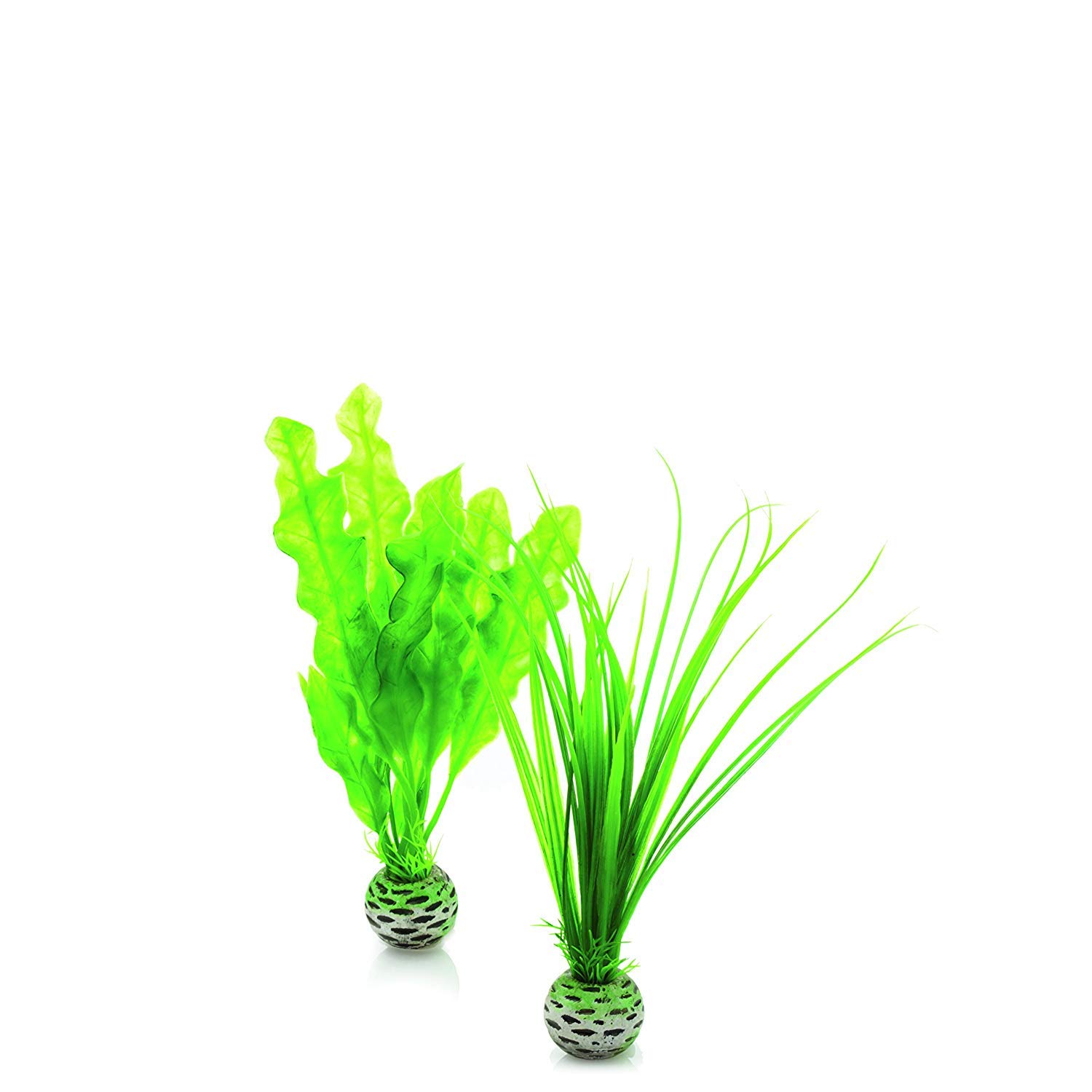
Rating: 4.3 ★ | Price: $$ | Material Safety: Silk soft | Anchoring: Self-righting base | Plant Type: Artificial rooted | Size & Coverage: 7.9 in, 2 plants | Durability: Stems break easily
Unlike the top pick’s durable plastic, biOrb’s silk leaves are noticeably softer – a clear safety advantage for fancy goldfish with flowing fins. The weighted bases self-right, so they stay put in gravel. However, the stems can break during cleaning, and you get only two small plants for a mid-range price.
This pack suits owners who prioritize fin safety over plant quantity and are willing to handle each stem carefully during tank maintenance. For larger tanks or goldfish that dig heavily, the cheaper plastic alternative offers better durability and value.
Pros
- Extremely soft, realistic silk leaves that won’t snag delicate fins
- Self-righting weighted bases keep plants upright in gravel
Cons
- Leaves and stems can break off during cleaning – requires gentle handling
- Expensive for only two small artificial plants
For betta or fancy goldfish keepers who value softness over volume and don’t mind fragility, this is the safest artificial option.
Best for Large Tank Background
Marcus Amazon Sword 3-Pack

Rating: 4.6 ★ | Price: $$ | Material Safety: Natural broad leaf | Anchoring: Plant in substrate | Plant Type: Live rooted | Size & Coverage: 7–12 in, 3 plants | Durability: Uprootable by goldfish
These Amazon swords arrive with healthy root systems and vibrant green leaves that quickly fill vertical space. Each plant has well-developed roots for easy planting in gravel or sand. Goldfish may uproot or nibble the leaves unless plants are anchored with weights or tied to driftwood. Occasional snail hitchhikers or temporary melting during transition can appear. Despite the anchoring requirement, the rapid growth and natural look make this a rewarding option for goldfish keepers with tanks 10 gallons or larger who don’t mind a bit of setup — a higher-maintenance alternative to the top pick’s Java Fern and Anubias bundle that attaches without substrate.
Pros
- Healthy, large plants with established root systems ready for growth
- Vibrant green leaves brighten the tank and provide natural cover
Cons
- Goldfish may uproot or damage leaves unless plants are secured with weights or ties
- Snail hitchhikers or temporary melting can occur after planting
A good live background for goldfish tanks if you’re willing to anchor the plants — the top pick’s rhizome-based plants are easier for those who want set-and-forget.
Best for Budget Live
AquaLeaf Java Fern

Rating: 4.2 ★ | Price: $ | Material Safety: Natural leaf | Anchoring: Tie to decor | Plant Type: Live rhizome | Size & Coverage: ~10 in, 1 plant | Durability: Variable arrival health
This Java Fern is very hardy and grows well in low light when it arrives healthy. However, condition on arrival varies — some plants are small or show signs of stress, making it a gamble for goldfish owners who need immediate greenery. Best for experienced keepers willing to nurse it back or those with low-tech tanks.
Pros
- Hardy growth in low light — thrives with minimal care.
- Budget-friendly price for a live plant that can anchor to driftwood.
Cons
- Can arrive small or stressed, requiring patience to recover.
Worth a try for budget-conscious goldfish keepers who have patience for recovery, but arrival condition is unpredictable.
Best for Decorative Floater
Aquarigram Red Root Floaters

Rating: 4.3 ★ | Price: $$ | Material Safety: Soft floating leaf | Anchoring: Floating, high light | Plant Type: Live floating | Size & Coverage: Floating, 30+ plants | Durability: Goldfish eat roots
The Aquarigram Red Root Floaters bring vivid red roots and bright green leaves to the water surface, adding visual contrast while absorbing nitrates. However, goldfish often eat the roots and leaves quickly, and the plants demand medium to high light and minimal surface agitation to thrive – limiting their viability in many goldfish tanks.
Pros
- Adds striking red and green color to the tank surface while aiding nitrate reduction.
- Grows quickly, providing a self-renewing food supplement for nibbling fish.
Cons
- Goldfish can consume the roots and leaves rapidly, requiring regular replanting.
Best suited for goldfish keepers who have a low-flow, high-light setup and don’t mind replacing plants as goldfish nibble them.
Best for Alternative Sword
Water Plants Amazon Sword

Rating: 4.4 ★ | Price: $$ | Material Safety: Natural leaf | Anchoring: Plant in substrate | Plant Type: Live rooted | Size & Coverage: 7–12 in, 3 plants | Durability: Snail hitchhikers
This Echinodorus bleheri trio grows quickly and produces runners, making it a budget-friendly option for filling background space. However, arrival condition varies, and bladder snails may be present. The higher occurrence of snail hitchhikers compared to similar swords limits its appeal for those avoiding pests.
Pros
- Hardy plant that adapts to a wide range of water conditions
- Grows quickly and propagates via runners for easy expansion
Cons
- Plants may arrive in poor health and can introduce bladder snails
Best for experienced keepers who can quarantine and treat plants, accepting occasional losses for the price.
Best for Foreground Carpet
Smoothedo 20-Piece Mini Grass

Rating: 4.5 ★ | Price: $ | Material Safety: Plastic, no sharp edges | Anchoring: Weighted base | Plant Type: Artificial foreground | Size & Coverage: 1 in, 20 pieces | Durability: Chemical smell new
These 20 tiny plastic grass pieces create a natural carpet look in the front of a tank or reptile enclosure. The weighted bases stay put in gravel, and the 1-inch height is ideal for foreground detail. However, the strong chemical smell out of the box requires a thorough soak before use, and the size limits placement to foreground only – this isn’t a plant for filling the middle or back of a goldfish tank.
Pros
- Realistic mini grass creates a natural carpet look
- Weighted bases hold them down well in gravel
Cons
- May have a strong chemical smell initially that requires soaking to dissipate
Fills the front corner of a small tank or reptile setup when you need a low carpet, but only if you’re willing to soak it first and don’t need height.
Best for Small Tank Cave
Ameliade Plant + Cave Set

Rating: 4.6 ★ | Price: $ | Material Safety: Sharp edges possible | Anchoring: Base in gravel | Plant Type: Artificial mixed | Size & Coverage: 2–8 in, 8 pieces | Durability: Mixed quality
This set offers a colorful variety of plants plus a hiding cave at a budget-friendly price, ideal for small goldfish tanks. However, some pieces may have sharp plastic edges, and the larger plant can tangle delicate fins. For short-finned goldfish in 5–10 gallon tanks and owners willing to inspect each piece, it’s a decent value — but not for a fully risk-free setup.
Pros
- Colorful plant variety with a cave for hiding adds visual appeal.
- Great value for small tanks – includes 8 pieces at a low price.
Cons
- Some pieces may have sharp plastic edges that can snag fins.
Best suited for small tanks with short-finned goldfish where you can inspect and smooth any rough edges before use.
How to Choose
The most important thing to know about plants for goldfish is that they will test every anchor and nibble every leaf — so safety and stability come before looks.
Material Safety
Goldfish fins are delicate, especially on fancy varieties. Plastic plants with stiff or sharp edges can tear fins, causing stress and infection. Look for soft, flexible materials like silk or very thin plastic that bends without springing back. If you can’t bend a leaf without it resisting or leaving a sharp edge, it’s not safe.
Live plants are naturally soft, but some have tough stems that can still catch fins. Avoid plants with woody stems or hard thorns. The safest route is to run your fingers along every leaf before adding it to the tank — if it snags your skin, it will snag your goldfish.
Weight and Anchoring
Goldfish are natural diggers. They push gravel around and uproot anything not firmly anchored. Artificial plants need heavy ceramic bases or enough buried length to resist tipping. A base that is only a thin disc will float after one nudge.
For live plants, avoid root-based plants unless you use plant weights or tie them to rocks. Rhizome plants like Java Fern and Anubias can be glued or tied to driftwood, which goldfish can’t easily move. This is the single best way to keep live plants in a goldfish tank.
Plant Type
Your choice between artificial and live plants depends on how much maintenance you want. Artificial plants need no light, no fertilizer, and never die — but they accumulate algae and may need replacement if leaves detach or fade. Live plants improve water quality and look natural but require care and may be eaten.
Floating plants offer a middle ground. Duckweed and red root floaters suck up nitrates and provide a constant food source. The catch: goldfish devour them fast, so you need to either accept replenishment or grow them in a separate tank. They also need low surface flow to thrive.
Size and Coverage
Tall plants (8–12 inches) work best as background cover in tanks 20 gallons or larger. Short plants (1–6 inches) belong in the foreground or in small tanks. A common mistake is buying a bulk pack of mixed heights and finding that half the pieces are too short to be seen behind decorations.
Consider your goldfish’s swimming space. Dense plant clumps can block swimming lanes; goldfish prefer open areas with a few hiding spots. A rule of thumb: leave at least 60% of the tank free for swimming, and use plants to create structure near the back or sides.
Durability Under Fish Activity
Goldfish are strong and persistent. Artificial plants with glued leaves will lose leaves over months as glue joints weaken under constant battering. Look for plants with leaf stems molded into the main stalk rather than glued on. For live plants, fast-growing species like Amazon sword can handle some nibbling but will be uprooted if not anchored.
The trade-off is that the most durable plants (thick plastic) are often the least safe. Silk plants are safest but fall apart fastest. For a balance, choose artificial plants with heat-sealed seams rather than glue, and live plants that can regrow quickly from roots.
FAQ
Will goldfish tear up artificial plants with sharp edges?
Yes, if the plastic has sharp seams or stiff points. Fancy goldfish with long flowing fins are especially vulnerable. Always run your fingers along every leaf and stem. Any roughness will snag fins. The MyLifeUNIT 10-pack and biOrb plants are among the safest artificial options because their leaves are soft and flexible.
How do I keep fake plants from floating in my goldfish tank?
Most artificial plants come with lightweight bases that goldfish can easily push aside. Bury the base under at least an inch of gravel or use plant weights (small lead strips) wrapped around the stem. For plants with ceramic bases, ensure the tank is deep enough — in shallow water the base may not get proper ballast. If all else fails, attach the plant to a rock with a zip tie.
What live plants can goldfish not destroy?
Rhizome plants like Java Fern and Anubias are the most goldfish-resistant because they are attached to driftwood or rocks rather than planted in the substrate. Goldfish cannot uproot them, and the leaves are tough enough to survive occasional nibbling. Avoid stem plants or rooted plants like Amazon sword unless you are willing to replant frequently.
Is duckweed good for goldfish?
Yes, duckweed is an excellent natural filter and goldfish love to eat it. It absorbs ammonia and nitrates while providing a constant source of greens. The downside: goldfish will devour it quickly, so you need to either supplement it regularly or grow it in a separate tank. It also requires low surface flow and moderate light to survive.