This post contains affiliate links. We may earn a small commission when you buy through our links — at no extra cost to you.
Many pond builders start with an affordable liner, only to find it punctured or leaking within a season. The problem isn’t just the liner — it’s matching the material to the job. This guide cuts through the noise to show which materials actually hold water for years, and when the extra cost of rubber pays off.
The trade-off between budget-friendly plastics and heavy-duty rubber comes down to your pond’s permanence and risk tolerance. A lightweight PVC may keep costs low for a temporary water feature, but the wrong choice can mean digging up your entire pond to replace it.
Top Picks
Best for Large Permanent Ponds
Firestone 45mil EPDM 15×20

Rating: 4.7 ★ | Price: $$$ | Material: EPDM Rubber | Thickness: 45 mil
A 20-year warranty backs the Firestone 45mil EPDM liner, and the 45mil rubber resists punctures from rocks and tree roots that would cut thinner materials. The material stays flexible in cold weather, conforming to uneven ground without cracking. While the weight of this liner makes installation a two-person job, the payoff is a watertight seal that holds for years.
This liner suits permanent koi ponds and large water gardens where longevity matters more than upfront cost. The 90-lb, 15×20 sheet covers roughly 300 sq ft – enough for a 12×16 pond with overlap. If you’re building a small decorative feature on a tight budget or need a lightweight liner for a rooftop installation, consider a thinner PVC option instead.
Pros
- 45mil rubber absorbs impacts from rocks and roots without tearing.
- 20-year warranty reflects the liner’s expected lifespan in permanent installations.
- Flexible EPDM adapts to irregular pond shapes and stream beds without creasing.
Cons
- At 90 lbs, moving and positioning the 15×20 liner requires at least two people – solo installation is not feasible.
For a large, permanent pond that you want to install once and forget, this liner’s durability and warranty make it a sound investment.
Best for Large Ponds, Underlayment Essential
LifeGuard EPDM+Underlayment

Rating: 4.7 ★ | Price: $$$$ | Material: EPDM Rubber + Geotextile | Thickness: 45 mil
The LifeGuard combo integrates a 45 mil EPDM rubber liner with a bonded geotextile underlayment, eliminating the need to purchase and install a separate underlayment. This simplifies large pond construction, especially for first-time builders who want added puncture protection without extra steps. However, the premium price is the highest in our lineup, making it a better fit for those who value convenience over cost.
Pros
- Includes geotextile underlayment for easier installation and extra protection.
- 45 mil EPDM rubber offers flexibility and durability for large ponds.
Cons
- Premium price – the most expensive option in our list.
- Heavy – requires two people to handle during installation.
The LifeGuard combo is a convenient all-in-one solution for large ponds, but its premium price means it’s best for those who prioritize simplicity over budget.
Best for Small Ponds under 200 Gal
TotalPond 7×10 PVC Liner

Rating: 4.6 ★ | Price: $ | Material: PVC | Thickness: 14.5 mil
With over 4,200 reviews, this 14.5mil PVC liner is the go-to for budget-conscious DIYers building ponds under 200 gallons. Its flexibility makes installation straightforward even for first-timers, and the price is hard to beat. Where it falls short is longevity – PVC can become brittle with UV exposure and is more prone to punctures than EPDM rubber liners, especially if the subgrade has sharp rocks. Leaks may develop over time, requiring patches. This is a perfectly capable starter liner or temporary solution, not a decade-plus investment for a koi pond.
Pros
- Lightweight and flexible for easy DIY installation
- Budget-friendly price for small ponds
Cons
- PVC can become brittle over time and punctures may occur with sharp rocks
- Some owners experience water loss that may require patching
A solid value for small, low-risk ponds where budget is the priority – just plan for a smooth subgrade and expect to replace it sooner than an EPDM liner.
Best for Small Ponds Up to 80 Gal
Firestone 8×10 EPDM

Rating: 4.7 ★ | Price: $$ | Material: EPDM Rubber | Thickness: 45 mil
The Firestone 8×10 EPDM delivers the same 45mil rubber construction found in larger premium liners, but sized for small ponds. That means you get the same puncture resistance and UV durability without wrestling a 15×20 sheet. The rubber cuts cleanly with a utility knife, making it easy to shape for irregular pond contours. It’s a mid-range price for a premium material—not a budget shortcut.
This liner is best for ponds up to 80 gallons, where its manageable weight lets one person handle the installation. The 20-year warranty adds peace of mind, but the limited size restricts its use to small water features only. For larger ponds, the top-pick Firestone sheet makes more sense.
Pros
- Thick 45mil EPDM resists punctures and UV damage for long-lasting performance.
- Cuts easily with scissors or knife to fit custom pond shapes.
- Backed by a 20-year warranty, reflecting confidence in its durability.
Cons
- The dense rubber can be heavy to position alone, especially when working without assistance.
- In some cases, sheets arrive with irregular edges, requiring extra trimming during installation.
For small pond projects where premium EPDM durability matters more than square footage savings, this liner delivers dependable performance at a fair mid-range price.
Best for Small to Medium Ponds
Beckett 8×10 PVC Liner

Rating: 4.5 ★ | Price: $ | Material: PVC | Thickness: 20 mil
The Beckett 20-mil PVC liner provides noticeably heavier material than common budget PVC liners at a similar price point, making it a practical upgrade for small to medium ponds. Its flexibility simplifies installation for DIY beginners, but like all PVC it will eventually become brittle with UV exposure — this liner suits budget-focused projects where a few years of service is acceptable rather than a decades-long installation.
Pros
- Thick 20-mil construction resists punctures better than thinner budget PVC liners
- Flexible enough to shape around pond contours without special tools
Cons
- Some units have pinholes or seamed construction requiring inspection before install
- Will become brittle with prolonged UV exposure — not a permanent liner
A thicker PVC option that delivers better puncture resistance than entry-level liners for small ponds; plan on replacement after a few years rather than expecting decades of service.
Best for Streams and Waterfalls
Aquascape 12×15 EPDM 45mil

Rating: 4.6 ★ | Price: $$$ | Material: EPDM Rubber | Thickness: 45 mil
This 45-mil EPDM liner bends and conforms to complex contours better than most competitors, making it a strong fit for streams and waterfall basins where precise shaping matters. It’s certified fish and plant safe, so koi and aquatic plants are not at risk. The tradeoff: at 12×15 feet, it covers smaller ponds than the Firestone 15×20, and the rubber is heavy enough that you’ll want a second set of hands during layout. Isolated reports of seam leaks exist, but for medium-sized ponds, streams, or water gardens that demand flexibility, this liner handles the curves without compromising durability.
Pros
- Exceptional flexibility for tight curves and irregular pond shapes
- Fish and plant safe — no harmful chemicals leach into the water
Cons
- Can require a second person to unroll and position due to its weight
- Seam leaks have been noted in some installations — careful seaming is advised
If your pond project involves curves, streams, or waterfalls, this liner’s flexibility makes it a more practical choice than the top pick, despite its smaller size and isolated seam concerns.
Best for Large Permanent Ponds
LifeGuard 45mil EPDM 15×20

Rating: 4.6 ★ | Price: $$$ | Material: EPDM Rubber | Thickness: 45 mil
This LifeGuard liner matches the top Firestone 45mil EPDM in thickness and fish-safe certification, making it a strong alternative for those who prioritize wildlife safety. The higher cost is the main differentiator, and the significant weight means two-person installation is the norm for a 15×20 sheet.
Pros
- Thick 45mil EPDM construction resists punctures and UV degradation.
- Flexibility allows easy shaping around rocks and plant shelves.
Cons
- For a solo installer, the weight of this 15×20 liner makes positioning and adjusting difficult.
Choose this liner if fish safety is a priority and you have help for installation.
Best for Raised Beds, Temporary
KLEWEE 10×13 LDPE 20mil

Rating: 4.4 ★ | Price: $ | Material: LDPE | Thickness: 20 mil
The KLEWEE 10x13ft LDPE liner keeps costs low for its size, making it a practical pick for small rectangular ponds or raised bed liners. The 20-mil material is noticeably stiff, which complicates folding into complex shapes and increases the risk of crease leaks. Durability is average for the price — suitable for short-term use or areas without sharp rocks.
Pros
- Good value for a 10×13 liner at a budget price point
- Works well for small, straightforward water features
Cons
- Very stiff material makes installation difficult, especially around corners or curves
Consider this liner if you need a low-cost solution for a simple, temporary pond or raised bed and can work with a stiff material that won’t conform to irregular shapes.
Best for Large Temporary Ponds
Adroiteet 10×15 HDPE
Rating: 4.3 ★ | Price: $ | Material: HDPE | Thickness: 20 mil
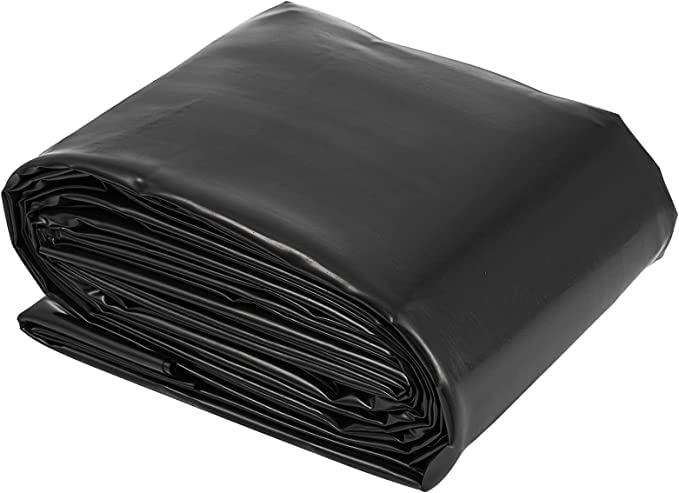
This 20 mil HDPE liner provides a large area at a low cost, suitable for temporary ponds or as a weed barrier. However, its stiffness makes it challenging to fit around curves, and leakage can occur, so it’s not recommended for permanent water features or fish ponds.
Pros
- Large 10×15 size at a budget-friendly price.
- 20 mil thickness offers decent puncture resistance for the cost.
Cons
- Leakage can occur in some installations, limiting use to non-water-holding applications.
Best suited for large temporary ponds, weed barriers, or landscape fabric where water retention is not critical.
Best for Small Backyard Ponds
hygger 10×13 PVC 14.5mil

Rating: 4.4 ★ | Price: $ | Material: PVC | Thickness: 14.5 mil
The hygger 10×13 liner is lightweight and bends easily around curves, making it simple to lay in small backyard ponds or fountains. However, at 14.5 mil PVC it’s thinner than many alternatives—best suited for decorative features with smooth substrates rather than rocky or heavy-duty koi ponds.
Pros
- Flexible material conforms to irregular pond shapes.
- Good value for a 10×13 size at this price point.
Cons
- 14.5 mil PVC can puncture under sharp rocks or heavy stones.
A cost-effective choice for casual garden ponds where heavy rocks won’t be used; consider a thicker liner for permanent koi ponds.
Best for Small Budget Ponds
ToLanbbt 7×10 HDPE 20mil

Rating: 4.3 ★ | Price: $ | Material: HDPE | Thickness: 20 mil
This HDPE liner costs less than any comparable size, making it a tempting option for small garden beds or temporary water containment. However, the material’s stiffness and variable tear resistance mean it works best in simple rectangular shapes without sharp folds. For a permanent koi pond, a more flexible PVC or EPDM liner is a better fit.
Pros
- Extremely low price for a 7×10 liner – ideal for tight budgets.
- Handles small, straightforward pond shapes without issue.
Cons
- Stiff material can make it difficult to fit around corners or curves.
A cost-effective option for lining a garden bed or creating a temporary water feature where ease of installation and long-term durability are secondary.
Best for Raised Beds, Temporary
UWIOFF 10×13 HDPE 20mil

Rating: 4.3 ★ | Price: $ | Material: HDPE | Thickness: 20 mil
This HDPE liner draws plenty of attention, but feedback points to stiffness and leakage as recurring limitations. It works well as a budget-friendly raised bed garden liner or temporary water feature for simple rectangular shapes. However, the material resists bending around curves and can tear under stress, making it a poor choice for irregular ponds or long-term use.
Pros
- Affordable price for a 10×13 ft cover
- Serves well as a raised bed garden liner
Cons
- Stiff HDPE resists shaping around curves and may tear at fold lines
Best for temporary rectangular garden beds or simple water features where low cost matters more than durability.
Best for Temporary, Ground Cover
SDLDEER 7×10 HDPE

Rating: 4.3 ★ | Price: $ | Material: HDPE | Thickness: 20 mil
The SDLDEER 7×10 HDPE liner offers the lowest price per square foot among pond liners, and it can handle simple applications like temporary barriers or ground cover. However, the material is stiff and can develop holes at fold points, making it unsuitable for any pond intended to hold water long-term. The savings are offset by a high failure rate for water projects.
Pros
- Very low price, among the most budget-friendly options available.
- Works for simple, temporary tasks like protective ground cover.
Cons
- Brittle material can develop holes at fold points, limiting it to temporary, non-water-holding use.
Best suited for single-use temporary projects or as protective ground cover where water retention is not required.
Best for Large Temporary Ponds
MAPORCH 16.5×26.5 HDPE
Rating: 4.1 ★ | Price: $$ | Material: HDPE | Thickness: 20 mil
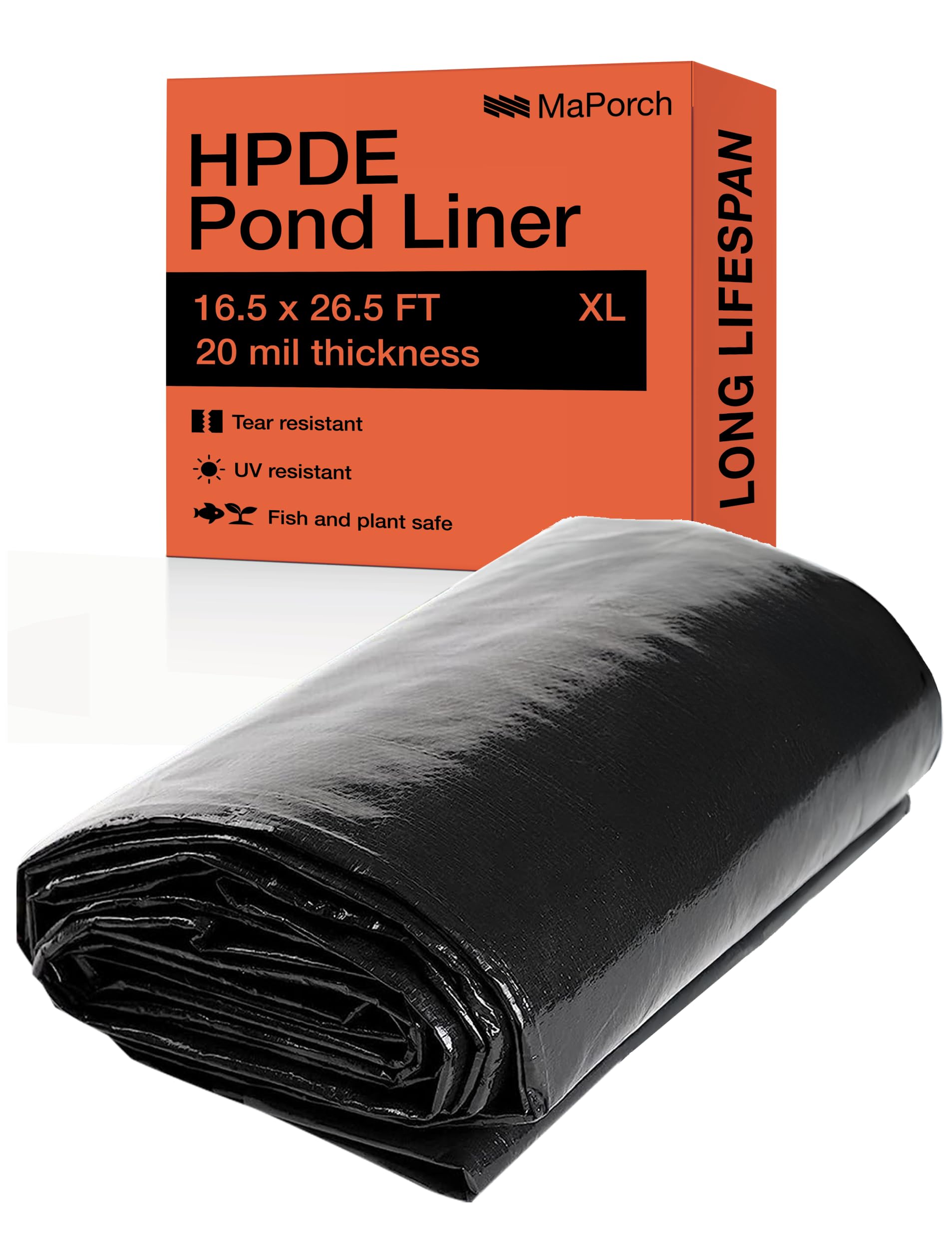
This HDPE liner provides a massive 16.5×26.5 ft sheet at a mid-range price, ideal for temporary water containment or landscaping ground cover. Two people can install it without much trouble. But the 20-mil material can puncture, leading to leaks — not a fit for permanent koi ponds or projects requiring zero water loss.
Pros
- Very large size for the price
- Easy to install with two people
Cons
- 20-mil material can develop punctures and leaks, especially with sharp rocks underneath
For temporary large water containment or as an economical ground cover, this liner delivers exceptional coverage per dollar when paired with a protective underlayment.
Best for Weed Barrier, Cover
Yarlung 10×13 HDPE 20mil

Rating: 4.1 ★ | Price: $ | Material: HDPE | Thickness: 20 mil
At under $32 for a 10×13 sheet, this is a cost-effective choice for non-water applications like weed barriers or temporary covers. The HDPE material cuts neatly with a utility knife. However, it is not designed to hold water – leaks have been reported after filling, and the stiff sheet resists shaping over curves.
Pros
- Budget-friendly price for a 10×13 sheet
- Cuts cleanly with standard tools
Cons
- Leaks can occur shortly after installation, making it unsuitable for ponds or water features
A practical weed barrier for gardeners on a budget, but avoid using it as a pond liner.
How to Choose
The single most important buying insight is that liner material dictates longevity—EPDM rubber lasts 20+ years while budget plastics often fail within a season.
Material
EPDM rubber is the gold standard for permanent ponds. It flexes without cracking, resists UV degradation, and can be patched if punctured. PVC and HDPE are cheaper but become brittle over time, especially under constant water pressure and sunlight. For koi ponds or any water feature intended to last more than a few years, EPDM is the only material that delivers on that promise.
Thickness
45 mil thickness is the benchmark for long-term use. Thinner sheets (14.5 to 20 mil) save money but are far more vulnerable to punctures from rocks, roots, or even your tools during installation. An underlayment can help, but the material itself still wears faster. For a small decorative pond with a smooth base, 20 mil may suffice; for anything with fish or irregular stones, 45 mil is the safer bet.
Flexibility
Flexibility determines how easily the liner conforms to complex shapes like curved edges or steep slopes. EPDM rubber remains pliable even in cold weather, while HDPE and LDPE are notoriously stiff and may require pre-warming or extensive weighting to hold curves. A stiff liner is more likely to bridge over contours, creating air pockets that strain the material and lead to leaks.
Puncture and UV Resistance
UV exposure steadily degrades plasticizers in PVC and HDPE, making them brittle and prone to cracking within a few years. EPDM contains carbon black that blocks UV rays, maintaining flexibility for decades. Puncture resistance follows the same pattern: thick rubber absorbs impacts, whereas thin plastics tear easily. Even a small rock hidden under the liner can become a slow leak source with budget materials.
Warranty
Warranty length is a strong indicator of manufacturer confidence. EPDM liners from Firestone and LifeGuard come with 20-year or lifetime coverage, reflecting their expected service life. Most budget liners offer no meaningful warranty or only cover manufacturing defects, not user error or punctures. If a liner doesn’t carry a multi-year warranty, the manufacturer is betting it will fail before you seek recourse.
FAQ
How long does an EPDM pond liner last?
A quality 45-mil EPDM liner installed with proper underlayment typically lasts 20 to 30 years. UV resistance and flexibility remain intact for decades, and small punctures can be repaired with a rubber patch. This is why EPDM is the standard for permanent koi ponds and water gardens.
Can I use a PVC pond liner for a koi pond?
PVC liners are not recommended for koi ponds. Koi require clean, stable water conditions, and PVC can leach plasticizers over time. More importantly, PVC becomes brittle within a few years and is prone to punctures from the sharp rocks koi ponds often have. For fish health and long-term reliability, choose EPDM.
Why does my pond liner keep leaking after installation?
The most common cause is inadequate underlayment—rocks or roots beneath the liner create pressure points that eventually puncture it. Another cause is improper folding: sharp creases in thin HDPE liners can crack at the fold. Using a geotextile underlayment and a thicker 45-mil EPDM liner eliminates most leak sources.
Is a 20 mil HDPE liner thick enough for a pond?
20-mil HDPE can work for small, simple ponds with a perfectly smooth, padded base and no sharp rocks. However, it is highly susceptible to punctures and UV damage, and most users report leaks within a year or two. For any pond you intend to keep longer than a season, a 45-mil EPDM liner is the safer investment.