This post contains affiliate links. We may earn a small commission when you buy through our links — at no extra cost to you.
Filter floss is the simplest way to polish aquarium water, but many rolls don’t deliver on thickness or stay intact after a few washes. Fine polishing pads trade longevity for clarity — they clog fast in heavily stocked tanks.
The key is matching floss to your maintenance routine. A dual-density roll that can be rinsed and reused saves money and hassle for most setups, while a thin disposable pad works for quick cloudiness fixes.
This guide highlights the options that actually hold their shape and catch particles without flooding your filter or falling apart. The right choice depends on your filter type, tank bioload, and how often you want to swap media.
Top Picks
Best for Most Tanks, Diy
Aquatic Experts FilterFirst Roll

Rating: 4.7 ★ | Price: $$ | Thickness & Density: Dual-density 3/4–1" | Reusability: Washable, multiple times | Cut-to-Fit: Cut to size | Compatibility: Canister, sump, HOB
The FilterFirst roll uses a dual-density design (coarse white topped with fine green) to catch particles of varying sizes while maintaining good flow. It cuts easily with scissors to fit any filter compartment, from HOBs to canisters and sumps. Water clarity improves noticeably within a day of installation.
This bulk roll suits DIY filter customizers who don’t mind trimming media to size, multi-tank owners who want a single roll to service several filters, and anyone who prioritizes a balance of polishing efficiency and media longevity. If you prefer pre-cut pads or worry about material breakdown after repeated washing, consider a bonded sheet or OEM pad instead — some units of this floss can shed fibers or lose structural integrity after several washes.
Pros
- Removes fine particles to polish water to crystal clarity.
- Sturdy construction handles repeated use without tearing.
- Generous 6-square-foot roll delivers low per-use cost.
Cons
- Not pre-cut; requires trimming to fit each filter.
- After multiple washes, the material may begin to shed fibers or break down.
For aquarists who want a cut-to-fit roll that balances clarity and longevity across any filter type, this is the media to buy.
Best for Fluval Canisters
Fluval Quick-Clear 6-Pack

Rating: 4.8 ★ | Price: $$ | Thickness & Density: Ultra-fine polyester | Reusability: Disposable | Cut-to-Fit: Pre-cut | Compatibility: Fluval 306/307/406/407
Fluval’s Quick-Clear pads are precision-cut for the 306/307/406/407 canisters, fitting perfectly without trimming. The fine polyester traps suspended particles effectively, yielding visibly clearer water after a single day of use. This same density means they load up with debris faster than coarser media – expect more frequent changes in tanks with heavy fish loads. The six-pack provides a reasonable supply for several months of routine maintenance, though ongoing replacement cost is a factor for heavily stocked aquariums. For Fluval owners who want convenience and polished water over bulk-media savings, these pads deliver.
Pros
- Noticeably clearer water within a day of installation
- Precise fit for Fluval 306/307/406/407 – no trimming required
- Consistent build quality across each pad, typical of OEM parts
Cons
- Clogs faster in high-bioload tanks, requiring more frequent swaps
- Pads are designed for single use; washing may cause the material to disintegrate
For Fluval canister owners who prioritize crystal-clear water and hassle-free fit, these pads are the right call – just plan for regular replacements.
Best for Budget Diy
Marineland Bonded Pad

Rating: 4.6 ★ | Price: $ | Thickness & Density: Bonded, 1/2" | Reusability: Washable, reusable | Cut-to-Fit: Cut to size | Compatibility: All filters
The Marineland Bonded Pad offers solid mechanical filtration at a per-square-inch cost that undercuts most alternatives. Unlike the top pick’s dual-density design, this single-density sheet requires cutting and layering for different filter compartments. Its 2 sq ft area works well for smaller tanks or as a pre-filter; larger aquariums may need multiple sheets.
This pad suits hobbyists who value low cost and reusability over convenience. It’s a good fit for DIY filter builds where you can trim the pad to size and wash it for multiple uses.
Pros
- Effective as pre-filter or general mechanical media
- Budget-friendly – one of the cheapest per-square-inch options
- Easy to cut to any size or shape
Cons
- Only 2 sq ft per sheet; larger setups may require multiple sheets
- Not designed for ultra-fine polishing – best for general mechanical filtration
A practical, no-frills option for budget-conscious DIY aquarists who don’t need fine polishing.
Best for Ultra-Fine Polish
Aquatic Experts 100 Micron Pad

Rating: 4.6 ★ | Price: $$ | Thickness & Density: 100 micron, 1/8" | Reusability: Washable, limited | Cut-to-Fit: Cut to size | Compatibility: All filters
The Aquatic Experts 100 Micron Pad targets a specific job: polishing water to crystal clarity in reef and planted tanks. Within 24 hours you’ll see a visible difference, but that fine mesh also traps particles quickly — in heavily stocked tanks you may need to rinse or replace it every few days. This isn’t a set-and-forget media; it suits aquarists who check their filters frequently and prioritize water quality over low maintenance.
Pros
- Produces noticeably clearer water within 24 hours of installation.
- Material holds its structure well through several wash cycles.
- Washable and reusable multiple times, reducing ongoing costs.
Cons
- In heavily stocked tanks, expect to rinse or change the pad every 3–5 days to maintain flow.
- Repeated washing may cause some wear over time; occasional replacement is needed.
If you’re willing to stay on top of filter maintenance for the sake of showroom clarity, this pad delivers the quickest polish in the category.
Best for Custom Fill
Sera Filter Wool
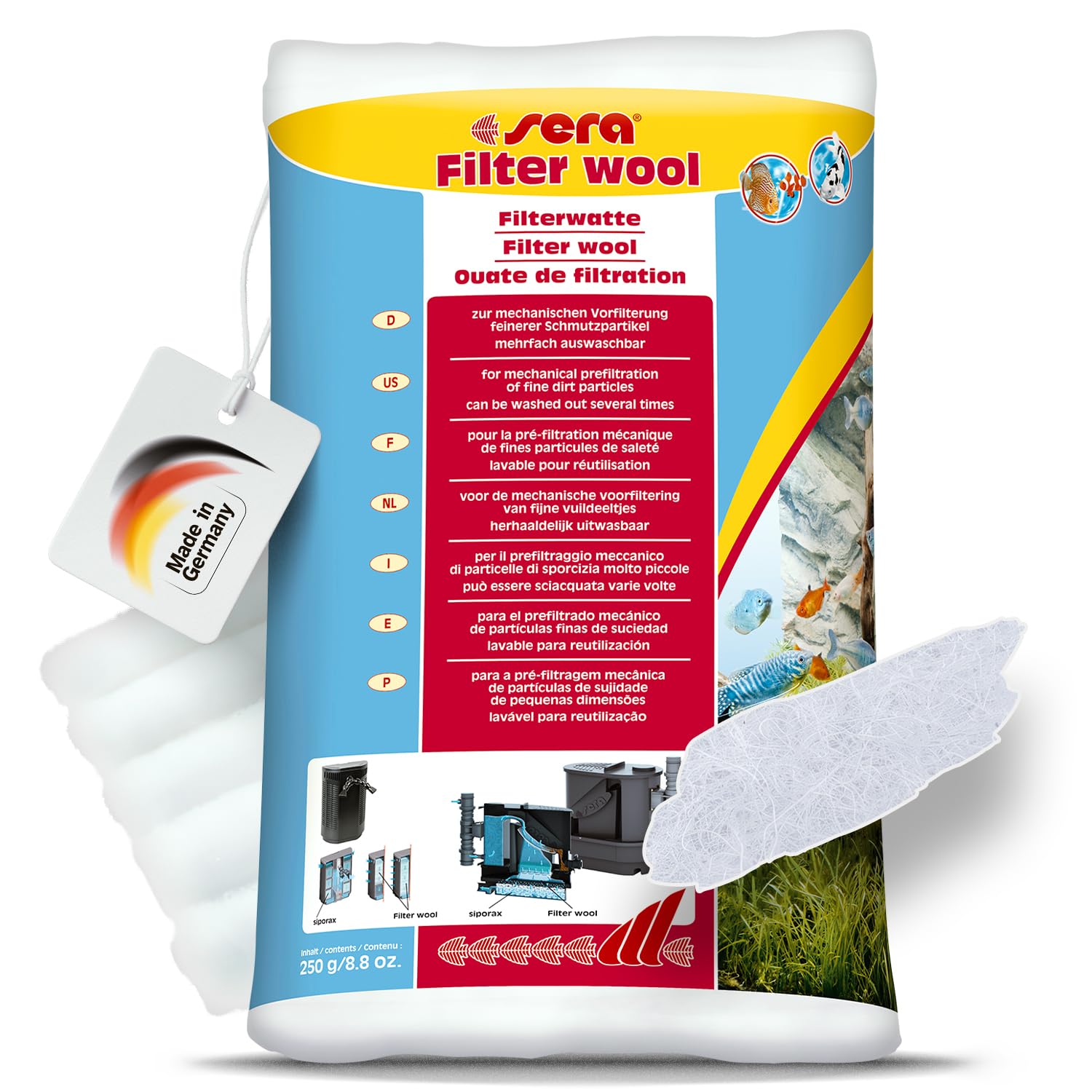
Rating: 4.7 ★ | Price: $$ | Thickness & Density: Loose wool | Reusability: Washable, reusable | Cut-to-Fit: Tear/pack | Compatibility: All filters
The Sera Filter Wool is a loose polyester floss that can be torn and shaped to fit any filter compartment, from internal corner filters to custom sump sections. It traps coarse and fine debris effectively and holds its shape through multiple washings. The trade-off against the top pick’s dual-density roll is the need for deliberate packing — fibers can shift if not evenly compressed, allowing water to bypass.
This wool suits aquarists who enjoy customising their media layout and don’t mind spending a minute adjusting the pack. For HOB owners or anyone wanting a rigid, drop-in pad, the loose structure is a poor fit — it may clog or shift under direct flow.
Pros
- Fits any filter type – tear and shape to match your compartment.
- Traps both coarse and fine debris effectively.
- Withstands multiple washings without losing shape.
Cons
- Not designed for HOB filters – loose fibers can shift under direct flow.
The Sera Filter Wool is the right call for aquarists who pack media by hand and value custom fit over drop-in convenience.
Best for Small Tanks
Blue Ribbon Floss Bag

Rating: 4.7 ★ | Price: $$ | Thickness & Density: Loose polyester | Reusability: Washable | Cut-to-Fit: Tear pieces | Compatibility: All filters
This 7-ounce bag of polyester floss delivers fine mechanical filtration at a low cost per use – ideal for hobbyists maintaining several small tanks. The loose material tears easily, stays dust-free, and polishes water clear. It compresses in high-flow canister filters over time, making it better suited for lower-flow setups or as a polishing stage after coarser media. A solid match for DIY filter stuffing and hobbyists who don’t need structured pads.
Pros
- Large bag provides months of use across multiple small tanks.
- Fine mechanical filtration keeps water noticeably clearer.
- Clean and dust-free – easy to tear into custom sizes.
Cons
- Compresses in high-flow filters, requiring more frequent replacement than structured pads.
The right choice for budget-conscious aquarists running multiple small tanks or low-flow filters who want clear water without spending on pre-cut pads.
Best for Marineland Canisters
MarineLand Polishing Pads

Rating: 4.7 ★ | Price: $ | Thickness & Density: Polishing pad | Reusability: Disposable | Cut-to-Fit: Pre-cut | Compatibility: Marineland C-Series
These pre-cut polishing pads clear cloudy water effectively for Marineland canister owners, with a fit that requires no trimming. The tradeoff: only two pads per pack, and compatibility restricted to C-Series and Magniflow models – not for bulk media needs or other filter brands.
Pros
- Effectively polishes water for clearer aquarium views.
- Budget-friendly replacement pads that fit without cutting.
Cons
- Pack contains only two pads – may require more frequent purchases for larger setups.
For Marineland canister owners who want a quick, no-cut polishing pad at a low price, this is a sensible choice – just plan for more packs if your tank requires frequent media changes.
Best for Nano Tanks
Borlech 8-Layer Pad
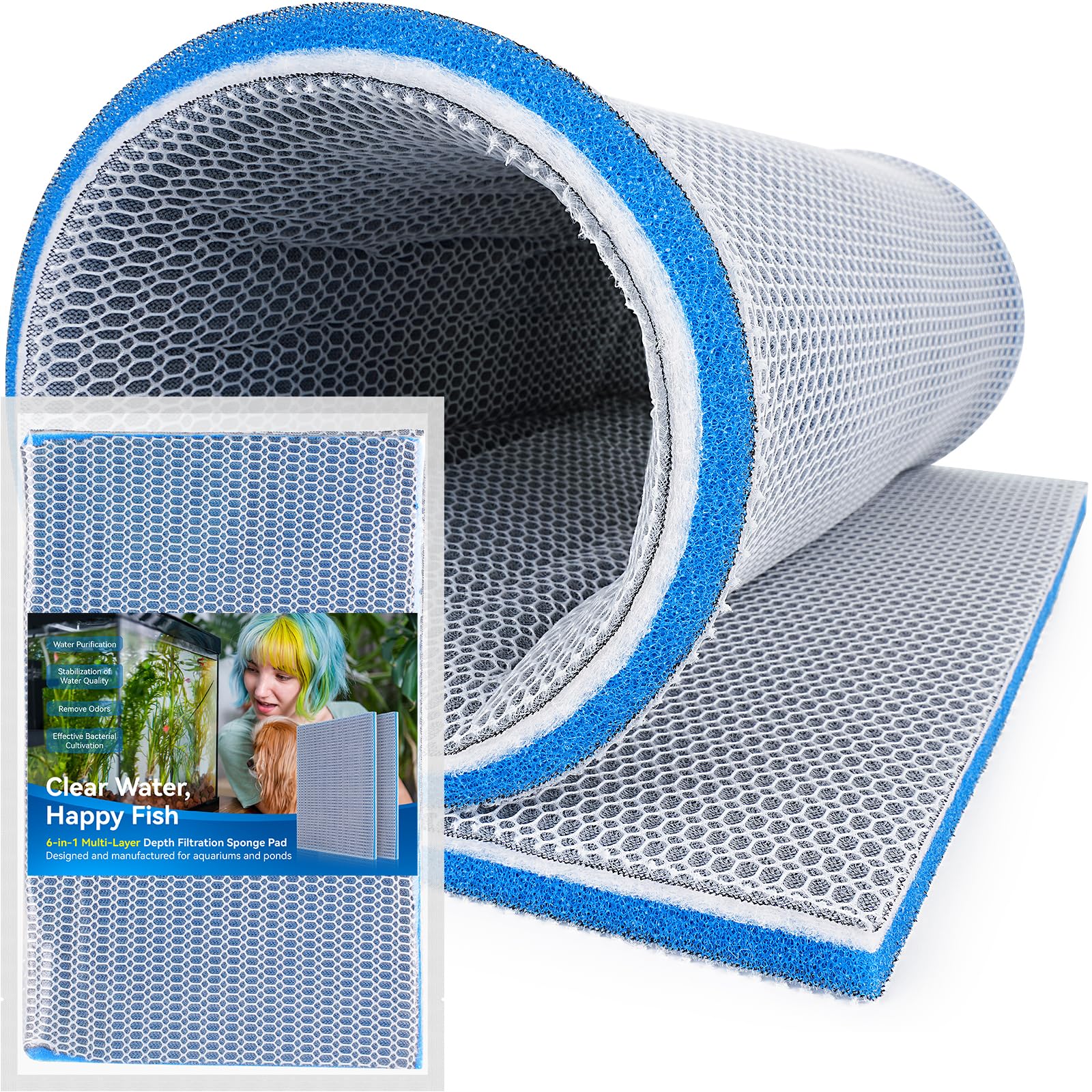
Rating: 4.6 ★ | Price: $ | Thickness & Density: 8-layer, 0.6" | Reusability: Washable | Cut-to-Fit: Cut to size | Compatibility: Small tanks
This pad clears cloudy water quickly in sub-10-gallon tanks, making it a handy quick fix. It’s thinner than expected and can clog within days in heavily stocked aquariums, causing overflow. It’s strictly for low-bioload nanos; larger tanks will find better value in thicker media.
Pros
- Quickly clears cloudy water in small aquariums
- Easy to wash and reuse multiple times
Cons
- Thin material folds easily, complicating precise cuts for filter trays
If you run a lightly stocked nano tank and need rapid water polishing between water changes, the Borlech pad gets the job done — just expect to replace it frequently in dirtier setups.
Best for Low-Flow Filters
sunjojo 8-Layer Pad

Rating: 4.5 ★ | Price: $ | Thickness & Density: 8-layer, 0.6" | Reusability: Washable | Cut-to-Fit: Cut to size | Compatibility: Low-flow sump
Build quality and easy cutting make this a budget-friendly choice for low-flow sumps and internal filters, where it polishes water effectively. The dense layers restrict flow heavily — in HOB filters, overflow may occur, so it’s best avoided there.
Pros
- Good build quality and durable for the price.
- Easy to cut to any size for custom fit.
Cons
- Some pads may shed loose fibers into the tank during initial use.
For low-flow sumps and internal filters, this pad offers good build quality and water clarity at a budget price. HOB filter owners should look elsewhere.
Best for Ponds, Sumps
Encompass All Bonded

Rating: 4.5 ★ | Price: $$ | Thickness & Density: Dual-layer bonded | Reusability: Washable | Cut-to-Fit: Cut to size | Compatibility: Pond, reef sump
This bonded pad handles mechanical filtration effectively for ponds and reef sumps, where coarse trapping matters more than fine polishing. It cuts to fit and holds up through washes. However, it lacks the fine-mesh density needed for aquarium water polishing, and it’s less versatile than the top pick for multi-tank use.
Pros
- Traps debris effectively in pond and sump setups.
- Dual-layer bonded construction holds shape and withstands repeated washing.
Cons
- Not fine enough to polish aquarium water to clarity levels some hobbyists expect.
Best used for pond bio-filters and reef sumps where coarse mechanical trapping is the goal, not for aquarium water polishing.
Best for Early Adopters
hygger Filter Floss
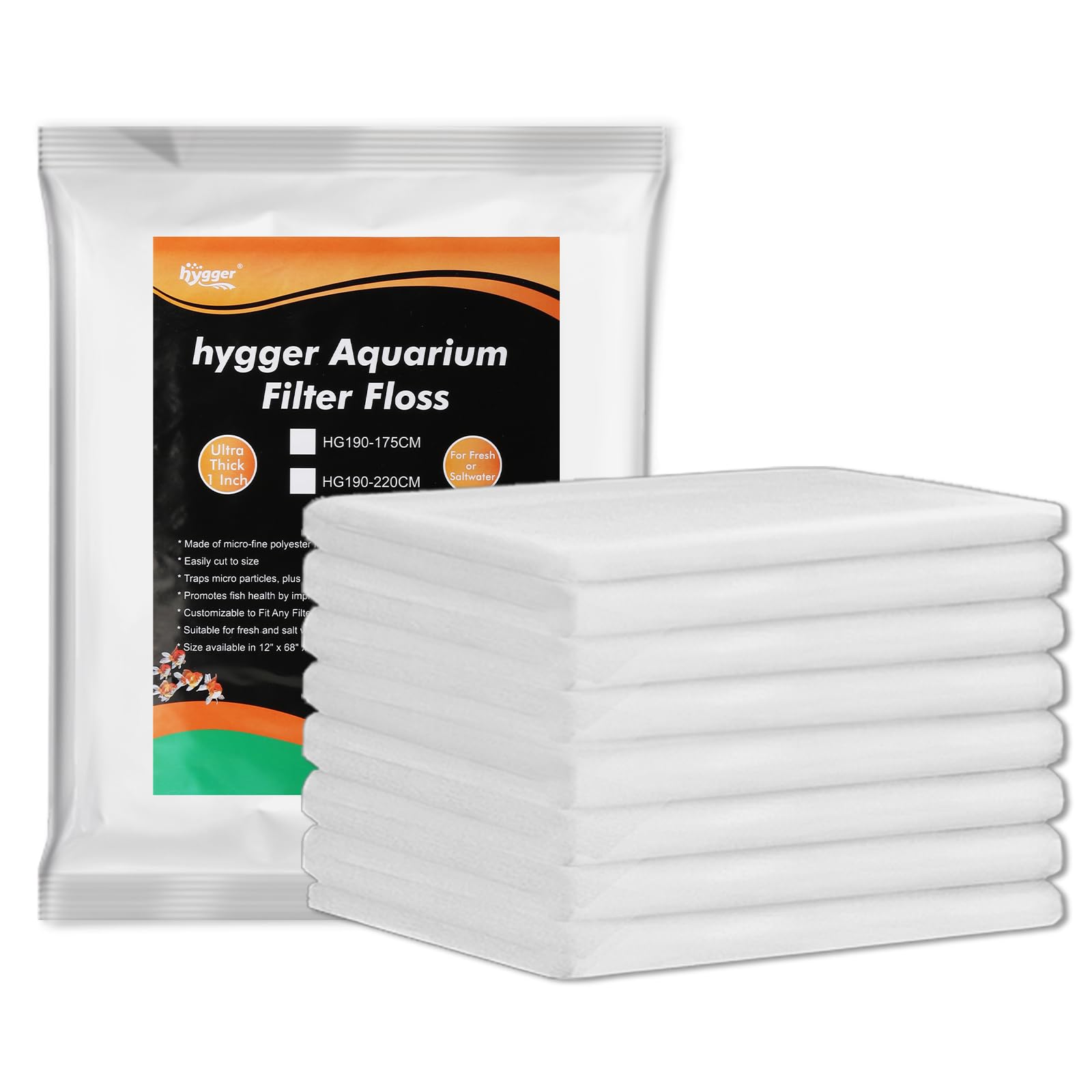
Rating: 4.6 ★ | Price: $$ | Thickness & Density: 1" claimed | Cut-to-Fit: Cut to size
The hygger Filter Floss offers a thick 1-inch polyester pad that can be cut to size for sump, canister, or HOB filters, aiming to polish water effectively. However, with only a modest number of buyer reviews and no detailed feedback, its real-world durability and clogging rate under typical bioload remain unconfirmed.
Pros
- Thick 1-inch pad provides ample depth for trapping fine particles during water polishing.
- Cut-to-size flexibility allows use in most filter types without special adapters.
Cons
- Under sustained heavy bioload, clogging speed and pad lifespan are not yet verified by buyer experience.
A reasonable option for early adopters willing to test a new media; those prioritizing verified performance should look to established alternatives.
Best for Disposable Use
Big Kahuna Roll 10ft
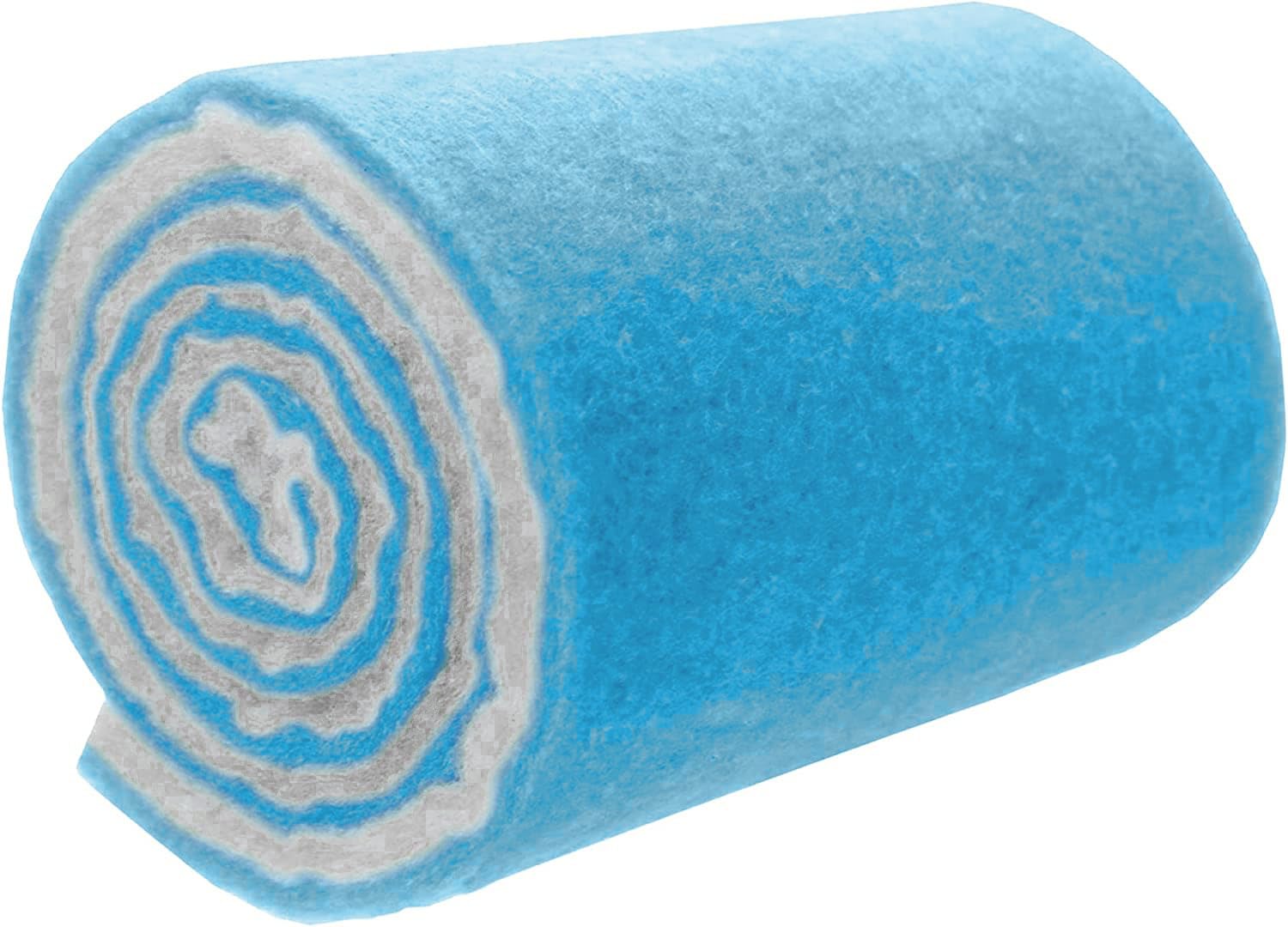
Rating: 4.5 ★ | Price: $ | Thickness & Density: 3/4–1" claimed | Cut-to-Fit: Cut to size | Compatibility: All filters
This roll offers the lowest per-foot cost in the category, and the floss cuts easily to fit any filter. However, the material is noticeably thinner than advertised, so double-layering may be needed to trap debris effectively. It works best as a disposable pre-filter for heavy loads or emergency backups where frequent replacement is acceptable.
Pros
- Low cost per square foot for a bulk roll
- Easy to cut to size
Cons
- Extremely thin – far less than advertised thickness
Best suited as a disposable pre-filter for high-bioload tanks or temporary setups where frequent replacement is part of the maintenance routine.
How to Choose
The most important buying insight: filter floss is a trade-off between water clarity and maintenance frequency, so match the media to how often you’re willing to clean or replace it.
Thickness and Density
Thicker, denser floss traps more particles but restricts water flow. A 3/4-inch dual-density pad removes both coarse debris and fine dust, but the dense layer clogs faster. If your filter pump struggles with back pressure, a thinner single-layer pad may be safer.
Design density ratings like ‘100 micron’ indicate particle size captured — finer micron means clearer water but quicker clogging. For a heavily stocked tank, a coarse pad in front of a fine pad extends time between cleaning.
Reusability and Washability
Many floss products claim to be washable, but the material determines how many rinses it survives. Bonded polyester pads hold their structure for several cleaning cycles, while loose polyester wool compresses and loses effectiveness after a few washes.
Fine polishing pads (e.g., 100-micron) are often single-use because the fibers mat down and can’t be fully cleaned. If you want to rinse and reuse, choose a dual-density bonded pad or a thicker wool that lets debris rinse out easily.
Cut-to-Fit vs Pre-Cut
Pre-cut pads are plug-and-play for specific filter models — no measuring or trimming, but they limit you to that brand. Cut-to-fit rolls give you flexibility to size for any filter tray, sump, or HOB compartment, and leftover material can be used in other tanks.
The trade-off: cutting takes a few minutes and requires sharp scissors. Bulk rolls also save money per square foot, but you need storage space and a way to keep the roll clean.
Compatibility
Not all floss fits all filters. Canister filters use flat pads or rolled media; HOB filters need a shape that doesn’t block the return flow; sumps accept loose wool or cut sheets. Check your filter’s media dimensions and flow path before buying.
OEM pads from Fluval or Marineland ensure perfect fit and no bypass, but they cost more per pad. A universal cut-to-fit roll works in any filter as long as you can secure it against the water flow so it doesn’t shift.
FAQ
Why does my aquarium filter floss clog so quickly?
Filter floss clogs fast when it’s too fine for your tank’s bioload. A 100-micron pad catches tiny particles but fills up in a few days in a stocked tank. Use a coarser pre-filter sponge in front to extend its life. If you must use fine floss, plan to rinse or replace it every 3-5 days.
Can I wash and reuse aquarium filter floss?
Yes, but only certain types. Bonded polyester pads and thick wool can be rinsed and reused several times. Fine polishing pads and ultra-thin rolls often fall apart after one or two washes. Squeeze debris out in old tank water, never tap water, to preserve beneficial bacteria. When the pad loses shape or fibers shed, replace it.
How often should I change filter floss in my canister filter?
That depends on the floss type and tank load. For dense dual-density pads in a moderately stocked tank, change every 2-4 weeks. For fine polishing pads, swap weekly. Rinse reusable floss during filter maintenance (every 2-4 weeks) and replace when it no longer rinses clean or starts falling apart.
What is the difference between aquarium filter floss and a polishing pad?
Filter floss is a general term for any mechanical media that traps suspended particles. A polishing pad is a specific type of very fine floss (often 50-100 micron) designed to remove tiny particulates for crystal-clear water. Polishing pads clog faster and are usually not reusable, while standard floss offers a balance of filtration and longevity.