This post contains affiliate links. We may earn a small commission when you buy through our links — at no extra cost to you.
Most ‘starter kits’ on the market are designed for freshwater. Finding a true saltwater-ready kit that includes a heater, proper filtration, and lighting out of the box is surprisingly rare. Beginners often discover this only after unpacking a box missing the one component that makes saltwater viable.
The difference between a frustrating start and a smooth one comes down to a single detail: does the kit include a heater? Without it, you are left buying a separate submersible heater that may not fit the filter compartment. This guide highlights the few kits that actually ship with everything you need to get going from day one.
It is not about choosing the flashiest tank. It is about picking the one that spares you a second shopping trip and gets your water to the right temperature and clarity immediately.
Top Picks
Best for Budget Beginners
Aqueon 10gal Starter Kit
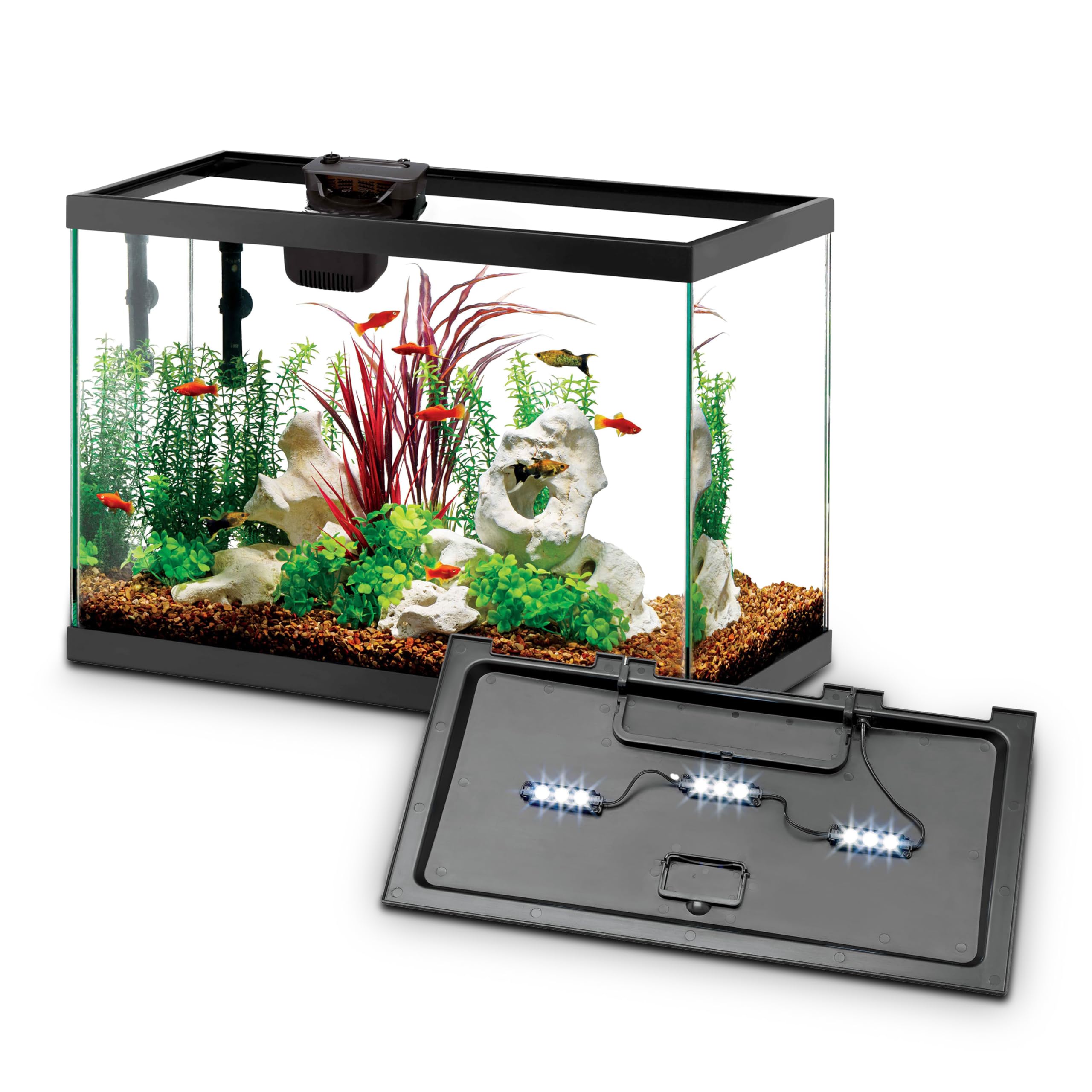
Rating: 4.3 ★ | Price: Budget | Tank Volume: 10 gal | Included Gear: Heater, filter, light, accessories | Ease of Maintenance: Simple
This kit bundles every essential for a first saltwater tank: a 50W preset heater, SmartClean filter, LED hood, fish net, water conditioner, and even a food sample. Setup takes minutes with clear instructions, and the price undercuts buying components separately – a rare find for budget-conscious beginners.
The filter can produce an audible hum in a quiet room, and some units have heater or LED failures within weeks. Quality control on the glass and sealant also varies, so a careful inspection on delivery is worth the time. These tradeoffs are manageable for the price, but worth knowing upfront.
Best for first-time saltwater keepers, parents setting up a child’s tank, or anyone wanting a no-surprise, everything-included start without a second purchase. The 10-gallon size fits desks and shelves, but the compact footprint limits stocking options. Check for cracks and test electronics before filling to avoid disappointment.
Pros
- Complete all-in-one kit for beginners
- Easy setup
- Good value for the price
Cons
- Filter noise may be noticeable in a quiet room
- Heater and LED reliability can vary – some units show early defects
For a no-fuss saltwater start on a budget, this kit delivers genuine one-box readiness – just add water, cycle, and stock. Inspect the glass and test the electronics early.
Best for Nano Reef Beginners
Fluval Evo XII 13.5gal

Rating: 4.3 ★ | Price: Premium | Tank Volume: 13.5 gal | Included Gear: Filter, light (no heater) | Ease of Maintenance: Simple
The Fluval Evo XII offers a sleek 13.5-gallon design with hidden 3-stage filtration and a 16W LED capable of supporting soft corals. It sets up quickly and its modern look stands out, but the kit omits a heater — you will need to purchase one separately. Occasional quality control variances with the pump or lid can occur, so inspect upon arrival. This tank suits hobbyists who prioritize aesthetics and are planning a fish-only or soft coral nano reef.
Pros
- Sleek modern design with hidden filtration compartment enhances any room.
- Simple assembly gets you from box to running tank in under an hour.
- Well-suited for beginners starting with soft corals or fish-only tanks.
Cons
- Occasional QC variances can result in broken glass or pump/light issues; inspect before filling.
- No heater included — requires separate purchase, adding to the overall cost.
This is the right tank if you want a premium-looking nano reef and don’t mind buying a heater separately.
How to Choose
The single most important factor for a beginner saltwater setup is whether the kit includes a heater — without it, you cannot stabilize temperature and cycling becomes unreliable.
Tank Volume
Small tanks under 10 gallons are harder to keep stable because water chemistry shifts quickly with evaporation and waste. A 10- to 15-gallon tank gives you enough water volume to buffer mistakes while still fitting on a desk or counter.
Larger volumes also allow a wider range of fish and coral choices. For a first saltwater tank, aim for 10 to 30 gallons — enough margin for error but not so large that maintenance becomes overwhelming.
Included Equipment
A complete kit should include a heater (typically preset at 78F), a filter with mechanical and biological media, and a light suitable for low-light corals or fish-only tanks. Many kits marketed as ‘saltwater-ready’ omit the heater, leaving you to buy one that might not fit the filter compartment.
Check the filter type: internal power filters are simple to maintain, while built-in sump designs require more setup but offer better media options. The light output matters if you plan to keep corals — LED systems with adjustable spectrum are a plus.
Glass Thickness and Build Quality
Thicker glass (5mm or more) reduces the risk of cracking during shipping and handling. Standard 3mm glass is common in budget kits and can be more fragile. Low-iron glass offers superior clarity but is usually found in premium tanks without a full kit.
Inspect the tank immediately upon arrival for cracks or sealant gaps. Even highly-rated kits have occasional quality control issues. Testing electronics before adding water can save a lot of cleanup later.
Noise Level
Filter and pump noise varies widely between kits. Internal power filters tend to produce a humming or trickling sound that can be noticeable in a quiet room. Some kits use a baffled design or foam padding to dampen noise.
If the tank will be in a bedroom or living area, look for customer feedback describing noise levels. A silent pump might cost a bit more but can make the difference between a relaxing aquarium and an annoyance.
Ease of Maintenance
Beginners benefit from kits with accessible filter compartments and simple water change procedures. Removable filter cartridges are convenient but can trap nitrates if not replaced regularly. Hang-on-back filters are easier to clean than internal sumps.
Look for kits that include a sample of water conditioner and fish food — these small extras signal that the manufacturer intended a complete beginner experience. A straightforward setup manual also reduces the learning curve.
FAQ
Do saltwater aquarium starter kits include a heater?
Not always. Many popular kits like the Fluval Evo XII omit the heater, expecting buyers to add their own. The Aqueon 10-gallon starter kit is one of the few that includes a preset 50W heater at 78F. Always check the product description for ‘heater included’ before purchasing.
Why does my new aquarium kit have a cracked glass panel?
Cracked glass during shipping is a known issue across all budget to mid-range kits. Glass thickness varies, and thin panels (3mm) are more prone to breakage. Inspect the tank immediately upon arrival and request a replacement from the seller if damaged. Some brands, like Innovative Marine, use thicker low-iron glass that is less likely to crack.
Can I use a freshwater aquarium kit for saltwater?
You can, but the equipment may not be suitable. Freshwater kits often lack the high-output lighting and chemical filtration needed for saltwater. More critically, many freshwater kits do not include a heater, and their filters may not handle the higher salt content. For a reliable start, choose a kit explicitly labeled for saltwater use with a heater included.
What size saltwater tank is best for a beginner?
A 10- to 15-gallon tank strikes the best balance between stability and manageability. Larger tanks dilute mistakes but require more space and water volume. Smaller tanks under 10 gallons are harder to keep stable and limit your fish choices. For a first saltwater aquarium, stick with the 10- to 15-gallon range.