This post contains affiliate links. We may earn a small commission when you buy through our links — at no extra cost to you.
Most aquarium fans promise dramatic temperature drops, but real-world cooling depends heavily on your tank size, ambient humidity, and the fan’s ability to stay attached. A 6–10°F claim often turns into 2–4°F in practice.
Fit is the second surprise: many clips simply won’t grip a standard black rim. Noise adds another layer — a fan that sounds reasonable in the store can become a droning presence in a quiet living room.
The real choice comes down to whether you want automated temperature control or the flexibility to adjust airflow across multiple tanks. Understanding that trade-off — and accepting the daily water top-off that evaporative cooling demands — turns a frustrating search into a straightforward match.
Top Picks
Best for Medium Tanks, Auto Temp
AQUASMITH AFan-220

Rating: 4.4 ★ | Price: $$$ | Fan Heads: 2 | Speed Settings: 3 | Timer: Auto on/off | Clip Thickness: 0.2–0.95 in | Noise: <40 dB claimed | Temp Control: Digital probe
The digital probe auto start/stop function maintains tank temperature within 1°F of the set point. This means the fan runs only when needed, holding 64–67°F for sensitive species like axolotls without manual adjustment. For medium tanks in the 20–50 gallon range, this automation eliminates the guesswork of constant fan control.
Dual fan heads provide even coverage across the water surface. On low speed the noise sits below a typical living room hum — fine for most spaces. Crank it to high and a noticeable fan noise appears, comparable to a desk fan on its highest setting. For tanks that don’t need maximum cooling, low or medium speed strikes a practical balance between airflow and quiet.
Best for aquarists who value hands-off temperature regulation over upfront cost. The clip fits rim thicknesses from 0.2 to 0.95 inches, covering most standard framed tanks. In very quiet rooms the highest speed hum will be present, and the premium price reflects the added automation — not a fan for budget-conscious shoppers.
Pros
- Auto on/off with digital probe keeps temperature steady within 1°F
- Solid build and quick installation out of the box
- Quiet enough on low and medium speeds for typical living areas
Cons
- Premium pricing compared to basic clip-on fans without automation
- In very quiet rooms, the highest speed setting may be noticeable
If automatic temperature regulation is a priority, the AQUASMITH AFan-220 delivers precision that manual fans can’t match.
Best for Multi-Tank, Timer
hygger 3-Fan

Rating: 4.4 ★ | Price: $$ | Fan Heads: 3 | Speed Settings: 5 | Timer: 0.5–12 h | Clip Thickness: Up to 0.45 in | Noise: Low quiet, high loud
The hygger 3-Fan stands apart with its five speed settings and built-in timer that can be programmed for day/night cycles. Unlike the top pick’s auto-probe approach, this unit gives you manual control over when and how hard the fans run. The three detachable heads can even be split across separate tanks, making it a practical choice for multi-tank keepers.
This fan suits owners of 20–40 gallon tanks who want a timed cooling schedule and don’t mind occasional noise at higher speeds. The clip works on rims up to 0.45 inches thick — standard glass tanks are fine, but thicker trim or rimless setups may need a different mount. If you prefer set-and-forget temperature regulation, the AQUASMITH remains the better fit.
Pros
- Programmable timer with five speeds lets you tailor cooling to daily temperature swings.
- Three fan heads can be split across multiple small tanks or concentrated on one larger one.
- Cools 20–40 gallon tanks by 2–4°F, often reducing reliance on a chiller.
Cons
- At higher speeds, fan noise becomes audible and may be noticeable in quiet rooms.
- The clip fits rim thickness up to 0.45 inches, leaving thicker trim or rimless tanks without a secure mount.
Best for multi-tank setups or anyone who values programmable timing over automatic temperature control.
Best for Quiet, Wide Fit
AQUASMITH AFan-PV
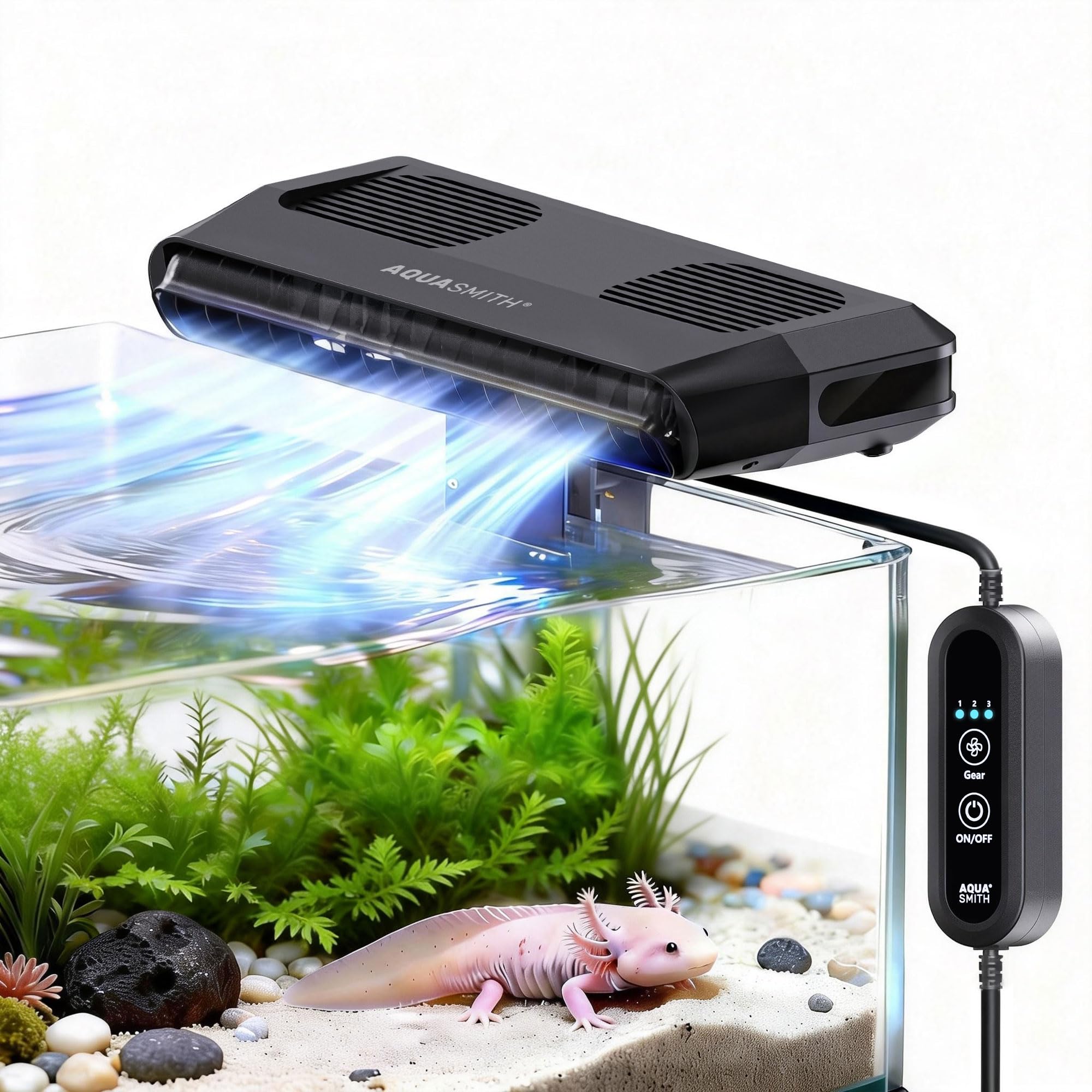
Rating: 4.4 ★ | Price: $$ | Fan Heads: 2 | Speed Settings: 3 | Clip Thickness: 0.2–0.95 in | Noise: Claimed 35 dB
The AQUASMITH AFan-PV delivers on its 35 dB promise – on low speed it’s barely audible even in a quiet room. The adjustable clamp works with rimmed and rimless tanks from 0.2 to 0.95 inches thick, eliminating the fit issues common with budget fans.
This fan suits early adopters who prioritize near-silent operation and need a single unit that fits different tank styles. It lacks the auto-temperature control of the top pick, so buyers comfortable with manual speed adjustments will get the most value.
Pros
- Ultra-quiet operation on low speed – barely audible in a bedroom
- Adjustable clamp fits both rimmed and rimless tanks without modification
- Three speed settings allow fine-tuning airflow to match temperature needs
Cons
- No temperature probe or auto on/off – requires manual monitoring and adjustment
- Cooling performance on high speed may produce noticeable airflow noise in very quiet spaces
For anyone who finds fan noise disruptive, the AFan-PV is the quietest option available. If you prefer automated cooling, consider the top pick instead.
Best for Large Tanks, 4 Fans
BAOSHISHAN 4-Head
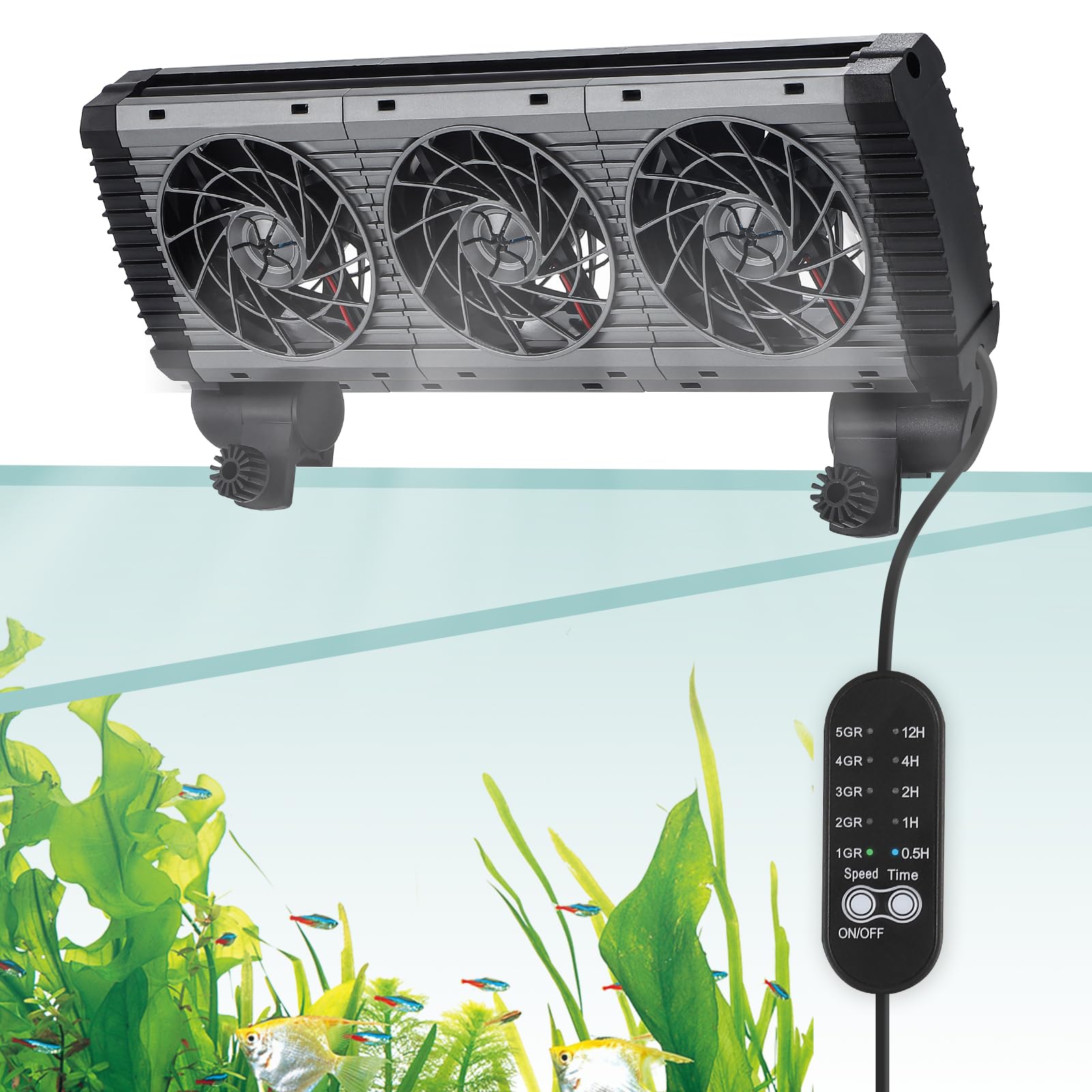
Rating: 4.3 ★ | Price: $$ | Fan Heads: 4 | Speed Settings: 5 | Timer: 0.5–12 h | Clip Thickness: Up to 0.6 in | Noise: Claimed 30–40 dB
The BAOSHISHAN 4-Head packs four fans, five speeds, and a programmable timer into a single clip-on unit – more configuration options than any comparable cooler. While the top pick automates temperature control with a probe, this fan requires manual adjustments to maintain your target water temperature. Early users confirm it can drop 3°F on a 50-gallon tank, and noise levels are lower than expected for four fans.
This setup suits larger tanks (20–50 gal) where multiple fan heads spread cooling evenly. However, the limited user history means long-term reliability is unproven – early adopters willing to test a new product will get the most value. For risk-averse buyers, the top pick or a simpler dual-fan unit with a longer track record offers more peace of mind.
Pros
- Four fan heads cover wide tank areas without hot spots.
- Quiet enough for living spaces – a rarity among multi-fan coolers.
- Five speeds and a 0.5–12 hour timer allow precise airflow control.
Cons
- No temperature probe – requires manual monitoring to prevent overcooling.
- Durability under continuous use is uncertain; some units may see performance changes over time.
For tank owners who prioritize broad coverage and manual control, this fan delivers – but confirm performance during the return window.
Best for Nano Tanks
DaToo Mini

Rating: 4.0 ★ | Price: $ | Fan Heads: 1 | Speed Settings: 2 | Clip Thickness: Up to 0.4 in | Noise: Loud for size
For nano tanks under 5 gallons, the DaToo Mini is the smallest clip-on fan available – its USB power and 2-speed control fit easily on a desktop without dominating the tank rim. It can lower water temperature by 3–7°F, enough to keep betta or shrimp comfortable in a warm room.
This fan suits nano tank keepers who value a tiny footprint and budget pricing over whisper-quiet operation. The fan noise will be present in a quiet room, and the clip may need periodic tightening to keep it from shifting. It’s a viable temporary cooling solution for desktop setups or emergency heat spikes, but not a set-and-forget option.
Pros
- Compact enough for 1–6 gallon tanks where larger fans won’t fit.
- Cools nano tanks by 3–7°F – enough to drop from 84°F to 73°F in a 2.5-gallon setup.
- USB powered – runs from any standard 5V port, no wall outlet needed near the tank.
Cons
- Noise may be noticeable in quiet rooms – the fan isn’t whisper-quiet.
- Clip tension may loosen over time, requiring occasional readjustment to stay secure.
Best for nano tank keepers who prioritize size and price over silence – the DaToo does the job if you can tolerate its hum and check the clip weekly.
Best for Small Tanks, Budget
PAIZOO PZBS-2
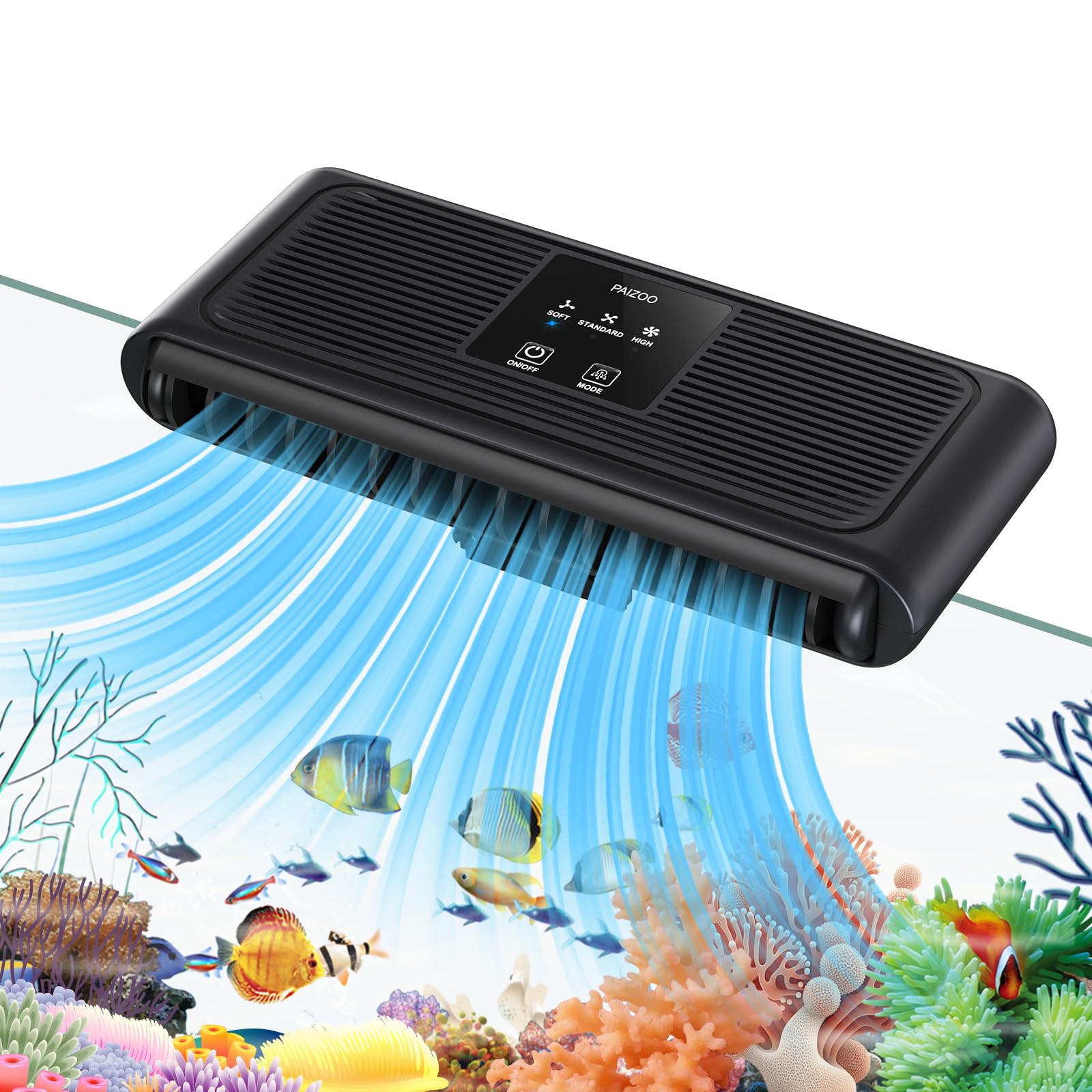
Rating: 4.2 ★ | Price: $ | Fan Heads: 2 | Speed Settings: 3 | Clip Thickness: Up to 1.02 in | Noise: Ultra-quiet claimed
The PAIZOO PZBS-2’s clip accommodates standard rimmed tanks up to 1.02 inches thick, a fit advantage over many cheaper alternatives. It drops water temperature by 4–7°F on a 10-gallon tank, offering genuine cooling for small setups. Where it falls short of top picks is long-term reliability – some units require replacement within months, making it better suited for seasonal heatwaves or low-risk applications than year-round critical use.
Pros
- Cools small tanks by 4–7°F, noticeable effect during warm spells.
- Wide clip fits standard rimmed tanks up to 1.02 inches thick.
Cons
- The USB power connector can disconnect with a light bump – worth securing the cable.
A sensible choice for temporarily cooling a small rimmed tank during heatwaves, assuming you’re comfortable with the possibility of an early replacement.
Best for Rimless Tanks
Pawfly Single Fan

Rating: 4.2 ★ | Price: $ | Fan Heads: 1 | Speed Settings: 5 | Timer: 0.5–12 h | Clip Thickness: For lipless up to 0.6 in | Noise: Mixed
The Pawfly Single Fan packs five speed settings and a timer adjustable from 0.5 to 12 hours into a compact clip-on unit. It can lower water temperature by 6–8°F in rimless tanks up to 10 gallons, making it a budget-friendly option for nano setups. However, its clip is too narrow for standard rimmed aquarium rims, so it’s best suited for rimless or thin-rimmed tanks.
Pros
- Effective cooling for small rimless tanks
- Flexible speed and timer controls
Cons
- Fan noise on higher speeds can be intrusive in quiet rooms
For nano rimless tanks, this fan delivers effective cooling and control features at a low price; avoid if you have a standard rimmed aquarium.
Best for Auto Temp Budget
PAIZOO PZBS-3
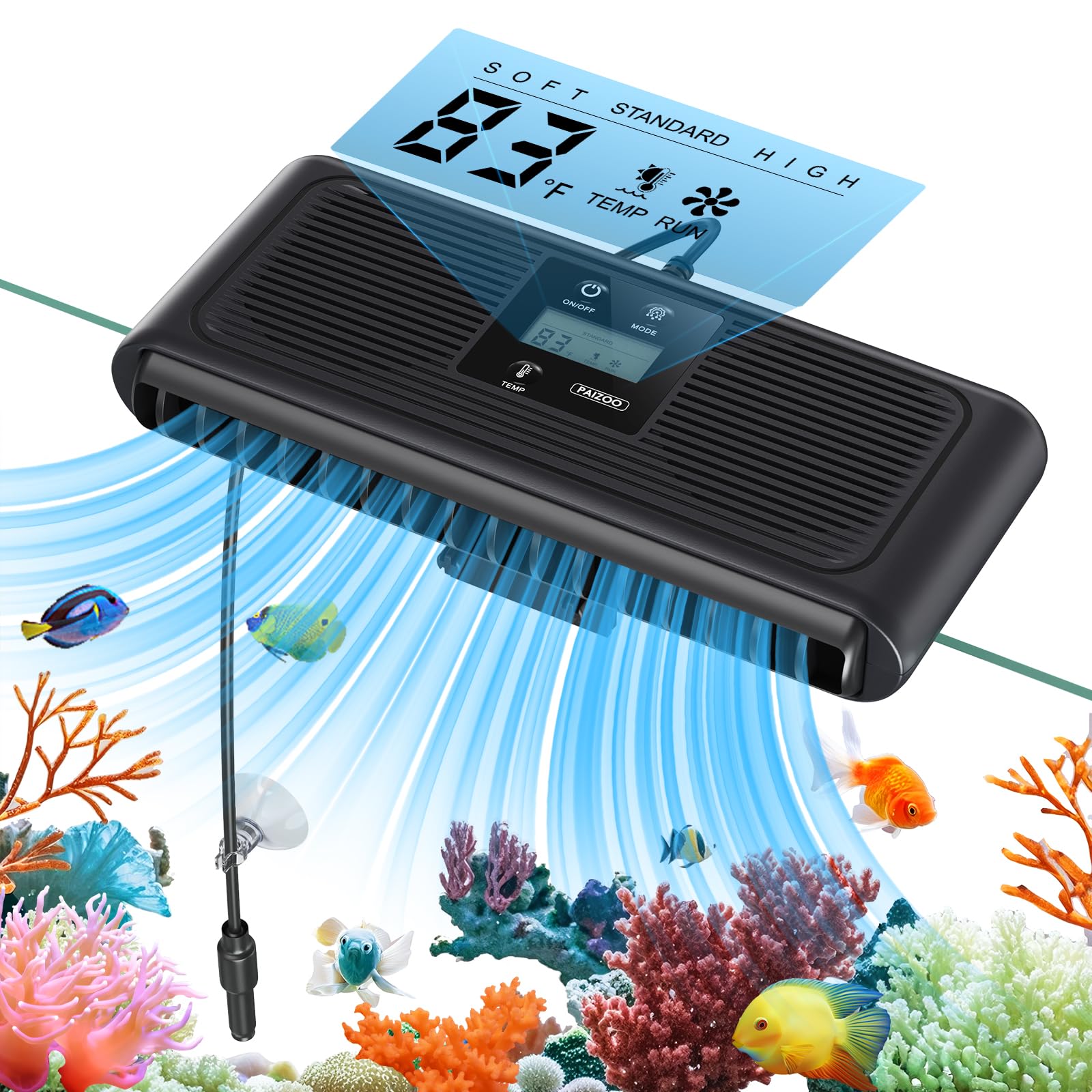
Rating: 4.1 ★ | Price: $$ | Fan Heads: 2 | Speed Settings: 3 | Clip Thickness: Up to 26 mm | Noise: Mixed | Temp Control: Auto probe
The PAZOO PZBS-3 brings integrated temperature monitoring and automatic fan control to the mid-range segment – a feature typically reserved for more expensive models. It maintains stable temperatures in tanks up to 55 gallons, with real-time LCD readout. The USB power connection can loosen with accidental bumps, and occasional units may stop operating after several months. This suits keepers who prioritize hands-off temperature management and can accommodate potential cable sensitivity.
Pros
- Integrated temperature probe enables automatic on/off based on actual tank temperature.
- Provides effective cooling for tanks up to 55 gallons in typical conditions.
Cons
- USB connection can loosen if bumped, requiring careful placement.
- Some units may stop operating within a few months – a flexible return policy is worth considering.
Best for aquarists who want automated temperature control without spending on a premium model, provided they can accept potential cable sensitivity and occasional unit longevity as part of the trade-off.
Best for Small Tanks Auto
PAIZOO PZBC-2
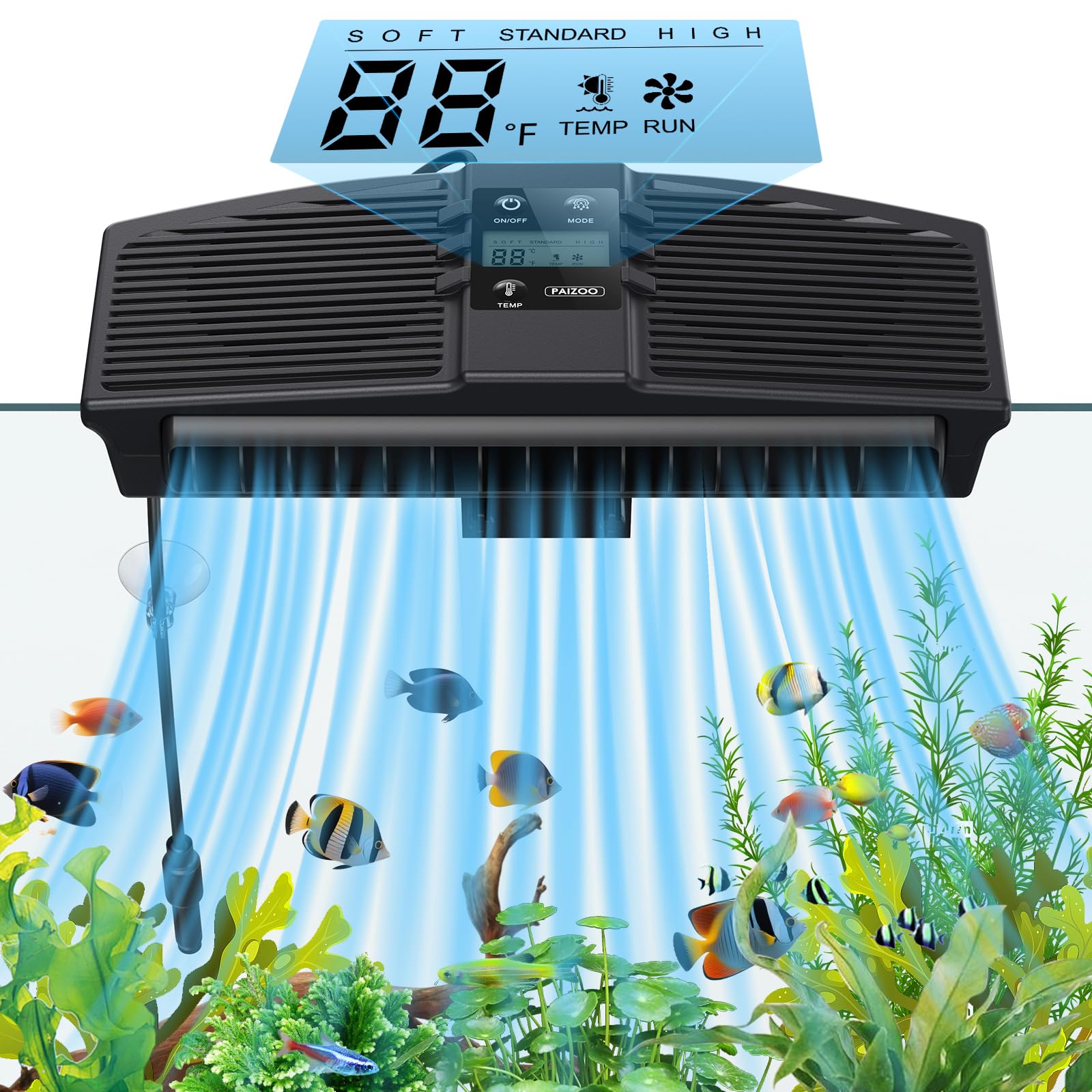
Rating: 4.1 ★ | Price: $$ | Fan Heads: 2 | Speed Settings: 3 | Clip Thickness: Up to 26 mm | Noise: Some rattling | Temp Control: Auto probe
The PAIZOO PZBC-2 steps up from the basic PZBS-3 with a larger fan body and 7W draw for slightly more air movement across small tanks. Its integrated temperature probe and LCD display enable automatic on/off control within a user-set range — handy for maintaining stable conditions in nano or backup setups. However, the fan noise can be noticeable in quiet rooms, and a single unit struggles to cool tanks over 20 gallons. This is a practical choice for very small tanks (under 20 gal) where automated cooling is desired and noise is less of a concern.
Pros
- Built-in temperature probe automates fan operation to maintain steady water temps.
- Good value for an automated cooling solution compared to basic fans.
Cons
- Fan noise may be intrusive in quiet living spaces, with occasional rattling reported.
- One unit is insufficient to cool tanks over 20 gallons without additional fans.
For nano tanks (under 20 gal) where automated temperature control is a priority and ambient noise is acceptable, this fan delivers solid value.
Best for Budget Cooling
DaToo 2-Fan

Rating: 4.1 ★ | Price: $ | Fan Heads: 2 | Speed Settings: 2 | Clip Thickness: Up to 0.5 in | Noise: Loud on high
The DaToo 2-fan can lower small tank temperatures by 5–10°F at a budget price. It is intended for rimless tanks—the clip does not secure onto standard plastic trim. Durability varies between units; some may need replacement within a few months of use.
Pros
- Can lower tank temperature by 5–10°F on small rimless setups.
- Budget-friendly price for a dual-fan cooling unit.
Cons
- Fan noise may be noticeable in quiet rooms.
A temporary cooling option for rimless tanks, best suited for short-term use during warm spells.
Best for Emergency Cooling
LONDAFISH 2-Fan
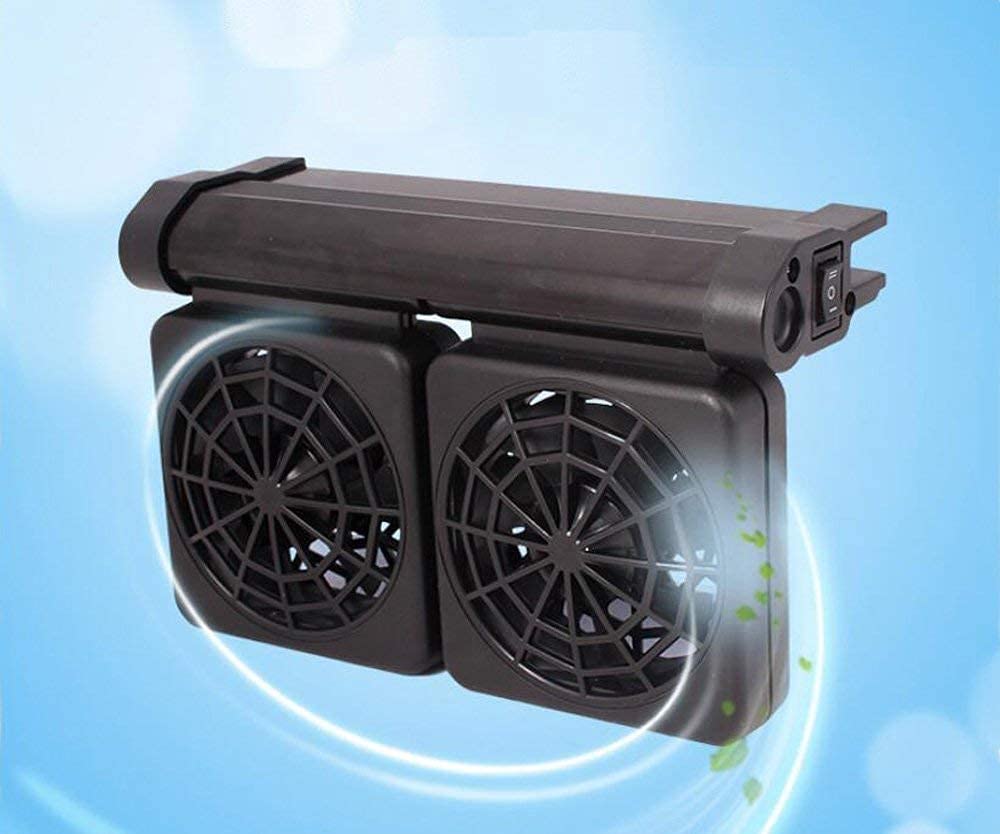
Rating: 4.1 ★ | Price: $ | Fan Heads: 2 | Speed Settings: 2 | Clip Thickness: Up to 0.47 in | Noise: Very loud
The LONDAFISH is the cheapest dual-fan aquarium chiller available, providing noticeable cooling for rimless tanks in emergency situations. It effectively drops water temperature quickly, making it a temporary fix for heat spikes. However, the noise level is high — particularly on the faster speed — and the clip design prevents attachment to tanks with standard plastic rims. Fan reliability has been inconsistent, with some units ceasing to function after short use. This is strictly a short-term solution for non-critical cooling needs, not a dependable long-term fixture.
Pros
- Drops tank temperature quickly and maintains stable levels for sensitive species.
- Costs significantly less than water chillers, offering good value for budget-conscious aquarists.
Cons
- Noise on high speed may be intrusive in quiet living spaces — better suited for garages or fish rooms.
- Durability varies: some units experience fan blade failure or power port issues within weeks.
Best reserved for rimless tanks in non-living areas where temperature rises are temporary and you can monitor the fan closely.
Best for Emergency, Rimless
Petzilla 1-Fan

Rating: 4.0 ★ | Price: $ | Fan Heads: 1 | Speed Settings: 2 | Clip Thickness: Less than 0.5 in | Noise: Very loud
The Petzilla single-fan cooler drops water temperature by several degrees on small to medium rimless aquariums, providing affordable emergency cooling. Noise levels are noticeable on high speed, so it fits best in spaces where fan hum won’t disturb. Durability varies between units, making it more practical as a backup than a daily driver.
Pros
- Cools small to medium tanks by 5°F or more – sufficient for axolotl and other temperature-sensitive species.
- Budget-friendly entry point for basic clip-on cooling.
Cons
- Clip only fits tanks with rims under 0.5 inches – not compatible with standard rimmed aquariums.
- Some units may lose cooling capability within weeks of use, so a flexible return policy is advisable.
Best suited as an emergency or temporary cooler for small rimless tanks where noise isn’t a concern and budget is tight.
How to Choose
The most important factor isn’t how much a fan claims to cool, but whether it fits your tank rim and noise tolerance.
Number of Fan Heads
More fan heads move more air, but each head increases water evaporation — and the noise level. A single head is enough for tanks under 10 gallons; two heads suit 20–40 gallons; three or four heads are for larger tanks or for splitting across multiple tanks.
The trade-off: four fans often require a sturdier clamp and may overhang the tank edge, creating an imbalance. If you don’t need heavy airflow, two heads are quieter and simpler.
Speed Settings and Timer
Variable speeds let you dial in the right balance of cooling and noise. A low speed may drop only 2°F but runs silently; high speed can add 3–4°F drop but at the cost of audible drone. Timers allow automatic shut-off at night when cooling is less critical.
The hidden trade-off: many fans with timers have no memory, so after a power outage they require reprogramming. For consistent cooling, a simple on/off with a separate outlet timer is often more reliable.
Noise Level
Decibel ratings are rarely measured in real-world aquarium environments. A fan that claims 30 dB may sound like a gentle hum from six feet away, but the same fan on a high setting can produce a whine that carries across a room. The type of noise matters more than the number: a low rumble is less bothersome than a high-pitched buzz.
Placement matters too. A fan clipped to a rimless glass tank will resonate differently than one on a plastic-rimmed tank. If the fan will be in a bedroom or living area, test it at the intended speed before committing.
Clip Thickness Compatibility
Standard rimmed aquariums have a black plastic lip that is often 0.4–0.6 inches thick. Many clip-on fans are designed for rimless or thin-rimmed tanks and simply won’t grip that lip securely. A loose clip can vibrate, fall off, or push the fan blades against the glass.
If you have a rimmed tank, look for a fan that explicitly lists a clip range above 0.5 inches, or plan to use an adapter such as a wooden block or a specialized bracket. Ignoring this spec is the most common reason for returns.
Temperature Probe and Auto-Control
Fans with a digital probe can automatically start and stop when the water temperature rises above a set point — useful for axolotls or sensitive fish. But the probe must be submerged near the water flow, and false readings can occur if it’s too close to the fan’s own airflow.
The advantage is set-and-forget cooling, but the downside is dependency on a sensor that can fail or drift. For critical tanks, a separate controller is more reliable than an integrated probe.
FAQ
Why is my aquarium fan not cooling as much as advertised?
Most fans advertise maximum cooling potential under ideal conditions (low humidity, ideal airflow). Real-world cooling is typically 2–5°F, not 6–10°F. Ambient humidity above 60% reduces evaporation sharply. To get the best drop, run the fan when your room is dry, and ensure significant surface agitation from the fan.
Can I use a clip-on fan on a rimmed aquarium?
Only if the fan’s clip explicitly fits your rim thickness (typically 0.5–0.95 inches). Many budget fans have clips that max out at 0.4 inches and will slip off a standard black rim. If yours doesn’t fit, a DIY adapter — like a small wood shim clamped between the fan and the rim — often works. Check the clip spec before buying.
How much water will I lose to evaporation with an aquarium cooling fan?
Expect to top off 1–2% of your tank volume daily. A 20-gallon tank may lose 0.2–0.4 gallons per day depending on fan speed and room humidity. This is normal; the cooling comes from evaporation. An automatic top-off system is helpful for tanks with sensitive species or when you travel.
Will an aquarium fan alone keep my axolotl tank cool enough in summer?
Yes, in most climates a good fan can maintain 64–68°F if the room is air-conditioned to around 72°F. But if your room hits 80°F, a fan alone may only drop to 74–76°F, which is too warm. In that case, combine the fan with a chiller or frozen water bottles (rotated carefully). The AQUASMITH AFan-220 with auto control is a strong match for axolotl keepers.