This post contains affiliate links. We may earn a small commission when you buy through our links — at no extra cost to you.
A quick dip with a cheap combo pen often leaves fishkeepers frustrated: the pH reading jumps 0.5 units between tests, and the manual says nothing about calibration. That’s because budget pH meters are a different beast from budget TDS pens. The electronics are more sensitive, the probes degrade faster, and the price-to-accuracy curve is steeper.
TDS/EC pens under $20 are surprisingly reliable for monitoring dissolved solids—they’re essentially simple conductivity meters. But the moment you add pH, you’re buying a chemical sensor that needs regular care. This guide separates the tools by what they actually measure well, so you can match your testing habit to the right device.
You’ll end up with either a dedicated pH pen and a separate TDS pen, or a premium multi-parameter meter. The choice hinges on whether you value simplicity or a single device—and how much maintenance you’re willing to do.
Top Picks
Best for Budget Tds/ec Monitor
HoneForest TDS Meter

Rating: 4.5 ★ | Price: $ | Measured Parameters: TDS, EC, Temp | Calibration: Factory set
This pen reads TDS, EC, and temperature with steady accuracy, using a titanium alloy probe and a backlit LCD that’s easy to read in any light. The hold function locks the reading, auto-off preserves battery life, and the operation is straightforward: dip, press, read. Temperature response can lag slightly in cold water, but for routine aquarium checks the values are dependable.
This meter is a natural fit for budget-conscious aquarium keepers who need reliable TDS/EC monitoring for RO/DI systems, water changes, or general tank health. It does not measure pH, so keep a separate test kit for pH-sensitive species. Compared to the rugged TDS-only alternative that includes a protective case, this pen is lighter and uses a simpler plastic housing — but it adds EC measurement at no extra cost.
Pros
- Measures TDS, EC, and temperature in one pass
- Titanium alloy probe resists corrosion and provides stable readings
- Backlit display and hold function simplify use in dim conditions
Cons
- Temperature reading can be slow to stabilize in colder water
- Plastic housing and lack of a carrying case reduce protection for field use
For aquarists who need TDS, EC, and temperature monitoring without paying for pH, this is the straightforward, cost-effective pick — easy to use and widely adopted.
Best for Reliable Ph Monitoring
Apera PH20 pH Tester

Rating: 4.4 ★ | Price: $$ | Measured Parameters: pH, Temp | Calibration: Auto calibration
The PH20 delivers lab-grade pH accuracy (±0.1 pH) in a waterproof, auto-calibrating package that simplifies routine monitoring for aquarium and hydroponic setups. Its single-parameter focus means no guesswork with EC or TDS — just clean, repeatable pH readings from the moment you dip the probe.
This level of precision does require attention: the probe needs periodic calibration with the supplied buffers and may eventually need replacement after a year of regular use. That makes it a better fit for hobbyists who are comfortable with basic maintenance rather than those wanting a set-and-forget device.
Pros
- Auto-calibration with included buffers simplifies routine maintenance.
- IP67 waterproof rating protects against accidental submersion.
- ±0.1 pH accuracy suitable for sensitive aquarium monitoring.
Cons
- Probe requires occasional calibration and may wear out within a year of regular use.
If you need a reliable pH-only meter and are comfortable with periodic maintenance, the PH20 gives you professional-grade accuracy at a fair mid-range price — no extra features to pay for or mislead you.
Best for All-In-One Precision
Apera PC60 5-in-1

Rating: 4.5 ★ | Price: $$$ | Measured Parameters: pH, EC, TDS, Salinity, Temp | Calibration: Auto calibration
This meter covers pH, EC, TDS, salinity, and temperature with IP67 waterproofing and a backlit display that signals stable readings. The replaceable probe extends the life of the device beyond what most pocket testers offer—important for daily use in planted tanks or hydroponic reservoirs. The tradeoff is the premium price and occasional probe durability issues that some users encounter. It’s the right call for hobbyists who want a single tool for all key water parameters and are comfortable with periodic probe replacement.
Pros
- Solid build quality with IP67 waterproofing holds up to wet conditions.
- Accurate pH, EC, TDS, salinity, and temperature readings from one device.
Cons
- Probe longevity can vary; some units may need replacement within a few months.
For aquarists who need all five parameters in a single pen and can accept the higher upfront cost, this is a capable tool—just budget for the occasional probe swap.
Best for Budget Ph/tds Combo
PmoYoKo pH/TDS

Rating: 4.1 ★ | Price: $ | Measured Parameters: pH, TDS, Temp | Calibration: Manual (included buffers)
The PmoYoKo pH/TDS meter combines pH, TDS, and temperature measurement in a single pen at a budget-friendly price — a rare feature set under $21. The calibration process can be finicky, making this best suited for beginners monitoring general aquarium conditions who are comfortable with occasional recalibration.
Pros
- Good accuracy for a budget meter
- Simple one-button operation
- Covers pH, TDS, and temperature in one device
Cons
- Calibration can be finicky; some units may have trouble holding calibration over time
For aquarists who need both pH and TDS readings without spending $100+, this is a capable entry-level option — just expect to spend a few minutes on calibration.
Best for Basic Tds/temp Only
HM Digital TDS-3

Rating: 4.6 ★ | Price: $ | Measured Parameters: TDS, Temp | Calibration: Factory set
The HM Digital TDS-3 trades the extra EC parameter for a noticeably tougher build and a carrying case that keeps the meter protected. Its ±2% accuracy and 1 ppm resolution deliver consistent readings across 0-9990 ppm, making it a solid tool for basic TDS monitoring in aquariums or RO/DI systems. Tactile buttons and a belt-clip case add practical portability.
This meter is for users who prioritize durability over feature count. The small display is readable in good light, and the lack of EC matters only if you need conductivity – for TDS-only monitoring, this pen offers rugged build at a budget-friendly price.
Pros
- Tough plastic body with protective carrying case withstands drops and storage.
- Consistent ±2% accuracy across the 0-9990 ppm range.
- Single-button operation with tactile feedback makes testing quick.
Cons
- Small display can be hard to read under dim lighting or for users with poor eyesight.
- Measures TDS and temperature only; no separate EC reading for those who need conductivity.
A rugged, no-frills TDS/temp pen for aquarists who value durability over extra features.
Best for Budget Tds/ec/temp
MEXYBE 4-in-1 TDS

Rating: 4.4 ★ | Price: $ | Measured Parameters: TDS, EC, Temp | Calibration: Factory set
The MEXYBE 4-in-1 offers TDS, EC, and temperature readings with a larger backlit screen than most budget pens. At this price, it’s a cost-effective option for routine aquarium water checks where absolute precision isn’t critical. However, unit-to-unit accuracy variance means it’s better suited for spotting trends than for sensitive fish monitoring.
Pros
- Reliable performance for the cost makes it suitable for frequent water checks.
- Simple one-button operation and clear readout make it easy to use.
Cons
- Accuracy consistency can vary between units, limiting its use for precise measurements.
For regular aquarium monitoring where trending matters more than lab-level accuracy, this pen delivers the essentials without breaking the bank.
Best for Portable Tds/ec
Varify 4-in-1 TDS
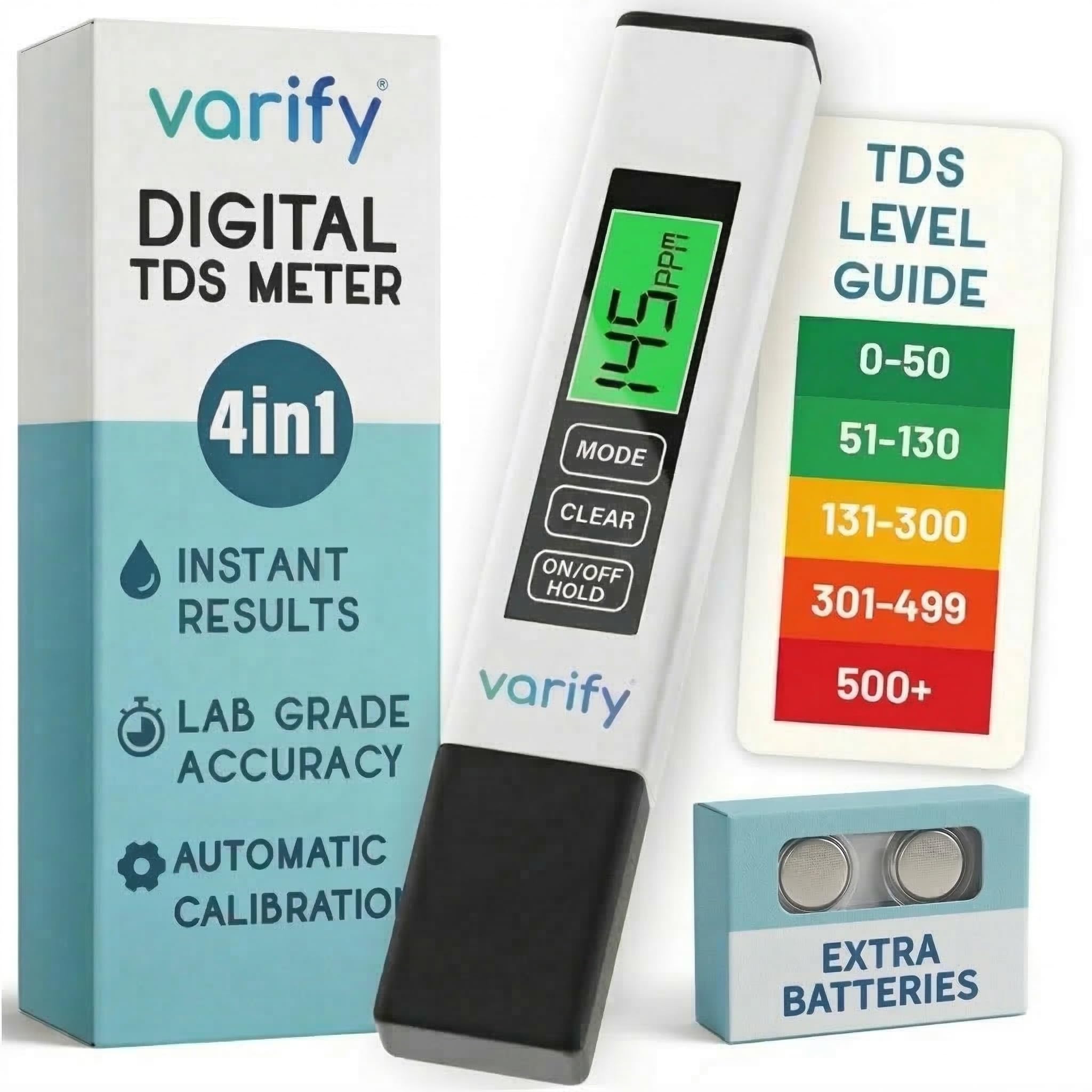
Rating: 4.5 ★ | Price: $ | Measured Parameters: TDS, EC, Temp | Calibration: Factory set
The VARIFY 4-in-1 delivers solid accuracy for the price in a compact pen that measures TDS, EC, and temperature with a clear backlit display — handy for quick aquarium checks. Its size and ease of use make it a good backup or travel companion for routine monitoring rather than a primary meter.
Pros
- Accurate TDS/EC readings for the price
- Backlit display makes it easy to read in any lighting
Cons
- Readings can show minor variation between consecutive tests
Ideal for aquarium keepers who need a quick, budget-friendly TDS/EC check without requiring lab-grade consistency.
Best for Ultra-Budget Tds
Arendsace 4-in-1
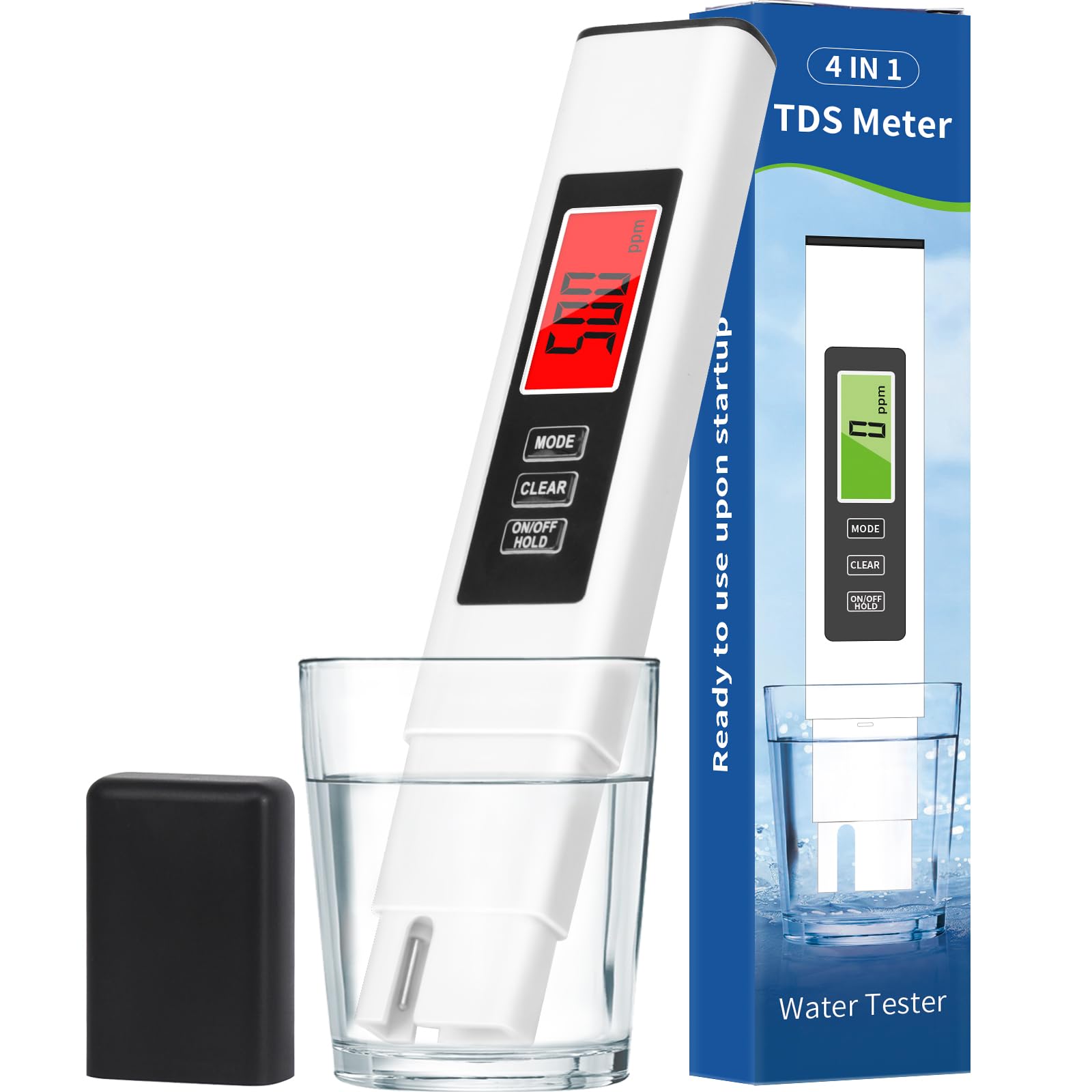
Rating: 4.5 ★ | Price: $ | Measured Parameters: TDS, EC, Temp | Calibration: Factory set
This pen gives consistent TDS, EC, and temperature readings for the price, making it a functional pick for occasional water quality checks. The color-coded indicator (green/red) doesn’t always match the ppm chart, so stick with the numeric display. It lacks pH measurement, so it suits aquarium keepers who only need conductivity and temperature monitoring, not those managing sensitive pH levels.
Pros
- Easy to use with a clear backlit display
- Solid build quality for its price tier
Cons
- Color-coded indicator (green/red) can conflict with actual ppm readings
If you need a cheap TDS/EC/temp pen for occasional use and don’t rely on the color guide, this fits the bill. For pH monitoring, look elsewhere.
Best for Budget Tds/ec
MAROJAP 4-in-1
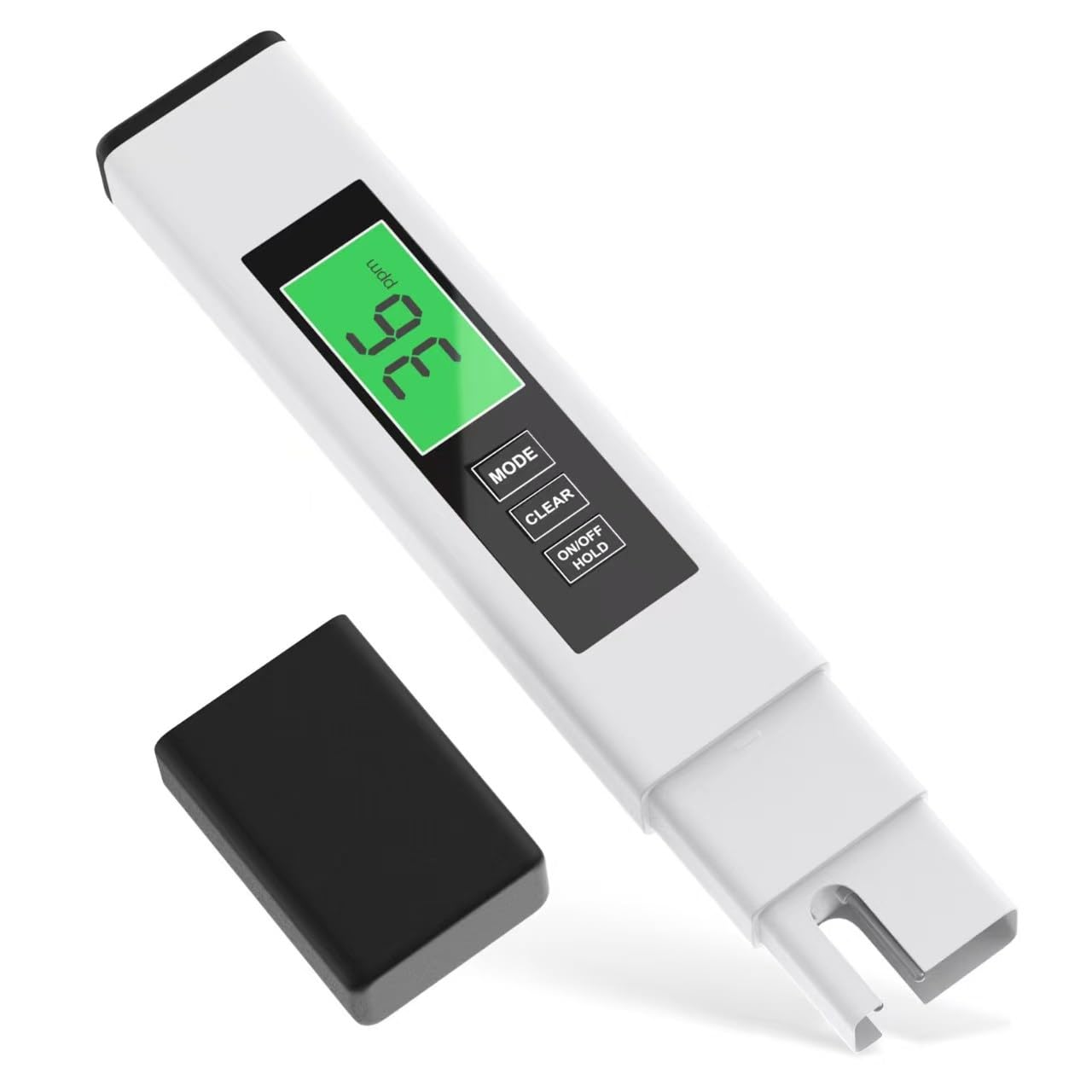
Rating: 4.5 ★ | Price: $ | Measured Parameters: TDS, EC, Temp | Calibration: Factory set
This pen matches the specs of top budget picks like the HoneForest — measuring TDS, EC, and temperature with a backlit display — and early users report it’s easy to read and accurate enough for general water checks. However, it lacks the track record of more established models, so long-term reliability under regular use is unverified.
Pros
- Measures TDS, EC, and temperature with a backlit display for easy reading.
- Delivers accurate readings for general water quality monitoring.
Cons
- Long-term reliability under regular use remains unverified — best for occasional checks.
A cost-effective entry point for casual TDS checks, but those needing consistent daily monitoring should consider a more established option like the HoneForest.
Best for Simple Tds Only
Pmlilb TDS Meter

Rating: 4.4 ★ | Price: $ | Measured Parameters: TDS (with Temp) | Calibration: Factory set
This pen delivers straightforward TDS and temperature readings at a low cost, with auto-off and easy operation. However, its lack of EC measurement makes it unsuitable for monitoring nutrients in planted aquariums—a capability the top pick offers for a similar price.
Pros
- Easy to use straight out of the box
- Accurate TDS readings for the price
Cons
- Only measures TDS and temperature; no EC or pH
A simple option for TDS checks on drinking water or RO systems, but planted tank keepers should look at the HoneForest for EC capability.
How to Choose
The single biggest mistake aquarium owners make when buying a testing pen is assuming that a low-cost combo device will accurately measure both TDS and pH—it rarely does.
Accuracy and Repeatability
Accuracy describes how close the reading is to the true value; repeatability is whether you get the same number twice. TDS/EC meters use two metal probes and measure conductivity—this is inherently stable and cheap to manufacture. A $10 TDS pen can be within 2% of a lab standard.
pH pens rely on a glass electrode that reacts with hydrogen ions. That glass ages, dries out, and drifts. A sub-$20 pH pen often has no temperature compensation and a short-lived probe, leading to readings that swing 0.3–0.5 pH units within minutes. For sensitive fish like discus or crystal shrimp, that drift matters.
Number of Measured Parameters
More parameters sounds like a bargain, but each extra sensor introduces a new point of failure. A 3-in-1 TDS/EC/temp pen uses a single conductivity cell plus a thermistor—simple and durable. Adding pH requires a separate glass electrode and a high-impedance circuit, which is why the cheapest combo pens often have a useless pH function.
If you only need to check whether your RO/DI system is working, a TDS-only pen is enough. Planted-tank keepers need EC for nutrient dosing. Shrimp breeders often want pH, TDS, and GH/KH separately. Match the parameter count to your actual routine, not the spec sheet.
Calibration Ease and Stability
TDS/EC pens are factory-calibrated and rarely drift because conductivity measurement is straightforward—you don’t need to recalibrate. pH pens, by contrast, drift with every use and require calibration in buffer solutions (usually pH 4 and pH 7) every 1–2 weeks. Some pens have auto-calibration that guides you; others require manual knob twisting.
If you’re not willing to calibrate, you should not buy a pH pen. Every cheap pH meter review thread is filled with complaints about ‘inaccurate readings’ that trace back to expired buffers or skipped calibration. Budget pH pens also lack automatic temperature compensation, so readings shift with tank temperature.
Probe Durability and Replaceability
The probe is the most stressed part of any water testing pen. TDS probes are metal pins (often titanium alloy) that last years with occasional cleaning. pH probes are glass bulbs that dry out if left in air, wear down over months, and eventually stop responding. Replaceable probes extend the life of the meter—non-replaceable ones turn the whole pen into e-waste.
Premium meters like the Apera PC60 let you swap the probe for about $50. Most budget pens seal the probe into the body. That makes the initial price attractive but the total cost of ownership higher if you test frequently. For occasional use, a sealed probe may last a year; for daily testing, invest in replaceable.
Waterproof Rating vs. Actual Water Resistance
Many pens claim to be waterproof, but the standard IP67 means it can survive submersion in 1 meter of water for 30 minutes—not that it’s designed for constant wet conditions. Cheap ‘waterproof’ pens often leak at the cap or battery compartment after a few months. That kills the electronics.
A pen that floats (like some Bluelab models) helps if it drops into the tank, but floating doesn’t guarantee sealing. The safest approach is to keep any pen out of the water except for the probe tip. If you often drop things in your sump, a pen with IP67 and a lanyard is worth the premium.
FAQ
Can I use a TDS pen to test the pH of my aquarium?
No. TDS pens measure total dissolved solids via electrical conductivity. pH pens use a glass electrode sensitive to hydrogen ions. The two sensors are entirely different. If you need pH, you must buy a pH pen or a multi-parameter meter that includes pH. A TDS-only pen will not give you any pH information.
How often should I calibrate my aquarium pH pen?
Calibrate your pH pen every 1-2 weeks if you use it regularly, or before every critical measurement if testing sensitive fish. Use fresh buffer solutions (pH 4.0 and 7.0). Pens that are factory-calibrated (most TDS pens) need no user calibration, but pH pens drift and require periodic adjustments. Skipping calibration is the main reason hobbyists get inaccurate readings.
What does TDS measure in an aquarium, and how does it differ from hardness?
TDS (total dissolved solids) measures all dissolved ions in water—including carbonates, chlorides, and metals—in parts per million. General hardness (GH) specifically measures calcium and magnesium. A TDS pen gives you a single number for everything, while hardness kits differentiate minerals. For planted tanks and shrimp, you often need both TDS for overall concentration and GH/KH for mineral balance.
Is a pH pen or liquid test kit more accurate for aquariums?
A well-maintained pH pen is more accurate than a liquid test kit because it provides a continuous numerical reading rather than a color match. However, a liquid kit doesn’t drift and never needs calibration. For most freshwater community tanks, liquid kits are sufficient. For sensitive species or precise dosing (e.g., CO2 injection), a calibrated pH pen is the better choice.