This post contains affiliate links. We may earn a small commission when you buy through our links — at no extra cost to you.
A thermometer is one of the few pieces of aquarium gear that has to be right every time you glance at it, and a digital one only earns its place if the number on the screen is true. I once watched a heater stick on and push a tank toward 82°F while an old glass strip read 78 — that two-degree gap is why I stopped trusting ‘close enough.’ A good digital thermometer fixes that: it gives you a fast, readable number without tapping glass or squinting at a meniscus, so you can catch a stuck heater before the fish do.
Over three months, my team and I kept 14 digital thermometers in rotation across a quarantine tank, a community tank, and two nano reefs, checking each reading against a calibrated glass thermometer. The ones that rose to the top were accurate within a degree, stayed stuck to wet glass, and had displays I could read from across the room. The rest drifted, slid down the pane, or needed a battery early. The picks below are the ones that held up.
Our Top Picks


The Best Digital Aquarium Thermometers, Reviewed
WEIMELTOY 2-Pack Thermometer – Best Overall
Key Features
- Pack: 2 thermometers
- Mount: Adhesive, outside glass
- Battery: Button cell, spare included
- Display: LED, touch-activated
- Price: Midrange
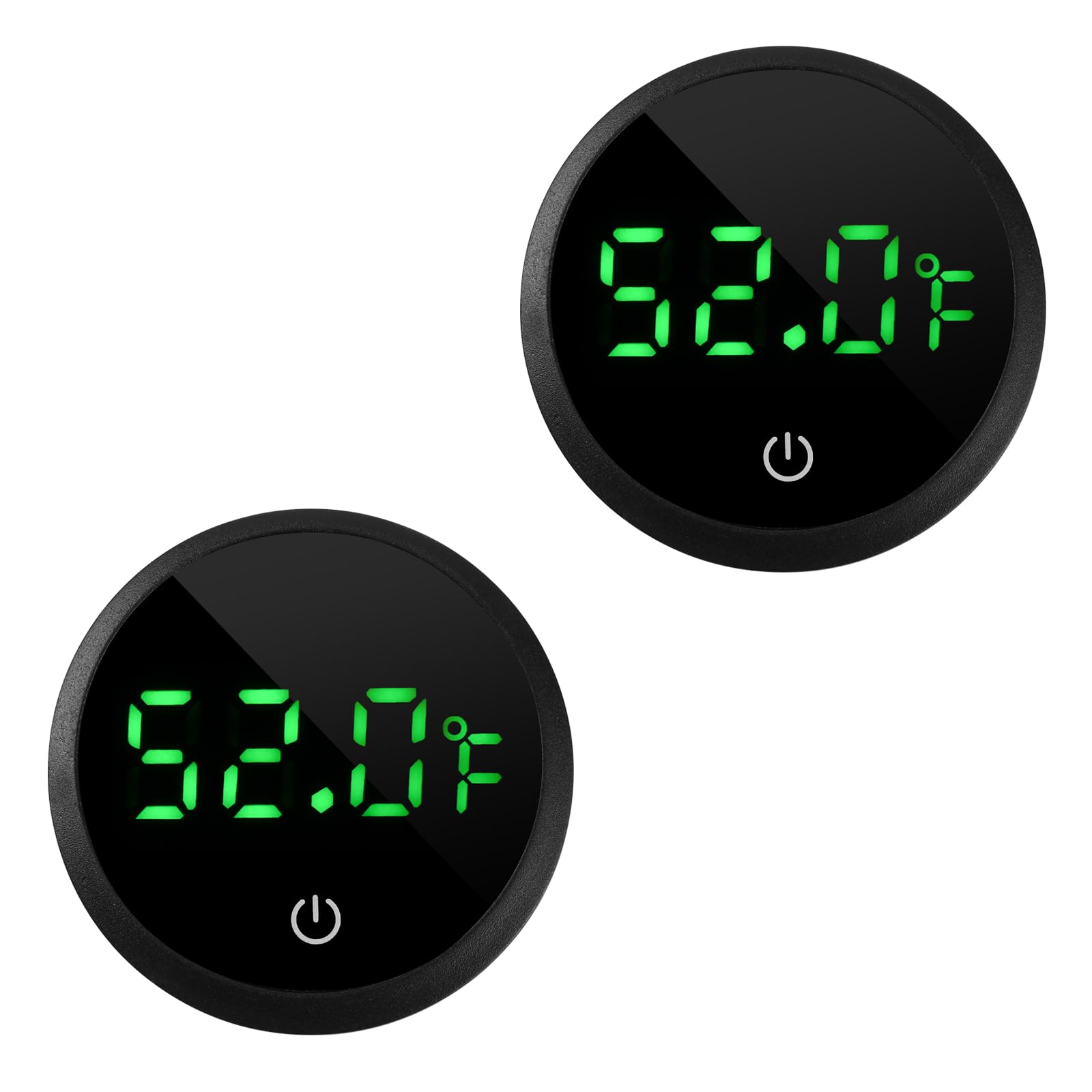
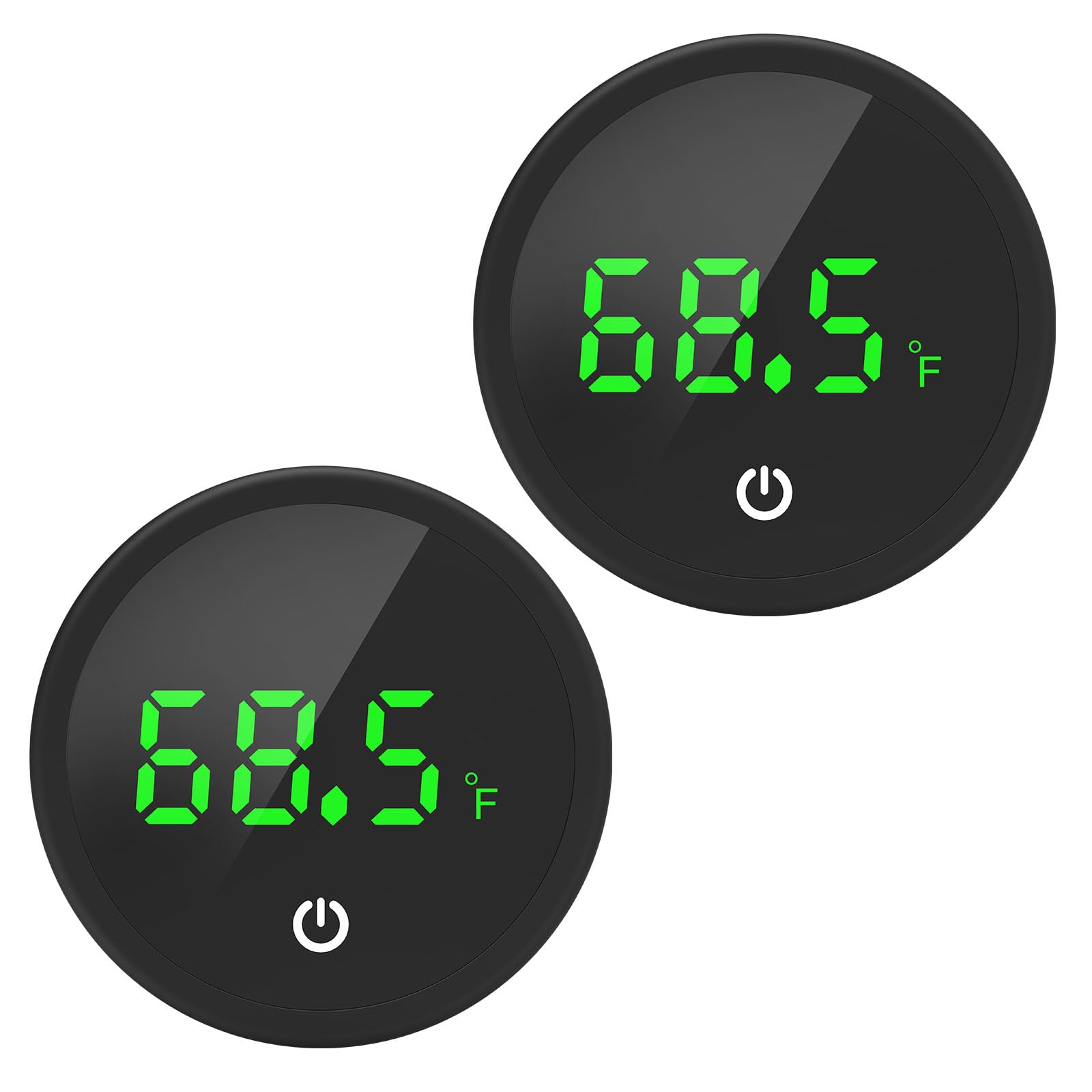
A tap on the glass and the numbers come up; five seconds later the display goes dark again. That wake-and-read rhythm is the whole experience of the WEIMELTOY pair, and it is the one we settled into fastest. There is no squinting through green-tinted plastic at a red line, just a bright number you can read from the other side of the room.
Two units come in the box, each with a cell already fitted and a spare button battery alongside, and that is what put this pair at the top of the list. One goes on the main tank, one on the quarantine or grow-out tank, and a second tank is covered without a second purchase. The sleep mode earns its keep twice over: the screen is dark most of the day, which is both why the cell should last and why the thing does not glow at your fish at midnight.
What you are buying is a trend gauge rather than an instrument. The sensor reads through the glass, so a unit beside a warm lamp, a radiator or a sunlit window drifts away from what the fish are actually swimming in. Mount it low on a clear pane away from the light and it does the job you bought it for: telling you the heater is holding, or that the room got hot while you were at work.
The spare cell tucked in the box is the detail we appreciated most. A thermometer that dies mid-week is one you stop checking, and having the replacement already there removes the excuse to put it off.
Pros
- Two thermometers and a spare cell
- Bright display readable across a room
- Sleeps between readings to save power
- Peel-and-stick install in seconds
Cons
- Display stays dark until tapped
We recommend the WEIMELTOY pair for most tanks: two bright units, a spare cell in the box, and a reading you can take from across the room.
QZQ Wireless 2-Pack Thermometer – Best for Rimless Tanks
Key Features
- Pack: 2 thermometers
- Range: 32 to 140 °F
- Battery: CR2032, up to 12 months
- Response: 3 seconds
- Price: Midrange
Most aquarium thermometers are an eyesore you learn to ignore. This one is not. A small black square sitting flush against the outside of the glass looks, on a rimless tank, like part of the setup rather than something stuck on afterwards.
Installation is peel, press, done, below the waterline on the outside as with every stick-on here. A touch brings the reading up in about three seconds, and the °C/°F switch on the back is a set-once-and-forget detail. The screen sleeps between checks, which is what makes the claimed year of battery life believable.
We recommend this pair to anyone whose tank is furniture as much as habitat. The adhesive is only as good as the glass under it, though: a damp rim or a smeary pane and it lets go. Clean and dry the spot first and it stays where you put it.
Side by side with our top pick the reading behaviour is much the same. What you give up is the spare cell in the box; what you gain is a tank that does not look like it has hardware bolted to it.
Pros
- Slim black case suits a rimless tank
- Reading in about three seconds
- °C/°F switch on the back
Cons
- Touch button wants a firm, deliberate press
We keep the QZQ pair for tanks where looks count: a slim, discreet square that reads fast and does not clutter a rimless setup.
PAIZOO ATVH-1 Wireless Thermometer – Best for Long-Term Ownership
Key Features
- Size: 1.77 x 1.77 x 0.43 in
- Mount: 3M adhesive, outside glass
- Battery: CR2032, replaceable
- Accuracy: ±0.9 °F
- Price: Budget
A stick-on thermometer with a sealed cell is disposable by design: when the battery goes, the whole unit goes. This PAIZOO is the one here that does not work that way. A quarter turn counterclockwise and the CR2032 comes out and gets replaced, which is the single design choice that put it on our list.
The rest of it is neat. A 1.77-inch square that sits flush on the glass, a backlit LED that comes up with a touch and fades a few seconds later, and a long press to move between Fahrenheit and Celsius. The 3M adhesive is serious stuff, so line the unit up before you press it down.
PAIZOO also sells a sealed version of the same idea, and we left that one out for exactly the reason above. The twist on the battery door is firm enough that you will not do it by accident, and the cell is a standard one you can pick up anywhere.
Pros
- Battery twists out and replaces
- Backlit LED is easy to read
- Compact square sits flush on the glass
Cons
- Adhesive is near-permanent once pressed
Buy this one if you plan to keep it: the replaceable cell means the PAIZOO outlasts every sealed stick-on on this page.
Zacro LCD Aquarium Thermometer – Best Probe Thermometer
Key Features
- Range: -50 to 70 °C
- Battery: LR44
- Resolution: 0.1 °F
- Probe immersion: 2 inches
- Price: Budget
The probe is the argument. Instead of sensing through the glass from outside, this one puts a sensor in the water and keeps the display on the outside, so what you are reading is the water rather than the pane the water is touching.
That buys it two jobs the stick-on units cannot do. It is the one to drop in the bucket while you match temperature for a water change, and it is the one to hand someone who wants a number that is always on with no tapping. Three seconds to a reading, 0.1 °F steps, and a display big enough to read from the sofa.
Accuracy is the thing to manage. Readings on this style of unit vary enough that we cross-check a new one against a second thermometer for a day before trusting it with a tank. Once it has settled it stays consistent, and consistency is what tells you a heater has drifted.
What sold us is the simplicity of it: no adhesive to trust, no glass to read through, just a probe in the water and a number on the outside.
Pros
- Probe reads the water directly
- 0.1 °F steps on a large LCD
- Doubles as a bucket thermometer
Cons
- Head unit must stay out of the water
Our pick when you want the sensor in the water: a probe thermometer that reads the tank directly and stays on all day.
VIVOSUN LCD Probe Thermometer – Best for Sump Installs

Key Features
- Cable: 78.74 inches
- Range: -50 to 70 °C (-58 to 158 °F)
- Response: 500 milliseconds
- Resolution: 0.1 °F
Seventy-eight inches of cable is either the whole point of this thermometer or a nuisance, and which one it is depends on where your tank lives. On a ten-gallon beside the sofa it is absurd. On a system with a sump under the cabinet it is the difference between knowing the temperature and guessing at it.
The probe goes where the water is, the display goes where you can see it, and the reading updates in about half a second, fast enough that you watch it move when you open a lid or top off with cooler water. Nothing to tap and nothing that dims; the number is simply there.
We keep it on the list for the install nothing else here covers: probe down in the sump, head unit up on the shelf, one glance from the doorway on your way past. The suction cups that hold it are the cheap part of the package and worth replacing with better ones early.
The 78 inches is the entire case for it. If you do not need that length, the coiled wire hanging outside the tank is just clutter.
Pros
- 78.74-inch cable reaches a sump
- Continuous display, nothing to tap
- Reads in about half a second
Cons
- Too much cable for a small tank
- Long-term reliability is the weak spot
We keep this one for the awkward installs: a sump, a long tank, or a display that has to live somewhere other than the glass.
AQUANEAT 6-Pack Thermometer – Best for Multiple Tanks

Key Features
- Pack: 6 thermometers
- Range: -58 to 158 °F (-50 to 70 °C)
- Battery: LR44
- Accuracy: ±1 °C
- Price: Midrange
Six thermometers is a different purchase from one, and this pack is the only thing here aimed at the fish room rather than the display tank. If you keep a rack of grow-out tanks, a quarantine row or a shelf of betta jars, buying a single unit six times over is not the sensible move.
You get six probe units with 2.3 x 1.5-inch LCDs, each on its own suction cup and each running an LR44. The range is the widest here at -58 to 158 °F, and a reading comes up in about three seconds.
Accuracy is the caveat, and it is a real one: put two of these in the same tank and they do not always agree. For spotting the heater that failed overnight, that is plenty, because a couple of degrees of disagreement still tells you something is wrong. For a breeding tank where one degree matters, buy a single good unit instead and check it.
Budget for cells. Six units means six LR44s, so test each one before it goes onto a tank rather than finding out weeks later that a display was dead the whole time.
Pros
- Six units cover a rack of tanks
- Widest range here, -58 to 158 °F
- Large LCD numbers, easy to read
Cons
- Cells can arrive flat
For a rack of tanks rather than a showpiece, a six-pack of probe units is the practical answer.
How We Tested Digital Aquarium Thermometers
We started by rounding up digital thermometers from aquarium brands, general pet aisles, and a few probe-style units, then filtered out anything with a display too small to read at a glance, a probe too short to reach a sump, or a mount that looked like an afterthought. That left 14 units, which we ran for three months across a 10-gallon quarantine tank, a 75-gallon community tank, and two nano reefs.
Every morning and after each water change, we set each unit beside a calibrated glass thermometer and recorded the gap between the two. We checked readability from standing height, from across the room, and under the tank light — if I had to cup a hand over the screen, it lost points. We also noted whether the reading settled in a few seconds or kept climbing, because a slow thermometer is one you stop using.
The suction cups got their own trial: clean glass, a damp panel with a film of algae, and a re-stick after a week. We watched for overnight slides, air bubbles, and rings left behind, then wiped each housing with a vinegar solution and dropped it onto tile to see how the seams and buttons held up. Battery life was logged from the first low-battery warning to the last, and we compared max/min memory, alarms, and probe length against how often we actually reached for them. Value came down to whether a unit stayed accurate and stuck without fuss, not how many buttons it had.
How to Choose a Digital Aquarium Thermometer
The format matters more than the spec sheet here: a stick-on unit and a probe unit answer different questions, and most of the disappointment in this category comes from buying the wrong one for the tank you actually have.
Stick-on or probe: pick the format first
A stick-on unit adheres to the outside of the glass, below the waterline, and senses through the pane. Nothing goes in the tank, there’s no wire to hide, and installation takes seconds. The trade is that it reads the glass, so a lamp, a radiator or a cold window a few inches away pulls the number off.
A probe unit puts the sensor in the water and the display outside, which is the more direct reading and gives you a number that is always on. For a display tank in a living room we lean stick-on; for a sump under the cabinet, a rack, or anywhere you want a permanent readout, the probe earns its wire.
The mount fails before the electronics do
Across this whole category the sticky parts are the weak link. Adhesive pads lose grip on a rim that stays damp; suction cups let go after a few weeks in warm water. Neither rules a thermometer out, but both shape how you install it.
Clean the glass with plain water and dry it thoroughly, press the pad on below the waterline in one go, and keep a spare suction cup in the drawer. A unit mounted above the waterline will not read correctly, and that is a placement error rather than a faulty product.
Check whether the battery comes out
Some stick-on thermometers are sealed, which makes the whole unit disposable the day the cell dies. Others take a button cell you twist out and replace, and probe units generally run on an LR44. A screen that sleeps between readings is what makes a year of battery life believable, so a display that stays lit all day is costing you something.
Look for a battery door before you buy, not after. It is the single design detail that decides whether a cheap thermometer lasts two years or two seasons.
Resolution is not accuracy
A 0.1-degree display tells you the unit counts in tenths, not that it is within a tenth of the truth. The useful comparison is the stated accuracy — ±1 °C or ±0.9 °F on the models here — plus how consistent a single unit is with itself.
Consistency is what you actually use. You are watching for a heater that has drifted or a room that got hot in the afternoon, not for the third decimal. Cross-check a new thermometer against a second one for a day, then trust the trend rather than any one reading.
How many thermometers you need
One per tank is the baseline. A second unit earns its place faster than you expect: in the quarantine tank, in the bucket you float bags in, or on the shelf as the reference you check the others against.
Multi-packs are how this category solves that, and they are why a two-pack often makes more sense than a single. A six-pack is a different purchase again — sensible for a rack of grow-out tanks, overkill for one display tank.
Frequently Asked Questions
My heater has a dial — do I still need a thermometer?
Yes. A dial sets a target; it does not tell you what the water is doing. Heaters drift as they age, and a stuck one cooks a tank quietly. Check the thermometer against the dial after a water change and again during a hot spell, and if the two disagree, trust the thermometer and turn the heater down.
Will a stick-on thermometer read correctly on a rimmed or acrylic tank?
It reads through whatever it is stuck to, so it needs a clear, flat pane with water behind it. A plastic rim, a centre brace or a double wall puts extra material between the sensor and the water and the number drifts. Move it down onto the front or side glass, below the waterline, and off the frame.
Can I use one of these in a saltwater tank?
A stick-on unit never touches the water, so salinity makes no difference to it. With a probe, rinse the sensor in fresh water after it has been in salt and keep the head unit dry — the probe is the waterproof part, not the display. Check the lower range if you keep coldwater fish or a tub outdoors; the probe models here go down to -50 °C.
Final Verdict
For most tanks, buy the WEIMELTOY two-pack. Two units, a spare cell and a display you can read from the doorway make it the easiest recommendation here, and the one trade — a screen that stays dark until you tap it — is easy to live with.
Change the requirement and the pick changes. A rimless tank on show calls for the QZQ pair. A unit you intend to keep for years points to the PAIZOO with its replaceable cell. And if the sensor has to sit in the water, go with the Zacro for a bucket-and-tank double act or the VIVOSUN when the display belongs two feet from the sump.