This post contains affiliate links. We may earn a small commission when you buy through our links — at no extra cost to you.
Dwarf hairgrass is a popular foreground carpet plant, but many aquarists find their first clump turning brown within days. That melt is not a sign of failure—it’s the plant transitioning from emersed to submerged growth. Success starts with choosing the right product format for your tank’s light and CO2 levels.
Tissue culture cups guarantee pest-free starts and consistent quality, but they require strong light and often CO2 injection to reach full carpet density. Non-tissue live plants are cheaper and arrive established, but quality varies widely. This guide breaks down the key differences so you can pick a dwarf hairgrass that fits your setup and budget.
Portion sizes are frequently smaller than product photos suggest, so ordering extra is wise. Understand these trade-offs and you’ll avoid common frustrations.
Top Picks
Best for Serious Aquascapers
Greenpro DHG TC

Rating: 4.4 ★ | Price: $$$ | Type: Tissue culture | Portion Size: 1 cup | Lighting/CO2: High light, CO2 | Review Count: 710
Greenpro’s Dwarf Hairgrass arrives in a sterile cup with vibrant green color and zero pests—a direct result of tissue culture propagation. Under high light and injected CO2, runners spread quickly and form a dense carpet within weeks, matching what serious aquascapers expect from a premium plant.
Growth is consistent when provided with proper conditions: moderate to high light and CO2 supplementation. Without those inputs, the plant struggles to develop — a boundary that matters for low-tech setups but not for the targeted aquascaper.
This cup suits hobbyists who prioritize sterility and strong genetics over cost. The portion size is smaller than many expect (about half a typical cup), so a 20-gallon tank may need multiple cups — a consideration for those on a tighter budget. For small tanks (10 gallons or less), a single cup provides ample starting material.
Pros
- Healthy, vibrant plants with deep green color and no pests on arrival.
- Fast shipping with well-insulated packaging ensures live arrival.
- Strong growth under high light and CO2, producing runners and carpet quickly.
Cons
- Cup may contain less plant material than expected — around half full in some cases.
- Per-portion cost is higher than non-tissue-culture alternatives, making it less economical for large tanks.
For the aquascaper who wants a clean start with no snails or algae, this cup delivers predictable carpet growth — worth the premium for small-to-medium high-tech tanks.
Best for Budget-Conscious Aquarists
Planterest DHG TC

Rating: 4.4 ★ | Price: $ | Type: Tissue culture | Portion Size: 3 cups | Lighting/CO2: High light, CO2 | Review Count: 479
Planterest delivers three tissue culture cups at a price that undercuts the competition, and each cup arrives vibrant green, pest-free, and easy to divide. While the top pick offers more consistent growth under high light, this budget alternative shows some variability — portions may stall or melt without CO2 injection, so it favors aquarists who can provide that support. The BOGO deal makes it a solid entry point for budget builds, though the added effort required to avoid die-off is real.
This pack suits hobbyists on a tight budget who already plan to use CO2 or a dry start method. Growth inconsistency in low-tech setups means this isn’t a set-and-forget carpet, but for those willing to dial in lighting and supplementation, the value per cup is hard to match. Skip it if you want reliable results from a standard tank with basic light alone.
Pros
- Arrives vibrant green and healthy, ready to divide and plant.
- Delivers strong value with three cups for the price of one.
- Tissue culture format is easy to separate and plant evenly.
Cons
- Carpet formation may stall without strong lighting and CO2 injection.
- Transition melt can leave sparse patches before plants reestablish.
A smart pick for budget-focused aquarists willing to provide strong light and CO2 — expect to invest effort for the carpet this pack promises.
Best for Experienced Hobbyists
Marcus Fish Tanks DHG

Rating: 4.0 ★ | Price: $$ | Type: Non-tissue live | Portion Size: 1 plant (BOGO) | Lighting/CO2: High light, CO2 | Review Count: 436
This live dwarf hairgrass from Marcus Fish Tanks comes with a buy-two-get-one-free promotion that makes it one of the most cost-effective ways to start a dense carpet—undercutting sterile tissue culture cups on a per-portion basis. Unlike tissue culture, these are non-sterile plants; when healthy, they arrive with established root systems and a natural green color that transitions quickly under strong light and CO₂. Quality is not consistent, though, and some batches may include weakened or dying shoots.
This plant is best matched with experienced aquascapers running high-tech setups who are willing to handle occasional failures. Portion sizes can be smaller than the listing images imply, so plan on dividing carefully and having a few extra plants on hand to fill gaps. If a flawless initial planting is non-negotiable, the top-pick tissue culture option delivers more predictable results.
Pros
- Arrives with bright green coloration and solid initial health when conditions are right.
- Buy-two-get-one-free pricing effectively halves the cost of stocking a tank, giving the best per-plant deal in this comparison.
- Comes from a store with a long-standing focus on live aquarium plants, adding a layer of confidence in handling.
Cons
- Portions can arrive noticeably smaller than the advertised 2–3 inch clumps, making a full carpet harder to achieve without additional plants.
- Occasional shipments contain dead or dying grass that fails to recover, requiring replacement.
If you’re equipped to handle the possibility of some duds and want to minimize upfront plant cost, the BOGO structure here is hard to beat—just keep a few backup stems ready.
Best for High-Tech Setups
Mainam DHG TC

Rating: 4.1 ★ | Price: $$ | Type: Tissue culture | Portion Size: 1 cup | Lighting/CO2: High light, CO2 | Review Count: 321
Mainam’s tissue culture arrives pest-free and with vibrant green blades, matching the sterile starts offered by higher-volume brands. Where the top pick’s tissue culture has a longer record of consistent growth, Mainam delivers similar sterility at a slightly lower price—provided you can meet its lighting and CO2 demands.
Experienced aquascapers running small, high-tech tanks will appreciate the clean start and manageable portion size for nano layouts. In low-tech or beginner setups, plants can melt quickly before a carpet establishes. If you lack CO2 injection and intense lighting, this tissue culture will struggle to spread.
Pros
- Arrives with bright green, undamaged blades and no signs of pests.
- Thrives in high-light, CO2-injected tanks, forming a dense foreground carpet.
- Sterile tissue culture eliminates the risk of snails, algae, or unwanted hitchhikers.
Cons
- Plants can decline or melt without strong lighting and CO2 supplementation.
- Tissue culture cup may contain less material than expected, potentially requiring extra purchases for full coverage.
For nano tanks with established CO2 injection, the Mainam tissue culture provides a clean start and a portion size that makes sense for compact foregrounds.
Best for Small Tanks
Generic DHG TC
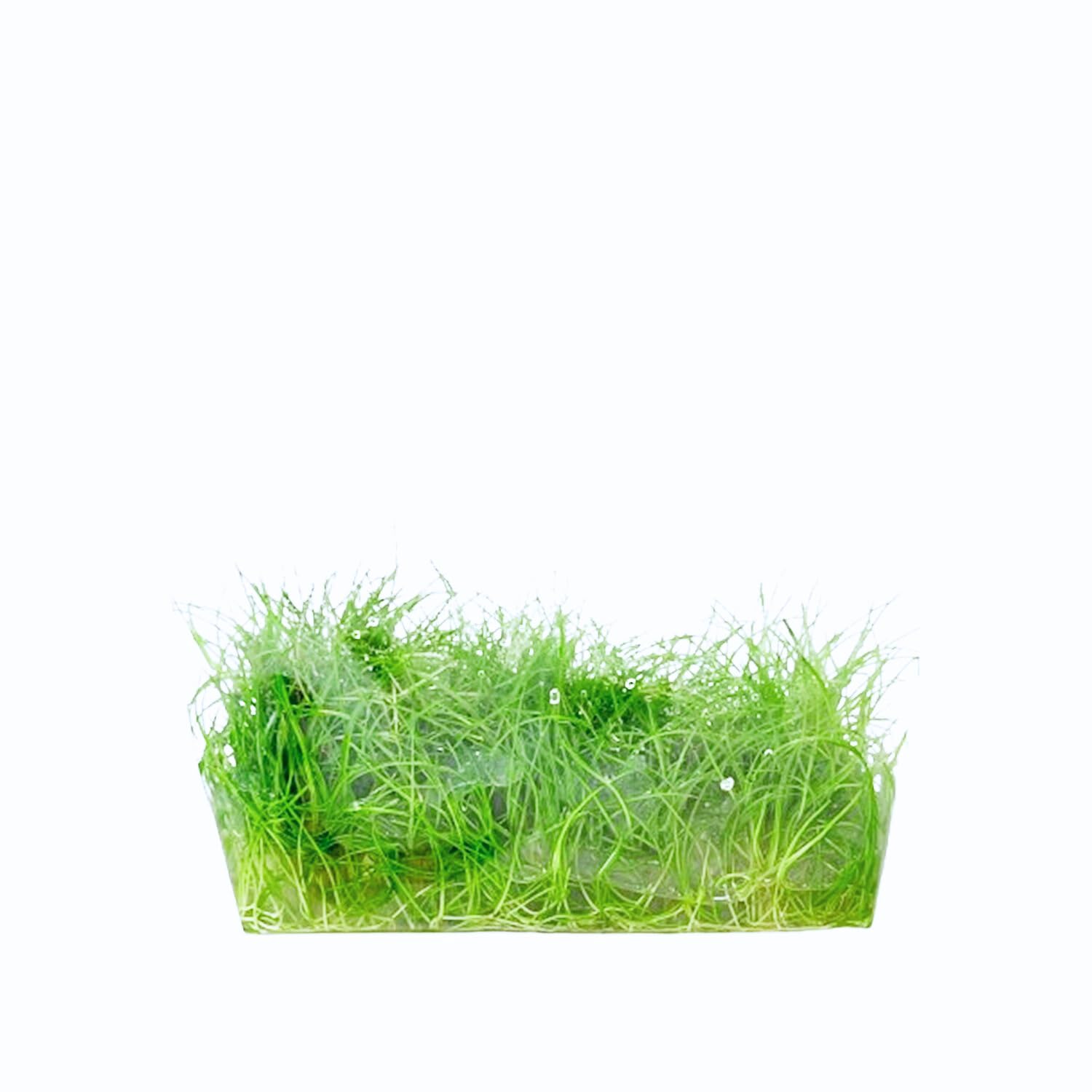
Rating: 4.1 ★ | Price: $$ | Type: Tissue culture | Portion Size: 1 cup | Lighting/CO2: High light, CO2 | Review Count: 56
Unlike the more established mid-range option (B07VH6D61V) which has a longer track record, this newer listing arrives with noticeably strong root systems and vigorous early growth. The sterile tissue culture format eliminates pest concerns, and the cost per cup is competitive for buyers who only need a modest planting area.
This is a good fit for aquarists starting a small scape or those who want to test a budget-friendly tissue culture before committing to larger volumes. Buyers needing a full-carpet coverage for a 20-gallon tank will likely require multiple cups, and the product’s shorter market presence means long-term growth consistency is less documented compared to widely tested brands.
Pros
- Arrives healthy with strong roots and shows early growth vigor.
- Priced competitively for tissue culture — good value for a small start.
- Sterile tissue culture eliminates risk of algae or pest hitchhikers.
Cons
- Portion size may differ from product photos — worth verifying upon arrival.
- Each cup provides a modest start; multiple cups are needed for a full carpet in larger tanks.
A cost-effective tissue culture for small tanks or aquarists willing to try a newer listing, but those wanting a well-established option with a longer track record should consider the top pick.
How to Choose
The single most important factor in dwarf hairgrass success is matching the product type—tissue culture or live—to your tank’s lighting and CO2 capacity.
Tissue Culture vs Non-Tissue
Tissue culture cups are grown in sterile gel, free of algae, snails, and pathogens. When submerged, the emersed leaves melt away as new submerged leaves emerge—this is normal and takes 1–3 weeks. Non-tissue plants arrive already submerged but may carry pests or melt from shipping stress.
For a pest-free start and predictable growth, tissue culture is the safer choice. Non-tissue can be cheaper but risks introducing unwanted organisms or receiving dead portions.
Portion Size and Quantity
Product photos often show large, dense clumps that don’t match what arrives. Actual tissue culture cups are typically 2 inches wide and contain only a small mat of plants. A single cup covers about a 3×3 inch area once divided.
Plan to order 20–30% more than your layout demands. BOGO deals help but still may not fill a 20-gallon tank in one purchase.
Lighting and CO2 Requirements
Dwarf hairgrass needs at least 30–50 PAR at the substrate to grow horizontally and form a carpet. Without this, it grows tall and leggy instead of spreading. CO2 injection accelerates runner production and density.
In low-tech tanks (no CO2, low light), expect slow growth and a patchy carpet even after months. High light alone can work but often leads to algae without balanced CO2.
Brand Reputation and Reviews
Brands with hundreds of reviews, like Greenpro and Planterest, offer a more reliable picture of arrival condition and growth success. Newer listings with under 100 reviews carry uncertainty about consistency.
Check recent reviews for mentions of melt or portion size—these are the most common pain points across all brands.
FAQ
Why is my dwarf hairgrass melting after planting?
Melting is normal for tissue culture plants transitioning from emersed to submerged growth. The old leaves die off, but new submerged leaves should appear within a week or two. Ensure your lighting is strong enough and consider CO2 injection to speed recovery.
How much light does dwarf hairgrass need to carpet?
At least 30–50 PAR at the substrate level is required for horizontal spread. Without this, the grass grows upward rather than forming a carpet. Use a medium-to-high output LED fixture and measure PAR if possible.
Can dwarf hairgrass grow without CO2?
Yes, but growth will be very slow and the carpet will be sparse and thin. CO2 injection dramatically improves runner production and density. For a dense carpet in a reasonable time, CO2 is strongly recommended.
How long does it take for dwarf hairgrass to cover the bottom of a tank?
Under optimal conditions (high light, CO2, nutrients), a 10-gallon tank can be covered in 2–4 months with multiple starter cups. Without CO2, expect 6–12 months or longer, and coverage may remain patchy.