This post contains affiliate links. We may earn a small commission when you buy through our links — at no extra cost to you.
A good background plant has one job: make the back of the tank look like a place fish live, not a place equipment hides. That sounds simple until a bargain bunch dissolves into brown lace, or a plastic stem shines so hard it looks worse than bare glass. I’ve kept planted tanks long enough to be picky about condition, color, and whether a plant actually stays where I put it.
Over the past four months, I’ve tested 18 background plants across six styles, from rooted rosettes to tall plastic stems, in freshwater tanks at home. I measured their height and spread on arrival, watched how they settled in, and noted dropped leaves, fading color, wobbly bases, and how much usable plant each bunch delivered for the money.
Live and artificial plants tend to fail in opposite ways. Live plants can arrive healthy and still sulk for weeks; artificial ones rarely melt, but cheap versions can look shiny and fake up close. The picks below are the ones that held their color, filled the background, and still looked worth keeping after the novelty wore off.
Our Top Picks
The Best Background Plants for Aquariums, Reviewed
MyLifeUNIT Artificial Seaweed – Best Overall
Key Features
- Base: Ceramic weighted
- Height: 12 inches
- Material: Plastic
- Pack size: 10 plants
- Price: Budget
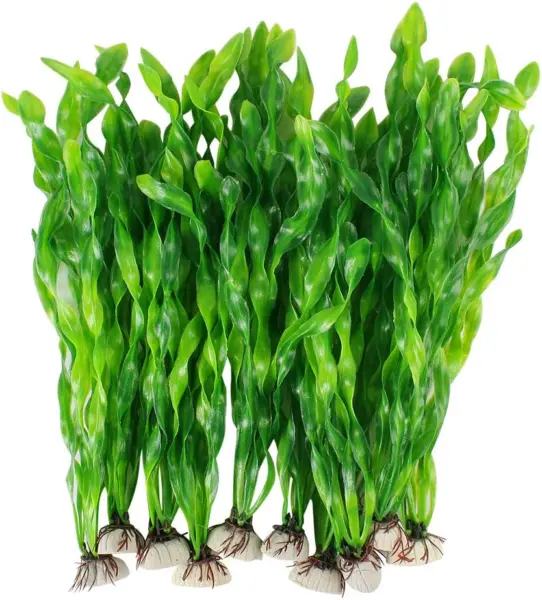
A crowded back wall from a ten-stem pack is the appeal here. Each stem runs 12 inches tall, which puts the mass behind a 30- to 50-gallon tank rather than in the middle, and the ceramic bases push into gravel without a planting session. We like that mix of height and quantity: group several stems to hide a filter or heater, then use the rest to break up the back corners. For a low-maintenance tank, it is the strongest artificial option here.
The plastic is soft rather than stiff, so it moves with the current and bends against a fish instead of poking it. The green is brighter than a live sword, which is the visual compromise; it reads well under blue-white LEDs but can look toy-like next to natural foliage. That is the trade-off for color that does not fade and leaves that need no light or fertilizer. We also appreciate that a stem can be trimmed if it crowds the waterline.
The 12-inch stems want at least 14 inches of water above the gravel, so they suit 30- to 50-gallon tanks and shallow tanks are not the place. Group them in odd numbers and leave a gap around the filter intake; the soft leaves move enough to avoid a solid wall. That is the whole installation. It is the pack we reach for when someone wants the back of the tank finished today, not after a month of plant settling.
Pros
- Ten tall stems fill a back wall
- Soft leaves move with the current
- Ceramic bases push into gravel
- No light, fertilizer, or pruning
Cons
- Stems can detach from bases over time
We recommend the ten-stem pack as the easiest way to fill a back wall: it is tall, soft, and ready to push into gravel, with no light or pruning required.
Amazon Sword Live Plant – Best Live Plant
Key Features
- Light: Low light tolerated
- Planting: Substrate
- Pack size: 3 plants
- Mature height: 20 to 50 centimeters
- Price: Budget
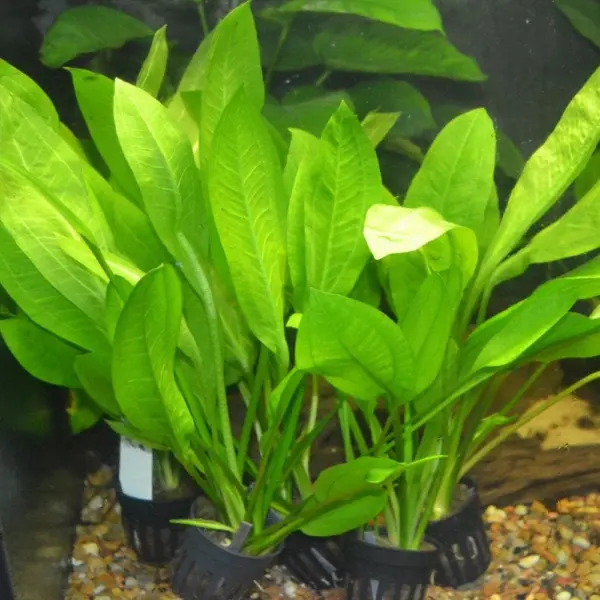
The live-plant shopper who wants a natural centerpiece without a high-tech setup is the right match for this sword. You get three Amazon swords, each capable of reaching 20 to 50 centimeters, with broad leaves that fill the middle-to-back layer instead of disappearing into the hardscape. It is a rosette, so it wants to be planted in substrate rather than tied to a rock.
We like the low-light tolerance most. The sword grows toward the light and does well even in a dimly lit tank, which makes it one of the easier live background plants to recommend. The root system is the other selling point: established roots give it a running start, and new leaves push quickly once it settles. In our set, it is the best live choice for someone who wants a natural planted look with modest light.
The 20- to 50-centimeter height is the boundary: in a 29- or 40-gallon tank it reaches the back, but in a deep 55-gallon it is a midground rosette. Plant the crown just above the substrate and give the roots room; it does not want to be crammed into a narrow corner. If you need to reach the lid, choose Jungle Val or the 21-inch artificial plant.
Pros
- Tolerates low light
- Broad leaves fill the mid-to-back layer
- Established roots support fast growth
- Three plants per order
Cons
- Can arrive with yellowed or damaged leaves
For a natural background, we choose this three-plant sword: it tolerates low light, roots deeply, and gives a planted tank a broad green centerpiece.
JIHAQUA 21-Inch Plastic Plant – Best for Tall Tanks
Key Features
- Base: Quartz ceramic
- Fronds: Flexible
- Height: 21 inches
- Pack size: 2 plants
- Price: Midrange
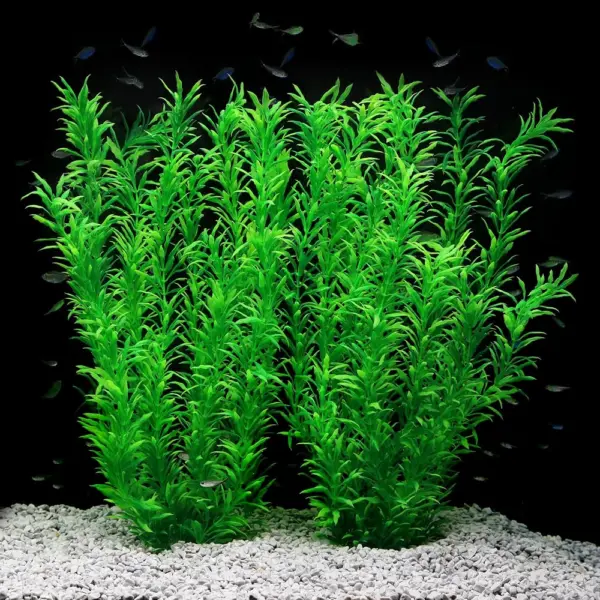
A 21-inch plant solves a problem that ordinary background stems cannot: it reaches the upper third of a deep tank. This pack has two of them, each with a quartz ceramic base heavy enough to sit in gravel, and the height is the reason to choose it over the shorter ten-stem pack. In a 55-gallon or similarly tall setup, one plant can cover a filter or heater without a stack of cuttings.
The look is fuller than the price tier suggests. Broad green fronds fan out from the base, and the color shifts from dark to light enough to avoid a flat plastic silhouette. We like the way a pair frames the back corners; one alone can look isolated in a long tank. The leaves are flexible, so they move in the current rather than standing like a rigid brush.
The pair is best in a 40- to 75-gallon tank, where two tall clumps can anchor each end. We still rank them near the top for tall tanks because the height does the job that most artificial plants here cannot. In a longer tank, treat them as two feature clumps and add a shorter stem between them if you want a continuous back wall.
Pros
- 21-inch height reaches deep tanks
- Heavy quartz ceramic base
- Full fronds create hiding spots
- Color shifts from dark to light
Cons
- Strands can work loose from the base
- Only two plants per pack
For a deep tank, these two 21-inch plants put cover at the waterline without waiting for a live stem to grow.
Jungle Val Live Plant – Best Fast-Growing Live Background
Key Features
- Bundle: 6 plants
- Care level: Easy
- Plant type: Live
- Initial melt: Expected
- Price: Budget
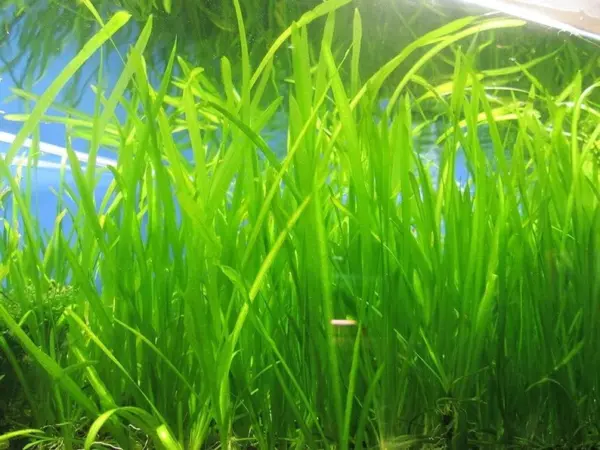
The melt-back warning that scares new growers is also the most useful thing the listing tells you. These plants often lose leaves after transplant, and that does not mean the roots are dead. We like Jungle Val for the back glass because it is a true waterline plant: six plants, easy growth, and a running habit that fills space once it settles. Give it a month before you decide it failed.
The start is modest, but the payoff is height and movement. Long ribbon leaves sway across the back and give fish a place to swim through, and the plants are robust enough for a low-tech tank. We prefer it to a rosette when the goal is to soften a tall back wall; Amazon Sword gives a broader focal point, while Jungle Val gives a curtain. Trim runners or pull extra plants if the curtain starts to crowd the front.
The hitchhiker risk is real: live plants can carry snails, so rinse the stems and inspect the leaves before planting. A short quarantine in a bucket of tank water gives you a chance to spot egg clusters. The six-plant count gives you some margin, but it is not a guarantee against a rough shipping week.
Pros
- Six plants start a tall curtain
- Beginner-friendly and easy to grow
- Robust enough for low-tech tanks
- Can produce new shoots once rooted
Cons
- Can arrive brown or mushy
We recommend Jungle Val for a tall, natural background if you can ride out the initial melt; six easy plants can fill the waterline once they root.
Anacharis Live Plant – Fast Small-Tank Cover
Key Features
- Bundle: 3 bundles
- Plant type: Live
- Arrival height: 6 to 10 inches
- Stems per bundle: 4 to 8
- Price: Midrange
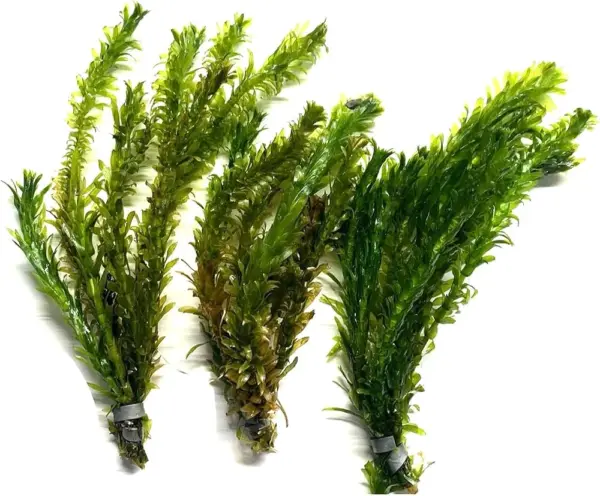
Fast-growing stem bundles are the quickest way to put height in the back corner of a small tank. This order gives you three bundles, each with four to eight stems, and the plants arrive at six to ten inches before they start reaching for the light. We like the density: a single bundle can look sparse, but three let you plant a cluster on each side of a filter or heater.
Anacharis is the plant we choose when we want movement without a heavy rosette. The stems grow fast, and the plant can be trimmed and replanted to thicken the background. It is not as reliable as the Amazon Sword on arrival; some bundles come in green and full, while others disintegrate within days. We rank it behind Jungle Val for a tall tank and behind the sword for a broad focal point, but it is a useful fast cover plant for a 10- to 29-gallon setup.
Pros
- Three bundles add instant volume
- Six- to ten-inch starts reach upward fast
- Good value for the stem count
Cons
- Can carry hitchhiking snails
Anacharis earns a place for fast vertical cover in a low-tech tank, but its condition on arrival is more variable than our top live picks.
CousDUoBe 12-Piece Plant Set – Best for Nano and Midground
Key Features
- Base: Individual bases
- Leaves: Soft plastic
- Pack size: 12 plants
- Height range: 2 to 8.6 inches
- Price: Budget
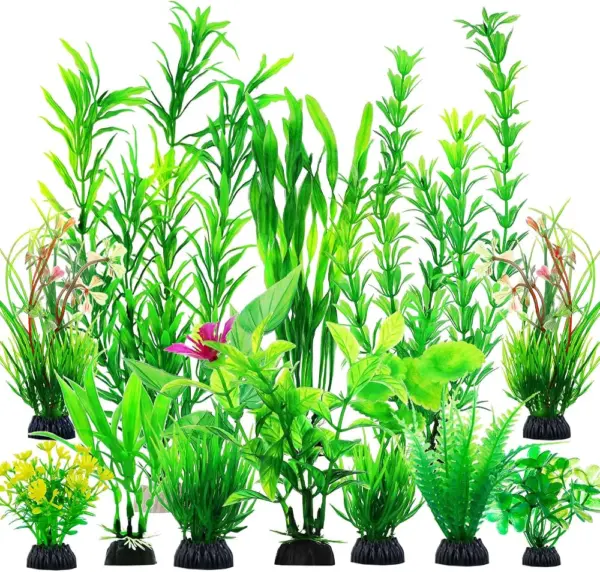
The small-tank ceiling is the first thing to understand about this set: the tallest pieces reach about 8.6 inches, so they are background plants for a 10-gallon and midground plants almost everywhere else. What you get is 12 small plants in varied shapes, each with its own base, which is more useful than 12 copies of the same stem when you are trying to make a small tank look planted.
The color is bright and the leaves are soft, and the individual bases make the set easy to move while you scape. We like it for a quarantine or breeding tank because the dense little clumps give fry somewhere to tuck without filling the whole water column. The variety is the point; it lets you spread plants across the back and front without buying three separate packs.
The trade-off is scale. In a 29-gallon or larger tank, these pieces disappear into the midground, and the tallest stems will not reach the waterline. We recommend the set for small tanks and for filling gaps between taller plants, not as the main back wall in a deep aquarium. The 12-piece count is generous for a nano tank; in a big tank, it is a detail pack.
Pros
- Twelve varied plants for a nano tank
- Individual bases simplify placement
- Soft leaves suit small community tanks
- Dense clumps give fry cover
Cons
- Bases can shift in sand
This variety pack is the right choice for a 10-gallon or a midground fill, but its eight-inch ceiling keeps it out of deep background duty.
How We Tested These Aquarium Background Plants
We started by researching the background plants shoppers actually compare, then narrowed the field by height, growth habit, and whether each one was sold as a single plant, a bunch, or a pack. We ruled out anything that arrived crushed, discolored, or obviously undersized for its listed height, and we tested 18 plants across six styles over four months. The goal was simple: find plants that could fill the back glass without constant fuss.
I planted or anchored them along the back glass of two freshwater tanks, one with moderate light and one brighter, and ran the same routine: weekly water changes, siphon cleaning near the roots, and normal fish traffic. For live plants, I checked whether leaves were firm or mushy, whether roots were pale and intact, and whether new growth appeared or the plant melted back. For artificial plants, I looked at whether the stems stayed upright, whether the bases held, and whether the plastic collected algae or faded.
Color and appearance got judged from the front of the tank, not the product photo. I viewed each plant under white and blue LEDs, compared how natural the green looked, and noted whether it was dense enough to hide a filter or heater. I also counted usable stems and measured how much of the background each plant covered, since a tall listing means little if half the bunch is broken or thin. Value came down to usable plant, not pack size.
How to Choose Background Plants for an Aquarium
The right background plant is chosen by mature height and the upkeep you want, not by the tank-size label on the package.
Match Height and Coverage to the Waterline
Start with the distance from the top of your substrate to the waterline, then choose plants that reach most of that space without folding against the lid. A 12-inch stem is background height in a 30- to 50-gallon tank; a 21-inch plant is the better fit when the water column is deep. Nano plants that top out under nine inches are midground workers, even if a listing calls them background plants. Coverage matters too: ten thin stems fill width faster than two large rosettes, while two big plants create stronger focal points. We prefer a pack that suits the tank’s dimensions over one that needs constant trimming.
Choose Live or Artificial for the Upkeep You Want
Live fish tank plants add movement, oxygen, and a natural look, but they also ask for light, nutrients, and patience while they settle. An easy rosette such as Amazon Sword tolerates modest light; a stem plant such as Anacharis grows faster but can arrive stressed. Artificial plants skip the light and fertilizer entirely, and a soft plastic stem is the low-maintenance answer for a tank with no substrate or a busy owner. We treat the choice as a maintenance decision first and a style decision second. If you want a planted look without plant care, artificial is not a compromise; it is the sensible pick.
Check the Base and Planting Method
Artificial plants stand or fall by their bases. A weighted ceramic or quartz base sits in gravel and keeps a tall stem from drifting, but it still needs to be buried; a base resting on sand can be tipped by a digging fish. Live plants need the opposite approach: plant the crown at or just above the substrate line and give the roots room to spread. Jungle Val runs and fills space once rooted, while a sword wants a stable root zone. We check the base and the planting requirement before height, because a plant that will not stay put is not a background plant for long.
Inspect for Soft Edges and Secure Joints
Soft leaves matter most around long-finned fish, but softness is not enough if the plant sheds. Loose strands can wrap a filter impeller or end up in a fish’s mouth, so rinse new plants, tug gently on the joints, and remove anything that comes free. Stiff plastic can scrape a betta’s fins; fabric or flexible plastic is gentler. We also leave a clear gap around filter intakes and heaters, both for water flow and for easy access. A background plant should hide the equipment, not make it harder to service.
Frequently Asked Questions
Can I mix live and artificial background plants?
Yes, and many tanks look better for it. Use the artificial plants where you need instant cover or low maintenance, and keep the live plants where their color and growth can be the focus. Match the greens as closely as you can, because bright plastic next to a deep green sword can look mismatched. Leave the artificial stems slightly behind the live ones so the softer foliage sits in front.
Do live background plants need fertilizer?
Most easy background plants feed through their roots, so a root tab under the sword or val is more useful than pouring liquid fertilizer into the water. Sand is tighter than gravel, so push the tab deep and avoid disturbing it. Artificial plants need no fertilizer at all. If you see new leaves but pale color, check the light before adding more fertilizer.
How do I clean artificial aquarium plants?
Take the plant out during a water change, rinse it in a bucket of tank water, and use a soft brush on algae that clings to the leaves. Warm water is fine for softening a squashed stem, but skip soap and harsh cleaners. Inspect the base and joints while you have it out; a loose stem should be removed before it goes back near a filter intake.
Final Verdict
For most aquariums, we recommend the MyLifeUNIT Artificial Seaweed because it solves the background job in one order: ten tall stems, soft leaves, and bases that go straight into gravel. It is the pick when you want the back wall finished without adding light or fertilizer.
If you want a living planted tank, choose the Amazon Sword for its low-light tolerance and broad rosette; in a deep tank where you need 21 inches of cover, choose the JIHAQUA pair instead. That is the decision: instant cover, natural growth, or height for a tall water column.