This post contains affiliate links. We may earn a small commission when you buy through our links — at no extra cost to you.
Every planted tank needs CO2 to thrive, but choosing a diffuser often feels like a gamble. Glass stems snap during installation, ceramic discs arrive clogged, and budget models trade quality control for a low price tag.
The real divide isn’t between expensive and cheap – it’s between parts that actually dissolve gas versus parts that just make bubbles. A diffuser that works consistently requires a clear match between your CO2 pressure, tank volume, and the disc’s ability to produce fine mist.
This guide breaks down the trade-offs so you can pick a diffuser that delivers from day one, not one that needs a replacement order before the first water change.
Top Picks
Best for Medium Planted Tanks
Aquario Neo Original M

Rating: 4.3 ★ | Price: $$ | Material: Acrylic | Tank Size: Up to 32 gal
The Aquario Neo Original M produces a steady stream of micro-bubbles that dissolve efficiently into the water column, giving planted tanks even CO₂ distribution. The acrylic body feels solid and will hold up to routine removal and cleaning, while the integrated bubble counter removes the need for an extra adapter. At a mid-range price, this diffuser delivers the fine mist performance that keeps plants healthy without demanding premium spending.
This diffuser suits planted tank owners who want a no-hassle in-tank solution for setups up to 32 gallons. The ceramic disc may need a short break-in before bubble size stabilizes — some units start with larger bubbles initially. Occasional reports of the disc loosening or the diffuser stopping after a few months exist, so buying from a retailer with a flexible return policy is a reasonable precaution. For most medium planted tanks, the balance of build quality and mist performance makes this a safe choice.
Pros
- Produces a fine, even mist of CO₂ for good plant uptake
- Acrylic construction feels sturdy and holds up to regular handling
- Built-in bubble counter simplifies setup and saves on extra parts
Cons
- Bubble size can be inconsistent out of the box – some units produce larger bubbles initially
- In some cases the ceramic disc may loosen or the diffuser stops working after a few months
For most medium planted tanks, the Aquario Neo Original M is the most dependable acrylic diffuser at this price, delivering the fine mist and durability that matter without unnecessary extras.
Best for Diy Co2 Setups
FZONE Neo S-13mm

Rating: 4.2 ★ | Price: $ | Material: Acrylic | Working Pressure: ≥ 20 PSI | Tank Size: Up to 13 gal
The FZONE Neo S-13mm works with yeast and citric acid DIY systems, making it a rare budget option for hobbyists running homemade CO2 rigs. Its acrylic build feels solid for the price, and it handles both low-pressure DIY setups and standard pressurized tanks. The catch: bubble size can vary between units, and some examples arrive with a stem that cracks during installation. This diffuser suits first-time CO2 users with nano tanks up to 13 gallons who are comfortable with occasional quality control issues.
Pros
- Works with DIY yeast and citric acid setups
- Sturdy acrylic construction for the price
- Compatible with both DIY and pressurized CO2
Cons
- Bubble size can be inconsistent – some units produce large bubbles or none out of the box
- The stem may crack under stress in some cases
For the price-conscious DIY user with a small tank, this is a cost-effective starting point — just be prepared for potential bubble inconsistency.
Best for Rimless High-Pressure
Clscea SS DC300-20
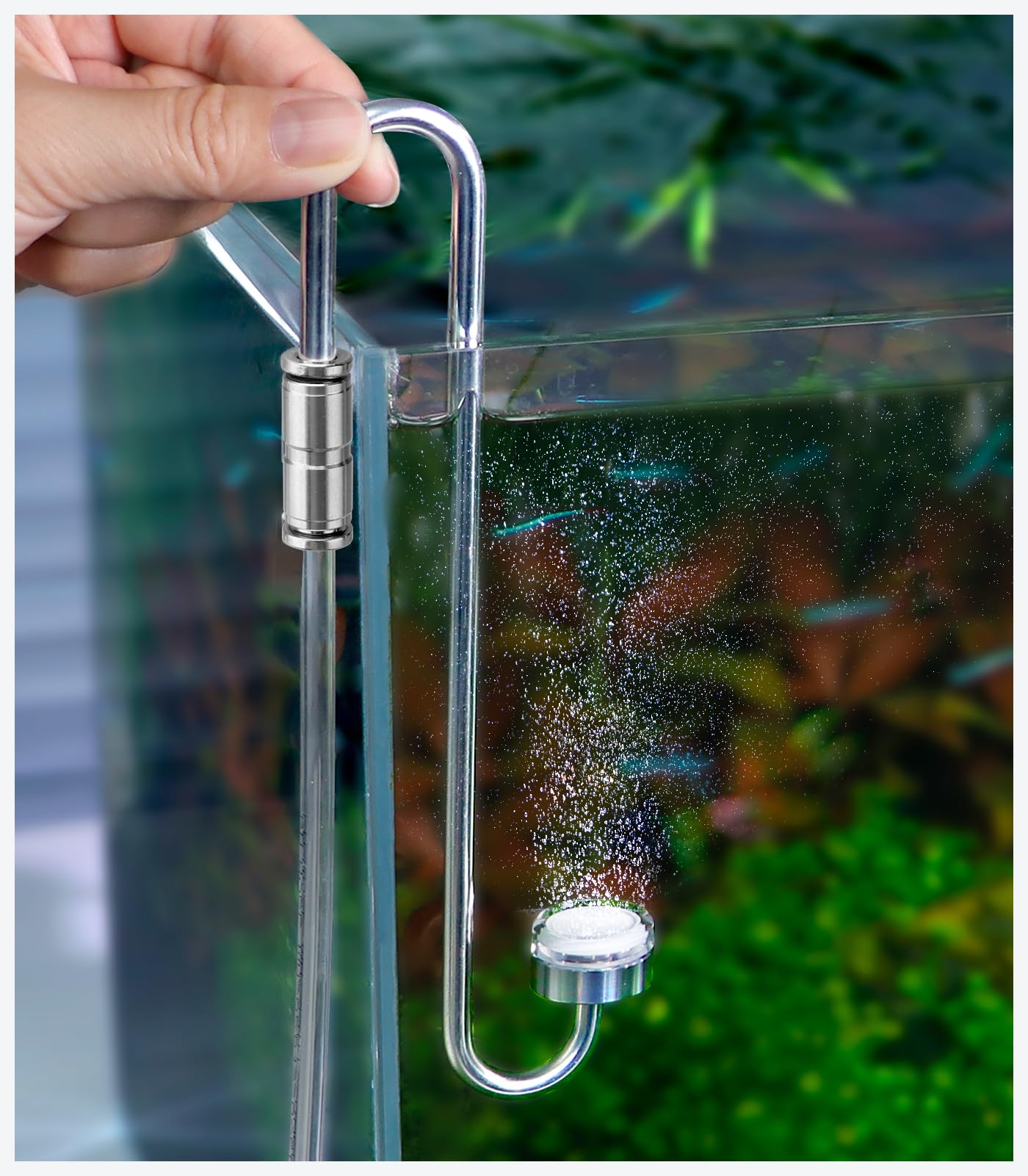
Rating: 4.3 ★ | Price: $$ | Material: 304 Stainless Steel | Working Pressure: ≥ 42 PSI | Tank Size: Rimless only | Disc Replaceable: Yes
The Clscea trades the typical ceramic-and-glass fragility for 304 stainless steel that can survive drops and scrubbing without cracking. An integrated check valve eliminates one extra component, keeping the setup clean. This diffuser is best for aquarists using a pressurized CO2 system (tank or generator) with a rimless aquarium – the hook mount only fits frameless glass, and the 42 PSI minimum means DIY yeast setups won’t produce bubbles. Branching to tubing that isn’t a snug fit can cause a slow leak, so pairing with the right hose or a clamp is worth checking.
Pros
- Nearly unbreakable 304 stainless steel body survives drops and disassembly.
- Integrated check valve simplifies setup – no extra component needed.
- Removable disc makes cleaning straightforward without tools.
Cons
- Requires at least 42 PSI – will not produce bubbles with DIY yeast or low-pressure setups.
- Hook mounting works only on rimless tanks; standard frames may not fit.
A smart buy for planted-tank hobbyists running pressurized CO2 on rimless aquariums who want a diffuser that won’t crack or need replacement.
Best for Canister Filter Users
Aqualexs Inline

Rating: 4.4 ★ | Price: $$ | Material: Plastic/metal | Tank Size: Any (inline) | Disc Replaceable: Yes
The Aqualexs Inline diffuser connects to your canister filter outflow, spreading CO2 throughout the tank without hanging anything inside the aquarium. Its plastic/metal body avoids the fragility of glass, and unlike some tight-fitting metal inlines, the hose connections are straightforward. Hobbyists who want a hidden setup and already run a canister filter will appreciate the clean look. Plan on adding hose clamps to prevent possible leaks, and give the ceramic disc a few days to break in — initially the mist can be coarser before settling into fine bubbles that plants absorb well.
Pros
- Distributes CO2 through the canister output for even diffusion and healthy plant growth.
- Tough plastic/metal build survives drops without cracking, a clear advantage over glass diffusers.
Cons
- Mist may start with larger bubbles and take several days to settle into consistently fine diffusion.
- Connections can leak without added hose clamps, requiring an extra purchase to secure tubing.
For canister filter users who want an equipment-free tank and are willing to add hose clamps and wait a few days for the mist to stabilize, the Aqualexs is a practical, sturdy choice.
Best for Large Planted Tanks
JARDLI Music 2in
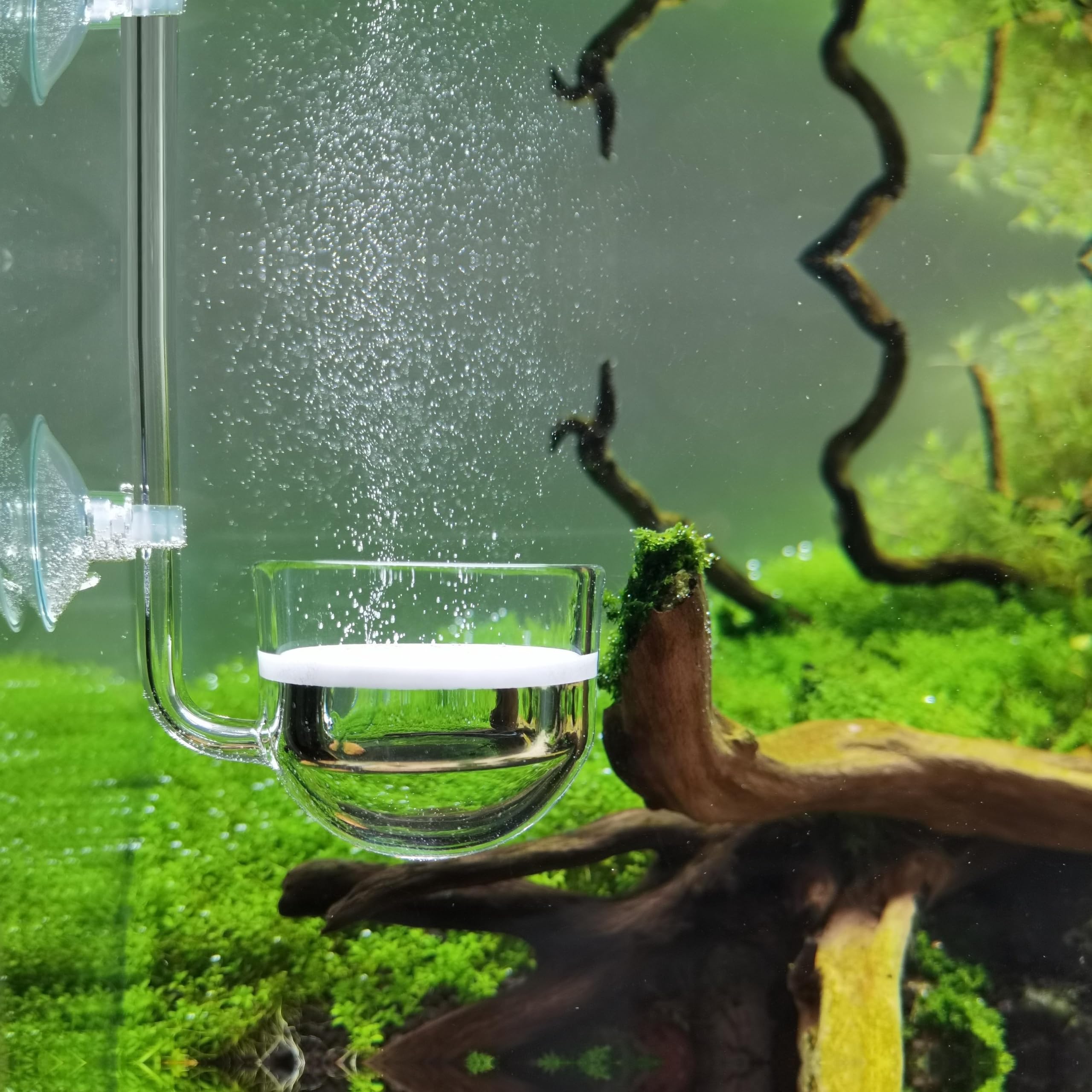
Rating: 4.4 ★ | Price: $$ | Material: Glass | Tank Size: 75+ gal | Disc Replaceable: No
The 2-inch ceramic disc on the JARDLI Music diffuser produces exceptionally fine microbubbles, giving large aquariums high CO2 saturation. This size advantage comes with a tradeoff: the glass stem and body can snap during installation or cleaning if not handled with deliberate care.
Best suited for experienced aquascapers who value mist quality and have steady hands. The fragile construction and occasional bubble inconsistency mean this diffuser is not a casual choice — it rewards patience and careful maintenance in large planted setups.
Pros
- Ultra-fine microbubbles for efficient CO2 dissolution in tanks 75+ gallons.
- High-quality glass with an elegant design that complements the aquarium.
Cons
- Bubble size can be inconsistent, with occasional larger bubbles mixed into the mist.
- Glass stem may snap during installation or maintenance if not handled with extreme care.
Best for experienced aquascapers who prioritize mist quality in large tanks and are comfortable with delicate glass maintenance.
Best for Nano Tanks
TWINSTAR M-19mm

Rating: 4.2 ★ | Price: $ | Material: Acrylic | Tank Size: Up to 120 gal (small)
One of the smallest diffusers on the market, the TWINSTAR M-19mm slips easily into tight nano tank spaces where larger units won’t fit. When operating, it produces a notably fine mist that dissolves CO₂ efficiently. However, the glass stem is fragile – it can snap during installation or routine maintenance, and the diffuser is physically smaller than its 120-gallon rating implies, so it’s best considered a dedicated nano-tank tool rather than a general-purpose diffuser. This is a good match for experienced aquascapers who prioritize compact sizing and are comfortable handling delicate glass equipment.
Pros
- Produces exceptionally fine bubbles for efficient CO₂ dissolution in planted nano tanks.
- Delivers good CO₂ diffusion quality at a budget-friendly price point.
Cons
- Glass stem can snap during installation or cleaning – best suited for users who handle equipment gently.
- Very compact – verify dimensions against your nano tank as some may find it smaller than anticipated.
The TWINSTAR M-19mm is the right choice for nano-tank enthusiasts who want a tiny, fine-mist diffuser and are comfortable with delicate glass – but not for anyone looking for a robust, larger unit.
Best for Small-Medium Tanks
Aquario Neo Special M
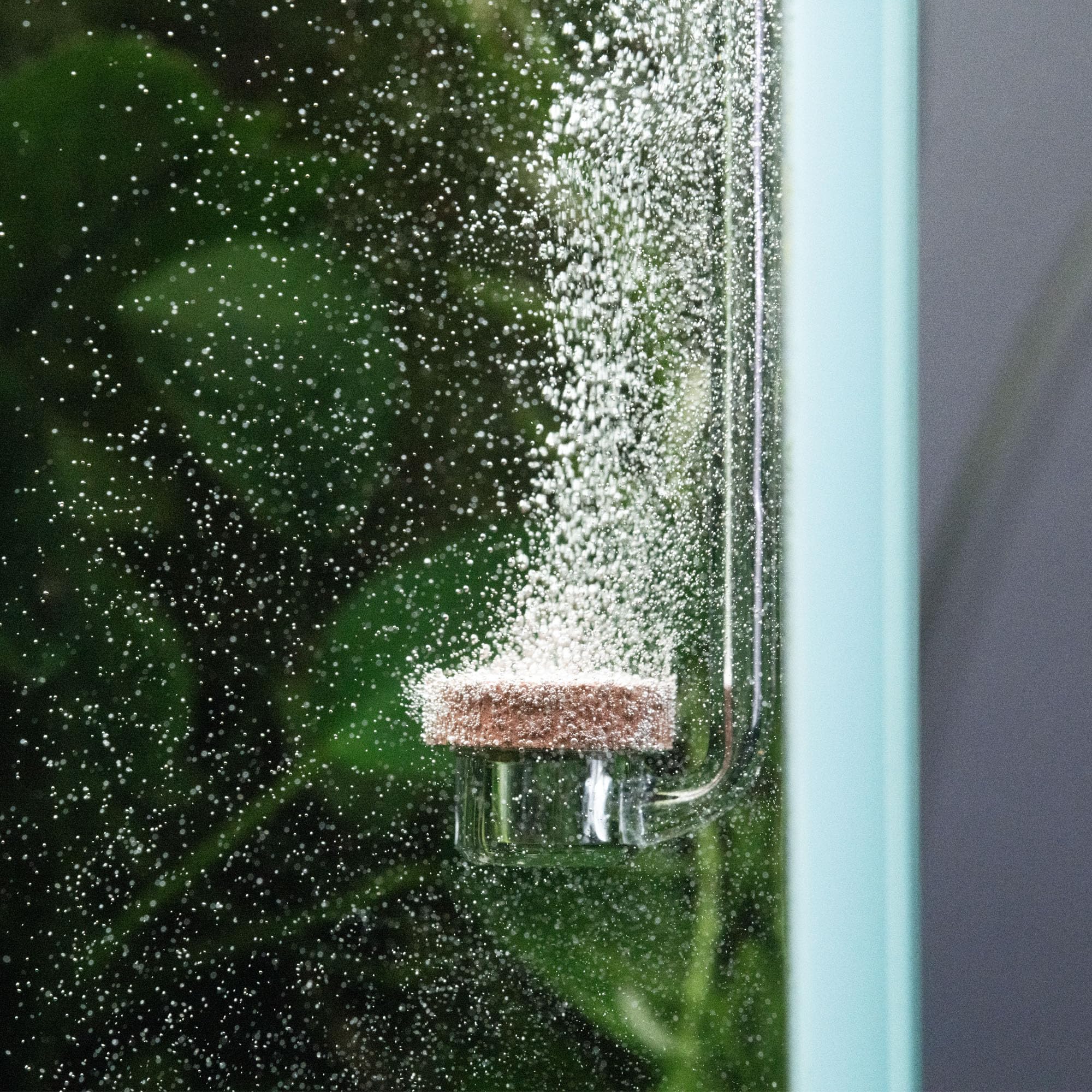
Rating: 4.3 ★ | Price: $$ | Material: Acrylic | Tank Size: Up to 32 gal
The Aquario Neo Special M delivers the same fine-mist ceramic found in the brand’s top pick, producing a dense cloud of CO2 bubbles for efficient dissolution in medium planted tanks up to 32 gallons. By omitting the built-in bubble counter, it trims the cost by roughly ten dollars — a sensible saving for anyone already using a separate counter. The acrylic body handles bumps better than glass alternatives, though some units may experience reduced output after several months of use, making periodic cleaning worth incorporating into routine maintenance. This diffuser suits small to medium setups where the owner prefers to manage bubble counting separately.
Pros
- Produces a very fine mist of CO2 bubbles for efficient gas dissolution
- Acrylic construction is more impact-resistant than glass diffusers
Cons
- No integrated bubble counter — requires a separate unit to monitor CO2 flow
A sensible value for planted tank owners who already have a bubble counter and don’t mind occasional diffuser maintenance.
Best for Medium-Large Tanks
JARDLI Pollen 2in

Rating: 4.1 ★ | Price: $$ | Material: Glass | Working Pressure: ~25–30 PSI | Tank Size: 50–80 gal | Disc Replaceable: No
The JARDLI Pollen Diffuser’s curved glass design and dual suction cups make it visually appealing and easy to position in the corner of a 50-80 gallon tank. However, the thin glass stem can break during installation – careful handling is a must – and the ceramic disc may produce larger bubbles than expected, not the fine mist some desire.
Pros
- Effective CO2 diffusion for medium to large tanks
- Attractive design with dual suction cups for corner mounting
Cons
- Glass stem and disc can break during installation or cleaning – requires gentle handling
Best suited for patient, experienced aquarists who value glass aesthetics – otherwise, a sturdier acrylic option is a safer choice.
Best for Canister Filter Setups
FZONE Inline 5/8

Rating: 4.0 ★ | Price: $$ | Material: Aluminum alloy | Working Pressure: ≥ 30 PSI | Tank Size: Any (inline) | Disc Replaceable: Yes
The aluminum body feels substantial and the replaceable disc extends usability. Some units take a few days to produce fine bubbles, but they eventually deliver consistent mist. Tubing fit is the main quirk—not all standard 5/8” hoses seal tightly without clamps, so check your hose diameter before buying.
Pros
- Sturdy metal construction with replaceable ceramic disc prolongs diffuser life.
- Quick, straightforward installation on standard canister filter outflow lines.
Cons
- Tubing fit occasionally requires clamps with standard 5/8” hoses, risking a loose seal without them.
A practical inline diffuser for canister setups where you can confirm your hose fits snugly or you’re willing to add clamps.
Best for Emergency Replacement
Pawfly Acrylic
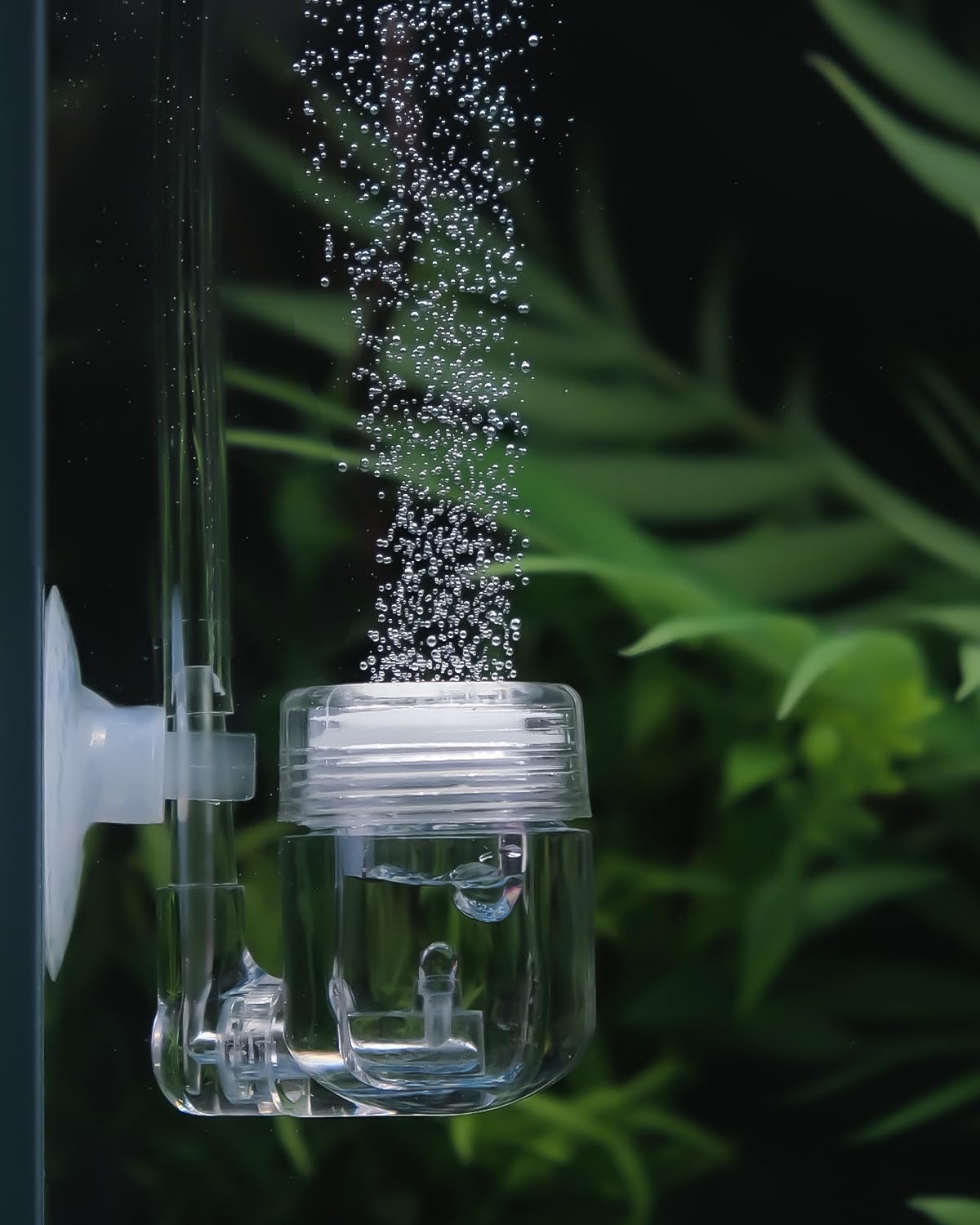
Rating: 4.0 ★ | Price: $ | Material: Acrylic | Working Pressure: ≥ 14 PSI | Tank Size: 11–47 inch | Disc Replaceable: Yes
The Pawfly Acrylic combines a bubble counter and check valve in one unit at a low price, with acrylic construction that resists breakage better than glass. However, bubble size can be too large for effective dissolution, especially initially, and the built-in check valve may allow backflow. This works for extreme budget builds or emergency replacement, not for reliable fine mist.
Pros
- Acrylic construction is less likely to break than glass
- Integrated bubble counter and check valve in one unit
Cons
- Bubble size may be too large for effective CO2 dissolution, especially initially
Best reserved for budget-constrained setups where fine mist is not a priority.
Best for High-Tech Planted
JARDLI Glass Inline
Rating: 4.4 ★ | Price: $$$ | Material: Glass | Tank Size: Any (inline)
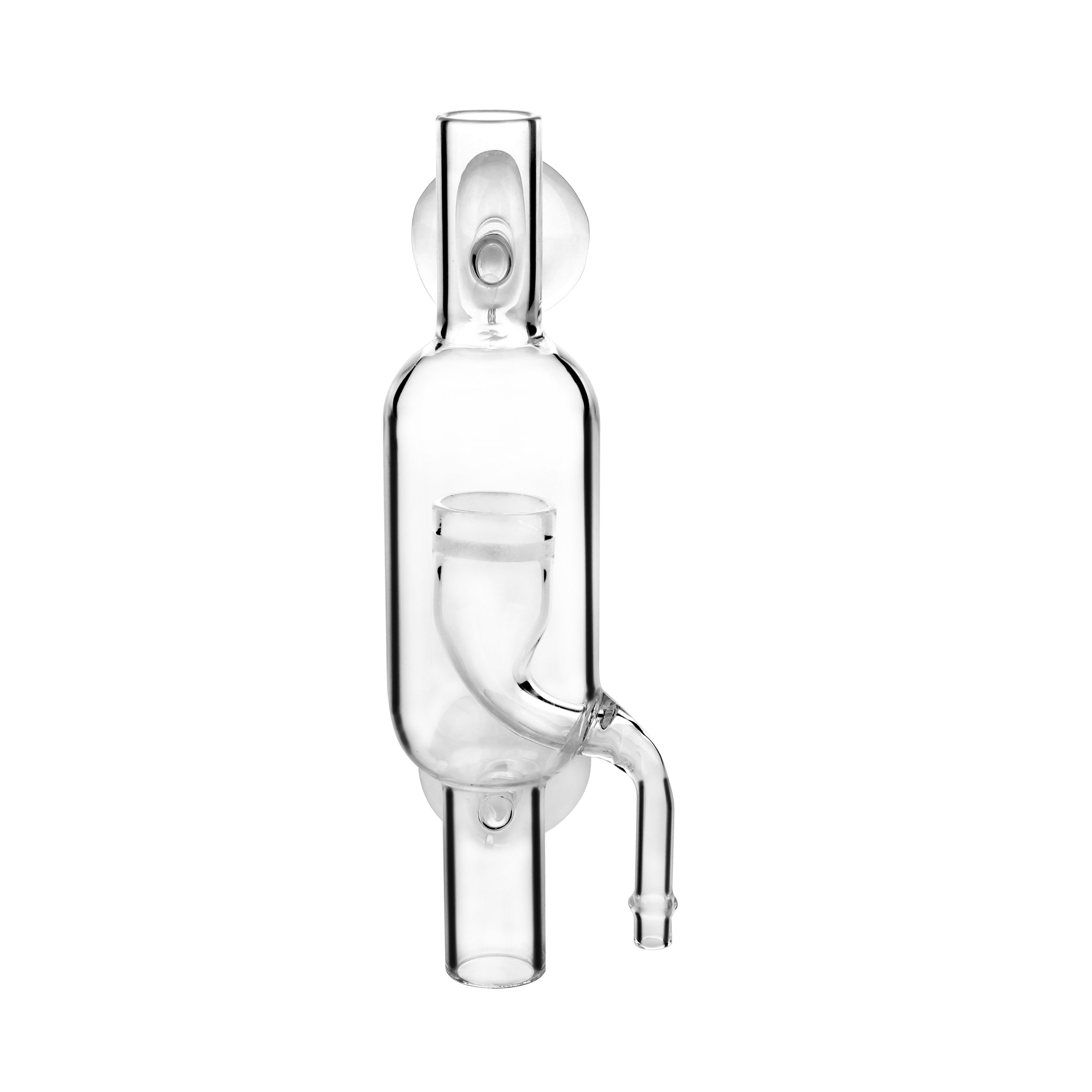
This inline diffuser delivers a very fine mist that dissolves fully, keeping the tank interior clean and equipment hidden. The tradeoff is fragile glass that can break if the hose is forced or during maintenance, plus hose connections may need additional clamps to prevent leaks. The premium price and delicate build make it a choice for experienced aquascapers who prioritize diffusion quality over durability.
Pros
- Creates an exceptionally fine mist that dissolves completely, boosting plant growth.
- Keeps the tank interior clean and equipment hidden for a polished aquascape look.
Cons
- Glass body can break if the hose is forced or during maintenance – requires careful handling.
Best for experienced aquascapers who prioritize diffusion quality and tank aesthetics over durability and cost.
Best for Replaceable Disc Users
Clscea Acrylic L

Rating: 4.1 ★ | Price: $$ | Material: Acrylic | Working Pressure: ≥ 14 PSI | Tank Size: Large | Disc Replaceable: Yes
Replaceable ceramic disc extends the diffuser’s life, and after soaking it works well at low bubble rates. Bubble output can be erratic out of the box – some units produce no bubbles or very large ones – and the stem may break under normal use. A reasonable pick for those who value replaceability over initial performance.
Pros
- Replaceable ceramic disc extends product life and simplifies maintenance.
- Effective diffusion at low CO2 bubble rates once the disc is soaked.
Cons
- Bubble count can be erratic out of the box; some units deliver no bubbles or very large ones.
Suited for aquarists who want an acrylic diffuser with a replaceable disc and are prepared for possible initial bubble inconsistency.
How to Choose
The most frequent mistake is choosing a diffuser that doesn’t match the pressure your CO2 system delivers – a DIY yeast setup can’t drive a model requiring 42 PSI.
Material: Glass vs. Acrylic vs. Stainless Steel
Glass diffusers offer the clearest view and best aesthetics, but they are fragile. A single bump during cleaning can snap the stem, and many arrive broken in shipping. Acrylic is more forgiving – it won’t shatter on impact but can scratch over time.
Stainless steel diffusers are virtually indestructible and often include an integrated check valve, but they require a metal mounting hook that only fits rimless tanks. The choice comes down to how much abuse your equipment will realistically take.
Working Pressure
Every diffuser has a minimum working pressure, usually between 14 and 42 PSI. A DIY yeast or citric acid system struggles to exceed 20 PSI – if your diffuser needs 30+, you’ll get no bubbles or large, useless ones.
Pressurized CO2 tanks can easily supply 40+ PSI, but the regulator must include a working pressure gauge. Matching pressure to the diffuser is non-negotiable; otherwise, the ceramic disc won’t atomize gas into fine mist.
Tank Size
A diffuser that is too small for your tank will struggle to dissolve enough CO2 per hour, while an oversized unit can oversaturate small tanks and stress fish. Manufacturers often list a maximum volume, but that’s an optimistic ceiling.
In practice, choose a diffuser rated for your tank size or one step larger – a 50-gallon rated diffuser works fine in a 40-gallon, but a 20-gallon rated one will underperform in that same tank because contact time is lower.
Disc Replaceability
Ceramic discs clog over time from algae and mineral deposits. A replaceable disc lets you restore performance by swapping just the disc instead of the entire diffuser. Models with non-replaceable discs become disposable after a few months.
The cost of a replacement disc is usually $5–10, making a $25 diffuser with a replaceable disc cheaper in the long run than a $15 diffuser you have to replace entirely. If you run CO2 year-round, prioritize replaceability.
FAQ
Why is my CO2 diffuser not producing bubbles even after soaking?
First, confirm your CO2 system delivers enough pressure – many DIY setups fall below 20 PSI, which can’t push gas through a high-pressure disc. If pressure is sufficient, the ceramic disc may be clogged with manufacturing residue. Soak it in a diluted bleach solution (1:10) for 30 minutes, rinse thoroughly, and try again. If still no bubbles, the disc or body is defective.
Can I use a glass CO2 diffuser with a DIY yeast setup?
Yes, but only if the diffuser is rated for low pressure (14–20 PSI). Most glass models have a low working pressure, but check the spec – some require 25+ PSI. Also, glass is fragile, so the vibrations from a yeast bottle can create small cracks over time. Acrylic is safer for DIY setups.
How often should I clean a ceramic CO2 diffuser disc?
Clean the disc every 4–6 weeks to prevent clogging. Remove the disc, soak it in a 1:1 mix of hydrogen peroxide and water for 30 minutes, then rinse. Never scrub the ceramic surface. A clogged disc produces larger bubbles and reduces CO2 dissolution efficiency.
Will an inline CO2 diffuser work with a hang-on-back filter?
No – inline diffusers are designed to be installed on the outflow hose of a canister filter. HOB filters have no hose connection for inline installation. For HOB setups, use an in-tank diffuser or a suction-cup model placed in the filter’s outflow path.