This post contains affiliate links. We may earn a small commission when you buy through our links — at no extra cost to you.
Most guppy food labels promise ‘slow-sinking’ but deliver pellets that hit the bottom before your fish notice. This common mismatch between marketing and reality makes feeding more trial-and-error than it should be.
The real challenge isn’t just finding food that floats—it’s finding one that combines palatability with the right pellet size and nutritional profile for your specific tank setup. Some foods excel at bringing out color but sink fast; others are budget-friendly but lack the ingredients fry need.
We focused on five products that balance these trade-offs honestly. The right pick depends on whether you prioritize proven consistency, natural ingredients, or growth-focused formulas—and how much sinking speed matters to your fish.
Top Picks
Best for General Guppy
Hikari Fancy Guppy 3-Pack
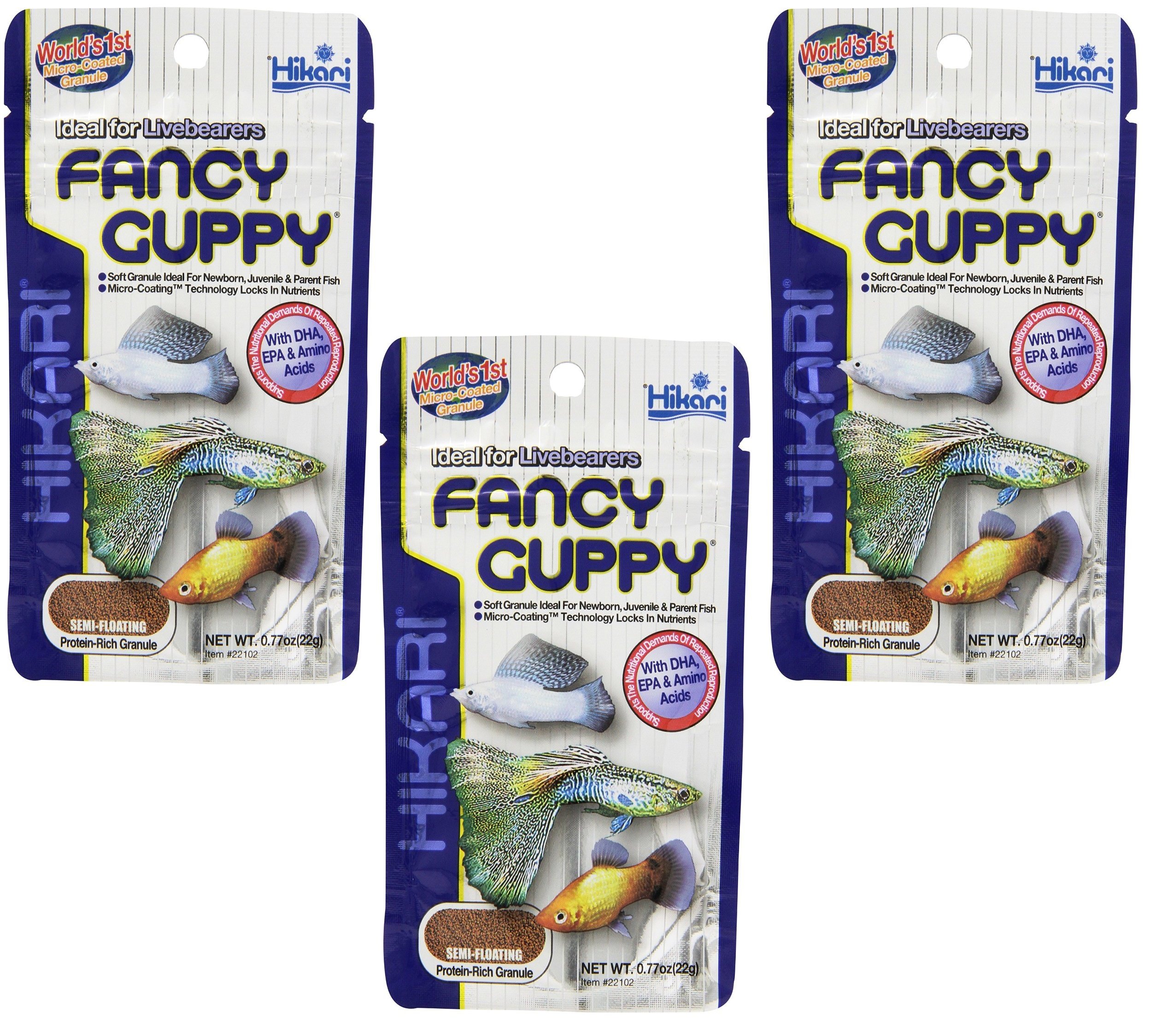
Rating: 4.8 ★ | Price: Mid-Range | Pellet Size: Small granule | Float/Sink Behavior: Varies, some sink | Additives: Chitosan, vitamin C, seaweed
With over a thousand reviews and consistently high marks, the Hikari Fancy Guppy 3-Pack is the most established guppy staple food on the market. The small granules are formulated to support health, color, and steady growth, and long-term users regularly see their fish thrive across multiple tanks. The three separate bags also keep the food fresh longer, making it practical for both single-tank and multi-tank setups.
In feeding, the granules are readily accepted by most guppies and similar livebearers. Many keepers report visible color enhancement within a few weeks, along with improved breeding activity. The food’s moderate sinking speed suits bottom-feeders as well, though it is not advertised as a slow-sinker.
This pack is ideal for the vast majority of guppy keepers who want a straightforward, no‑surprises daily food. It covers the nutritional needs of adult guppies, swordtails, mollies, and platies. However, if you require a strictly floating food or have extremely small fry that need crushed pellets, the slight variation in pellet size and floatability may require an adjustment — these are not dealbreakers for most, but worth noting.
Pros
- Consistent brand with decades of positive feedback – fish health and color improvements widely observed.
- Cost-effective 3‑pack – each bag stays fresh, great for multi‑tank setups.
- Supports health, color, and growth – fish show steady growth and vibrant colors.
Cons
- Granule size works for most, but some adult guppies may prefer larger pellets, and bettas not intended for this food may find them too large.
- Floatability varies – some pellets sink quickly despite the product being marketed as a floating food.
For guppy keepers who want a no‑surprises staple food with a track record of results, this 3‑pack delivers consistent quality at a fair price.
Best for Natural Ingredient
Ultra Fresh Royal Guppy Mignon

Rating: 4.6 ★ | Price: Mid-Range | Pellet Size: 0.6 mm micro | Float/Sink Behavior: Sinks fast | Protein Content: 35% sword prawns | Additives: Spirulina, seaweed, probiotics
Ultra Fresh Royal Guppy Mignon uses 35% wild sword prawns and 3M CFU/g probiotics to support digestion and vibrant color without fillers. The micro pellet size suits mixed-age tanks, from fry to adults, and fish take to the food quickly, minimizing waste. Compared to growth-boosting formulas that pack high meat content, this food prioritizes water quality and long-term health through natural ingredients.
This food fits hobbyists who value organic ingredients and don’t mind pellets that sink quickly. The pellets descend faster than the label’s floating claim, which can be a drawback for guppies that prefer to feed at the surface. But if your tank includes bottom-feeding tankmates or you target vibrant colors without sacrificing water clarity, the trade-off is manageable. Those exclusively keeping surface feeders may find a floating staple more practical.
Pros
- 35% wild sword prawns and probiotics aid digestion and promote cleaner water.
- Micro pellets suit fry and adults; fish take them readily, cutting uneaten debris.
- Regular feeding visibly boosts color vibrancy in guppies.
Cons
- May cause cloudy or tinted water in some tanks after feeding.
- Pellets sink immediately rather than floating, frustrating guppies that feed at the surface.
Ultra Fresh Royal suits keepers who prioritize natural ingredients and water quality and don’t mind pellets that reach the substrate.
Best for Budget Community
Ocean Nutrition 7oz Pellets

Rating: 4.4 ★ | Price: Budget | Pellet Size: Small pellet | Float/Sink Behavior: Sinks immediately | Protein Content: 41.1% | Additives: Garlic, krill, spirulina
Ocean Nutrition’s 7 oz pellets deliver 41% protein at a cost per ounce that undercuts most competitors — a clear value proposition for keepers with large fish populations. The small pellet size works well for nano fish and invertebrates, and the formula includes garlic and spirulina that appeal to a wide range of species. Where it diverges from guppy-specific options is in its sinking behavior: pellets hit the bottom almost immediately, which suits bottom feeders like corydoras and shrimp but creates a mismatch for top-feeding guppies accustomed to floating food.
This is a smart buy for budget-conscious keepers running community tanks where bottom-feeders will clean up what guppies miss. Guppy-only setups should treat it as a supplemental food rather than a primary staple, since the rapid sink rate means surface-oriented fish may struggle to catch enough. Also worth noting: while the label says “soft moist,” a few pellets can arrive quite hard — soaking them for a minute softens the texture and avoids any grittiness for small mouths.
Pros
- 41% protein at a budget-friendly price per ounce
- Small pellet size suitable for nano fish and inverts
- Works in both fresh and saltwater community tanks
Cons
- Pellets sink immediately — top-feeding guppies may not catch them in time
- Occasional hard pellets contradict the “soft moist” claim; pre-soaking helps
If you run a community tank with bottom-feeders and want maximum protein for the money, this is the right call. For guppy-only keepers, it works best as a supplement rather than a daily staple.
Best for Breeder Growth
Ultra Fresh Apex Guppy
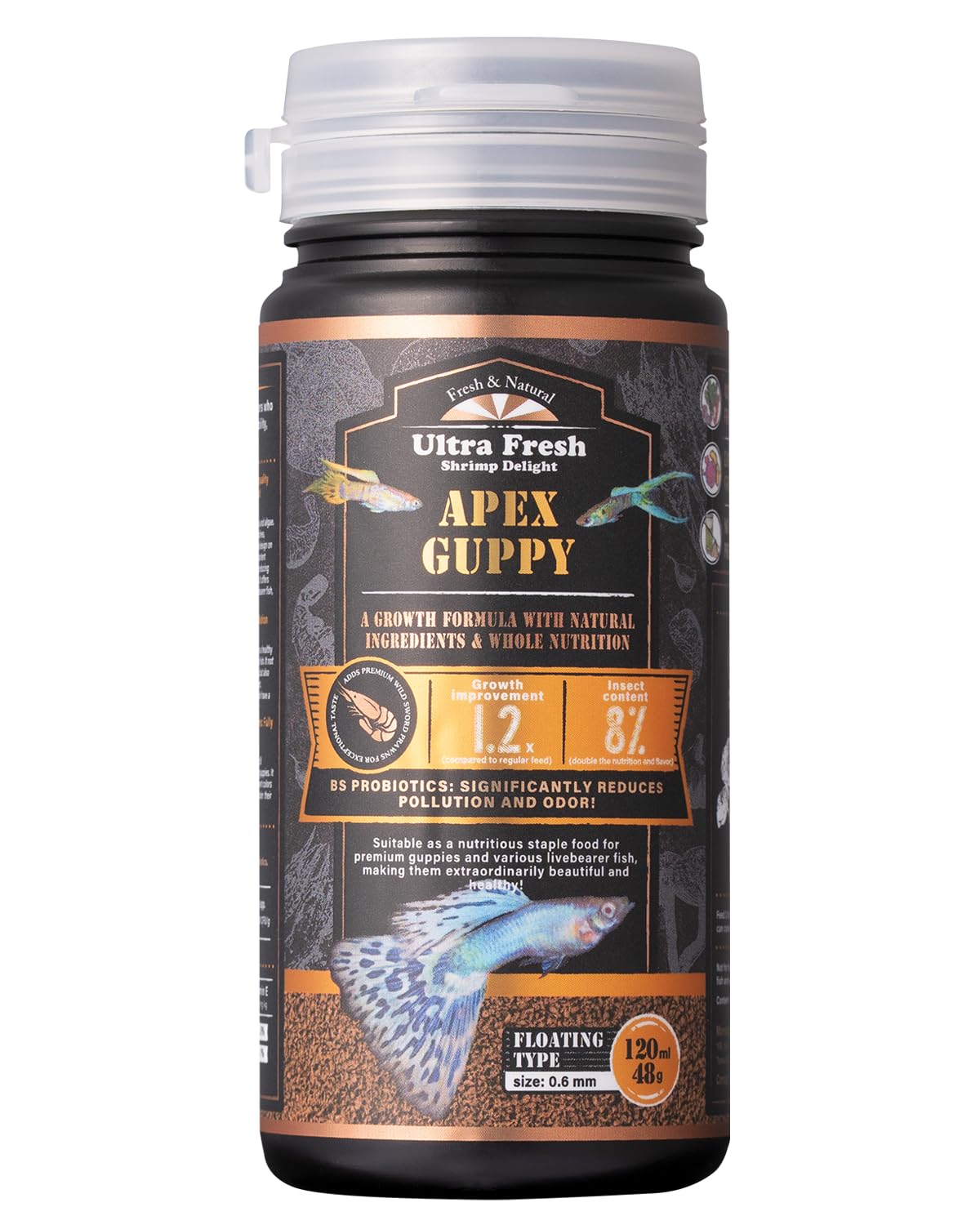
Rating: 4.7 ★ | Price: Premium | Pellet Size: Small (juvenile) | Float/Sink Behavior: Sinks (presumed) | Protein Content: 63% meat | Additives: Reishi, cod liver, spirulina
Ultra Fresh Apex packs 63% meat content (sword prawns, sardines, insects) and BS probiotics into a small pellet that fish eagerly consume. The formula claims 1.2x faster growth and 30% less feed, and keepers have noted brighter colors and faster development in young guppies. Where Hikari’s consistent flake/pellet provides balanced nutrition for daily feeding, Apex targets breeders who want measurable results. The tradeoff: a premium price per ounce and pellets that may be too large for fry under two weeks old.
This is the right pick for breeders who see the cost as an investment in accelerated growth and vibrant offspring. For casual keepers feeding a mixed community, the per-ounce cost is harder to justify. And for tanks with the tiniest fry, a separate finer food will be needed.
Pros
- Fish eagerly accept this pellet, with even sick individuals showing improved appetite.
- Keepers report brighter colors and faster growth in young guppies.
- Pellet size is appropriate for juvenile guppies and adolescent Endlers.
Cons
- Premium per-ounce cost may not suit casual keepers looking for an everyday staple.
- For tanks with fry under two weeks old, pellet size can be too large, requiring a separate starter food.
Delivers on growth and color promises for breeders who prioritize results over cost — just plan for separate fry feeding.
Best for Livebearer Keepers
Aquatic Provisions Granulettes

Rating: 4.6 ★ | Price: Mid-Range | Pellet Size: Tiny granulettes | Float/Sink Behavior: Sinks fast | Additives: Spirulina, vitamins, minerals
The 3.17 oz bottle delivers a generous amount of high-protein granulettes at a competitive price, making it a cost-effective pick for livebearer keepers. This formula works best when you don’t mind pellets that drop quickly or have livebearers larger than tiny fry – it may not satisfy hobbyists who want floating food or have very small fry.
Pros
- High protein content supports healthy growth and coloration.
- Large 3.17 oz bottle provides strong per-ounce value.
Cons
- Pellets sink too fast despite the ‘slow sinking’ label – best for bottom-feeding setups.
- Very small granulettes can be difficult for tiny fry to see or ingest.
A good value for keepers who don’t need floating food and are feeding larger livebearers or bottom feeders.
How to Choose
Guppy food labeled ‘slow-sinking’ often hits the bottom instantly, so test a pinch before serving.
Pellet Size
Pellets smaller than 0.5mm are ideal for newborn fry but may require multiple mouthfuls for adult guppies. Larger granules reduce mess but need to be soft enough to crush easily. If you have a mixed-age tank, a 0.6–1mm size often works for both.
Extremely tiny pellets can be lost in substrate or missed by adults. Crushing larger pellets is an option, but consistency varies by brand.
Float/Sink Behavior
Dense protein-rich pellets sink faster regardless of marketing claims. Top-feeding guppies prefer floating food, so if your fish ignore sinking pellets, feed sparingly or pre-soak to slow descent. Bottom feeders like corydoras and shrimp benefit from immediate sinking.
True floating foods are rare in guppy-specific formulas. Accepting a mix of float and sink often works better than chasing a label.
Protein Content
High protein (40%+) supports growth and color but can cloud water if uneaten. Excess protein breaks down into ammonia, stressing fish. Match protein level to your feeding habits and tank load.
For light feeders or heavily planted tanks, a moderate protein (35–40%) formula with probiotics may provide a better balance between nutrition and water quality.
Additives
Probiotics and spirulina enhance digestion and coloration, but their effectiveness depends on pellet freshness and storage. Garlic boosts appetite in picky fish, while seaweed iodine supports thyroid health.
Don’t assume more additives equals better quality. Focus on proven ingredients like spirulina and stabilized vitamin C rather than exotic blends.
FAQ
Why does my guppy food sink immediately when it says floating?
Most guppy pellets are dense to deliver concentrated nutrition. The ‘floating’ claim often refers to slow sinking, not true float. Test a pinch – if it sinks in under 5 seconds, feed sparingly or pre-soak to slow descent.
Can guppy food pellets be too small for adult guppies?
Yes. Pellets under 0.5mm can be hard for adults to see and grab, leading to wasted food. If adults ignore tiny granules, crush slightly larger pellets or choose a size around 1mm.
Does high protein guppy food cause cloudy water?
Yes, if overfed. Uneaten protein decomposes into ammonia, feeding bacteria blooms. Feed only what fish consume in 30 seconds, and consider lower protein for light feeders.
How to feed guppies that refuse sinking pellets?
Pre-soak pellets in tank water for a minute to soften and release oils, or use a feeding ring to keep pellets in one spot. If they still won’t eat, switch to a floating flake or slow-sinking granule.